REVIEW · NAPLES NATIONAL ARCHAEOLOGICAL MUSEUM
National Archaeological Museum of Naples Private Guided Tour
Book on GetYourGuide →Operated by Grand Tour Experience · Bookable on GetYourGuide
Roman Naples in two focused hours. The National Archaeological Museum of Naples (MANN) turns you from a casual viewer into a sharp observer, with an archaeologist guide who helps you connect objects to the real stories behind them. I especially love the Pompeii and Herculaneum highlights (frescoes and mosaics), and I like how the route makes time for the big-name sculptures of the Farnese Collection. One watch-out: 2 hours moves fast, so you won’t see everything the museum has.
What makes this tour work is the way the guide frames what you’re seeing. You’ll get guided “movie moments” in the galleries—like passing through scenes such as the Battle of Osso, getting your eyes on the mosaic portrait of Alexander the Great, and slowing down for Pompeii artwork with still-clear colors. The format is private, and you can choose among several languages. I also appreciate that the guide approach can flex: Roberta, for example, is described as adapting the tour in French for a 14-year-old so the visit stays understandable.
In This Review
- Key things to know before you go
- Inside Naples MANN: why a private guide changes everything
- Meeting at the MANN entrance and using the 2-hour window
- Pompeii frescoes and Herculaneum antiquities: what to actually look for
- The mosaic of Alexander the Great and the feel of Classical portraiture
- The Farnese Collection sculptures: scale, finish, and why size isn’t the only detail
- Battle of Osso and Roman artifacts: making grand stories human
- Languages, pacing, and adapting the story for real people
- Price and value: what $260.56 covers for a private museum session
- Who this tour suits best (and who should consider something else)
- Should you book the Naples MANN private guided tour?
- FAQ
- How long is the National Archaeological Museum of Naples private guided tour?
- Where does the tour start?
- Is this tour private?
- What languages are available?
- What’s included in the price?
- What is not included?
- Is the tour wheelchair accessible?
- What is the cancellation policy?
- Can I reserve without paying right away?
Key things to know before you go
- A licensed archaeological guide leads the pacing, not random gallery wandering
- Pompeii and Herculaneum antiquities are built into the highlights you’ll actually spend time on
- Frescoes, mosaics, and sculpture are covered together, so themes click faster
- Classical masterpieces get close viewing time, not just a quick glance
- Private format means you can ask questions without slowing down a crowd
Inside Naples MANN: why a private guide changes everything
The National Archaeological Museum of Naples is one of those places where the building is only half the story. The real draw is that you’re looking at artifacts that explain how Romans lived, what they admired, and what they feared—sometimes through luxury objects, and sometimes through the ordinary stuff that survived by accident and chance.
A big museum can be a lot. You arrive, you stand in front of something famous, and then… you’re not sure what you’re supposed to notice. That’s where a private guide earns its keep. With a licensed archaeological guide, you don’t just see objects—you get prompts for what matters: materials, placement, context, and how to read symbols and styles. That means you leave with a better mental map, and you can enjoy the museum beyond the specific highlights.
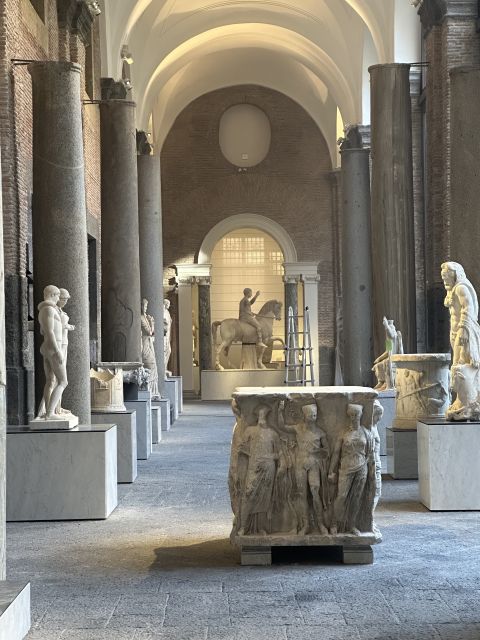
And with this tour, the focus is clear. You’re not getting a generic overview. You’re getting a curated run through signature areas tied to Pompeii and Herculaneum, plus major Classical-era works like the Farnese Collection sculptures. You also get Roman-era objects that include both everyday and precious pieces, which helps the museum feel human instead of distant.
You can also read our reviews of more guided tours in Naples National Archaeological Museum
Meeting at the MANN entrance and using the 2-hour window
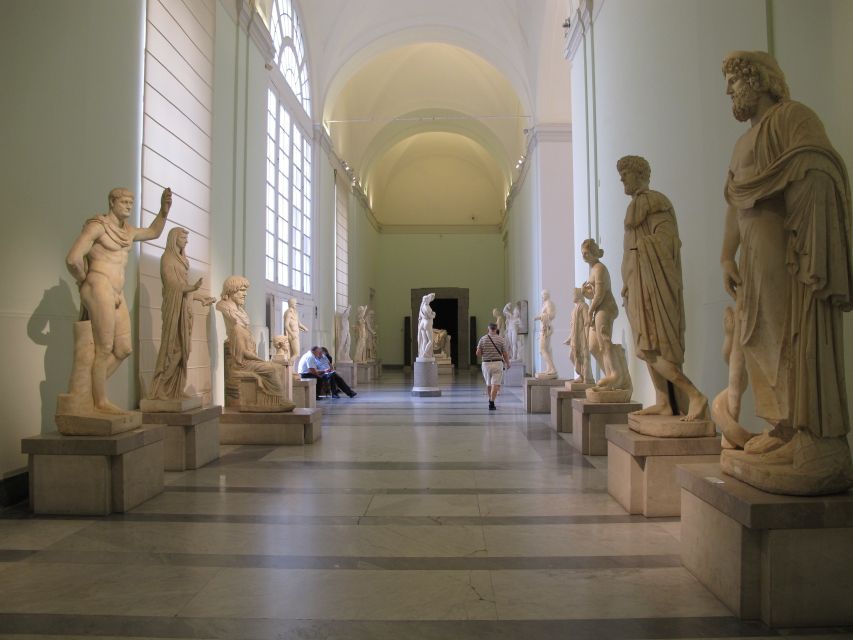
This is a 2-hour private session, so think of it as a sprint with structure, not a slow museum day. The guide meets you in front of the entrance of the MANN, and the tour ends back at the same meeting point.
That timing matters because MANN is huge and it rewards people who know where to spend attention. In two hours, you’re not meant to do everything—you’re meant to do the right things. The guide’s job is pacing and interpretation: choosing a route that makes sense, guiding you through the key galleries, and helping you make sense of what you’re seeing as you go.
If you’re the type who likes to linger and take photos for a long time, you’ll need to accept that this tour is about guided viewing. If you want to maximize your time without feeling rushed by your own indecision, the private format is a strong fit.
Pompeii frescoes and Herculaneum antiquities: what to actually look for
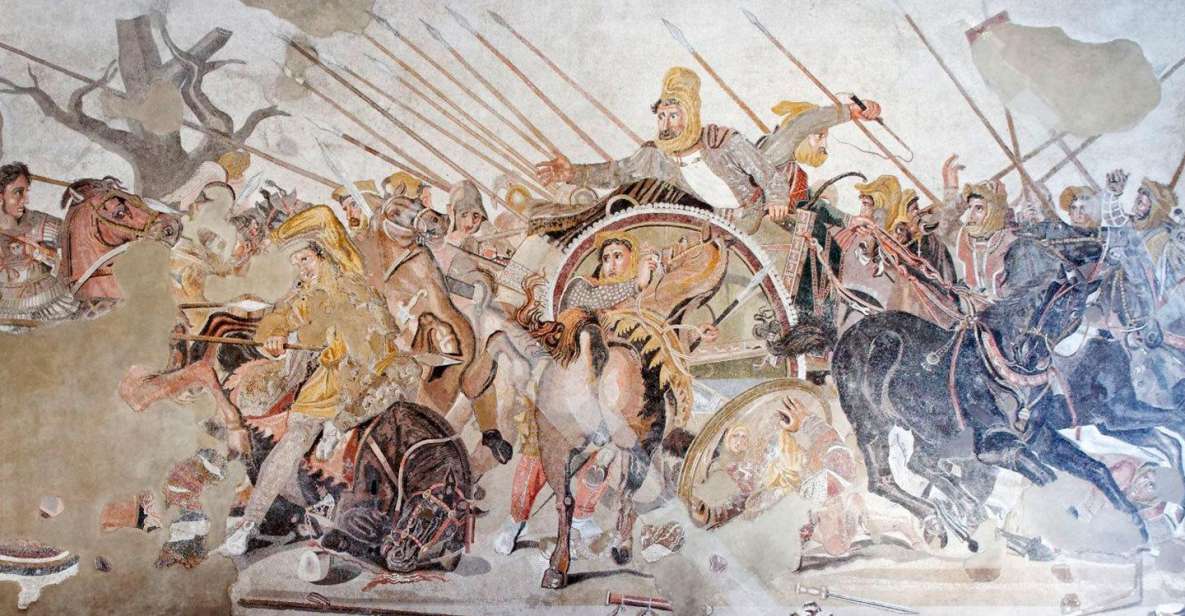
The Pompeii and Herculaneum section is where this tour earns its keep, because these artifacts are some of the clearest ways to understand Roman visual life. The descriptions of what you’ll see point to two big categories that most people love: frescoes and mosaics.
In practical terms, frescoes are about surface and storytelling. You’ll benefit from having someone point out details—how scenes are composed, how figures are arranged, and what survives well enough that colors can still feel striking. If you’ve ever stood in front of a faded wall and wondered what the painter was trying to do, this is the fix: the guide helps you “read” the imagery rather than just stare.
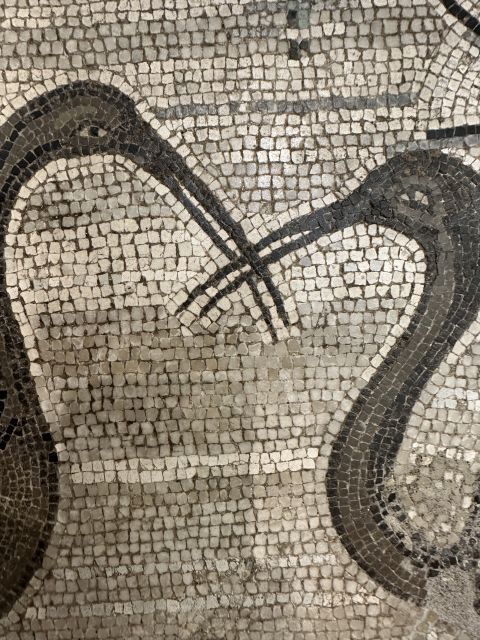
Mosaics take a different kind of attention. The tour includes a close look at a mosaic connected to Alexander the Great. With a guide, you’ll know what to focus on: the portrait style, the way the scene is constructed, and what the mosaic format is doing for the viewer. That’s how mosaics become more than decoration.
The other advantage is scale. The museum’s Pompeii and Herculaneum antiquities are not one small corner. You’re walking through a substantial selection, and the guide ties the works together so you start noticing patterns instead of treating each room like a separate random stop.
The mosaic of Alexander the Great and the feel of Classical portraiture
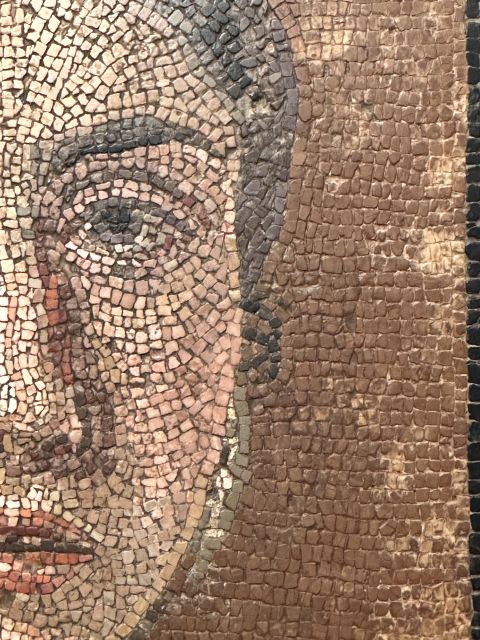
One moment the tour calls out is standing before the mosaic portrait of Alexander the Great. Portraits like this are fascinating because they sit at the crossroads of politics and art: who is being shown, how power is presented, and what visual language communicates status.
When you’re looking at an image like this without guidance, you can still enjoy it—but you might miss why it matters. The guide’s role is to anchor you in context and to point out the craft choices that shape the impression. You’ll get help seeing how Classical-age styles influence later Roman taste, and how portrait imagery can function as more than a likeness.
I like this stop because it gives you a “brain hook.” After you see a major portrait mosaic, you tend to start looking for the same visual logic in other objects—how artists imply authority, how they simplify forms, and how they use materials to create impact.
The Farnese Collection sculptures: scale, finish, and why size isn’t the only detail
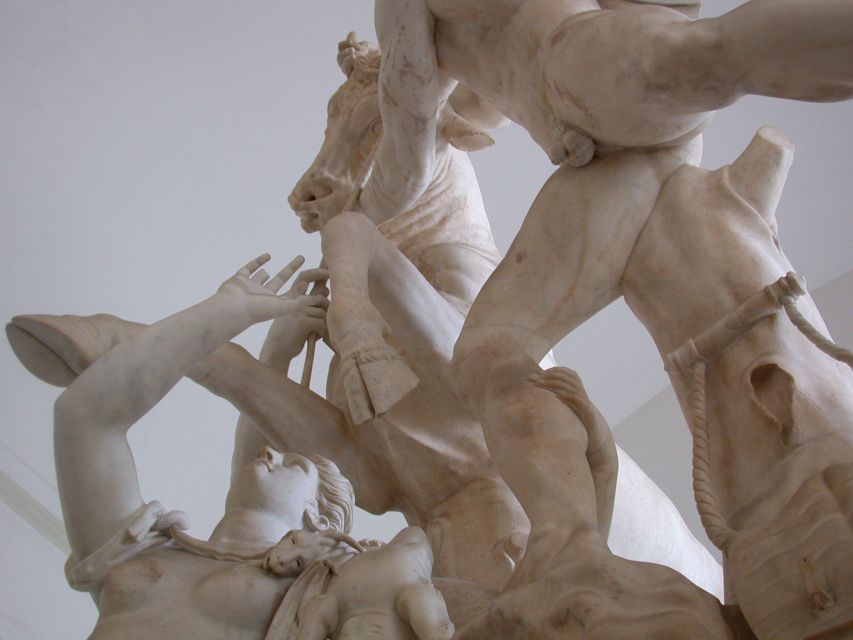
Another standout highlight is the walk through the Farnese Collection. This is where MANN flexes its reputation for major sculpture. Huge classical statues can be intimidating, mostly because the viewing experience is about distance. In a crowd, you get a quick look, and then you move on.
With a private guide, you get something better: time to understand what you’re seeing. You can learn how the sculptures are positioned, what kinds of details matter for their style, and how their size and presence are part of the message. The description specifically notes huge classic sculptures, and that’s exactly why guidance helps. A person without context often stares at the biggest visible feature. A good guide helps you track what the artist wants you to notice next—faces, gestures, drapery, and the overall sense of motion or calm.
Also, the Farnese Collection doesn’t just impress your eyes. It helps your understanding of what later collectors valued. You begin to see why Roman and Classical art became a reference point for identity, education, and status.
Battle of Osso and Roman artifacts: making grand stories human
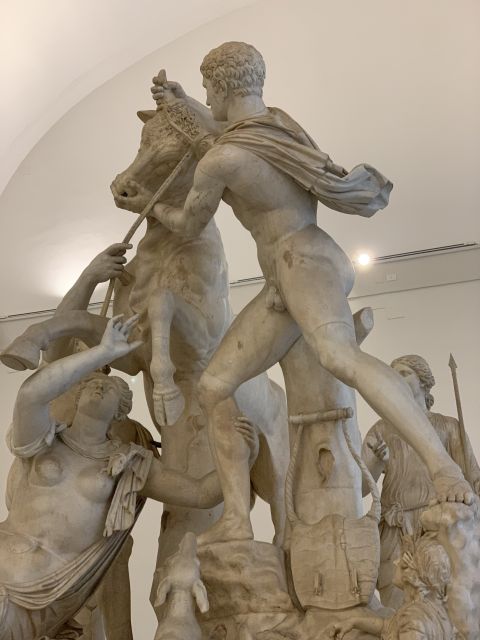
The tour also includes an element that feels like a story-world rather than a list of objects: you’ll be spectators at the Battle of Osso. That’s a great framing device, because museum visits often fail when artifacts are treated like disconnected showpieces.
When the guide ties items to a named scene, you start walking differently. You pause more. You connect images. You’re less likely to feel overwhelmed by the museum’s scale. Even if you’re not a specialist, this kind of narrative structure helps the galleries click into place.
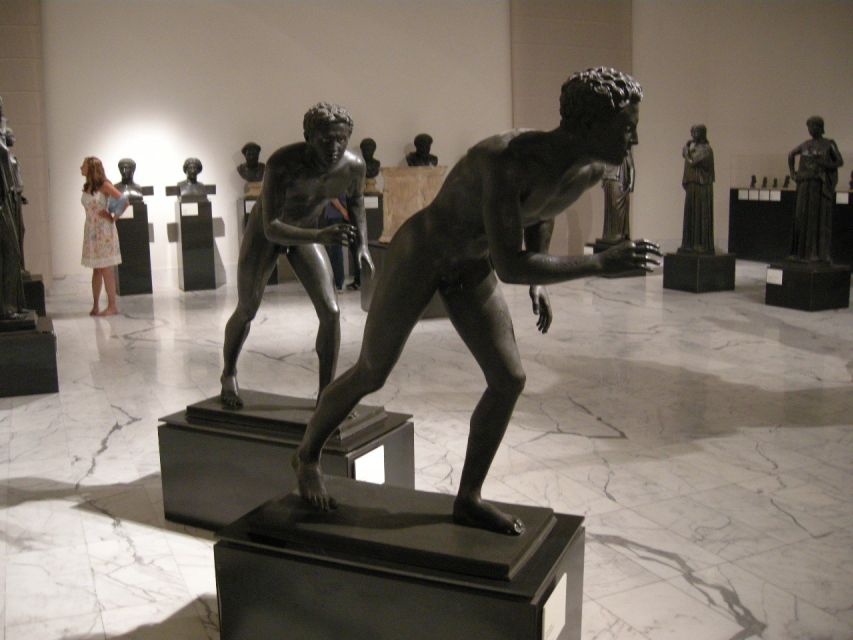
Then there’s another balance point I appreciate: alongside the famous masterpieces, you also see ordinary and precious objects from the Roman era. That mix matters. If your visit only focuses on luxury items, you get a flattering view of ancient life. When everyday objects are included, the museum feels closer to reality—like you’re seeing both the stage and the backstage.
That balance is often what makes a short guided tour feel satisfying rather than superficial.
Languages, pacing, and adapting the story for real people
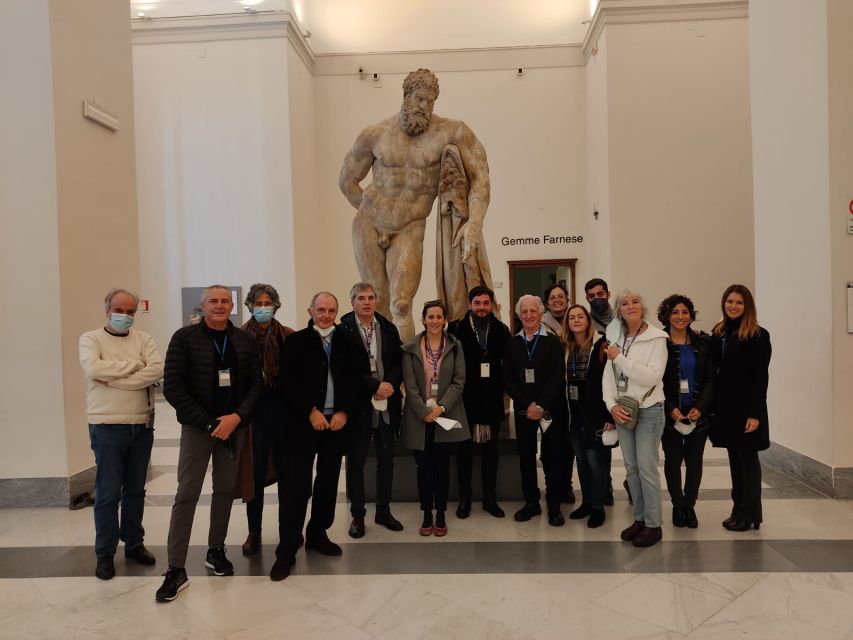
This tour offers live guiding in English, French, Spanish, and Italian. That matters because archaeology museums can get technical fast. You want someone to explain things in a way that feels natural to your language brain, not forced through a script.
There’s also a clear signal that the guide style can adjust to the group. One guide example mentions Roberta giving the tour in French and adapting the experience for a 14-year-old. That’s a big deal if you’re traveling with younger teens or if you want the explanations to stay clear without talking down.
In a private setting, you can also ask follow-up questions without feeling like you’re holding up a busload. Even if you don’t ask much, knowing you can helps you relax and listen.
Price and value: what $260.56 covers for a private museum session
The price listed is $260.56 per group up to 1, with admission tickets included. For a private tour, that’s the key value point: you’re paying for a licensed archaeological guide plus the entry ticket, all within a focused 2-hour session.
Is it a bargain? That depends on how you travel. If you’re going alone or as a small private group and you hate feeling lost in a big museum, this pricing can actually feel reasonable because the guide gives you decision-making power. You’re not spending time figuring out where to go, and you’re not relying on signage to do all the work.
On the other hand, if you’re comfortable wandering and you want the full freedom of a longer self-guided museum day, you might not need a private guide. But if you want Pompeii and Herculaneum highlights, mosaics, and Farnese sculptures explained in a way that sticks, the private format is what you’re really buying.
Who this tour suits best (and who should consider something else)
This experience fits best if you fall into one or more of these buckets:
- You want high-impact viewing in limited time
- You’re interested in Pompeii and Herculaneum and want the art connected to meaning
- You like asking questions and getting direct answers, rather than reading everything yourself
- You’re traveling with family members who need explanations paced for their attention span
It’s less ideal if you want to spend half a day moving slowly through every gallery, or if you already know exactly what sections you want and you’re happy doing it alone.
Also, because the tour ends where it starts, it’s easy to plug into a broader Naples plan. You can pair it with other stops on the same day without awkward logistics.
Should you book the Naples MANN private guided tour?
I’d book it if you want a focused Naples museum experience where you’re guided to the highlights that most people miss when they go on their own—Pompeii frescoes, Herculaneum antiquities, key mosaics like the Alexander portrait, and the Farnese Collection sculptures.
You might skip it if your dream day is long, quiet, and fully self-directed, or if you already have a clear plan to spend more than two hours in MANN.
If you’re on the fence, here’s my practical rule: if you’d rather understand what you’re seeing than just see it, this private archaeological guide session is a smart way to spend your time.
FAQ
How long is the National Archaeological Museum of Naples private guided tour?
The tour lasts 2 hours.
Where does the tour start?
You meet your guide in front of the entrance of the National Archaeological Museum of Naples (MANN).
Is this tour private?
Yes. It’s listed as a private group.
What languages are available?
The live guide is offered in English, French, Spanish, and Italian.
What’s included in the price?
The tour includes a guided tour, a licensed archaeological guide, and admission tickets.
What is not included?
Personal expenses, food and drinks, and hotel pick-up and drop-off are not included.
Is the tour wheelchair accessible?
Yes, the activity is wheelchair accessible.
What is the cancellation policy?
You can cancel up to 24 hours in advance for a full refund.
Can I reserve without paying right away?
Yes. It offers a reserve now & pay later option, so you can book and pay nothing today.