REVIEW · NAPLES
Herculaneum – Small Group Tour
Book on Viator →Operated by Pompeiify · Bookable on Viator
Herculaneum rewards fast focus. In just about two hours, this small-group tour steers you through the most important ruins at Parco Archeologico di Ercolano with a guide’s straight-to-the-point explanations. You’ll get a feel for everyday Roman life, not just a list of walls and columns.
I love the practical route: you cover standout private houses, public spaces, and the seafront in one go, including the House of the Deer and the ancient beach scene tied to the 79 AD eruption. I also love the group size, because you can actually ask questions and keep momentum without feeling herded. One possible drawback: there’s limited shade, and hot, humid days can feel long—so plan like it matters.
In This Review
- Key Highlights at a Glance
- Why Herculaneum Works When You’re Short on Time
- Your Main Stop: Parco Acheologico di Ercolano in a Logical Route
- The Private Houses That Explain Roman Daily Life Fast
- Public Spaces: Shops, Baths, and the City’s Daily Rhythm
- The Seafront Surprise: An Ancient Beach, Skeletons, and a Wooden Boat
- How Guides Turn Stones Into Stories
- How 2 Hours Feels on the Ground (and Why It’s the Sweet Spot)
- Morning or Afternoon: Pick Based on Heat and Energy
- Price and Value: What You’re Paying For (and What You’re Not)
- Who Should Book This Tour
- Should You Book This Herculaneum Small Group Tour?
- FAQ
- How long is the Herculaneum small group tour?
- Is the admission ticket included in the price?
- What language is the tour offered in?
- How big is the group?
- Will I get a mobile ticket?
- Can I choose a morning or afternoon tour?
- What if the tour is canceled due to minimum participants?
- Is free cancellation available?
- Are service animals allowed?
Key Highlights at a Glance
- Two-hour walkthrough of the most meaningful parts of Herculaneum without wasting time
- Small group (max 15) for real interaction and follow-up questions
- Standout homes and public areas in one planned route, including baths and shops
- Seafront clues to the eruption: the preserved wooden boat and the sheltering-from-fate details
- English licensed guides (Regione Campania) who help you read the site
Why Herculaneum Works When You’re Short on Time
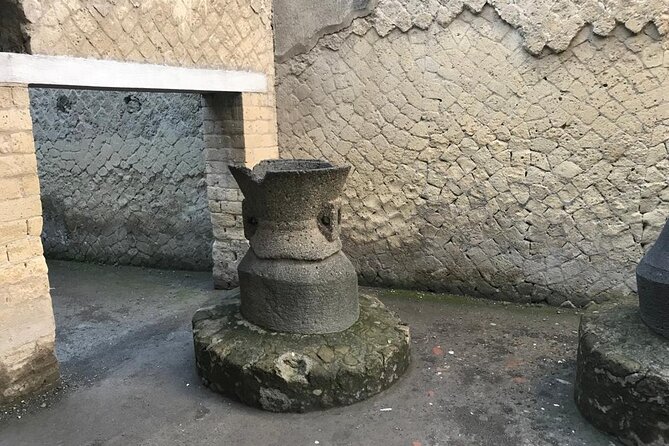
Herculaneum is one of those rare ruins that you can actually “use” on a busy itinerary. It’s big enough to feel like a full experience, but scaled so a guided visit can land the key stories quickly. That matters when you’re in Naples for a day, on a port stop, or juggling multiple stops in the region.
I also like the match between the ruins and the time you have. With about 2 hours, you get a guided orientation, then you’re free to linger afterward on your own at a pace that feels human. If you’re the type who enjoys connecting the dots while you walk, this format fits.
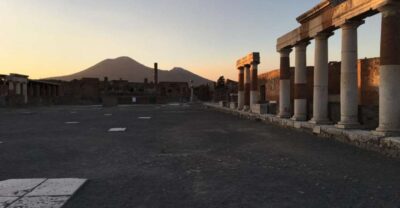
And yes, there’s a reason people often compare it to Pompeii. Here, the scale is smaller and the setting feels more readable, so you can better imagine how the city functioned before the eruption changed everything.
You can also read our reviews of more tours and experiences in Naples.

Your Main Stop: Parco Acheologico di Ercolano in a Logical Route
This tour’s centerpiece is Parco Acheologico di Ercolano, and the route is built to help you see the most representative sections without wandering. You’ll move through standout private residences, then shift into city life with Roman shops, the public baths, and the main street.
What makes the guided format valuable is that Herculaneum can look “quiet” if you’re only guessing. There isn’t enough built-in context to connect each building to daily life, social rank, and the eruption’s impact. A good guide does that work for you, so the site makes sense as you move.
If you choose a morning or afternoon departure, you’ll still hit the same core pieces. That’s a big deal when you’re trying to plan around heat, train timing, or cruise schedules.
The Private Houses That Explain Roman Daily Life Fast
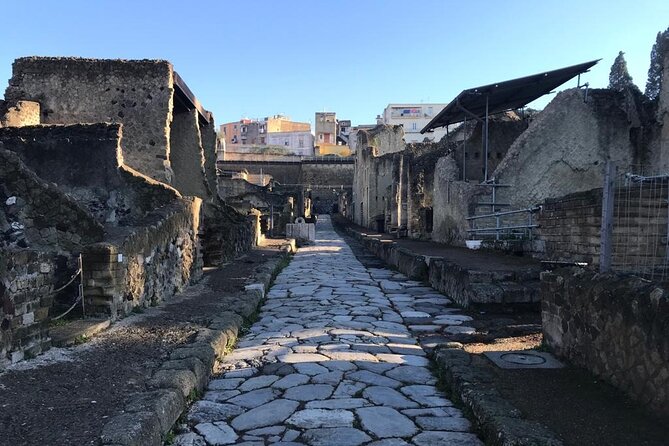
The most satisfying part of Herculaneum is how the ruins preserve the feel of real homes. In the guided route, you’ll visit major private houses that let you compare layouts, decorative choices, and function. It’s not random sightseeing—you’re learning how people lived.
You may see the House of the Deer, the House of the Wooden Partition, the House of Neptune and Amphitrite, and the House of the Bicentenary. Even if you don’t memorize names, the tour’s job is to help you recognize what each home reveals—where you’d relax, where daily tasks happened, and how the home worked as a social space.
Here’s what you’ll likely appreciate most: the guide helps you notice structural details that ordinary visitors can miss. That can include how rooms relate to each other, how spaces were used, and how the city’s status symbols show up in domestic settings. In other words, you’ll stop looking at ruins like ruins and start reading them like evidence.
Public Spaces: Shops, Baths, and the City’s Daily Rhythm
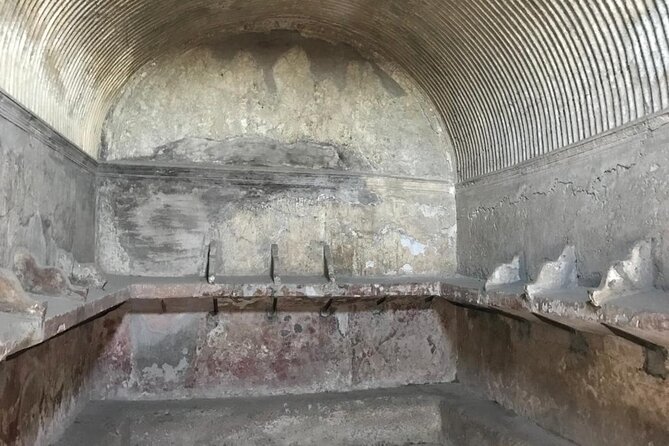
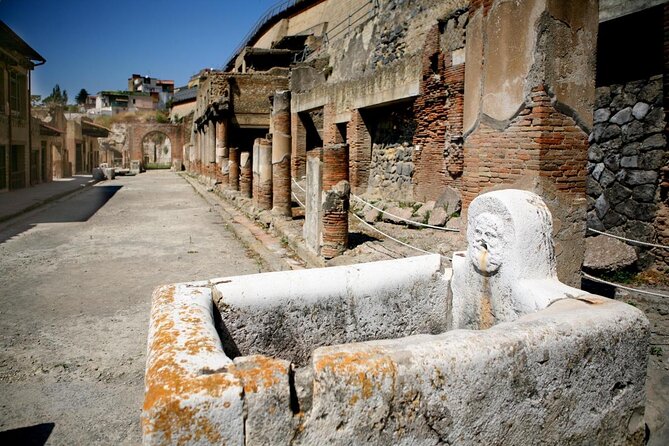
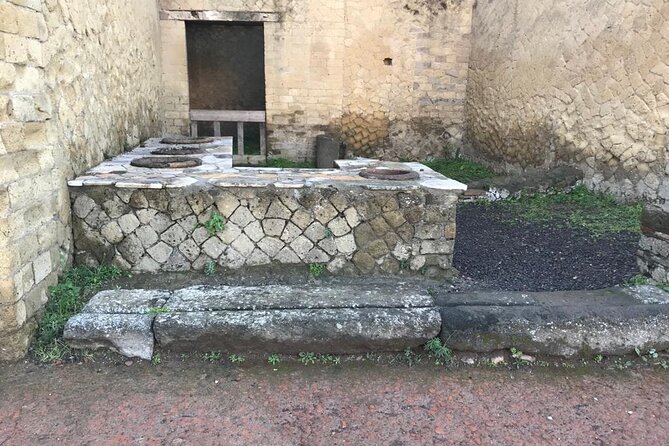
After the homes, the tour moves you into areas tied to public life. You’ll see typical Roman shops, the public baths, and the main street—plus important public buildings that show how the city organized itself.
This section is where the tour becomes more than a walk-through of archaeology. Roman towns weren’t just houses and temples. They were also routines: errands, bathing, casual conversations, and the movement of people along streets that shaped the day.
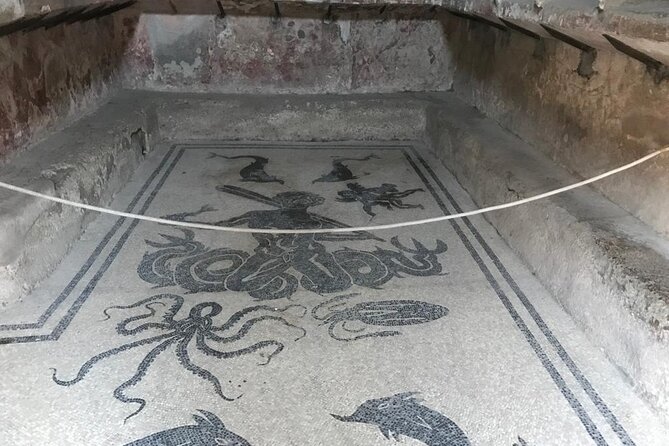
The baths are a particularly useful stop for orientation. Even with ruins, baths communicate scale and behavior. You get a sense of what kind of community gathering a city supported, and how leisure and cleanliness worked in practice.
The Seafront Surprise: An Ancient Beach, Skeletons, and a Wooden Boat
One of the most gripping parts of the route is the seafront. You’ll visit the ancient beach area where people sought shelter in structures along the shore. The ruins here are connected to the disaster moment, including the details tied to the skeletons and the wooden boat found on the beach.
This isn’t just dramatic content. A guide uses it to explain what the eruption did and how the effects differed from other nearby cities. The goal is to help you understand cause and consequence, not just the shock value of the scene.
Also, these coastal details help explain why Herculaneum can feel oddly intimate. You’re not staring at distant history. You’re looking at remains connected to a specific place and a specific geography—street, shore, and daily life all in one frame.


How Guides Turn Stones Into Stories
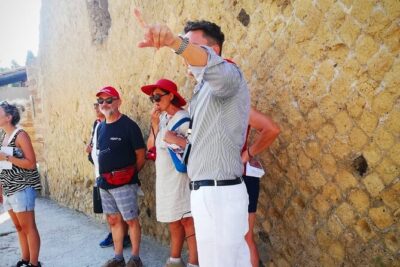
The tour is built around interpretation, and the guides seem to be the big reason people rave. You might meet Francesco, Marco, Roberta, Marzia, or Antonella—names that show up across successful experiences. What they have in common is pacing and clarity, plus a real effort to keep the tour moving without turning it into a lecture.
Licensed guides are a practical advantage here. The site is complex, and the explanations you want aren’t only facts—they’re also the “how to look” part. That’s what helps you spot what matters in a place where signage may not be enough to steer you.
You’ll also likely feel the difference in how questions are handled. The small-group format (up to 15) makes it easier to get direct answers, not just general statements. One of the best parts of a guided Herculaneum visit is hearing how a guide connects buildings to human behavior—how people used space, how they socialized, and what the eruption changed.
Heat can also show up fast, and guides can matter there too. Multiple experiences highlight that some guides help you stay comfortable by managing shade and pace. Even if your guide doesn’t do anything fancy, the right pacing can make the tour feel doable.
How 2 Hours Feels on the Ground (and Why It’s the Sweet Spot)
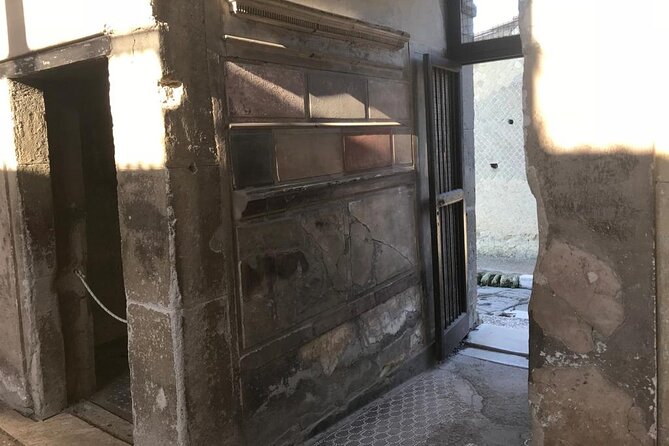
Two hours sounds short until you’re walking a site where every stop has meaning. In this case, the time is used for a focused route: the major homes, public areas, and the seafront story. You don’t get dragged into every fragment of wall. You get a guided storyline.
This length also supports a smart follow-up. After the tour, you can explore at your own pace and check out the museum portion if you want extra context. Some visitors use the guided visit as their “map,” then spend a bit more time in the park once they know what they’re looking at.
In the heat, shorter is better. Herculaneum is an outdoor site, and one repeated theme is that there’s limited shade. If you’re going in summer—or even a warm shoulder season—bring a hat and plan to move efficiently.
Morning or Afternoon: Pick Based on Heat and Energy
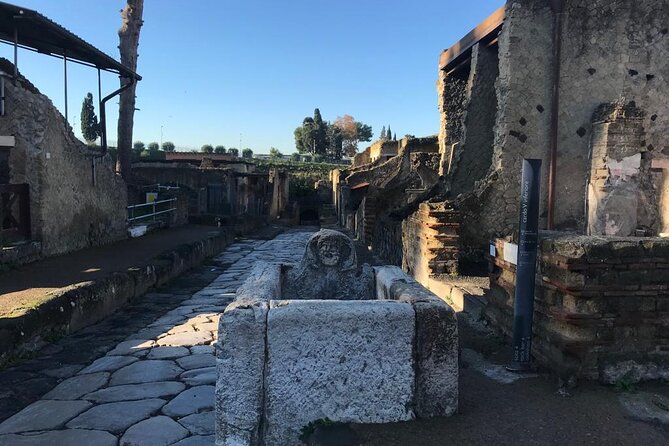
The tour lets you choose morning or afternoon, which is exactly how it should be. If you’re sensitive to heat, mornings can feel easier on the body. If you’re trying to connect the trip with other plans, afternoon can work without sacrificing the core route.
Also, if you’re combining Herculaneum with Pompeii, timing matters. Many guides are experienced at helping you see contrasts. The best approach is to ask your guide (during the tour) what to compare between the two sites, so the second visit feels sharper and more intentional.
Price and Value: What You’re Paying For (and What You’re Not)
The tour costs $50.81 per person, and the admission ticket is not included. That’s an important detail for your budget, because the ticket can affect what the total day really costs.
So what are you paying for? You’re paying for a guided route that covers the most important ruins efficiently, plus a licensed guide with structured explanations. You’re also paying for the small-group advantage—up to 15 people—meaning you can ask questions and get better answers than you would in a big crowd.
On value alone, this works best when you’re the kind of traveler who likes understanding what you’re seeing. If you prefer wandering solo with minimal guidance, you might not fully use the guide’s strength. But if you want the stones to start telling you a story, the price feels more reasonable.
A final practical note: the tour uses a mobile ticket, which is handy in the moment. You won’t be juggling paper while you’re trying to find your way.
Who Should Book This Tour
This is a strong fit for families and mixed-age groups. Guides are often able to keep both younger and older visitors engaged, and the pace is designed to avoid losing people. If you’re traveling with teens, the small-group setting also makes it easier to keep attention without distractions.
It’s also a good choice if you want to feel confident you didn’t miss the main things. A guided route helps you avoid the common problem of seeing a lot of ruins but not understanding which ones carry the key lessons.
If you want extra comfort during the walk, ask your guide about pacing and where you can slow down. Experiences include guides who help visitors keep up and manage steps—so it’s not just a sightseeing tour, it’s also a support-your-day kind of experience.
And yes, service animals are allowed, and it’s positioned as doable for most travelers.
Should You Book This Herculaneum Small Group Tour?
Book it if you want the best use of time and you care about understanding what you’re seeing. The two-hour structure is tight, the route hits major domestic and public spaces, and the seafront story adds a powerful piece of context for 79 AD.
Don’t book it if you’re only interested in a self-guided wander and you’d rather save money by handling the site without a guide. Also, if you know you struggle in heat, plan extra for comfort, because shade can be scarce.
If your goal is a focused, high-impact introduction to Herculaneum that sets you up to explore further, this tour is a very sensible choice.
FAQ
How long is the Herculaneum small group tour?
It runs for about 2 hours.
Is the admission ticket included in the price?
No. The tour price does not include admission. You’ll need to buy the ticket separately.
What language is the tour offered in?
The tour is offered in English.
How big is the group?
This is a small-group tour with a maximum of 15 travelers.
Will I get a mobile ticket?
Yes. You’ll have a mobile ticket.
Can I choose a morning or afternoon tour?
Yes. You can pick a morning or afternoon time option.
What if the tour is canceled due to minimum participants?
If it’s canceled because the minimum number of travelers isn’t met, you’ll be offered a different date or experience or a full refund.
Is free cancellation available?
Yes. You can cancel for a full refund if you cancel up to 24 hours in advance.
Are service animals allowed?
Yes. Service animals are allowed.