REVIEW · NAPLES
Naples: Catacombs of San Gennaro Entry Ticket & Guided Tour
Book on GetYourGuide →Operated by Catacombe di Napoli · Bookable on GetYourGuide
Neapolitan faith lives underground. In the Catacombs of San Gennaro, you follow a guide through centuries of burial space that also feels like a moving story of Naples’ patron saint and early Christianity.
I really like two things here: the art and age (frescoes and mosaics that can go back to the 3rd to 10th centuries), and the fact that your ticket doesn’t stop after one tour. You also leave with a pass to visit more catacombs and a basilica later.
One possible drawback: you’ll have to accept no photos/video inside, and there are a lot of steps getting down, so it’s not ideal if mobility is an issue.
In This Review
- Key highlights you’ll care about
- San Gennaro Beneath Naples: why this tour feels different
- What’s down there: art you can actually describe
- Upper catacombs and the early Christian look
- Byzantine-era imagery and a timeline you can hold onto
- Baptismal font and refuge during iconoclast conflict
- The Crypt of the Bishops and 5th-century mosaics
- Your guide matters: pacing, humor, and real explanations
- The bonus pass: San Gaudioso and Santa Maria della Sanità
- Price and logistics: getting good use from your $15 ticket
- Who should book this tour (and who should think twice)
- Should you book the Catacombs of San Gennaro guided tour?
- FAQ
- How long is the guided tour?
- Where do I meet for the tour?
- What’s included besides the Catacombs of San Gennaro tour?
- What languages are available?
- Is there a photo policy inside the catacombs?
- Can I cancel for a refund?
Key highlights you’ll care about
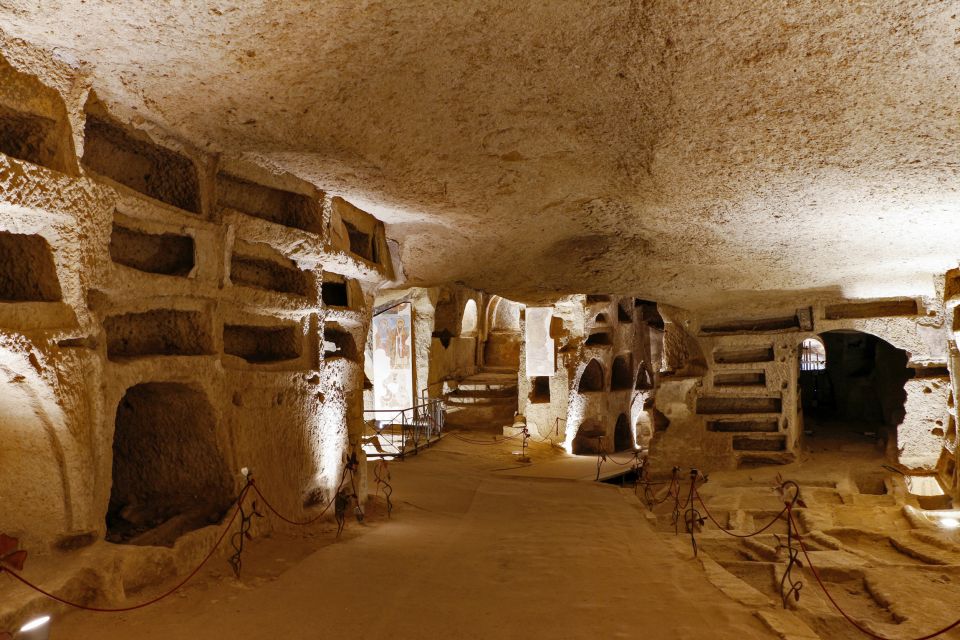
- San Gennaro’s underground world connects Naples, faith, and patron-saint devotion in one walk
- Early Christian art, including Byzantine-style paintings and very old mosaics
- Pompeian-style decoration in the upper catacombs (3rd century)
- The Crypt of the Bishops with 5th-century mosaics, including St. Quodvultdeus
- Your ticket includes a bonus visit to Catacombs of San Gaudioso and Basilica di Santa Maria della Sanità for 12 months
San Gennaro Beneath Naples: why this tour feels different
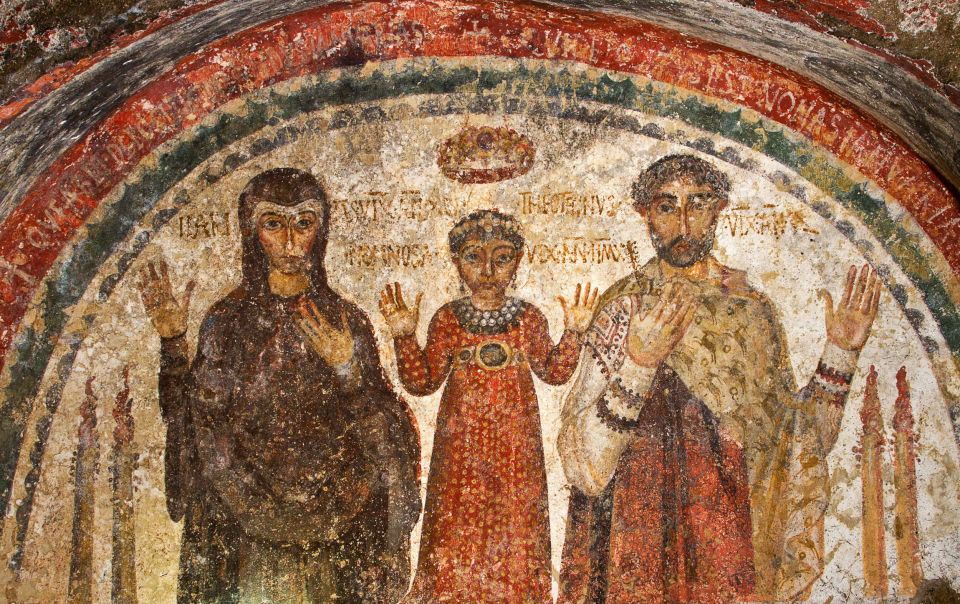
Naples has big churches above ground, but the Catacombs of San Gennaro are where the faith story becomes physical. You’re not just walking through tunnels. You’re moving through underground spaces shaped by belief, protection, and community memory.
What makes this experience especially worth your time is how the guide connects the art to real Naples. The catacombs became tied to the city’s patron-saint world in a very practical way—when important remains were transferred, underground basilicas grew around that new reality. That’s why the visit can feel both intimate and surprisingly grand: you see decorated spaces, not just simple burial niches.
You’ll also come away with a clearer sense of why Naples’ historic neighborhoods like Rione Sanità matter today. Your ticket supports a redevelopment project in that area, so this doesn’t feel like a disconnected museum stop. It’s part of a living effort to protect and improve the neighborhood around these sites.
You can also read our reviews of more tours and experiences in Naples


What’s down there: art you can actually describe
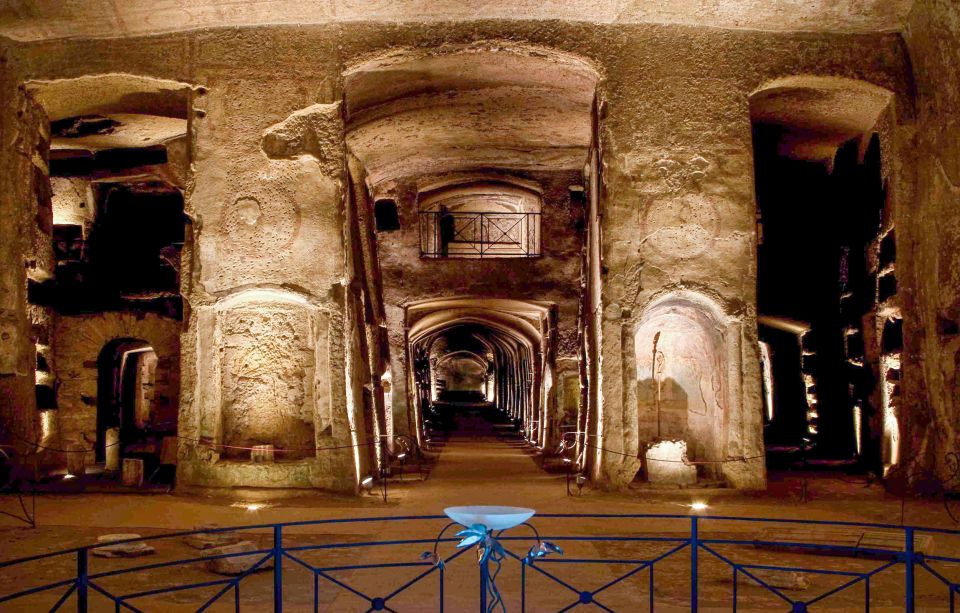
This is the kind of tour where the details matter. The guide points out specific locations and then explains what they represent. That’s how the centuries start to click into place instead of blurring together.
Upper catacombs and the early Christian look
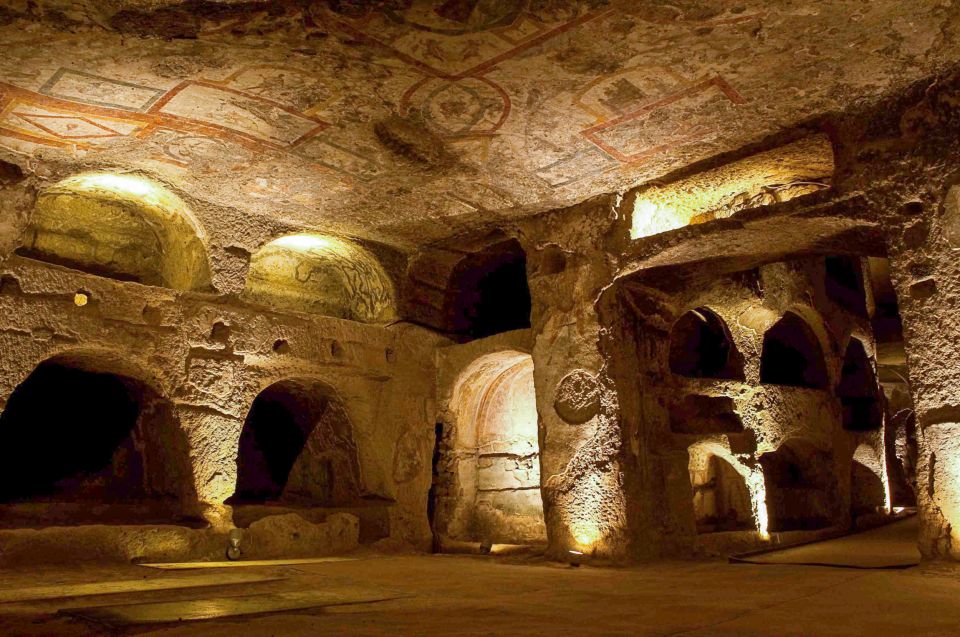
You’ll spend your time seeing decorated underground chambers that include some of the earliest Christian paintings you can find in Italy. One standout is the upper catacomb, noted for decoration in a Pompeian style—a strong hint that Roman-era visual language was still shaping what people wanted to see, even as Christianity spread.
As you move, the tour ties those wall paintings and frescoes to what people needed: remembrance, identity, and a sense of continuity. The catacombs weren’t only about death. They were about community life and shared hope.
Byzantine-era imagery and a timeline you can hold onto
The tour also focuses on artwork from the 9th to 10th centuries, including Byzantine-style paintings. You’ll hear how earlier burial spaces were expanded over time, and how later communities kept returning to these rooms with fresh meaning.
That timeline is important because it helps you avoid the common catacomb mistake: treating it like one static scene. Here, you can sense that the site evolved. The guide explains an early 4th-century expansion that followed the transfer of the remains of St. Agrippinus to an underground basilica dedicated to him. This is a key piece, because it shows how political and religious events translated into architecture you can walk through.
Baptismal font and refuge during iconoclast conflict
Another moment that often sticks with people: the baptismal font commissioned by Bishop Paul II, who took refuge in the catacombs during the iconoclastic struggles. Even if you’re not a religious-history specialist, that part lands because it connects art and objects with real survival and decision-making.
It also helps you understand the catacombs as a place that offered safety when the larger world became dangerous. That context makes the rooms feel less like scenery and more like a shelter with a long memory.
You can also read our reviews of more guided tours in Naples




The Crypt of the Bishops and 5th-century mosaics
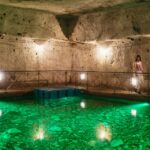
If you like visual punch, make sure you slow down when you reach the Crypt of the Bishops. This is where the tour points to 5th-century mosaics, including one depicting the Bishop of Carthage, St. Quodvultdeus.
Mosaics under the ground can sound strange until you see them for yourself. The effect is that you’re staring at prayers turned into images—small in scale, but huge in time. It’s also one of those places where a good guide helps you notice what you’d otherwise miss.
Your guide matters: pacing, humor, and real explanations
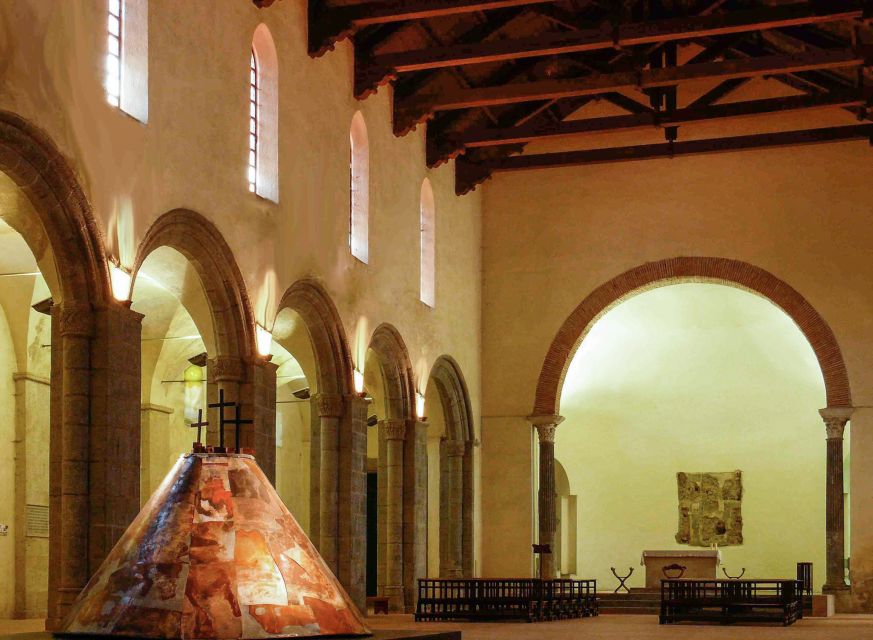
This tour is built around a guided walkthrough, and that’s not fluff. The underground setting already limits how much you can read on your own. A strong guide does two jobs: keeps the group moving at a human pace, and makes the historical connections feel clear rather than like a lecture.
I like that the explanations tend to stay focused. People often find the tour not overly dense, even if you’re not trying to memorize dates. Guides also seem to work in a way that invites questions. That means you can ask what things mean on the wall, not just watch someone talk.
You may get different guide styles. Names that have come up often include Nello, who tends to mix history with humor, and Antonia, whose explanations people described as especially interesting. Others like Emmanuel and Valentina have also been singled out for engaging, question-friendly guiding.
One practical tip: go in ready to listen. The best moments here are the ones where the guide points to something specific and tells you what it is and why it was painted or built in that exact spot.
The bonus pass: San Gaudioso and Santa Maria della Sanità
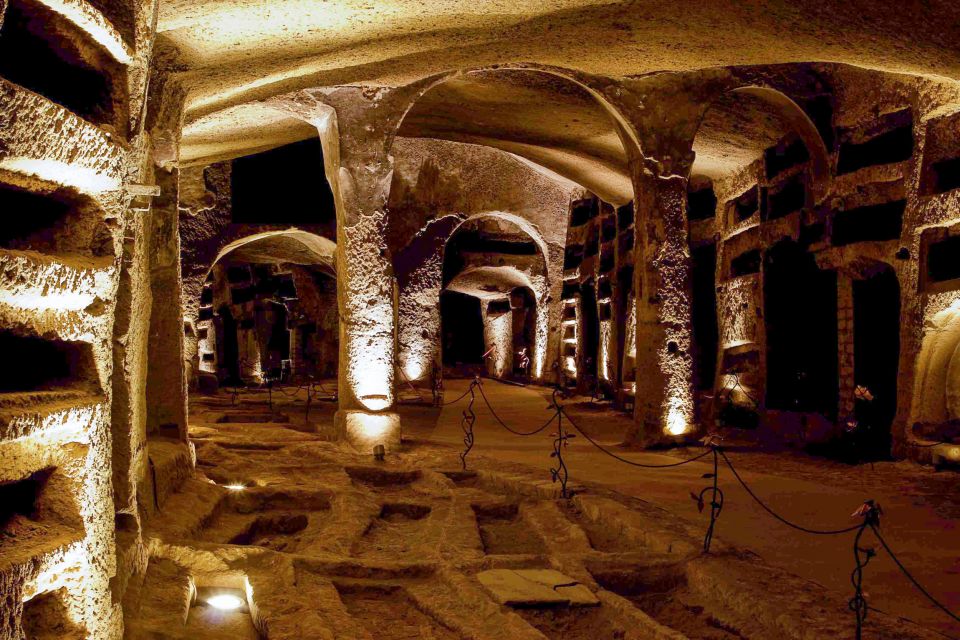
A big part of the value comes after the main catacombs tour. When you finish, you receive an entry pass you can use later for Catacombs of San Gaudioso and the Basilica di Santa Maria della Sanità. The pass is valid for 12 months, so you’re not forced into squeezing the second visit into the same day if Naples traffic and schedules don’t cooperate.
This matters because one catacombs visit can leave you wondering what’s unique about each site. Adding San Gaudioso lets you compare how early Christian spaces were reused and decorated, and it gives you more complete context for the Rione Sanità area. Even if you’re short on time, it’s smart to plan a window for that second visit—because the art and architecture aren’t the same story twice.
Also, the whole point of this ticket is that your money supports the broader redevelopment and community work around these places. So the bonus isn’t just extra sightseeing. It’s a chance to see more of what’s being protected.
Price and logistics: getting good use from your $15 ticket
At $15 per person, this is one of those Naples deals that only makes sense if you use what’s included. The price includes the guide, entry to the Catacombs of San Gennaro, and the bonus access pass to San Gaudioso plus Santa Maria della Sanità for a year.
If you were paying separately for guided entry to multiple underground sites, you’d likely spend more. Here, the ticket functions like a bundle: one guided experience now, and one extra opportunity later.
A few logistics points you’ll want to keep in mind:
- The ticket office opens at 9:30 AM.
- You should arrive about 15 minutes early at reception at Via Capodimonte, 13, 80136 Naples.
- Your ticket is valid only for the specific day and time you booked, and being late can cause you to miss the tour schedule and any linked visits.
- Photos aren’t allowed inside the catacombs, so plan to experience with your eyes, not your camera.
Walking and comfort are also real considerations. The sites involve descending steps, and at least some visitors report that there’s a carpet-like ground surface in parts that helps you move around. Still, if you have mobility challenges, this is not a “stroll” outing.
Who should book this tour (and who should think twice)
Book it if:
- you love early Christian art and want to see frescoes/mosaics in a guided setting
- you want a Naples experience that connects faith, history, and the modern neighborhood of Sanità
- you like tours that keep a steady pace and explain what you’re actually looking at
- you’ll use the pass to visit San Gaudioso (it’s included for 12 months)
Consider skipping or choosing something easier if:
- you strongly need photos/video during indoor visits
- you can’t handle lots of steps getting down into underground spaces
- you’re traveling with very young kids. This isn’t described as a child-focused activity.
Should you book the Catacombs of San Gennaro guided tour?
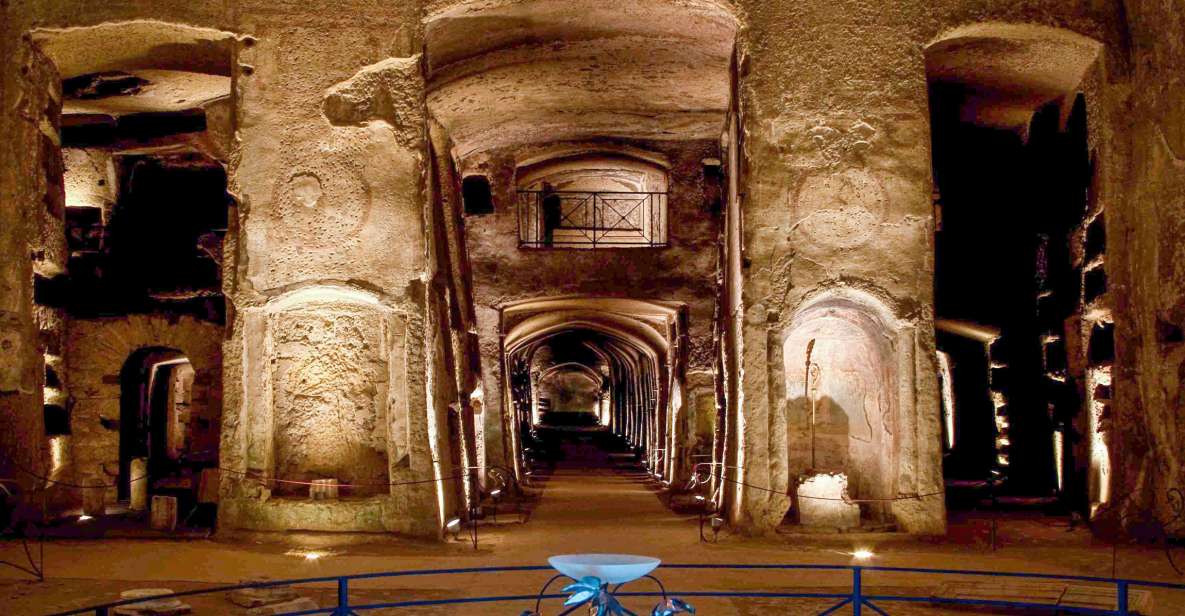
Yes, if you want Naples in a form that most first-time visitors miss. The payoff is the art plus context: you’ll leave with a clearer timeline (3rd-century decoration through Byzantine-era work) and a sense of how the patron-saint story shaped the city below the streets.
I’d only hesitate if mobility is a concern or if you’re hoping to document everything with your camera. Otherwise, this is a strong value stop—especially because your ticket stretches beyond one tour with access to San Gaudioso and Santa Maria della Sanità later.
FAQ
How long is the guided tour?
The Catacombs of San Gennaro visit runs for about 45 minutes, and the guided portion is listed as around 50 minutes.
Where do I meet for the tour?
Meet at reception at the Catacombs of San Gennaro, Via Capodimonte, 13, 80136 Naples.
What’s included besides the Catacombs of San Gennaro tour?
Your ticket includes entry for you to later visit Catacombs of San Gaudioso and the Basilica di Santa Maria della Sanità, with validity for 12 months, plus a live guide for the main tour.
What languages are available?
The live tour guide is available in English and Italian.
Is there a photo policy inside the catacombs?
Photos are not allowed during the visit.
Can I cancel for a refund?
You can cancel up to 24 hours in advance for a full refund. Tickets are not refundable after that.