REVIEW · NAPLES
Galleria Borbonica Entrance Ticket in Standard Route
Book on Viator →Operated by Galleria Borbonica · Bookable on Viator
Naples under your feet sounds like a movie set, but it is real. Galleria Borbonica is a guided underground walk that turns a busy city into a quiet set of stories: tunnels, shelter history, and artifacts you cannot see above ground.
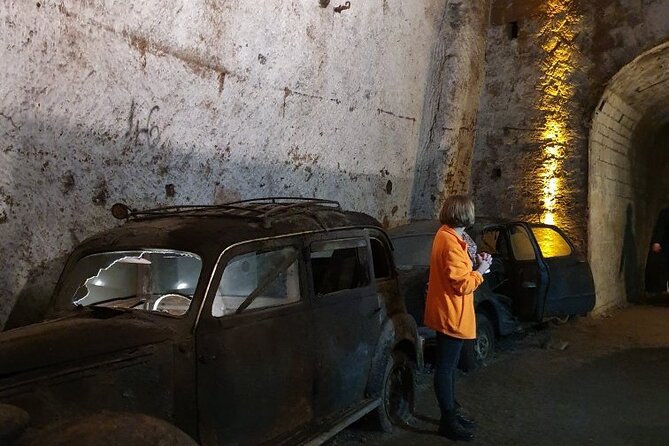
I love two things most. First, the route makes you understand how the tunnels were used over time, from a 19th-century escape plan to later wartime survival. Second, you get the thrill of seeing old vehicles preserved in the tunnels, not just hearing abstract history.
One consideration: expect tight spaces and a steep start. Even though the tour is about an hour, some parts involve narrow steps, and the guide voice can feel hard to catch in echoing sections.
In This Review
- Key things to know before you go
- Entering the Bourbon Tunnel: what that descent feels like
- The World War II air-raid shelter stories you will actually remember
- Artifacts in the tunnels: old cars and everyday objects
- Your itinerary on the standard route: what to expect step by step
- Stop 1: Galleria Borbonica and the Bourbon Tunnel entry
- You may exit at a different point than you enter
- Shop or museum time at the end may be short
- How much it costs, and why it can be good value
- Group size, guide quality, and what to do if you struggle to hear
- Who should book the standard route (and who should pick entry #2)
- Should You Book the Standard Route?
- FAQ
- FAQ
- How long is the Galleria Borbonica standard route tour?
- Where is the meeting point for this standard route?
- Is the tour guided?
- What is included in the ticket price?
- What is not included?
- Which entrance should I use if I’m claustrophobic or have walking issues?
- Is the tour accessible for children?
- What’s the age pricing for this ticket?
Key things to know before you go
- Two different entrances exist, and the “right one” matters (Vico del Grottone vs. Via Morelli).
- World War II shelter history is a major focus, including how locals used the tunnels during the conflict.
- Steep descent up front: it starts with a staircase and ramps before things ease out.
- Standard route is about 1 hour with a professional guide in English or Italian.
- Smallish max group (50) helps, but narrow walkways still mean you may feel crowded at bottlenecks.
- Exit may differ from entry, so plan for a finish near a public car park.
Entering the Bourbon Tunnel: what that descent feels like
The main idea of the standard route is simple: you head underground into Naples and follow a guided path through spaces that have served wildly different roles. The entrance area is by the Plebiscito Square side of town, with the Bourbon Tunnel accessed from Vico del Grottone 4. From there, you descend through a staircase with 8 ramps and about 33 yards down into the Chiaia district beneath you.
That steep opening is not a minor detail. Several parts of the experience start off narrow and vertical, so I treat this like a mini workout plus a history lesson. Wear comfortable shoes you trust on steps, and plan to take it slow on the first section. The experience info also recommends a sweater, which makes sense because underground spaces can feel cooler than the street.
If you feel worried about claustrophobic moments or you have walking issues, entry #2 is recommended. Entry #2 is Via Domenico Morelli 40, accessed through the crosswalk of Quick parking. The idea here is that you can choose a starting point that better matches your comfort level, even if you will still be navigating underground corridors and steps during the walk.
You can also read our reviews of more tours and experiences in Naples
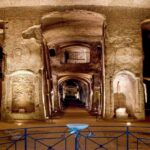


The World War II air-raid shelter stories you will actually remember
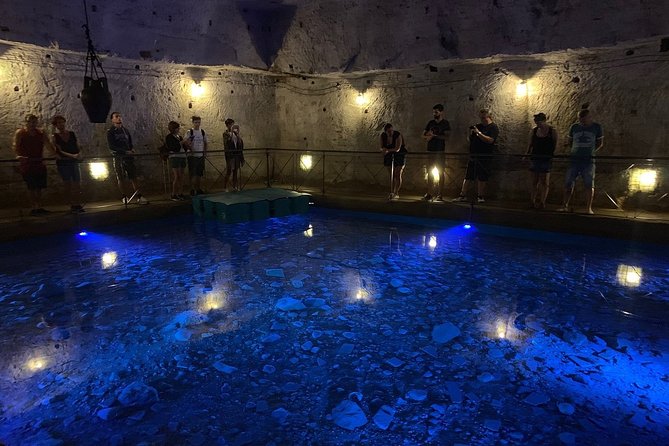
A big draw here is the way the guide ties the tunnels to real life during hard times, especially around World War II. You are not just touring a set of dusty hallways. You are guided into an area described as an air bomb shelter from the war, and you hear how residents and systems used the space when Naples needed protection and function.
You also get a layered timeline rather than a single straight line. The Bourbon Tunnel began life as an escape concept. In 1853, Ferdinand II of Bourbon built it out of concern about a rebellion, and he wanted a route from the Royal Palace area down to a barrack location that is now known as Via Morelli (originally referred to as Via della Pace at the time). The work was not finished as first planned, and later the tunnel’s role shifted again during the second World War, when residents used it as a military hospital. After that, it became associated with a Hall Judicial Deposit. In other words, the tunnel carries multiple identities.
The physical setting also reinforces the story. The wartime period left its mark even in the subsoil, which is a subtle way of saying: this place looks and feels like it has survived something, not like it was created for tourists. That authenticity is why I think this tour sticks better than more polished attractions.
Artifacts in the tunnels: old cars and everyday objects
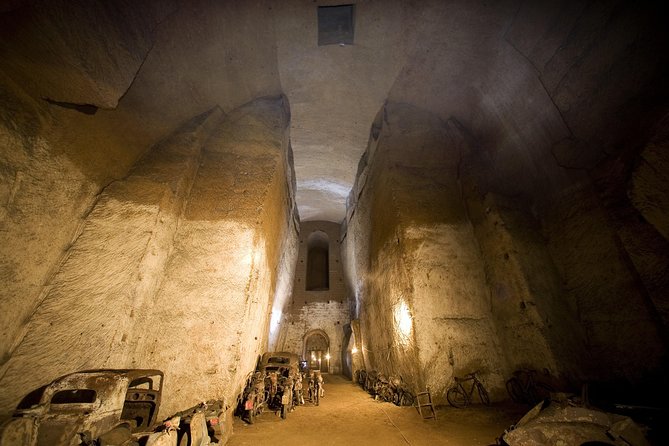
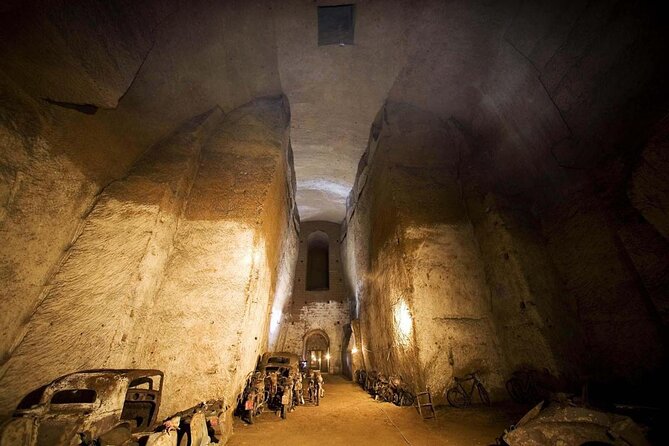
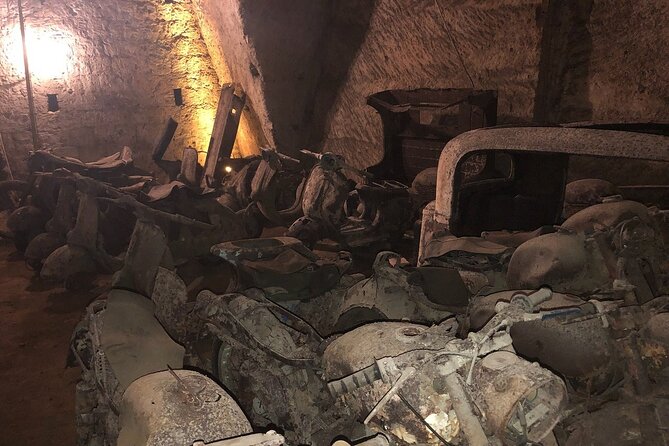
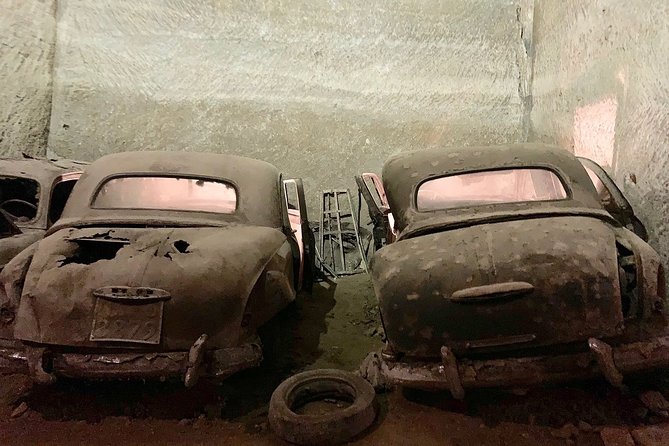
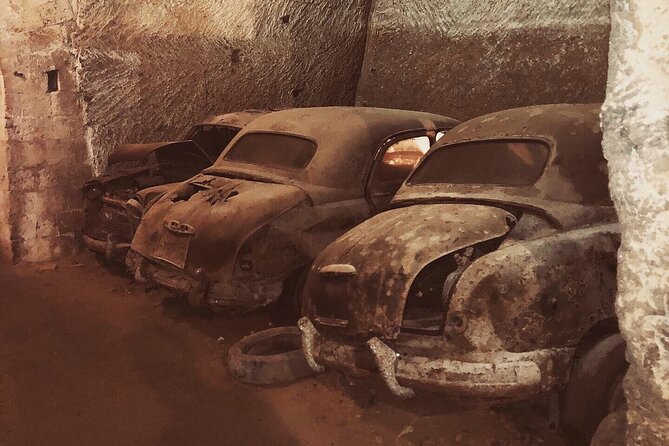
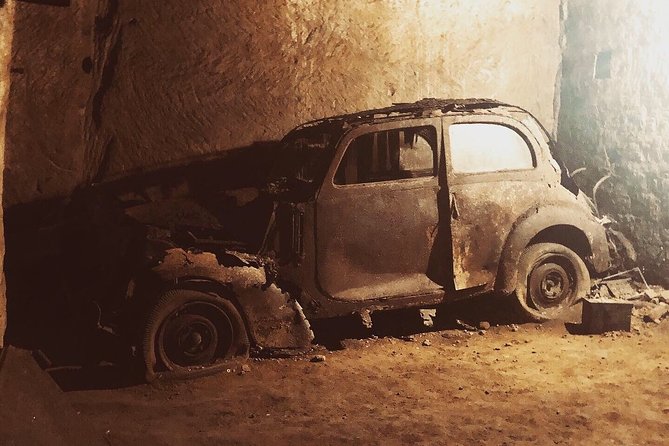
One of the most fun parts of the standard route is that it does not stay purely academic. The tour shows artifacts from the tunnel’s past uses, including old cars and other items that you would never picture underground in Naples.
Seeing vehicles in a subterranean space does a simple thing to your brain. It makes the tunnel’s timeline feel tangible. You stop thinking of it as a “historical site” and start thinking of it as a working place—used for movement, transport, and storage at different times. The result is that the tour becomes more than a lecture: it becomes a visual puzzle you solve with your guide.
There can also be photo opportunities along the way. The tunnel is a tight environment, so I would treat photos as part of the experience rather than your primary mission. Your best shots will happen when you pause at points where the guide wants you to look closely at an object or a detail.
Your itinerary on the standard route: what to expect step by step
The standard route is about 1 hour on foot with a guide. It focuses on one main underground circuit through the Bourbon Tunnel network, with the key stop being the Galleria Borbonica itself.
Stop 1: Galleria Borbonica and the Bourbon Tunnel entry
You start at the tunnel entrance and follow the guided route through descending stairways and ramps. Early on, you are moving from street level into a confined underground system, so the pace feels a bit different than typical city walking tours. At first, you will likely feel the geometry of the place: narrow corridors, steep sections, and moments where you cannot fully “spread out.”
As the guide leads you deeper into the story, the walking becomes easier in many segments. Several people describe that after the initial steep and twisty steps, the route is more manageable. Still, narrow walkways can slow the group. If you are sensitive to crowding, I suggest arriving early enough to settle your nerves and get in line without rushing.



You may exit at a different point than you enter
Another detail that matters: the entry point is not necessarily where you exit. The experience may have you finish at another end of the tunnel network, and the exit can be through a public car park with limited signage. This is not a problem once you know it’s coming, but it can feel confusing in the moment if you assume you will come back out at the exact same spot.
My practical advice is to keep your phone handy for navigation, and take note of the general area you are leaving from. Then, plan your next stop around where you end the tour rather than where you think you might end up.
Shop or museum time at the end may be short
There is a chance you will want more time at the end—especially if you are curious about the artifacts and displays near the exit. Some tours run right up to the scheduled window, which can limit time to browse at the end. I would treat the guided circuit as the main event and plan any extra browsing as optional, not guaranteed.
How much it costs, and why it can be good value
The ticket price is $18.14 per person for this standard route, and the tour runs about an hour. That pricing is attractive when you think about what you are paying for: professional guiding, a guided walk into underground tunnels, and access to an experience that changes your perspective on the city.
Booking is often done about 13 days in advance on average, which tells me this is one of those Naples activities that fills up, especially during busy seasons. Since the group maximum is 50, you are not likely to feel like you are inside a bus tour. But you still can face congestion at bottlenecks, so buying ahead helps you get a good time slot and keeps your day organized.
Language is also part of the value. You can get a guide in either English or Italian, which is a real advantage if you want the explanations rather than a self-guided walkthrough.
Group size, guide quality, and what to do if you struggle to hear
The experience includes a professional guide, but the underground setting changes how sound travels. Echo can make it harder to catch every word, particularly in restricted spaces. Some visitors point out that group size can get large enough that the guide starts commentary before everyone is present. Add narrow walkways, and it can feel like you are walking while listening, instead of listening while walking.
There is also a common practical snag: if your guide speaks quickly, or if their volume is hard to project through echoes, you may miss a few details. The tour info does not mention headsets, so if audio clarity is important to you, bring patience and ask questions when you get a clearer moment.
On guide quality specifically, the names Roberto, David, and Sabrina show up in examples of guides being praised for clear English and for turning the tunnels into a story you can picture. I cannot guarantee which guide you will have, but it does suggest the operator can deliver strong interpretation when the group is ready to listen.
Who should book the standard route (and who should pick entry #2)
This tour makes the most sense if you like history told with your feet on the floor. If you enjoy WWII stories, underground engineering, or seeing real artifacts like vehicles, you will likely get a lot out of the standard route.
I also think it is a great break from Naples heat, since you trade sun exposure for cool underground air. People have described it as an escape during hot weather, and the route’s length fits well into an active travel day.
If you have walking limitations or you get nervous in tight spaces, entry #2 (Via Domenico Morelli 40) is specifically recommended. For claustrophobia, I would not treat this as “maybe okay.” It is an underground tunnel with narrow passages and steep movement. Choose the starting point that the operator recommends for comfort, and go slow on the first descent.
For very young kids, the steep, twisty step sections may be more challenging than the hour-long duration suggests. I would plan around the physical demands, not just the time on the ticket.
Should You Book the Standard Route?
Book it if you want a Naples experience that feels different from the usual churches-and-streets loop. For about an hour, you get a guided underground walk that connects Ferdinand II’s tunnel plan, later WWII uses as a military hospital and air shelter, and visual artifacts like old cars.
I would skip or reconsider if you know stairs and tight spaces are a problem for you, or if you hate the idea of ending somewhere slightly different from where you start. If you do book, choose the entrance that matches your comfort, wear sturdy shoes, and show up with time to get oriented before your tour begins.
FAQ
FAQ
How long is the Galleria Borbonica standard route tour?
It’s listed at about 1 hour.
Where is the meeting point for this standard route?
The ticket redemption point is Vico del Grottone, 4, 80132 Napoli NA, Italy.
Is the tour guided?
Yes. It includes a professional guide in either English or Italian.
What is included in the ticket price?
The ticket includes admission and the professional guide.
What is not included?
Food and drinks, transportation to/from attractions, and anything else not mentioned as included.
Which entrance should I use if I’m claustrophobic or have walking issues?
Entry #2 is recommended for people who are claustrophobic and for people with walking issues. It’s accessed at Via Domenico Morelli 40.
Is the tour accessible for children?
Most travelers can participate. There are free admission ages 0-10, reduced price for age 11–13, and you should be aware the route includes steep narrow steps.
What’s the age pricing for this ticket?
Free admission is for ages 0–10. Reduced price is €5 for over 75 and for age 11–13.