REVIEW · NAPLES
Naples: Spanish Quarters Underground Guided Tour
Book on GetYourGuide →Operated by Associazione culturale LAES · Bookable on GetYourGuide
Naples goes underground, and you feel it. This Spanish Quarters tour takes you beneath the streets into Underground Naples, where darkness, tunnels, and old stone stories change how you see the city. I love how quickly the walk turns into a real sense of place, not a museum stop.
I also love the story arc: Greeks, then later changes over centuries, ending with how the aqueduct and passages were used as an air-raid shelter during World War II. Guides like Alex and Eduardo are known for mixing facts with humor while you negotiate narrow corridors and stairs. The catch is that it is not right for everyone: if you deal with claustrophobia or have mobility issues, skip it.
In This Review
- Key Points Before You Go
- Getting Started in the Spanish Quarters: Where the Tour Begins
- First Steps Underground: Darkness Changes Everything
- How the Route Tells Naples’ Story: Greeks, Aqueducts, and WWII Shelter
- The Neapolitan Aqueduct Stop: Wall Writing and Water Channels
- Stairs and Tight Passages: The Reality Check You Should Know
- Guide Energy: Why Names Like Alex, Eduardo, and Grazia Keep Coming Up
- Price and Time: Is $17 for 1 Hour Real Value?
- Practical Logistics: Meeting Neatly, Starting Confidently
- Who Should Book This Tour (and Who Should Skip)
- Should You Book the Naples Spanish Quarters Underground Tour?
Key Points Before You Go
- You’ll walk real tunnels in Underground Naples, with darkness playing a big part of the experience
- History runs through your route, from early Greek-era changes to WWII use as shelter
- The Neapolitan Aqueduct is a standout, including old markings and wall writing
- Guides work around comfort needs with wider “bypass” routes when possible
- Plan for stairs and tight squeezes, even though the tour lasts only 1 hour
- Meeting point is very central near Toledo and Plebiscito Square (metro Toledo, funicolare Augusteo)
Getting Started in the Spanish Quarters: Where the Tour Begins
Meet at vico S. Anna di Palazzo 52, in the Spanish Quarters area, close to Toledo Street and Plebiscito Square. This matters more than it sounds. Naples feels best when you start in real neighborhoods, not out by a parking lot somewhere. From here, you’re already in the kind of streets that make the underground history make sense.
Your group gathers, then you get a short intro before you head in. That intro isn’t fluff. It gives your brain something to hold onto while you start walking into low, stone-heavy spaces. The guides also set expectations about what you’ll see and how the tunnels connect, so you’re not just following a string of doors and corners.
And yes, the time stays tight: the tour runs about 1 hour total. That’s a good length for something physical like this. You get the full experience without turning it into a half-day project.
You can also read our reviews of more guided tours in Naples

First Steps Underground: Darkness Changes Everything
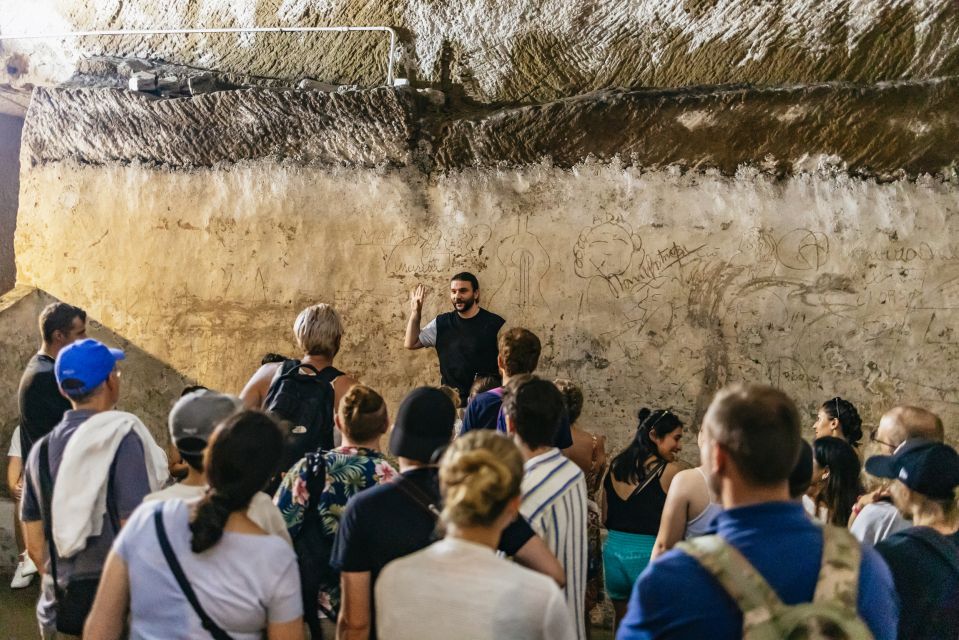
Once you pass beneath the streets, your eyes need a moment. That’s built into the experience. The tour is designed so you begin with the basic feeling: the city above you is suddenly gone, and you’re in a different Naples layer made of rock, water routes, and survival engineering.
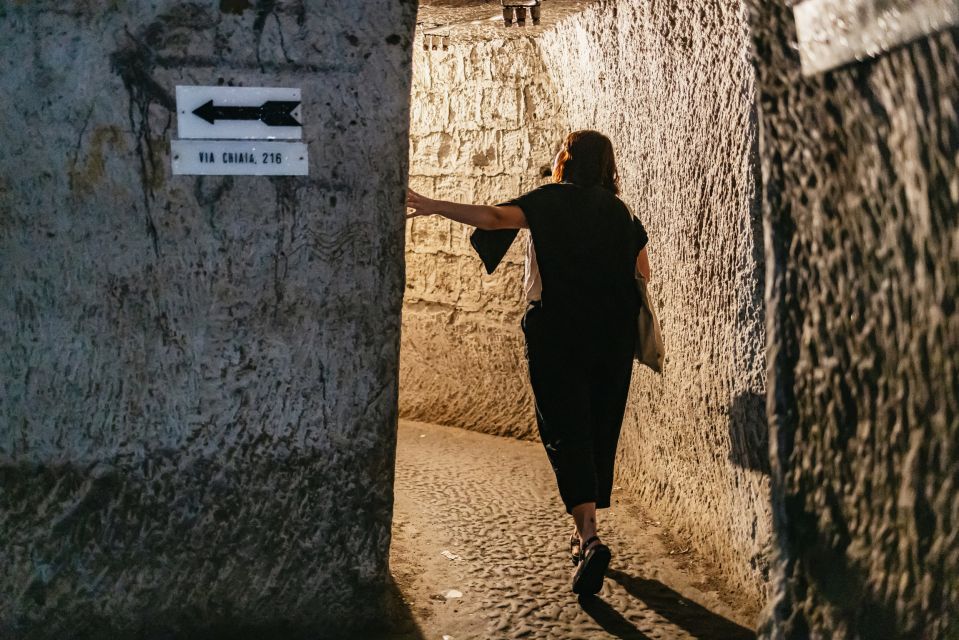
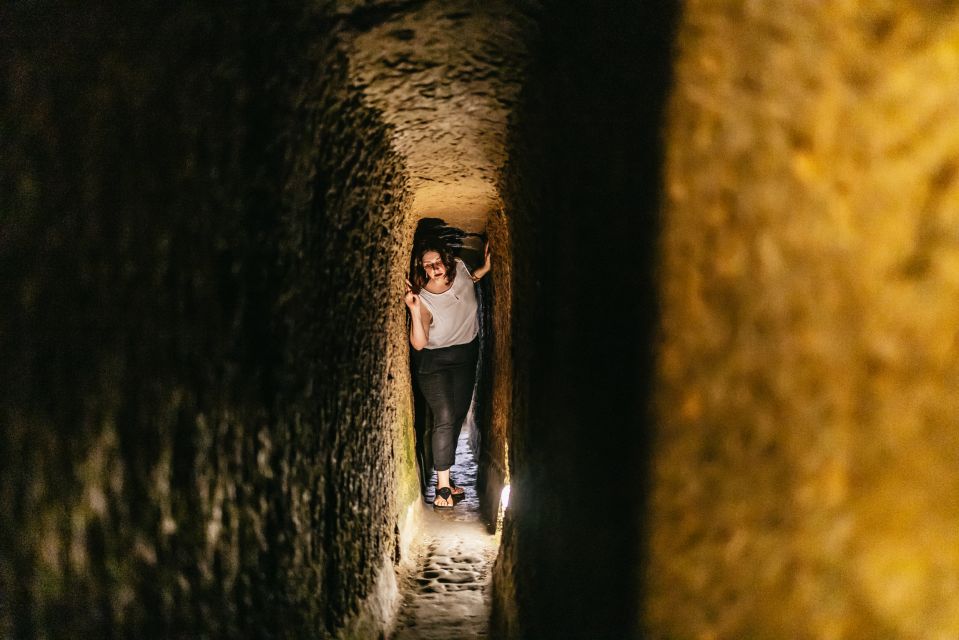
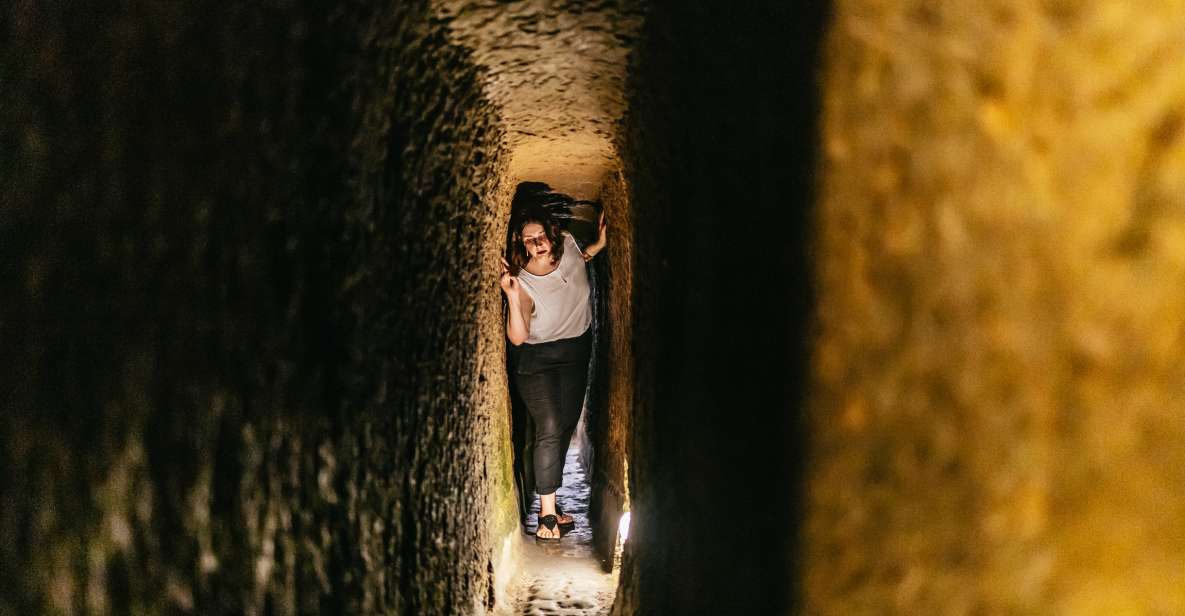
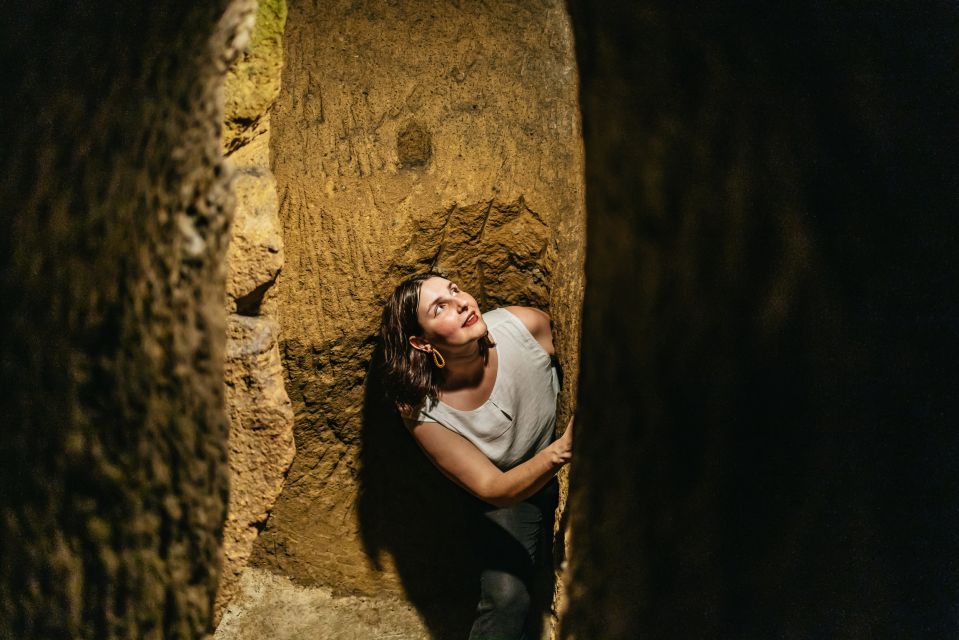
You’ll walk winding tunnels and historic corridors, and at points the route gets cramped. More than once, guides steer the group through narrow sections while keeping the pace comfortable. The goal is to make you slow down just enough to notice details: stonework lines, passage directions, and the way water would have moved through these spaces.
One thing I really like about this format is the way it turns “Naples history” into something physical. Instead of staring at an artifact, you’re moving through the same kind of space people used to move through. Your body understands the place faster than your mind alone ever could.
Expect the underground to feel damp and cool, even if Naples is warm above. If you like cold stone and the smell of age, you’ll be in your element. If you don’t, just go prepared with the right mindset: short, guided segments, then a return to daylight.
How the Route Tells Naples’ Story: Greeks, Aqueducts, and WWII Shelter
The tour’s main “plot” is history told by movement. You start in the Spanish Quarters, then you walk down into spaces that reflect how Naples changed over time. The guide explains how the city developed and transformed across eras, including early Greek influence and later infrastructure work.
Then the route pivots toward the Neapolitan Aqueduct system. This is where the story becomes practical. An aqueduct wasn’t only about water. It was about control, supply, and shaping how people lived in the city above. Seeing the passages and channels gives you a better sense of what those systems meant for daily survival.
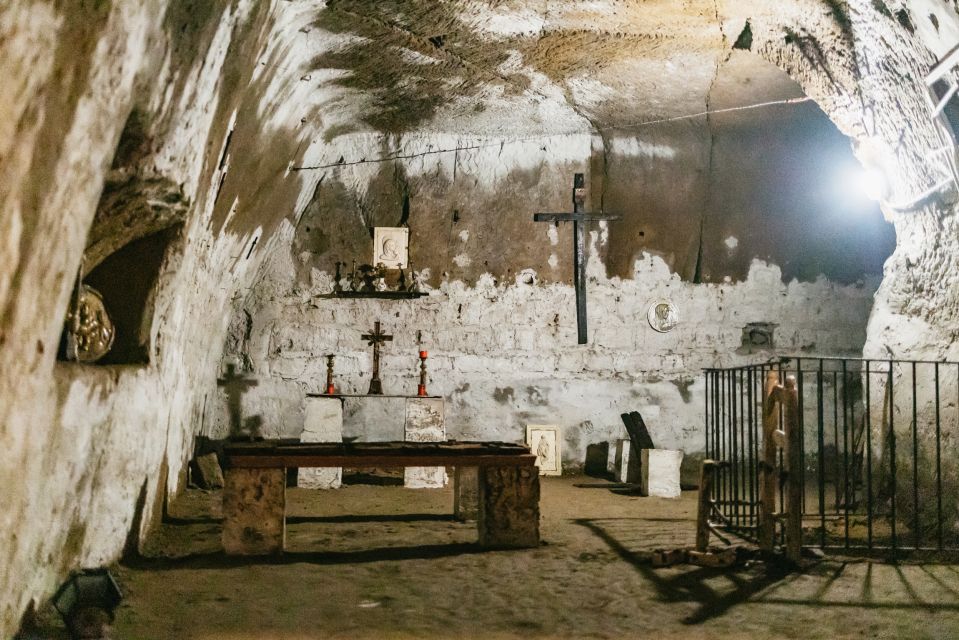
The standout moment is the WWII connection. In these underground spaces, the aqueduct and tunnels were later adapted as an air-raid shelter. You’ll hear how the city used the underground for safety when the modern world came knocking with bombs. That part lands because you’re standing in the exact kind of environment people would have relied on—tight corridors, low visibility, and the need to stay calm while moving through dark space.
Guides tend to emphasize how these spaces were used, reused, and repurposed. That makes the underground feel less like a single era snapshot and more like a long-running Naples system that kept taking on new roles.
The Neapolitan Aqueduct Stop: Wall Writing and Water Channels
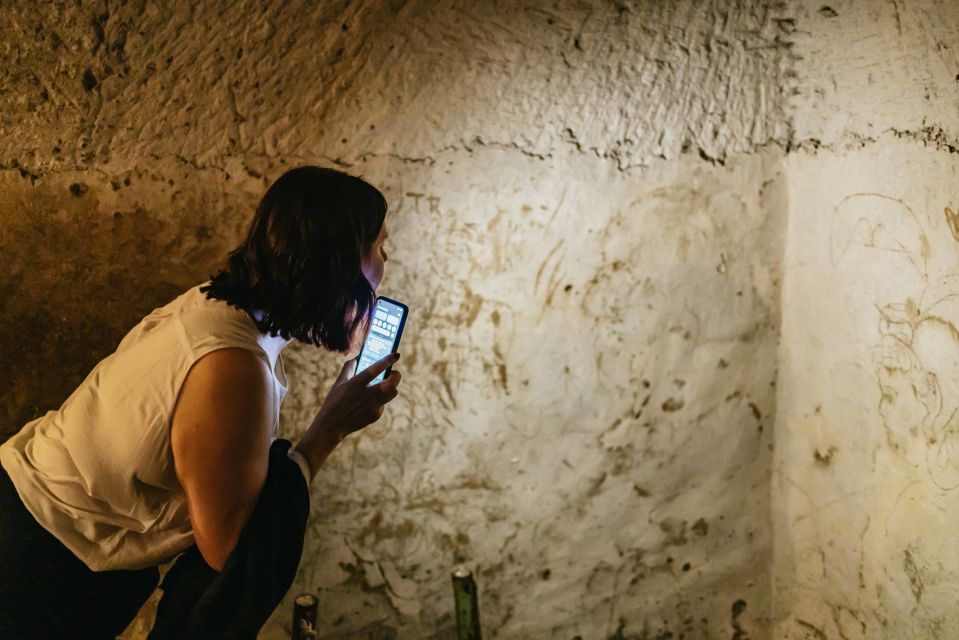
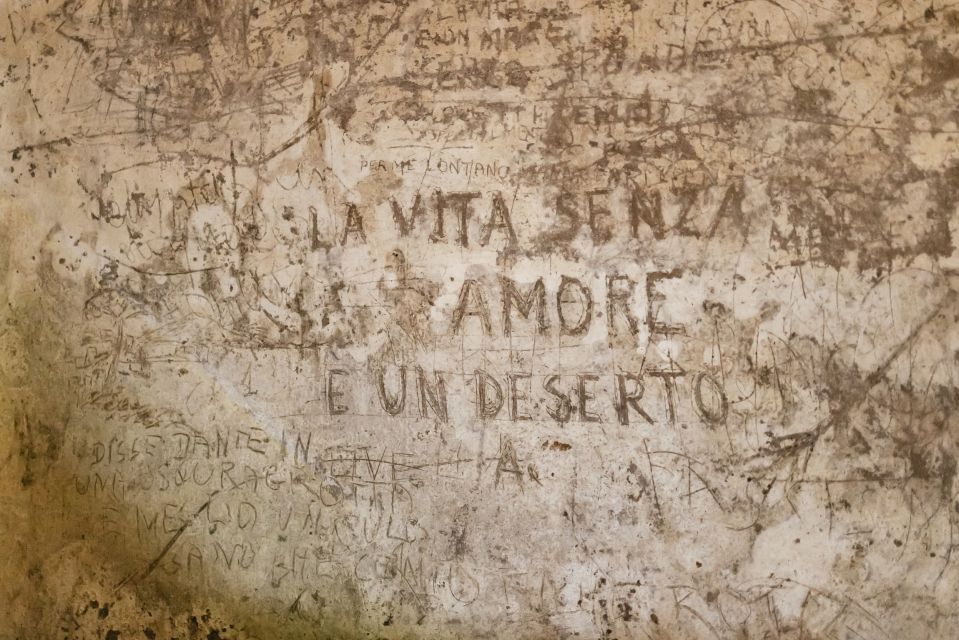
The Neapolitan Aqueduct visit is the tour moment you’ll remember when you’re back above ground. You’re not just looking at an old structure—you’re studying how the infrastructure worked and how people left traces around it.
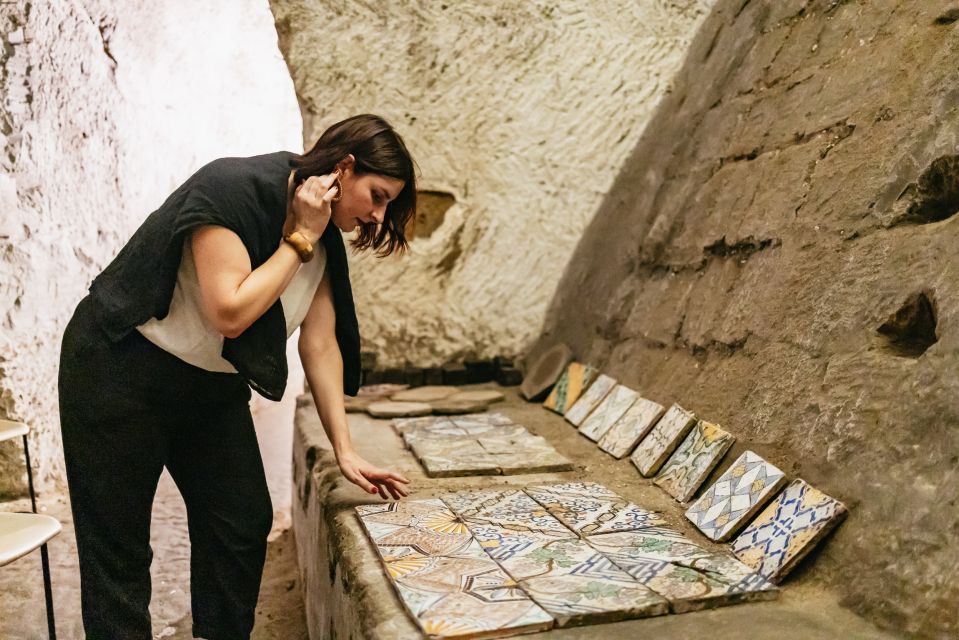
The tour highlights include walking past the aqueduct and studying old writing on the walls. You may also see marks and evidence tied to human use over time, not just construction. It turns the tunnel into a page, and the guide helps you read it.
This stop is also where the tour becomes less about “where are we” and more about “what was happening here.” Aqueduct channels connect to the idea of water management, but the underground setting adds a layer of emotion: the same stones that carried water also sheltered people. That contrast gives this experience real weight without turning it into heavy propaganda.
If you like practical history—how cities solve problems—this is the section for you. And if you like storytelling, guides usually slow down here, because it’s hard not to.
Stairs and Tight Passages: The Reality Check You Should Know
This tour comes with a clear physical reality. It is not suitable for:
- people with mobility impairments
- people with claustrophobia
- wheelchair users
Even beyond that official guidance, the walking style matters. Expect steps down and back up, plus narrow corridors. Some routes can be tight enough that you’ll naturally watch your footing and spacing. One review notes that when someone is claustrophobic, the guide can accommodate with larger tunnels as bypasses. That’s a useful detail. It suggests there is some flexibility in how the route is handled.
But don’t count on it. The overall experience is still underground walking through constricted spaces. If you struggle with enclosed rooms, go in only if you’re confident you can stay calm when the ceiling gets low.
What to wear is simple. Bring comfortable shoes with grip. Wear clothes you don’t mind brushing against stone. If you’re traveling in layers, keep it light; the temperature shift can be noticeable underground, but you don’t want a bulky setup you’ll regret on stairs.




Guide Energy: Why Names Like Alex, Eduardo, and Grazia Keep Coming Up
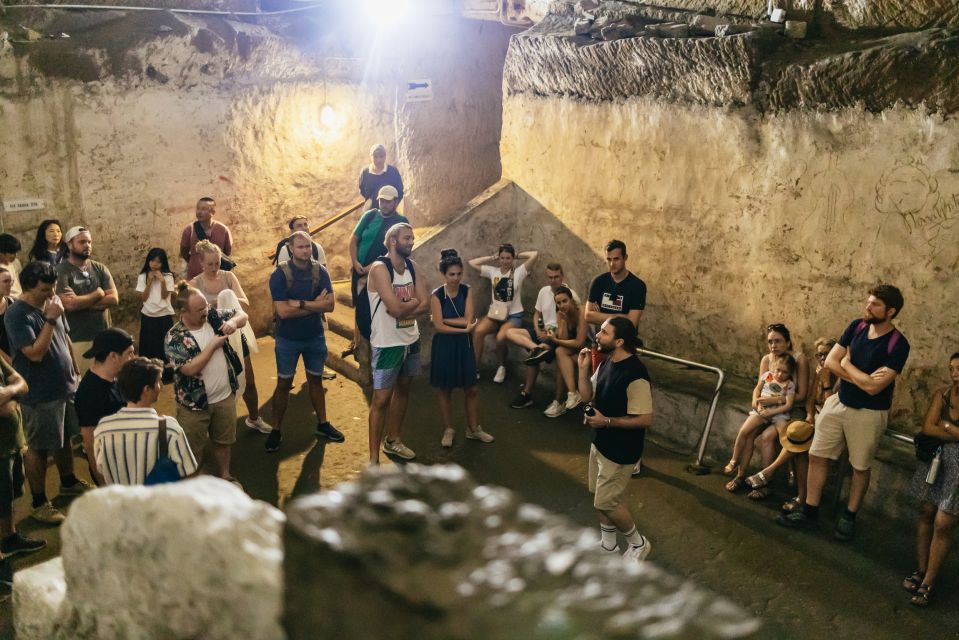
A big reason people rate this tour so highly is the guides. Names show up again and again: Alex, Edwardo/Eduardo, Alessandro, Grazia, Marco, Giulia, Massimo, and Marko. That tells you something. This is not “stand and recite.” The guides are mixing facts with performance.
Humor is a recurring theme. You can expect stories told with timing, and occasional playful references if the group engages. One guide has been noted for Scottish-style bits when asked, and another for laughs that keep the mood light in tight spaces. The point isn’t jokes for their own sake. It’s emotional support. Underground walking can feel intense fast, so the humor keeps people steady.
Also, good guides manage the group. They steer people through narrow sections and keep the flow moving. One review praises how the group was looked after, even in small passages. Another notes how a guide made the experience entertaining while still explaining history clearly.
If you like a lively guide—someone who makes you pay attention—you’ll likely enjoy this tour more than a quiet, self-guided option.
Price and Time: Is $17 for 1 Hour Real Value?
At $17 per person for about 1 hour, this is priced like a short activity, not a full-day commitment. The value comes from two things combined:
1) Guided access to Underground Naples, not just wandering on your own
2) A route that includes both tunnels and the Neapolitan Aqueduct
One-hour tours work best when the content is concentrated. This one feels that way. You’re guided from the start into the underground system, you get a coherent history thread, and you end back above ground before fatigue sets in.
You should also consider the setting. Underground spaces are fixed and limited. If you’re paying for entry elsewhere in Naples, the unique part here is the combination: narrow corridors, aqueduct structures, and the WWII air-raid shelter story, guided by someone who knows how to connect the dots.
If you’re visiting Naples for only a short time and you want one “different Naples” experience, this is a strong candidate.
Practical Logistics: Meeting Neatly, Starting Confidently
You’ve got good access options. The nearest metro station is Toledo (linea 1) and the closest funicolare station is Augusteo (funicolare centrale). That matters because Naples foot traffic can be unpredictable, and being able to arrive without stress improves your start.
Plan to arrive a little early so you can find the exact spot at vico S. Anna di Palazzo 52 without rushing. The tour doesn’t list a huge buffer, and underground walking is easier when you’re not late and flustered.
Also bring your attention to the simple stuff:
- comfortable shoes
- water if you’ve been walking in the heat (but don’t overpack)
- a calm attitude if you’re sensitive to enclosed spaces
If you’re booking in advance, you can often keep plans flexible with a reserve-and-pay-later approach. It’s useful when your Naples days are still in motion.
Who Should Book This Tour (and Who Should Skip)
This tour fits best if you want:
- an underground Naples experience you can’t get from street-level wandering
- a guided history thread tied to places you walk through
- a one-hour activity with strong atmosphere
You’ll likely enjoy it if you like spooky-but-informative settings, history that connects to infrastructure, and guides who add humor while you move.
Skip it if:
- you use a wheelchair or have significant mobility limits
- you have strong claustrophobia
- you know you’ll feel panicked in tight corridors and on stairs
A good rule: if you’re unsure, don’t guess. The underground environment is part of the point, and the tour’s physical constraints are real.
Should You Book the Naples Spanish Quarters Underground Tour?
Yes, if you want a compact Naples experience with real atmosphere: tunnels, aqueduct structures, and a WWII air-raid shelter story told by guides who keep people engaged. The price for a guided, ticketed underground visit is hard to argue with, and the aqueduct stop gives the tour a satisfying “anchor” moment.
No, if enclosed spaces scare you or if stairs and narrow passages would put you in discomfort. You’ll enjoy Naples more when you choose experiences that match your body and your limits.
If this tour sounds like your kind of story—dark streets above, stone routes below—book it early and wear shoes you trust. Then let the tunnels do their job.