REVIEW · NAPLES
Herculaneum: Skip-the-Line Guided Tour with Archaeologist
Book on GetYourGuide →Operated by Askos Tours · Bookable on GetYourGuide
Herculaneum feels frozen in time. This 2-hour, archaeologist-led tour takes you through one of Italy’s best-preserved Roman cities, with skip-the-line entry so you can spend more time walking and less time queuing. You also get the big-picture story of Vesuvius—how the blast ended a wealthy port town almost overnight.
I really love the archaeologist-led style here. Guides such as Luciano, Diego, Yolanta, Anna, and Roberta are described as funny and intensely passionate, and they connect what you’re standing on to how people actually lived. I also like that you get a real preservation lesson: you’ll see carbonized wood and surviving art like ceramics, paintings, and mosaics, not just ruins that feel like piles of stone.
One drawback to plan for: the site is vast and exposed, so the pace can feel quick even though the tour is only 2 hours. Also, the ruins are not a good match for wheelchair users or anyone with mobility limitations, and you’ll want to stay fairly close to hear the narration through the headsets.
In This Review
- Key things to know before you go
- Herculaneum vs Pompeii: why this buried city feels calmer
- Meeting at the ticket office: getting started without wasting daylight
- Your 2-hour route: what you’ll actually see
- Archaeological Site of Herculaneum: the port town story first
- Casa dei Cervi: a house you read like a map
- Casa di Nettuno ed Anfitrite (House of Neptune and Amphitrite): myth used for status
- House of Skeletons: the tragedy becomes specific
- Casa dell’Albergo and Casa del Salone Nero: rooms that show comfort and control
- Sacellum of the Augustales (Temple of the Augustales): religion as public identity
- Thermal baths, gymnasium, forum: the public heartbeat of Ercolano
- What preservation teaches you: why art looks different here
- Guides and headsets: how to get the most from the 2 hours
- Price and value: what $53 buys you in real terms
- Who should book this tour
- Practical checklist for your day at Herculaneum
- Should you book Herculaneum skip-the-line with an archaeologist?
- FAQ
- How long is the Herculaneum skip-the-line guided tour?
- What is included in the tour price?
- Where do I meet the guide?
- What languages are offered for the live guide?
- What should I bring to the ruins?
- Is the tour suitable for wheelchair users?
Key things to know before you go
- Skip-the-line access means you start sooner and lose less time to entrance bottlenecks
- Archaeologist guides (often named Luciano, Diego, Yolanta, Anna, Roberta) turn the site into a story you can picture
- Headsets are included, which helps you keep up in a larger crowd
- Herculaneum is more tranquil than Pompeii, with a compact layout that makes details easier to catch
- You’ll focus on standout houses and civic spaces, including Casa dei Cervi and the House of Neptune and Amphitrite
Herculaneum vs Pompeii: why this buried city feels calmer
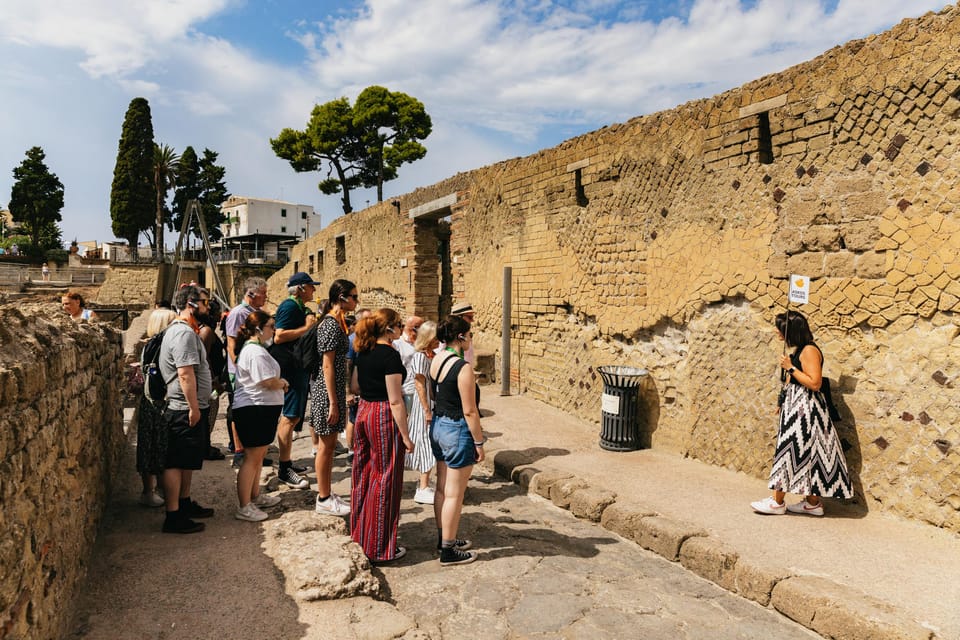
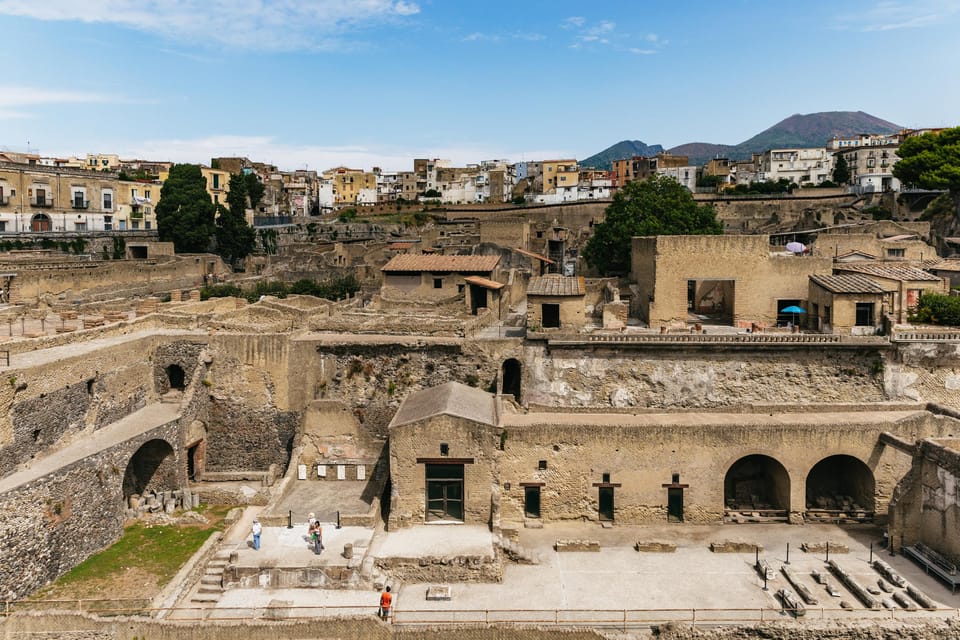
If you already know Pompeii, Herculaneum is a smart second stop. Pompeii tends to feel louder: lots of open areas, big crowds, and wide streets. Herculaneum, by contrast, is easier to approach as a town you can almost step back into—smaller, more intact in places, and full of details that survive on the original surfaces.
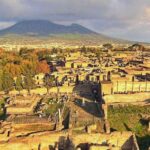
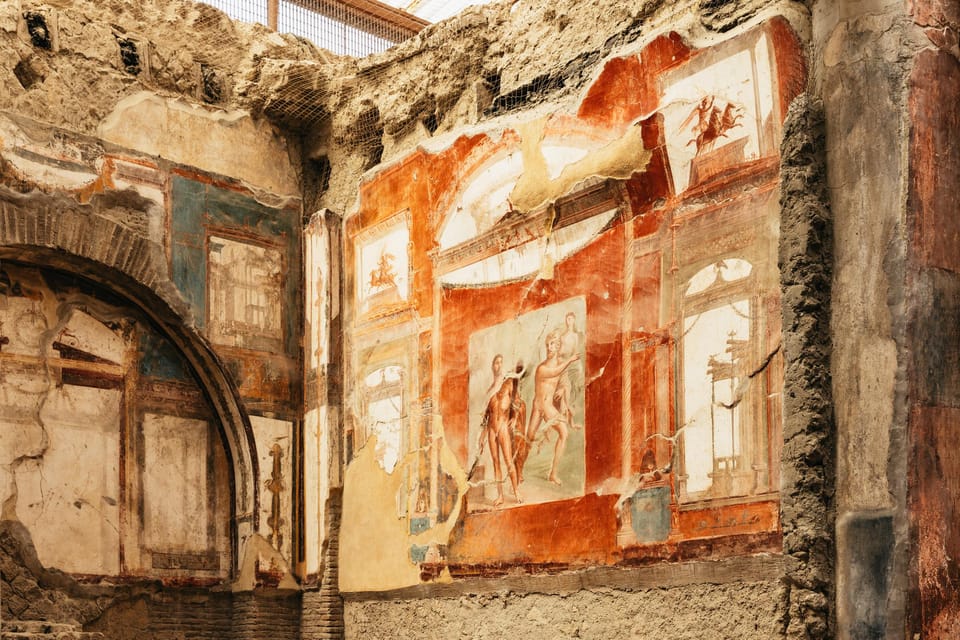
What makes it so gripping is the type of destruction. This was not just a random disaster. The eruption of Mount Vesuvius nearly 2,000 years ago buried Herculaneum fast. You’re not only seeing “what survived.” You’re also seeing how different materials survived. That’s why ceramics, paintings, and mosaics can look astonishingly preserved, while other items can appear in darker, carbonized forms.
And yes, you’ll hear comparisons between what happened at Herculaneum and what happened at Pompeii. The contrast is part of the value of doing both sites, and it often comes up naturally as the guide points from one preserved feature to the next.
You can also read our reviews of more guided tours in Naples

Meeting at the ticket office: getting started without wasting daylight

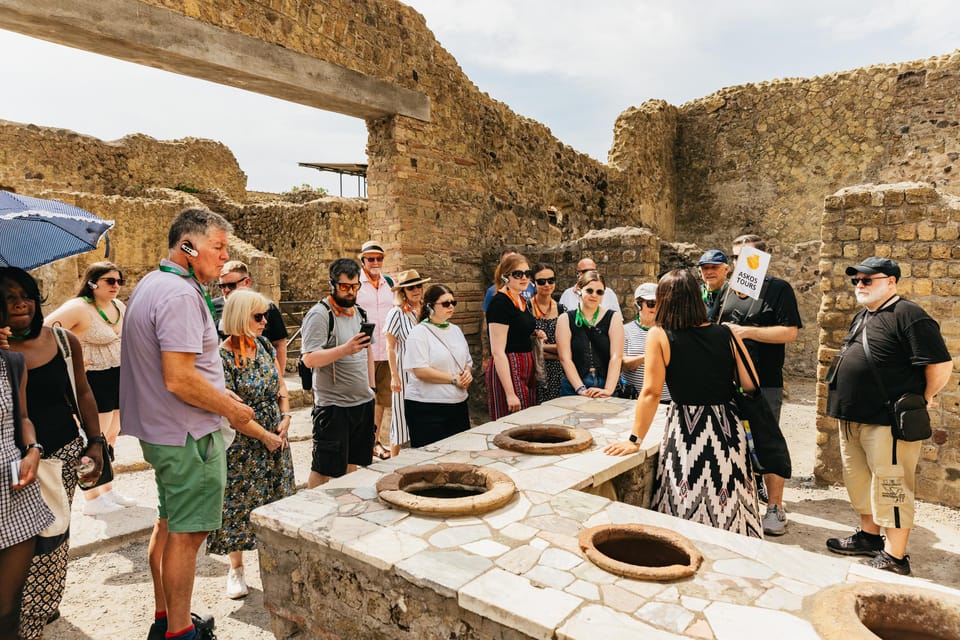
The meeting point is the ticket office of the Herculaneum Ruins. Your guide holds an Askos Tours sign. The pickup area can be near Via dei Papiri Ercolanesi, but the practical rule is simple: go to the ticket office and look for the sign.
Logistically, this tour works well because it includes skip-the-line access. When you’re visiting a high-demand site, the entrance queue can eat into your best hours. Here, you pay partly to buy back time, so you can start moving through the city instead of standing still.
You’ll also get headsets. That matters because the narration is part of how the site makes sense. If you drift off too far or you’re slow to follow the group, audio can drop. It’s not a big deal if you stay close, but it’s something to know.
Your 2-hour route: what you’ll actually see
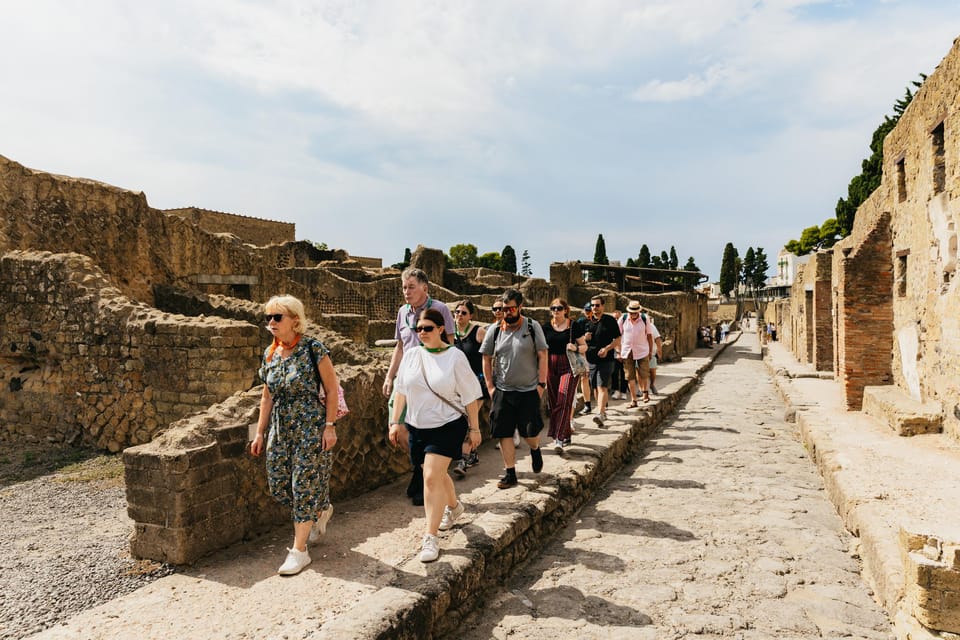
This tour is built to cover the strongest highlights without turning into a marathon. You move through key neighborhoods and homes, then shift to civic and religious spaces. Expect a guided walk that includes a mix of “wow” visuals and practical explanations—how rooms functioned, what the decoration tells you, and how the eruption changed what you see today.
Here’s the order and vibe, in plain terms:
Archaeological Site of Herculaneum: the port town story first
You start at the Archaeological Site of Herculaneum, where your guide sets the stage. Herculaneum was a port town with wealthy merchants and nobility. When Vesuvius struck, people tried to escape. The waterfront area is especially dramatic because the site includes remains of more than 300 people who died trying to flee by going to the ocean.
This first segment is where the tour earns its keep. You’re not just walking; you’re getting the framework to understand why certain houses matter and why public buildings feel different here than in other Roman sites. You’ll also hear about the mix of surviving materials: stone, marble, ceramics, along with carbonized wood and surviving art such as paintings and mosaics.
Casa dei Cervi: a house you read like a map
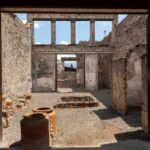
Casa dei Cervi is one of the stops that helps you feel the city as a lived space, not a museum layout. Even if you’re not a “Roman house person,” this stop usually works because it teaches you how homes were organized: what people used different rooms for, and how the design reflected status.
The key here is decoration and layout. Herculaneum preserves enough to show the contrast between ordinary daily function and the “we want to show our taste” side of Roman life. The guide should help you connect what you see—walls, floors, and architectural features—to everyday behavior.
Potential drawback: like most sites, this is also where you’ll be tempted to take endless photos. Try not to. Look first. Then snap. The guide’s explanation lands best when your eyes are on the feature they’re describing.
You can also read our reviews of more tours and experiences in Naples

Casa di Nettuno ed Anfitrite (House of Neptune and Amphitrite): myth used for status
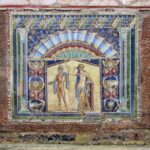
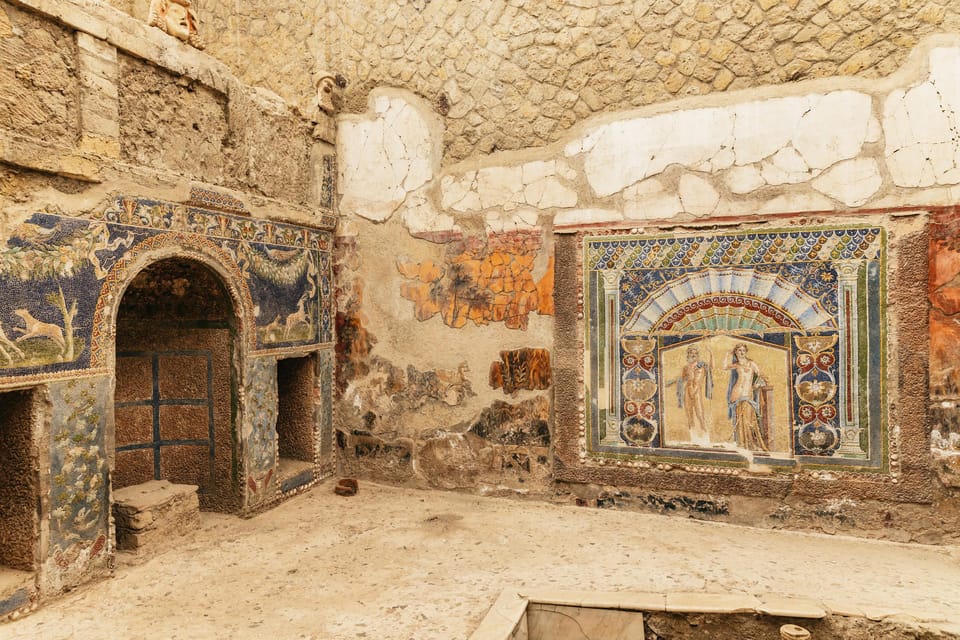
Next comes the House of Neptune and Amphitrite. This is the kind of stop that makes Herculaneum feel more human. Mythology isn’t just decoration; it’s branding. The Roman household put messages into the visual language of their spaces—especially around areas where guests would see the most.
When you visit a place like this with an archaeologist guide, you learn to notice composition and symbolism, not just beauty. You’re watching how art and architecture were used together. And because Herculaneum preserves elements like mosaics and painted surfaces, the stop can feel unusually sharp, like the house is waiting for you to understand it.
House of Skeletons: the tragedy becomes specific
The House of Skeletons is hard to look at, but that’s the point. It shifts the story from “a city” to individual lives. The name is blunt, and your guide should handle it with care—linking what you see to what people faced during the eruption.
This stop often lands emotionally, but it also helps you understand Roman risk and escape attempts. It’s not just about fear; it’s about how people tried to act under impossible conditions. If you’re pairing Herculaneum with Pompeii, this is one of the places where the differences in the disaster are often explained.
Casa dell’Albergo and Casa del Salone Nero: rooms that show comfort and control
After the emotional anchor, the tour returns to structure—homes that reflect how people built daily life.
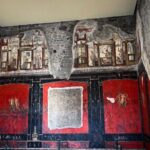
Casa dell’Albergo is a chance to see how a larger property functioned within the city. Casa del Salone Nero is another highlight that tends to reward close attention: the guide can help you interpret the layout and the significance of decorative choices.
If you like tours where the guide talks about the “why” behind the visuals, these stops are where you’ll appreciate an archaeologist-led approach. The buildings aren’t just scenic backgrounds; they’re evidence.
Sacellum of the Augustales (Temple of the Augustales): religion as public identity
Then you move to the Sacellum of the Augustales. This is where the tour expands from private living to public or semi-public religious identity. Roman religious spaces often tied together civic pride and social organization. Seeing one here helps you understand that Herculaneum wasn’t only houses and shops—it had formal communal meaning.
Your guide should connect this space to the city’s social structure, especially the role of groups that supported religion and public status.
Thermal baths, gymnasium, forum: the public heartbeat of Ercolano
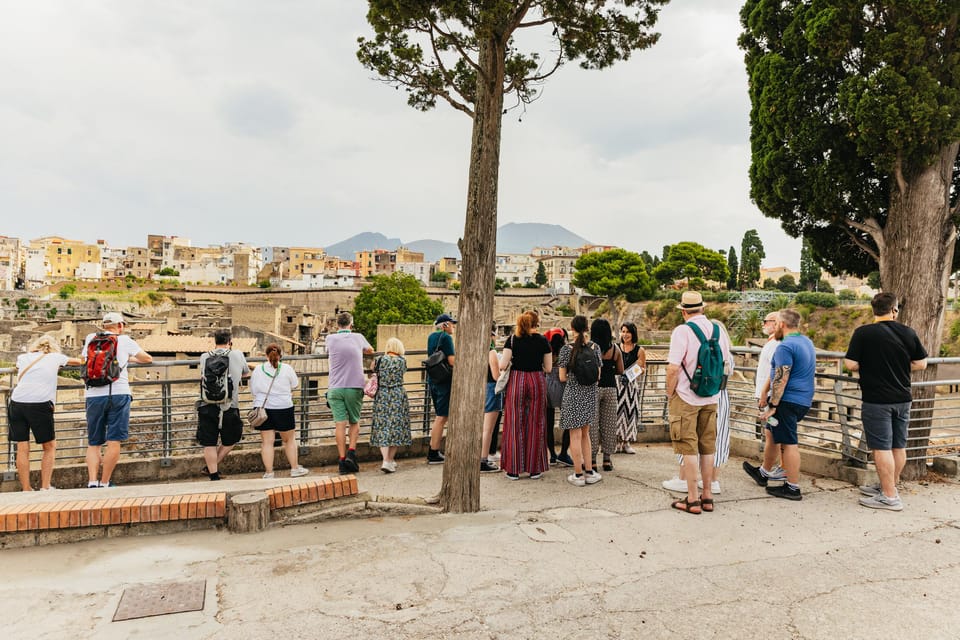
Even within a tight 2-hour window, you should expect the tour to touch major public areas such as the thermal baths and the forum, plus nearby architectural zones like the gymnasium. This is one of the reasons Herculaneum feels less like a ruin-walk and more like a city tour.
Public buildings make everything easier to picture. Homes tell you how people lived; baths and civic spaces show you how they gathered. In a buried city, that combination is powerful because preservation lets you see more than outlines. With luck and timing, the guide will also point out details tied to how these spaces worked.
One practical note: parts of the route can be very exposed. You’ll benefit from sunscreen and possibly a hat, and you’ll want closed-toe shoes. The ground can be tricky inside the ruins.
What preservation teaches you: why art looks different here
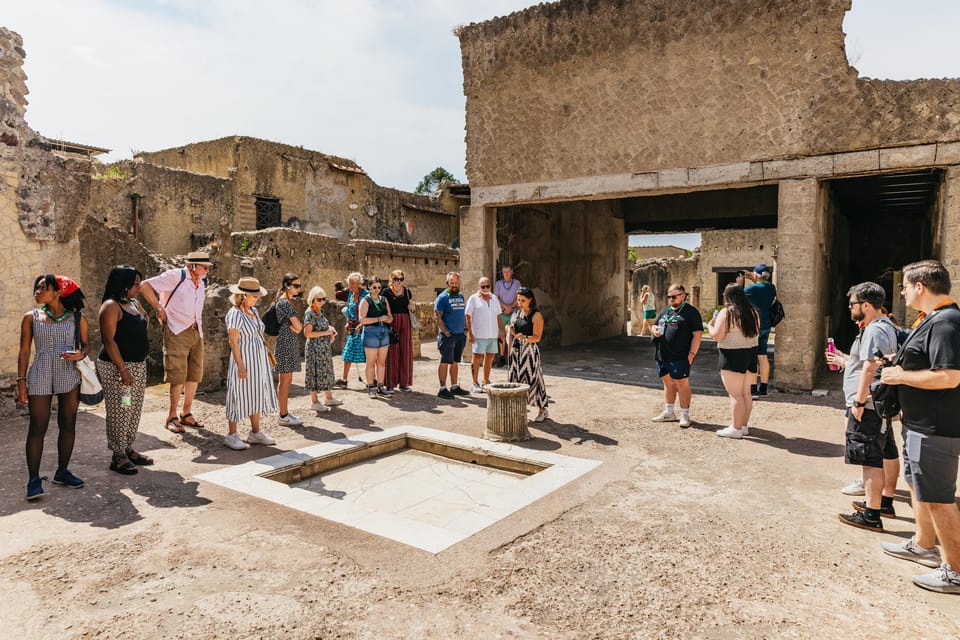
Herculaneum is famous for preservation, but it helps to know what you’re looking at. Because the eruption buried the city rapidly, some materials survived in ways that feel surprising. Stone, marble, and ceramics are often clearly visible. At the same time, you may notice carbonized wood and darker, fragile-looking traces of daily life.
Your archaeologist guide should connect those material differences to the process of burial. That’s where the tour feels worth it versus a self-guided walk. It’s not just “look, it’s intact.” It’s “here’s why you’re seeing it this way.”
In some departures, guides use photo-based explanations—like overlay images that show what the site looked like before the eruption. That kind of visual storytelling can make the site snap into focus fast.
Guides and headsets: how to get the most from the 2 hours
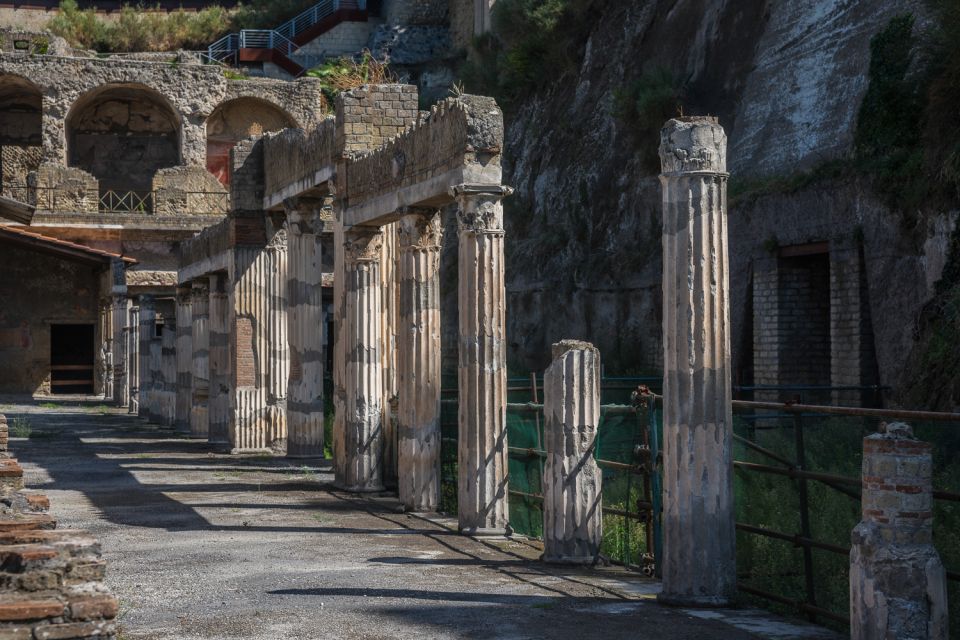
A huge number of the standout comments about this tour point to guide style: humor, clear explanations, and a genuine love for the site. Luciano is repeatedly praised, with many descriptions of fast-moving explanations and entertaining delivery. Diego, Yolanta, Anna, Roberta, and others also show up in the mix, and they’re often described as making the story feel vivid.
Two practical tips if you want this tour to go smoothly:
- Stay with the group. If you fall behind, headset audio can drop, and you’ll miss parts of the explanation.
- Don’t treat it like a sprint. The 2 hours are packed, but looking carefully makes the information stick.
Group size seems to vary. One account mentions around 15 people. If you’re sensitive to crowding, you might prefer the smaller end of whatever runs on your date.
Price and value: what $53 buys you in real terms
This tour costs $53 per person for a 2-hour visit. The big value piece is that the price includes admission fees to Herculaneum plus an archaeologist guide and headsets.
That matters because adult entry tickets are listed at 16.00 euros. So you’re not only paying for a guided talk—you’re getting the site entry bundled with the expertise and the skip-the-line convenience.
Also, because this tour includes admission, you should be able to spend time at the site after your guided portion. One way to think of it: you’re buying a fast, guided orientation first, then getting the option to linger on your own when you’re ready for slower looking.
Who should book this tour
Book it if:
- You want an archaeologist-led walk through Herculaneum’s most meaningful houses and public spaces
- You’re comparing Herculaneum to Pompeii and want the “why it differed” explanation
- You prefer a structured 2-hour plan with a guide that can explain details like art, materials, and civic life
Skip it if:
- You need wheelchair access or you have mobility limitations (this tour isn’t suitable for wheelchair users)
- You want lots of unstructured wandering inside the guided time block (this tour is built to cover highlights, not meander)
Practical checklist for your day at Herculaneum
Inside the ruins, simple prep makes a big difference:
- Wear comfortable, closed-toe shoes
- Bring sunscreen, and consider a hat
- Bring a raincoat if weather looks iffy, since the tour runs rain or shine
- Leave large luggage at home; luggage or large bags are not allowed
- Bring your passport or ID card
- If you’re traveling with kids, they must be accompanied by an adult
Also note: unaccompanied minors aren’t allowed.
Should you book Herculaneum skip-the-line with an archaeologist?
Yes, if you want your time to count. This tour’s main strength is practical: skip the entrance line, get headsets, and follow a route that hits the places that best explain how a wealthy Roman port town worked and why the eruption produced such strange preservation.
If you’re the type who learns faster with a story—someone naming buildings like Casa dei Cervi and the House of Neptune and Amphitrite while pointing out how art survives—this is a smart way to do Herculaneum. And if you’re doing Pompeii too, the guided comparison is often the part that makes the two sites click as a pair.
Just plan for the reality of the ruins: stay close enough to hear, wear the right shoes, and choose the timing that gives you room to linger when you’re done with the 2-hour guided portion.
FAQ
How long is the Herculaneum skip-the-line guided tour?
The tour duration is 2 hours.
What is included in the tour price?
It includes a guided tour of Herculaneum, admission fees to Herculaneum, an archaeologist guide, and headsets.
Where do I meet the guide?
Meet at the ticket office of the Herculaneum Ruins. The guide will be holding an Askos Tours sign.
What languages are offered for the live guide?
Live tour guidance is available in English, Italian, German, Spanish, and French.
What should I bring to the ruins?
Bring a passport or ID card, comfortable shoes, and sunscreen. A hat can also help due to the exposed nature of the site.
Is the tour suitable for wheelchair users?
No. The tour is not suitable for people with mobility impairments or wheelchair users.