REVIEW · NAPLES
Pompeii: Skip-the-Line Entry Ticket with Audio Guide or Tour
Book on GetYourGuide →Operated by Vox City International · Bookable on GetYourGuide
Pompeii is big, but your time doesn’t have to be. With a skip-the-line ticket, plus a GPS-style audio guide and map, this is a smart way to tackle the ruins without getting stuck in entry queues.
I really like the simple flow: swap your voucher at the Vox City info point in Piazza Esedra and get moving fast. I also like that the audio guide is made for walking, with multilingual commentary and location-based prompts so you can bounce between the Forum, temples, theaters, houses, and baths at your own pace.
One thing to think about: the audio guide experience depends on your phone. You’ll want a charged smartphone and headphones (not included), and some people find the app less reliable at autoplay or matching site labels.
In This Review
- Key Things to Know Before You Go
- Piazza Esedra to the Gate: How Fast-Track Really Works
- The Audio Guide Setup: Download, Headphones, and Map Reality
- A 2-Hour Pompeii Plan That Won’t Leave You Lost
- The Forum and Civic Center: Where Pompeii Feels Like a Real City
- Temples of Venus, Apollo, and Jupiter: Religion With Good Footsteps
- House of the Faun and Other Homes: The Detail That Makes You Slow Down
- Baths, Mosaics, and Street Life: Roman “Everyday Entertainment”
- The Theater, Aqueduct Clues, and Views: Put the City Back Together
- Eruption Story and Plaster Casts: The Moment That Freezes Time
- Optional Guided Tour With an Art Historian: When a Human Guide Changes Everything
- What This Ticket Does Not Include: Suburban Villas
- Value for $37: Skip the Line, Pay for Time and Structure
- Practical Tips for a Smoother Walk Through Pompeii
- Should You Book This Pompeii Skip-the-Line + Audio Option?
- FAQ
- Where is the meeting point for this experience?
- How long does the visit take?
- What is included with the ticket?
- Do I need headphones and a smartphone?
- Does this include the suburban villas?
- What languages are available?
- Do guided tours leave exactly at the booked time?
- How do I get the audio guide on my phone?
- Is there free cancellation?
Key Things to Know Before You Go
- Skip-the-line entry through a fast-track ticket exchange so you can start seeing Pompeii sooner
- Vox City pickup at Piazza Esedra (in front of Hotel Vittoria), not deep inside the site maze
- Audio guide + digital map with multilingual commentary (English, French, Spanish, German, Italian)
- Optional guided tour with an art historian in English, Spanish, or Italian
- Suburban villas are excluded, including Villa of the Mysteries, Villa of Diomedes, and Villa Regina
- A 2-hour timed slot, but Pompeii often stretches beyond that if you pace yourself slowly
Piazza Esedra to the Gate: How Fast-Track Really Works
Pompeii is famous, which also means it’s busy. This setup is designed to reduce your most painful moment: the long wait for entry tickets. You pre-book, then swap your voucher for the official admission at the Vox City info point in Piazza Esedra, right in front of Hotel Vittoria.
Once exchanged, you’re routed to entry near the ticket area and into the excavations quickly. That’s the main value here: saving enough time that you can spend it where it counts—standing in front of the Forum, peeking into Roman homes, and trying to imagine daily life under volcanic ash.
The location matters, too. Piazza Esedra is an easy landmark in the city, and the Vox City kiosk is meant to be findable without a full-on scavenger hunt.
If you’re choosing the option with a guide, there’s another time-saving benefit. Your group meets your guide at the same Vox City info point, and the guided segment departs at your booked slot. Arrive about 5 minutes early so you don’t end up doing the Rome-version of “running late” right at the start.
You can also read our reviews of more tours and experiences in Naples


The Audio Guide Setup: Download, Headphones, and Map Reality
This experience leans hard on your phone. Included is an audio guide with a digital map and multilingual commentary. Before arrival, you’re instructed to scan the QR code on your voucher to download the audio guide.
Bring headphones and a charged smartphone. Headphones aren’t included, and the whole point is listening on-site while you use the map to orient yourself. If your phone battery runs low, the ruins won’t stop—but you might.
Here’s what this can feel like in practice:
- You can move at your own pace, bouncing between big-ticket areas and smaller details.
- The audio is designed to start based on where you are, so you don’t need to remember a strict itinerary.
- You get short, targeted explanations tied to specific sights, like streets under ash, temples, and market areas.
The caveat? Some people report that autoplay or GPS pinpointing can be inconsistent. So don’t plan as if it will always trigger perfectly every time. If it doesn’t start, you may need to manually use the map to find the correct stop and press play.
And one more practical note: the ticket can come with map expectations, but it’s smart to plan that you might want to reference your own map too. Pompeii covers a large area—about 44 square hectares—so even when navigation works, you’ll benefit from having a “what am I looking at” mental checklist before you walk in.
A 2-Hour Pompeii Plan That Won’t Leave You Lost
Pompeii is huge, and a timed slot can make you feel rushed. The good news is this is built for focus. Even though Pompeii is open daily and many visitors linger 2–4 hours, your ticket is set around a 2-hour visit window with a skip-the-line entry.
So I suggest treating it like a smart highlights loop with room to pause.
A workable approach is:
- Start with the most recognizable “city center” areas early (Forum and nearby civic buildings).
- Then branch into the neighborhoods of Roman daily life: homes, baths, and temples.
- Save the most photo-friendly shock-and-awe visuals (especially those linked to the eruption story) for when you’ve worked up a rhythm.
If you only do two hours, you won’t see everything. But you can still see enough to understand what the Romans were doing here—shopping, praying, dining, relaxing, and living—while knowing why the city survived the way it did.
The Forum and Civic Center: Where Pompeii Feels Like a Real City
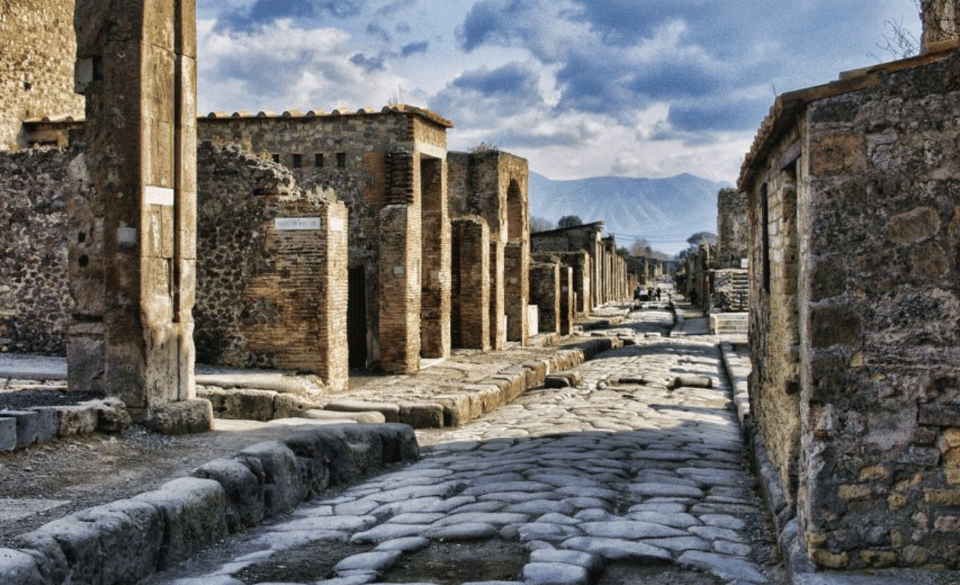
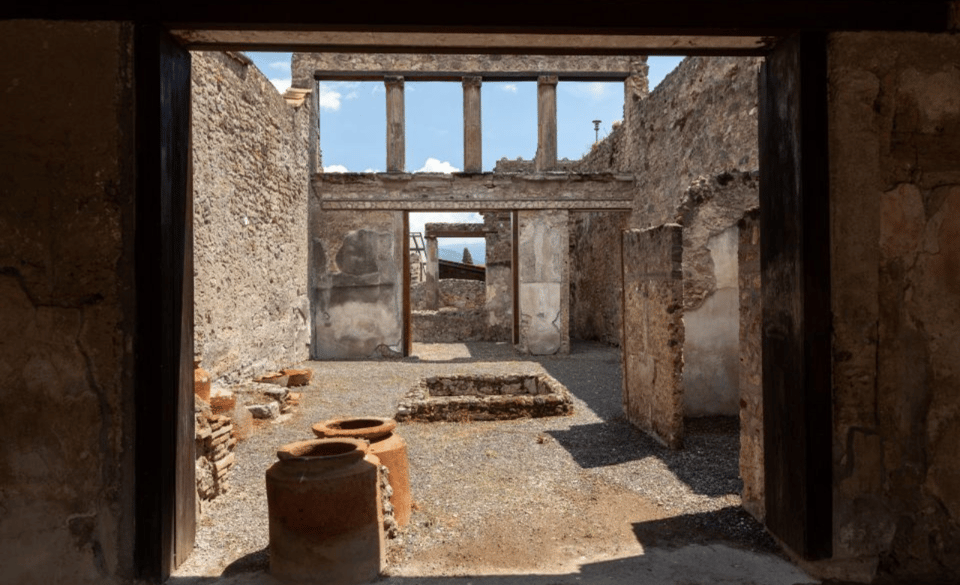
Your walk begins in an ancient urban world—streets buried under volcanic ash, with the layout of a Roman city you can still read. The audio guide and digital map help you connect what you’re seeing to what it was for, which matters because Pompeii can look like a pile of stone until you understand the function of each space.
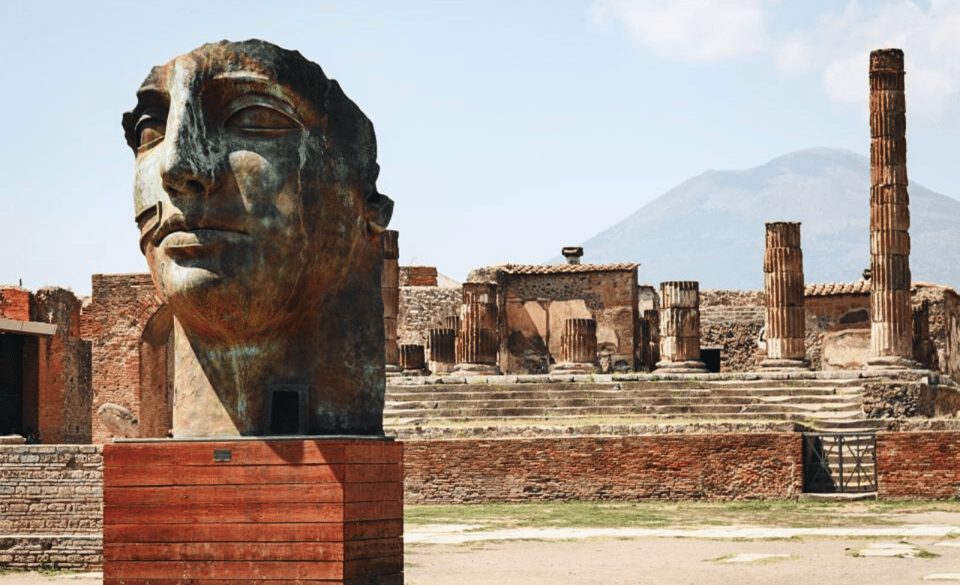
Aim first for the Forum area. This is where you get a sense of civic life: public space, movement, and the kind of buildings people would have seen every day. With Mount Vesuvius visible in the background, it’s easier to keep the geography in your head rather than treating it as a postcard view.
The audio guidance around the civic zones also helps you spot the rhythm of the city: open squares, entrances into larger complexes, and the edges where private homes start to show themselves.
Temples of Venus, Apollo, and Jupiter: Religion With Good Footsteps
Pompeii isn’t only about daily chores and marketplaces. It’s also about religion—and you pass temples tied to major gods such as Venus, Apollo, and Jupiter.
If you’re the type who likes to understand why people built something, these stops are useful. The temples help explain how worship was integrated into city life. Even when you’re just walking through ruins, you’re still seeing the “why” behind the layout.
The other bonus here is pacing. Temples are usually easier to interpret from the outside than some indoor spaces. In a 2-hour visit, that makes them a good anchor while you’re learning the site.
You can also read our reviews of more guided tours in Naples






House of the Faun and Other Homes: The Detail That Makes You Slow Down
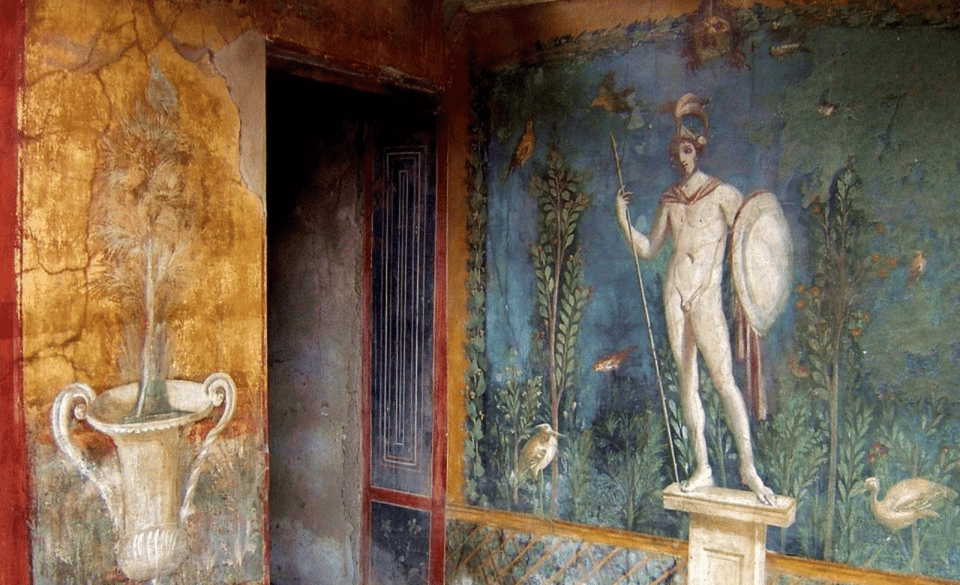
One of the most striking parts of Pompeii is how much of private life is still legible. The ticket experience points you toward homes and notable residences such as the House of the Faun.
This is where the city starts to feel personal. You get the sense of wealth, taste, and status—not just “people lived here,” but how they decorated and arranged spaces for social life and comfort.
You may also encounter the House of Sirico, where inscriptions include the phrase Salve lucru (Welcome, profit). It’s a reminder that humans have always been human—aspirations, business, and a bit of wordplay—written right into the stone-and-plaster reality.
And then there are the wine details. Wine jars labeled Vesuvinum reference both the volcano and the wine—another little example of local humor and resilience. It’s not a grand speech. It’s a label. But it gives the city personality.
Baths, Mosaics, and Street Life: Roman “Everyday Entertainment”
After the big civic areas, you’ll start hitting the spots that feel like daily routine: marketplaces and public bathing areas. The audio guide points you toward marketplaces that once bustled with commerce and toward mosaics you can see in or near the public baths.
This is a great zone for two reasons:
- It changes the tone from civic space to personal relaxation.
- You can get a lot of meaning quickly, because the function of baths and markets is easy to picture even if you don’t know every Roman term.
In a short visit, baths and marketplace-adjacent areas give you the strongest “I get it” factor. You’re not just looking at ruins; you’re understanding how people spent time.
The Theater, Aqueduct Clues, and Views: Put the City Back Together
As you continue walking, you’ll see larger public structures like the grand theater. This area helps you imagine gatherings—performances, crowds, and the feeling of public entertainment in the Roman style.
You may also notice remnants tied to infrastructure: aqueducts, fountains, and homes with the systems that kept the city running. Pompeii works best when you treat it as a whole mechanism, not a set of monuments.
And yes, there are Vesuvius views along the way. They’re not just pretty. They keep reminding you what happened here—this wasn’t just a “lost city,” it was a city caught mid-life.
Eruption Story and Plaster Casts: The Moment That Freezes Time
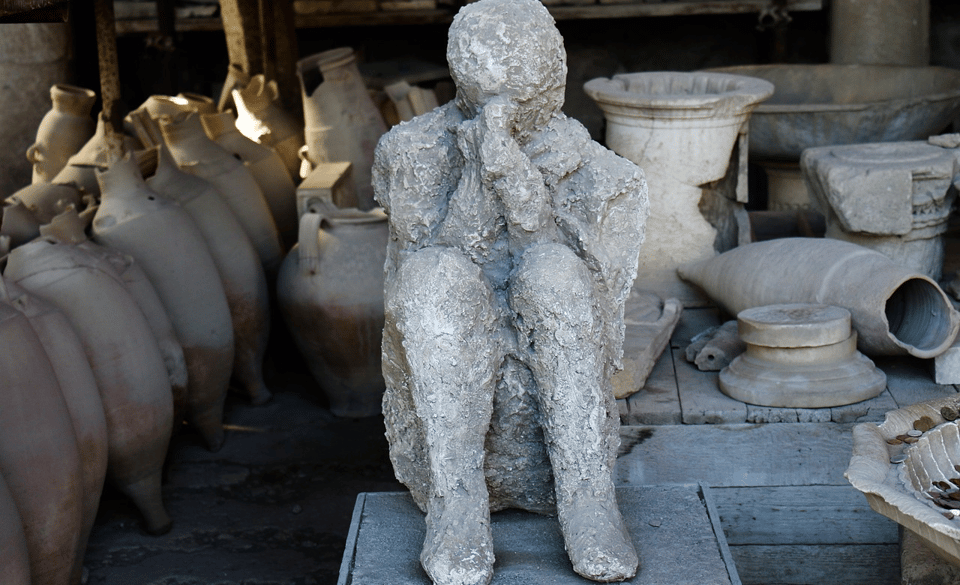
No part of Pompeii hits like the eruption story. This experience guides you toward the catastrophe of 79 C.E. that both devastated and preserved the city. As you move through the site, you encounter the plaster casts of victims—haunting, and also oddly instructive about how sudden and total the event was.
If you’ve never seen these casts before, plan on slowing down. It’s one of those stops where your brain tries to reconcile the scale of a disaster with the intimacy of individual people.
This is also where an audio guide can add value beyond the obvious. Instead of just reading a sign, you hear short explanations tied to what you’re looking at, which helps you connect the casts to the broader story of preservation and Roman daily routines.
Optional Guided Tour With an Art Historian: When a Human Guide Changes Everything
If you add the guided tour option, you’re paired with a professional art historian for a structured walk. Tours are available in English, Spanish, or Italian.
A human guide helps when:
- you want interpretation, not just facts,
- you’re worried you’ll miss key symbolism or layout,
- the crowd is heavy and you want a plan for where to go next.
Some guides you might run into during these sessions include Grace, Maria, and Mario. The point isn’t the name—it’s that people describe the guide communication as clear and energetic, with lots of details folded into the 2-hour pace.
But keep expectations realistic. Pompeii is still a big archaeological site. Even with a guide, you’re fitting a lot into a short window. The guide should help you prioritize, not promise you’ll see every single brick and artifact.
What This Ticket Does Not Include: Suburban Villas
This ticket does not include access to the suburban villas, including Villa of the Mysteries, Villa of Diomedes, and Villa Regina. Those are separate areas outside the main Pompeii route, so plan to treat them as a different day—or another ticket entirely—if villas are a top priority for you.
If suburban villas are your dream, this option is fine for the main city, but you’ll need to plan add-ons if you want those homes too.
Value for $37: Skip the Line, Pay for Time and Structure
At $37 per person, this isn’t the cheapest way into Pompeii. But you’re paying for two things that matter in real life: skip-the-line entry and a ready-made interpretive layer (audio guide + map, and possibly a guide).
One reviewer noted that the official ticket price can be 19€ on Pompeii’s official materials. Even if you compare like-for-like, the extra cost here is basically for convenience and reduced uncertainty at arrival—getting in quickly and having a guided listening framework rather than starting from scratch.
So I’d judge this as value if:
- you hate wasting time in lines,
- you want an easier orientation,
- you’re okay with a 2-hour highlights approach,
- you can handle the phone-based audio setup.
It might not be great value if:
- you’d rather use another proven audio system you already love,
- your phone battery is unreliable,
- you want suburban villas included in the same ticket.
Practical Tips for a Smoother Walk Through Pompeii
A few small moves can make the biggest difference.
- Download the audio guide before you arrive, using the QR code on your voucher.
- Carry headphones and keep your phone charged; Pompeii walking drains batteries.
- Wear shoes you can stand in for a long stretch—Pompeii rewards slow, careful walking.
- If the audio autoplay is inconsistent, switch to manual mode using the map points so you don’t lose your place.
- Plan your priorities ahead of time: Forum + temples + one or two houses + baths/theater area will give you the best understanding per minute.
Pompeii also changes with weather. If rain hits, you may not want to spend as long outdoors, so lean into the stops you can see clearly and move smart.
Should You Book This Pompeii Skip-the-Line + Audio Option?
I’d book it if you want an efficient entry and a guided listening layer that helps you connect Pompeii’s ruins to Roman life. It’s especially good for first-timers who are worried the site will be too big and too confusing without help.
Skip it if you’re looking for:
- suburban villas access in the same package,
- a fully hands-free audio experience that always auto-triggers perfectly,
- a deep, museum-grade interpretation at every step (this is still a walk-through site, not a lecture hall).
If you can bring headphones, keep your phone powered, and show up ready to walk, this is a solid way to spend your time in Pompeii instead of spending it waiting at the gate.
FAQ
Where is the meeting point for this experience?
You exchange your voucher at the Vox City info point located in Piazza Esedra, in front of the Hotel Vittoria. If you choose the guided tour option, you meet your guide at the same place.
How long does the visit take?
The duration is listed as 2 hours. Check availability for starting times.
What is included with the ticket?
Included features are the Pompeii skip-the-line entry ticket, an audio guide with a digital map, and multilingual audio commentary. If you select the guided tour option, you also get a guided tour in English, Spanish, or Italian.
Do I need headphones and a smartphone?
Yes. What to bring includes headphones and a charged smartphone.
Does this include the suburban villas?
No. This ticket does not include access to the suburban villas such as Villa of the Mysteries, Villa of Diomedes, and Villa Regina.
What languages are available?
Guided tours are available in English, Spanish, or Italian. The audio guide includes commentary in English, French, Spanish, German, and Italian.
Do guided tours leave exactly at the booked time?
Guided tours depart at the booked time slot. If you choose the guided option, arrive about 5 minutes early if possible.
How do I get the audio guide on my phone?
Scan the QR code on your voucher to download the audio guide prior to arrival.
Is there free cancellation?
Yes. Free cancellation is available up to 24 hours in advance for a full refund.