REVIEW · POMPEI CAMPANIA
Pompeii: Skip-the-line-Ticket and Guided Tour
Book on GetYourGuide →Operated by TOURISTATION · Bookable on GetYourGuide
Pompeii feels real with a guide. This skip-the-line Pompeii tour gets you into the UNESCO site faster, then an archaeologist helps you read the city like a story, with preserved frescoes and mosaics that feel startlingly close to daily life.
One possible downside: the full circuit is only 2 hours, so it moves at a steady pace and you’ll want to plan extra time later if Pompeii grabs you.
In This Review
- Key things I’d clock before you go
- Why a guided Pompeii tour beats wandering ruins
- Getting in fast: how the skip-the-line ticket changes your day
- Porta Marina Superiore and the Forum: Pompeii’s main storyline
- Baths, temples, bakery, theater, and brothel: why these stops feel human
- Art on the walls: what to notice in frescoes and mosaics
- The Mount Vesuvius viewpoint: the story behind the city
- Group size, headsets, and hearing your guide clearly
- Price check: is $64 for Pompeii good value
- Villa dei Misteri: what this tour does not include
- Where to meet and how to avoid timing headaches
- What to bring, what not to bring, and practical rules
- Should you book the Pompeii skip-the-line guided tour?
- FAQ
- How long is the Pompeii skip-the-line guided tour?
- How much does the tour cost?
- Where do I meet the guide?
- What’s included with the tour?
- What languages are offered for the live guide?
- Is there a smaller-group option?
- Is Villa dei Misteri included?
- What do I need to bring?
- Is the tour suitable for wheelchair users?
Key things I’d clock before you go
- Skip-the-line entry so you don’t waste your trip waiting outside
- Archaeologist guide who explains what you’re actually looking at, not just where it is
- Headsets included, which makes it easier to hear in crowded sections
- Pompeii highlights in one loop, from Porta Marina Superiore to the Forum and major public spaces
- Mount Vesuvius viewpoints that add meaning to the ruins beyond the buildings themselves
Why a guided Pompeii tour beats wandering ruins
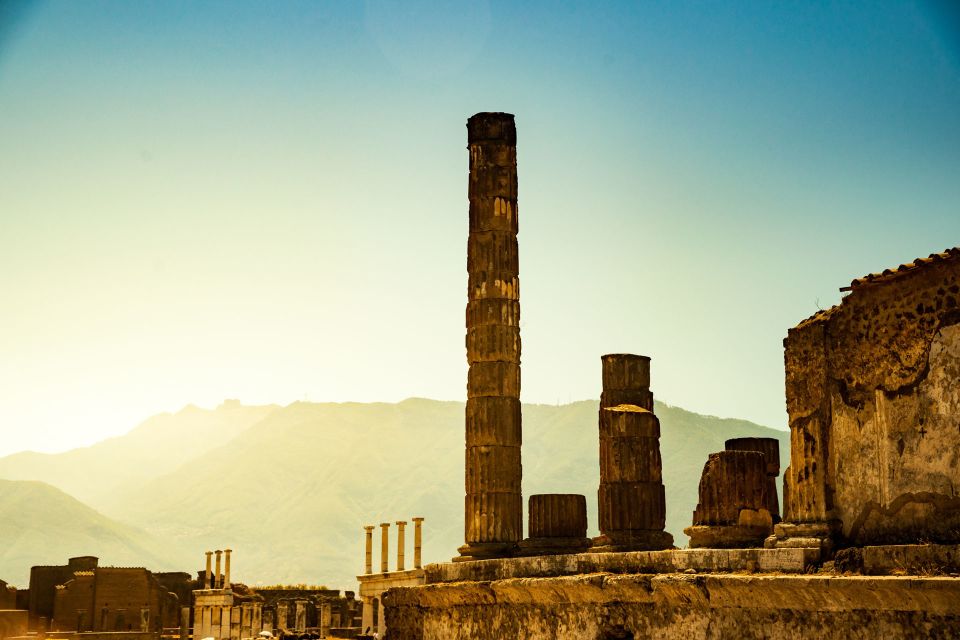
Pompeii is famous for a reason, but it’s also easy to get lost in it. You can stand in front of a doorway, a wall painting, or a mosaic and still miss the point. A solid guide fixes that. Here, you’re with a live archaeologist guide who ties rooms and streets to the people who lived there.
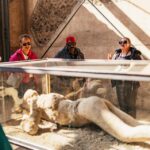
That matters because Pompeii isn’t just stone. It’s evidence of routines: where people bathed, how they shopped and ate, what they watched in the theater, and what they advertised on plastered walls. With a guide, the city starts behaving like a place again, not a museum floor.
Also, this tour is designed for momentum. You’re not meant to pick one site and linger all day. Instead, you get a curated walk that hits the parts most people come to see, with explanations that help you remember them.
You can also read our reviews of more tours and experiences in Pompei Campania


Getting in fast: how the skip-the-line ticket changes your day
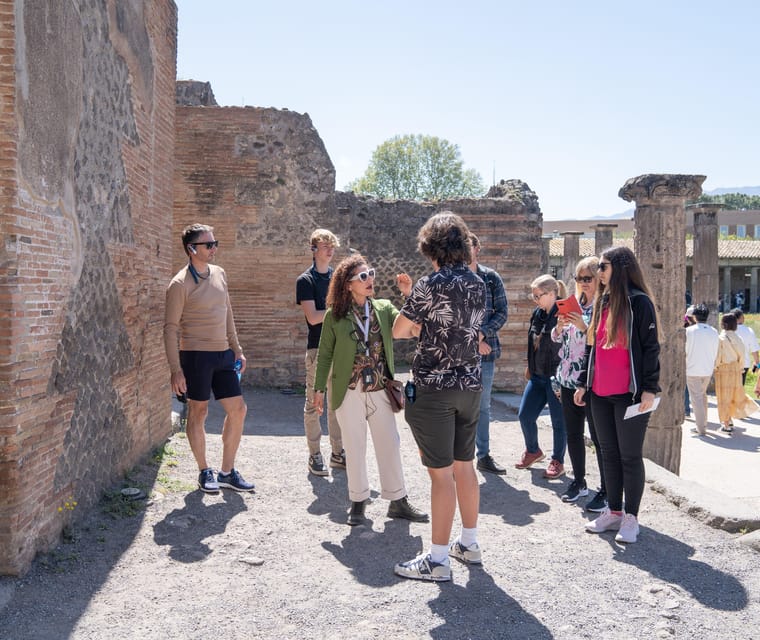
The biggest practical win is the reserved Pompeii skip-the-line ticket. On days when the lines are long, those saved minutes feel like free time. They also reduce stress. You arrive, you get oriented, and you start walking instead of waiting.
You’re also set up to follow along. Your package includes a city map, headsets, and assistance at the Tourist Office. The headsets may sound like a small perk, but in a place with crowds and competing voices, they’re the difference between hearing the story and just catching fragments.
What you should expect in return: you’ll need to keep up. Since the tour is 2 hours, you’ll move from one major area to the next. If you enjoy stopping to read every panel, you’ll likely want to do a bit of self-guided wandering after.
Porta Marina Superiore and the Forum: Pompeii’s main storyline
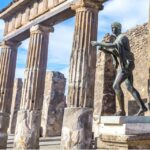
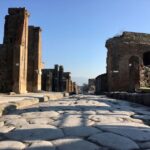
The tour starts at the city’s Porta Marina Superiore, one of the gates that gave access to Pompeii. That’s a smart first move. You’re not beginning in the middle of ruins without context. A gate is how you enter a city. It sets the tone: Pompeii as a living place with routes, entrances, and boundaries.
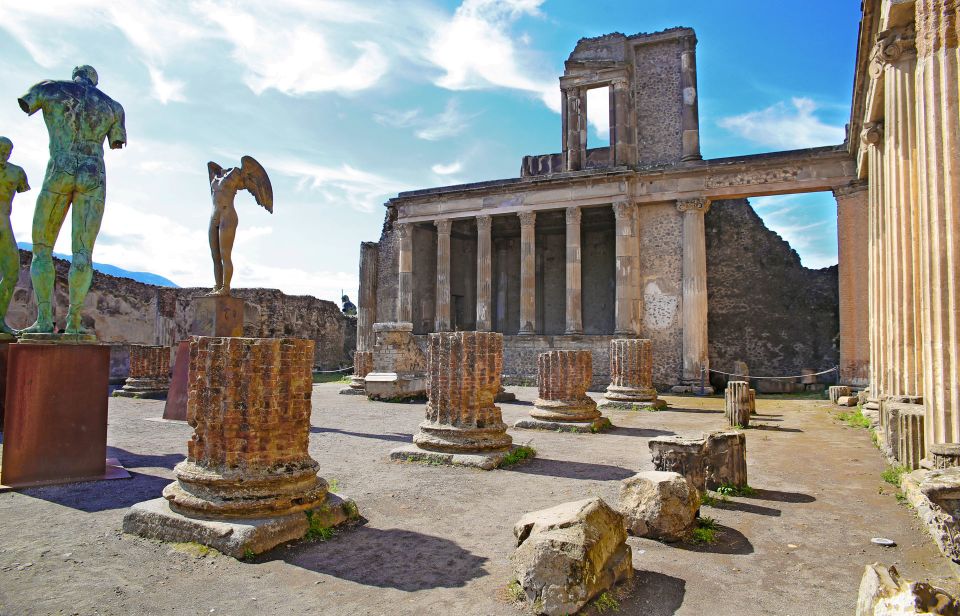
From there, you’ll walk the main streets toward the Forum, the heart of Pompeii’s public life. This is where a guide really earns their fee. The Forum isn’t just a square of old blocks. It’s a shortcut to understanding civic space: where announcements mattered, where people gathered, and where political and social life overlapped.
A common mistake on self-guided visits is focusing only on the most photographed structures. With this route, you get the bigger pattern first. Once the Forum clicks, the smaller buildings you see later feel less random.
Baths, temples, bakery, theater, and brothel: why these stops feel human
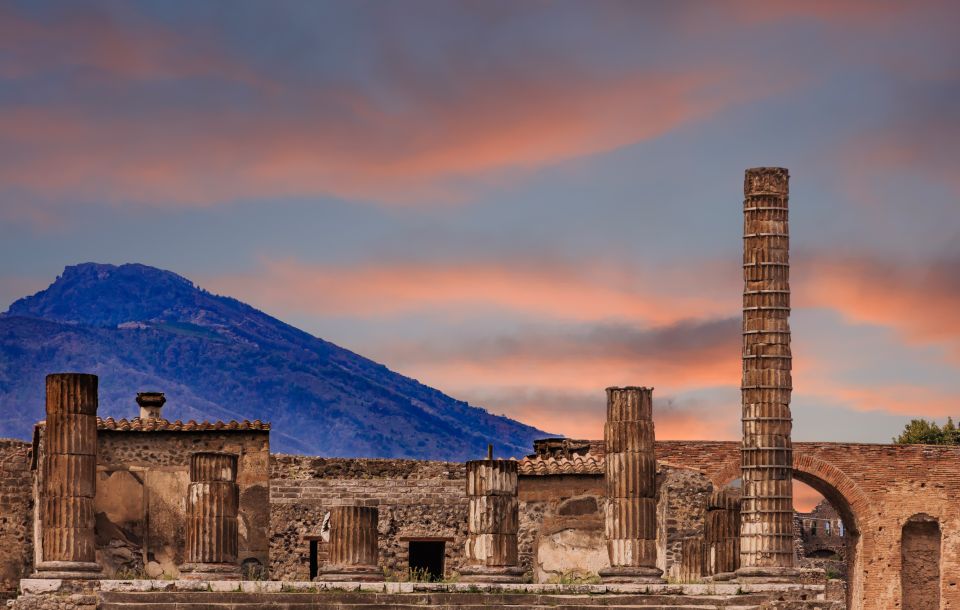
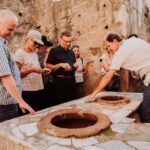
The route is built around everyday Pompeii life, not just big monuments. After the Forum, you’ll see the baths and temples, plus a bakery. That mix is key. Pompeii can look like it’s all spectacle until you realize how central routine places were.
Here’s why those stops matter:
- Baths show hygiene, leisure, and social rhythm. People didn’t just work and sleep; they spent time there.
- Temples remind you that religion wasn’t separate from daily schedules. It was part of the city’s layout.
- Bakery helps you picture food as a system, not an afterthought.
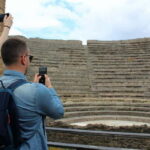
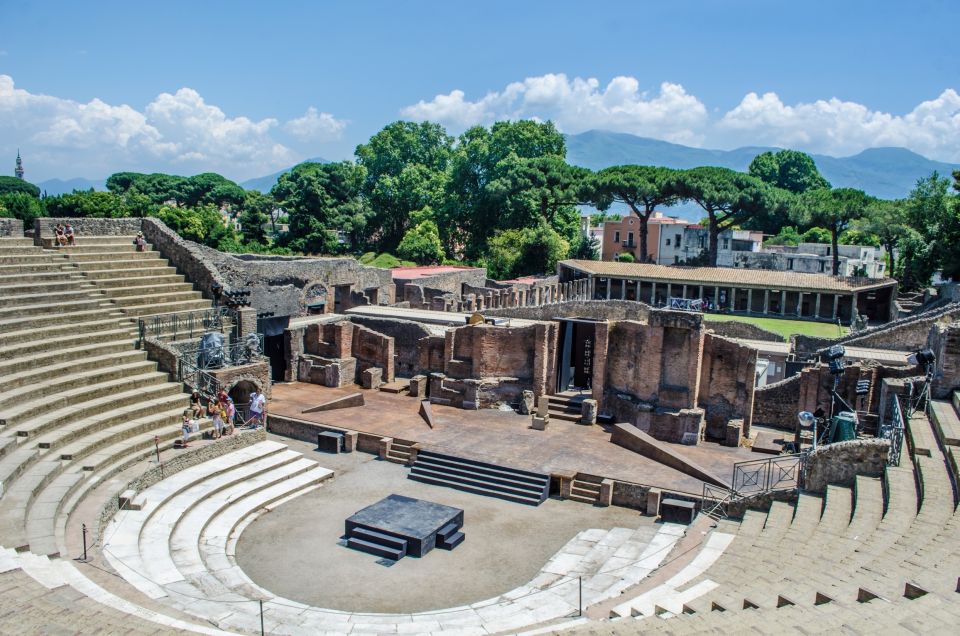
Then you’ll move to the great theater and a brothel. These two are often the reason people remember Pompeii, because they show how varied entertainment and services were. It’s also where guide explanations can make the architecture click fast. You’re not just looking at seating or rooms. You’re understanding the role each space played in city life.
One caution: this part of Pompeii can get busy. Even with headsets, you’ll still feel the crowd flow. Go with the mindset of getting the big picture in 2 hours, not hunting for every last detail.
Art on the walls: what to notice in frescoes and mosaics
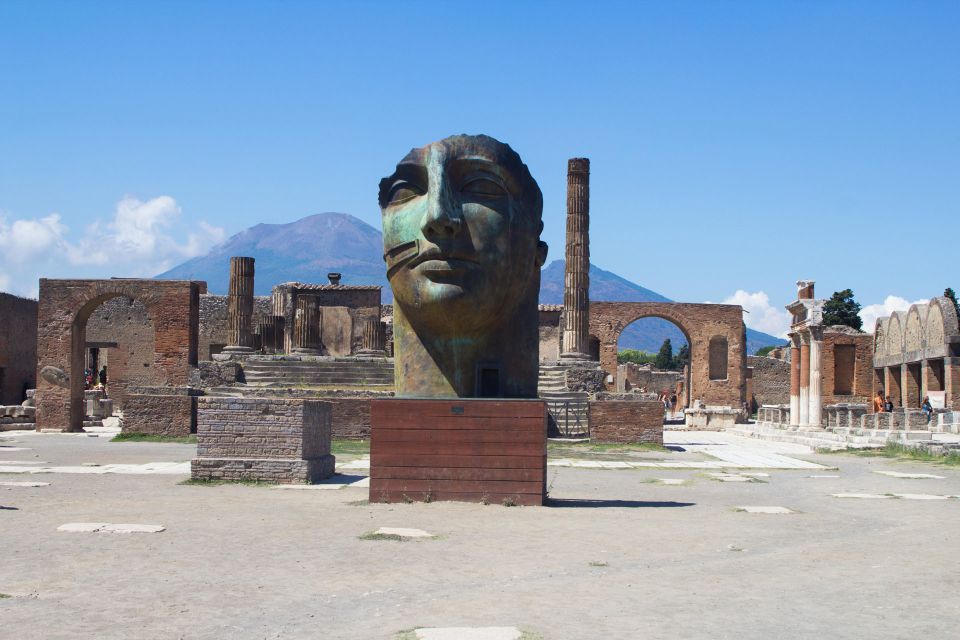
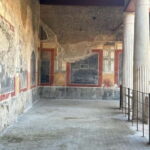
Pompeii’s art is famous, but a guide helps you read it. During the tour, you’ll see preserved frescoes, mosaics, and artworks throughout the city. The value here isn’t only seeing them. It’s understanding where they appear and what their placement suggests.
When you’re standing close, try focusing on a few things:
- How paintings frame a room or doorway, as if you were inside, not outside.
- How mosaics connect to thresholds and paths, guiding where people walked.
- How repeated motifs can tell you something about taste and identity.
This is one place where the guide’s communication style really matters. In English tours, I’d lean into the headsets and stay close rather than drifting behind. Some guides are easier to understand than others, so your best move is to keep the audio working in your favor.
You can also read our reviews of more guided tours in Pompei Campania
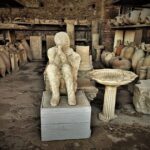
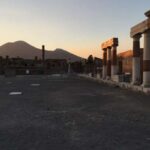
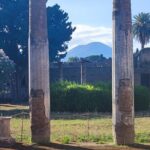
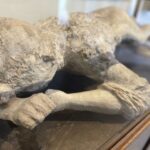
The Mount Vesuvius viewpoint: the story behind the city
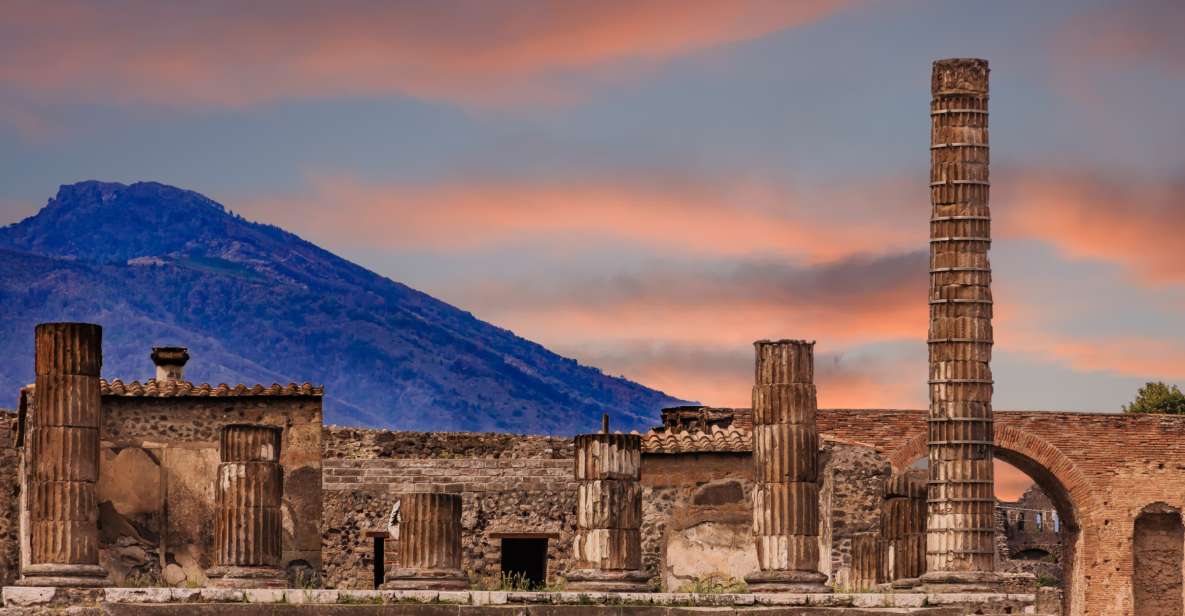
You’ll get views of Mount Vesuvius beyond the city. That’s not a random photo break. It changes the emotional weight of the ruins, because Pompeii’s destruction is the reason these spaces survived in the first place.
Standing where you can see the volcano helps you connect cause and effect. Without it, Pompeii can feel like a finished artifact. With it, you remember it was once a normal place with a very real, very nearby threat.
Don’t treat this as just scenery. Pause here, then re-enter the ruins with that context. The buildings start telling a different kind of story when you can picture what sat in the background.
Group size, headsets, and hearing your guide clearly
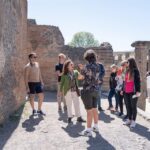
This tour is designed around clarity and control. You get headsets, and the guide is equipped to keep everyone together.
There’s also a semi-private option with a maximum of 12 people. If you’re the type who likes questions, a smaller group can make the experience feel more personal. It can also reduce the strain of trying to hear in dense sections.
Group size can still affect your comfort. If you end up in a larger group, you’ll want to be ready to follow the guide’s pace and positioning. The headsets help, but they can’t remove physics: sound travels, people move, and Pompeii is open air with crowds.
If you care a lot about listening, pick the tour language carefully. English works well when the guide speaks clearly, and the headsets do the rest.
Price check: is $64 for Pompeii good value
At $64 per person for a 2-hour guided visit with a skip-the-line ticket, this is fairly priced for what’s included: entrance access plus an archaeologist guide, plus headsets, a city map, and assistance at the Tourist Office.
The value comes down to two questions:
- Do you want structure in a place that’s easy to get wrong on your own?
- Is your time limited enough that skipping lines matters?
If you only have a short window and you’d otherwise be planning around queues, the reserved entry pays you back quickly. If you have all day and you love wandering, you might do fine without the tour. But in that scenario, you’d still be trading away a lot of context that makes Pompeii memorable.
Also consider who you’re traveling with. The tour is priced per person, so plan for the full cost if you’re bringing kids, and verify whether any age-based pricing exists before you book.
Villa dei Misteri: what this tour does not include
One key item: entrance to Villa dei Misteri is not included. That doesn’t mean you can’t see it at all, but it’s not part of this specific package.
If Villa dei Misteri is on your must-see list, you’ll want to plan it separately. That’s a simple way to avoid a surprise mid-trip. If it’s not on your list, you still get a strong overview of the city’s major areas, with enough art and public-life stops to satisfy most first-time visits.
Where to meet and how to avoid timing headaches
Meeting point details matter in Pompeii because the site is large and the immediate area has multiple entry points and offices.
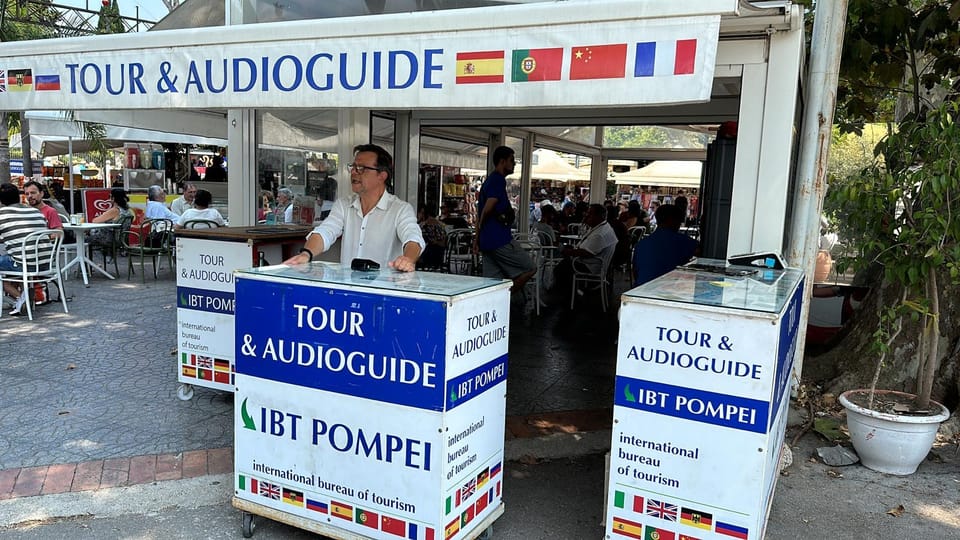
You should report to the Office IBT Center/Touristation next to Chalet Donna Lucia. If you tend to arrive late, set an earlier buffer. This is one part that can feel tricky if you’re relying on intuition once you’re already nearby.
You’ll also need passport or ID card for all participants. Bring it. Pompeii is still a security-checked place, and you don’t want to waste time looking for documents.
What to bring, what not to bring, and practical rules
A smooth visit depends on keeping your bag situation simple. Here are the main constraints:
- No smoking
- No luggage or large bags, and no oversized items
- No umbrellas
- Pets aren’t allowed in the archaeological area, though small dogs are permitted under specific rules: leash required, and dogs must be carried when inside buildings
If you’re traveling light, you’ll be comfortable. If you’re traveling with a lot of gear, you may run into frustration finding a place to stow it.
If you have mobility limitations, note this: the tour is not suitable for people with mobility impairments or wheelchair users. The ruins are uneven, and the pace is built for walking between key zones.
Cancellation-wise, this activity is listed as non-refundable, so I’d only book it when your dates are solid.
Should you book the Pompeii skip-the-line guided tour?
Yes, book it if you want a smart first visit that covers the biggest parts in a tight timeframe. The combination of skip-the-line access, a live archaeologist guide, and headsets is exactly how you turn Pompeii from a pile of ruins into a place with logic.
Skip it (or at least reconsider) if you don’t mind spending time waiting, if you’re hoping for a slow, picture-by-picture stroll, or if your schedule needs maximum flexibility. The short 2-hour format is great for an overview, but it won’t scratch every itch.
If you’re the kind of person who likes your history with context and your walking with meaning, this is a strong match.
FAQ
How long is the Pompeii skip-the-line guided tour?
The guided portion lasts 2 hours.
How much does the tour cost?
The price is listed as $64 per person.
Where do I meet the guide?
Meet at the Office IBT Center/Touristation, next to Chalet Donna Lucia.
What’s included with the tour?
Included are the Pompeii archaeological area skip-the-line ticket, the 2-hour guided tour, headsets, a city map, assistance at the Tourist Office, and Wi-Fi.
What languages are offered for the live guide?
The guide is available in Italian, French, Spanish, and English.
Is there a smaller-group option?
Yes. There is a semi-private option with a maximum of 12 people.
Is Villa dei Misteri included?
No. Entrance to Villa dei Misteri is not included.
What do I need to bring?
Bring a passport or ID card.
Is the tour suitable for wheelchair users?
No. The tour is not suitable for people with mobility impairments or wheelchair users.