REVIEW · POMPEI CAMPANIA
Pompeii 3hours Villa of Mysteries tour with an Archaeologist
Book on GetYourGuide →Operated by Askos Tours · Bookable on GetYourGuide
Three hours in Pompeii can feel like a week. This small-group, archaeologist-led walk adds meaning to the ruins, and the big payoff is Villa of the Mysteries access with skip-the-line entry. I also love how the route is timed so you’re not stuck in a crush at every stop. The main consideration: 3 hours won’t cover all of Pompeii, so you’ll want a plan for what you’ll do afterward.
The starting point is practical and easy to find: Porta Marina Superiore, with your guide from Askos Tours holding a sign. And the tour moves through a mix of house life, public spaces, and major landmarks, so you get a rounded sense of what daily Roman life felt like. If you’re lucky enough to have a guide like Sarah, Theresa, Yolanta, or Antonella (names you’ll see come up often), you’ll get stories tied to what you’re actually standing in front of.
One drawback for some people: it’s not suitable for wheelchair users or those with mobility impairments, and you’ll be walking on uneven ancient surfaces. Plan for a real walking tour, not a casual stroll.
In This Review
- Key highlights
- Porta Marina Superiore: how the best Pompeii start keeps you moving
- The 3-hour rhythm: what your archaeologist actually helps you notice
- House stops you’ll recognize: Vettii, Faun, Menander, and more
- What can be frustrating?
- Public spaces without the chaos: Theatre, Baths, Basilica, and the Forums
- A practical tip for these stops
- Villa of the Mysteries: the fresco experience that makes this tour worth it
- The reality check
- Ending at the Temple of Apollo: closing the loop on public and sacred Pompeii
- Price and value: what $88 gets you in real Pompeii time
- Who should book this Pompeii archaeologist tour
- Should you book? My straight recommendation
- FAQ
- FAQ
- How long is the Pompeii tour with the Villa of the Mysteries?
- What is the price per person?
- What is included in the ticket?
- Does the tour skip the ticket line?
- Where does the tour meet?
- Is transportation included?
- Are food and drinks included?
- What languages are available for the live guide?
- What should I wear and bring?
- Does the tour run in bad weather?
- Can I bring a pet?
Key highlights
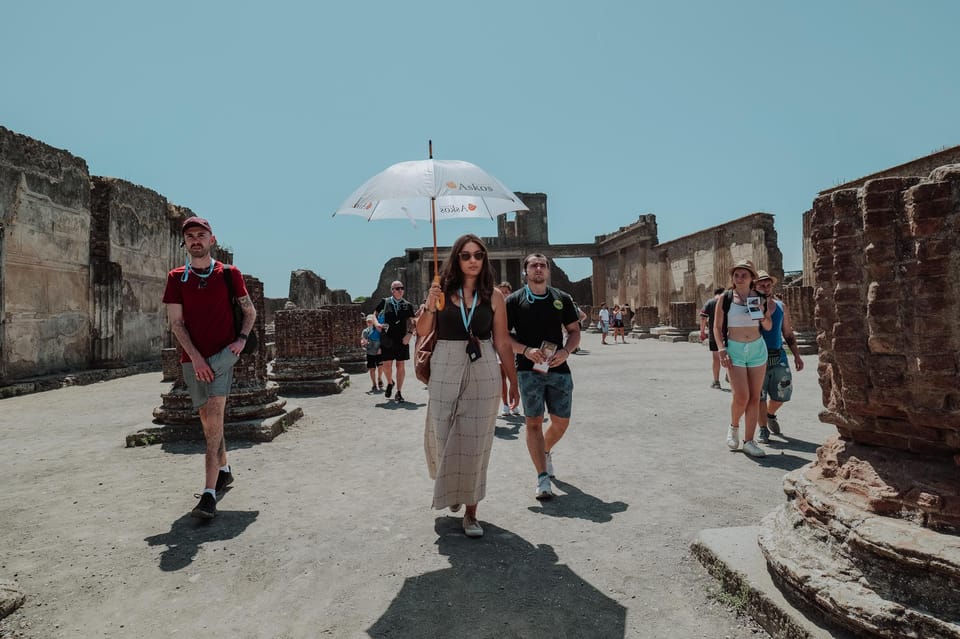
- Villa of the Mysteries entry with Pompeii Plus ticket access, plus time to study its famous fresco narrative with an archaeologist guide
- Small-group pacing that aims for quieter moments, so you can actually think while you look
- House stops like the House of the Vettii, House of the Faun, and House of Menander that focus on domestic design and everyday objects
- Public-life landmarks including the Large Theatre, Baths, Basilica, and the Forums, framed through how people used space
- Practical guidance from real site experts, with tour headsets/ear pieces referenced in guest feedback so you don’t miss the explanations
Porta Marina Superiore: how the best Pompeii start keeps you moving
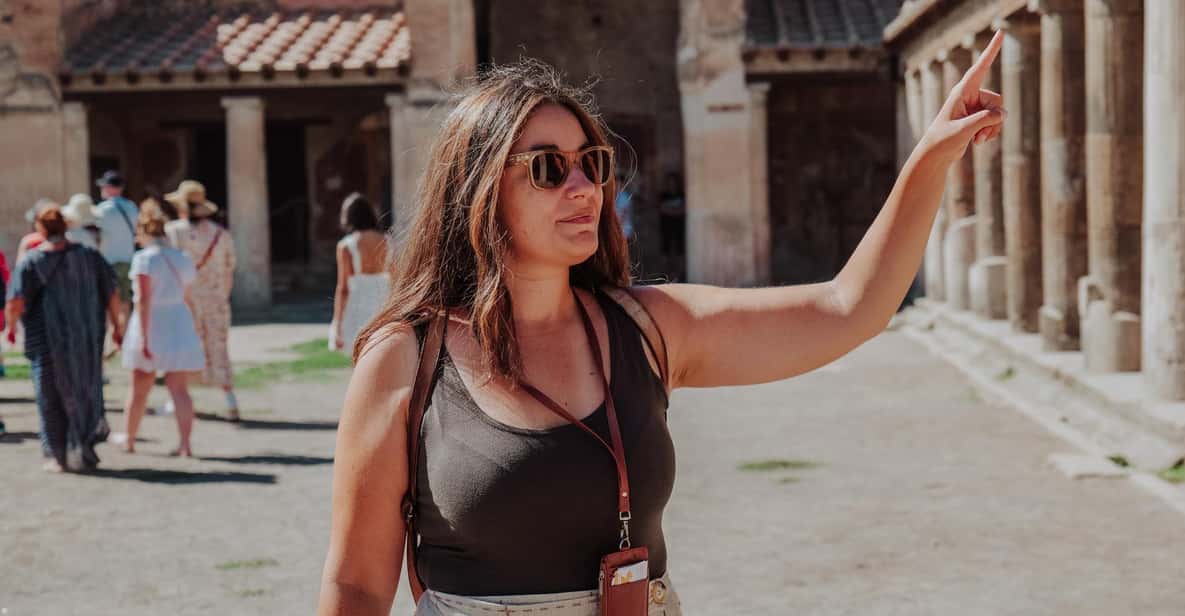
Your Pompeii experience begins at Porta Marina Superiore, where the guide meets you at the entrance gate holding a sign that says ASKOS TOURS. I like this setup because it’s clear, fast, and it gets you into the archaeological park without the usual wandering around with maps and confusion.
From there, your archaeologist guide sets the tone. Instead of just telling you what things are called, they help you read what you’re seeing: street layout, how buildings relate to one another, and what parts of the city were built for everyday life versus public gatherings. This matters more than it sounds. Pompeii isn’t one single monument. It’s a whole town that happens to be preserved, and the layout can feel overwhelming without someone pointing out the logic.
A big bonus is the small-group style. The aim is to walk away from the thickest tourist waves when possible. In Pompeii, timing is everything. When you’re standing in a courtyard or looking at fresco fragments, you don’t want to be constantly shoulder-to-shoulder. The best version of this tour makes it easier to see details and hear the guide.
You can also read our reviews of more tours and experiences in Pompei Campania.


The 3-hour rhythm: what your archaeologist actually helps you notice

The core of the tour is a guided interpretation. You’re not just collecting photos; you’re learning how to look. Your archaeologist guide connects architecture and objects to Roman daily life, with special attention to frescoes and household artifacts.
At a good pace, you’ll move from quieter angles on streets to houses and back out to public sites. The tour is also built to be thoughtful about crowd flow, so you can pause at the right moments and absorb what you’re seeing. This is one of those travel skills that’s hard to do alone—Pompeii is huge, and without a plan you end up rushing past the best stuff.
You’ll also get a mix of themes:
- Domestic life in Pompeian houses (design choices, wall paintings, everyday material culture)
- Public life in spaces where people met, debated, traded, and practiced religion
- A standout moment at Villa of the Mysteries, where fresco storytelling becomes the star of the show
If you’ve ever stood in a museum and wondered why one painting feels urgent while another feels decorative, this is the same idea. The archaeologist’s job is to make the site feel specific. You start seeing patterns instead of random fragments.
House stops you’ll recognize: Vettii, Faun, Menander, and more

One of the best uses of time in Pompeii is houses, because they show you what people lived with every day. This tour includes multiple house stops—House of the Vettii, House of the Faun, House of Menander, and House of the Tragic Poet—plus a focus on domestic lifestyle rather than just the names.
Here’s what I like about this approach for you: Pompeii’s houses are like time machines for the senses. You get a chance to understand how rooms were arranged for daily routines, and you’re guided to notice wall paintings and other small details that make the place feel lived-in. Even when you can’t see every fragment clearly, your guide helps you interpret what remains.
Also, you’ll benefit from the small-group format here. Houses are often where groups bottleneck. When you’re in a smaller group, you can linger without blocking each other, and your guide can point things out in the space between people’s attention spans.
What can be frustrating?
Houses in Pompeii are also fragile and sometimes partly restored or broken. In a short tour, you won’t be able to study every room at museum depth. If you love architecture and want to read every surviving detail, you’ll likely want extra free time afterward. But for getting the biggest meaning out of three hours, the house sequence works well.
Public spaces without the chaos: Theatre, Baths, Basilica, and the Forums
Pompeii’s public life is the other half of the story. This tour doesn’t ignore it. You’ll move through major civic and communal areas, including the Large Theatre, Forum Baths, Basilica, and Foro Civile di Pompei.
The guide frames these spaces around how Pompeii functioned as a city: where people came together for political talk, trade, and religious ceremony. That context changes the way you view the buildings. Instead of thinking of them as ruins with a cool name, you start imagining movement—who would pass through, where people would gather, and why certain areas mattered.
The tour is also timed so you get a better shot at quiet. That’s not a luxury in Pompeii. It’s what turns a public building from a background setting into an actual story you can follow.



A practical tip for these stops
Bring your patience for uneven ground and stairs. Pompeii is outdoors, and the stone doesn’t care about your comfort. Closed-toe shoes are required, and the tour runs rain or shine, so you’ll want footwear that handles slick surfaces without drama.
Villa of the Mysteries: the fresco experience that makes this tour worth it
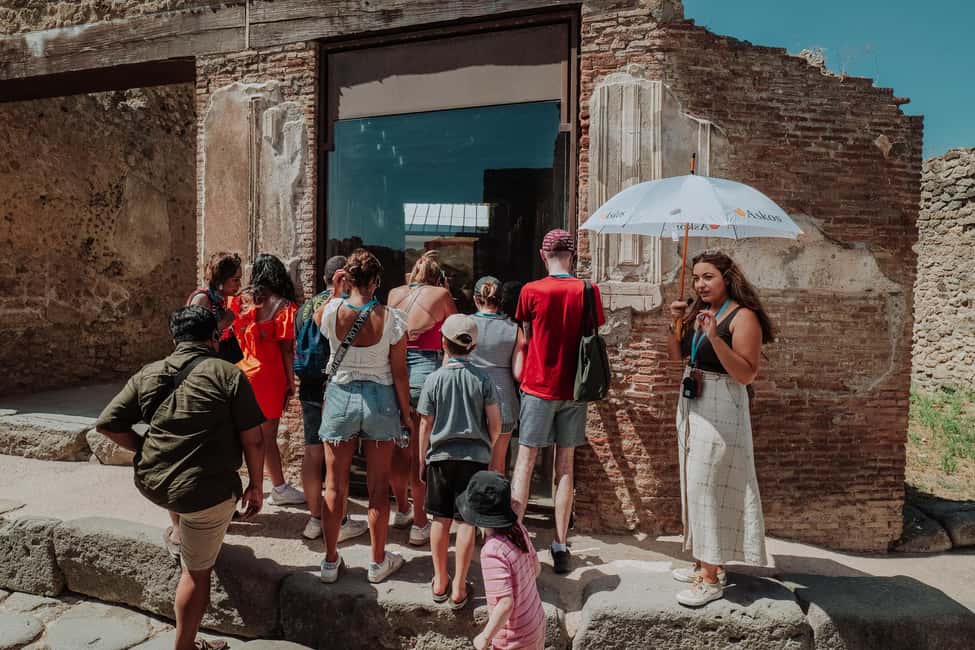
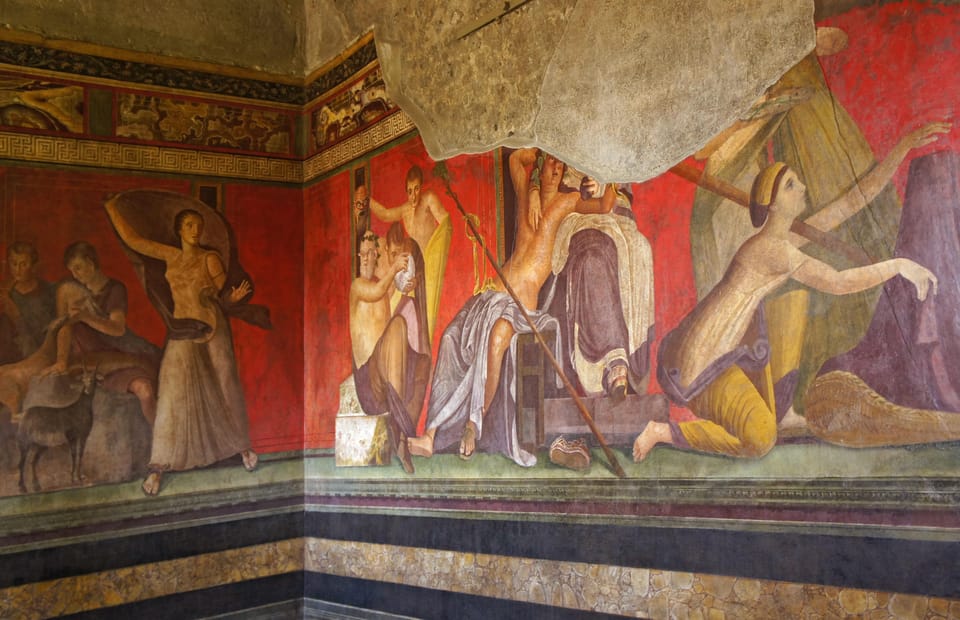
Let’s talk about the headline act: the Villa of the Mysteries. This is the moment most people are chasing, and this tour is built around it. You get privileged access with your Pompeii Plus entrance ticket, and you’re not just walking through and moving on. Your archaeologist guide helps you interpret the famous fresco program, so you’re seeing more than pigment on a wall.
I love how the tour treats the villa like a narrative. Frescoes can be easy to miss if you only get quick glances. Here, you’re given time to connect the artwork to the wider world of Pompeii—symbolic details, domestic-to-ceremonial space, and the sense that the villa held meaning beyond everyday living.
One extra bonus: a recent guest noted that after the villa there can be access to a quieter adjacent area (another villa and a cemetery), which can be a nice reset point to sit for a moment and plan your next steps. If you’re the type who wants fewer crowds and a little recovery, keep an eye out for that option.
The reality check
The villa is only one stop in a three-hour tour, and the time you spend there is still limited. If you want to linger longer, plan to return on your own after the guided portion ends. But even with that limit, guided interpretation is what transforms this from a checklist item into a memory.
Ending at the Temple of Apollo: closing the loop on public and sacred Pompeii
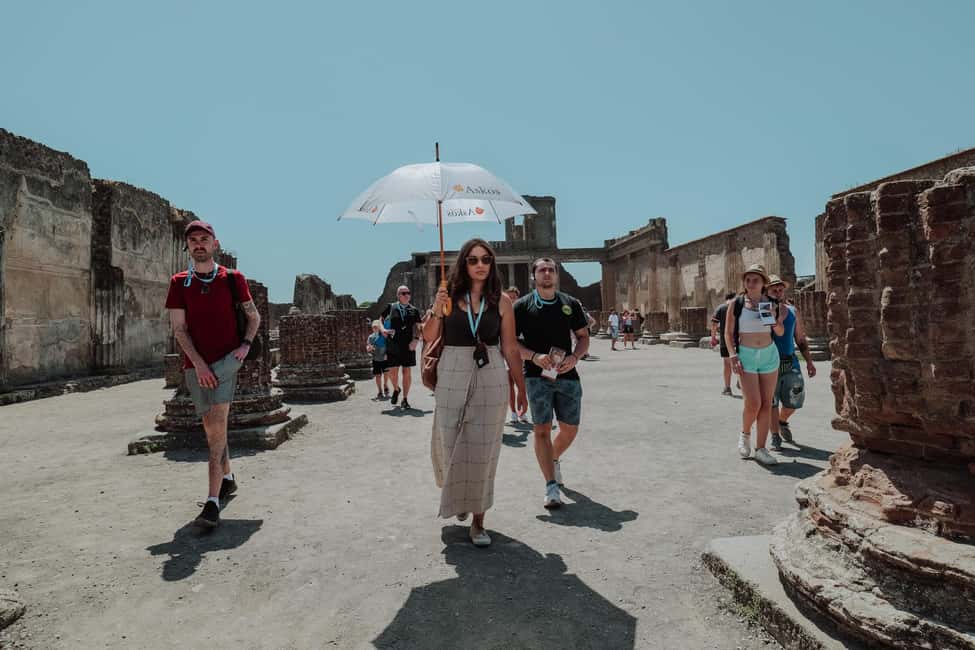
The route finishes with one more major landmark: Temple of Apollo. It’s a fitting place to wrap up because it pulls you back into the public and sacred side of the city.
After seeing domestic spaces and civic sites, you’ll have a better framework for understanding why religious architecture mattered in daily Roman life. Even when you’re moving quickly, that “citywide” perspective sticks. You stop thinking in individual monuments and start thinking in relationships—how Pompeii worked as one system.
This also helps you plan your next hours. If you’re staying in the area after the tour, you’ll know which zones feel like they match your interests.
Price and value: what $88 gets you in real Pompeii time
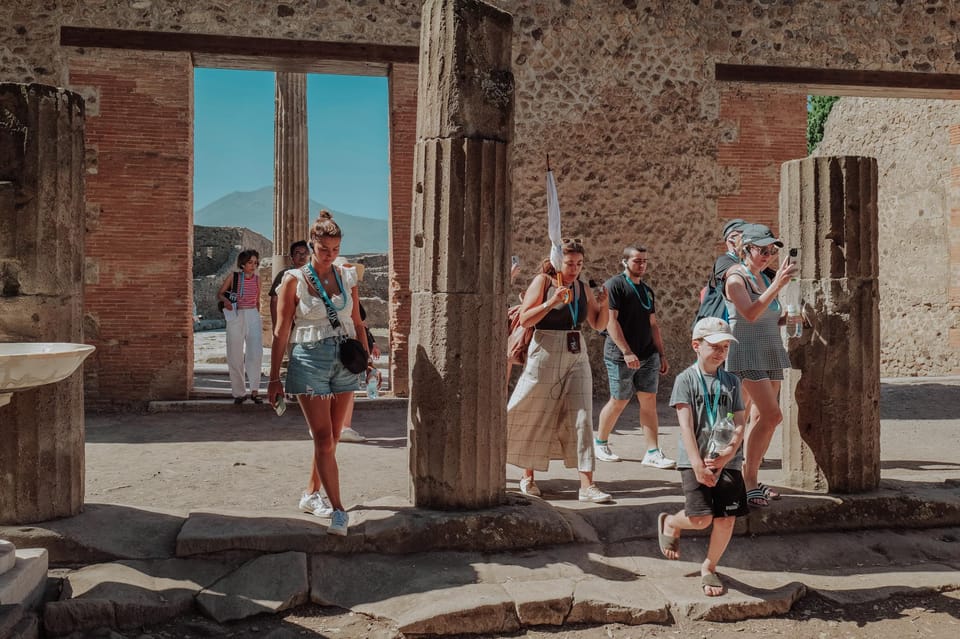
At $88 per person for a 3-hour small-group tour, the price feels fair once you factor in what’s included.
You’re getting:
- A 3-hour archaeologist-led tour
- A guide experience focused on interpretation, not just logistics
- The Pompeii Plus entrance ticket, including Archaeological Park + Villa of the Mysteries
- Skip-the-ticket-line entry
That combination is key. Pompeii entry can be slow, and the Villa of the Mysteries is the part many people most want to see. Paying for the guided package makes sense if you want to protect your time and avoid losing momentum at the gate.
Is it worth it if you only want a photo tour? Not really. If your goal is lots of independent wandering, you could do it on your own. But if you want to understand what you’re seeing while you’re still standing in the right spot, this is a good value structure.
Also, a quick honesty note: one guest mentioned a guided tour ran a bit later than the stated end time. In other words, if you have a strict timed appointment right after, build a buffer. Pompeii’s crowds and weather can stretch things.
Who should book this Pompeii archaeologist tour
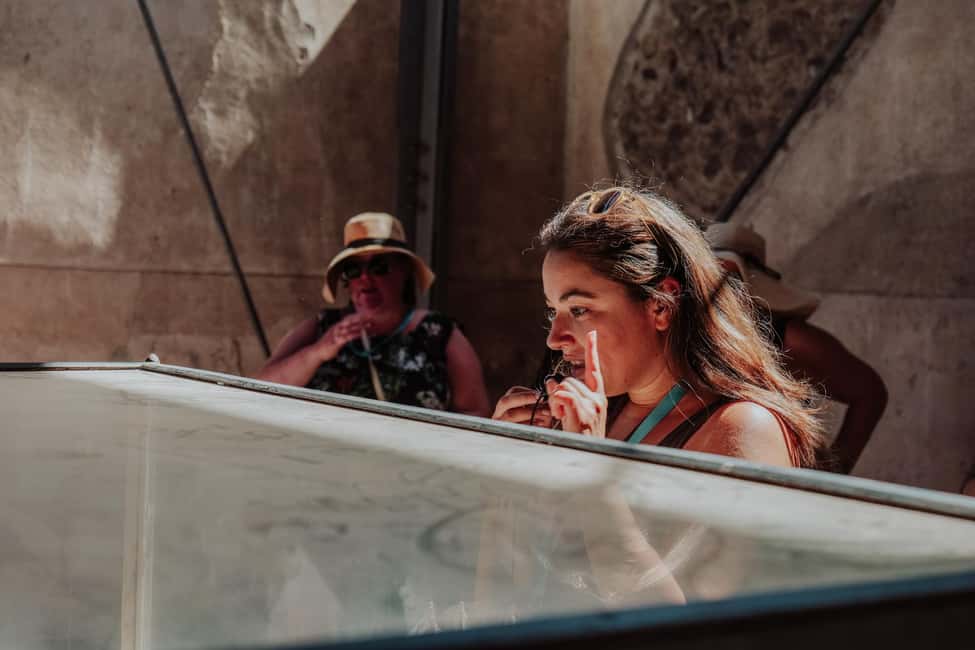
This tour is best for you if:
- You want meaning, not just names of sites
- You like being guided through houses and public spaces with context
- You specifically care about Villa of the Mysteries fresco interpretation
- You prefer small-group pacing and quiet moments over constant crowd navigation
It’s not a great fit if:
- You rely on wheelchair access or have mobility limitations, since it’s not suitable
- You want a fully self-paced stroll, because you’ll be moving on a set route for about three hours
- You need extensive downtime built into the schedule
One more fit check: this tour works well as a single anchor activity when you’re also visiting Naples or the Amalfi Coast. You get a dense hit of Pompeii without turning your entire day into a logistics puzzle.
Should you book? My straight recommendation
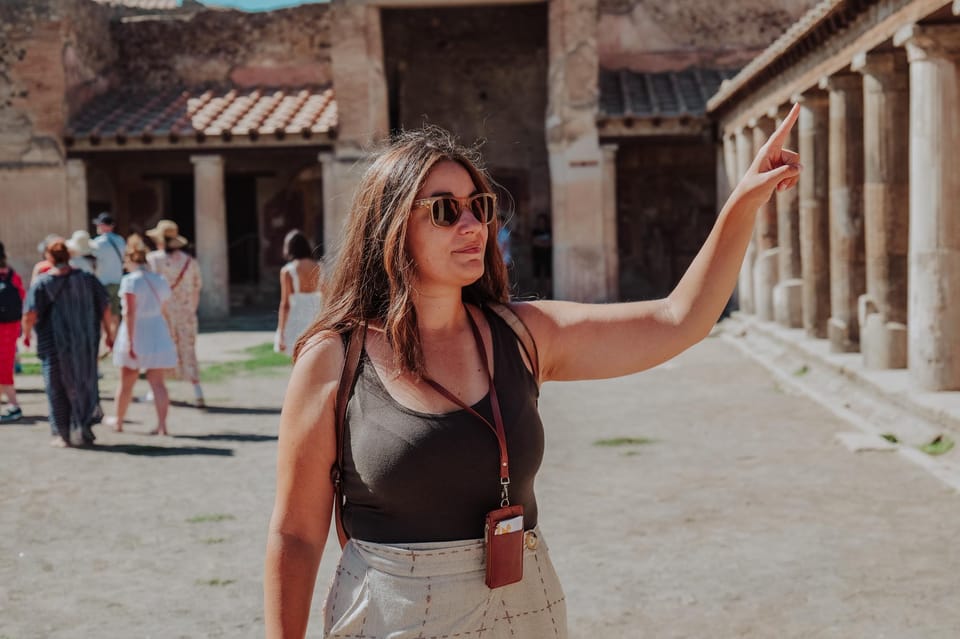
I’d book this tour if you’re choosing just one Pompeii experience and you want to leave with understanding. The combination of archaeologist guidance, small-group pacing, and Villa of the Mysteries access is the kind of trio that makes Pompeii feel less random.
If you already know Pompeii well and you’re comfortable navigating alone, you might not need a guide. But most first-timers benefit from having someone help you see what matters and when to linger.
FAQ
FAQ
How long is the Pompeii tour with the Villa of the Mysteries?
The tour lasts 3 hours.
What is the price per person?
It costs $88 per person.
What is included in the ticket?
The package includes Pompeii Plus entrance ticket access, including the Archaeological Park and the Villa of the Mysteries.
Does the tour skip the ticket line?
Yes, it includes skip-the-ticket-line entry.
Where does the tour meet?
The guide meets at Porta Marina Superiore, at the entrance gate, holding a sign with ASKOS TOURS written on it.
Is transportation included?
No. Transportation is not included.
Are food and drinks included?
No. Food and drinks are not included.
What languages are available for the live guide?
The live tour guide is available in German, Italian, French, English, Spanish, and Portuguese.
What should I wear and bring?
Wear comfortable, closed-toe shoes. In summer, a hat is recommended, and flip-flops are not suitable. Bring a passport or ID card.
Does the tour run in bad weather?
Yes. The tour takes place rain or shine.
Can I bring a pet?
Small pets within 10 kg are allowed inside the Archaeological Park of Pompeii, but they must be kept on a leash.