REVIEW · POMPEI CAMPANIA
Pompeii: Small Group Tour with an Archaeologist
Book on GetYourGuide →Operated by Askos Tours · Bookable on GetYourGuide
Pompeii feels personal when someone explains it. This small-group Pompeii tour (with options for private time) lets you walk a UNESCO city laid bare by Vesuvius and understand what you’re seeing through an archaeologist-led route.
I love that the experience blends big “wow” stops (like the Forum and the Great Theatre) with close-up art moments such as frescoes and mosaics inside key houses. The main drawback: the site has uneven ground, steps, and short steep climbs, so it’s not a great match if you have mobility limits (including wheelchair use).
In This Review
- Key things to know before you go
- Pompeii lands differently with an archaeologist in front of you
- Two tour lengths: pick 2 hours or 3 hours for the Villa of the Mysteries
- Entering through Porta Marina Superiore and setting your bearings
- Pompeii’s public heart: Forum, Basilica, and the big civic stops
- Great Theatre and the thrill of seeing designed performance spaces
- Thermal baths, temples, bakery—small clues that make daily life click
- Houses and art: mosaics, frescoes, and learning what to notice
- The Lupanar: why the brothel is famous (and what to expect)
- Plaster casts in display cases: picturing 79 AD without guessing
- How the guide changes everything: humor, interaction, and better routing
- Headsets, group size, and why 2–3 hours can feel like a lot
- How to spend the rest of your day after the official tour ends
- Price and value: is $40 a good deal?
- Practical notes you should plan for (before you arrive)
- Should you book this Pompeii small-group archaeologist tour?
- FAQ
- What’s the duration of this Pompeii tour?
- Does the price include entry tickets?
- Can I choose a private tour instead of a small group?
- Are headsets provided?
- Where does the tour enter Pompeii?
- What languages are available?
- Is this tour suitable for wheelchair users or mobility impairments?
Key things to know before you go
- Archaeologist-led route that helps you read buildings instead of just passing them
- Two lengths: a 2-hour introduction or a longer 3-hour version that includes the Villa of the Mysteries
- Skip-the-line entry plus a guide pacing you through the busiest areas
- Hands-on-looking details: mosaics, wall art, and spots like the House of the Vettii and the Lupanar
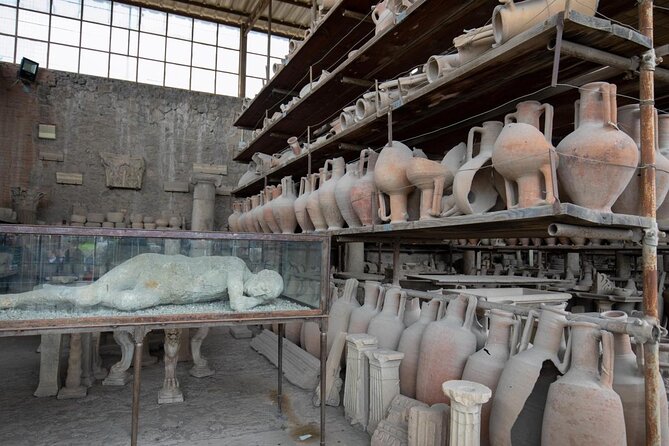
- Plaster casts in display cases help you picture what happened in 79 AD
- After the tour freedom to stay on-site and explore at your own speed
Pompeii lands differently with an archaeologist in front of you
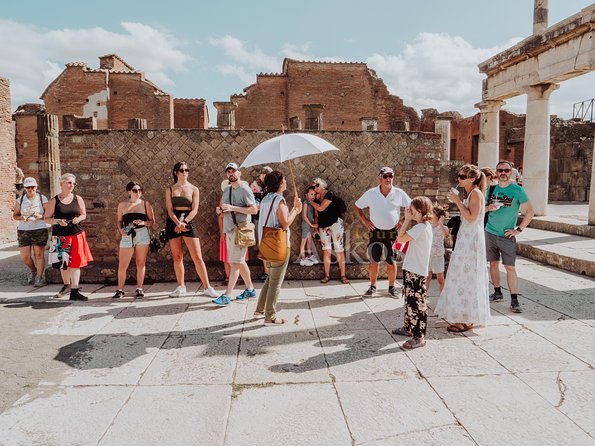
Pompeii isn’t just ruins you stare at. It’s a whole town frozen by ash, with daily life stamped into stone, plaster, and wall color. What changes everything is having an archaeologist guide who can explain why a room was set up the way it was, what a street corner used to mean, and how the city functioned when people were still running errands and buying food.
In other words, you’re not only seeing the past—you’re learning how to “read” the evidence. I especially like the way guides in this program often make the story feel human, with talk that connects architecture to real habits: where people met, how shops worked, and why certain spaces mattered.
You can also read our reviews of more tours and experiences in Pompei Campania.


Two tour lengths: pick 2 hours or 3 hours for the Villa of the Mysteries
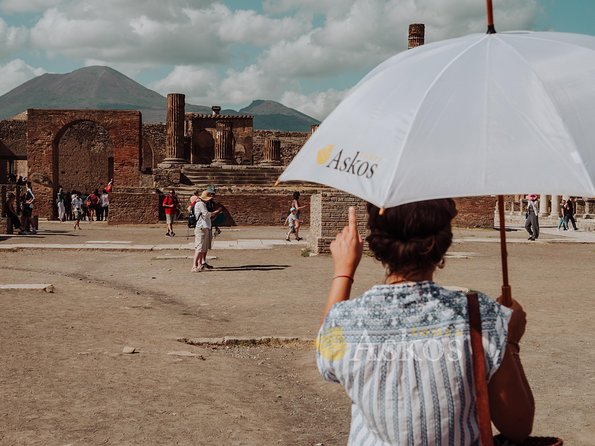
This is one of those choices where “short” can still be satisfying—because Pompeii is huge. You’ll choose between:
- A 2-hour guided tour (shared small group or private)
- A 3-hour guided tour that adds a visit to the Villa of the Mysteries
If you want the best balance of orientation plus time to wander afterward, the 2-hour option is a strong fit. If you’re the type who gets hooked by art and symbolism in frescoes, the 3-hour route is worth the extra time because it gives you more room to slow down and look closely.
Entering through Porta Marina Superiore and setting your bearings
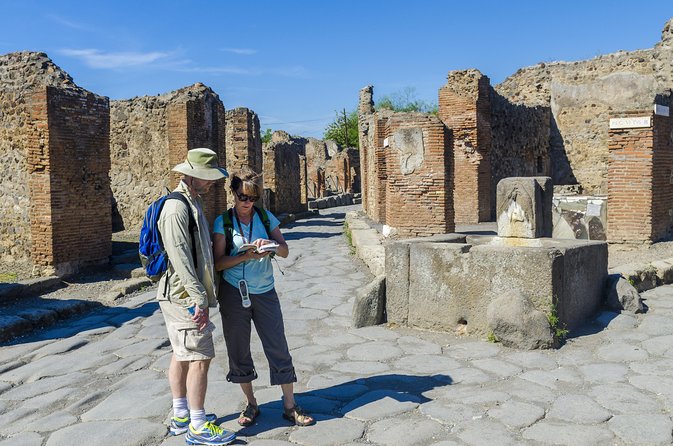
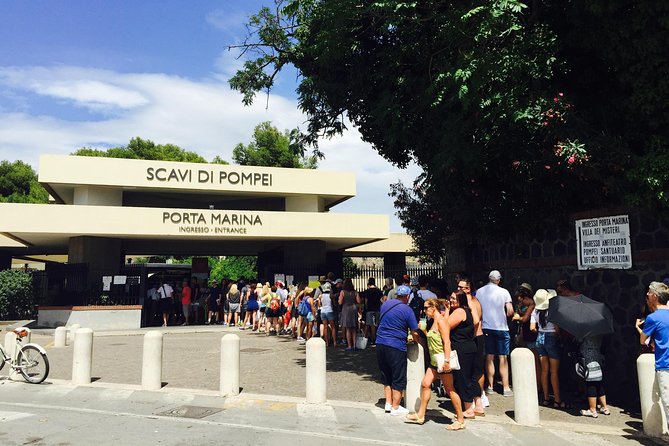
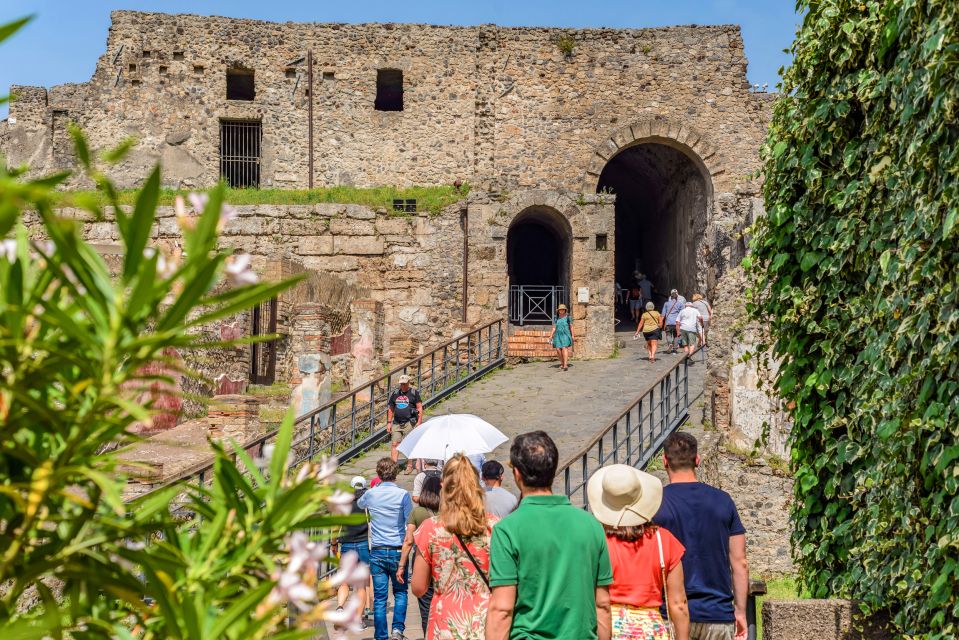
Your visit starts at Porta Marina Superiore, one of Pompeii’s ancient gates. That matters more than it sounds. Walking in from a gate that was once used for movement and commerce helps you understand the city as a place people accessed—not a museum you step into.
You’ll also likely get practical help before you walk: the tour includes Pompei Express entry tickets, and you’ll skip the ticket line, which saves time in a place where lines can eat your energy. There’s also a free cloakroom service near Porta Marina Superiore (when available), which can be a relief if your day tour plan includes a bag you’d rather not carry around.
Pompeii’s public heart: Forum, Basilica, and the big civic stops
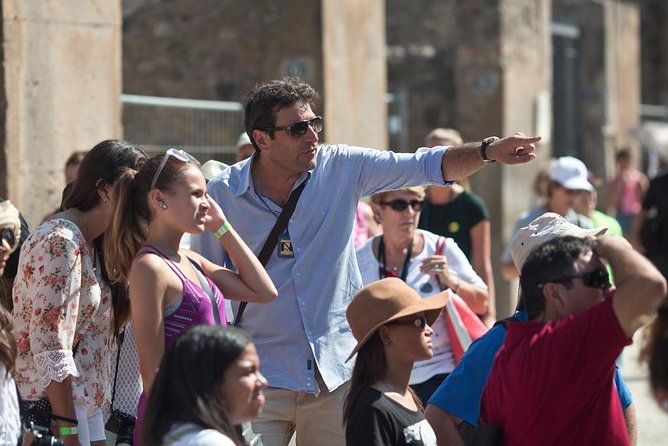
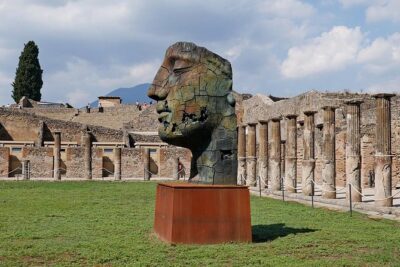
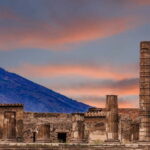
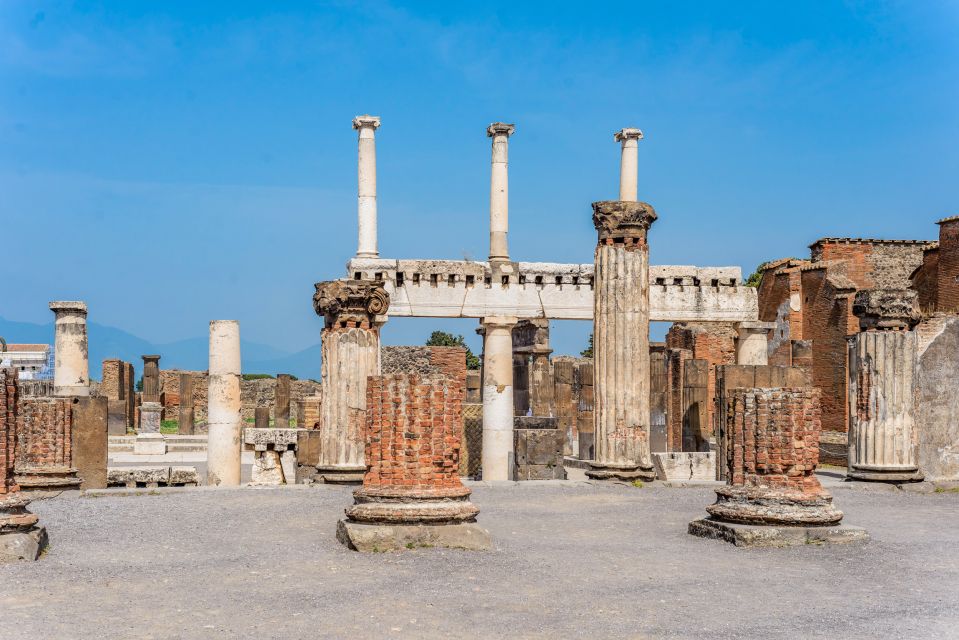
A guided loop around Pompeii’s center is how you understand the city fast. You’ll spend time in the Forum, the old heart of public life, where you can look at the Forum Civile area and start connecting street layout with civic power.
From there, you’ll typically move through major public architecture such as:
- The Basilica, described as a business and legal center
- Temple areas, including the Temple of Apollo and the Temple of Jupiter
The pay-off here is context. Without help, it’s easy to treat temples and civic buildings like separate “sights.” With a guide, you learn what each space likely did in daily Roman life—where people gathered, where decisions got made, and how religion and civic business were physically intertwined.
One thing I appreciate: the pacing. People who love this tour often comment on guides steering away from the most congested zones. That means you spend more time actually looking, not just shuffling.
Great Theatre and the thrill of seeing designed performance spaces
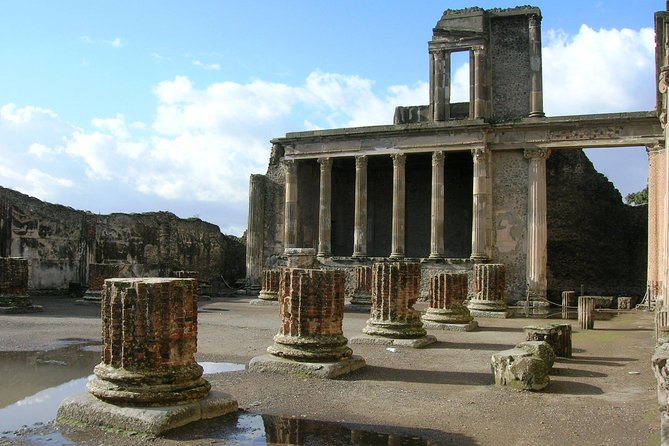
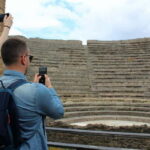
The Great Theatre of Pompeii is one of those places where you can feel why the Romans built for crowds. Even in its damaged state, you can sense the scale and purpose: it was made for public gatherings, entertainment, and community presence.
On this tour, the theatre stop is more than a photo moment. Your archaeologist guide will point out details that help you understand how such a space worked and why it was so central to public identity. It’s the kind of stop where you walk away thinking about the people who sat there—cheering, watching, and going back to their neighborhoods afterward.



Thermal baths, temples, bakery—small clues that make daily life click
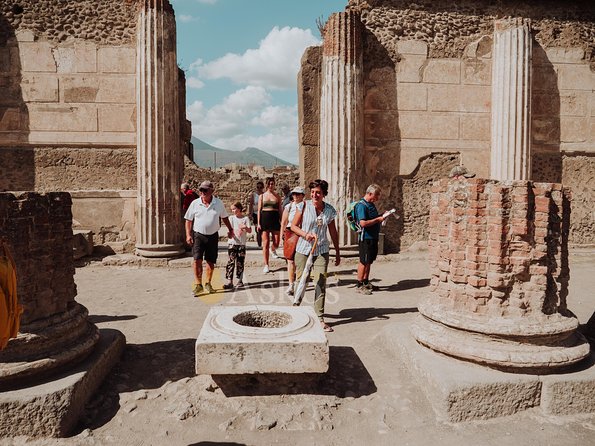
Pompeii’s best moments often come from the “in-between” places, not just the headline sights. Your guided route can include the thermal baths, plus other elements that show the city’s routine: temples and even a bakery.
Here’s why that matters for you. Pompeii can trick your brain into focusing only on elite houses and dramatic art. But daily life is visible everywhere if you know what to look for. When your guide connects these sites to habits—washing, eating, worship—you start to see Pompeii as an actual city with rhythms, not a stop-motion set.
Houses and art: mosaics, frescoes, and learning what to notice
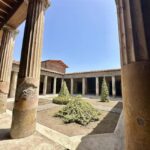
This tour is built around more than walking streets. You’ll see restored artwork, mosaics, and frescoes up close, with stops tied to key homes such as:
- House of the Vettii
- House of Menander
- House of the Faun
- (Depending on timing and route flow) other prominent domestic areas
I like these house visits because they train your eyes quickly. You learn how to distinguish decorative choices that signal status or taste, and how rooms were arranged to support family life and guest relationships.
Also, note the way the route is structured for time. You won’t see everything, and that’s not the goal. The goal is to build a mental map of what matters most so your later self-guided wandering is smarter.
The Lupanar: why the brothel is famous (and what to expect)
One of the most talked-about stops is the Lupanar, Pompeii’s preserved brothel. On the tour you’ll learn how it got its name, then you’ll see the stone beds and frescoes that helped advertise the rooms.
A practical note: this is an adult-themed site. The tour handles it in a way that’s meant to be informative rather than sensational, but it’s still part of Pompeii’s real record of life. If you’re bringing kids, consider how your family handles mature topics, even when delivered thoughtfully.
Plaster casts in display cases: picturing 79 AD without guessing
A key emotional moment on this tour is the chance to see plaster casts related to people caught in the eruption. You might hear about them during your walk, and you’ll find them in displayed form in sealed glass cases rather than being part of everyday “in-house” scenes. The result is powerful in a different way: it gives you a concrete reference point while keeping the site focused on what can be authenticated and shown.
This is exactly where an archaeologist guide earns their keep. Instead of guessing or turning the tragedy into drama, you get a clearer picture of what you’re looking at and why it matters.
How the guide changes everything: humor, interaction, and better routing
The best Pompeii guides don’t just list sites. They teach you to notice. That’s why many groups leave calling out guides who are personable, funny, and willing to answer questions.
You may run into different guide personalities across languages, but the common thread seems to be storytelling skill plus practical explanations. Some recent groups highlight guides like Roxanne, Alexandra, Alessandra, Paulo (Pablo), Teresa, Antonella, and Anna, each with a style that helps the group stay engaged rather than mentally zoning out among walls and columns.
One standout detail I’d plan around: your guide will often tell you what to look for in a few seconds—like clues for whether a space was commercial or residential—so you can read Pompeii while you’re still moving.
Headsets, group size, and why 2–3 hours can feel like a lot
If you’re in a shared group of 16 or more, you’ll get headsets. That’s a small detail, but it matters. Pompeii isn’t quiet, and you want every word when the guide is connecting art and architecture to daily life.
Time is also managed for you. You’re scheduled for 2 to 3 hours, which is long enough to hit major highlights, yet short enough to keep you from melting in the heat—or losing the thread of the story. Afterward, you can stay longer if you want.
How to spend the rest of your day after the official tour ends
The tour ends with something I love: the freedom to explore the archaeological site on your own. That’s huge because Pompeii rewards curiosity. You’ll already have a map in your head, so you can choose what to revisit.
Here’s a practical way to use that extra time:
- Go back to the places that sparked questions during the tour
- Spend longer in areas with the best surviving art you noticed from your route
- Walk slowly and look for small clues the guide pointed out, like street wear or decorative signals
Also remember scale: Pompeii is big. Even with a planned tour, you’re unlikely to see everything in one day. If you’re doing this as your first Pompeii visit, starting with a guided introduction is the simplest way to avoid wandering aimlessly.
Price and value: is $40 a good deal?
At around $40 per person, the price can feel surprisingly fair once you break down what’s included. You get:
- Your entry ticket via Pompei Express
- An archaeologist-led guided tour for 2 or 3 hours
- A guided route that covers major highlights efficiently
- The option to explore afterward on your own
Without a guide, you can still buy a ticket and walk. But the value here is time saved and meaning gained. Pompeii doesn’t label itself in a way that tells you what every room and street corner meant. Paying for a knowledgeable archaeologist is what turns the visit from sightseeing into understanding—especially if it’s your first time at the park.
If you’re traveling with a group and you choose the private option, the value can feel even better because your schedule and language needs are easier to match.
Practical notes you should plan for (before you arrive)
Here’s what you’ll want to have ready:
- Bring passport or an ID card (a copy is accepted)
- Expect a lot of walking on uneven ground
- Don’t bring luggage or large bags, and don’t plan on mobility scooters
- No smoking inside the site
- Dogs over 10 kg aren’t allowed
Accessibility is the other big factor. This tour isn’t recommended for wheelchair users or people with mobility impairments, because of steps, ramps, and steep spots. If that’s your situation, it’s smart to look for an option designed for your needs rather than forcing it.
Finally, languages can vary by option. The tour offers French, Spanish, German, Portuguese, English, and Italian, but shared group versus private doesn’t always guarantee the same language. If you have a language preference, double-check your specific option before booking.
Should you book this Pompeii small-group archaeologist tour?
Yes—if you want Pompeii to make sense quickly and you value interpretation, not just sightseeing. The combination of skip-the-line entry, archaeologist guidance, and the chance to keep exploring afterward is the right structure for first-time Pompeii visitors.
Skip it or choose a different format if you need wheelchair-friendly routes or step-free access. Also consider the 2 vs 3 hour choice based on how art-focused you are: the Villa of the Mysteries is the added draw for longer time.
If you do book, show up ready to walk and listen. Bring water, comfortable shoes, and a curious mindset. Your payoff is a Pompeii visit where the buildings explain themselves—and where you’ll leave with names, relationships, and daily-life clues instead of a folder full of similar photos.
FAQ
What’s the duration of this Pompeii tour?
It runs 2 to 3 hours, depending on whether you book the shorter option or the longer option that includes the Villa of the Mysteries.
Does the price include entry tickets?
Yes. The tour includes Pompei Express entry ticket along with the guided time.
Can I choose a private tour instead of a small group?
Yes. There is a private group option available in addition to shared small-group tours.
Are headsets provided?
Headsets are provided for listening to the guide for groups of 16 or more.
Where does the tour enter Pompeii?
The tour begins at Porta Marina Superiore.
What languages are available?
The guide language options listed are French, Spanish, German, Portuguese, English, and Italian. Language availability can differ between shared and private options, so it’s worth checking what’s offered for your booking.
Is this tour suitable for wheelchair users or mobility impairments?
No. It is not recommended for wheelchair users or people with mobility impairments because the route includes steps, ramps, and steep climbs.