REVIEW · POMPEI CAMPANIA
Pompeii: Small-Group Tour of Pompeii and Herculaneum
Book on GetYourGuide →Operated by Askos Tours · Bookable on GetYourGuide
Pompeii and Herculaneum feel like time travel. This archaeologist-led small-group walk (up to 20 people) is the difference between staring at stones and understanding what you’re seeing, and I especially like how it pairs Pompeii’s drama with Herculaneum’s sharper preservation. The chance to hear real interpretation about Roman daily life makes both sites much easier to process on a single day.
The one drawback to plan for is practical: the break after Pompeii is short, so lunch can feel rushed if you want a proper sit-down meal and not just a quick bite.
In This Review
- Key highlights you’ll actually care about
- Why this Pompeii and Herculaneum combo is such a smart use of your day
- Where to meet at Pompeii: Porta Marina Inferiore and finding your guide fast
- Pompeii for 2 hours: what your archaeologist guide helps you notice
- Pompeii break time: using the 30 minutes without turning it into a scramble
- The Circumvesuviana train ride: 20 minutes of motion and a mental reset
- Herculaneum in 2 hours: smaller city, better-preserved life
- Headsets, group size, and how the tour stays readable inside a busy ruin
- Tickets, entry handling, and the real value of an archaeologist guide
- What to pack so the day stays comfortable
- Where the day ends: finishing at Parco Archeologico di Ercolano
- Who should book this Pompeii + Herculaneum small-group tour
- Should you book? My honest take
- FAQ
- How long is the Pompeii and Herculaneum tour?
- What group size should I expect?
- Where do I meet the guide?
- What happens after Pompeii?
- How long is the Pompeii guided portion?
- How long is the Herculaneum guided portion?
- Does the tour include tickets or entry handling?
- What language is the tour offered in?
- Is the tour suitable for wheelchair users or limited mobility?
Key highlights you’ll actually care about
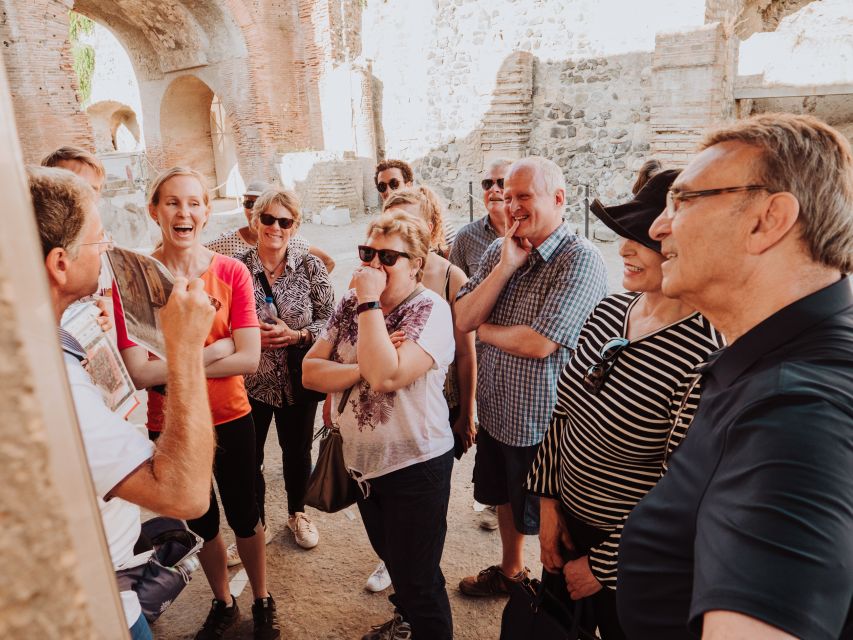
- Archaeologist guide on both sites so buildings, statues, and street scenes get explained in plain terms
- Small group (max 20) with headsets provided for larger groups so you can hear the guide clearly
- Pompeii first, then the Circumvesuviana train to Ercolano for an easy change of pace
- Herculaneum’s preservation includes intact mosaics and paintings plus carbonized wooden objects
- Where you end matters: the tour finishes at Parco Archeologico di Ercolano, not back at Pompeii
- Comfort planning helps a lot: bring water and dress for heat or sudden rain
Why this Pompeii and Herculaneum combo is such a smart use of your day
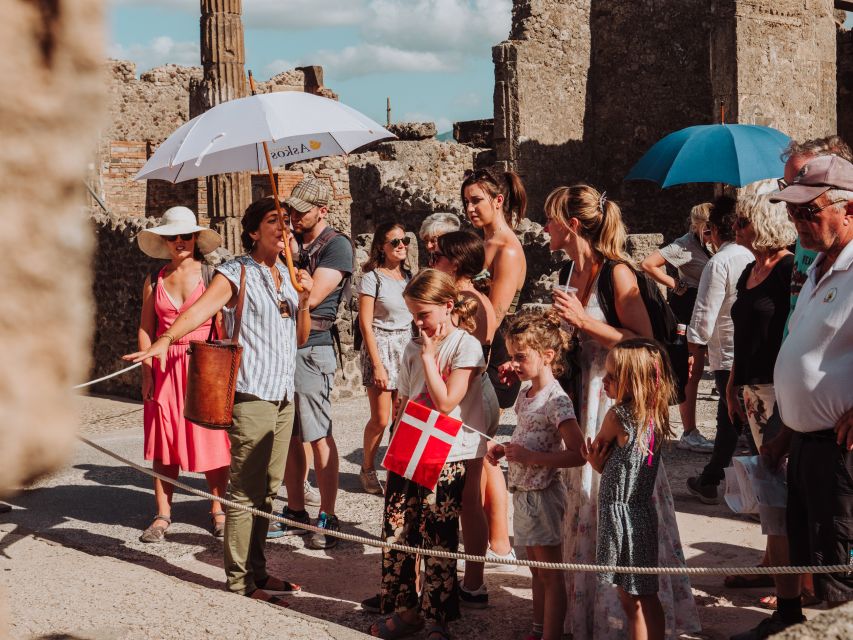
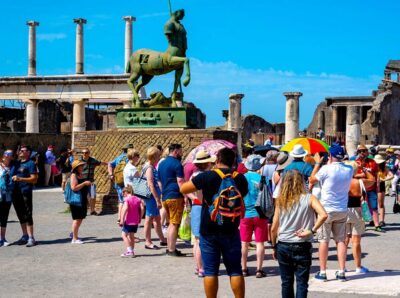
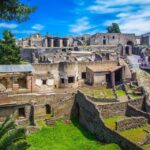
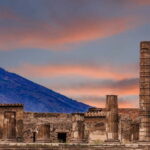
If you only have one day in Campania, this pairing makes sense because the two sites “answer” each other. Pompeii shows a city that was buried under meters of pumice and ash, so you get that sense of scale and sudden catastrophe. Herculaneum, buried differently, was preserved with more of the delicate stuff—tile floors, wall paintings, and mosaics—so you get a clearer look at how people lived.
I like that you’re not forced to choose between them. With one guided flow, you can see how the Roman world functioned: public life in Pompeii’s bigger layout, then the more intimate, better-kept interior life of Herculaneum. Guides from Askos Tours often include names like Diego, Alfredo, Sergio, Julia, Paulo, and Vincenzo in past departures, and the common thread in their work is that they don’t just recite dates—they connect what you see to everyday habits.
One more reason this format works: the timing. You get a focused guided walk at each site, plus a transfer between them. You won’t spend half your day wandering in the heat, trying to figure out what matters most.
You can also read our reviews of more tours and experiences in Pompei Campania.


Where to meet at Pompeii: Porta Marina Inferiore and finding your guide fast
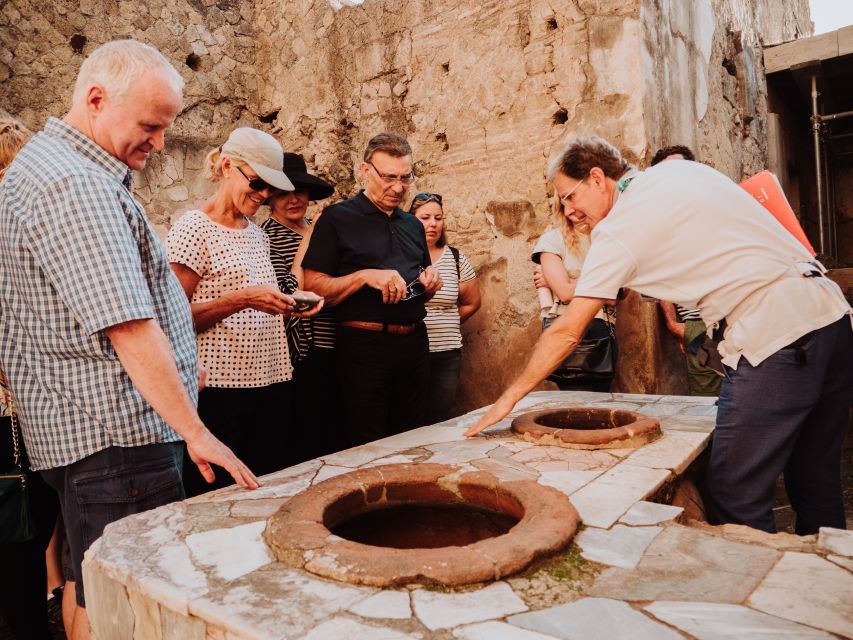
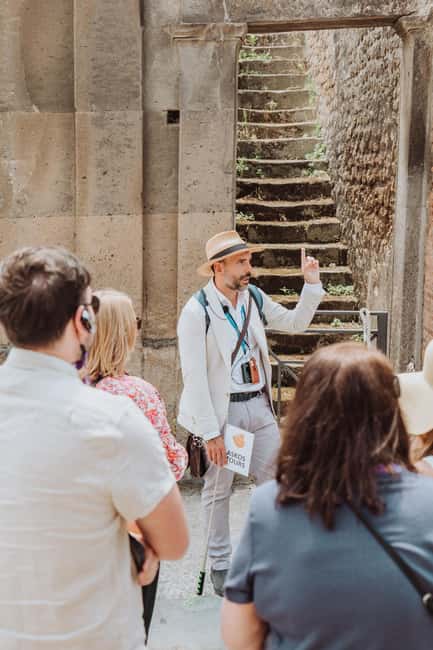
You’ll start at Piazza Porta Marina Inferiore, 1, meeting your guide on the left side of the Pompeii entrance called Porta Marina Inferiore, close to the Arte bus stop. Your guide should be holding a sign that reads Askos Tours, which helps when you’re arriving at a busy perimeter with lots of operators nearby.
This matters more than it sounds. Pompeii is confusing at first glance. If you start with even a small delay—waiting in the wrong spot—you can lose the calm you need for the first part of the visit.
Also note this practical detail: the meeting point is a few minutes from the Circumvesuviana area near Pompei-Villa dei Misteri. So if you’re coming in by train, you can match your arrival plan to that general area.
Pompeii for 2 hours: what your archaeologist guide helps you notice
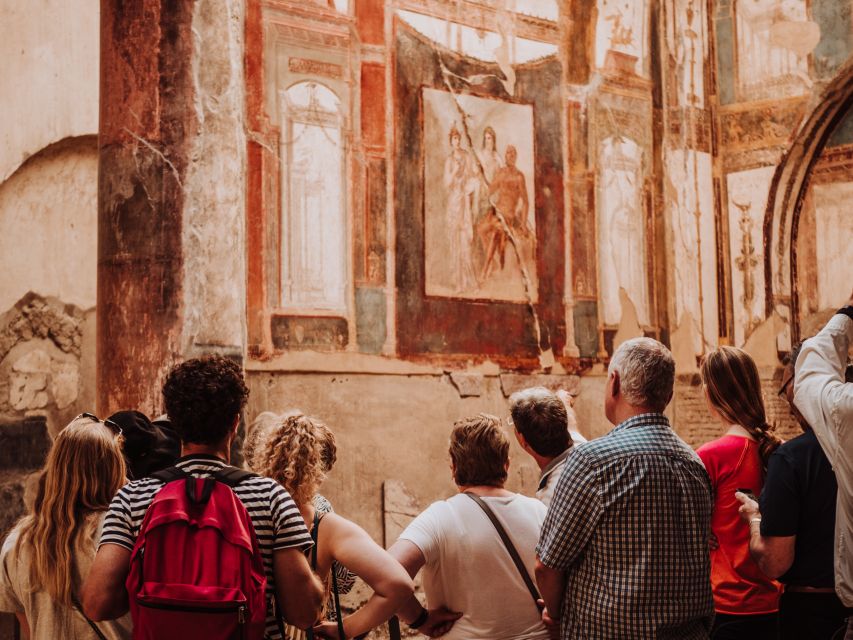
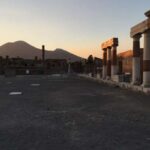
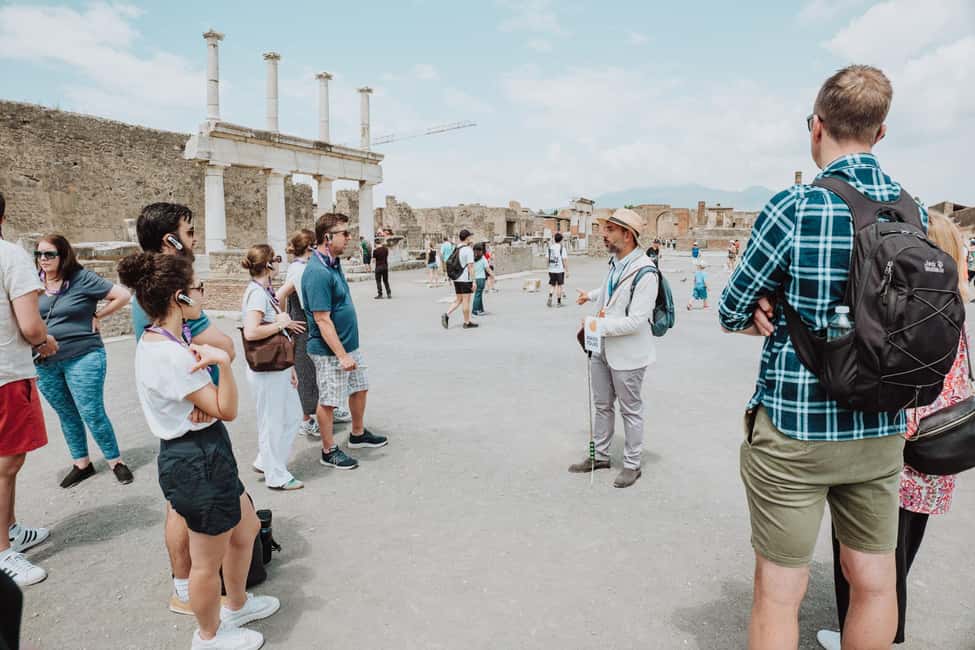
The Pompeii portion is a 2-hour guided tour. That duration is long enough to hit the “why does this building exist?” moments, but short enough that the guide can keep you moving without turning the day into a marathon.
Here’s what this kind of archaeologist-led walkthrough does for you:
- It gives you structure. Pompeii is huge. Even with maps, you can feel lost. A guide helps you connect street layout, building function, and Roman habits as you move.
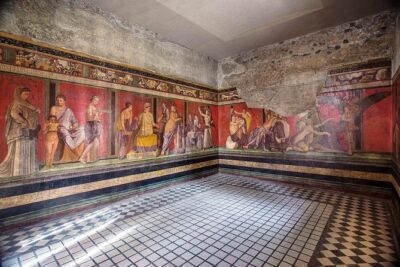
- It turns details into clues. Instead of seeing columns, doorways, or wall marks as random fragments, you learn what they likely indicated—public vs. private space, how rooms were used, and how the city worked.
- It helps you read the emotional moments. Pompeii is heartbreaking. When someone explains how bodies and objects were preserved, the site shifts from sightseeing to understanding.
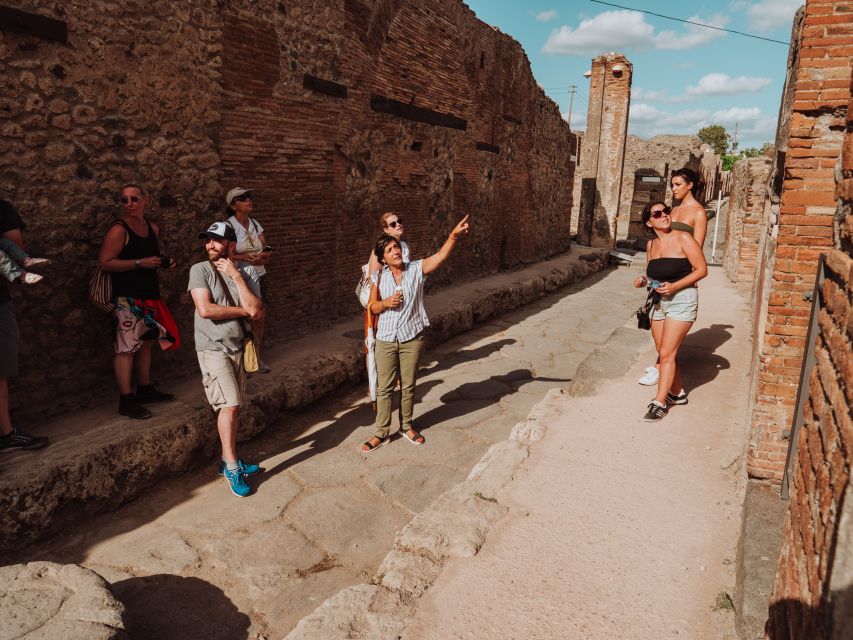
In the guide format used here, you’re not stuck with static information panels. People in the group can ask questions, and the pace is designed around viewing the most important areas without rushing every stop. In past departures, guides like Diego or Sergio have been noted for steering groups toward the most interesting zones so you’re not just zig-zagging through the crowds.
One small thing to keep in mind: Pompeii crowds can be real. Even with a small group, you’ll still be part of the larger site energy. Your best move is to stay close to the guide at the start, then keep an eye on where the group pauses—those are often the moments when you’ll get the most context.
Pompeii break time: using the 30 minutes without turning it into a scramble
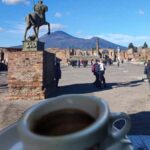
After Pompeii, you get a 30-minute break. You can use it for lunch, a restroom stop, and a quick reset before the transfer.
I’ll be blunt: if you want a long sit-down meal, this part may not feel generous. Several people have suggested that they’d prefer more time for lunch, especially to get out of the sun. With 30 minutes, your realistic plan is:
- grab something quick,
- use the restroom,
- and return to the meeting point on time.
If you’re traveling in high season heat, the schedule can feel tighter because you’re also walking longer distances to reach food. So pack your patience along with your water.
The Circumvesuviana train ride: 20 minutes of motion and a mental reset
Next comes the train—about a 20-minute trip on the Circumvesuviana to Ercolano (Ercolano is Herculaneum in Italian usage: you’ll often see it written as Ercolano). The schedule blocks 30 minutes for the train segment, which covers practical bits like walking to the platform, boarding, and regrouping.
This train gap is underrated. It’s not just transportation; it’s a pressure release valve. After Pompeii’s scale and intensity, the short ride helps your brain switch modes. You go from “big city, dramatic burial” to “smaller city, intimate preservation.”
And since your guide is managing the group movement, you don’t have to worry about coordinating public transit with your ticket and timing on your own. Just keep your water handy and stay aware of the regrouping moment.


Herculaneum in 2 hours: smaller city, better-preserved life
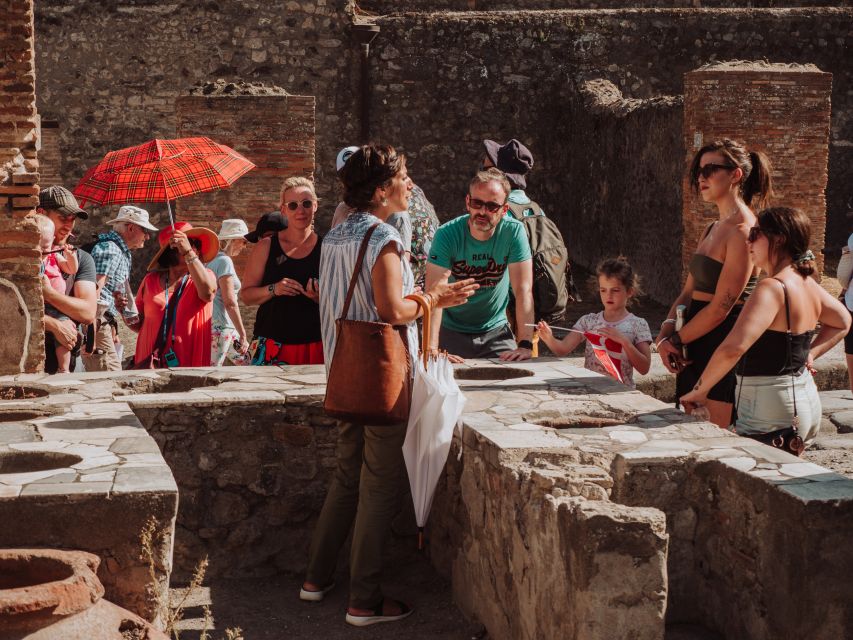
The Herculaneum portion is another 2-hour guided walk. This is where the story becomes painfully vivid, but also easier to picture. The core reason is preservation: Pompeii was covered in about four meters of ashes, while Herculaneum was buried under a thick mix of mud (reported here as about 20 meters) that ended up protecting many delicate surfaces and materials.
What you can expect to see (and why it’s so striking):
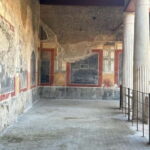
- Intact paintings and mosaics that give you a sense of taste and status, not just architecture
- Carbonized wooden objects—these details make daily life feel real
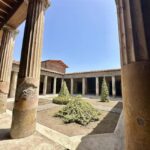
- Second floors preserved enough to help you visualize how buildings functioned
- A clearer sense of an opulent lifestyle among wealthier Romans
Herculaneum is smaller than Pompeii, so you get a more human scale. You’re not constantly asking, Where am I now? You can focus on the “how it worked” questions—where people moved, how rooms connected, and what decoration says about the owners.
It’s also a great match for first-time visitors. If Pompeii feels overwhelming, Herculaneum often clicks faster because the surviving interiors give you “less interpretation required” visually. Your guide still does the heavy lifting—context, explanations, and translating what you see into Roman life.
Headsets, group size, and how the tour stays readable inside a busy ruin
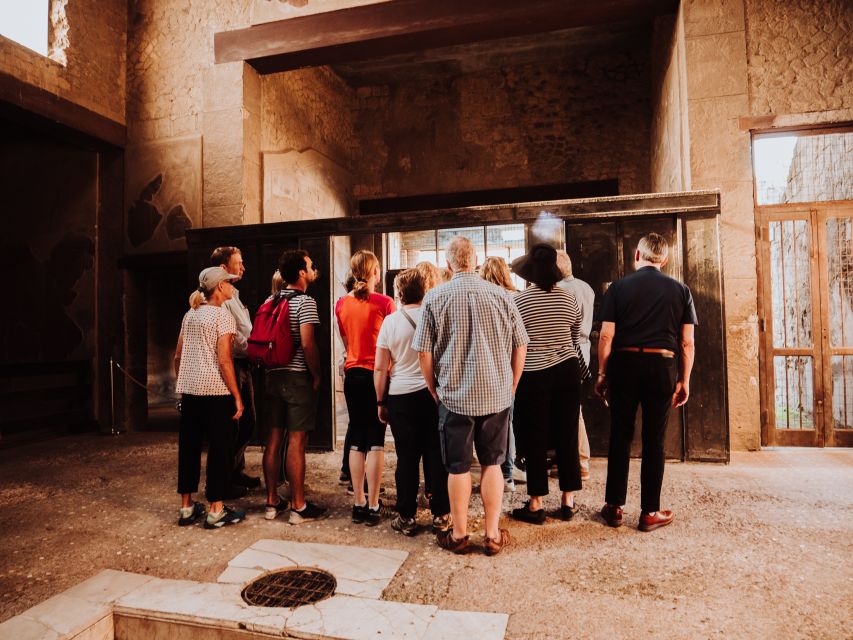
A group of up to 20 keeps the experience manageable. Inside large archaeological sites, your biggest enemy is lost audio and lost direction. Here, that’s solved with two layers:
- keeping group size small, and
- providing headsets for groups of more than 10 participants.
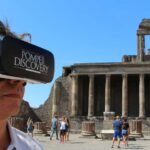
If you’ve visited ruins with a crowd before, you know the problem: everyone’s speaking over everyone. Headsets let you hear your guide even when the group is moving and the wind or other noises kick in.
This also helps with questions. You’re not shouting. You can ask something and get a real answer before moving on.
Tickets, entry handling, and the real value of an archaeologist guide
The tour includes skip-the-ticket-line handling, and the tour information also notes entry ticket costs for Herculaneum if you were buying separately (16.00 euros/adults; 2.00 euros/EU citizens 18–25). That tells you tickets are part of the logistics either way, and the key benefit here is less friction getting into the sites.
But the deeper value isn’t the paperwork. It’s what you’re buying with a trained guide:
- You save time because you don’t need to decode every building on your own.
- You avoid the “pretty but meaningless” feeling. Pompeii and Herculaneum can look like ruins to someone with no context.
- You get guided storytelling that connects artifacts and architecture to Roman habits—public life, private life, and social status.
I also like that the guides used by Askos Tours have been described as fun as well as serious. When someone can explain why a wall painting matters or what a space was used for, you remember it later. That’s the real value of paying for interpretation rather than just entry.
What to pack so the day stays comfortable
This tour is about 5.5 hours of walking in and around the ruins. Plan for sun and uneven surfaces.
Bring:
- your passport or ID card
- comfortable clothes
- sunglasses and a hat
- water in summer
- a raincoat or poncho for sudden showers
If you’re in colder months, you’ll still want layers because the sites can feel exposed. And good shoes matter because both archaeological parks involve uneven ground.
Also, there’s a clear accessibility note: it’s not suitable for mobility impairments and wheelchair users. That’s worth taking seriously rather than hoping you can “power through.”
Where the day ends: finishing at Parco Archeologico di Ercolano
The tour finishes at Parco Archeologico di Ercolano. In practical terms, that means you should plan your next step from Ercolano, not Pompeii.
If you’re staying in Pompeii or heading back toward Naples, build in time to get your bearings after the guided portion ends. People who expect a direct return to Pompeii can get surprised by this kind of end point difference, so it’s smart to check your route plan in advance.
Who should book this Pompeii + Herculaneum small-group tour
Book it if you:
- want both sites in one day without doing two separate tours
- like learning from a guide who connects what you see to Roman life
- appreciate small groups and hearing clear explanations (headsets help)
- want the contrast: Pompeii’s large-scale tragedy plus Herculaneum’s better-preserved interiors
Consider a different option if you:
- need a lot more time for lunch or a slower pace than what fits here
- have mobility needs that can’t handle uneven ruins (this one is not suitable for wheelchairs)
- want total freedom to roam without a structured route
Should you book? My honest take
If you’re choosing between wandering both sites alone and paying for interpretation, I’d lean toward booking this tour. Pompeii and Herculaneum are unforgettable, but they’re also easy to misunderstand. A strong archaeologist guide helps you see what matters fast, and the small-group pace keeps it from feeling like a factory line.
If your top priority is a relaxed schedule with a long lunch and lots of downtime, then the timing might be the mismatch. But if you can handle a quick meal window and you’d rather spend your energy learning instead of figuring things out, this is a high-value way to experience two of Italy’s most important Roman cities—side by side, with one coherent story from start to finish.
FAQ
How long is the Pompeii and Herculaneum tour?
The total duration is 5.5 hours.
What group size should I expect?
It’s a small-group tour with a maximum of 20 people.
Where do I meet the guide?
Meet at Piazza Porta Marina Inferiore, 1, at the left side of the Pompeii entrance Porta Marina Inferiore, near the Arte bus stop. Your guide will have a sign that says Askos Tours.
What happens after Pompeii?
You’ll have time for a break (30 minutes) for lunch or browsing outside the ruins, then you’ll take the Circumvesuviana train to Ercolano.
How long is the Pompeii guided portion?
You’ll have 2 hours of guided time at the Pompeii Archaeological Site.
How long is the Herculaneum guided portion?
You’ll have 2 hours of guided time at Herculaneum (Archaeological Site of Herculaneum).
Does the tour include tickets or entry handling?
The tour indicates skip-the-ticket-line. It also provides entry ticket information for Herculaneum (16.00 euros for adults; 2.00 euros for EU citizens 18–25).
What language is the tour offered in?
The guide is available in English and Italian.
Is the tour suitable for wheelchair users or limited mobility?
No. It’s listed as not suitable for people with mobility impairments and wheelchair users.