REVIEW · NAPLES
From Naples: Pompeii & Herculaneum with Archaeologist Guide
Book on GetYourGuide →Operated by Askos Tours · Bookable on GetYourGuide
Naples to Pompeii and Herculaneum in one day is a solid shortcut to history. You get an English-speaking archaeologist-style guide, plus skip-the-line entry, so you spend more time looking at real streets and rooms instead of waiting.
I especially like how Herculaneum’s preservation brings the disaster into sharp focus, with carbonized wood and intact wall art you can actually stand near. I also like the tight small group size (about 20), which helps you hear explanations and move at a workable pace.
The main drawback is physical: there are stairs and grades at both sites, and the tour isn’t recommended for limited mobility or wheelchair users.
In This Review
- Key moments that make this tour worth it
- Why Pompeii + Herculaneum is such a smart combo
- Getting started in Naples: meet point and minibus comfort
- Herculaneum: the 20-meter burial that keeps the past intact
- Herculaneum highlights you’ll want to time well
- The small lunch break before Pompeii keeps the day realistic
- Pompeii walk: how you see the city’s real rhythm in 2 hours
- Pompeii stops that turn a crowd into a story
- Pace, comfort, and what this 7-hour day demands
- Value check: is $168.79 a fair deal?
- Who this tour fits best (and who should think twice)
- Should you book this Pompeii & Herculaneum tour?
- FAQ
- Where does the tour start in Naples?
- How long is the tour?
- Is skip-the-line entry included?
- What’s the walking like at the ruins?
- What do you visit at Herculaneum?
- What do you visit at Pompeii?
- Are meals included?
- What should you bring and not bring?
Key moments that make this tour worth it
- Skip-the-line tickets that cut the worst waiting and keep the day moving
- An archaeologist guide who connects artifacts to daily Roman life
- Herculaneum’s preservation from 20 meters of buried mud and landslide deposits
- Pompeii’s big public hits plus private houses, mosaics, and street-scale details
- Small group size (limited to 20) so questions don’t vanish in the crowd
Why Pompeii + Herculaneum is such a smart combo
These two ruins are tied together by Vesuvius, but they don’t feel the same. Pompeii reads like a city snapshot: streets, shops, and big public spaces built for crowds. Herculaneum feels more intimate and fragile, because the conditions of burial helped preserve details that usually vanish.
You’ll also notice the contrast in what the guide spotlights. In Pompeii, you’re walking through major landmarks and everyday trade life. In Herculaneum, you’re often looking at objects and decoration that make you think, wow, someone really lived here—not just visited here.
If you want value for time (and you do, because it’s a 7-hour day), pairing the two sites is the move. You get the storyline of one eruption with two very different “after photos.”
You can also read our reviews of more guided tours in Naples


Getting started in Naples: meet point and minibus comfort
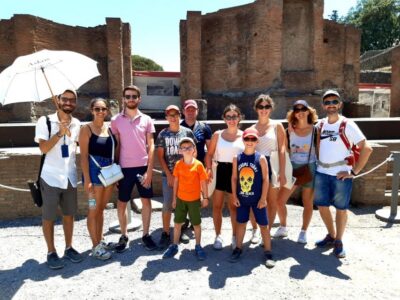
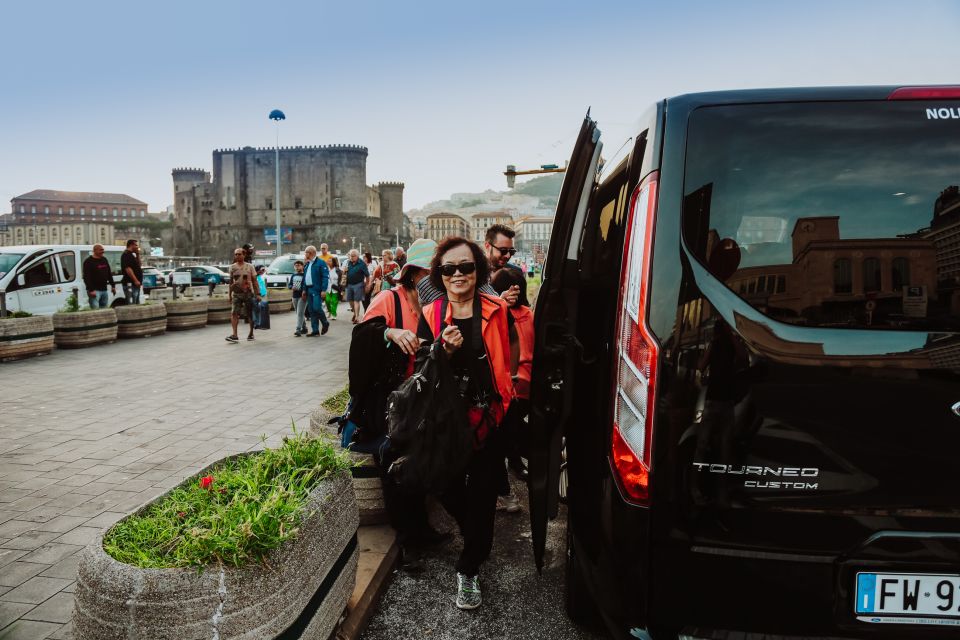
You meet at Starhotels Terminus, right by Naples Central Station, and you’ll spot your guide holding an Askos Tours sign. After pickup, you’ll ride in a modern minibus with a professional English-speaking driver. The group stays compact, which makes it easier to keep track of everyone on the day’s tight schedule.
The driving time matters more than you’d think. You’re not spending all day behind a window; you’re using that travel time to reposition yourself so you can actually get two guided walks in. You also get parking/tolls handled, so you’re not dealing with the stress of finding your own route through the Naples area.
Herculaneum: the 20-meter burial that keeps the past intact
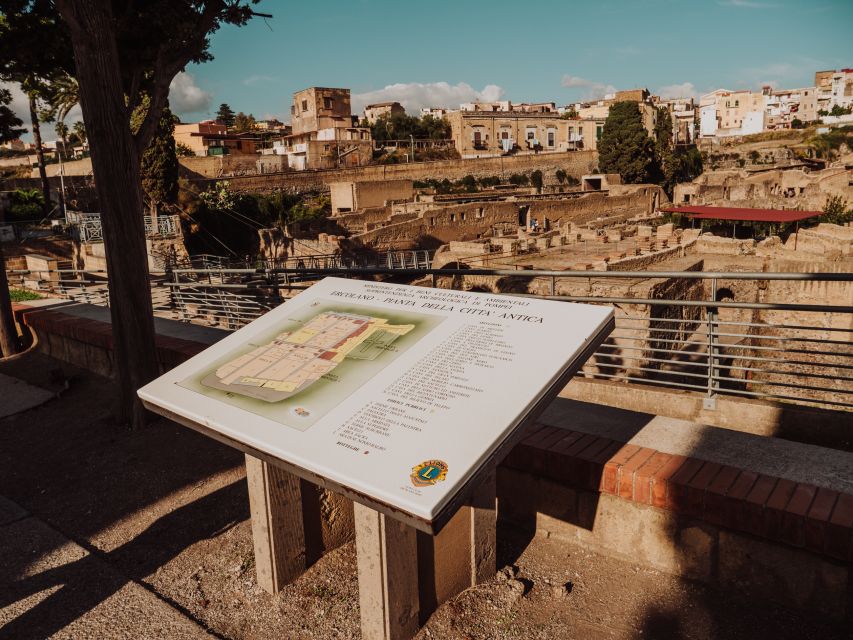
Herculaneum is the part many people remember first, because it doesn’t feel like “just ruins.” It was buried under mud from a landslide—reported as about 20 meters deep—and that kind of quick sealing helped preserve things that usually decay away.
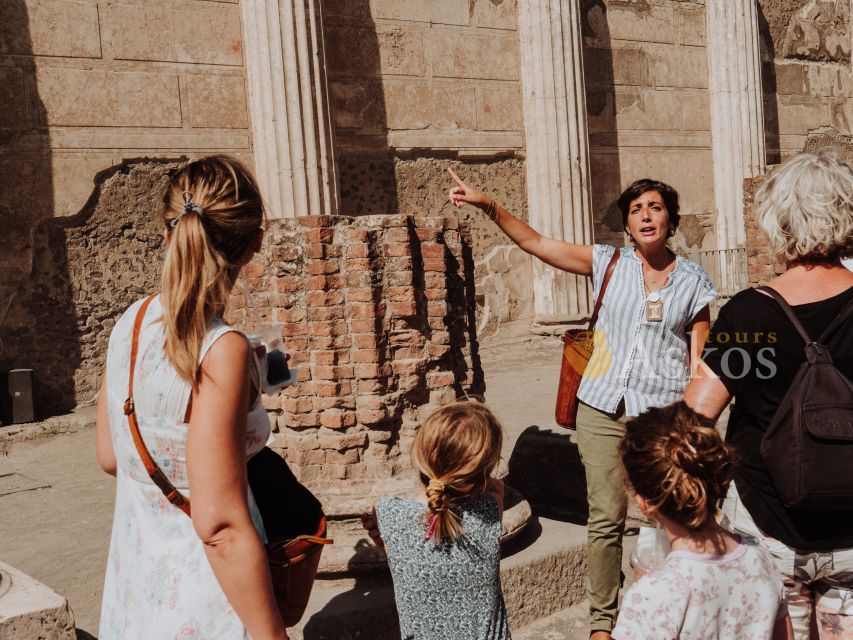
When you arrive, you enter with skip-the-line tickets and start a guided visit of about 2 hours. This is where the archaeologist guide earns their keep, because the story isn’t only about what’s missing. It’s about what survived and what that survival tells you.
You’ll see highlights tied to preservation, including carbonized wooden objects, intact paintings, and mosaics still in place. Standing in the right spot for those details is the difference between a photo and an understanding.
Herculaneum highlights you’ll want to time well
This site moves in layers, like a museum built into a hillside town. Here are the stops the guide is likely to emphasize, and why they matter:
Temple of the Augustali
This is one of the anchors for understanding local religious life and civic identity. Even if you’re not a religious-history person, it helps you picture how communities organized culture and power.
The beach with more than 300 skeletons found
This is one of the hardest moments emotionally, but it’s also one of the most informative. You learn how people tried to flee and what the shoreline scene suggests about the eruption’s pace and chaos.
Thermal Baths
Roman baths weren’t just hygiene. They were social hubs. You’ll get a clearer sense of daily routine when the guide explains how spaces worked and who used them.
Forum and civic spaces
At Herculaneum, the forum areas help you connect the everyday with the public. It’s where you start seeing how a town functioned, not just how it collapsed.
Samnite House, Gymnasium, and the House of the Dears
Private residences and leisure spaces show the contrast between public life and home life. The House of the Dears is especially memorable when the guide points out what decoration and layout suggest about status and taste.
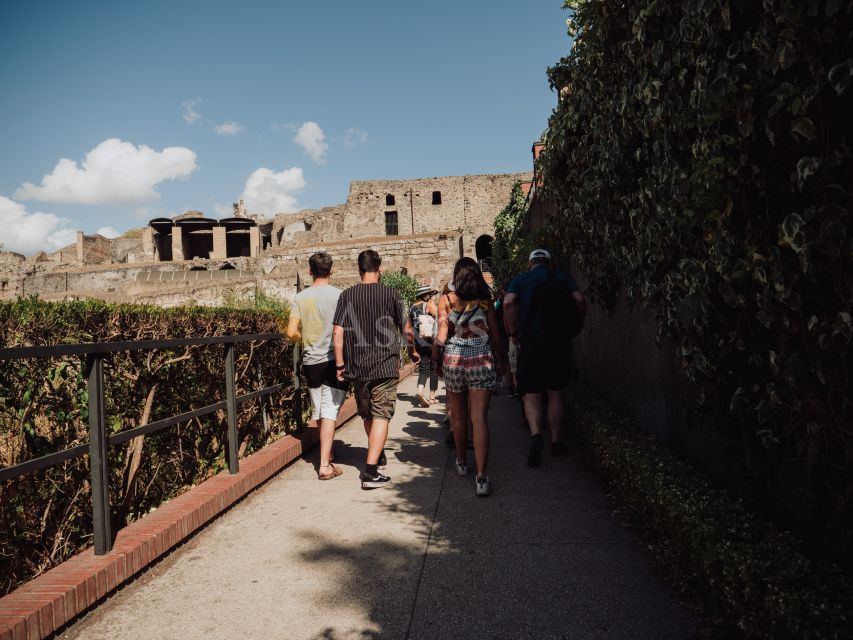
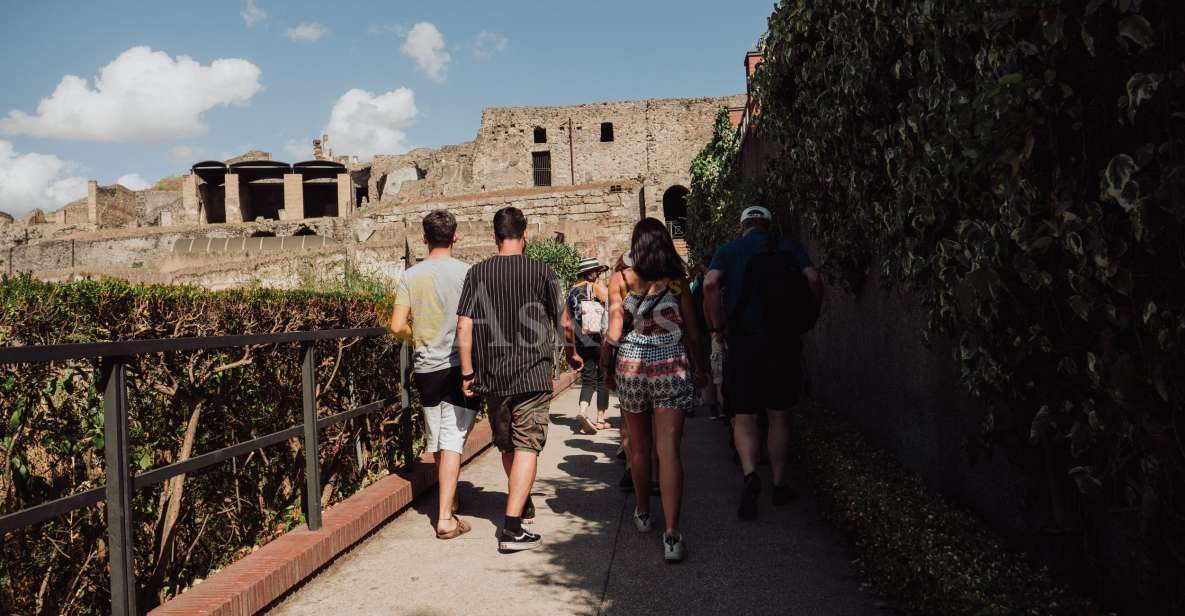
One practical thing: expect walking on uneven ground and some stairs. It’s not a sit-and-stroll site. Wear real shoes, and plan to slow your pace when you hit steeper grades.
The small lunch break before Pompeii keeps the day realistic
After Herculaneum, you’ll transfer toward Pompeii, with time for a break. You also get a lunch window—around 40 minutes—before the Pompeii portion starts.
This is short on purpose. Pompeii is huge, and you only have so many hours before the day has to end back where you started. The upside is that your itinerary is designed to hit major, meaningful zones instead of spreading you too thin.
If you don’t want to gamble on quick food, consider bringing snacks or a small sandwich. One review noted restaurant prices around 30€ per person inside the area, which is a good reason to pack something simple if you’re watching your budget. Even a bottle of water you bought outside the busiest entrances can help you stay comfortable.




Pompeii walk: how you see the city’s real rhythm in 2 hours
Pompeii is your guided city walk, about 2 hours long, after skip-the-line entry. The key benefit here is that you’re not wandering without direction. You’re following a route that hits big public buildings and key domestic and street-life spots.
The eruption story is the backdrop: Mount Vesuvius buried Pompeii under volcanic ashes in 79 AD. In practice, the ashes act like a time-stopping layer, trapping streets, shop fronts, and household spaces.
Pompeii stops that turn a crowd into a story
Here are the major highlights you should expect to see, and why each one matters:
Marina Gate
This gives you an arrival point feeling—how people moved in and out, and how the city connected to its wider area.
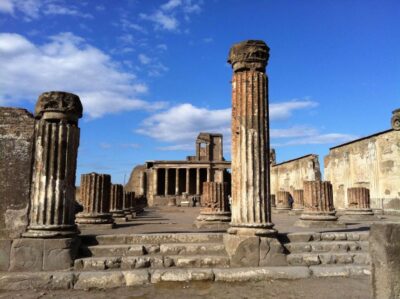
Basilica and the Forum
These are the big legal and civic zones. When the guide links them to daily activity, you understand why people gathered there and how public life ran.
Forum Baths
Baths again, but here they reinforce the city’s rhythm: work, public business, then leisure. It helps you “hear” the city in your head.
Lupanar (brothel)
This is the kind of place that people either want to know about or avoid. With a guide, it becomes a window into social life, regulations, and the reality of Roman street culture.
Bakery and Termopolium Capuano
Food and drink spaces make Pompeii feel lived-in. A bakery shows labor and production. A termopolium (quick-service eatery) shows daily consumption habits.
House of Faun
Private homes let you see wealth and layout choices. Even in a quick visit, the guide’s pointing helps you notice the difference between “a house” and a statement of status.
House of the Tragic Poet and plaster casts
The plaster casts are a gut-punch in the best way: they show people’s positions and what remained. They turn the eruption from a date in a textbook into bodies-in-place reality.
Pompeii is busy. So your best strategy is to treat this as a highlight tour, not an everything tour. You’ll come away with the big landmarks and the most instructive scenes.
Pace, comfort, and what this 7-hour day demands
The itinerary is built around a full day with two guided blocks: about 2 hours at Herculaneum and about 2 hours at Pompeii, with transfers and a lunch break. It’s a good pacing model if you want a first visit that’s meaningful.
Still, there’s a reason some people wish they had more time inside. Two hours per site does not equal “wander slowly and read every inscription.” It equals “see the most important places and learn how they fit together.”
Comfort details that matter:
- You’re in a modern minibus, and the driver is professional.
- You’ll be walking and standing a lot.
- The tour runs rain or shine, so bring a raincoat if the weather looks iffy.
- You should avoid bringing luggage or large bags.
Also, this isn’t a good match if you need flat, step-free movement. The tour isn’t recommended for people with limited mobility, and it isn’t suitable for wheelchair users.
Value check: is $168.79 a fair deal?
$168.79 per person sounds like a splurge until you break down what’s included. In this case, the price bundles transportation by shared minibus, an archaeologist guide, and skip-the-line entry support.
It also includes:
- A Pompeii entry ticket labeled Pompei Express
- A Herculaneum entrance ticket (listed as €16 each)
- Tolls and parking expenses
Meals are not included, so that part is on you during the lunch break. But the core value is that you’re paying for time-savings and expert interpretation. If you tried to DIY both sites from Naples in one day, you’d likely lose time to lines and you’d miss a lot of the “why does this matter” guidance that makes the ruins click.
For me, this tour is best seen as a guided highlight pass that saves hours of guesswork. If you already know Pompeii well and want hours of slow museum-style looking, you might feel boxed in. If you’re seeing these sites for the first time, it’s a strong use of a limited vacation day.
Who this tour fits best (and who should think twice)
This is a great fit if:
- you want an expert guide to interpret what you’re seeing
- you like a structured route that covers both ruins in one day
- you’d rather pay for skip-the-line access than fight the queues
- you prefer a smaller group size (about 20) so the day feels manageable
You might think twice if:
- you need step-free access or have significant mobility limits
- you’re hoping for long, unhurried wandering in every house and corridor
- you’re extremely sensitive to stairs, uneven ground, or long standing periods
In the guide lineup reported in real trip experiences, people have specifically praised archaeologist-style guides like Raphael and Michele, and also enjoyed other English-speaking guides such as Roberta and Vito for clear explanations and good pacing. That matters, because the difference between a “tour” and a “learning day” is the guide.
Should you book this Pompeii & Herculaneum tour?

Yes, if you want the best first-day payoff from Naples. You get skip-the-line entry, two focused guided site blocks, and a route that hits Pompeii’s civic landmarks and Herculaneum’s preservation-driven highlights like carbonized wood, intact wall art, and mosaics.
I’d say book it with the right expectations: it’s a highlight tour. You’ll leave with a strong understanding of how Roman life looked right up to the eruption, not with the feeling that you saw every corner.
If your priority is maximum comfort and mobility-friendly visiting, look for a different format. But for most people with decent walking ability, this is one of the cleaner ways to do both sites in a single day without wasting it in lines.
FAQ
Where does the tour start in Naples?
You meet in front of Starhotels Terminus, located opposite the train station, and you’ll look for the guide holding an Askos Tours sign.
How long is the tour?
The tour runs about 7 hours total.
Is skip-the-line entry included?
Yes. Skip-the-line tickets are included for both Herculaneum and Pompeii.
What’s the walking like at the ruins?
Expect walking with stairs and grades. This tour is not recommended for people with limited mobility, and it’s not suitable for wheelchair users.
What do you visit at Herculaneum?
You’ll tour the Herculaneum archaeological site and see major areas such as the Temple of the Augustali, the Thermal Baths, the Forum, the Samnite House, the Gymnasium, and the House of the Dears, plus the beach area where more than 300 skeletons were found.
What do you visit at Pompeii?
You’ll do a guided walk in Pompeii covering highlights such as the Marina Gate, the Basilica, the Forum, the Forum Baths, the Lupanar, the Bakery, the House of Faun, the Termopolium Capuano, the House of Tragic Poet, and the plaster casts.
Are meals included?
No. Meals are not included, though there is a lunch break during the day.
What should you bring and not bring?
Bring a passport or ID card. Luggage or large bags are not allowed.