REVIEW · POMPEI CAMPANIA
Pompeii: Entry Ticket and Guided Tour with an Archaeologist
Book on GetYourGuide →Operated by Askos Tours · Bookable on GetYourGuide
Pompeii clicks into focus with an expert guide. This small-group tour pairs skip-the-line access with an archaeologist’s explanations of what you’re seeing in the ruins, from street life to big public buildings. It’s built for people who want more than photos and quick facts.
I especially like the way the tour stays human-scaled: up to 20 people, with headsets when the group is large. I also like the route design, which moves through major areas instead of bouncing around randomly.
The main thing to plan for is the walking. Pompeii’s paths are uneven, with some steps, so bring good shoes and don’t assume you can glide through comfortably.
In This Review
- Key things that make this Pompeii tour worth your time
- Skip-the-Line Entry and an Archaeologist Guide: Why $35 makes sense
- Where the walk begins: from Porta Marina into the city’s story
- Foro Civile di Pompei: public power, politics, and daily movement
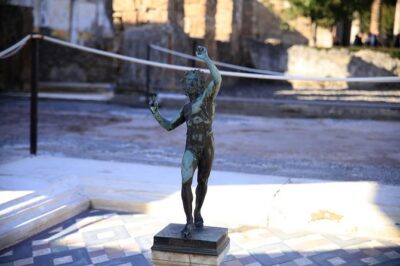
- House of the Faun: where art, status, and layout show up fast
- Lupanar: a frank look at 1st-century commerce and social life
- House of Menander and the city’s rhythm of streets and shopping
- Forum Baths and the Plaster Casts effect
- Pace, headsets, and comfort tips that actually matter
- The guides: the difference between facts and a living city
- Should you book this Pompeii archaeologist tour?
- FAQ
- How long is the Pompeii entry and guided tour with an archaeologist?
- What is included in the price?
- Does this tour include skip-the-line access?
- Where does the tour meet?
- What languages are offered?
- What group size should I expect?
- What should I bring or watch out for?
- Is this tour suitable for wheelchair users or mobility scooters?
- Can I bring a small dog?
- Is food included?
- Can I cancel for a full refund?
Key things that make this Pompeii tour worth your time
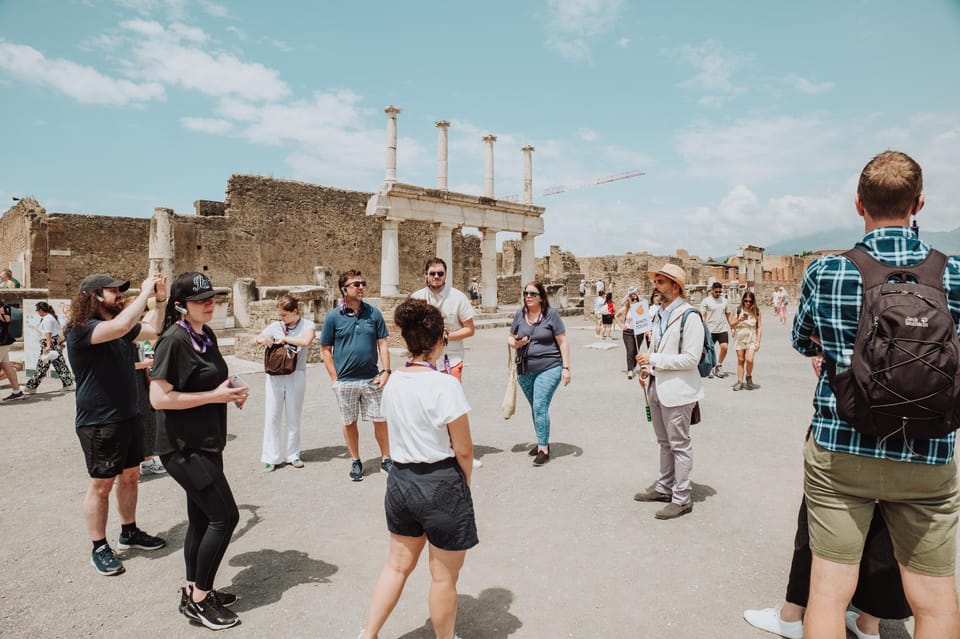
- Skip-the-line entry saves the slow start so your guide can hit the best stops sooner
- Archaeologist-led interpretation helps you connect buildings and objects to real Roman life
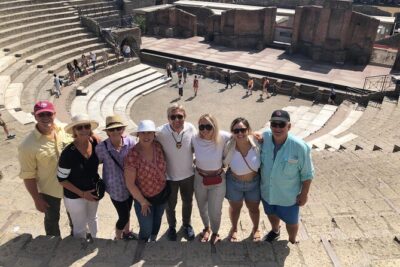
- Small group (up to 20) keeps the pace manageable and questions practical
- Headsets for groups of 10+ help you hear the guide over crowd noise
- A route that hits iconic houses and public spaces (Faun, Menander, baths, forum areas)
- Practical end-of-tour recommendations so you know where to spend extra time after the guided portion
Skip-the-Line Entry and an Archaeologist Guide: Why $35 makes sense
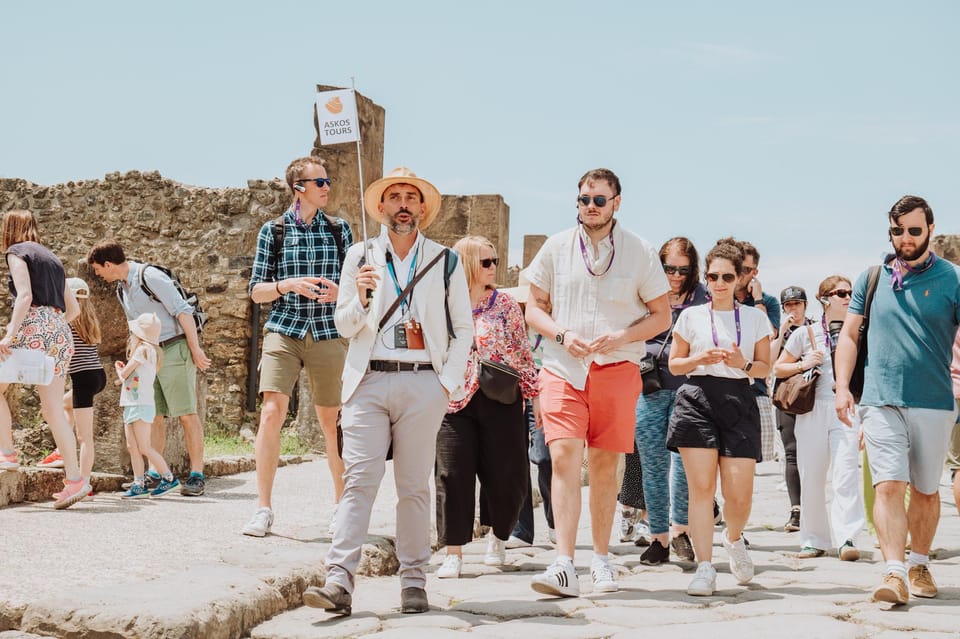
At $35 per person for a 2-hour tour, you’re paying for two key things together: the Pompei Express entrance ticket and a live expert guide (an archaeologist). That matters in Pompeii, where the site is huge and easy to misunderstand if you’re just reading signs.
This isn’t a passive “stand and listen” format either. You’ll be walking between stops while your guide explains what you’re looking at and what it meant to people living there. That’s the difference between seeing ruins and understanding why certain rooms, courtyards, and street layouts mattered.
The tour is offered in multiple languages, including English, Spanish, French, Italian, Portuguese, and German. If you’re traveling with mixed-language needs, that flexibility is a real plus.
You can also read our reviews of more tours and experiences in Pompei Campania


Where the walk begins: from Porta Marina into the city’s story
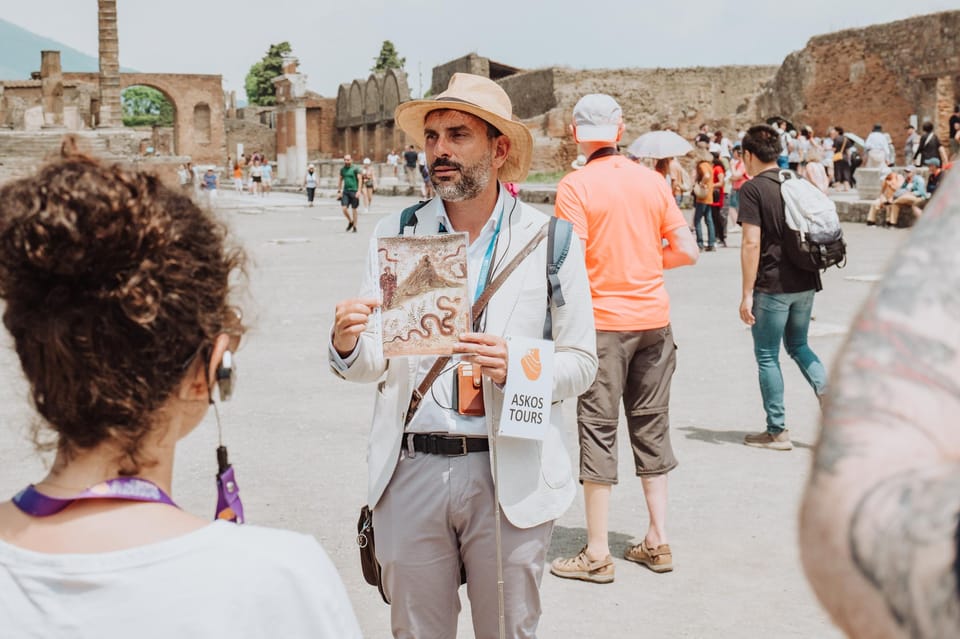
Meeting points can vary depending on the option you book, but you’ll start near Via Villa dei Misteri, 2 (that address shows up as an option for the tour). From there, the route quickly gets moving.
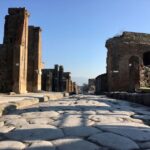
You pass Porta Marina for about 10 minutes. This gate area is a fast way to understand Pompeii as a living city, not just a set of buildings. A guide’s framing here helps you stop thinking in straight lines and start thinking in routes—how people would have moved into the city, toward the forum and marketplaces.
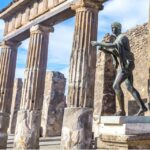
You then pass the Temple of Apollo for around 10 minutes. Even if you don’t spend a long time planted in one spot, it’s a useful anchor point. Religious space shaped daily life, public identity, and status in ways that show up again when you see houses, civic buildings, and baths.
Foro Civile di Pompei: public power, politics, and daily movement
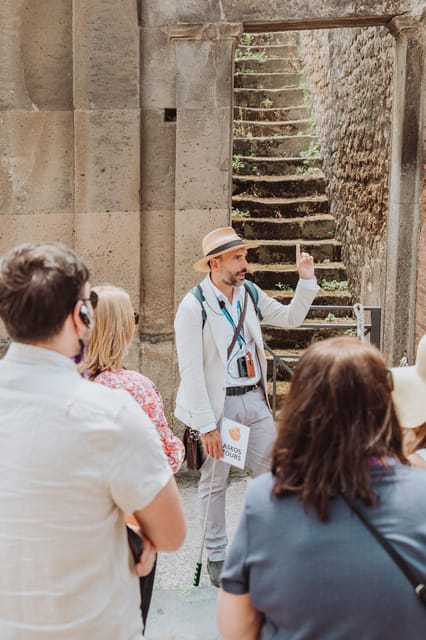
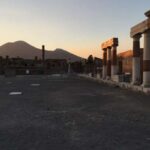
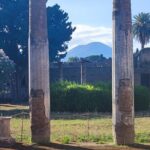
Next is Foro Civile di Pompei (around 20 minutes). This is where Pompeii’s “who mattered and how decisions got made” feeling comes through. You’re in the public core, where the city’s social and civic rhythm would have played out.
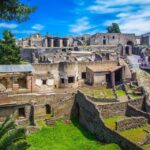
This stop is also a good moment to understand how Pompeii is organized. The layout helps you make sense of why you’ll see certain types of buildings together—public meeting spaces and major religious structures nearby, with streets carrying foot traffic between them.
In addition to the forum area itself, this tour format also sets you up to recognize other major civic landmarks as you go, including the Basilica and additional Forum spaces. That’s one of the practical wins of a guided walk: you learn to “read” the city instead of hunting for it.
House of the Faun: where art, status, and layout show up fast
The House of the Faun gets a guided stop of about 20 minutes. This is the kind of site that makes Pompeii feel real because it’s domestic life—not just monumental stone.
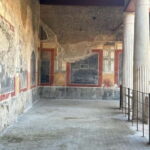
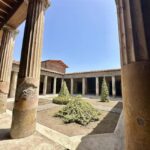
Your guide will point out the parts you might otherwise miss: the logic of room placement, how courtyards and access shaped movement, and how decorative choices signaled wealth and taste. If you care about how Romans lived, this is one of the best time investments in the whole tour.
A note from the real-world experience side: expect some uneven ground and a couple of steps. Even when the pace is controlled, you’ll still need to step up and down. This is also where good shoes pay off in a big way.
Lupanar: a frank look at 1st-century commerce and social life
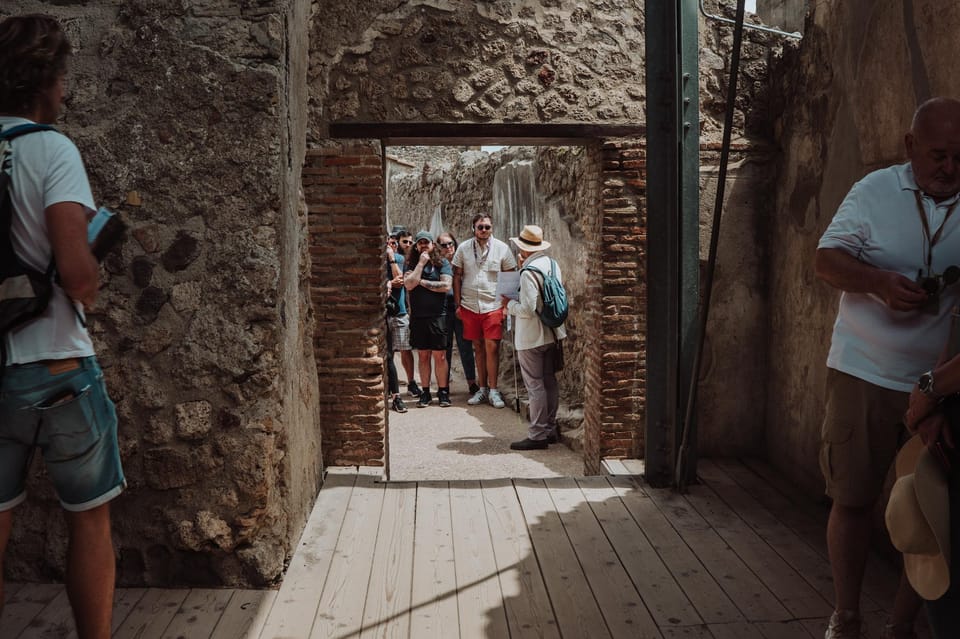
Next is the Lupanar with about 20 minutes guided. This is the famous brothel area, and it tends to grab attention immediately because it connects architecture to a specific kind of service and social setting.
A good guide’s job here is to keep the focus on context. You’ll learn how the space fit into the broader city—how people would have encountered it, and what the building suggests about demand and daily street life.
It’s not a “school lecture” stop. You’ll be shown what to look for, explained in clear language, and given enough interpretation that it doesn’t feel like random shock value. Still, it’s adult subject matter, so if you prefer to avoid that topic, keep it in mind.
You can also read our reviews of more guided tours in Pompei Campania
House of Menander and the city’s rhythm of streets and shopping
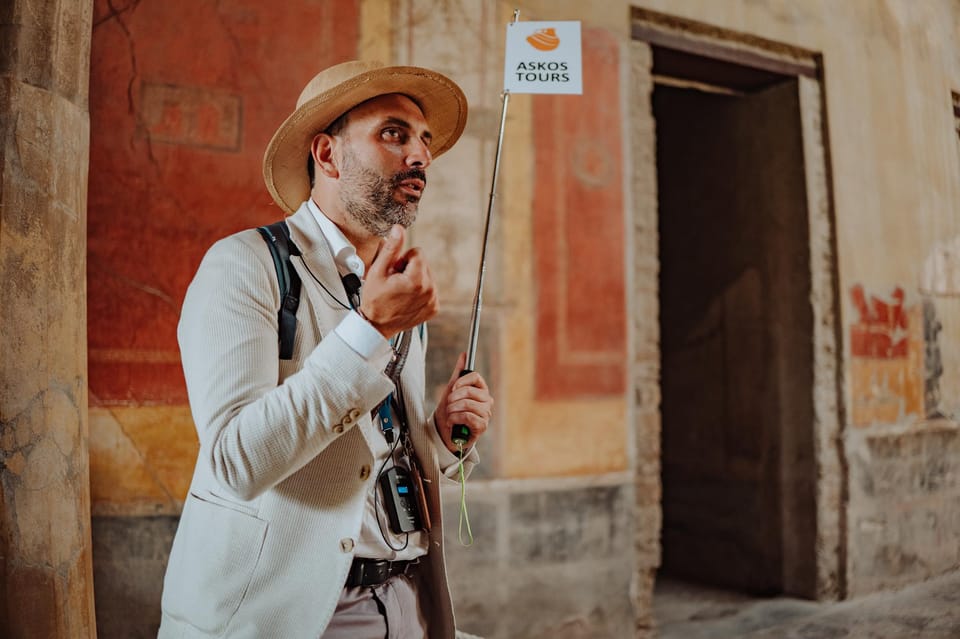
The House of Menander is another guided stop of about 20 minutes. The tour’s goal here is to show you how another top-tier house functioned, and how differences in layout and decoration reflect different owners and priorities.
This stop also helps you compare. Once you’ve seen the Faun house approach, Menander gives you a second viewpoint—so you start noticing patterns in what elite homes emphasized and how they related to the street world around them.
After that, you move to the Macellum of Pompeii (about 10 minutes guided). That’s the marketplace model in action. Even in a short window, a guide can help you connect “where people ate and bought food” to what you’ll see in domestic spaces and public buildings.
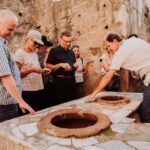
In the wider tour experience, you can also expect references to places like the Termopolium (ancient quick-service food spots). That helps complete the picture: Pompeii wasn’t just houses and temples. It was also noise, commerce, meals, and errands.
Forum Baths and the Plaster Casts effect
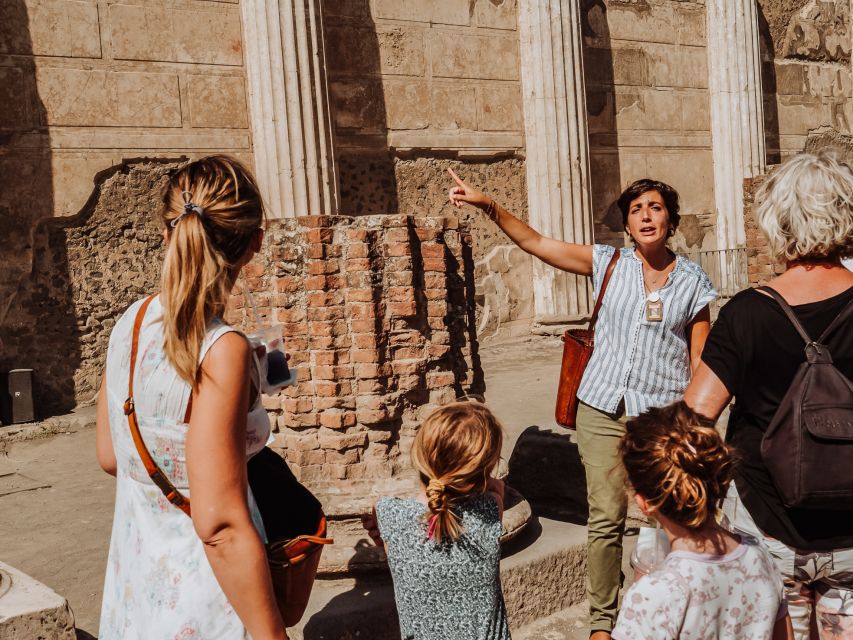
You finish the tour segment with Forum Baths (about 10 minutes guided). Baths in Pompeii aren’t just about hygiene. They were social spaces—somewhere people talked, relaxed, and maintained status through everyday rituals.
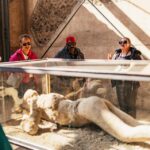
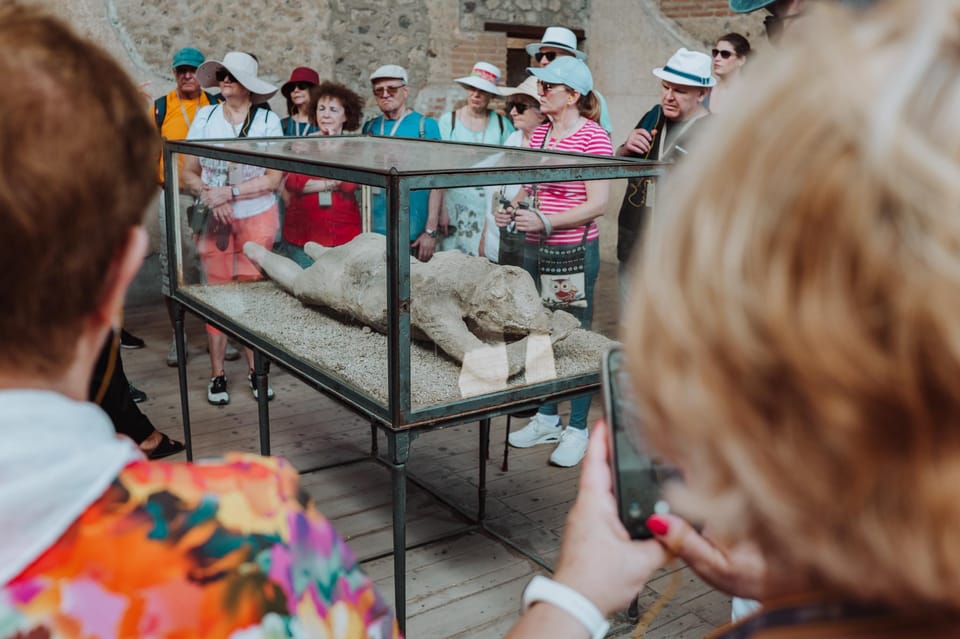
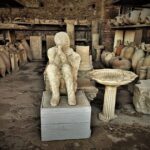
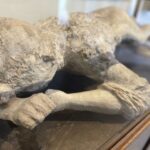
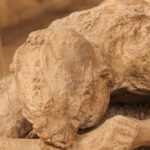
This is a strong pairing with what comes after and what the guide frames across the route. As part of the overall tour experience, you’ll also encounter major emotional anchors like the Plaster Casts of victims and insights tied to areas such as the Theaters. The combination can hit harder than you expect because it changes your mental image of Pompeii from a preserved museum to a city interrupted mid-life.
Weather can affect this part, but the structure holds. Even if it’s rainy or crowded, the guide keeps you moving through the right sequence so you don’t end up overwhelmed or lost.
Pace, headsets, and comfort tips that actually matter
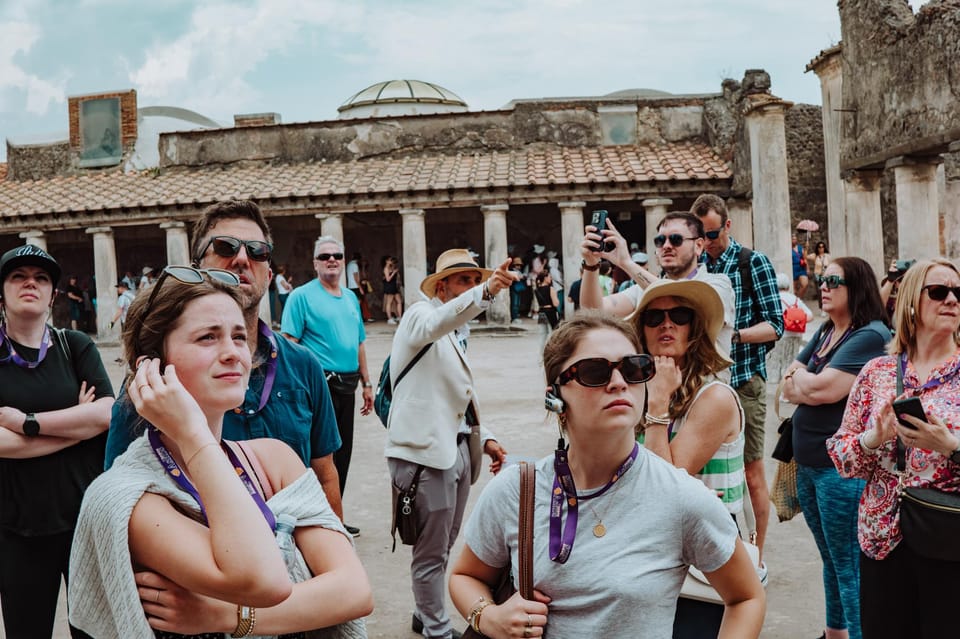
This tour is designed for a two-hour walk, not a long, slow wander. That’s great for getting oriented, but it means you’ll be on your feet for most of the experience.
Bring comfortable walking shoes. Pompeii’s ground is uneven, and you may climb a couple of steps along the way. If you’re tempted to wear pretty shoes, don’t. You’ll regret it by the end.
If your group qualifies for them, you’ll get headsets. They can make a difference in crowds, but some people find they need a quick adjustment to hear clearly when you walk past dense groups.
I also strongly suggest you bring water. One of the most honest small-life notes from real visits is that the walk can run longer than you expect in practice, and Pompeii can wear you out even when the day is cool.
Finally, there’s no room for mobility scooters, and it’s not suitable for wheelchair users. If mobility is an issue, plan a different style of tour.
The guides: the difference between facts and a living city
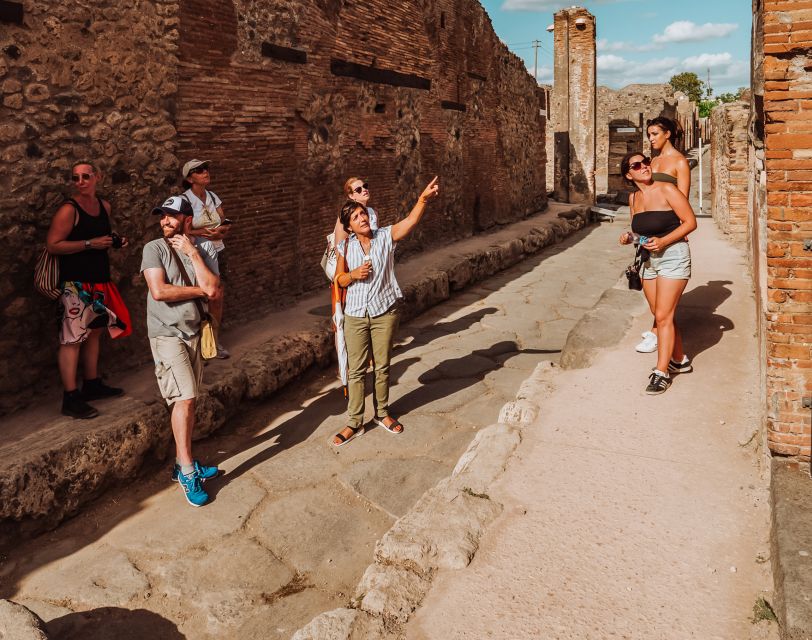
One reason this tour consistently works is the guide style. Names that have led tours include Teresa, Anna Sorrento, Giancarlo, Alfredo, Paolo, Mario, Diego, Raffaella, Jolanda, and Sergio. Across different languages, the pattern is the same: stories plus specific pointing.
Guides don’t just recite dates. They explain why someone would choose this street, how a house functioned, what a public building suggests about power, and how religion and daily life overlapped. Humor shows up too. It keeps long-standing ruins from turning into a pile of names.
You’ll also get guidance for what to do after the official tour ends. That’s practical value because Pompeii really does reward a second pass once you know what you’re looking at.
Should you book this Pompeii archaeologist tour?
Book it if:
- You want skip-the-line entry plus expert interpretation in a short, focused window
- You’re excited by iconic stops like the House of the Faun, Lupanar, House of Menander, and the bath/forumbuilding areas
- You like asking questions and hearing how a guide connects buildings to everyday life
- You want a route that helps you avoid feeling lost in a giant site
Pass or choose something else if:
- You need wheelchair access or you rely on mobility scooters (this one doesn’t fit)
- Walking uneven ground and steps is a deal-breaker for you
- You’d rather do Pompeii at your own pace without headsets or a timed plan
If your goal is to see Pompeii in a way that makes sense quickly, this is one of the smartest ways to do it in limited time.
FAQ
How long is the Pompeii entry and guided tour with an archaeologist?
The tour lasts 2 hours.
What is included in the price?
The price includes the Pompei Express entrance ticket, an archaeologist guide, a small group tour, and headsets for groups of 10 people or more.
Does this tour include skip-the-line access?
Yes. It includes skip the ticket line access.
Where does the tour meet?
The meeting point may vary depending on the option booked.
What languages are offered?
The live tour guide is available in English, Spanish, French, Italian, Portuguese, and German.
What group size should I expect?
You’ll be on a small group of up to 20 people.
What should I bring or watch out for?
Wear comfortable shoes, since the paths are uneven and you may climb a couple of steps. It also helps to bring water, especially if you get slowed down by crowds or weather.
Is this tour suitable for wheelchair users or mobility scooters?
No. Wheelchair users and mobility scooters are not suitable or allowed for this activity.
Can I bring a small dog?
Only dogs that are 10 kg or less and 40 cm or less in height are permitted. The dog must be on a leash, held in your arms inside buildings, and you must collect excrement.
Is food included?
No. Food and drinks are not included.
Can I cancel for a full refund?
You can cancel up to 24 hours in advance for a full refund.
One last routing thought: a lot of Pompeii visitors are working their way up the peninsula, and the art cities make the natural second act. When the trip turns north, Florence Explorer gives Florence the same reviews-first treatment you will find useful after a site this dense.