REVIEW · POMPEI CAMPANIA
Pompeii and Herculaneum: Guided Tour with an Archaeologist
Book on GetYourGuide →Operated by Benedetto Tourist Guide · Bookable on GetYourGuide
Two Roman cities in one careful day.
This Pompeii and Herculaneum guided tour brings the eruption story of Vesuvius back to street level, with an archaeologist walking you through what daily Roman life looked like before 79 AD. I like the small group format (up to 10), and I especially like that your guide is Benedetto, an archaeologist who explains the sites with serious training and real humor.
You’ll spend focused time inside Pompeii’s best-known areas, including richly decorated houses, public spaces, and the Forum area where plaster casts show the victims. Then you shift to Herculaneum for a quieter, better-preserved feel, with standout finds like wood, mosaics, jewelry, and even skeletons.
One consideration: this is not an easy stroll. The ground is uneven, there’s a lot of walking, and it’s not suitable for wheelchairs or people with mobility impairments—plus you’ll want to manage heat with hat and water.
In This Review
- Key Things I’d Plan Around
- Pompeii and Herculaneum: Why This Two-City Plan Works
- Meet Benedetto: The Archaeologist Part That Changes Everything
- Starting at Ristorante Suisse: Logistics Without the Headache
- Pompeii Highlights Tour: Porta Marina Inferiore to the Lupanare and Forum
- Theatres and public spaces
- Houses with art you can actually look at
- Shops, bakeries, and snack-bar life
- Baths and the famous Lupanare
- The Forum plus plaster casts of victims
- Lunch Break Strategy: Eat Close, Keep Your Pace
- Getting to Herculaneum by Train: Small-Time Transfer, Big-Time Reward
- Herculaneum Highlights: Fresher Details, Wood, Mosaics, Jewelry, Skeletons
- Small Group Size (Up to 10): Why It Feels Less Like a Rush
- Skip the Ticket Line and the Headset Detail That Saves Your Day
- Price and Value: What $141.61 Really Buys
- What to Bring (And the One ID Rule You Must Follow)
- Who This Tour Fits Best
- Should You Book This Pompeii and Herculaneum Tour with Benedetto?
- FAQ
- How long is the Pompeii and Herculaneum guided tour?
- Where do we meet, and where does the tour end?
- What’s included in the price?
- Is transportation between Pompeii and Herculaneum included?
- What stops are included during the day?
- Can I skip ticket lines?
- What languages are offered?
- Is this tour suitable for wheelchair users or mobility impairments?
- What do I need to bring or prepare before I go?
Key Things I’d Plan Around
- A true archaeologist guide (Benedetto) who mixes humor with evidence-based context
- Pompeii first, then Herculaneum, so you can compare two cities shaped by the same disaster
- Frescoes, mosaics, and plaster casts that make the tragedy and the daily life feel specific
- Herculaneum’s unusual preservation, including exceptionally well-preserved wood and other organic materials
- Small group touring (up to 10), with headsets for groups larger than 8 so you don’t miss details
- Easy-to-follow day structure starting at Ristorante Suisse and ending back there
Pompeii and Herculaneum: Why This Two-City Plan Works
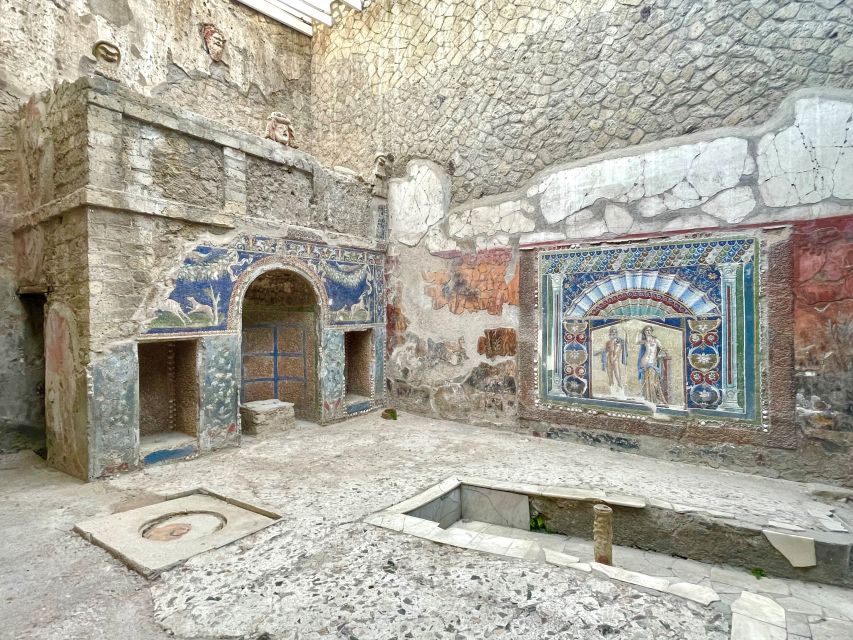
Seeing Pompeii alone can be overwhelming. It’s big, busy, and full of fragments. The smartest move is to pair it with Herculaneum, because the two sites feel different in a way you can actually sense on foot.
I like that this tour keeps the day moving but not rushed. You start in Pompeii, get the story and the main highlights, take a lunch break, and then transfer by train to Herculaneum for a second guided loop. That contrast does something important: it helps you stop thinking of Pompeii as one big museum and start seeing it as a living city, right up until the moment it stopped.
And yes, you’ll cover the Vesuvius eruption of AD 79 as the spine of the day. The guide doesn’t treat it like a dramatic one-liner. Instead, it becomes a framework for understanding why buildings, streets, and even everyday objects ended up the way they did.
You can also read our reviews of more guided tours in Pompei Campania

Meet Benedetto: The Archaeologist Part That Changes Everything
A guided tour can be either a lecture in motion or a fun walk with facts. This one hits a better target because Benedetto is not just a storyteller; he’s an archaeologist who has clearly spent years with these sites.
The big difference shows up in how he explains details you’d otherwise skate past. You don’t just hear that a space was used for something—you get context for how Romans lived, worked, shopped, bathed, and socialized. People also consistently point to his humor and energy. That matters at Pompeii, because if the guide is dry, you’ll mentally check out by the time you reach the Forum.
Another practical bonus: the tour is built for small groups. With fewer people, Benedetto can answer questions instead of racing ahead. In a crowd, questions get swallowed. Here, they get space.
Starting at Ristorante Suisse: Logistics Without the Headache
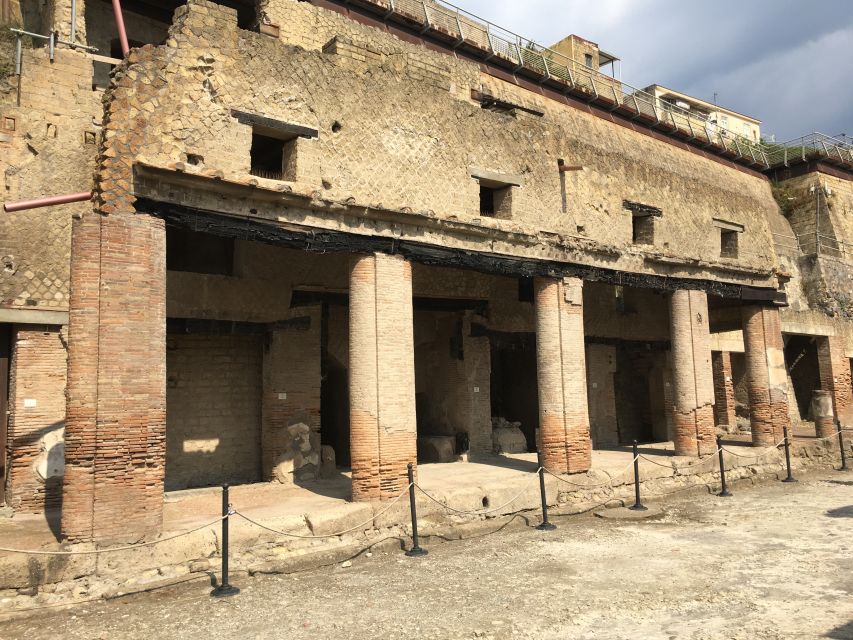
The tour starts at Ristorante Suisse. You meet the guide at the Suisse Restaurant entrance area, with a sign and your name on it. Ending back at the same meeting point keeps the end of the day simple.
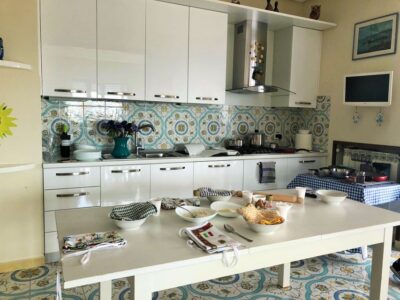
This start point also makes lunch more realistic. There’s a built-in break for lunch time (with free time), and it’s convenient if you want to eat near the Pompeii entrance rather than relocating across town.
A tip I’d take seriously from people who’ve done this day: the restaurant right outside the entrance has been a good spot for both breakfast and lunch, and some tables are set up with small white cards that can help with free restroom access. If you want less hassle during your Pompeii half-day, eat close and keep moving.
Pompeii Highlights Tour: Porta Marina Inferiore to the Lupanare and Forum
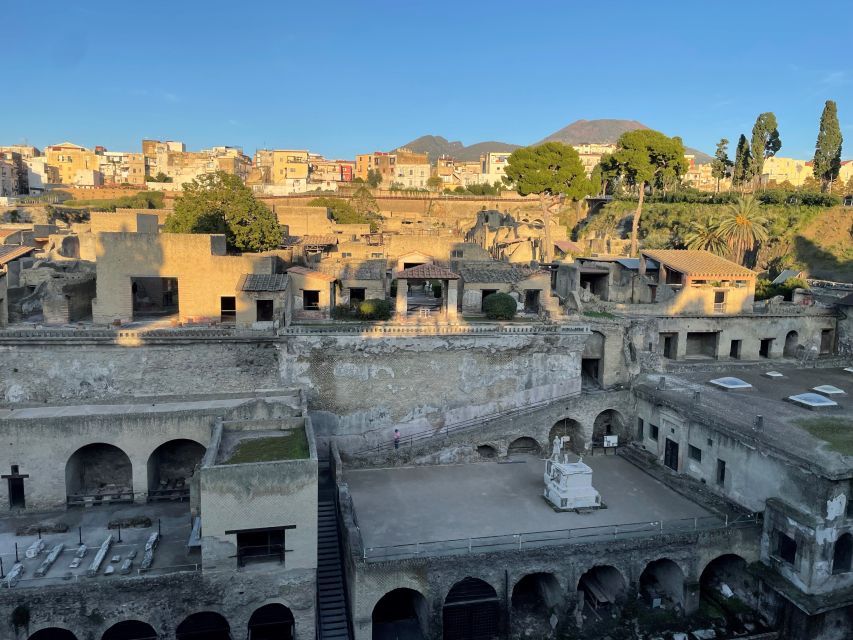
Pompeii gets the first, heavier chunk of the day: about 2 hours of guided time. You begin at Porta Marina Inferiore, then move through major public areas and streets that help you build a mental map fast.
One thing I appreciate about this route is that it doesn’t only chase the famous buildings. It connects the dots between public life and private life.
Here’s what you can expect in Pompeii, in human terms:
Theatres and public spaces
You’ll walk past the theatre area, which helps show Pompeii as a city designed for gatherings—shows, meetings, and public rhythms.


Houses with art you can actually look at
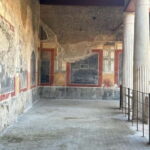
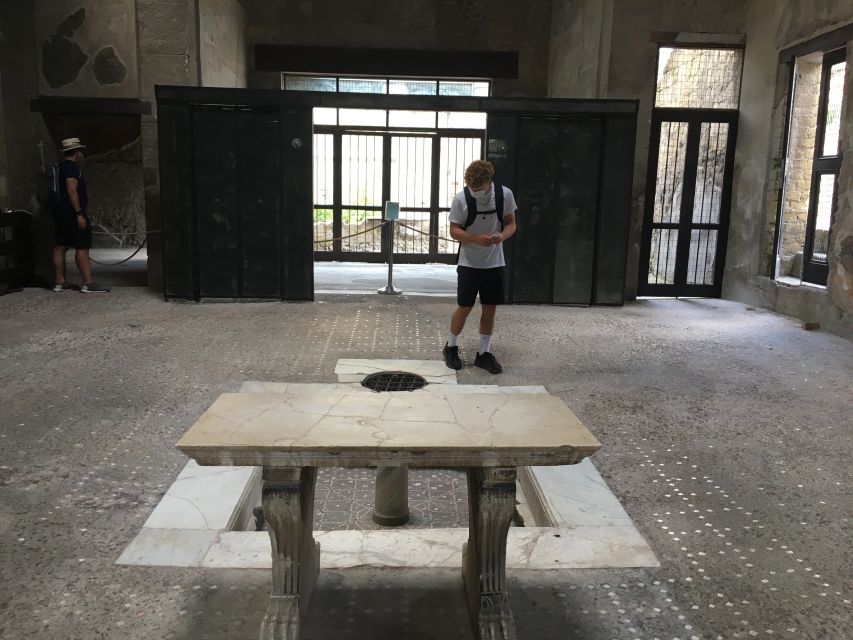
A major focus is on decorated homes. You’ll see mosaics, frescoes, and marble details that make the Roman world feel less like an abstract textbook. Even when parts are weathered, the intent comes through: these were not blank-walled places.
Shops, bakeries, and snack-bar life
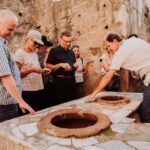
You’ll pass through the everyday commercial zones too—shops, old Roman bakeries, and ancient snack bars. This is where the archaeologist framing pays off. It turns ruins into a snapshot of routine: what people ate, how they moved, and what they bought.
Baths and the famous Lupanare
The tour continues to the public baths and the Lupanare. This is one of those areas where the site’s labels can shock you at first, but the guide’s job is to ground it in Roman social reality rather than sensational gossip.
The Forum plus plaster casts of victims
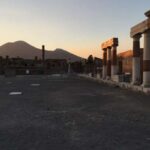
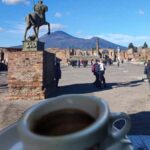
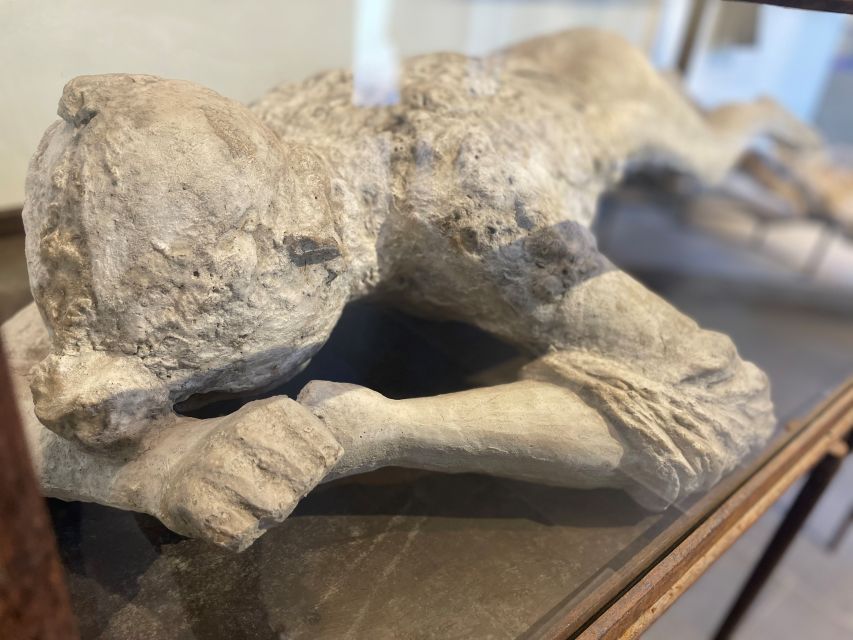
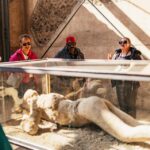
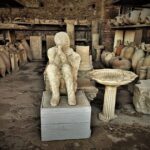
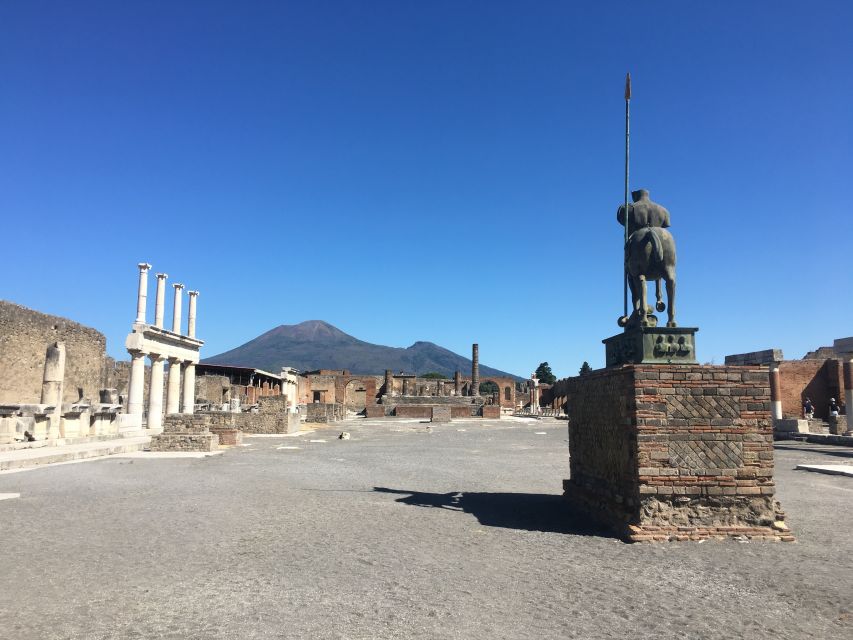
Finally, don’t rush the Forum stop. The tour includes public buildings there, and it features plaster casts of the victims. These casts are a hard stop emotionally, but that’s the point: they make the disaster human. When you see them after walking through homes and shops, the eruption stops being a story and becomes a sudden end to ordinary lives.
My practical advice for Pompeii: wear shoes you trust. You’ll move over uneven surfaces, and you’ll want your feet to handle the day without drama.
Lunch Break Strategy: Eat Close, Keep Your Pace
Between Pompeii and Herculaneum, you get a break time with lunch. Transportation between sites happens afterward, so it’s smart to eat in a way that keeps energy steady instead of taking a long detour.
If you’re choosing where to eat, the meeting point location is a convenient fallback. It’s right there at Ristorante Suisse, and it’s easy to return to the group without losing the schedule.
This is also a good moment to rehydrate and check your supplies: hat, water, ID, and your camera battery if you’re shooting photos.
Getting to Herculaneum by Train: Small-Time Transfer, Big-Time Reward
Then comes the transition: a short train ride between Pompeii and Herculaneum. The plan is built around that transfer, so you’re not left coordinating transit alone while trying to hold together a plan of your own.
You’ll regroup and move into Herculaneum for the next guided portion, about 1.5 hours.
Herculaneum Highlights: Fresher Details, Wood, Mosaics, Jewelry, Skeletons
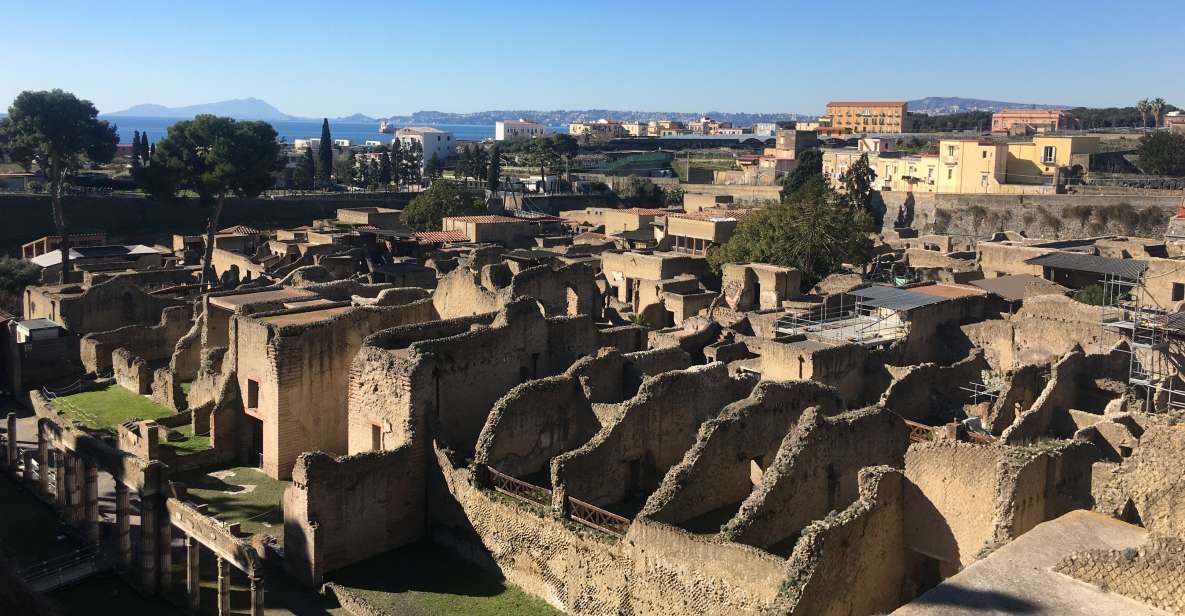
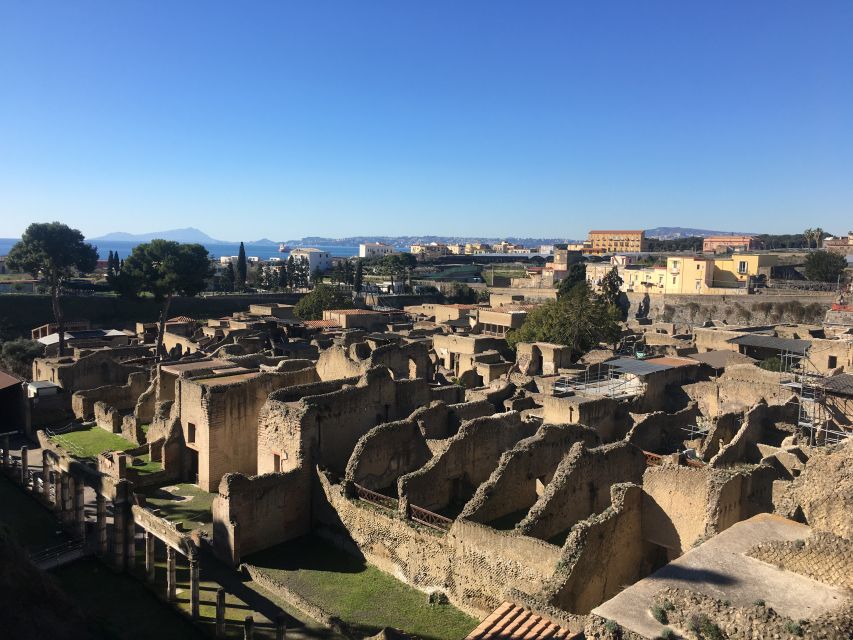
Herculaneum feels different almost immediately. One reason is simple and physical: it’s better preserved in many areas. The tour leans into that, calling it a small jewel, and the site shows why.
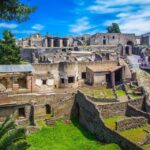
If Pompeii gives you scale and street life, Herculaneum gives you texture. It’s where you start seeing individual rooms and materials more clearly—especially decor and organic remains.
Expect to admire:
- Splendid residences with distinctive decorations
- Frescoes, marbles, and mosaics that look closer to what they were meant to be
- Jewelry and personal items, which make Roman life feel specific
- Skeletons that bring the tragedy back into focus
- Exceptionally well-preserved wood, which is rare to see in places this old
This wood detail is a big deal. You’re not just looking at stone outlines; you’re seeing remnants that survived in a way you rarely get from ancient sites. That makes Herculaneum feel more like a time capsule than a set of ruined walls.
Also, the guide’s archaeologist context matters here again. Herculaneum’s preservation can tempt you to treat it like a perfect showpiece. Benedetto helps you keep it grounded: these were homes, with daily life, and then the eruption changed everything.
Small Group Size (Up to 10): Why It Feels Less Like a Rush
A lot of ruins tours feel like being herded through bullet points. Here, the group size is small—up to 10—and that changes how the day plays out.
With fewer people, you get more of the following:
- More time at the most important spots
- Easier Q and A
- More chance to notice details you’d otherwise miss
- A tour pace that feels like it’s meant for comprehension, not just completion
People also consistently note how the guide steers the group to handle crowds. In Pompeii, crowds are real. In this format, you’re better able to maneuver through them without losing the thread of what you’re seeing.
Skip the Ticket Line and the Headset Detail That Saves Your Day
This tour includes entry tickets, and it’s designed to help you skip the ticket line. That matters because Pompeii ticket lines can swallow your morning if your plan is vague.
Also included: headsets for groups larger than 8. Even if you love listening, crowded ruins noise can wreck audio. Headsets help you hear the archaeologist guide clearly, which means you get more from every stop.
Food and drink are not included, but lunch time is built into the day as free time. That’s a workable setup: you’re not stuck eating a packaged meal at a random spot just to keep moving.
Price and Value: What $141.61 Really Buys
At $141.61 per person for a 5-hour guided day, you’re paying for the combination that’s hard to DIY:
- A professional archaeologist (Benedetto) doing the interpretation
- Two sites in one day with structured pacing
- Entry tickets included
- Skip-the-line setup
- Small group handling
If you were to plan this yourself, you could certainly visit Pompeii and Herculaneum. The cost difference comes from time and clarity. A guide doesn’t just point out what’s there; they help you understand what you’re looking at—especially in places where the meaning of objects and spaces isn’t obvious at a glance.
Where the price can feel less “all-in”: transportation and food and drink are not included. You’ll handle meals and any costs related to getting between locations on your own terms, even though the day includes a train segment as part of the flow.
If you want the most out of your day in Campania without playing calendar Tetris, this is good value.
What to Bring (And the One ID Rule You Must Follow)
Bring:
- Passport or ID card
- Comfortable shoes
- Hat
- Water
Two logistics points matter more than they sound:
- In Pompeii, the ticket is named. After booking, you’ll need to provide first and last names for all participants.
- Don’t forget the passport or ID card in original. The named ticket rule is the kind of detail that can create problems if you show up with the wrong document.
Plan for walking. Also, pack like a person who expects sun and dust: hat and water aren’t optional niceties.
Who This Tour Fits Best
This day works especially well for:
- Families who can handle a guided pace without needing constant playground breaks
- People who like photography and archaeology but don’t want to spend the day guessing what each ruin means
- Anyone who wants Pompeii and Herculaneum in one coherent narrative instead of two disconnected outings
It’s also a smart choice if you’ve already read about Vesuvius and now want the places to click in your mind.
One more practical note: it’s not suitable for people with mobility impairments or wheelchair users, since the walking and site surfaces aren’t set up for accessibility needs.
Should You Book This Pompeii and Herculaneum Tour with Benedetto?
I’d book it if you want a guided day that does real interpretation at two different Pompeii-area sites. The small group format, archaeologist-led explanations, and the Pompeii-to-Herculaneum contrast make it feel efficient without feeling like you’re sprinting.
I’d think twice only if you can’t handle uneven walking or if your priority is total freedom with no structure at all. This is built for a guided experience, and that’s where it shines.
If your goal is to understand what happened in AD 79 and see why these cities feel so different, this is one of the strongest ways to do it in a single day.
FAQ
How long is the Pompeii and Herculaneum guided tour?
The tour duration is 5 hours.
Where do we meet, and where does the tour end?
You meet the guide at the Suisse Restaurant with a sign showing your name, and the tour ends back at the same meeting point.
What’s included in the price?
The tour includes an archaeologist guide, entry tickets, headsets for groups larger than 8, and free time for lunch.
Is transportation between Pompeii and Herculaneum included?
Transportation is not included in the price. The day plan includes time for a train between the two sites, but you should expect to cover transportation on your own.
What stops are included during the day?
The tour covers Pompeii with a guided portion, a lunch break, then a train segment, and then a guided visit in Herculaneum before finishing at the Archaeological Park of Herculaneum.
Can I skip ticket lines?
Yes. The tour includes skip-the-ticket-line entry.
What languages are offered?
The live guide is available in English, Italian, and French.
Is this tour suitable for wheelchair users or mobility impairments?
No. It is not suitable for people with mobility impairments and not suitable for wheelchair users.
What do I need to bring or prepare before I go?
Bring a passport or ID card (original), comfortable shoes, a hat, and water. Also note that the Pompeii ticket is named, so you’ll need to provide first and last names of all participants after booking.