REVIEW · POMPEI CAMPANIA
Pompeii: Skip-the-Line Entrance Ticket with Audio Guide
Book on GetYourGuide →Operated by Tempio Travel Pompei Tickets · Bookable on GetYourGuide
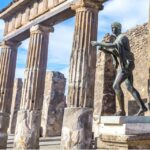
Pompeii hits fast, even before you enter. This skip-the-line ticket gets you into one of Europe’s most unforgettable UNESCO sites quicker, and the audio guide plus map help you navigate without rushing. You can set your own tempo while you take in standout areas like the Roman amphitheater and the spaces where people actually lived.
I especially like two things: the easy ticket exchange at Circumvesuviana (right by the entrance area), and the way the audio guide turns scattered ruins into a story you can follow as you walk. You’ll get a map for the big-picture layout, which matters because Pompeii is huge and it’s easy to lose time if you’re wandering.
One main consideration: it can be hot, and there isn’t much shade. If you plan around the heat and bring what you need, the self-guided format feels like a win instead of a grind.
In This Review
- Key highlights to know before you go
- Where to exchange your voucher at Circumvesuviana (and why it matters)
- Skip-the-line access: what you actually gain once inside
- Pompeii’s big monuments you can build your route around
- Roman amphitheater: spectacle and scale
- Small theater: quieter, but still telling
- Public gym: where routine became culture
- Frescoes, banquet spaces, and the everyday Roman home feeling
- Using the audio guide and map without getting frustrated
- Timing your visit: how long you’ll want and how to avoid overheating
- Price and value: is $39.97 a good deal?
- Practical info you should sort before you go
- Should you book this Pompeii skip-the-line ticket with audio guide?
- FAQ
- What’s included with the Pompeii skip-the-line ticket?
- Do I need to bring headphones?
- Where do I exchange my voucher?
- Is food or drinks included?
- Can I bring luggage or large bags?
- What languages are available for the audio guide?
- Are children free?
Key highlights to know before you go

- Skip-the-line entry: trade long ticket queues for more time among the ruins.
- Audio guide + map: you’re not stuck following a fixed route, and you’ll have help finding key areas.
- Self-guided flexibility: you can linger over frescoes or move quickly to the big monuments.
- Prime Pompeii zones included: Roman amphitheater, small theater, public gym, and everyday-life areas.
- On-site pickup location near the train station: exchange your voucher at the activity provider office on the first floor of Circumvesuviana.
Where to exchange your voucher at Circumvesuviana (and why it matters)

Your day starts at a very practical spot: the activity provider office on the first floor of Circumvesuviana train station (Via Villa dei Misteri, 1, 80045 Pompei). You’ll exchange your voucher there for your entry setup, so you avoid the classic end-to-end ticketing scramble.
This is more than just convenience. When you’re heading to Pompeii, time is everything. The site fills up, and waiting around in multiple lines burns the hours you’d rather spend looking at walls, floors, and street corners up close. The good news is the exchange desk is described as being right by the entrance area, which makes it much easier to stay on schedule.
If you’re driving, there’s also a note about a possible chance for free parking at Osteria Nonna Cherubina (Via Andolfi 46, 80045 Pompei) if it’s open and available. It’s optional, but it’s worth knowing if you’re trying to keep costs down.
You can also read our reviews of more tours and experiences in Pompei Campania



Skip-the-line access: what you actually gain once inside

A skip-the-line ticket sounds simple, but here’s what you’re really buying: fewer delays between arriving and walking through the gates. Even with a skip option, you still may encounter some crowding at the site entrance itself since Pompeii draws a lot of people. The difference is that you’re not stuck at the ticket office stage.
Once you’re in, the experience shifts quickly from logistics to exploring. This is a self-guided setup, so you’re free to choose what you want to prioritize. Want a slower walk that focuses on paintings and details? Go for it. Prefer to hit the headline monuments first? Do that. And because you have a map, you’re not relying purely on spotting signs.
You also have language support built in. The host or greeter can assist in German, Italian, French, English, and Spanish, and the audio guide is available in the same language set (French, German, Italian, English, Spanish). That’s helpful if you’re traveling with mixed language skills.
Pompeii’s big monuments you can build your route around

Pompeii is famous for its grand public buildings, and this experience highlights several of the most important zones. The trick is not trying to see everything at maximum speed. Instead, use these areas as anchors and then fill in the gaps with whatever captures your attention.
Roman amphitheater: spectacle and scale
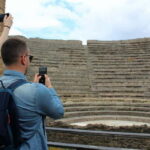
The Roman amphitheater is one of the main landmarks you’ll have access to. It’s the kind of site that makes you understand how public life worked in Roman cities—crowds, entertainment, and architecture designed for viewing.
If you like moments where the ruins feel alive, plan to pause here longer than you think. Even from a distance, you can get a sense of how people arranged themselves for shows.
Small theater: quieter, but still telling
The small theater offers a contrast. It’s not just another stop—it gives you another angle on Roman entertainment and daily rhythms. If you’re the type who enjoys comparing how different buildings function, this area is a solid choice early in your visit while you still have energy.
You can also read our reviews of more guided tours in Pompei Campania



Public gym: where routine became culture
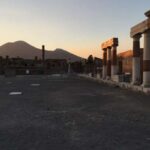
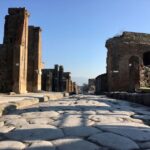
The public gym is also included. This is where Roman life isn’t just background. The idea of a gym in an ancient city is about more than exercise; it’s about meeting people, routine, and social behavior. Seeing it in person helps you understand Pompeii as a functioning place, not only a tragedy frozen in time.
Frescoes, banquet spaces, and the everyday Roman home feeling
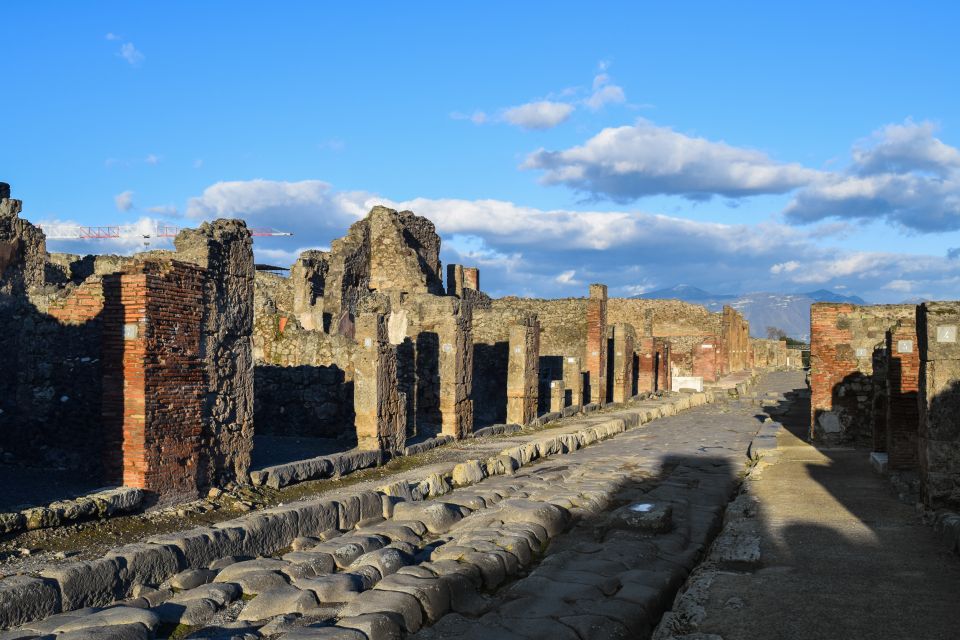
Pompeii isn’t only about monuments. It’s about the texture of normal life—and that’s where the audio guide earns its keep.
You’ll encounter centuries-old frescoes and learn what you’re looking at as you pass through rooms and structures. The audio guide is set up to explain the history of the site in context, so the ruins don’t feel like random walls.
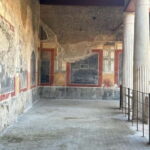
You’ll also be pointed toward areas tied to how Romans lived day to day, including places associated with banquets and household activity. Even if you don’t know Latin or Roman history, you can still read the city by noticing spatial clues—where people would gather, where activity happened, and how rooms connect.
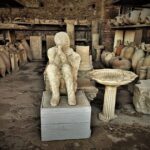
One especially memorable element noted in the experience description is the presence of moving casts of citizens and their pets. That kind of exhibit hits differently than architecture alone. If you prefer emotionally direct storytelling, plan extra time around those areas so it doesn’t blur into a rushed checklist.
Using the audio guide and map without getting frustrated
The audio guide is one of the most praised parts of this experience, especially for giving background while you walk. The practical upside is that you don’t need to follow a rigid group route.
But there are a couple of real-world tips that help you get the most out of it:
- Bring your own headphones/earphones. Headset isn’t included, and you’ll want comfortable listening for hours of walking.
- Come ready to use the audio guide smoothly. Some people received it as a phone-based setup and found it handy to use an aux-style connection. If you have an aux cable and appropriate earphones, it can save you stress.
- Use the map like a tool, not a souvenir. Pompeii is described as large and maze-like, so treat the map as your navigation baseline and let the audio guide steer your attention, not your direction.
A small note from experience feedback: audio guide pickup can feel unclear for some people. The fix is simple—ask at the exchange desk on the first floor of Circumvesuviana if you’re unsure where to collect or activate the audio setup. You shouldn’t have to guess.
Timing your visit: how long you’ll want and how to avoid overheating
The ticket is listed as a one-day experience, with starting times shown based on availability. In practice, I’d plan around a half-day to full-day visit depending on your pace.
Some people ended up staying for about three and a half hours, especially when they added an optional guided component. If you focus only on self-guided audio and prioritize a few major areas, you can likely do it faster—but Pompeii has enough to reward slowing down.
Heat is the big real-world factor. There’s a clear warning in the feedback that you’ll want water and that shade is limited. Here’s how I’d handle it:
- Start earlier if you can, aiming for morning to reduce heat stress and keep your walk enjoyable.
- Wear sunscreen and breathable clothes, then bring more water than you think you need since food and drinks aren’t included.
- Take short breaks when you hit open areas, especially during peak sun.
Price and value: is $39.97 a good deal?
At $39.97 per person, you’re paying for three core things: skip-the-line entry, an audio guide, and a map. For a major UNESCO site, that’s the sort of price point that makes sense if you care about time and want interpretation without paying for a fully guided tour.
The value improves if:
- You’re trying to fit Pompeii into a tight schedule while traveling by train.
- You’d rather control your pace instead of being stuck in a group itinerary.
- You want a history layer as you walk, not after the fact.
If you already know you want a tightly structured guide route, you might consider whether an extra paid guided tour is offered on-site. Some visitors mention paying an additional amount for a guided tour and feeling it was worth it, especially for better navigation and context. But if you’re happy to roam, the audio guide option does the heavy lifting.
Also, keep in mind what’s not included: food and drinks. That’s not a reason to avoid it, just something to plan for so the day stays comfortable.
Practical info you should sort before you go
A few essentials from the listing that can affect your day:
What to bring:
- Passport or ID card
- Driver’s license
- Headphones (headset isn’t included)
Not allowed:
- Luggage or large bags
Language options:
- Host/greeter: German, Italian, French, English, Spanish
- Audio guide: French, German, Italian, English, Spanish
Age note:
- Children aged 0 to 17 go for free.
- People aged 18 to 24 from the European community with identification document pay €2.
Meeting point and end:
- You start at the activity provider office on the first floor of Circumvesuviana.
- The activity ends back at the meeting point.
Should you book this Pompeii skip-the-line ticket with audio guide?
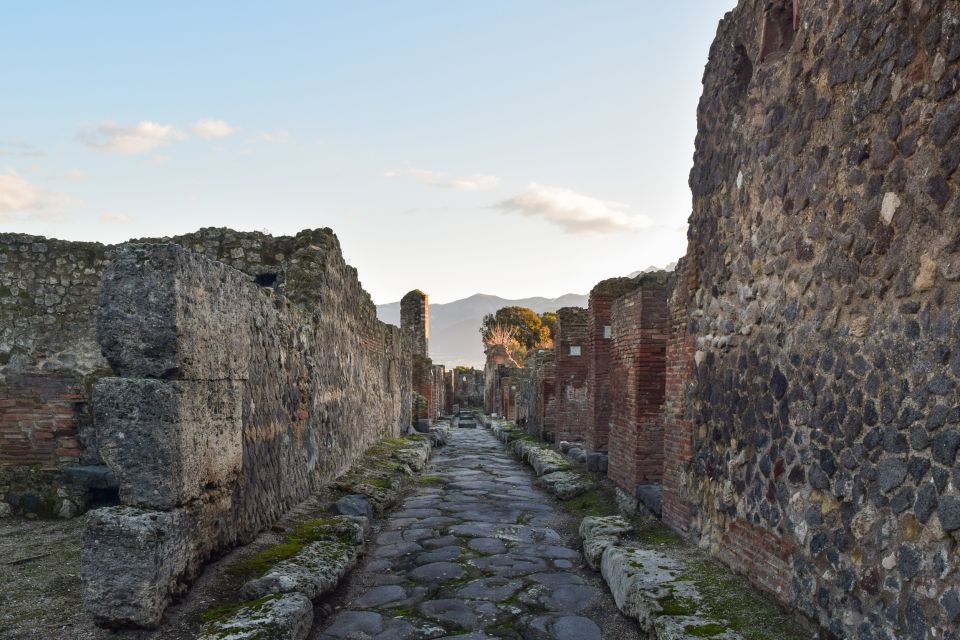
I think this is a smart booking choice if you want more ruin time and less waiting time, and you’d rather explore at your own pace. The audio guide and map are exactly the combination you need for a site that’s big, easy to get disoriented in, and full of details worth learning.
Book it if:
- You’re visiting Pompeii by train and want pickup that doesn’t feel like a scavenger hunt.
- You like having context as you walk, not only at museums or in guidebooks.
- You’re comfortable walking for hours and planning around heat.
Skip it (or consider something else) if:
- You hate self-guided experiences and strongly prefer a single group route.
- You don’t want to deal with audio guide setup or bringing your own headphones.
- You’re traveling with large luggage, since luggage or large bags aren’t allowed.
If you can handle the heat with water and sunscreen, this ticket is one of the more practical ways to experience Pompeii with less friction and better story-telling built in.
FAQ
What’s included with the Pompeii skip-the-line ticket?
You get skip-the-line entry, an audio guide, and a map.
Do I need to bring headphones?
Yes. Headset is not included, so you should bring headphones.
Where do I exchange my voucher?
Exchange your voucher at the activity provider’s office located on the first floor of Circumvesuviana train station (Via Villa dei Misteri, 1, 80045 Pompei NA, Italia).
Is food or drinks included?
No. Food and drinks aren’t included, so plan to buy or bring what you need.
Can I bring luggage or large bags?
No. Luggage or large bags are not allowed.
What languages are available for the audio guide?
The audio guide is available in French, German, Italian, English, and Spanish.
Are children free?
Children ages 0 to 17 go for free. People aged 18 to 24 from the European community with identification document pay €2.