REVIEW · POMPEII ARCHAEOLOGICAL SITE
Pompeii: Group Tour with an Archeologist Guide
Book on GetYourGuide →Operated by Tempio Travel Pompei Tickets · Bookable on GetYourGuide
Pompeii hits harder when you understand what you’re looking at. This 2-hour guided tour takes you through the western heart of Pompeii with a professional archeologist guide, so the city feels less like ruins and more like daily Roman life. I love that you skip the ticket line and get moving faster, and I love the focus on the most important buildings and named areas rather than a random walk. One possible drawback: it’s a group format in a limited time, so you won’t see the whole site.
You’ll start at Porta Marina and work through famous landmarks like the Basilica, the Forum, the baths, the Lupanar brothel area, the main street, and the theaters. Expect plaster casts of Pompeii’s citizens and a route that includes named houses such as the House of the Tragic Poet and the House of the Golden Cupid. In hot weather, the pace can feel like a sprint—so wear good shoes and plan for sun.
In This Review
- Key highlights worth prioritizing
- A 2-Hour Pompeii Circuit With an Archaeologist at Porta Marina
- Starting at Tempio Travel: Where You Meet (and Why It’s Easy)
- Skip-the-Line Entrance and Whisper Headsets for a Smoother Walk
- Western Pompeii Highlights: Porta Marina, the Forum, and the Big Public Buildings
- Baths, Lupanar, and the Main Street: Real Roman Daily Life vs. Just Ruins
- Plaster Casts and Fresco Details: Seeing the Human Story
- Named Houses: House of the Tragic Poet and House of the Golden Cupid
- What You Do at the End: Tips for Modern Pompeii (and a Nearby Church Stop)
- Price and Value: What $50.11 Buys You in Pompeii Time
- Who This Tour Fits Best (and When to Consider Another Plan)
- Should You Book This Pompeii Group Tour With an Archaeologist Guide?
- FAQ
- How long is the Pompeii group tour with an archaeologist guide?
- What languages are offered?
- Where do I meet the group, and where does the tour end?
- What’s included in the price?
- What should I bring, and is luggage allowed?
- Is Pompeii free on the first Sunday of the month?
Key highlights worth prioritizing
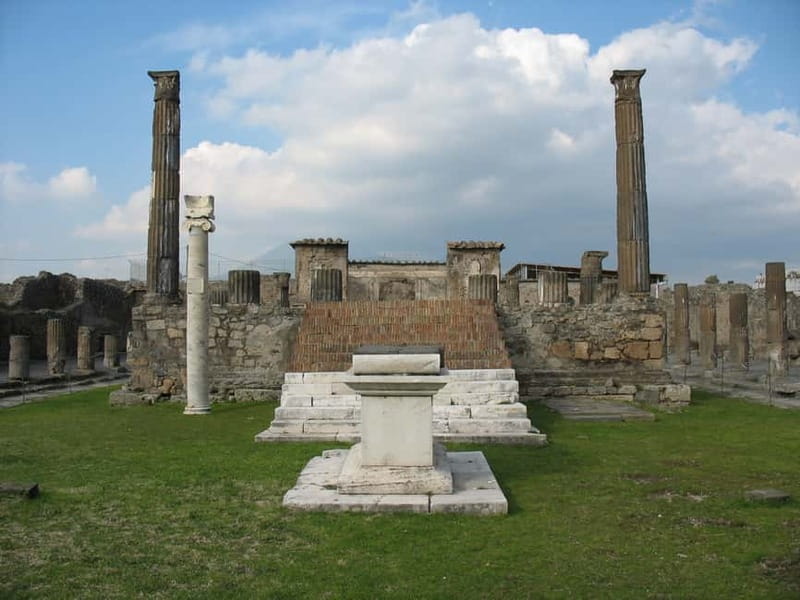
- Skip-the-line entry so your 2 hours goes to Pompeii, not waiting outside
- Whisper headsets that help on a large-group walk
- Western Pompeii focus with big “top sites” in a compact route
- Porta Marina to the Forum itinerary that gives you clear structure
- Plaster casts plus named houses to make the tragedy and daily life click
- Garden of the Fugitives for one of Pompeii’s most memorable stops
A 2-Hour Pompeii Circuit With an Archaeologist at Porta Marina
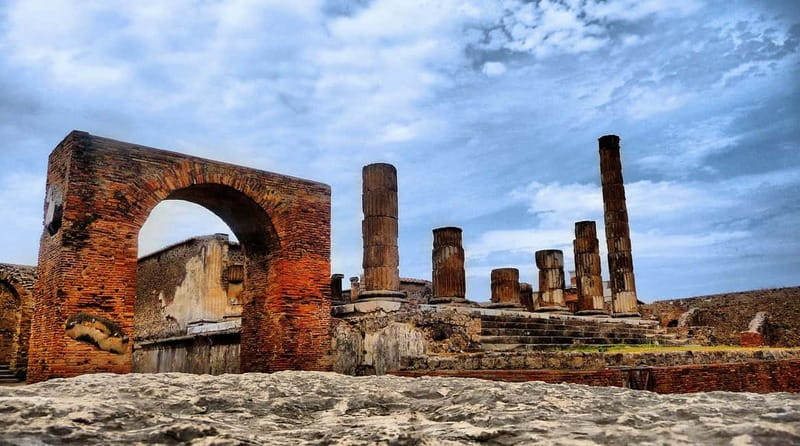
If Pompeii is on your “must-see” list, this tour is built for getting traction fast. You’ll spend 2 hours inside the archaeological site, led by an English or Italian live guide, and framed by an archeologist’s explanations. That matters because Pompeii isn’t just pretty crumbling walls. It’s a whole urban system—homes, streets, public buildings, and work spaces—frozen in time by the 79 AD eruption of Mount Vesuvius.
I like that the tour doesn’t try to cover everything. Instead, it concentrates on the western part of the city where you can connect the dots quickly. You get a real sense of how Pompeii functioned, what people used and visited, and how the layout shaped daily routines. The “famous frescoes” angle also fits this approach: the tour is meant to help you notice details you’d probably miss while walking on your own.
The timing is also practical. Two hours is enough to grasp the big story and see major landmarks, but short enough for people with limited schedules—especially if you’re pairing Pompeii with other stops around Campania.
You can also read our reviews of more guided tours in Pompeii Archaeological Site

Starting at Tempio Travel: Where You Meet (and Why It’s Easy)
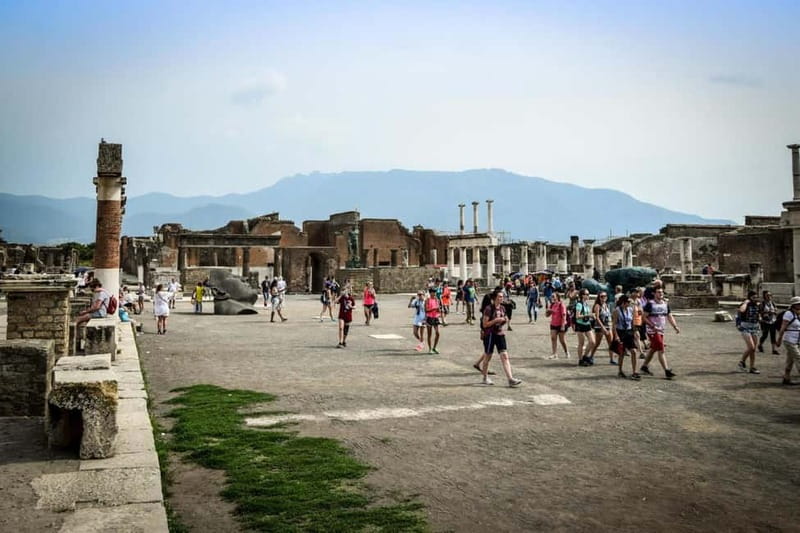
The meeting point is the Tempio Travel office on the 1st floor of the Circumvesuviana train station. The tour ends back at the same meeting point, which keeps logistics simple when you’re done exploring.
One small thing that can make or break the morning is knowing where to start before you get stressed in the station. If you’ve got limited time, I recommend arriving a bit early, then walking straight up to the office level. In a group tour, that first moment matters because the rest of the schedule is paced to keep you moving through the site.
Also note what the tour is not built for: it’s not suitable for people with mobility impairments. Pompeii’s terrain inside the ruins can be uneven, and a guided circuit like this depends on keeping the group together.
Skip-the-Line Entrance and Whisper Headsets for a Smoother Walk
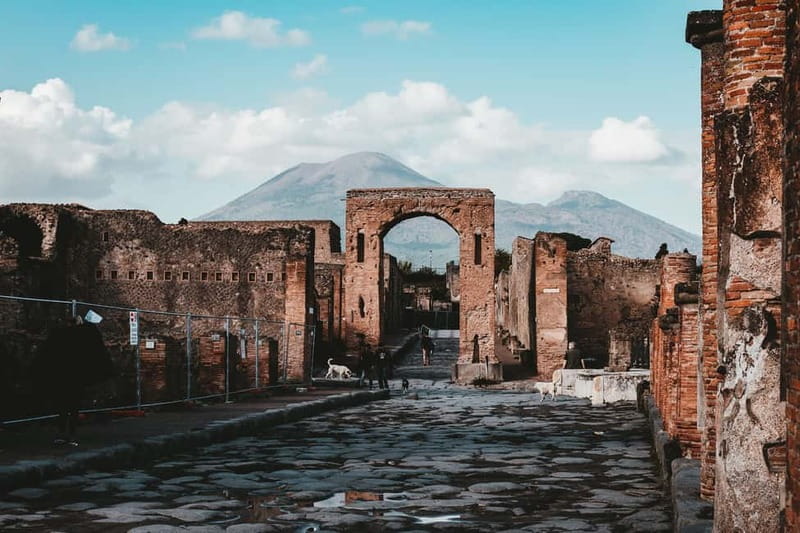
Pompeii can have long lines at the entrance, and that’s exactly why skip-the-line tickets are a big deal here. Saving time at the start means more time for the sections you’re actually paying to see. For a 2-hour tour, every minute counts.
Then you get whisper headsets, especially helpful in a larger group. This is a smart inclusion. Pompeii can be loud with foot traffic and wind, and when you’re trying to follow a guide’s explanations, poor audio is the fastest way to lose the thread. Headsets let you hear the details without constantly craning your neck or stopping every few minutes.
Group tours do mean you’re sharing pace with other people. You may feel the crowd at peak hours, and you won’t linger in quite the same way as solo visitors. Still, with headsets and a structured route, you keep the flow—and the guide can redirect attention so you don’t miss the “why” behind what you’re seeing.
Western Pompeii Highlights: Porta Marina, the Forum, and the Big Public Buildings
The tour begins at Porta Marina, one of Pompeii’s key gateways on the western side. Starting there is helpful because it frames Pompeii as a city with entrances, movement patterns, and neighborhoods—not a museum you stumble into.
From there, you’ll walk past major public and civic landmarks, including:
- The Basilica
- The Forum
- The main street
- The theaters
This is where a guided approach pays off. On your own, you might see impressive ruins but struggle to connect what each building was for. With an archeologist guide, you can understand how the Forum and civic spaces worked as centers of community life, while theaters show how entertainment and public gatherings shaped the social rhythm of the city.
A short note on expectations: this tour is concentrated on the western route, so you’re getting a selection of the “big names.” That’s a good thing if you want an effective overview. It’s less ideal if your goal is a complete, do-everything-for-hours Pompeii day.
Baths, Lupanar, and the Main Street: Real Roman Daily Life vs. Just Ruins

One of the best parts of this itinerary is that it doesn’t only focus on temples or grand buildings. You’ll also see places tied to everyday life and entertainment culture, including:
- The baths
- The Lupanar brothel area
- The main street
For me, this is where Pompeii turns from ancient geography into lived experience. Baths weren’t just for washing—they were social and routine spaces. The baths and street layout help you visualize how people moved, met, and spent time.
The Lupanar brothel stop can feel surprising the first time you encounter it in Pompeii, but that’s also the point. Pompeii isn’t sanitized history; it’s a record of messy human behavior. A strong guide helps you stay grounded in the context rather than getting stuck on shock value.
If you’re traveling with kids or you just like your history with context and clarity, this kind of stop can be a turning point because it shows that the city had services, leisure, and norms that feel recognizable—even after nearly two millennia.



Plaster Casts and Fresco Details: Seeing the Human Story
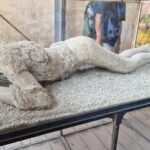
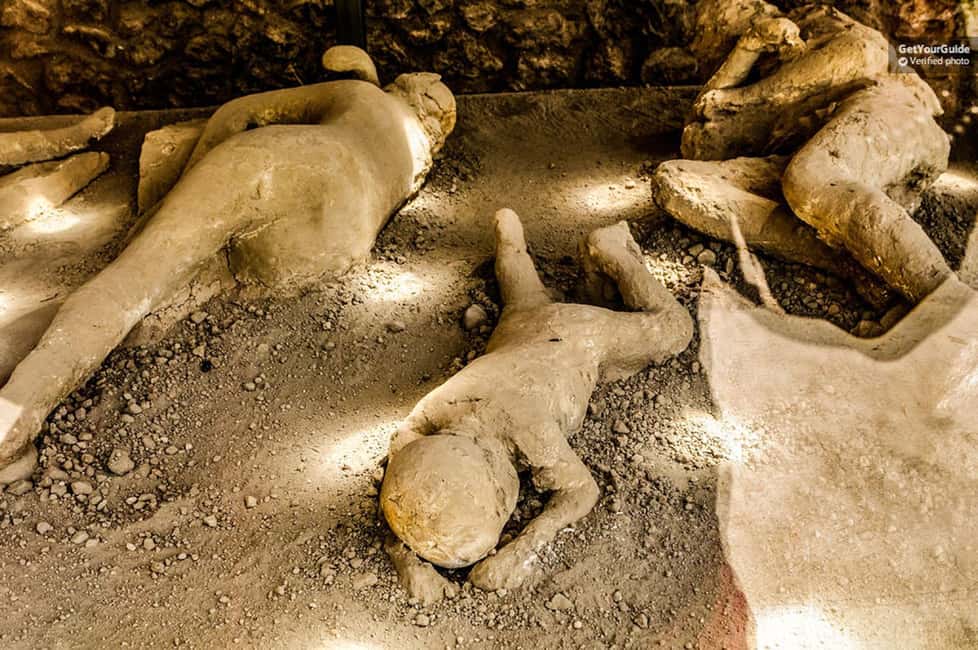
You’ll also see plaster casts of Pompeii’s tragic citizens. This is one of those additions that changes your emotional experience of the site. Buildings tell you about architecture; plaster casts push you toward the human scale of what happened. In a short tour, that impact matters because you’re not just collecting facts—you’re absorbing what the city’s final moments meant for real people.
The highlight also mentions frescoes, and Pompeii’s wall art is a major part of why the site feels so vivid. A guide’s job here is to help you look beyond the fact that a surface is old. You’ll get cues about what the artwork suggests about interiors, status, and daily visual culture.
If you’re the kind of person who usually walks past museum labels, this is the antidote. The tour format pushes you to pay attention to specific visual elements so you don’t miss what’s there.
Named Houses: House of the Tragic Poet and House of the Golden Cupid

Another strong part of this route is that you’ll visit named areas and houses, not just generic street segments. The tour includes:
- Garden of the Fugitives
- House of the Tragic Poet
- House of the Golden Cupid
- Other famous named houses along the way
Named houses help you navigate Pompeii because they give you a reference point. The House of the Tragic Poet is memorable for what the name signals about the surviving context of the home, while the House of the Golden Cupid points you toward details you can actually picture once you see it in person.
The Garden of the Fugitives is especially worth your focus. Even if you already know Pompeii’s broad story, this stop is often the one that makes the timeline feel immediate. It’s one of those places where a guide’s framing matters: you’re standing at a scene that’s both archaeological and deeply human.
One practical consideration: houses and interior-like areas can involve more walking and more shifting angles to see details. Wear shoes that handle uneven ground, and don’t plan to eat a snack mid-tour unless you’re okay with slowing the group down.
What You Do at the End: Tips for Modern Pompeii (and a Nearby Church Stop)
When the tour finishes, the guide doesn’t just cut you loose. You’ll get suggestions on how to spend the rest of the day in modern Pompeii, and you may also be directed toward the Sanctuary Dedicated to Our Lady of the Holy Rosary, located just steps from the archaeological site.
This is a smart benefit for short-stay travelers. Pompeii the ruins are only half the story; modern Pompeii can help you round out your day with food, wandering, and one more meaningful stop. If you’re trying to avoid an awkward “now what?” moment, the guide’s orientation is useful.
You’ll also appreciate that the tour ends back at the meeting point, so you’re not stuck figuring out transportation while tired and sunburnt.
Price and Value: What $50.11 Buys You in Pompeii Time
At $50.11 per person (for a 2-hour tour), you’re paying for more than entry tickets. The value comes from the combo of:
- A professional archeologist guide who gives context and explains what you’re seeing
- Skip-the-line entrance tickets, which is a huge time saver at a high-demand site
- Whisper headsets that make group listening actually work
- Free parking if it’s open and available
For many visitors, the biggest hidden cost at Pompeii is time. Two hours sounds short until you factor in the reality of queues and the fact that Pompeii is huge. This tour is a priced shortcut to a high-impact route.
Also, the operator includes clear structure. That reduces your mental workload. Instead of deciding what to prioritize while juggling crowds, you follow a path designed to hit the most important western landmarks and the named stops that make the story memorable.
If you’re the type who wants to see everything at your own pace, you may find any timed group tour limiting. But if you’re prioritizing understanding and efficiency, the price-to-time ratio can feel fair.
Who This Tour Fits Best (and When to Consider Another Plan)
This is a great match if you want:
- A guided Pompeii overview with the key western sites
- An archaeologist-led explanation that makes ruins feel understandable
- A short, efficient plan for a tight schedule
- Headsets and skip-the-line entry to reduce stress
It may be less ideal if:
- You want to wander slowly for hours across every district of Pompeii
- You need a step-free, mobility-friendly route (this tour is not suitable for mobility impairments)
- Your day depends on flexible, unscheduled stops inside the site
Weather is also real at Pompeii. It can get very hot, and one practical tip that came up is to handle sun with smart shade—people have bought an umbrella just outside the entrance to stay comfortable in strong heat. If you know you’ll be there during peak sun, bring a plan for it.
Should You Book This Pompeii Group Tour With an Archaeologist Guide?
I’d book it if Pompeii is one of your only “big” stops and you want to leave feeling like you actually understood what you saw. This tour concentrates on the western highlights, includes plaster casts and named houses, and keeps the walking route coherent with an expert guide. The skip-the-line ticket and whisper headsets are practical upgrades that make a short visit work better.
I’d hesitate if you’re aiming for a full-day, deep, wandering exploration with no group pace. In that case, a timed circuit might feel like you’re moving too fast or skipping sections you’d personally want to linger on.
FAQ
How long is the Pompeii group tour with an archaeologist guide?
The tour lasts 2 hours.
What languages are offered?
The live tour guide is available in English and Italian.
Where do I meet the group, and where does the tour end?
Meet at the Tempio Travel office on the 1st floor of the Circumvesuviana train station. The tour ends back at the meeting point.
What’s included in the price?
Included are the 2-hour guided tour, skip-the-line entrance tickets, whisper headsets for large groups, and free parking if open and available.
What should I bring, and is luggage allowed?
Bring a passport or ID card and comfortable shoes. Luggage or large bags are not allowed.
Is Pompeii free on the first Sunday of the month?
Yes, entrance is free on the first Sunday of each month, but tickets cannot be reserved ahead of time, so entry is not guaranteed.