REVIEW · POMPEII ARCHAEOLOGICAL SITE
Pompei: Pompeii Private Tour
Book on GetYourGuide →Operated by Tempio Travel Pompei Tickets · Bookable on GetYourGuide
One word: time-saver. Pompeii is huge, and this private tour gives you skip-the-line access plus an archaeologist to make sense of what you’re seeing. I like that it’s built around the big story of the city’s founding through the 79 AD Vesuvius disaster, not just a checklist of famous blocks. The one thing to keep in mind is that 3 hours means you’ll have to be a little selective about where you linger.
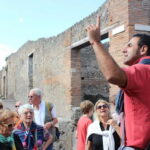
What I really like is the focus on how buildings, art, trades, and everyday life connect. A guide like Marina or Giada can turn the ruins from spooky stone piles into a working Roman city in minutes, and the private format makes that slower, clearer pace possible. You also get real flexibility: the tour description says you’ll have a chance to visit in detail two major places, such as the Amphitheatre or the Villa of Mysteries.
The main drawback is simple: Pompeii covers about 66 acres, so you won’t see everything. If you’re the type who wants to photograph every wall detail, you might feel a pinch—especially on busy days—so you’ll want to decide in advance what matters most to you.
In This Review
- Key points before you go
- Skip-the-line entry at the Pompeii ruins
- What 3 hours really means inside Pompeii
- Meeting point near Circumvesuviana: less stress, more time
- Pompeii’s story arc: from 7th century BC to 79 AD
- Learning to read the ruins: more than walls and stones
- Choosing your time: Amphitheatre or the Villa of Mysteries
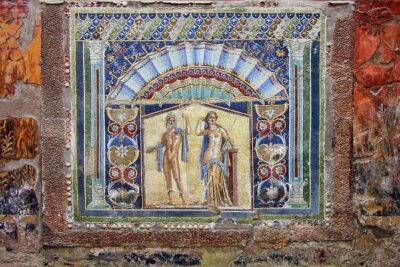
- Art, customs, and everyday life you can actually picture
- Crowds, pacing, and why a private guide helps
- Included vs not included: what you’re actually paying for
- What to bring, and the luggage rule that catches people
- Languages on the tour: matching your comfort level
- Who this private Pompeii tour suits best
- Tips for getting the most from your 3 hours
- Should you book this Pompeii Private Tour?
- FAQ
- How long is the Pompeii Private Tour?
- Does this tour include skip-the-line entry?
- Where do we meet the guide?
- What languages are available for the live guide?
- Can we visit the Amphitheatre or the Villa of Mysteries?
- What should I bring?
- Is luggage allowed?
- Is entry free on the first Sunday of each month?
Key points before you go
- Skip-the-line entrance ticket express so you can start seeing sooner
- Private 3-hour pace with an archaeologist guide instead of a cattle-car group
- UNESCO World Heritage site viewing through Roman daily life, not just monuments
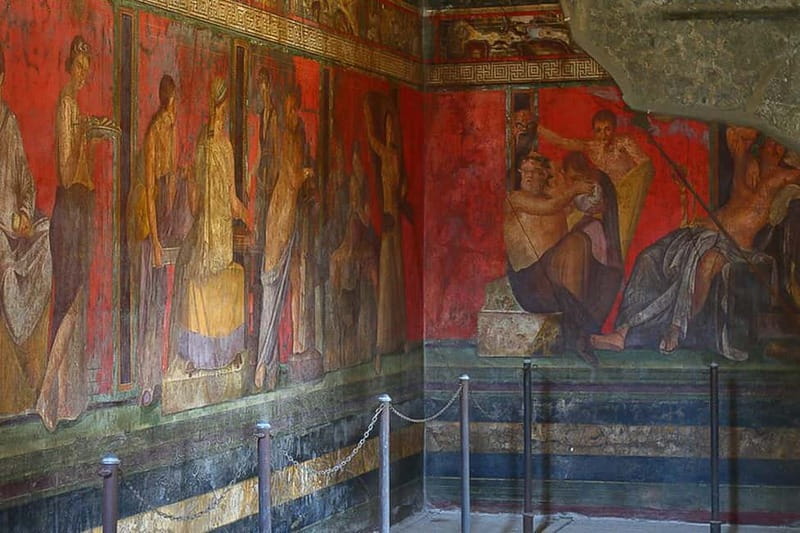
- Two-detail “choice” moments may include the Amphitheatre or the Villa of Mysteries
- Family-friendly guidance that can slow down for kids or include multiple generations
Skip-the-line entry at the Pompeii ruins
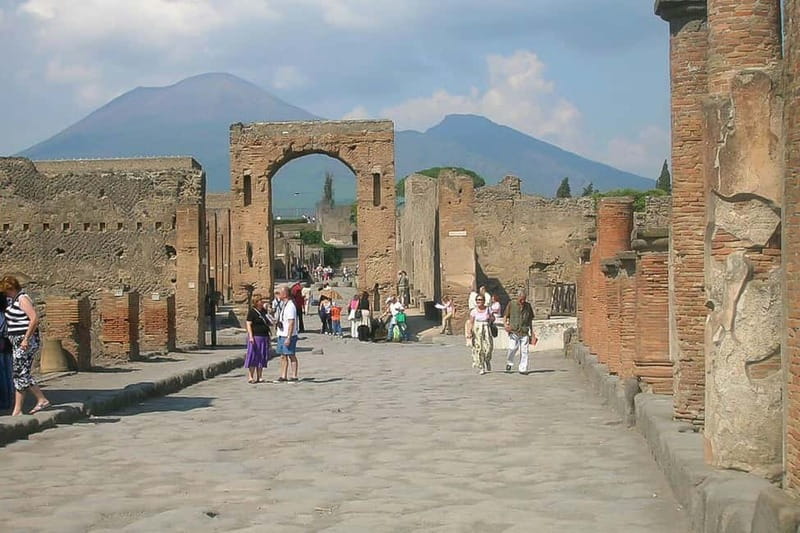
Pompeii rewards good timing. The site is so popular that the first minutes after you arrive can disappear fast, which is why I like tours that include skip-the-line ticket access rather than leaving you to guess the slowest line.
With this tour, you meet your guide at the Tempio Travel agency by the Pompeii ruins Circumvesuviana train station. From there, you move into the archaeology with less waiting and more daylight for walking.
A practical note: on the first Sunday of each month, entrance is free, but tickets can’t be reserved ahead of time. That means entry isn’t guaranteed, so if you want certainty, don’t gamble on that day.
You can also read our reviews of more private tours in Pompeii Archaeological Site



What 3 hours really means inside Pompeii
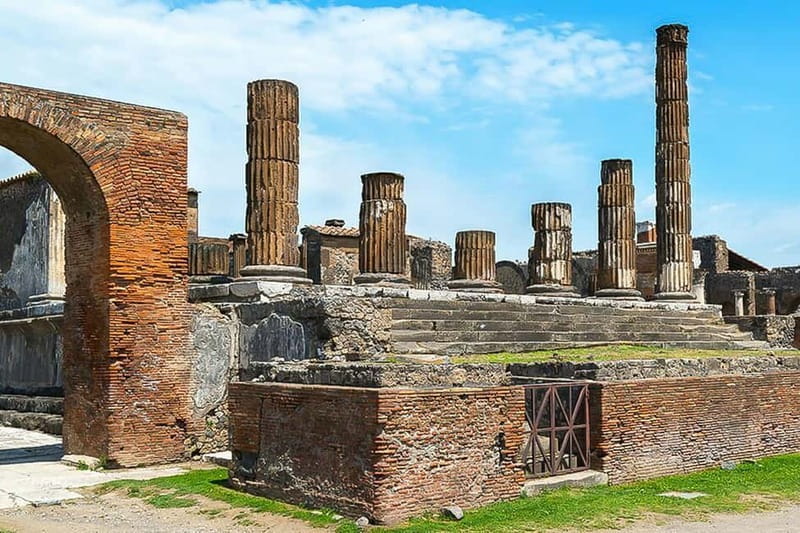
Pompeii doesn’t work like most museums. It’s an open-air city, spread out, with uneven ground and lots of points of interest. That’s exactly why a private format helps: you’re not forced to keep up with a rushing pack.
The tour is listed as a 3-hour experience, and the description signals an emphasis on “the heart of this city.” In practice, that usually translates to seeing the major areas that explain how people lived, worked, worshiped, and died there—without trying to cover every street corner.
If your group includes kids (and especially if it includes a wide age range), the guides here seem comfortable shifting pace and explanations. You’ll also find that a private guide can handle questions without making everyone else wait.
Meeting point near Circumvesuviana: less stress, more time
Getting to Pompeii is half the battle, and the meeting point is clear. Start by meeting at the Tempio Travel agency at the Pompeii ruins Circumvesuviana train station.
I like this because it’s close to the most common rail approach. It also makes it easier to plan around local train times rather than building a complicated arrival strategy from a distant pick-up point.
The tour ends back at the meeting point. So you’re not stuck figuring out a new meeting location after three hours of walking.
Pompeii’s story arc: from 7th century BC to 79 AD
The tour is structured around the big timeline you actually need to understand the site. You’ll go back to the period when the city was founded and then move forward to how the eruption of Mount Vesuvius in 79 AD destroyed it.
What I find useful is that the guide isn’t only pointing at ruins. You’re meant to connect the ruins to Roman art, customs, trades, and daily life—basically, how the city functioned before catastrophe froze it in time.
Guides with strong storytelling, like Giada or Dr Daniella, can keep that chronology flowing without turning it into a lecture. The best guides make you feel like you’re walking through a place that had routines: markets, workshops, homes, and public space.
Learning to read the ruins: more than walls and stones
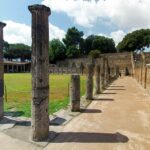
Pompeii can look overwhelming at first. Streets loop, buildings overlap, and you end up staring at the same kind of stone for too long if you don’t have a guide who knows what matters.
Here’s the main value of an archaeologist-led private walk: you learn what each building likely represented and why the details matter. The tour description explicitly talks about looking beyond walls and ruins to reveal the meaning of each building without missing key masterpieces.
I also like the “site revealed by excavation” angle. It matters because Pompeii isn’t just a static ruin—it’s an archaeological story of what’s been uncovered and how scholars interpret it. That’s a very different experience than wandering around on your own.



Choosing your time: Amphitheatre or the Villa of Mysteries
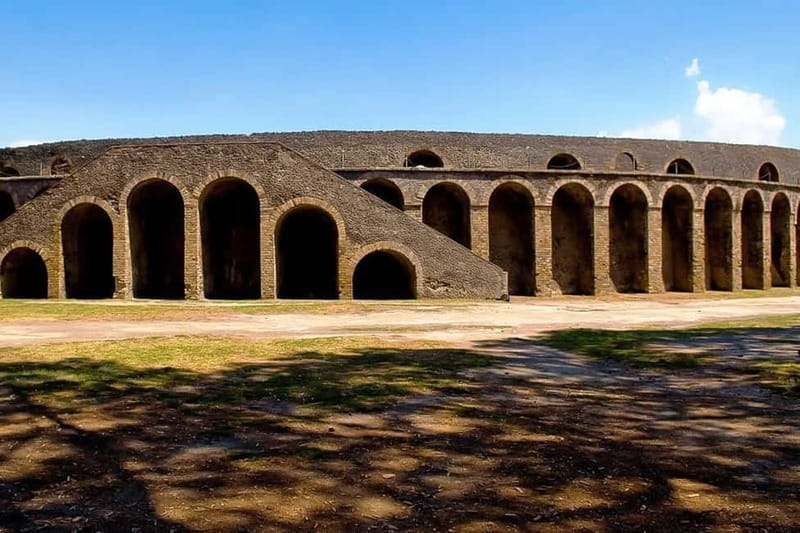
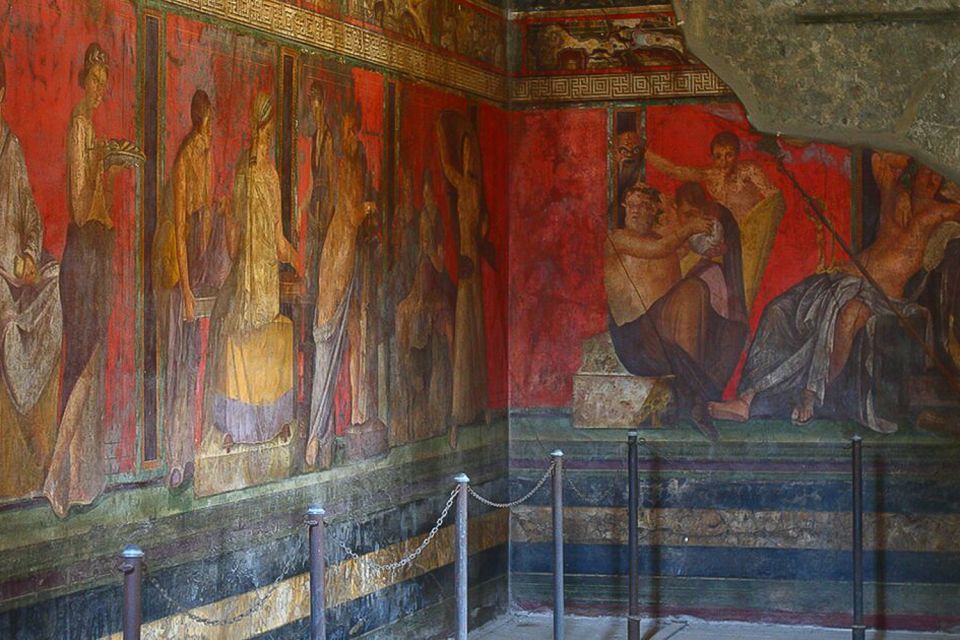
You’ll have the possibility to visit in detail two of the most important places on the site. The tour lists either the Amphitheatre or the famous Villa of Mysteries as options you can focus on.
This matters for two reasons. First, both areas tend to be highlights, so prioritizing them can make your tour feel like a “real experience” rather than a general tour. Second, spending enough time helps you notice the smaller details that make those places stand out.
If you care most about public spectacle and crowds, you’ll likely gravitate toward the Amphitheatre. If you’re more drawn to art and symbolism, the Villa of Mysteries is usually the stronger pull. In a private format, you can steer toward what you want most—within the constraints of a 3-hour visit.
Art, customs, and everyday life you can actually picture
The ruins of Pompeii aren’t just dramatic. They’re practical evidence of ordinary people doing ordinary things. The tour description calls out ancient Roman art, customs, trades, and everyday life, and I agree with that emphasis because it’s what makes the site memorable after the photos fade.
Guides named in the tour notes—Marina, Daniela, Mariachiara, and Alessandra—stand out for turning Pompeii into human-scale stories. That’s a big deal for anyone who struggles to translate what they see into something understandable.
If you’ve ever toured another ancient site and wished someone would explain how people ate, worked, socialized, and believed, this kind of guidance is exactly what you’re looking for. The private format makes it easier to ask follow-up questions instead of moving on mid-thought.
Crowds, pacing, and why a private guide helps
Pompeii is popular. That’s not a complaint, it’s just reality. A private guide can help you navigate the busiest stretches by choosing routes and timing as you go, so you don’t feel stuck in a bottleneck.
The guides described here are praised for handling crowds and adjusting pace. One review highlights that a guide helped “negotiate the crowds and see all the most important sights,” which is the practical advantage of hiring a person who knows the site layout.
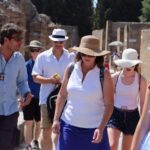
Another useful point for your comfort: the tour can adapt to different energy levels. One write-up mentions an itinerary paced for an elderly visitor, and another notes a guide using an iPad with kids to keep their attention. That kind of flexibility can turn a tiring walk into a doable one.
Included vs not included: what you’re actually paying for
Here’s the straightforward breakdown. Included are the tour, an archaeological guide, and a Pompeii entrance ticket express. Not included are transportation and lunch.
This matters when you judge value. You’re not just buying access to the site; you’re buying time saved from waiting plus a guide who helps you understand what you’re looking at. If you would otherwise spend that 3-hour window wandering without context, the guide pays off quickly.
Also, because it’s private, the cost per person can look different depending on group size. The price is listed as $407.83 per group up to 1, so your “best value” happens when the private format matches your travel style—like couples, solo travelers who want a guide, or small multi-generation groups that don’t want to split up.
What to bring, and the luggage rule that catches people
Keep it simple: bring a passport or ID card. The tour also notes that luggage or large bags are not allowed.
That’s an easy rule to violate accidentally when you’re traveling by train and carrying day bags. If you’re planning to use this tour as part of a travel day, pack light and plan for any storage you might need at your arrival point.
Wear comfortable walking shoes. Pompeii’s ground and stone steps aren’t designed for fashion sneakers.
Languages on the tour: matching your comfort level
The tour guide languages listed are Spanish, English, French, German, and Italian. If you have a preference, it’s worth confirming when you book so your guide can explain details clearly.
This language detail matters because the best part of Pompeii isn’t only seeing the ruins—it’s understanding why they look the way they do. When your guide can explain in your language, you’ll get more from every stop.
Who this private Pompeii tour suits best
This is a strong fit if you want real interpretation, not just a highlight run. A private 3-hour visit works particularly well for:
- Couples or solo travelers who want skip-the-line entry plus a guide
- Families with kids who need explanations at a pace they can follow
- Multi-generation groups that don’t want to split into separate tours
- People who care about Roman daily life, art, and trades—not only famous monuments
If you’re the type who loves reading on your own and can tolerate doing Pompeii without a guide, this may feel like extra cost. But if you want Pompeii to click as a living city, the archaeologist format is the point.
Tips for getting the most from your 3 hours
You’ll get the most value by deciding what you want your tour to accomplish. Do you want the best story arc? Pick the stops that match that goal. Do you want a deep look at major sites? Make sure you communicate that early to your guide.
Also, arrive with a small mindset shift: you’re not trying to “finish” Pompeii. You’re trying to understand a slice of it in a way that sticks. A well-run private tour makes that happen fast.
Finally, be ready for walking. Even a short tour inside Pompeii is still an active outdoor experience.
Should you book this Pompeii Private Tour?
Book it if you want skip-the-line time, an archaeologist guide, and a private pace that helps Pompeii make sense. The guide names highlighted in the tour experience point to a consistent strength: storytelling that connects Roman life to the ruins, plus the ability to adjust for families and different needs.
Skip it only if you’re determined to cover Pompeii like a personal checklist and you’re comfortable without interpretive help. If you want the site to feel legible—where the buildings, art, and daily routines all connect—this is a smart way to spend a short visit.
If you book, do one simple thing: choose what matters most to you—Amphitheatre vs Villa of Mysteries, or a broader “life in Pompeii” focus—then let your guide steer the route within those priorities.
FAQ
How long is the Pompeii Private Tour?
The tour is listed as 3 hours.
Does this tour include skip-the-line entry?
Yes. It includes a Pompeii entrance ticket express with skip-the-line access.
Where do we meet the guide?
You meet at the Tempio Travel agency at the Pompeii ruins Circumvesuviana train station.
What languages are available for the live guide?
The guide is available in Spanish, English, French, German, and Italian.
Can we visit the Amphitheatre or the Villa of Mysteries?
The tour description says you have the possibility to visit in detail two of the most important places, including the Amphitheatre or the Villa of Mysteries.
What should I bring?
Bring a passport or ID card.
Is luggage allowed?
No. Luggage or large bags are not allowed.
Is entry free on the first Sunday of each month?
Entrance is free of charge on the first Sunday of each month, but tickets can’t be reserved ahead of time, so entry is not guaranteed.