REVIEW · NAPLES
From Naples: Pompeii Private Tour with Transfer and Guide
Book on GetYourGuide →Operated by WORLDTOURS S.r.l. · Bookable on GetYourGuide
Pompeii works best when it’s guided. This private setup gets you in with skip-the-line entry, then keeps the pace manageable with a live guide like Theresa, who’s known for clear storytelling and a smooth rhythm. I especially like that you’re not stuck in a herd—you can ask questions and stop where the details matter.
Two things I’d call out: round-trip transfer from Naples hotels (so you’re not figuring out logistics) and time spent walking real streets like the Romans did, not just staring at distant ruins. One consideration: you’ll cover a lot on foot in about 2 hours on site, so plan on steady walking. Also, it isn’t suitable for people with mobility impairments, and large bags aren’t allowed.
In practice, the tour hits Pompeii’s big emotional beats fast: daily life in the Forum, the social world around the baths and an ancient brothel, then the drama of the amphitheater and the wealth shown in villas like the House of the Faun. It’s a focused visit—less wandering, more meaning—and that’s a good thing if you’re short on time in Campania.
In This Review
- Key highlights to look for
- Naples to Pompeii transfer: less hassle, more time on the ground
- Skip-the-line entrance and getting oriented with a live guide
- The Forum and Roman streets: walking the city instead of sampling it
- Stabian Baths and the social side of Pompeii
- Temples, shops, and the everyday Roman layout
- House of the Faun and the old amphitheater: where the grandeur shows
- How to use your free time without losing the plot
- Price and value: what you’re really paying for
- What to bring (and what to leave behind)
- Who this Pompeii private tour suits best
- Should you book this Naples to Pompeii private tour?
- FAQ
- How long is the tour?
- Does this tour include skip-the-line entry?
- How do you get from Naples to Pompeii?
- What will you see inside Pompeii?
- Are food or lunch included?
- What languages are available?
- Are large bags allowed?
Key highlights to look for
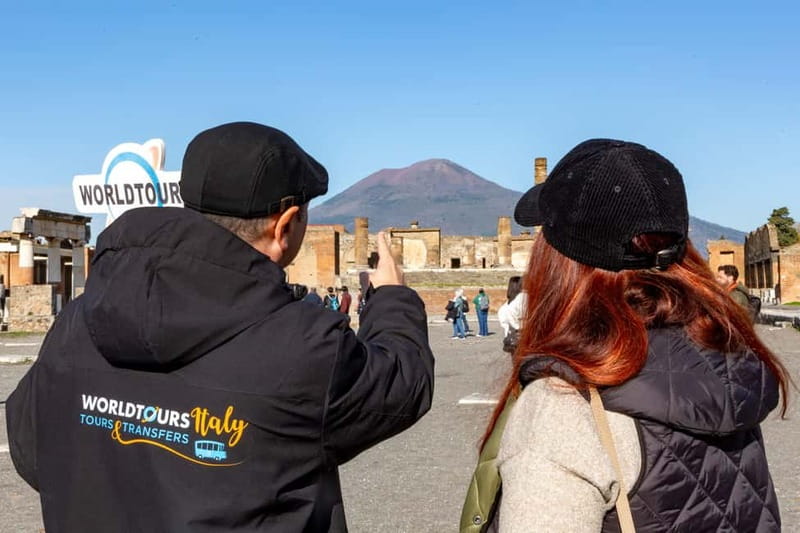
- Skip-the-line Pompeii entrance so your time goes to ruins, not ticket lines
- Private group (max 8) with a pace that you can actually keep up with
- Round-trip hotel transfer from Naples on a comfortable vehicle (about 30 minutes each way)
- Forum, Stabian Baths, and an ancient brothel for a fuller picture of everyday Roman life
- House of the Faun and the old amphitheater as your top “wow” stops
- Driver personality that helps you settle in, with examples like Gino and Mirko being friendly and punctual
Naples to Pompeii transfer: less hassle, more time on the ground
The biggest quality-of-life win here is how you start: round-trip transportation from your Naples hotel. The drive is about 30 minutes, which matters because it keeps the tour tight and efficient. You get a comfortable vehicle and a driver who speaks English (and other languages depending on the option), so it’s not stressful from the first minute.
The pacing on this kind of tour is key. A lot of Pompeii day plans fail because people burn time on transit and then feel rushed once they arrive. Here, the schedule is built so you get roughly 2 hours at the archaeological site, plus enough time to move back comfortably to Naples.
If you’re worried about punctual meeting points, the good news is that drivers like Mirko have a reputation for arriving early and staying on time. That little bit of reliability makes it easier to relax—especially if you’re juggling other Naples plans the same day.
You can also read our reviews of more guided tours in Naples


Skip-the-line entrance and getting oriented with a live guide
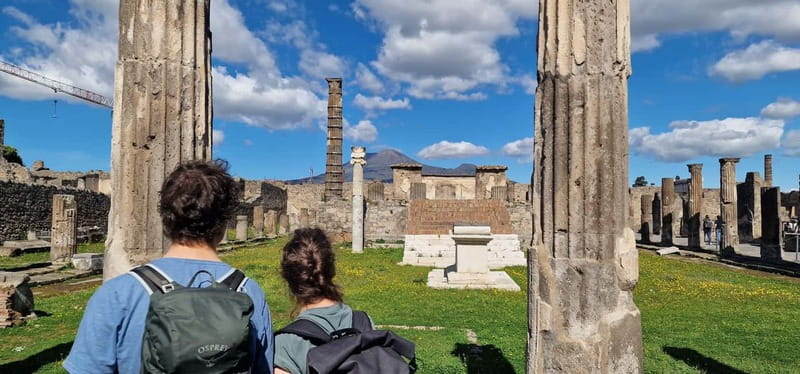
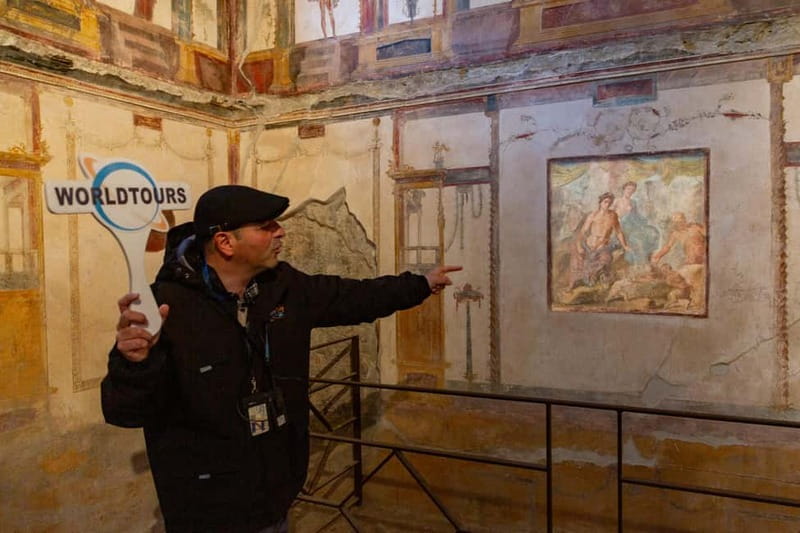
Once you arrive, you enter the archaeological site and meet your guide for the main walkthrough. You can also choose an audio option on arrival (with English, Spanish, French, Portuguese, or German), but the live guide is where this private format really pays off. The guide is offered in English, French, German, or Spanish, and the tour is designed around that language support.
What I like about the live-guide approach is that you get orientation early. Pompeii can feel like a maze at first—streets, rooms, fragments of walls. A guide helps you connect what you’re seeing to how the city actually worked. And in a private group, you can ask follow-up questions instead of just hearing a fixed script and moving on.
The guides are also good at practical details. Theresa, for example, has been described as kind and understanding with a pacing that’s not too fast and not too slow. People also noted that she knew where to point for clean toilet facilities and how to get a cold bottle of water before the walk begins. That’s not glamorous—but it’s the kind of real-world help that keeps a short tour enjoyable instead of exhausting.
The Forum and Roman streets: walking the city instead of sampling it
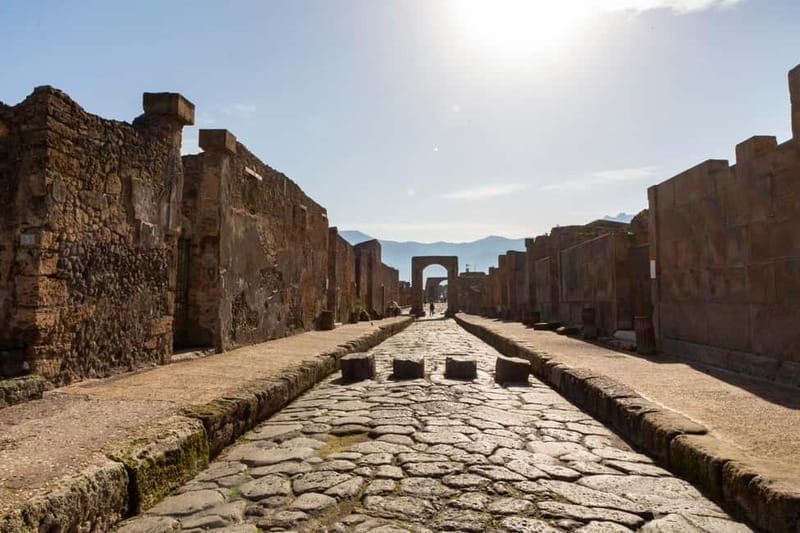
After you settle in, the tour focuses on Pompeii’s core public spaces, starting with the Forum. This is where Pompeii stops feeling like ruins and starts feeling like a city. The Forum area is a smart anchor point because it ties together government, religion, commerce, and daily foot traffic—basically the stuff that shaped everyday life.
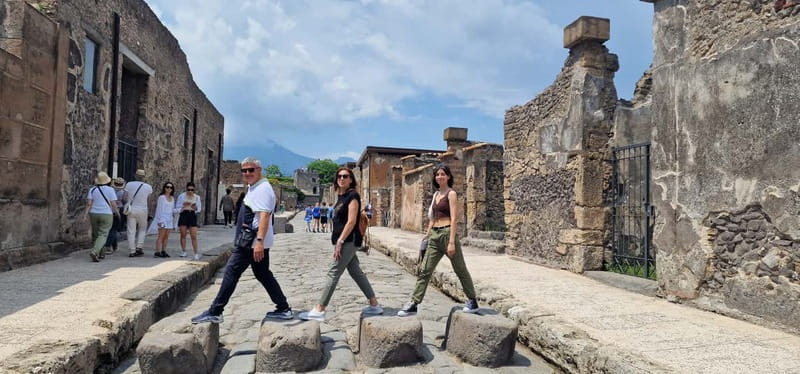
You’ll also stroll on the same roads the citizens used. That doesn’t just sound romantic; it changes how you understand the scale. Standing beside a street section is one thing. Walking it while a guide explains what happened there helps you picture movement, crowding, and how people navigated the city.
A potential downside of any “short and important” Pompeii tour is that you can’t cover everything. But the Forum is a strong choice because it gives context. Even if you only stay part of the day, this kind of stop helps you recognize patterns: where people gathered, what buildings faced the street, and how the layout supported regular life.
If you’re the type who likes to ask questions (Why was this placed here? What was that room used for?), the private format is a real advantage. In a small group, you’re not just listening—you’re learning at the speed you prefer.
Stabian Baths and the social side of Pompeii
One of the most interesting inclusions is the Stabian Baths. Baths in Roman cities weren’t just hygiene. They were social hubs—places to talk, relax, and spend time. Standing in the remains of the bathing complex gives you a sense of how everyday routines could be built around architecture and community.
Another standout stop is the ancient brothel. This is one of those topics people sometimes expect to be awkward or sensational, but a good guide brings it back to function: who went there, how it fit into the city’s social structure, and what daily commerce looked like in Pompeii. If you’d like a fuller picture beyond temples and villas, this stop does a lot of work.
The practical takeaway: if you want Pompeii to feel like real life—not just monuments—then baths and the brothel are exactly the right kind of contrast. You’ll see how the city served different needs, from leisure to social commerce.
One note on comfort: you’ll be doing a lot of walking on uneven ground. Pompeii’s ruins are historic, not designed for modern strolling. Bring comfortable shoes, and you’ll enjoy the “walk the roads” element much more.
Temples, shops, and the everyday Roman layout
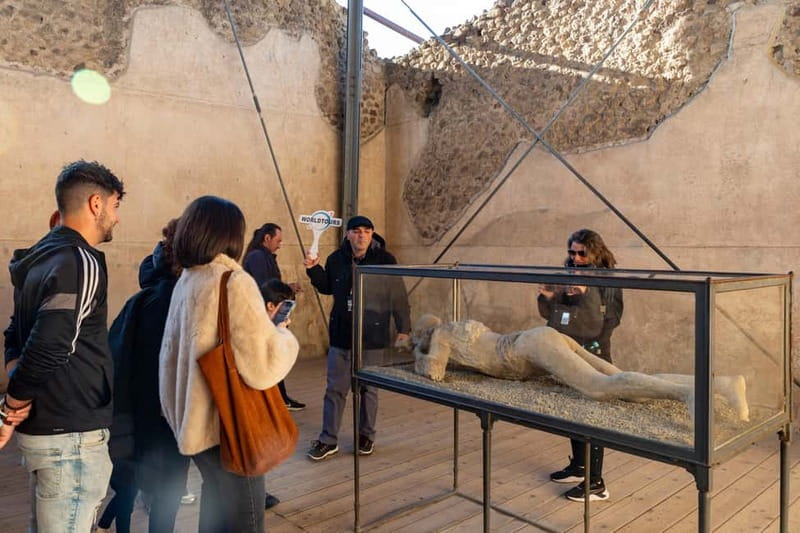
Beyond the Forum and the baths, the tour also includes temples, plus the kind of small-scale spaces that help you understand daily economics—shops and the street-level texture of Roman life. Pompeii is famous for the big names, but the day becomes memorable when you notice how often the city blended public and private life.
This is where a guide earns their pay. Temples and public buildings can feel similar if you’re looking at them alone. A live guide helps you distinguish what each space likely meant for people at the time—where sight lines were, how buildings related to street movement, and why certain areas became gathering points.
There’s also a built-in “wow factor” in how intact many areas still feel. Buildings are preserved enough that you can mentally place yourself there. That’s especially powerful when you’re moving through the site rather than stopping only for photos.
You can also read our reviews of more private tours in Naples






House of the Faun and the old amphitheater: where the grandeur shows
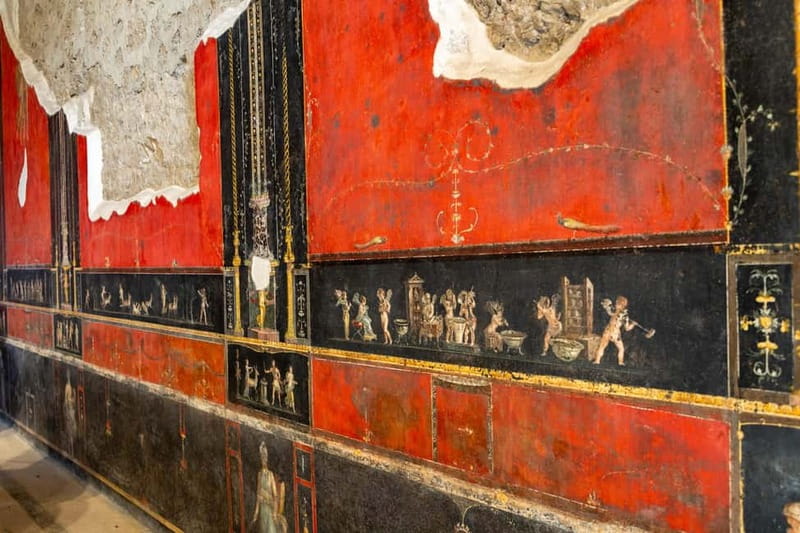
By the time you reach the House of the Faun, the tour shifts toward the wealthier side of Pompeii. This villa is included because it helps you understand the contrast between ordinary city life and elite domestic space. When you’re standing inside or near rooms that once belonged to affluent residents, you start to see Pompeii not just as a tragic story, but as a society with real economic layers.
The old amphitheater is the other major emotional stop. Amphitheaters were built for mass events—public entertainment and gatherings. Even in ruins, the seating areas and the sense of scale make the space feel dramatic. It’s a natural “final act” style stop if your tour timing is tight, because it gives a clear sense of what Pompeii was like for big crowds.
The tradeoff with a private 2-hour site visit is that you can’t linger everywhere. The guide has to make calls about order and pacing. The good guides get the mix right: context early (Forum), social life in the middle (baths and brothel), then standout architecture and spectacle toward the end (villa and amphitheater).
How to use your free time without losing the plot
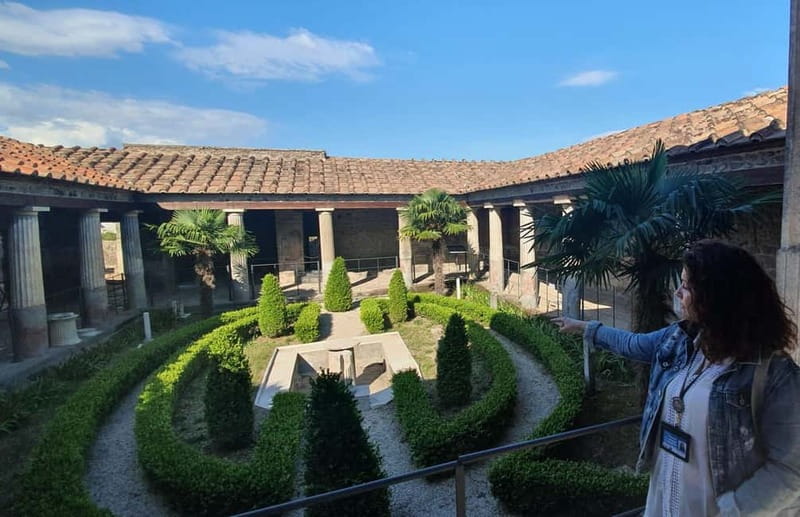
After the main guided walk, there’s typically some free time to explore on your own before the minibus takes you back to Naples. This is where you can turn a good tour into a great one, but only if you plan.
Here are smart ways to use that free window:
- Revisit one stop you found most interesting (usually the Forum area or the baths zone) so the guide’s context sticks.
- Take photos while you still remember where to look. Early orientation helps you frame shots faster.
- Do practical stuff immediately, like finding a restroom or grabbing water. You’ll already have the guide’s advice on where to go.
Since the tour includes bottled water, you’re covered there. Still, plan to bring your own refill bottle if you tend to drink a lot, and remember the site requires steady walking.
Price and value: what you’re really paying for

The listed price is $390.66 per group (up to the booking’s group size limit). On paper, Pompeii might look expensive compared to self-guided entry. But value here isn’t just the ticket—it’s the time saved and the meaning you gain from a good guide.
You’re getting:
- Skip-the-line entrance
- An archaeological guide for Pompeii
- Round-trip transportation from Naples hotels
- Driver support in multiple languages
- Bottled water
And you’re not getting lunch. That’s normal for a short private day tour, but it affects value if you planned to spend all day away from Naples.
So who does this work best for? It often makes the most sense when:
- You want a private experience instead of a large group scramble.
- You have limited time in Naples and need Pompeii to be efficient.
- You’ll actually use the guide for questions and context, not just for a walk.
If you’re traveling solo or with just one other person, the price per person can feel steep. But if you’re booking as a small group (this tour allows up to 8 participants), the cost spreads more naturally, and the private benefit becomes easier to justify.
What to bring (and what to leave behind)
This is a site tour, not a sit-down museum day. Bring comfortable shoes because you’ll walk across uneven ancient terrain.
Also plan for the bag rules: luggage or large bags aren’t allowed. If you’re traveling with a lot of gear, that’s the one logistical snag to plan around. Pack light so you don’t waste time worrying about storage.
And keep expectations realistic. Pompeii is weather-dependent and mostly outdoors, so wear clothing that handles sun or shade well.
Who this Pompeii private tour suits best
This tour fits best if you want Pompeii with structure. It’s ideal for:
- People who like a guided route with clear stops and context
- Anyone who wants to see key highlights like the Forum, Stabian Baths, an ancient brothel, the House of the Faun, and the old amphitheater without doing all-day planning
- Those traveling with a small group who prefer questions and pacing over being rushed
It’s not suitable for people with mobility impairments, based on the tour’s information. It also requires comfort with active walking, since the format is built around seeing a lot in a short window.
Should you book this Naples to Pompeii private tour?
If you want Pompeii to feel human—streets, routines, social spaces—and you want to maximize time from Naples, this private plan is a strong choice. The skip-the-line entrance plus the hotel transfer removes the common friction points, and the live guide approach helps you connect what you’re seeing to how the city worked.
I’d book it if you’re the kind of person who likes your sightseeing with a thread: a start, a route, key stops, then a wrap-up with time to look around. I’d reconsider if you need lots of unstructured wandering or if mobility is an issue, because the tour is designed for walking and for getting through a set route in limited time.
If you’re aiming for a memorable Pompeii day without turning it into a logistical project, this is the kind of tour that delivers.
FAQ
How long is the tour?
The activity is listed with a duration of 3 hours. You can also expect about 2 hours at the Pompeii archaeological site after the transfer.
Does this tour include skip-the-line entry?
Yes. Pompeii skip-the-line entrance is included.
How do you get from Naples to Pompeii?
You get round-trip transportation from Naples hotels by comfortable vehicle. The drive is approximately 30 minutes each way.
What will you see inside Pompeii?
The tour includes main sights such as the Forum, Stabian Baths, an ancient brothel, the House of the Faun, and the old amphitheater, along with temples, villas, shops, and restaurants.
Are food or lunch included?
No. Lunch is not included.
What languages are available?
Languages offered include French, English, Italian, and Spanish (for the guide/experience). Audio options on arrival can also include English, Spanish, French, Portuguese, or German.
Are large bags allowed?
No. Luggage or large bags aren’t allowed. Comfortable shoes are recommended.