REVIEW · NAPLES
Naples: San Gaudioso Catacombs Guided Tour
Book on GetYourGuide →Operated by Catacombe di Napoli · Bookable on GetYourGuide
Naples gets under your skin fast. The San Gaudioso Catacombs tour turns a short underground visit into a story about early Christian burial life, with 5th–6th century frescoes and the strange 17th-century skull displays that made the place famous (in a spooky way). I also like how the guide keeps it practical and human: you learn what you’re seeing, not just dates on a wall.
My only caution is physical: parts of the route can feel tight and uneven, so if you’re claustrophobic or have mobility limits, it may be stressful even though the tour stays focused and doesn’t drag.
In This Review
- Key things to know before you go
- Entering the San Gaudioso experience: what you’re really buying
- Meeting point and getting down fast (so you don’t lose your time)
- Underground Naples: how San Gaudioso is laid out and why it matters
- The frescoes and mosaics: the early-Christian art you’ll actually notice
- The saint’s tomb and the sense of devotion
- 17th-century nobles and the skulls in the ambulatory
- The Basilica di Santa Maria della Sanità stop: why going upstairs is part of the point
- Who the guides are, and what they do well
- The free San Gennaro catacombs voucher: a smart planning move
- Price and timing: fitting a 45-minute underground visit into Naples
- Who should book this San Gaudioso guided tour
- Should you book San Gaudioso?
- FAQ
- FAQ
- How long is the guided part of the San Gaudioso catacombs tour?
- What is included besides visiting the catacombs?
- What languages are available for the live guide?
- Where do I need to meet for the tour?
- Do I get free entry to another catacomb with this ticket?
- When does the ticket office open?
- How early should I arrive before my booked time?
- Can I cancel and get a refund?
Key things to know before you go
- St. Gaudiosus (451–453 AD) anchors the story, so you’re not wandering without context
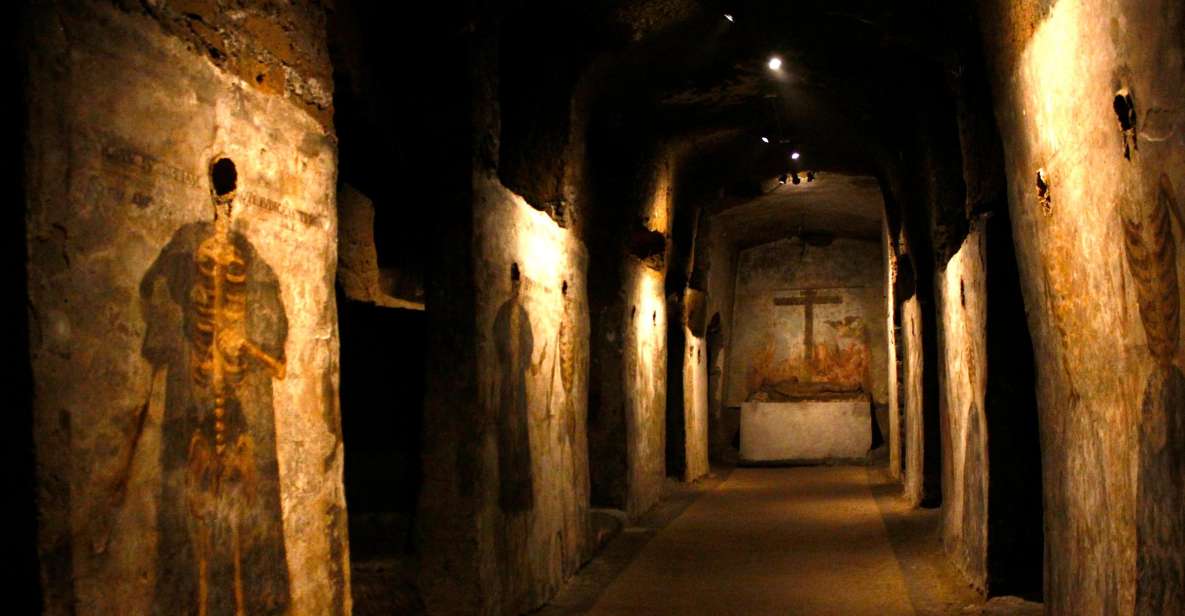
- Frescoes and mosaics from the 5th and 6th centuries show early Christian motifs up close
- Skulls in the ambulatory explain a 17th-century way of honoring the dead that feels unsettling and fascinating
- Noble graves (17th century) add a social layer to the cemetery, not just the spooky scenes
- Short, structured timing: about 45 minutes with a church stop on top
- Free entry to San Gennaro (valid for 12 months) turns one ticket into two catacombs
Entering the San Gaudioso experience: what you’re really buying
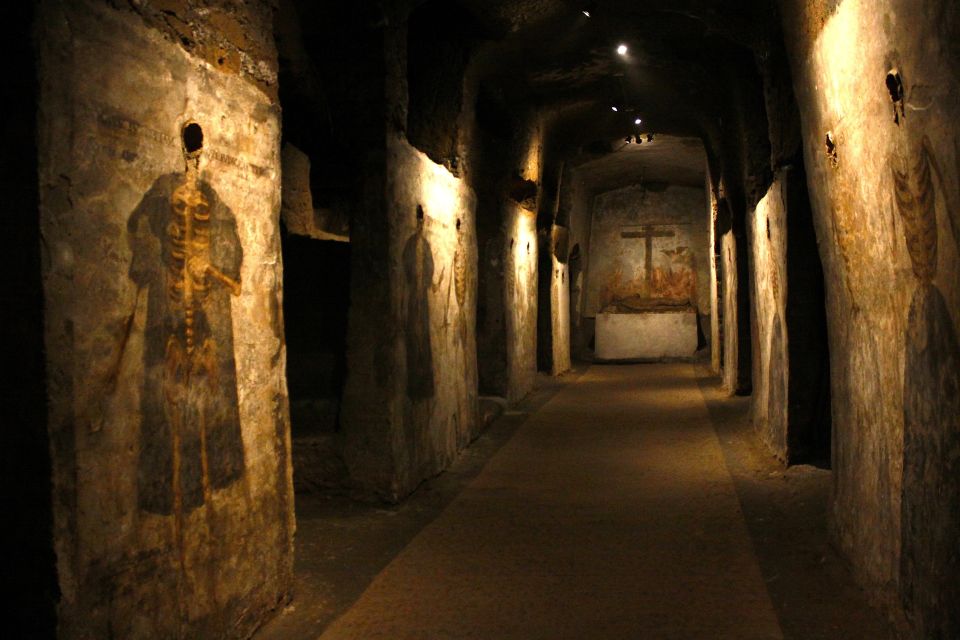
This is a value-packed ticket for Naples because you’re not paying just for entry. For $15 per person, you get a 45-minute guided visit through the Catacombs of San Gaudioso plus a guided stop at the Basilica di Santa Maria della Sanità. The guide work matters here. Catacombs can be “wow, dark tunnels” without a storyline. With the right guide, they become legible.
The tour’s format also respects your time. You get a tight route and a clear finish point, which is ideal if you’re doing Naples for a few days and want something different from churches on the surface.
And there’s a bonus that’s easy to miss when you’re planning: your ticket includes free entry to the Catacombs of San Gennaro (valid for 12 months). That’s a smart add-on because it lets you compare two early-Christian sites without paying twice.
You can also read our reviews of more guided tours in Naples


Meeting point and getting down fast (so you don’t lose your time)
You meet at the ticket office of the Catacombs of San Gaudioso. The ticket office opens at 9:30 AM, and your ticket is valid only for the day and time you purchase.
The practical thing: show up early. You need to arrive 15 minutes before your booked time, because arriving after the tour departure time means you can’t join and you won’t get a refund. This is one of those places where “I’ll be there soon” becomes “missed it.”
Also, plan for vertical movement. In the area, you might need to go down by elevator from street level to reach the correct entrance, so if you’re arriving confused, slow down and ask staff where to go.
Underground Naples: how San Gaudioso is laid out and why it matters
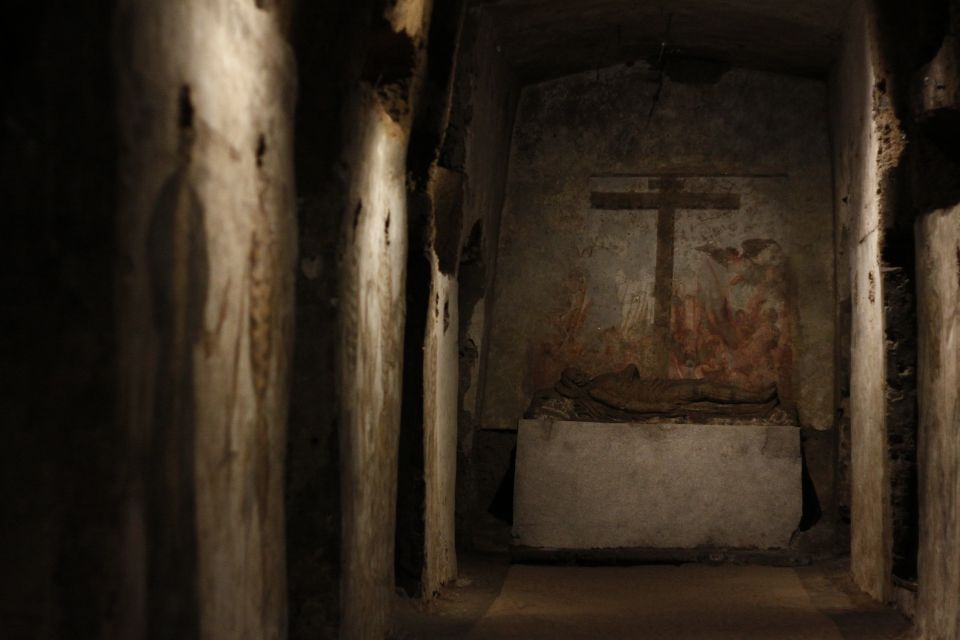
Catacombs aren’t just old graves. They’re a system—built, expanded, and organized over time—so you can understand them better when you know the key chapters in their history.
San Gaudioso is tied to the burial and later reverence for St. Gaudiosus, a North African bishop whose burial dates fall between 451 and 453 AD. That matters because the site grew and changed after his burial. Instead of thinking of one static cemetery, the tour frames it as a place that expanded as devotion and burial customs evolved.
The guide then helps you read the space in layers:
- what the earliest Christians built and decorated
- what later generations added
- how the site functioned differently depending on who could afford burial there
That’s why the tour feels more satisfying than a quick walk. You’re not only looking; you’re learning the logic behind the structure.
The frescoes and mosaics: the early-Christian art you’ll actually notice
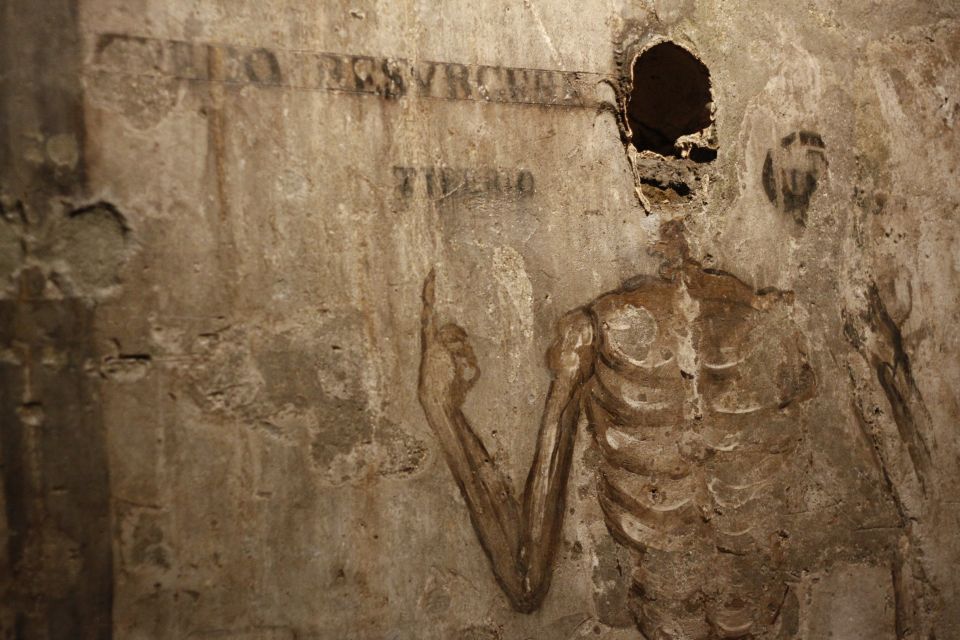
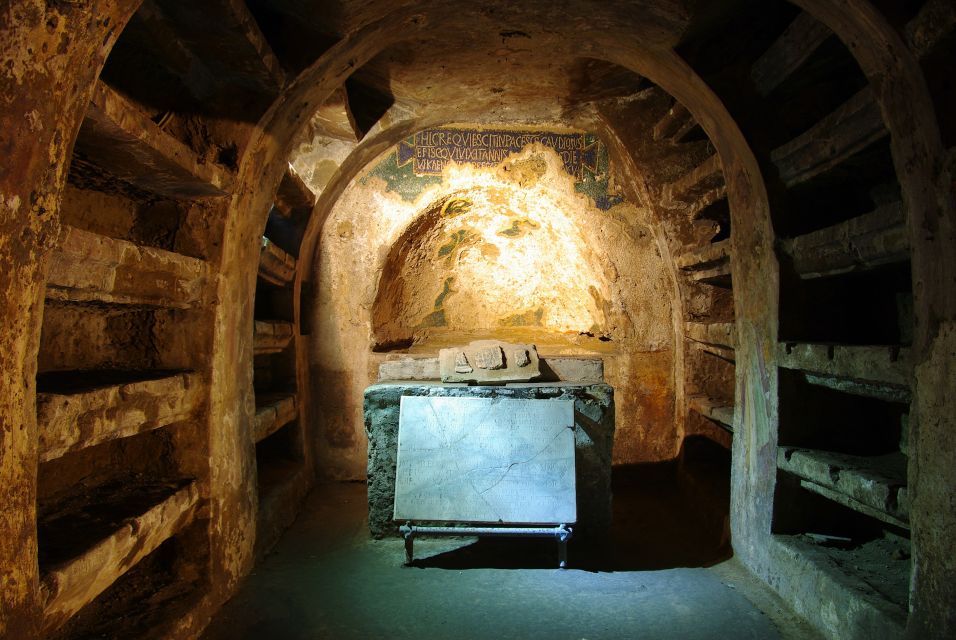
The headline visual here is the frescoes and mosaics from the 5th and 6th centuries, with typical early Christian motifs. The best part is that the tour doesn’t treat these as distant art fragments. The guide points out what to focus on and how the imagery fits with burial beliefs.
A guide can make a huge difference in places like this. The way it’s described in the tour experience is consistent: guides give clear context and tell the story in a way that keeps you engaged underground, not just listening while you stumble forward.
If you love visual detail, this is one of the moments to slow down mentally. Even in a dim space, you can start seeing patterns and symbolism rather than only skulls and shadows.
The saint’s tomb and the sense of devotion
You’ll also spend time around the tomb of St. Gaudiosus. This section changes the mood. The catacombs feel macabre, yes, but the tour grounds that tone in belief: why people came, why the site expanded, and why the burial place mattered.
In several guides’ storytelling styles, the emphasis lands on how reverence shaped the architecture and decoration. One reason it works: the guide ties history to the physical place, so it feels like a real human story rather than an encyclopedia entry.
If you’re not expecting to be emotionally moved, you might be surprised. Not by horror, but by the seriousness behind the art and the organization of the cemetery.




17th-century nobles and the skulls in the ambulatory
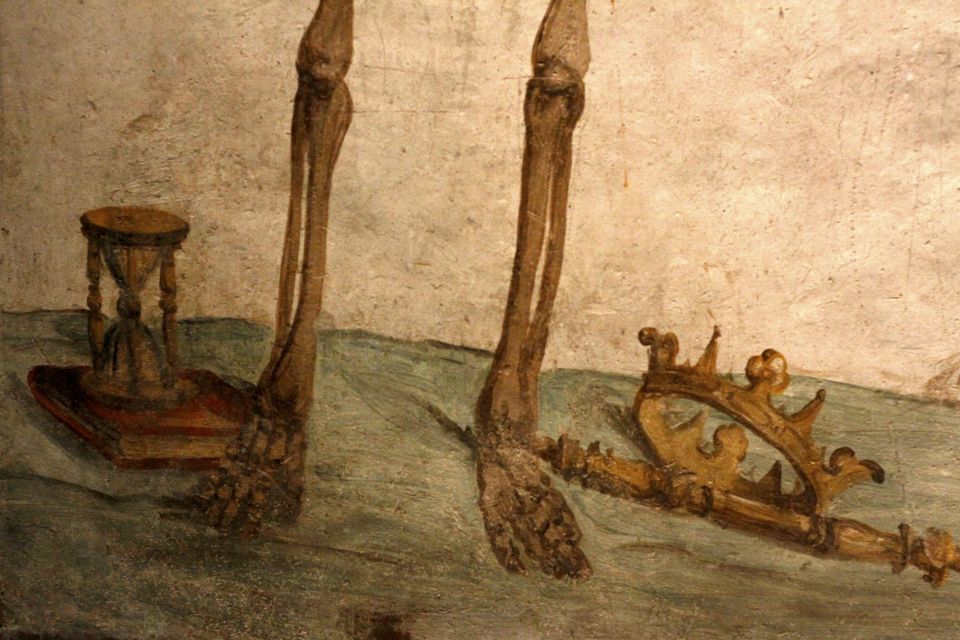
This is the part people talk about because it’s hard to forget. The catacombs resumed their function as a burial site for nobles in the 17th century, and the tour shows you what that meant visually and symbolically.
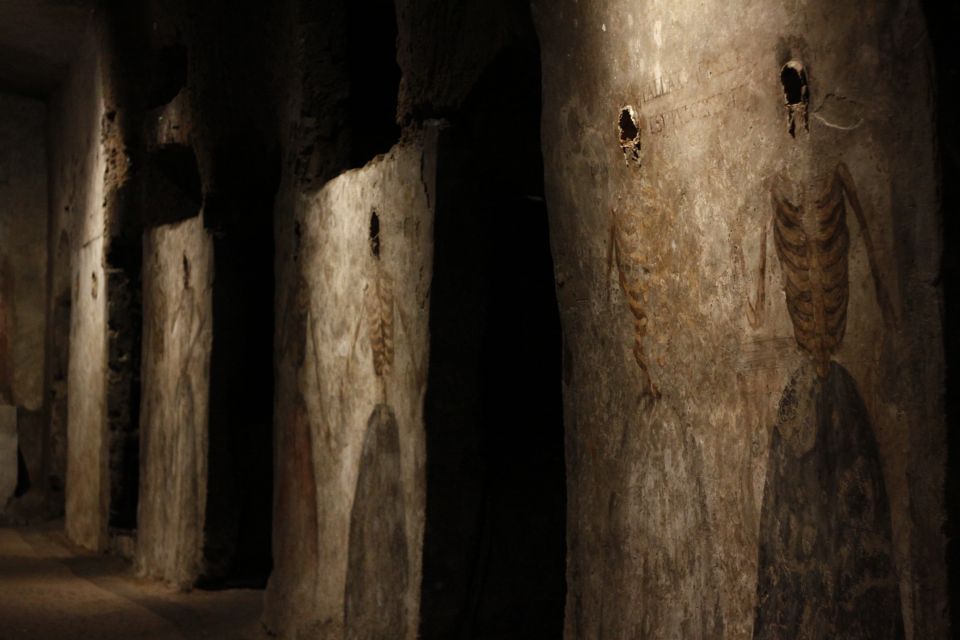
One standout detail is the skulls placed on display in the walls of the ambulatory in the 17th century. That’s not just decoration. It’s a statement about death, remembrance, and status. Seeing it in person forces you to rethink what you thought “respect for the dead” looks like in different eras.
You also get a chance to see how the site blends earlier Christian motifs with later burial practices. It’s a reminder that even a sacred place can be reinterpreted over centuries.
The Basilica di Santa Maria della Sanità stop: why going upstairs is part of the point
The tour isn’t all underground. Included in the experience is a guided stop at the Basilica di Santa Maria della Sanità. It helps to see how the catacombs connect to daily life above ground.
Reviews mention that the church stop can feel stunning, and some visitors note the presence of a presepi (nativity scene) during their visit. Even if the exact seasonal details vary, the idea stays the same: the church gives you a reference point so the underground feels less like a separate attraction and more like a continuation of Naples’ religious and neighborhood identity.
This upstairs time also gives your body a breather. After tunnels and low light, even a short church visit makes the tour feel complete instead of rushed.
Who the guides are, and what they do well
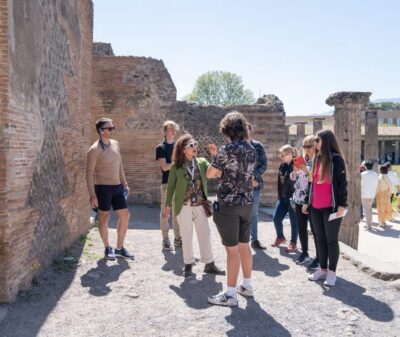
The guides seem to be a major reason people rate this tour highly. Names you may hear include Nello, Antonella, Claudia, Lisa, Emanuele, Flavia, Valentina, Ricardo, and Sara. The common thread: guides come prepared to explain the site clearly, answer questions, and keep the group moving without turning it into a lecture.
I especially like the fact that the experience often feels interactive. Several guides are described as engaging and friendly, with a sense of humor that helps when you’re looking at uncomfortable imagery like skulls.
Also, it’s worth noting that the tour can feel connected to the Sanità district itself. Some guides reference local cultural projects tied to community support and neighborhood development, including work associated with Don Antonio Loffredo and regeneration initiatives like La Paranza. That doesn’t replace the history, but it adds a real-world layer: catacombs aren’t only artifacts; they’re part of a living community.
The free San Gennaro catacombs voucher: a smart planning move
Here’s the planning advantage. Your ticket gives you free entry to the Catacombs of San Gennaro, valid for 12 months. That means you can do San Gaudioso first, then return later (or on the same trip) when you still have energy for one more underground experience.
It also lets you compare two sites with different vibes. Even if the catacombs all share the same underground DNA, the decoration, structure, and storytelling emphasis can feel different enough that a second visit doesn’t feel repetitive.
If you’re building a Naples itinerary, this is a great way to keep flexibility. One guided tour gives you the basics, then the voucher gives you the option to go deeper later.
Price and timing: fitting a 45-minute underground visit into Naples
At $15, you’re paying for three things:
- a live guide who makes the space understandable
- entry to San Gaudioso
- a church visit plus a voucher for another catacomb
For Naples, that’s a solid value because the experience is short and structured. You’re not committing an entire half day to something that might end up being too dark and confusing to appreciate.
Timing-wise, build around the fixed departure. Since the ticket is valid only for the time you purchased and late arrivals don’t join the tour, plan your day so you aren’t sprinting across Naples at the last second.
Who should book this San Gaudioso guided tour
This tour is a strong match if you:
- want a guided catacomb experience rather than wandering without context
- like early Christian art and want to see specific 5th–6th century frescoes and mosaics
- don’t mind macabre imagery (skulls and tombs), but prefer it explained with care
- want a Naples activity that fits easily even with a busy sightseeing day
You might think twice if you:
- are claustrophobic or easily stressed by tight underground spaces
- have mobility issues that could be affected by uneven underground areas and stairs (the tour is short, but still underground)
Should you book San Gaudioso?
Yes, if you want an organized, story-driven catacomb visit. The value is in the guide-led clarity: you get history anchored to the site, visible art you can actually identify, and that unforgettable 17th-century angle with the skulls. The basilica stop upstairs also keeps it from feeling like a one-note dark attraction.
If you’re sensitive to cramped spaces, it’s worth considering before you commit. But for most people, this is one of the most efficient ways to experience early Christian Naples without wasting time guessing what you’re looking at.
FAQ
FAQ
How long is the guided part of the San Gaudioso catacombs tour?
The guided tour lasts about 45 minutes, covering the Catacombs of San Gaudioso and a stop at the Basilica di Santa Maria della Sanità.
What is included besides visiting the catacombs?
In addition to the Catacombs of San Gaudioso, the tour includes a guided visit to the Basilica di Santa Maria della Sanità and free entry to the Catacombs of San Gennaro.
What languages are available for the live guide?
The live tour guide is available in English and Italian.
Where do I need to meet for the tour?
Meet at the ticket office of the Catacombs of San Gaudioso.
Do I get free entry to another catacomb with this ticket?
Yes. The ticket includes free entry to the Catacombs of San Gennaro, and it’s valid for 12 months.
When does the ticket office open?
The ticket office opens at 9:30 AM.
How early should I arrive before my booked time?
You should arrive 15 minutes before your booked time.
Can I cancel and get a refund?
Yes. You can cancel up to 24 hours in advance for a full refund.