REVIEW · NAPLES
Naples Walking Tour: Old Town and Spaccanapoli
Book on GetYourGuide →Operated by Napoli Official Tour · Bookable on GetYourGuide
A street can teach you Naples fast. This Naples Old Town and Spaccanapoli walk packs ancient streets, major piazzas, and everyday neighborhood life into just 2 hours. You’ll connect Greek and Roman layers with medieval and Baroque architecture, all while your route feels like it’s being guided by the city itself.
What I like most is the focus on Spaccanapoli—the long, iconic street where daily life and church doors seem to pop up around every corner. I also really value the built-in food tasting, which gives you an easy break without turning the tour into a long restaurant stop.
The main trade-off: if you’re specifically hunting for heavy historical context, this tour may feel more like a guided walk with highlights than a deep lecture. That’s not a dealbreaker if you want atmosphere and orientation, but it’s worth knowing.
In This Review
- Key highlights you’ll actually feel on the walk
- Starting at Piazza Dante: easy orientation and quick momentum
- Spaccanapoli: the Naples “spine” where life happens in small spaces
- Port’Alba and Piazza Bellini: small squares that explain the city’s layout
- Via dei Tribunali and the Duomo area: where architecture layers show up fast
- San Gregorio Armeno: nativity scenes, craft, and the icon mix
- Piazza San Domenico Maggiore and Piazza del Gesù Nuovo: faces of the Baroque Naples you can feel
- The food tasting: simple fuel that makes the walk easier
- Price and value: why $29 can work well for the right traveler
- Listening clearly in a busy city: headsets for groups of 6+
- Who should book this Naples Old Town and Spaccanapoli walk?
- Should you book it? My straight answer
- FAQ
- Where is the meeting point for the tour?
- How long is the Naples Old Town and Spaccanapoli walking tour?
- What does the tour include?
- Is the tour available in English?
- Will the tour run in bad weather?
- What are some of the main stops on the route?
- Does the tour involve walking the whole time?
Key highlights you’ll actually feel on the walk
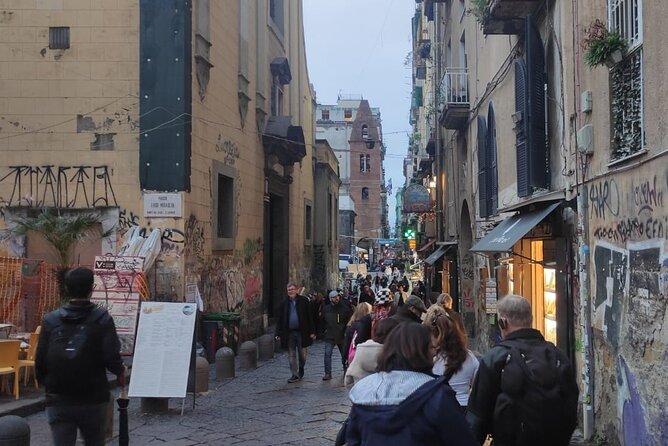
- Spaccanapoli neighborhood energy: you’re walking the street that gives the area its identity
- San Gregorio Armeno nativity-scene street: artisan work tied to local tradition
- Churches and mixed icons in the same stroll: you’ll notice pagan and Christian imagery side by side
- Historic stops that act like signposts: Piazza Dante, Port’Alba, Piazza Bellini, Duomo area
- Headsets when needed: clearer listening for groups of 6+
Starting at Piazza Dante: easy orientation and quick momentum
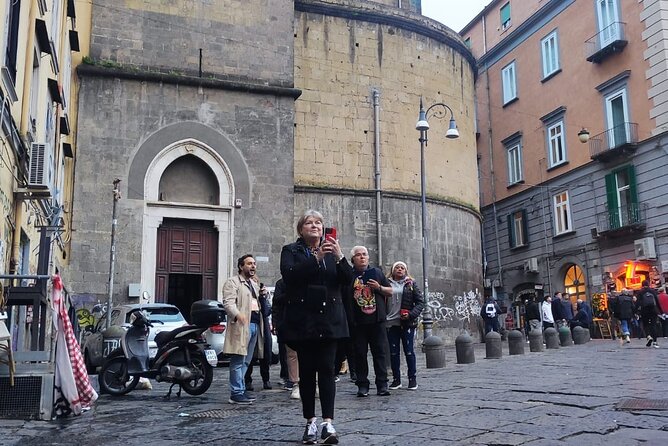
Your tour begins at Piazza Dante, meeting by the Dante Alighieri statue. It’s a good choice for first-timers because the square is recognizable and helps you get your bearings fast before you dive into tighter streets. When you arrive, your guide will be holding a sign with your name, which makes the meetup smoother than guessing who’s with what group.
From the start, you should expect a lively pacing. This isn’t a sit-down tour; it’s a walking route built to help you understand how Naples is put together—block by block, piazza by piazza. You’ll move from major open squares into lanes that feel older and narrower, where you can see how the city breathes.
One practical thing I appreciate about a 2-hour format: it fits into almost any day. You can do it early to get oriented, or later to reconnect the neighborhoods you’ve already seen on your own.
You can also read our reviews of more walking tours in Naples



Spaccanapoli: the Naples “spine” where life happens in small spaces
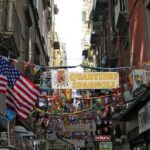
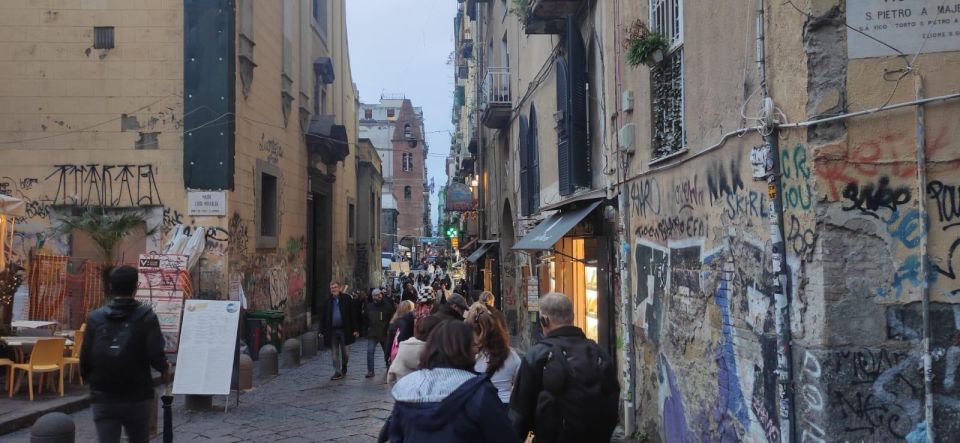
The heart of the experience is your time on Spaccanapoli, the famous long street that slices through old Naples like a backbone. The tour approach here is less about “look, don’t touch” and more about noticing how people move, shop, and worship alongside tourists. You get real Neapolitan lifestyle just by walking—casual and close, not staged.
Spaccanapoli is also where the city’s visual mix becomes obvious. You’ll see buildings in different architectural moods, and you’ll pass churches frequently enough that they become part of the street rhythm instead of isolated landmarks. That matters because Naples isn’t tidy; it layers time on top of time, and this route helps you feel that layering.
The description also points to narrow streets with players and dancers that color the walk with extra energy. Whether you catch them in a brief moment or only hear the buzz around them, the point is the same: this isn’t a museum corridor. It’s street life.
Port’Alba and Piazza Bellini: small squares that explain the city’s layout
Before you get deep into the tighter lanes, you’ll pass through key transition points like Port’Alba and Piazza Bellini. I like these stops because they act like mental maps. You see an open space, you learn what it connects to, and then you walk back into the densest streets with a clearer sense of direction.
Port’Alba is especially useful as an orientation marker. It sits like a hinge between busier movement and quieter older lanes, which makes it an ideal place for your guide to help you understand what you’re seeing. Piazza Bellini adds another layer: it’s a more piazza-like Naples moment, where you can look around, reset your eyes, and notice how many churches and old facades share the same walking radius.
If you’ve ever felt overwhelmed in old cities, this “square then lane” rhythm is the antidote. You’re not only chasing sights—you’re building a simple layout in your head.
Via dei Tribunali and the Duomo area: where architecture layers show up fast
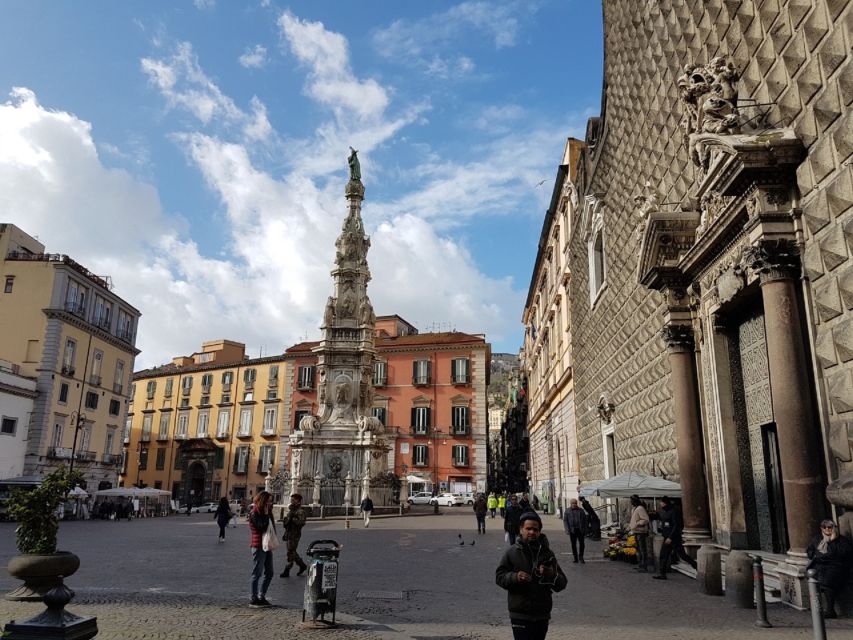
As the route continues toward Via dei Tribunali and the Duomo area, the walking starts to feel like you’re moving through Naples’ different eras in quick succession. The tour highlights the variation in architectural styles—Greek and Roman zones, plus medieval and Baroque areas—so you can start noticing what changes as you go.
What’s valuable here is not memorizing dates. It’s training your eye. When your guide points out contrasts—shape, facade style, how the street opens or tightens—you’ll begin to understand how Naples evolved rather than treating every building like it belongs to the same time period.
You’ll also see the city’s religious landscape up close. The walk mentions observing how different belief systems coexist, and that shows up in the way religious icons and church presence sit alongside everyday commerce. Even if you don’t care about religious history, it helps you understand why the city looks the way it does.
San Gregorio Armeno: nativity scenes, craft, and the icon mix
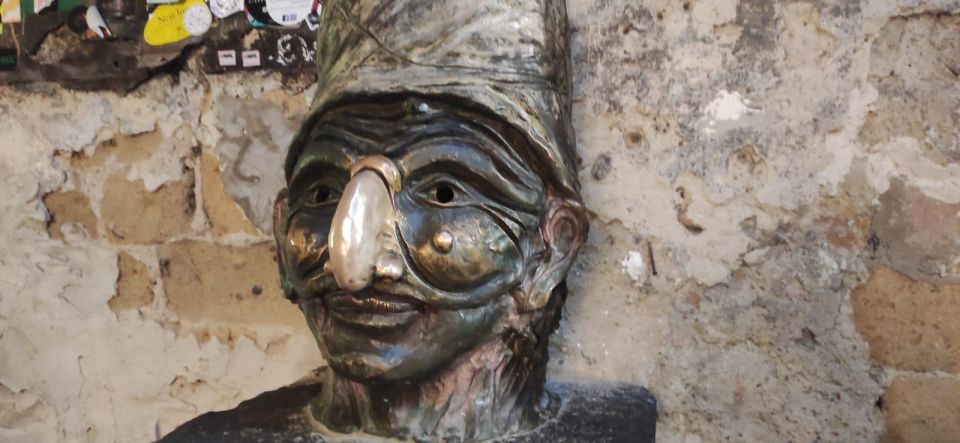
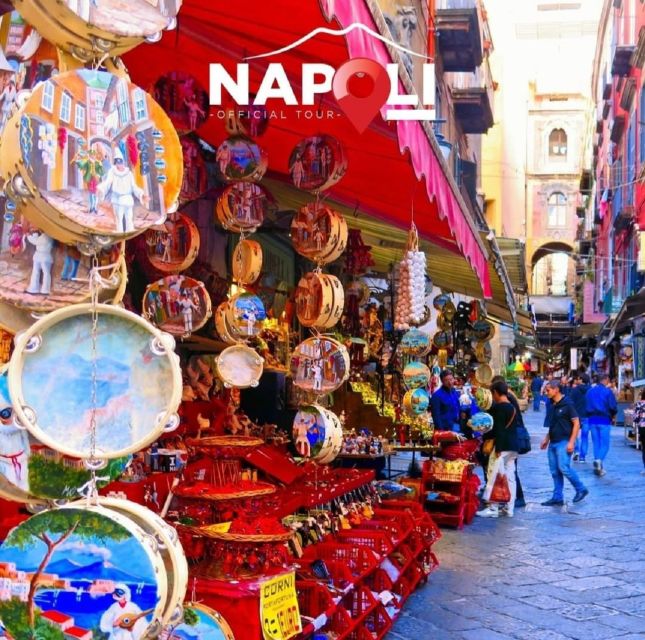
One of the biggest reasons to choose this tour is San Gregorio Armeno, the famous area associated with nativity scenes and artisan work. This is where Naples’ creative tradition becomes tangible. You’re not only looking at a street—you’re noticing that local culture has a crafts rhythm, and it’s tied to the seasonal story of the city.
The description also calls out something I think is especially Naples: you can see a mixture of pagan and Christian icons in the market area. That doesn’t have to become a lecture topic to be meaningful. It just helps you understand the cultural reality—Naples doesn’t separate traditions into neat boxes. You’ll see that in the signage, the subject matter, and the feel of the shops.
If you enjoy artisan shopping but don’t want to spend your whole day hunting stores, this stop gives you a perfect balance. It’s time for browsing and looking without turning into a shopping marathon.

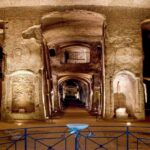


Piazza San Domenico Maggiore and Piazza del Gesù Nuovo: faces of the Baroque Naples you can feel
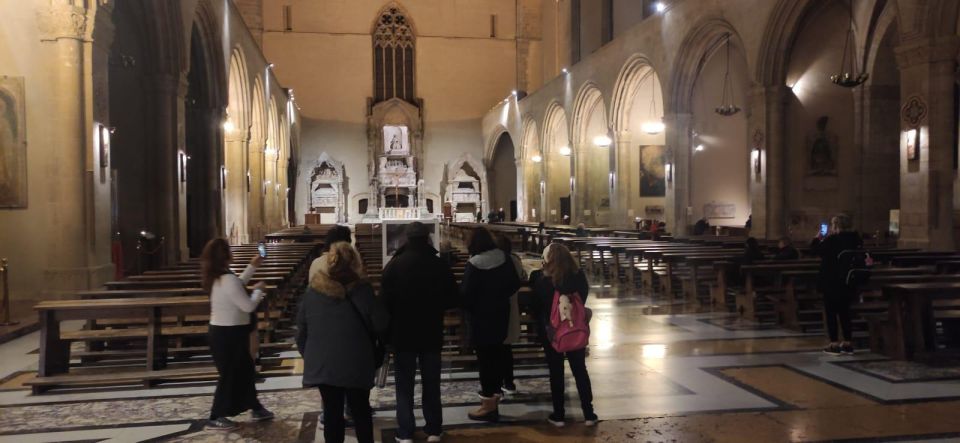
Later on, you’ll reach open moments like Piazza San Domenico Maggiore and Piazza del Gesù Nuovo. These stops matter because Baroque Naples shows best where you can step back and take in facades, church fronts, and the overall scale of the square.
I like using piazzas as “checkpoints” on a walking tour. They give your eyes a breather and let you compare styles you’ve been seeing in the streets. If your earlier stops were all about getting into lanes and noticing layers, these piazzas help you connect those observations into something you can remember.
Also, because your walk is only 2 hours, these squares help prevent the classic problem: by the end, you know you saw a lot, but you can’t place it. These named piazzas give you anchors.
The food tasting: simple fuel that makes the walk easier
A standout value detail: you get food tasting, either sweet or savory. For a short tour, that’s smart. You’re on your feet, you’ll likely walk past shops and crowds, and a small tasting gives you energy without slowing down the whole schedule.
I like that the tasting is included rather than optional. When it’s part of the itinerary, you’re not wondering when to eat or where to find something quick that won’t derail your day. And because it’s described as sweet or salty, you’ll likely get something that works regardless of your preferences.
Don’t treat it like a full meal. Treat it like a palate break and a practical snack so you can keep walking comfortably.
Price and value: why $29 can work well for the right traveler
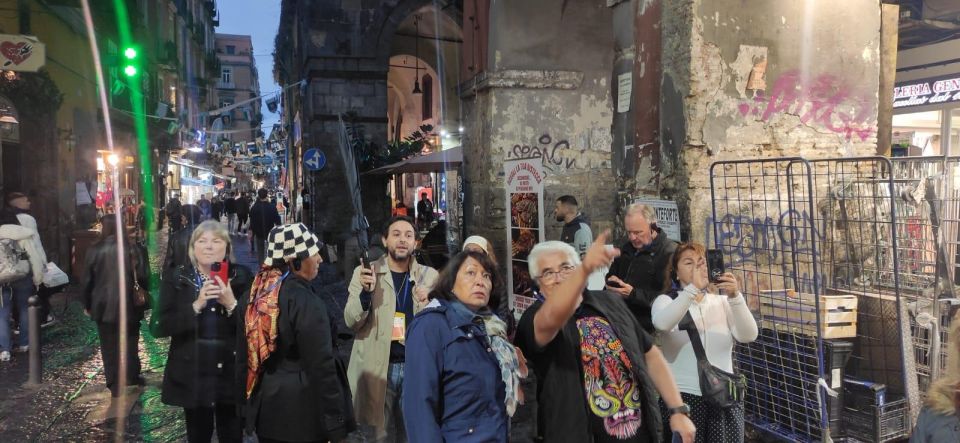
At $29 per person for a 2-hour walking tour, the value comes from the mix of guided orientation plus included extras. You’re paying for a local guide, headsets (for groups of 6+), named landmarks, and that included tasting. In a city where you can easily wander for hours without a plan, paying a bit to get a structured route often saves you time.
The big question is fit. If you want a calm, museum-style explanation and lots of seated time, this may not be your best match. But if you want Naples in motion—churches, craft shops, street energy, piazzas that help you navigate—then $29 for a short, guided route can be a very reasonable spend.
One more value point: the “rain or shine” setup. Bad weather can make self-guided wandering unpleasant, but a guided route keeps you moving and gives you something to follow.
Listening clearly in a busy city: headsets for groups of 6+
Naples walking routes can be noisy: engines, chatter, and the general street soundtrack. This tour includes headsets when there are 6 participants and on, which is a real quality-of-life upgrade. It means you’re more likely to hear your guide without constantly straining your ears.
It also affects pacing. With clear audio, you don’t stop as often to ask people to repeat themselves, and you keep momentum. For a 2-hour experience, that matters—less wasted time, more actual walking and noticing.
If you’re the type who likes to follow stories while you walk, headsets help you do that instead of losing details to street noise.
Who should book this Naples Old Town and Spaccanapoli walk?
This tour is a strong pick if you want:
- A first-time introduction to old Naples without spending half your vacation planning
- A guided route through Spaccanapoli and the church-filled lanes
- A cultural stop that feels grounded in local craft at San Gregorio Armeno
- A short day activity that still hits major names like Piazza Dante, Port’Alba, and the Duomo area
It’s also a good option if you like your history served through what you see on the street. You’ll notice architecture shifts and the coexisting icon mix; you just won’t necessarily get a heavy, lecture-style timeline.
If your top priority is only historical depth, you might want to compare with a tour that’s explicitly history-heavy. Otherwise, this one is a practical way to understand how Naples functions day to day.
Should you book it? My straight answer
If you want a 2-hour Naples walking tour that gives you orientation, street atmosphere, and a well-known cultural stop in San Gregorio Armeno, I’d book it. The price-to-time ratio is sensible, and the included tasting plus headsets make it feel more thought-through than a casual wander.
Just go in with the right expectation: you’re here for the experience of Naples—Spaccanapoli’s energy, churches and piazzas as navigation anchors, and artisan tradition—more than for deep historical analysis.
FAQ
Where is the meeting point for the tour?
You meet your guide next to the Dante Alighieri statue in Piazza Dante. The guide will be holding a sign with the participant’s name.
How long is the Naples Old Town and Spaccanapoli walking tour?
The tour lasts 2 hours.
What does the tour include?
It includes a local guide, headsets (for groups of 6 participants and on), and a food tasting (sweet or savory).
Is the tour available in English?
Yes. The live tour guide languages listed are Spanish, English, and Italian.
Will the tour run in bad weather?
Yes, the tour takes place rain or shine.
What are some of the main stops on the route?
Key highlights include Piazza Dante, Port’Alba, Piazza Bellini, Via dei Tribunali, the Duomo area, Spaccanapoli, San Gregorio Armeno, Piazza San Domenico Maggiore, and Piazza del Gesù Nuovo.
Does the tour involve walking the whole time?
Yes. It’s a walking tour through old Naples streets and piazzas, with multiple stops along the way.