REVIEW · NAPLES
Private Walking Tour through the Historical City of Herculaneum
Book on Viator →Operated by Guide Centre Sorrento · Bookable on Viator
Herculaneum feels personal, not staged. This private walk in Ercolano pairs a tight route with a licensed archaeology guide, so you can slow down at Terme Del Foro and the charred-wood house spaces without feeling rushed.
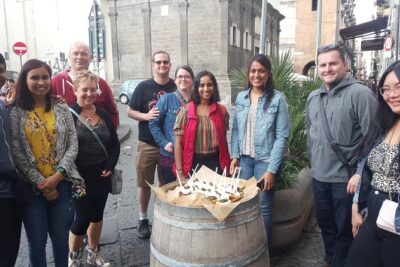
What I like most is that the guide keeps you on the park’s most meaningful stops, then builds the story from what you’re seeing: daily life, status, and Roman design. The other win is the group dynamic. You tour with family and friends, ask questions, and you don’t have to compete for the guide’s attention.
One thing to plan for: you’ll still need to budget for the €16 Herculaneum Archaeological Park entrance ticket (free under 18 with document), since it’s not included in the tour price.
In This Review
- Key things to know before you go
- Herculaneum, not Pompeii: why a 2-hour walk can hit harder
- Price and value: what $102.12 buys, plus the €16 ticket
- Meeting point and practical start: Corso Resina in Ercolano
- The main storyline: what you’ll actually see (and why not everything is visible)
- Terme Del Foro: Roman bath culture in remarkably preserved form
- Charred wood house stop: Partem Domus lignea and the shock of preservation
- Neptune and Amphitrite mosaic: Casa di Nettuno e Anfitrite
- Casa dei Cervi: the deer house and its panoramic setting
- Casa Sannitica: first Pompeian style paintings in an older home
- Salone della Barca di Ercolano: the charred boat museum stop
- College of the Augustales: mythological frescoes in a public temple
- Casa del Salone Nero: the black hall and Vitruvian ideas
- Antiquarium di Ercolano: museum time for jewelry and everyday objects
- Private guide impact: what makes this tour feel different
- Who should book this private Herculaneum walk
- Book it or skip it: my honest recommendation
- FAQ
- What’s the duration of the private walking tour?
- Is this tour private?
- What language is the tour offered in?
- How much does it cost?
- Do I need to buy a ticket for the Archaeological Park of Herculaneum?
- Where do we meet, and where does it end?
- What should I bring or wear?
- Is confirmation instant?
- What’s the cancellation policy?
- Are service animals allowed?
Key things to know before you go
- Private format means you can ask questions and set your own pace within the 2-hour window
- A guide-led path through the excavated core helps you make sense of what’s on view versus what remains buried
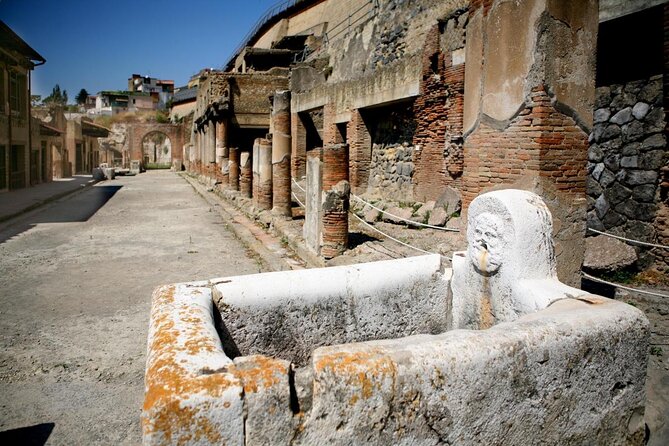
- Real Roman highlights are front and center: bath rooms, mosaics, frescoes, and the famous charred finds
- You also get museum time outside the main walk, including the boat display in a small stop
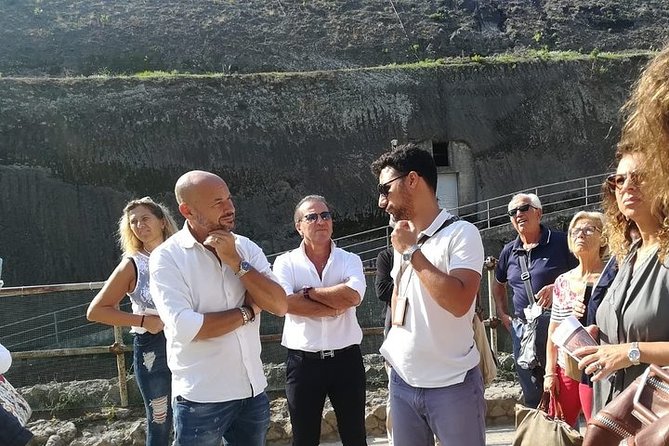
- English is covered, and guides are praised for clear explanations and patience with slower walkers
Herculaneum, not Pompeii: why a 2-hour walk can hit harder
Herculaneum (Ercolano) is the kind of place where fewer ruins can still feel like a lot—because the surviving homes and public spaces are so intact. Unlike some big sites where you can get lost in the scale, here the guide can point out what matters quickly and then help you read the buildings like a living neighborhood.
This tour is designed around that idea. You don’t just wander. You move stop to stop through the areas currently visitable, which is important because much of the ancient city is still under the ground. Your guide turns that limitation into context, so you’re not left thinking you missed everything.
If you want a “walk and learn” experience with Roman details you can actually see—mosaic scenes, bath-room layouts, and wall painting styles—this format is a strong fit. And because it’s private, your group can linger where your interests land.
You can also read our reviews of more walking tours in Naples


Price and value: what $102.12 buys, plus the €16 ticket
The tour price is listed at $102.12 per person for about 2 hours and is private. Taxes are included, and you get a licensed guide expert in archaeology. That part matters because the site can look like “old rocks” if no one helps you connect the dots.
Then comes the separate €16 park entrance fee (free under 18 with document). Since the entrance isn’t included, your total cost is basically:
- Tour price per person
- Plus €16 per person for the archaeological park ticket
When you’re comparing value, think about what the tour changes. A guide doesn’t just add facts; they help you notice the things that make Herculaneum different—like how well-preserved the thermal system is, or why charred wood furniture is such a big deal. In a place like this, that interpretation is often where the money goes.
Meeting point and practical start: Corso Resina in Ercolano
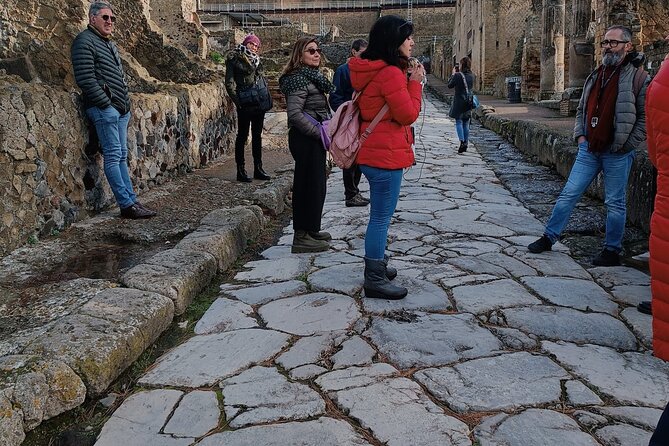
You meet at the Archaeological Park of Herculaneum, Corso Resina 187, 80056 Ercolano NA. The tour ends back at the same meeting point, which keeps the logistics simple.
You’ll also want to think about comfort for a walking visit:
- Wear comfortable shoes with grip
- Bring a hat and sunglasses for sun and glare
- Go with light, breathable clothing
This isn’t a “sit in a museum chair” outing. The path runs through excavated spaces, and the pacing works best when everyone can move comfortably. If your group includes anyone who needs extra time, many guides on this tour are praised for patience.
The main storyline: what you’ll actually see (and why not everything is visible)
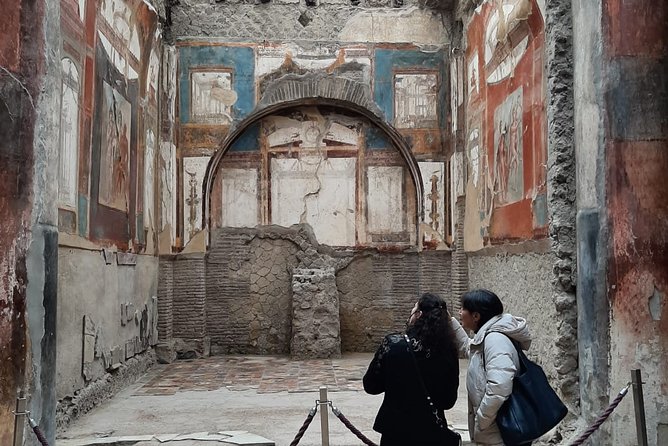
Before you hit the individual highlights, your guide sets expectations about the site. Only part of the ancient city has been excavated, which means big chunks of Herculaneum are still buried underground.
Most of the visitable park consists of imperial-age private homes in different types. That shapes the experience. You’re not covering a whole city grid like you might imagine. You’re seeing representative neighborhoods, with a strong emphasis on architecture, decoration, and everyday living spaces.
That’s why a private tour is especially helpful here. If you go without guidance, it’s easy to miss how the rooms connect, or why certain decorations show up where they do.
Terme Del Foro: Roman bath culture in remarkably preserved form
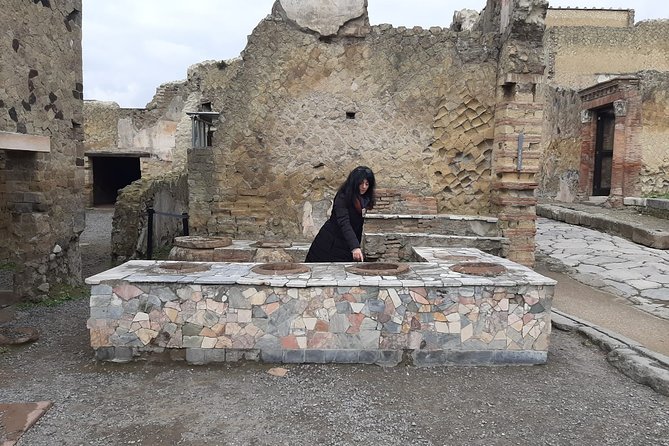
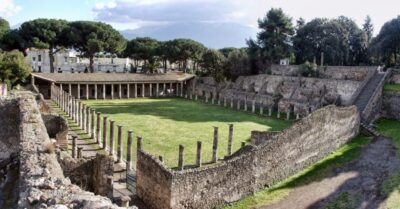
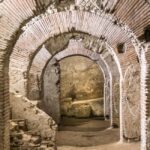
Your first major stop is Terme Del Foro. This is one of the best ways to understand how Romans used public and semi-public spaces. The bath system here is very well preserved, so you can see the layout instead of just imagining it.
You’ll spend around 15 minutes in this stop, and the key value is in the specificity. The tour description points to rooms like:
- a gym area
- changing rooms
- spaces for warm and warm baths
That’s exactly the kind of detail that makes the ancient world feel real. When you can visually match a room to a function, you stop thinking of “Roman baths” as a generic idea and start seeing it as a routine.
A small drawback to consider: because this is preserved and contained, it can feel a bit “close” if you’re in a larger group. The private format helps with space and question time.
You can also read our reviews of more city tours in Naples


Charred wood house stop: Partem Domus lignea and the shock of preservation
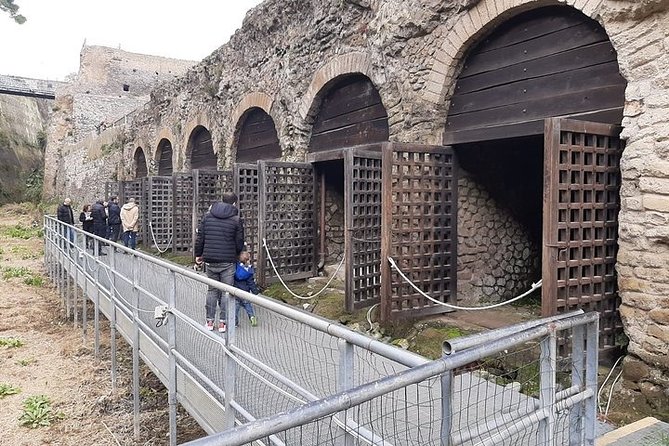
Next you’ll visit Partem Domus lignea – Casa del Tramezzo di Legno, often noted for one standout feature: charred wood furniture. The survival of wood in a volcanic disaster is not what you expect to see at most sites, so this is where Herculaneum’s story can really grab you.
You’ll spend about 15 minutes here. The guide’s job is to help you interpret what you’re seeing—what’s original, what’s been restored or presented, and why the arrangement matters.
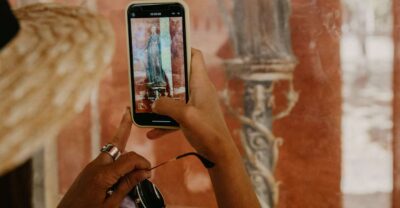
If your group likes tangible details, this stop tends to be a highlight. It turns the disaster narrative into something human and practical: everyday objects, household layout, and what people actually used.
Neptune and Amphitrite mosaic: Casa di Nettuno e Anfitrite
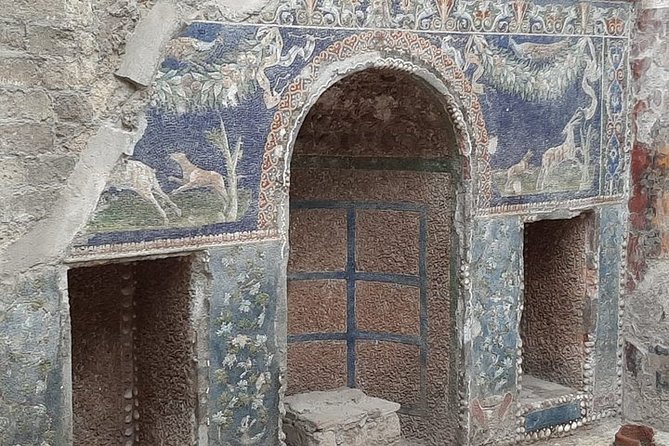
At Casa di Nettuno e Anfitrite, you’re in the symbolic-house lane. This home is praised for a standout artistic feature: one of the most beautiful mosaics among the Vesuvian sites.
Plan on about 15 minutes here. What makes this stop useful on a tour is the guide’s ability to explain how mosaic art worked in Roman homes. You’re not just looking at pretty tiles. You’re learning how imagery signaled identity, taste, and mythic themes.
If your eyes tend to gravitate toward art, you’ll like this part. And if your group is more architecture-focused, it still works, because mosaics tell you about interior design and who had the means to decorate this way.
Casa dei Cervi: the deer house and its panoramic setting
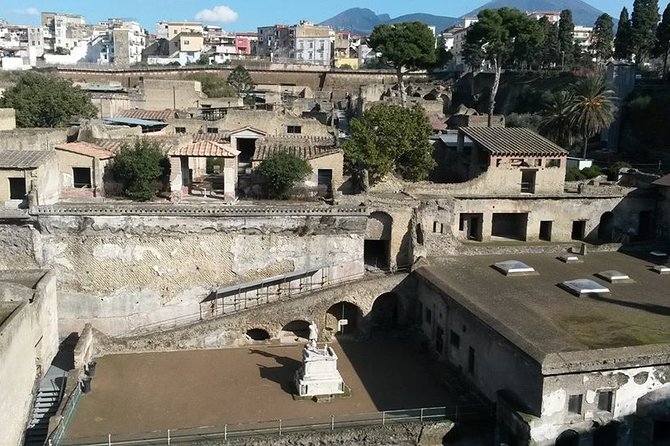
Then comes Casa dei Cervi (the deer house), with a setting you can feel in your imagination even before you fully take it in. It’s described as being in a spectacular panoramic position between the Gulf of Naples and Capri.
You’ll have about 10 minutes. The short time limit is real, but the advantage is that the guide helps you use those minutes well. The stop is tied to recognizable features, including:
- polychrome marble details
- the sense of the house’s placement within the landscape
This is a good moment for a group photo, but keep moving. Herculaneum rewards attention to small things, and the tour stays tight so you don’t miss the next major highlight.
Casa Sannitica: first Pompeian style paintings in an older home
Casa Sannitica is about age and style. It’s described as one of the older houses in Herculaneum, famous for pictorial decoration in the first Pompeian style.
You’ll have about 10 minutes. With a guide, this becomes more than a label. You learn how painted styles evolved and what “first Pompeian style” signals in terms of decorative goals—illusion, architecture-on-walls, and how households tried to create visual depth.
If you’re the kind of traveler who likes to know why something looks the way it does, you’ll appreciate this stop. It’s also a nice counterweight after the mosaics and charred wood, because it highlights painting techniques and wall effects.
Salone della Barca di Ercolano: the charred boat museum stop
One of the most memorable ways this tour expands beyond the open-air walk is Salone della Barca di Ercolano. It’s outside the main archaeological area, in a small museum where you can admire an ancient charred Roman boat and other finds.
Time here is listed at 15 minutes. This stop works because it changes the “format” of what you’re looking at. Instead of rooms and floors, you’re confronted with an object—the kind of thing that brings the disaster to a very physical level.
Guides also tend to connect this to the wider Roman world around the Bay of Naples, so you’re not stuck inside one tragedy. You’re seeing how everyday life included transport, goods, and water-based activity.
College of the Augustales: mythological frescoes in a public temple
Now you move into a more public-feeling space: College of the Augustales. It’s described as one of the few public temples excavated that you can visit, and the highlight is mythological frescoes.
Plan on about 15 minutes. What you get from a guide here is context: why a public religious or ceremonial space matters in a town’s social life, and how fresco subjects connect to Roman beliefs.
This stop is especially helpful if your group wants more variety than just private homes. The contrast between domestic art and public myth helps you see how art functioned across different settings.
Casa del Salone Nero: the black hall and Vitruvian ideas
In Casa del Salone Nero (the house of the black hall), the description brings two big points:
- it overlooks the main street of Herculaneum
- the layout reflects a Vitruvian model, and frescoes are notable for conservation
You’ll spend about 10 minutes. Even in a short time, a good guide can point out how architectural ideas were translated into real space—how design principles show up in the way a home faces the street and how rooms are arranged.
The “black hall” detail also gives you something concrete to focus on. Instead of walking past walls, you know what feature the stop is built around.
Antiquarium di Ercolano: museum time for jewelry and everyday objects
If you want to add a little extra, there’s Antiquarium di Ercolano. It’s optional at the customer’s discretion and listed as 15 minutes. This is where you can see permanent and temporary exhibitions, including items like:
- jewelry
- everyday objects
- charred wood furnishings
This stop is valuable when your group wants more than architecture and wall decoration. It shifts from “the house as a room” to “the house as a source of objects,” which can help bring daily life into focus.
A practical note: the museum stop can be a good option if anyone in your group needs a short reset in shaded space.
Private guide impact: what makes this tour feel different
This is where the private format really shows. In the small-group experience, guides can tailor pace and priorities. Many guides connected to this tour are praised for clear English and patience, and you’ll hear familiar names like Martina, Carmine, Francesca, Alessandro, Annalisa, Ernesto, Fabrizio, and Luciano.
What that means for you:
- If someone in your group moves slower, you’re less likely to feel rushed.
- If your family loves mosaics, the guide can spend a little more time on Casa di Nettuno e Anfitrite.
- If your group is more into objects, you’ll likely get the most from Salone della Barca di Ercolano and the Antiquarium stop.
One small but helpful detail from guide styles: on hot days, some guides have brought small cooling aids, like a water spray, to make the walk more comfortable. That kind of touch is the difference between “we saw it” and “we enjoyed it.”
Who should book this private Herculaneum walk
You’ll be happiest with this tour if:
- you want a 2-hour, focused introduction without feeling like you’re chasing the site map alone
- your group includes kids, teens, or anyone who benefits from a clear narrative and strong visuals
- you care about specific Roman features like mosaics, fresco styles, bath architecture, and charred everyday items
It’s also a good pick when you’re choosing between Herculaneum and Pompeii. Herculaneum tends to feel more intimate because so much is preserved, and that suits travelers who want to see more detail in less time.
If you have accessibility needs, this tour description says most travelers can participate, and guides have been noted for adapting for limited mobility and strollers. Still, the terrain is archaeological. Wear traction-friendly shoes and plan for uneven surfaces.
Book it or skip it: my honest recommendation
I’d book this private Herculaneum tour if you want the site’s best moments explained clearly in a short time, with enough flexibility to ask questions. The €16 entrance fee is an extra line item, but the tour price buys interpretation, pacing, and access to the highlights you’ll otherwise miss.
I’d think twice only if your group has a very tight budget and is comfortable touring on your own. Without a guide, Herculaneum can still be beautiful, but you’re more likely to leave without understanding why each room and object matters.
If your goal is to make Herculaneum feel like a town people actually lived in, this is the kind of tour that helps you do that.
FAQ
What’s the duration of the private walking tour?
It’s listed at about 2 hours.
Is this tour private?
Yes. It’s a private tour/activity, and only your group participates.
What language is the tour offered in?
The tour is offered in English.
How much does it cost?
The price is $102.12 per person. The Archaeological Park entrance fee is not included.
Do I need to buy a ticket for the Archaeological Park of Herculaneum?
Yes. The entrance fee is €16 per person and is free under 18 with a document.
Where do we meet, and where does it end?
You start at the Archaeological Park of Herculaneum on Corso Resina 187, 80056 Ercolano NA, Italy. The tour ends back at the meeting point.
What should I bring or wear?
Comfortable shoes and clothing for walking are recommended, along with sunglasses and a hat.
Is confirmation instant?
No. Confirmation is received within 48 hours of booking, subject to availability.
What’s the cancellation policy?
Free cancellation is available. You can cancel up to 24 hours in advance for a full refund, based on local time.
Are service animals allowed?
Yes, service animals are allowed.
If you tell me your travel month and whether your group includes kids or slower walkers, I can suggest the best way to pace your day around Herculaneum.