REVIEW · POMPEII
Pompeii Private Tour with an Archaeologist and Skip The Line
Book on Viator →Operated by ELIANA SANDRETTI · Bookable on Viator
Pompeii feels different with a real archaeologist beside you. This private skip-the-line tour brings you through the site’s biggest moments fast, with guides like Luisa and Eliana Sandretti turning streets, baths, and theaters into everyday life in Roman Pompeii. I love the high-yield pacing for a 2-hour visit, and I like how the route balances big sights with detail, including the casts left by the 79 AD eruption.
One key consideration: Pompeii admission tickets are not included in the tour price. You’ll need to buy the 19 euro per person ticket first so the skip-the-line help matches what you’re expecting.
In This Review
- Key things to know before you go
- Private Pompeii With an Archaeologist: Fast, Focused, and Built for Real Sightseeing
- Price and Tickets: The Real Cost Breakdown (Skip-the-Line Included, Tickets Not)
- Pompeii in Your Two-Hour Route: From Theaters to Baths and the Forum
- Pompeii Archaeological Park: The big zones in one guided sweep
- Small Theater (Odeion): Roman acoustics explained on-site
- Teatro Grande: the main theater of Pompeii
- Via dell’Abbondanza: the main street feeling
- Granaries of the Forum: amphora deposit and casts
- Stabian Baths (Terme Stabiane): a Roman spa stop
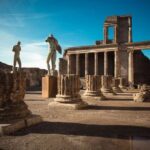
- Forum and Basilica: justice, markets, and civic power
- Temple of Jupiter and the theater complex zone
- Vicolo del Lupanare and the Temple of Venus
- Casa del Fauno: Pompeii’s luxury home
- How the Guide Makes (or Breaks) the Experience
- Timing Tips: When You’ll Feel the Ruins More Comfortably
- Should You Book This Private Pompeii Tour?
- FAQ
- Is the Pompeii entrance ticket included in the tour price?
- How much is the entrance ticket to Pompeii?
- Do I need to buy tickets in advance to skip the line?
- How long is the private Pompeii tour?
- Where do we meet for the tour?
- Is this tour private?
- How many people can be in a group?
- What language is the tour offered in?
- What’s included besides the guide?
- Are food and drinks included?
- Can service animals join the tour?
Key things to know before you go

- Private archaeologist guide for just your group (up to 10 people)
- Skip-the-line support, plus a ticket link sent one day before your tour
- Plaster casts of victims are part of the route (Granaries of the Forum and other areas)
- Roman life in one sweep: theaters, shops/food spots, baths, forum, and the red-light district area
- You’ll hear about Roman acoustics at the Small Theater (Odeion)
- The route is designed to move efficiently so you don’t lose half your time in lines
Private Pompeii With an Archaeologist: Fast, Focused, and Built for Real Sightseeing
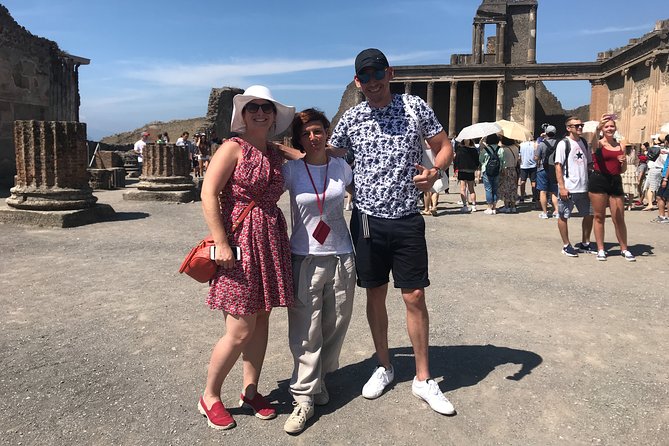
Pompeii is massive. If you show up with just a phone map, you can see a lot and still miss the meaning. This is built for the opposite problem: it’s a private, archaeologist-led walk that keeps you moving through the most important zones, with explanations tied to what you’re actually standing in front of.
The time frame matters. At about two hours, you’re not trying to “see everything.” You’re trying to see the Pompeii that makes the rest click later—how public space worked, what people ate and bought, where they went to bathe, and how the city’s layout tells its story.
Most importantly, you’re not stuck waiting around with strangers. Since it’s private for your group, the guide can slow down when you have questions or pick a slightly different emphasis if you care more about daily life than big monuments.
You can also read our reviews of more private tours in Pompeii


Price and Tickets: The Real Cost Breakdown (Skip-the-Line Included, Tickets Not)
The tour price is $375.05 per group for up to 10 people, for about two hours. On its face, that sounds like a “tour splurge.” But it often works out well if you’re traveling as a family or small group and want a fast, guided hit instead of spending your limited time bouncing between busier entrances.
Then there’s the part that trips people up: Pompeii admission tickets are not included. The tour lists a 19 euro per person entrance ticket (and free entry for under 18, with ID or passport if they check birth date). That means your total day cost is usually:
- Tour fee (per group)
- Plus 19 euros per person for site entry
Skip-the-line only makes sense when you’re already holding the right ticket. The good news is that the provider sends you a link one day before to buy online tickets in advance so you can also skip the ticket office line. Read that message, buy the admission ticket ahead of time, and your “skip-the-line” day should feel smooth.
If you forget this step, you’ll still likely get in—but you may lose the time you paid to save. This is the single biggest practical gotcha with this experience.
Pompeii in Your Two-Hour Route: From Theaters to Baths and the Forum
You meet at Piazza Esedra, 10, and the tour ends back there. You’ll spend time inside the Archaeological Park (Pompeii’s main zone), moving from major public spaces to domestic life. Expect short stops—often around 10 to 15 minutes—so the guide can keep the flow tight and the story connected.
Below is what you can expect from the stops, in the order you’ll likely encounter them.
Pompeii Archaeological Park: The big zones in one guided sweep
Your guide starts in the main archaeological area and works through a set of high-impact sites. You’ll go past the spaces that show how Pompeii worked as a city, not just as ruins.
You should expect to see:
- The theaters and temples, which anchor the public and ceremonial side of Roman life
- A rich house that helps explain wealth and status (and why some homes look so different)
- The Stabian baths area, tied to everyday routine and social time
- Shops and fast-food style spots, showing commerce and quick meals rather than just “fancy dinners”
- The Lupanar area, associated with the red-light district
- The Forum, the city’s main square for business and civic life
- The Area of the Gladiators, linked to training and entertainment
- Casts of people who died during the eruption, which turn the tragedy into something you can see clearly
This is the heart of the tour: you get a walking map of Pompeii’s social life, from public ritual to daily errands.
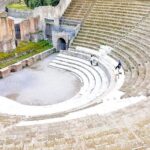
Small Theater (Odeion): Roman acoustics explained on-site
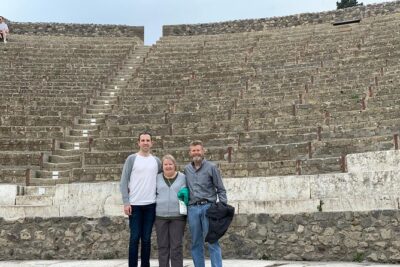
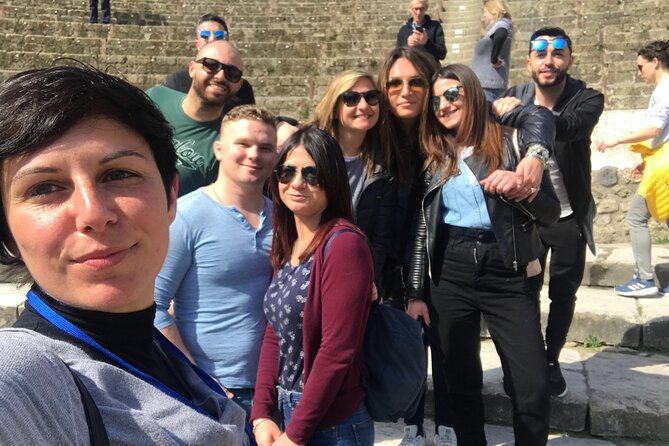
Next comes the Small Theater (Odeion). The guide focuses on how Romans designed for sound, and how they recreated strong acoustics inside the space. This stop is short on time, but it’s memorable because it’s one of the few places where architecture turns into an experience you can understand in your body, not just your brain.
If you like “how did they do that?” details, this is one of the best stops to lean into.
You can also read our reviews of more tours and experiences in Pompeii



Teatro Grande: the main theater of Pompeii
Then you reach the Great Theater, known as Teatro Grande, one of the most important theater structures in the park. Here you’ll connect the public entertainment world to the rest of the city’s layout—where people gathered and how spectacle fit into civic life.
Even if you’ve visited other Roman theaters, Teatro Grande helps because it’s tied to what you’ve already seen: the streets leading in, the surrounding public spaces, and the scale of Pompeii’s everyday crowds.
Via dell’Abbondanza: the main street feeling
Between major anchors, you cross via dell’Abbondanza, Pompeii’s main street. This is one of those “quick but meaningful” segments. When you walk it with context, you stop thinking of Pompeii as isolated monuments and start seeing it as a lived-in grid of movement and errands.
Granaries of the Forum: amphora deposit and casts
You visit Granaries of the Forum, where you can see casts connected to victims of the eruption. This stop also highlights an archaeological deposit area with amphorae and work tools—the kind of everyday material that makes the site feel less like a museum and more like a paused moment in time.
The casts here are heavy emotionally, so go slowly if you need to. The guide’s job is to give structure—what you’re seeing and why it matters—so you don’t get lost just looking at figures.
Stabian Baths (Terme Stabiane): a Roman spa stop
You then head to the Stabian Baths, described as the best SPA of the Roman Empire in Pompeii. Even if you take that as a bold claim, it’s still a standout because bath culture was central to Roman routine. This is where you learn that bathing wasn’t only hygiene. It was conversation, relaxation, and social rhythm.
If your group likes practical daily-life topics, this is a great anchor stop.
Forum and Basilica: justice, markets, and civic power
You spend time at the Forum of Pompeii—markets and temples packed into the city’s main square. After that, you visit the Basilica, where justice was administered. Together, these stops show you how “public space” worked: who gathered, why people came in groups, and how the city ran on civic routines.
In the Basilica area, the guide’s explanation can make a big difference. Without guidance, it’s easy to read it as just big stone walls. With guidance, you start seeing it as the place decisions got made.
Temple of Jupiter and the theater complex zone
You’ll also visit the Temple of Jupiter, positioned in the main square area. Then you move toward the quadriporticus of the theatres, and specifically the gladiator barracks zone—where apartments and training spaces connect.
This is a good reminder that Roman entertainment had labor behind it. People trained. People lived. And Pompeii included the support system for spectacle, not just the final performance.
Vicolo del Lupanare and the Temple of Venus
You then head into Vicolo del Lupanare, the ancient red district area. It’s described as the old red-light quarter, and the guide keeps it anchored in how the space fits into the city rather than turning it into shock value.
After that, you visit the Temple of Venus, linked with devotion to the city’s divinity. This keeps the route from feeling like one long entertainment loop. It restores the spiritual and civic texture of Pompeii.
Casa del Fauno: Pompeii’s luxury home
Finally, you reach Casa del Fauno, one of the richest and most luxurious residences in Pompeii. This stop works best if you’ve already understood what the Forum, baths, and streets were like. Luxury stops feel different when you know the contrast.
You’ll leave with a clearer idea of class in Pompeii—where wealth sat, how homes were arranged, and how display helped people signal identity.
How the Guide Makes (or Breaks) the Experience
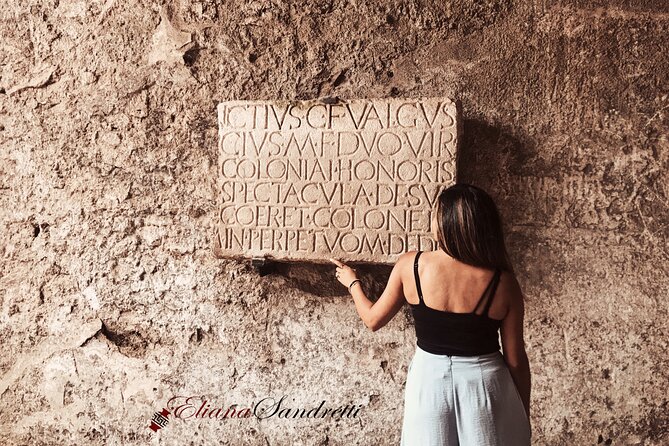
A good Pompeii guide does two things. First, they point out details you would miss. Second, they help you build a mental model fast: how the city functioned, how people moved, and what each major building meant.
In the reviews, guides like Luisa and Eliana Sandretti come up again and again for that “story that sticks” approach. People also highlight that the best guides keep you out of the worst crowds while still hitting the essential sights. Another strong theme is tailoring: if you’re traveling with kids, some guides adapt the pacing and pick shade breaks, so the tour stays enjoyable instead of turning into a hot slog.
You should also know that private tours are only as good as the guide you get. Most comments are positive, but a small number of experiences felt like expectations weren’t met on detail or communication style. My practical advice: if you care about specific themes—architecture, everyday life, Roman religion—say so at the start. A good guide can steer the walk toward your interests.
Timing Tips: When You’ll Feel the Ruins More Comfortably
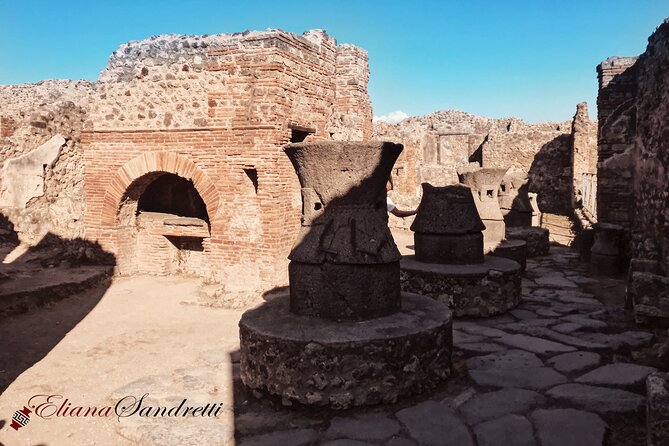
The tour runs about two hours, and Pompeii can be intense when crowds and heat stack up. One review mentioned a late-afternoon 5 pm time slot as especially pleasant, with fewer lines and less extreme heat. Even if your exact time is set by your schedule, you can use this as a rule of thumb: later in the day often feels easier.
Also, the experience requires good weather. If it gets canceled due to poor weather, you should expect an alternate date or a full refund. Pompeii is outdoors, so weather is part of the math.
Should You Book This Private Pompeii Tour?
Book it if:
- You want a guided hit of Pompeii in about two hours and you don’t want to spend your time figuring things out alone
- You’re a family or small group and the $375 group price makes sense for your headcount
- You like the idea of seeing both public life (Forum, justice spaces, theaters) and lived-in details (shops, baths, casts)
Skip it or do more homework if:
- You’re expecting the tour price to include Pompeii admission. It does not. Buy the 19 euro ticket first so the skip-the-line help works the way you want.
- You think you’ll “need” every single stop at a deep archaeology lecture pace. This is a tight route, not a three-day archaeology seminar.
My bottom line: for most people with limited time, this is a smart way to experience Pompeii without getting lost in crowds and random wandering. Just do one thing right—buy your site ticket in advance.
FAQ
Is the Pompeii entrance ticket included in the tour price?
No. Pompeii admission is not included, and the entrance ticket is priced at 19 euros per person.
How much is the entrance ticket to Pompeii?
The entrance ticket costs 19 euros per person. Under 18 can have free tickets.
Do I need to buy tickets in advance to skip the line?
To use the skip-the-line benefit smoothly, you should buy your Pompeii admission ticket in advance. The provider sends you a link one day before to buy online tickets so you can also skip the ticket office line.
How long is the private Pompeii tour?
The tour lasts about 2 hours (approx.).
Where do we meet for the tour?
The meeting point is Piazza Esedra, 10, 80045 Pompei NA, Italy, and the tour ends back at the same meeting point.
Is this tour private?
Yes. It’s a private tour/activity, and only your group participates.
How many people can be in a group?
The price is listed per group up to 10.
What language is the tour offered in?
The tour is offered in English. Other language options are only available on request for multiple languages.
What’s included besides the guide?
Included items are the authorized tour guide and assistance, skip the line, a private tour with an archaeologist, main attractions of Pompeii, and pre-trip support with a link to buy tickets online. A mobile ticket is also mentioned.
Are food and drinks included?
No. Food and drinks are not included.
Can service animals join the tour?
Yes, service animals are allowed.