REVIEW · POMPEII
Pompeii Small Group Tour with an Archaeologist
Book on Viator →Operated by Askos Tours · Bookable on Viator
Pompeii hits hard when it’s human-sized. This small-group tour takes you straight into the ruins with skip-the-line access and an archaeologist guide, so the site feels less like scattered stones and more like a real city with a pulse. You’ll move through major places early on, then slow down where the eruption left behind unforgettable evidence.
What I like most is the way the guide connects architecture to daily life. You also get tight group control (maximum 20), which makes it easier to ask questions and keep your place as you walk.
One thing to think about: Pompeii is not “easy walking.” Expect uneven ground, steps and ramps, and some steeper climbs, and mobility scooters aren’t allowed.
In This Review
- Quick Key Points Before You Go
- Meeting at Porta Marina Superiore: How You Get Into Pompeii Fast
- Basilica and Forum: Get the City’s Layout in One Shot
- Granaries of the Forum: The Eruption Story You Can Actually Feel
- Menander’s House and the Art of Reading Pompeii’s Surfaces
- Stabian Baths: Why Roman “Relaxation” Was a Whole Social System
- Lupanar and the Streets: Private Life, Public Architecture, and What You See
- House of Faun, Teatro Piccolo, and the Grande Finale at Teatro Grande
- Value and the Real Math Behind $35.67
- What to Bring: Comfortable Shoes and a No-Nonsense Water Plan
- Who This Tour Fits Best (and Who Might Prefer Something Else)
- Should You Book This Pompeii Archaeologist Small Group Tour?
- FAQ
- FAQ
- Where do we meet for the tour?
- How long is the Pompeii tour?
- Is there skip-the-line entry?
- What’s included with the tour price?
- What language is the tour offered in?
- Is this tour suitable for mobility issues?
Quick Key Points Before You Go
- Porta Marina Superiore start means you enter the park with a clear plan instead of wandering at the mercy of the map.
- Pompeii Express skip-the-line helps you spend your limited time inside, not in a queue.
- Basilica and Forum first gives you the city’s layout fast, so later stops make sense.
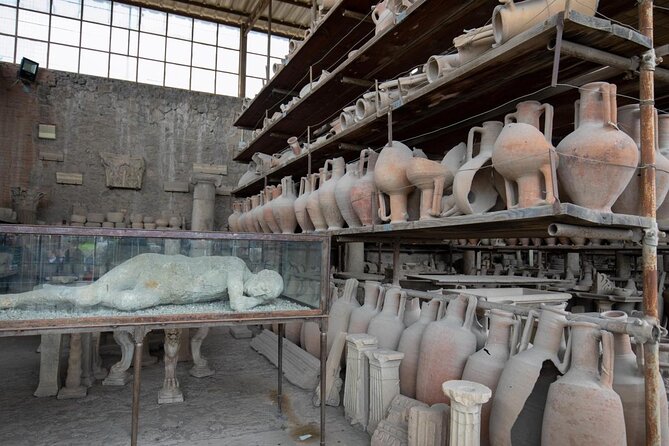
- Granai del Foro plaster casts bring the eruption story into focus with a respectful pause.
- Oldest thermal complex plus mosaics gives you a break from temples and tombs, and shows everyday luxury.
- Ends inside the ruins so you can keep exploring on your own after the guided portion.
Meeting at Porta Marina Superiore: How You Get Into Pompeii Fast
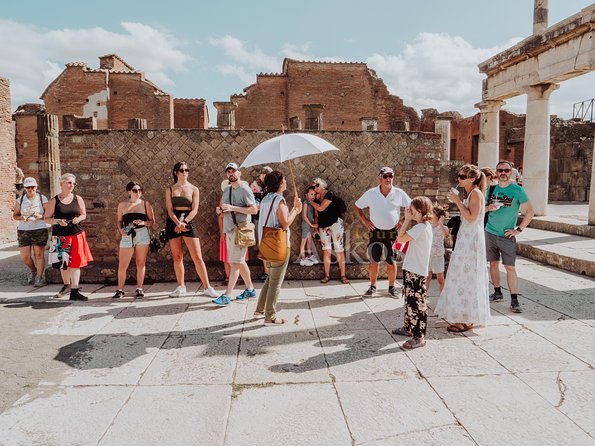
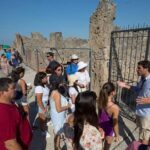
You’ll meet your archaeologist guide at the Pompeii Archaeological Park entrance called Porta Marina Superiore. The guide holds a sign for Askos Tours, so you can spot them and avoid the usual first-time confusion. The tour uses a mobile ticket and includes a Pompeii Express entry ticket, so you’re not standing around waiting for the next wave.
The whole experience is about 2 hours (approx.), and the pace is built for “high value” viewing. That matters because Pompeii is big. Even with good maps, you can miss important context. With a guide, you get the key buildings you’ll want to refer back to later when you’re strolling independently.
One practical perk: for groups of 16 or more, you’ll use headsets. That’s a small detail that makes a real difference when you’re trying to hear explanations while walking through crowds and open courtyards.
You can also read our reviews of more tours and experiences in Pompeii.

Basilica and Forum: Get the City’s Layout in One Shot
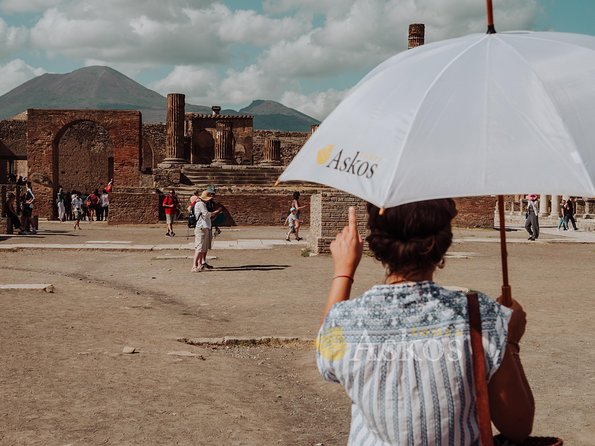
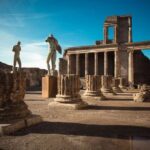
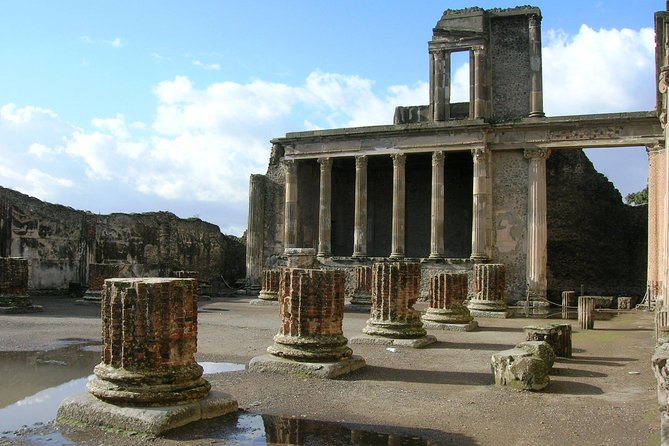
Early on, you’ll start with the Basilica, a big open portico area that worked like a covered hub for merchants and activities. Even in ruins, you can see how people flowed through it and why it mattered for business and public life. It’s the kind of place that’s easy to underestimate if you’re only looking at walls—your guide’s job is to show you what the space was for.
Then you’ll move to the Forum, Pompeii’s main square. This is where the city’s “center of gravity” sits. Once you understand the Forum’s role, the rest of Pompeii doesn’t feel random. Streets connect, neighborhoods click into place, and you’ll start noticing how entrances, courtyards, and routes were designed around everyday movement.
The drawback with stops like these is timing. Each location is given enough attention to build understanding, but this is still a highlights tour. If you love architectural minutiae and want long reading time, you’ll want to plan extra self-guided hours after.
Granaries of the Forum: The Eruption Story You Can Actually Feel
A major emotional turning point comes at the Granaries of the Forum (Granai del Foro). This stop includes marble tables and stone features connected to fountains that decorated house entrances. But the reason this place lingers in your mind is the plaster casts of victims—and yes, you’ll also encounter other casts, including a dog and a tree.
Your guide will pause here, so you’re not just speed-walking past the most powerful part of Pompeii’s story. That pause matters. Without it, the eruption can feel like a headline. With it, you’re given time to process what the site is showing: not a distant catastrophe, but a sudden end to ordinary lives.
If you’re someone who wants context without being overwhelmed, this is a good balance point in the tour. You get facts and meaning, but you also get a moment to slow down.
Menander’s House and the Art of Reading Pompeii’s Surfaces
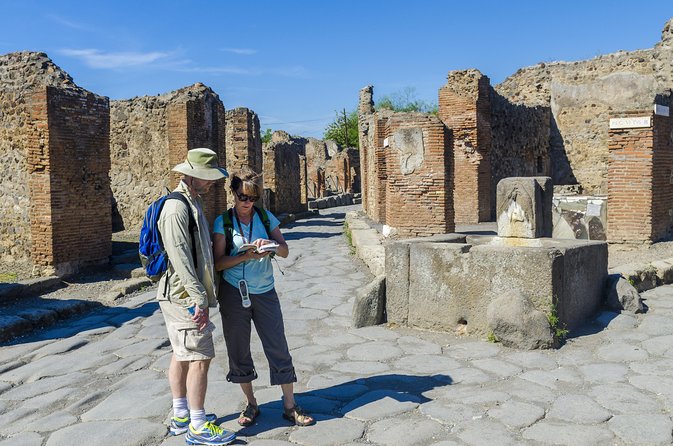
Next, you’ll head into the House of Menander, one of the wealthier and more impressive residences in Pompeii, especially for its architecture and decoration. This is where Pompeii becomes more than civic life. You start seeing how status showed up in mosaics, fresco-like surfaces, and the way rooms relate to each other.
You’ll also be walking along the original paved roadways and making stops to admire artwork you might otherwise miss—especially frescoes and mosaics seen inside spaces like the House of Menander and Stabian Baths.
Here’s what I’d watch for: don’t just look at the prettiest picture. Ask yourself what the decoration tells you about the home—who lived there, who visited, and what kind of comfort they wanted. A guide helps you “read” these choices instead of treating them as museum wallpaper.
Time is still limited, so the best approach is to enjoy what you can see clearly, then plan a return visit later if you want to go deeper.
Stabian Baths: Why Roman “Relaxation” Was a Whole Social System
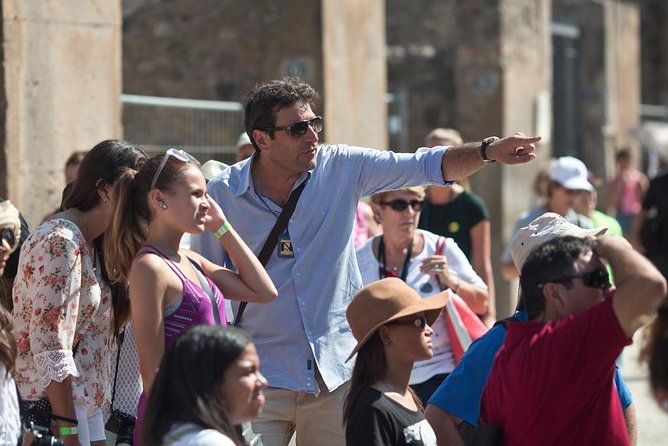
The Stabian Baths (Terme Stabiane) sit in a large area and are described as the oldest thermal complex in the city. This stop gives you a change of scenery from forums and private houses. Baths weren’t only about hygiene. They were social hubs, part workout space, part conversation space, and part status display.
A good guide helps you picture what the rooms were likely used for. Even when you can’t access every detail, you can still understand the layout and how the building supported a routine that many people shared.
This is also a stop where the guide’s storytelling style really helps. Guides on this tour—names like Teresa, Alfredo, and Alessandra have been highlighted in the past for clear storytelling—tend to make the baths feel like a place people actually lived their lives around.

Lupanar and the Streets: Private Life, Public Architecture, and What You See
You’ll then peek into the ruins of the city’s most famous brothel area, the Lupanar (often called the most famous brothel in Pompeii). This isn’t a stop meant to shock you for shock’s sake. It’s here because the building layout and decoration tell you how private commercial life worked in a Roman city.
Expect the guide to frame it with city context, not just titillation. Pompeii can feel voyeuristic if you treat it like a spectacle. A real archaeologist helps it become about how people organized space and commerce—who used these rooms, how access worked, and what the surrounding streets imply.
If you’re visiting with teens or you’re not sure how this subject will land, this stop can actually be a good teaching moment: the goal is to understand, not sensationalize.
House of Faun, Teatro Piccolo, and the Grande Finale at Teatro Grande
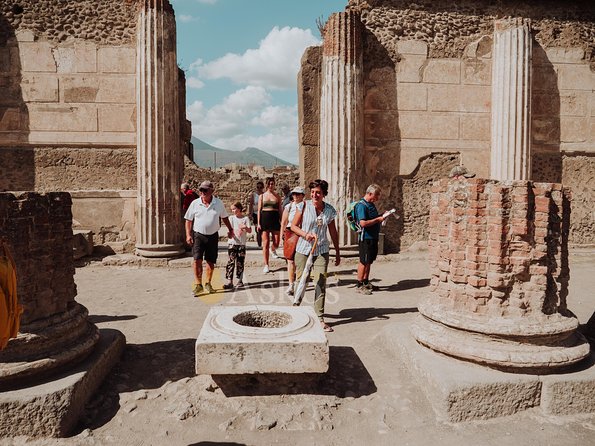
After the brothel area, you’ll continue to the House of the Faun, one of Pompeii’s largest private residences. This stop is impressive because it shows how private space could be both grand and carefully arranged. You can see why people used these homes to show power and taste.
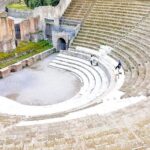
Then there’s a brief look at the Teatro Piccolo, followed by the Teatro Grande, the city’s largest and most important theater stop on this tour. If you’ve ever wondered how Romans spent free time, theaters are a clue. They weren’t only for performances. They were one of the ways a community gathered and shared culture.
This is a smart way to end: you go from homes and street life into public gathering space. When you finish at Teatro Grande, you’ll often feel like Pompeii has clicked together as a whole city, not just a list of sights.
Value and the Real Math Behind $35.67

At $35.67 per person for about two hours, the value isn’t just the entry ticket. The real cost-saver is the guide time plus the Pompeii Express skip-the-line ticket. Pompeii is the type of place where an hour spent finding your bearings can cost you a lot of the best material.
You also get a small group (maximum 20), and if your group is large enough, you’ll have headsets for clearer explanations. That combination helps you get more out of the same footprint of ground.
Is it perfect value for people who want to “collect photos”? Not really. This tour’s strength is interpretation: you’ll spend time learning what you’re looking at, not just moving from one highlight to the next for snapshots.
What to Bring: Comfortable Shoes and a No-Nonsense Water Plan
This is an outdoor site with uneven ground, and you’ll be going up and down with steps and ramps. Comfortable shoes are non-negotiable. In warm months, bring sunglasses and sunscreen, and carry a small bottle of water. There’s also very little shade in many areas, so your best friend is good footwear plus hydration.
If you’re traveling in winter, you may appreciate the smaller queues and fewer crowds, but you still need traction because stone can be slick.
One more tip: this is a short tour. If you show up late, you can end up missing the start and lose the chance to catch the group back up once you’re inside the ruins.
Who This Tour Fits Best (and Who Might Prefer Something Else)
This is best for you if you want:
- A guided overview that actually helps you understand what you’re seeing
- Priority entry so your time inside Pompeii doesn’t get eaten by lines
- A pace that shows lots of key places without turning into a marathon
It’s also a great choice for families and mixed groups because the tour is structured around major, easy-to-follow landmarks. In the past, guides have been praised for keeping explanations clear for different ages, including teens.
If you have mobility issues, mobility scooters aren’t allowed, and the tour is not recommended due to steps, ramps, and steep climbing. In that case, you’ll likely be happier with a private option designed around your needs.
Should You Book This Pompeii Archaeologist Small Group Tour?
If your goal is to feel oriented and informed fast, I’d book this. The price is reasonable for what you get: skip-the-line access, an archaeology-leaning guide, and a tight two-hour route through Pompeii’s most meaningful stops. You also end inside the site, which makes it easy to keep wandering after the guided portion.
Skip it only if you already have a strong Pompeii game plan and you prefer to control every minute alone. Also skip if mobility is a concern, since the walking terrain is part of the experience here.
FAQ
FAQ
Where do we meet for the tour?
You meet at the Pompeii Archaeological Park entrance at Porta Marina Superiore, where your guide will be holding a sign for Askos Tours.
How long is the Pompeii tour?
It’s about 2 hours (approx.).
Is there skip-the-line entry?
Yes. The tour includes a Pompeii Express entrance ticket designed to help you enter without waiting in the usual lines.
What’s included with the tour price?
Included are guidance for the full duration, the Pompeii Express entry ticket, a licensed guide with archaeological background, and headsets for groups of 16 or more.
What language is the tour offered in?
The tour is offered in English.
Is this tour suitable for mobility issues?
It’s not recommended for travelers with mobility issues or impairments because of steps, ramps, and steep climbs. Mobility scooters are not allowed.