REVIEW · POMPEII
Pompeii Private Tour with an Archaeologist and Skip The Line – 3 hours
Book on Viator →Operated by ELIANA SANDRETTI · Bookable on Viator
Pompeii feels huge until you have a plan. This private archaeologist tour threads together the most important parts of the city in just about three hours, from Porta Marina Superiore to Porta Marina Inferiore. You also get the practical benefit of skip-the-line support, which matters at a site that draws crowds daily.
What I really like is the focus on how Pompeii worked day to day, not just what you can point at. Guides such as Eliana Sandretti and Luisa are the kind of people who make construction details and everyday life click fast. I also like that the route hits the big “Roman life” stops—the theaters, forum, baths, markets, and homes—so you don’t end up zig-zagging across the park guessing where to go next.
One consideration: Pompeii requires good shoes and a lot of walking on uneven ground. Add in stairs and slippery patches, and you’ll want to go in ready—plus the park entrance fee is not included for adults, so clarify tickets early if you want the skip-the-line help to work smoothly.
In This Review
- Key things that make this Pompeii tour work well
- Pompeii becomes manageable with a private archaeologist route
- Getting started: Porta Marina Superiore to Porta Marina Inferiore
- Theaters first: Odeon and Teatro Grande
- Main Street and the Foro: where daily city life met power
- Baths and the everyday “morning routine” feeling
- Quadriporticus and the gladiator-linked barracks area
- The Lupanar area: a shocking reality check
- Temples of Venus and the quieter spiritual layer
- Homes and mosaics: Cave Canem and the Menander house
- Markets, food, and the behind-the-scenes engine of the city
- Workshops and laundries: Fullonica di Stephanus
- One last temple stop: finishing with public meaning
- Tickets: what you get, what you should double-check
- The value question: is a private 3-hour Pompeii worth $302?
- Walking reality: steps, uneven ground, and how to plan
- Who should book this Pompeii private tour
- Should you book this Pompeii private archaeologist tour?
- FAQ
- How long is the Pompeii private tour with an archaeologist?
- Is this a private tour or shared with other groups?
- What language is the tour offered in?
- Is the Pompeii entrance fee included?
- Where do we meet, and where does the tour end?
- Does the tour include skip the line access?
Key things that make this Pompeii tour work well
- Private archaeologist-led route through major areas without wandering
- Skip-the-line assistance for the ticket office, requested in advance
- A tight 3-hour route that covers theaters, forum life, baths, and homes
- Lots of stops with tickets included per listed area during the walk (confirm what you’re paying for)
- Highlights for real Pompeian scenes like the Cave Canem mosaic and the Lupanar area
- Good guide pacing for comfort, including shaded breaks when possible
Pompeii becomes manageable with a private archaeologist route
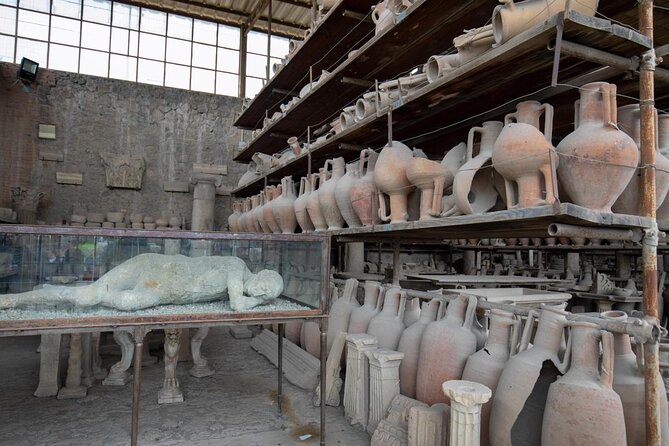
Pompeii is one of those places where “just walk around” sounds great—until you realize you’re spending half your time figuring out where you are. This tour gives you structure from the first minute. It starts at Hortus Pompei, Restaurant & Garden Bar by Porta Marina Superiore and ends back at the same meeting point at Porta Marina Inferiore. That end-back-to-start detail sounds small, but it saves stress when your legs are tired.
The big win here is the guide’s job: they connect scenes in a way that makes the ruins feel like a city, not a scattered museum. You’ll move through the theaters, the forum courts, bath life, food-shopping areas, and wealthy home rooms, with just enough time at each stop to understand what you’re looking at. In 3 hours, that matters.
You also get a specialized archaeological guide and a private format. That means you can ask questions without waiting for a group of strangers to catch up—handy at Pompeii, where one question often leads to three more.
You can also read our reviews of more private tours in Pompeii


Getting started: Porta Marina Superiore to Porta Marina Inferiore
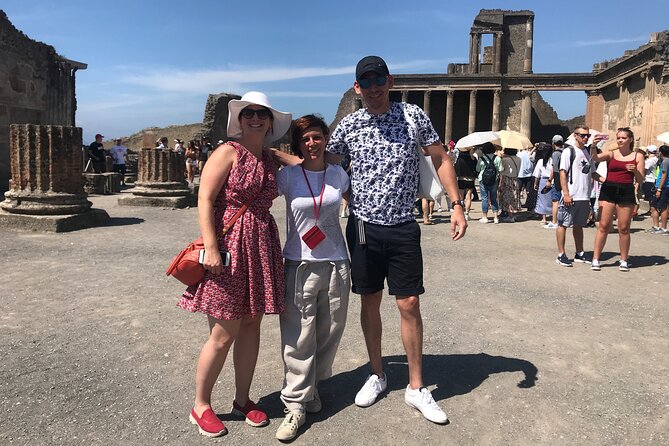
The tour begins at Porta Marina Superiore, which is a useful orientation point. You’re not starting in the middle of nowhere. You start on the edge and then follow a route that takes you through the city’s main areas.
The ending point—Porta Marina Inferiore—also helps you mentally “land” the experience. By the time you’re back near the meeting area, you’ve seen a full arc of public spaces and everyday life. It’s a complete Pompeii snapshot rather than random highlights.
If you’re thinking about logistics, note that the tour is offered in English and uses a mobile ticket. The meeting point is near public transportation too, which is useful if your day in the area isn’t just Pompeii.
Theaters first: Odeon and Teatro Grande
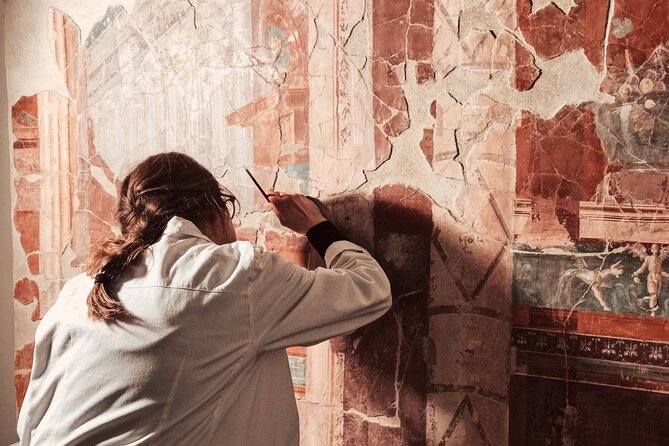
Pompeii loved public entertainment, and this tour starts you in the mood with the smaller and larger theaters.
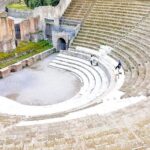
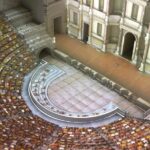
First comes the Odeon / Teatro Piccolo—the small theater. Then you move to the Teatro Grande, the large theater. The guide’s value at these stops is in how they explain what you’re seeing: how spaces like this worked for performances, how the scale feels when you stand inside, and what it tells you about social life.
Even if you’re not a theater person, the theaters are still important because they show Pompeii’s public rhythm. It’s the difference between seeing an old wall and understanding why people gathered there.
Practical note: these areas involve steps and uneven paths. Take it slow. Pompeii is forgiving only if you’re not rushing.
Main Street and the Foro: where daily city life met power
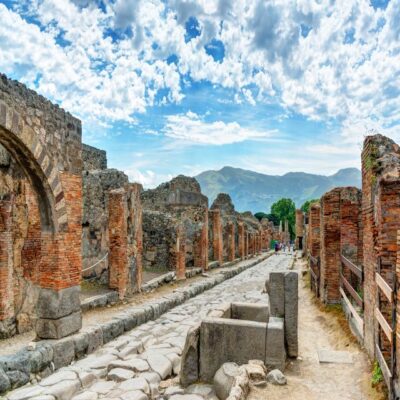
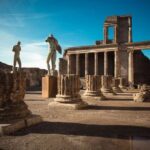
Next up is Pompeii’s “main artery” feeling—the main street segment—followed by public and commercial spaces built around the Forum.
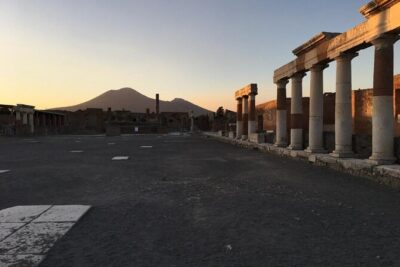
You’ll stop at Granai del Foro (the archaeological deposit/grain area) to connect the idea of provisioning and storage to the rest of the city. Then you’ll move into the heart of civic life: Foro di Pompei and the Basilica / court of justice area.
Here’s what you’ll likely enjoy most: the guide helps you see how power and commerce overlap. A forum isn’t only politics. It’s also a place where people moved, traded, negotiated, and watched.
Then you’ll reach a Temple of Jupiter stop. Temples in Pompeii aren’t just decorative. They’re part of how the city framed identity—who people worshipped and how civic life lined up with religious meaning.
Baths and the everyday “morning routine” feeling
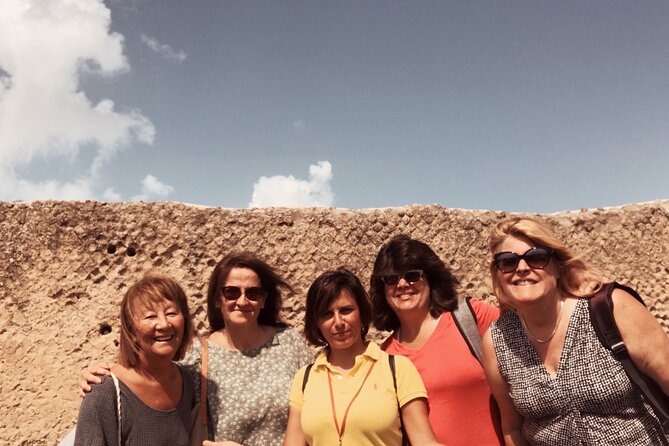
Pompeii wasn’t only about temples and big crowds. It was also about hygiene and relaxation—at least, Roman-style.
You’ll visit the Stabian Baths (Terme Stabiane), described as the first baths of Pompeii. This stop is valuable because baths are where architecture starts to tell human stories. You’ll see how the layout fits the rhythm of bathing and how these spaces served different roles.
From there, the tour keeps moving through other functional city zones. You’re basically building a picture of the week-to-week, not just the ceremonial side.
You can also read our reviews of more tours and experiences in Pompeii



Quadriporticus and the gladiator-linked barracks area
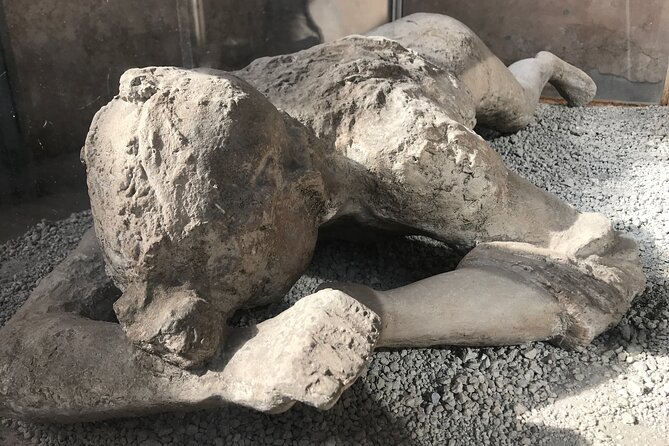
At the next stage, you’ll reach the Quadriporticus of the theatres, described as gladiators’ barracks. This is one of those places where the ruins can feel strange at first glance—until the guide turns it into a daily-life explanation.
This portion helps you understand that entertainment and labor weren’t separate in Pompeii. People trained, stored gear, and moved through linked spaces around the theaters.
If you like architecture details, this is a good area to slow down. Even a small perspective shift can make a room feel more purposeful.
The Lupanar area: a shocking reality check
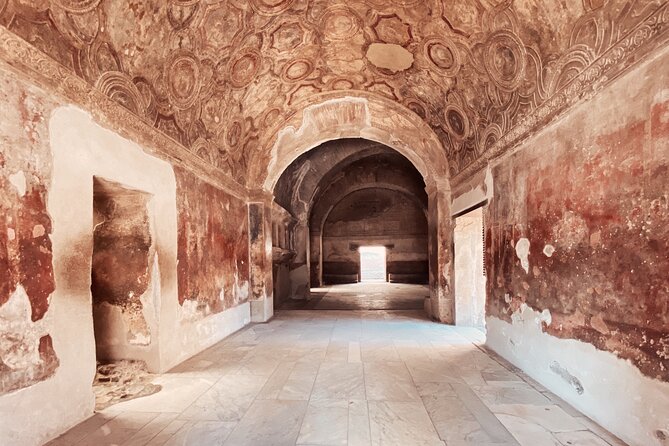
Then comes the Lupanar, the brothel/prostitution area. Pompeii doesn’t shy away from adult life, and this stop is part of that honesty.
I’d handle this with two expectations:
- You’re not going to get scandal. You’ll see an important social space.
- It might not be your cup of tea if you’re visiting with kids or you prefer purely uplifting historical sites.
If this topic is sensitive for you, ask the guide if they can adjust the pacing. The tour is private, so that flexibility tends to be easier than on a large group walk.
Temples of Venus and the quieter spiritual layer
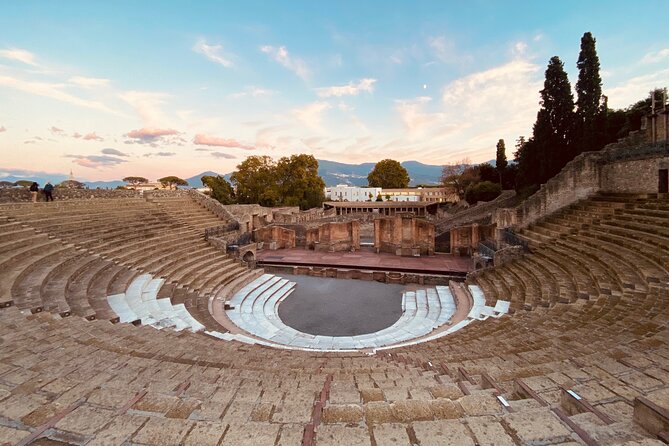
After the Lupanar stop, you’ll visit a Temple of Venus area. This is a nice counterweight. The tone shifts from the more uncomfortable side of city life toward a space tied to worship and symbolism.
This is also where a good guide can help you read what you’re seeing: why temples were central, how they relate to street-level life, and how religion was stitched into the city’s identity.
Homes and mosaics: Cave Canem and the Menander house
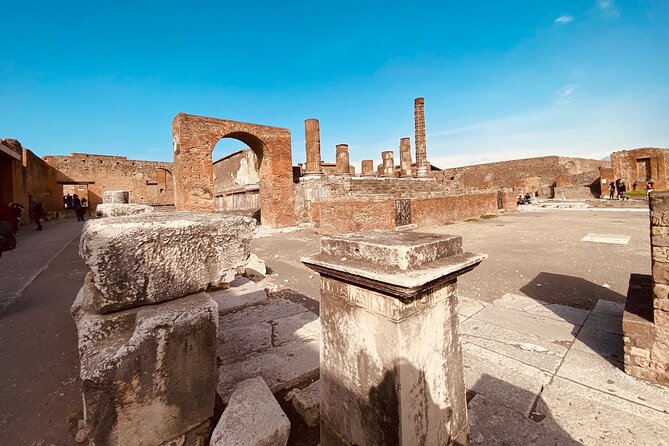
One of Pompeii’s main attractions is simple: it’s a city you can read through details. The homes do that best.
You’ll stop at Casa del Poeta Tragico for the Cave Canem mosaic. This mosaic is famous for a reason. Up close, it hits differently than in photos because you’re standing where it was meant to be seen—right where visitors moved into the home space.
Later, you’ll visit Casa del Menandro, known for frescoes and mosaics. This stop is where you start feeling the contrast between public Pompeii and private Pompeii. In a short tour, it’s a big emotional change, from marketplaces and courts to rooms decorated for people living their daily lives.
If you’re the kind of traveler who loves small “human scale” art, these home stops are likely the moments you remember after the big forum scenes fade.
Markets, food, and the behind-the-scenes engine of the city
Pompeii ran on trade. This tour makes sure you don’t miss that.
You’ll visit the Macellum (meat and fish market), then Edificio di Eumachia (wool market). You’ll also see more “fast life” food culture at the Termopolio di Vetuzio Placido—a take-away shop and fast food counter.
These stops matter because they show the city’s economics in a concrete way. You’re not guessing what people ate or where they bought things. You’re standing inside the types of spaces where those decisions happened.
Workshops and laundries: Fullonica di Stephanus
Next comes Fullonica di Stephanus, described as the laundry. This is one of those “not glamorous but real” Pompeii stops. It shows that city life included work that supported the whole population.
You’ll probably notice that the guide’s explanations here connect materials and function. Even without a science degree, the architecture makes sense when someone tells you what the process would have involved.
One last temple stop: finishing with public meaning
The itinerary includes a final temple stop (the name is simply listed as a temple in the plan). Even without a specific label, temples are a fitting closer for a 3-hour route because they pull together the theme: Pompeii wasn’t just buildings. It was belief, power, and community life all packed into one city.
By the time you’re there, you’ve already seen enough street life and civic space to make the temple stop feel earned rather than random.
Tickets: what you get, what you should double-check
This tour includes guidance and skip-the-line support, and the tour plan lists admission for the areas you’ll visit. But the fine print is still important: the tour data also states that the entrance fee is not included for adults (with a noted adult cost and free entry for some ages).
So here’s the practical advice: treat the tour price as the guide + route, and treat the Pompeii park ticket as something you should handle separately unless your booking confirmation clearly says otherwise. One guide tip that fits this situation well is to purchase your Pompeii park tickets online in advance if you want the skip-the-line benefit to work the way it should.
Also keep in mind that skip-the-line here is described as on request in advance. When you book, make sure the ticket request gets submitted, and keep your confirmation handy.
The value question: is a private 3-hour Pompeii worth $302?
At about $302.32 per group (listed up to 1), this isn’t a budget activity. The value lives in two places.
First, time. Pompeii rewards you for not wasting time. A private route with an archaeologist reduces the chance you’ll spend your best hours wandering in the wrong direction.
Second, clarity. Pompeii is loaded with details, and without context it can turn into “cool ruins” with little meaning. A skilled archaeologist guide turns those details into a coherent story, especially at the forum, baths, markets, and homes.
If you’re coming solo or with a small group, the cost can still make sense if you want maximum payoff in limited time. If you’re traveling as a larger party and each person wants their own pace, the private format becomes even more useful.
Walking reality: steps, uneven ground, and how to plan
Pompeii is not a sit-down tour. Expect lots of walking, steps, and surfaces that can be slippery. The site is also exposed in parts, so heat can be an issue.
The good news is that a private guide can adjust. In practice, guides on this type of tour have helped with pacing, answering lots of questions, and even finding ways to stay comfortable when possible. You should still plan smart:
- Wear sturdy shoes with grip.
- Bring water and use rest stops where you can.
- If mobility is a concern, ask ahead so the guide can plan a realistic pace.
Who should book this Pompeii private tour
This is a great fit if you want:
- A structured route through major Pompeii areas in about 3 hours
- An archaeologist guide who can explain what you’re seeing in context
- A private format where you can ask questions and move at your pace
It might be less ideal if:
- You want to spend the whole day at Pompeii and roam freely
- You’re not comfortable with lots of walking and stairs
- You’d rather skip the adult-life stop at the Lupanar (even though it’s handled as a historical site)
Should you book this Pompeii private archaeologist tour?
If you want Pompeii to feel like a city with a story—and you’d rather spend time learning than guessing—this is an excellent way to use your hours. The private format, the archaeologist-led context, and the route that hits the big “daily life” areas make it a strong value for the time it gives you.
Just do one thing before you go: confirm how the Pompeii entrance ticket is handled for adults and make sure the skip-the-line request is properly set up in advance. Once that’s sorted, you’ll spend your 3 hours where it counts—inside the ruins, with meaning in every turn.
FAQ
How long is the Pompeii private tour with an archaeologist?
The tour runs for about 3 hours.
Is this a private tour or shared with other groups?
It is a private tour. Only your group will participate.
What language is the tour offered in?
The tour is offered in English.
Is the Pompeii entrance fee included?
The tour data indicates that entrance fees (tickets) are not included for adults. Free entrance is noted only for under 18 years old, with an adult cost mentioned. You should purchase the park entrance tickets in advance.
Where do we meet, and where does the tour end?
You meet at Hortus Pompei, Restaurant & Garden Bar near Porta Marina Superiore, and the tour ends back at the same meeting point.
Does the tour include skip the line access?
Skip the line at the ticket office is available, but it is described as on request in advance. You’ll also be given a link to buy entrance tickets in advance.