REVIEW · POMPEII
Pompeii: Guided Small Group Tour Max 6 People with Private Option
Book on Viator →Operated by LivTours · Bookable on Viator
Pompeii moves faster than you expect. A small-group, guided visit like this keeps you from getting lost in the scale, while still hitting the big, meaningful stops in about 2.5 hours. I love two things most: the skip-the-line entry that protects your time, and the way the guide ties the ruins to daily Roman life instead of just reciting dates. The main consideration is that Pompeii is an active excavation site, so the exact route can shift based on the archaeologist’s duties.
This tour is built for people who want the highlights without turning their whole day into a homework assignment. You’ll see major areas including the Forum, a Roman bath house, and the theatre, plus standout homes like the House of Sallust and House of Julia Felix. Guides like Mario, Francesca, Carla, Luigi, Mariana, and Imma (and others) get praised for speaking clear English and spotting details most people miss.
At $168.17 per person, it’s not the cheapest way into Pompeii, but you’re paying for time saved, a tight route, and an actual expert guide—so it often feels like the smart value when your schedule is limited. If you’re the kind of traveler who wants to wander slowly and cover every street corner, this timed, highlight-focused approach may feel a bit brisk.
In This Review
- Key things to know before you go
- Pompeii in 2.5 hours: the sweet spot for first-timers
- Skip-the-line tickets + mobile ticket: protecting your time
- Meeting point at Via Villa dei Misteri: quick and straightforward
- How an expert guide changes the way you read the ruins
- The house stops: villas you can actually “follow” in your head
- Forum and theatre: public life beyond the doorway
- Roman bath house: the must-see stop that can be surprisingly educational
- The Vesuvius view: the story finally has an edge
- Small group max 6 vs private upgrade: who benefits most
- Price and value: when $168.17 makes sense
- Timing tips: morning vs afternoon for a calmer experience
- What to pack and how to make the walk feel easier
- Should you book this Pompeii tour?
- FAQ
- How long is the Pompeii guided tour?
- Is skip-the-line entry included?
- What’s included with the tour price?
- Is there a private option?
- Where does the tour start and end?
- What languages are available?
- Is food and drink included?
Key things to know before you go
- Max 6 people: a calmer pace, more chances to ask questions, and less crowd crush on key spots.
- Skip-the-line entry included: you spend more time looking at frescoes and mosaics, less time waiting.
- Expert archaeologist-led style: the tour focuses on daily life, not just monuments.
- Punch-list ruins in 2.5 hours: Forum, theatre, baths, and signature houses with practical context.
- Mt Vesuvius view: you get the volcano connection that makes the story click.
Pompeii in 2.5 hours: the sweet spot for first-timers
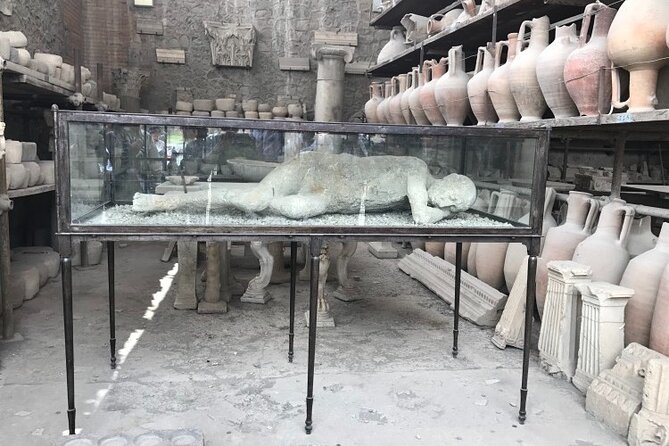
Pompeii is huge, and it has a way of turning a simple plan into a long day. This tour keeps you moving through the Pompeii Archaeological Park with a clear route and expert guidance, so you don’t waste time deciding what matters most.
The payoff is focus. Instead of trying to see everything (which is basically impossible), you get a “greatest hits” sweep of the places that explain how people lived—home life, work rhythms, and public spaces—right after the city was buried in 79 BC.
And yes, the “small group” piece matters. With a maximum of 6 travelers, you can usually hear your guide, and you’re less likely to end up at the back of the pack staring at shoulders instead of artifacts.
You can also read our reviews of more guided tours in Pompeii

Skip-the-line tickets + mobile ticket: protecting your time
One of the biggest stress points in Pompeii is the entry area. This tour includes guaranteed skip-the-line entry, so you’re not gambling with lines that can chew up your morning or afternoon.
You’ll also get a mobile ticket, which is handy if your phone is your “everything” travel tool. The practical value here is simple: fewer frictions, fewer chances your day slips sideways.
If you’ve only got a few hours in the area, this is the difference between seeing Pompeii and just getting near it.
Meeting point at Via Villa dei Misteri: quick and straightforward
The tour meets at Via Villa dei Misteri, 80045 Pompei NA, Italy and ends back at the meeting point. That end-back detail is more useful than it sounds. You’re not stuck negotiating your way out with tired legs and a full ticket wallet.
The meeting point is noted as near public transportation, which helps if you’re coming from Naples or switching between transit and tours. If you like to keep your travel day clean and predictable, this setup fits that style.
How an expert guide changes the way you read the ruins
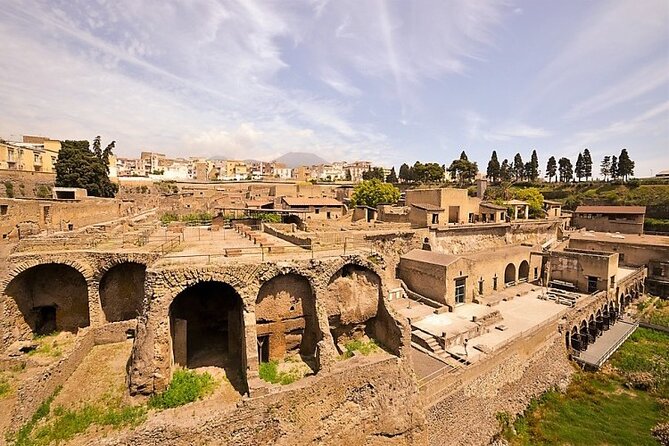
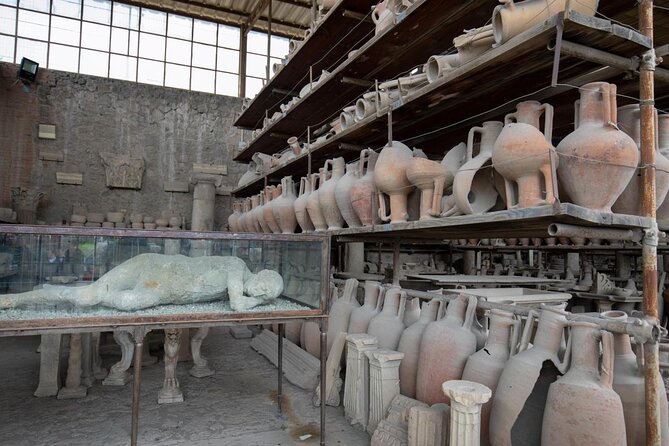
Pompeii isn’t just “old buildings.” It’s a snapshot of everyday life, preserved under volcanic ash. When you have an archaeologist-style guide, you stop seeing random rooms and start recognizing patterns: where people gathered, how homes were laid out, and what everyday routines might have looked like.
The tour is designed around key examples of daily life and urban culture, including homes and public structures. Your guide’s job is to point out details you might otherwise walk right past, like how spaces were organized and what those spaces suggest about Roman behavior and status.
This is also where the praise in the reviews lines up. Guides such as Mario and Luigi are singled out for making the bath houses, theatre, bakeries, and homes feel understandable—and for turning a pile of ruins into a living city story. That’s the real “guided” part.
The house stops: villas you can actually “follow” in your head
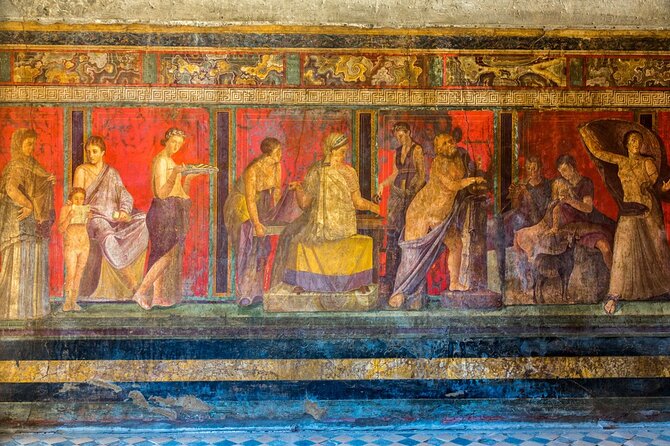
You’ll visit a selection of major residences during the walk through the park. The tour mentions several highlights, including the House of Menander, House of the Gladiators, House of Julie Felix, House of Loreius Tiburtinus, House of Sallust, House of the Tragic Poet, and the House of the Vettii Lupanar, along with additional curated stops.
What I like about seeing houses with a guide is that you’re not just looking for pretty mosaics. You learn what you’re supposed to notice and why it mattered.
Here’s what these home stops tend to help you understand:
- Social rank and layout: Roman homes often organized space by visibility and function, not just comfort.
- Art and household identity: frescoes and decoration weren’t random wall dressing. They communicated taste and position.
- How people moved through a home: courtyards and rooms tell you how daily life likely unfolded.
A note on expectation: the tour is structured as a highlight route, so you may not get the slow, room-by-room museum treatment. But you do get a guided narrative that ties the houses together, which is a strong trade when your time is limited.
You can also read our reviews of more private tours in Pompeii




Forum and theatre: public life beyond the doorway
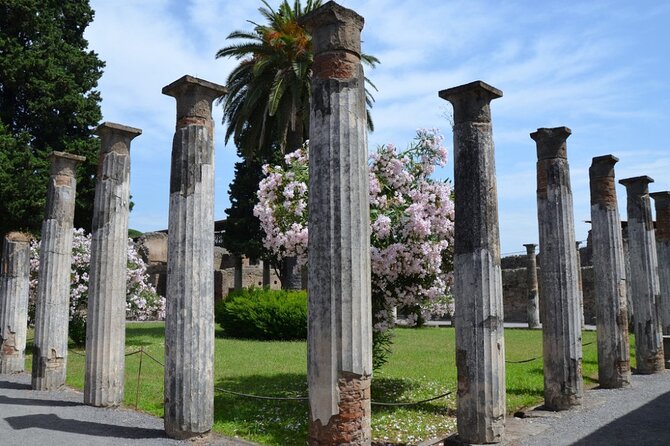
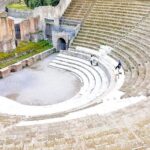
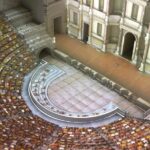
After you get a feel for homes, Pompeii’s public spaces make the city feel complete. This tour includes the Forum and the Pompeii theatre, which are both essential if you want the “whole city” picture.
The Forum is where the civic pulse lives. It’s where public conversation, power, and commerce would have mattered. With a guide, you’ll have help connecting the physical space to the social reality of Roman life.
The theatre adds a different kind of context. You’re not just learning about politics and buildings—you’re getting a sense of leisure, performance, and public assembly. In a city buried for nearly two millennia, it’s the kind of stop that makes you think, People really did gather here.
Roman bath house: the must-see stop that can be surprisingly educational
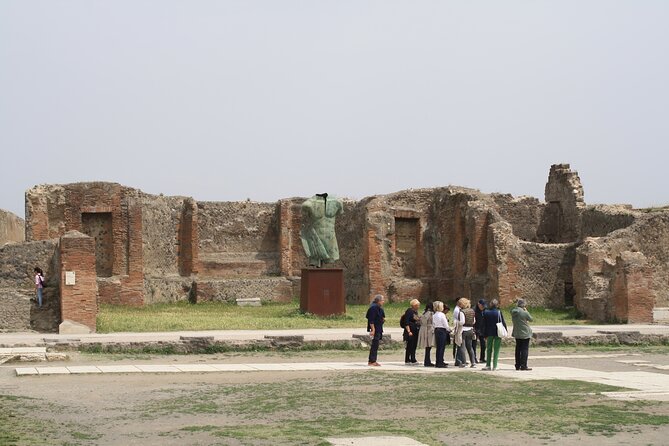
The Roman bath house is listed as part of the included program, and it’s also one of the stops that stands out in the guide praise. One review experience described bath houses, theatre, bakeries, and homes, with the guide explaining Roman culture in the everyday terms that make Pompeii click.
Bath houses are a great “anchor” because they combine engineering, routine, and social behavior. Even if you’re not a hardcore history person, you can see how the space functioned and why people would treat it as part of regular life.
Practical consideration: Pompeii can be hot, and you’ll do plenty of walking between open-air areas. One guide example in the reviews mentioned checking for hats and water and looking for shade opportunities. That’s exactly the kind of attentive touch that makes a day feel manageable rather than miserable.
The Vesuvius view: the story finally has an edge
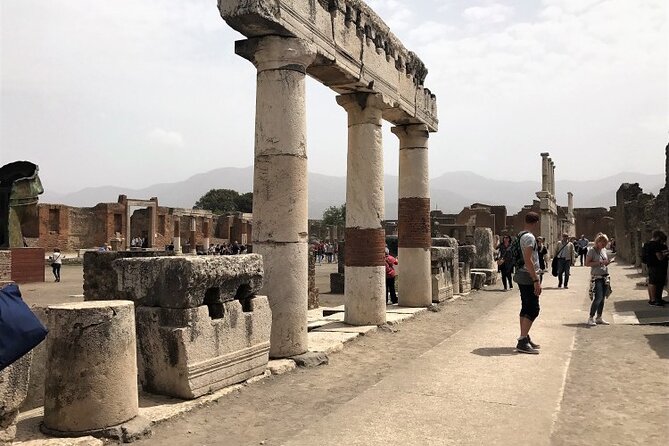
One of the included features is a Mt Vesuvius view. That might sound like a scenic extra, but it’s more important than it first appears.
Pompeii’s story is tied to the volcano. When you can see Vesuvius in the background, the “why” behind the burial becomes visual, not abstract. It turns the eruption from a textbook sentence into the physical reality of the place you’re standing in.
Even if you’ve read about 79 BC before, a viewpoint like this helps your brain connect the dots.
Small group max 6 vs private upgrade: who benefits most
The tour offers two styles: a small-group tour of up to 6 people or an upgrade to a private tour.
If you’re traveling as a couple or small group and you want more flexibility, the private option can be worth it. It also helps if you’re the type who likes to ask follow-ups without worrying about holding others up.
If you’re solo or just want the best balance of price and attention, the small group is the sweet spot. With only a handful of people, guides can adjust pacing and spend time on questions rather than rushing everyone through like a conveyor belt.
Either way, you’ll still be on a structured 2.5-hour highlight route. The difference is how personal and adjustable the experience feels.
Price and value: when $168.17 makes sense
At $168.17 per person, you’re paying for more than a ticket. You’re paying for:
- an expert guide for about 2 hours 30 minutes
- admission ticket included
- guaranteed skip-the-line entry
- a route that hits major highlights without turning into a full-day marathon
For many first-timers, the value is that you avoid the biggest time sink (lines) and you avoid the biggest decision sink (what to prioritize). You still get plenty of variety—houses, public spaces, baths, theatre—and the Vesuvius view ties it together.
If your group wants a flexible pace, private tours can raise costs quickly, so compare what you really want: speed and expert narrative, or slow wandering with fewer structured stops.
Timing tips: morning vs afternoon for a calmer experience
You can choose a morning or afternoon tour time. This matters because Pompeii is outdoor-heavy and you’ll feel heat and crowding differently depending on your slot.
If you prefer fewer crowds and cooler walking, a morning tour often feels better. If you’re syncing with other plans in the region, afternoon can still work well—just plan for the fact that shade breaks and water matter.
The good news: the tour style is built for movement through the ruins in a fixed time window. A guide who watches for shade and keeps the pace steady makes a noticeable difference when conditions are hot.
What to pack and how to make the walk feel easier
The tour doesn’t include food and drinks, so bring water and plan on refueling after. Pompeii’s ruins don’t care that you meant to eat later.
I also recommend:
- a hat (Pompeii sun is not subtle)
- sunscreen
- comfortable walking shoes with grip
- a light layer if you tend to get chilled by wind in exposed areas
From guide behavior highlighted in the reviews, good guides actively check for basics like water and hats and look for shaded moments. You’ll make it easier for them—and for yourself—by showing up prepared.
Should you book this Pompeii tour?
I’d book this tour if you fit one of these:
- You’re visiting Pompeii for the first time and want the key sights in about 2.5 hours
- You hate lines and want skip-the-line entry included
- You want an expert guide to explain how people lived, not just what the buildings are called
- You’re traveling with a small group and value a calmer pace (max 6 people)
I’d think twice if you:
- want to spend half a day wandering without a route
- get bored with a structured highlight plan
- are determined to cover every single section of Pompeii (this is a curated “best-of” approach)
Bottom line: if you want to see the right things fast, understand them, and keep your day from spiraling, this is a strong way to do Pompeii.
FAQ
How long is the Pompeii guided tour?
The tour runs for about 2 hours 30 minutes.
Is skip-the-line entry included?
Yes. The tour includes guaranteed skip-the-line tickets.
What’s included with the tour price?
You get a professional expert guide, skip-the-line entry, admission ticket included, and visits to stops such as the Pompeii theatre, Forum, Roman bath house, House of Sallust, House of Julia Felix, and a Mt Vesuvius view.
Is there a private option?
Yes. There’s a small-group tour limited to a maximum of 6 people, and you can upgrade to a private tour.
Where does the tour start and end?
It starts at Via Villa dei Misteri, 80045 Pompei NA, Italy, and ends back at the same meeting point.
What languages are available?
The tour is offered in English, French, Spanish, Portuguese, and Italian. You need to specify if you want a language other than English.
Is food and drink included?
No. Food and drinks are not included, so plan to bring water and eat before or after your tour.