REVIEW · POMPEII
Pompeii Walking Tour: The Real History of the Ruins
Book on Viator →Operated by InStazione · Bookable on Viator
Pompeii still talks—if you let it. In this 2-hour Pompeii walking tour, I love the way the Teatro Grande and the Forum connect theater, daily life, and politics in one walk. You also get admission built into the price, so you spend less time on logistics and more time looking closely at what 79 AD preserved. The main tradeoff: it moves fast, so you’ll want comfortable shoes and a willingness to skim some details rather than linger for an hour in every doorway.
You start at the InStazione help desk and head into the park together at 10:30 am (daily), with a small group capped at 35. The route is designed for first-timers who want the “real history” version of Pompeii: not just ruins, but how people lived, worked, prayed, and entertained when Vesuvius cut everything off.
In This Review
- Key Highlights You’ll Feel on the Walk
- Getting Started at InStazione and Entering Porta Anfiteatro
- Teatro Grande and Odeon: Comedy Under Ash
- Via Stabiana’s Cobblestones: The Old Street Scene Still Holds
- Casa del Menandro: How a 1,800 m² Domus Explains Wealth
- The Way of Abundance and Restored Shopfronts (Including Asellina)
- Stabian Baths (Terme Stabiane): Pompeii’s Oldest Bath Complex
- Lupanar: Mercenary Pleasure and What the Walls Tell You
- Forum of Pompeii: Temple of Jupiter, Court Politics, and Civic Power
- Temple of Apollo and the Granaries: Religion Meets Trade (and Measurements)
- How to Make 2 Hours Feel Like More
- Value for $42.05: What You’re Really Paying For
- Should You Book This Pompeii Walking Tour?
- FAQ
- What time does the tour start?
- How long is the Pompeii walking tour?
- Is the tour offered in English?
- What’s included in the price?
- Is lunch included?
- How many people are in the group?
- Is the meeting point clearly specified?
- What if the weather is bad?
- Is there free cancellation?
Key Highlights You’ll Feel on the Walk
- Ticket included with your guided route so you’re not doing the buy-and-enter dance
- Teatro Grande + Odeon: a look at Roman performance culture right under volcanic ash
- Via Stabiana cobbles: an old street with sidewalks, shops, and houses you can mentally map
- Terme Stabiane (Stabian Baths) plus the Lupanar for a rare dose of public life and private excess
- Forum sights in sequence: Temple of Jupiter, Basilica, Temple of Apollo, and the granaries area with key market details
Getting Started at InStazione and Entering Porta Anfiteatro
The tour begins with a simple plan: meet at the InStazione help desk in Pompeii and then proceed together to the park entrance at Porta Anfiteatro. Departure is listed as 10:30 am every day, and the experience runs about 2 hours. With a maximum of 35 people, you’re usually not trapped in a giant human line the entire time.
One practical note: Pompeii is weather-dependent here. If conditions aren’t good, the tour can be rescheduled or refunded, so I’d treat it like a “go when it’s clear” kind of plan. Also, you’ll be doing real walking across uneven ancient surfaces, so bring shoes you can stand in comfortably for the whole circuit.
You can also read our reviews of more walking tours in Pompeii



Teatro Grande and Odeon: Comedy Under Ash
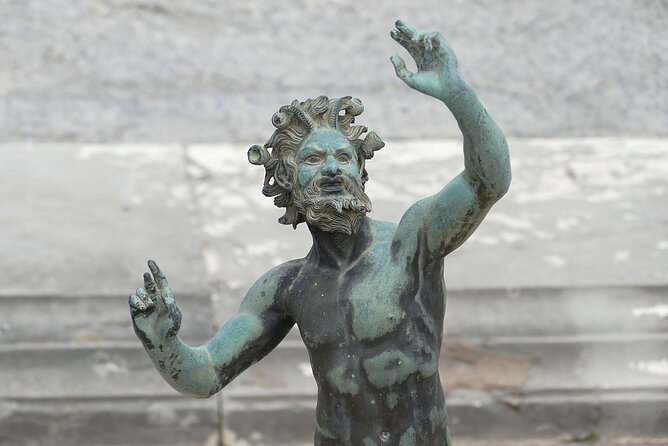
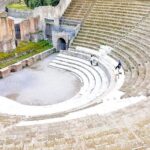
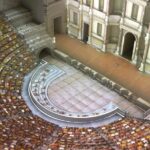
The first big stop is the Archaeological Park of Pompeii, with time focused on the Teatro Grande and the Odeon. The Teatro Grande is a Roman theater that was buried by Vesuvius in 79 AD and uncovered later through excavation. Inside, it hosted comedies, mimes, pantomimes, and the atellane, which helps you understand Pompeii as a functioning entertainment city—not just a spooky museum.
I like this start because it gives you a framework. Once you’ve seen how performance worked in Roman times, the rest of your walk feels more connected. It’s easier to picture people gathering here for shows, gossiping after, and then walking back into their own routines.
Via Stabiana’s Cobblestones: The Old Street Scene Still Holds
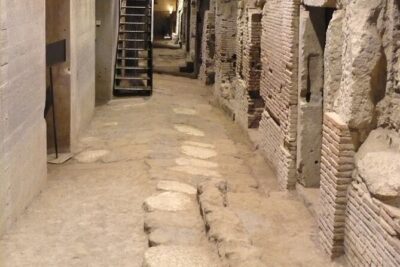
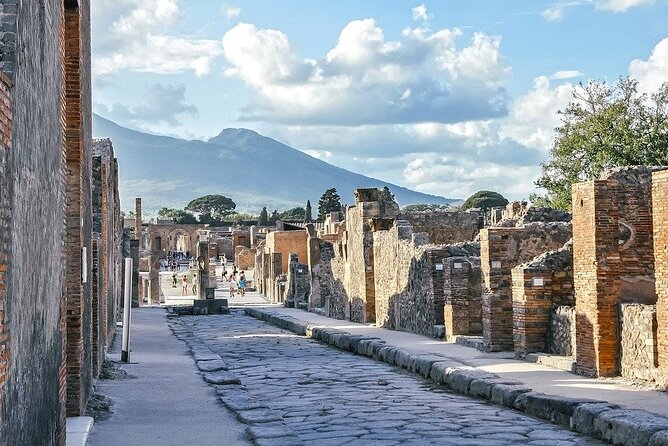
After the theaters, the route moves along Via Stabiana, described as a perfectly preserved cobbled street with sidewalks and pedestrian walkways, plus buildings that include shops and houses. This is one of those Pompeii moments that can feel surprisingly physical. You’re not just reading about an ancient city—you’re moving through an urban space that still has the bones of daily travel.
Two things to do here: first, look at how the street is shaped for people moving on foot. Second, notice how the mix of shops and homes suggests constant turnover—money, errands, and casual interactions happening right beside each other. That’s the “why” behind this stop: Pompeii isn’t only temples and big monuments. It’s also neighborhood life.
Casa del Menandro: How a 1,800 m² Domus Explains Wealth
Next comes Casa del Menandro, a wealthy urban domus of almost 1,800 m². The house was excavated in 1926–1932, and it’s named for a Greek poet image of Menander found there—not because we know the owner’s identity from the name alone. Even in a short visit (about 15 minutes), the scale alone tells you Pompeii had a real class system and real domestic ambition.
What I like most about a house like this is the contrast. A theater makes you think public. A domus brings you closer to private design: the kind of space where status is displayed in decoration and layout. You’re seeing how a well-off family organized everyday life—where guests might be received, where rooms shifted in function, and how the house reflected cultural taste.
The Way of Abundance and Restored Shopfronts (Including Asellina)
As you continue, you’ll hit a stretch often associated with an active street life—what’s described as the way of abundance, with public facilities, shops, and residences. Some shop paintings have been restored, which makes a big difference. Without those restored details, it can be hard to picture where trade fit into the scenery.
One named highlight here is the thermopolium of Asellina, plus the presence of artisan workshops known as officinae. If you care about the everyday economy, this is where the tour starts to feel less like a list of monuments and more like a city map. You’ll see how food service, small production, and consumer habits likely ran close to where people lived.
You can also read our reviews of more historical tours in Pompeii
Stabian Baths (Terme Stabiane): Pompeii’s Oldest Bath Complex
Then you’ll move to Terme Stabiane, the Stabian Baths, described as the oldest bath building in Pompeii. Like other major structures, it was buried by the eruption in 79 AD and later unearthed through excavation. The standout detail for this stop is the preservation of the bath layout—especially the male and female sectors, which are described as perfectly preserved.
Why this stop matters: baths weren’t just about washing. They were about routine, social mixing, and neighborhood identity, all rolled into one architectural plan. Even in about 15 minutes, seeing the bath complex helps you grasp how “public life” wasn’t limited to forums or theaters. It also happened in the daily flow of hygiene and conversation.
Lupanar: Mercenary Pleasure and What the Walls Tell You
A quick but important stop is the Lupanar (lupanari), which were places for mercenary sexual pleasure—effectively, houses of tolerance. You’ll see that some of these spaces are still visible in the ruins, and the walls include famous erotic scenes.
I recommend approaching this part with a calm, historical mindset. This isn’t presented as sensational entertainment; it’s presented as Roman urban life, including the ways the city accommodated paid services. If you’re sensitive to sexual imagery, just know it’s part of the tour’s “real history” angle—Pompeii doesn’t censor itself, and the guide’s framing is what keeps it from turning into shock value.
Forum of Pompeii: Temple of Jupiter, Court Politics, and Civic Power
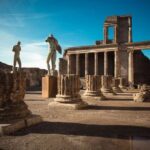
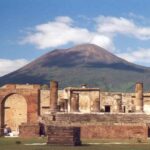
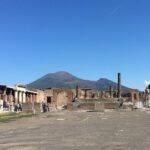
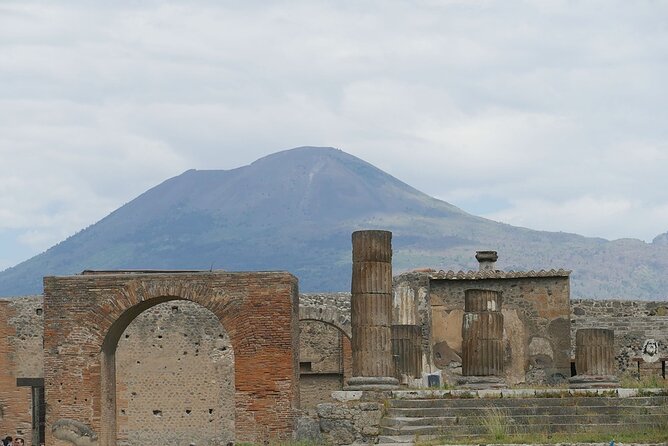
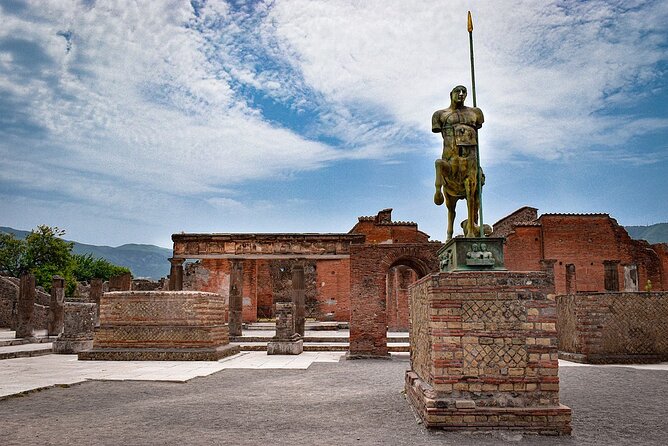
The tour’s civic core is the Forum of Pompeii, which has deep roots in the Samnite era. It was built around the 4th century BC near a road junction with routes toward Neapolis, Nola, and Stabiae. Shops around this open area were built mostly from lava and tuff with clay cement, and later, after Roman conquest, the Forum was rebuilt and enlarged, including changes to the shop structures and surrounding religious and political buildings.
Once you arrive, it gets practical-fast: the tour directs you to the Temple of Jupiter, which later became associated with the Capitolium and honored the three top divinities of Rome: Jupiter, Juno, and Minerva. Under the temple was the erarium, the public treasury. That’s a big conceptual link—religion and government weren’t separate departments.
Then you continue to the Basilica, an indoor building used as a kind of indoor forum when weather made outdoor gatherings harder. It dates to the second century BC, and the architecture is tied to how justice and transactions worked. There’s a tribunal for judges on an elevated position, and the design includes a safety detail: the judges’ area was reachable only by a mobile wooden staircase to prevent condemned people from attacking them.
This is where I think the guided piece pays off most. Pompeii can look like random piles of stone unless someone helps you connect the dots. In the Forum area, the dots become obvious: public money, public law, public worship, all in walking distance.
Temple of Apollo and the Granaries: Religion Meets Trade (and Measurements)
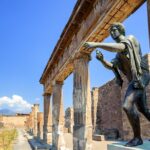
Next is the Temple of Apollo, tied to the cult of Apollo spreading through Italic populations via the Greek world. The tour notes that right before the eruption, Apollo’s followers had lost some influence as Jupiter’s dominance grew. You can currently see a bronze statue of Apollo depicted as an archer, and you can also observe a statue of Diana nearby.
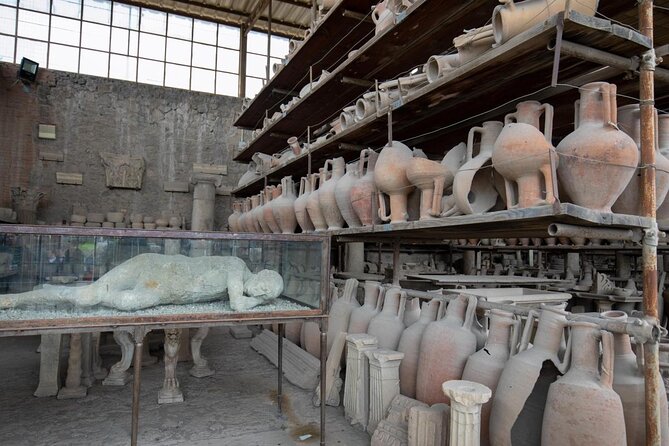
Then you’ll reach the granaries area, which today functions as a deposit for excavated materials—but in the past it was a market for cereals and legumes. A key interpretive detail is that traces of plaster weren’t found, which is used to suggest the structure may have been unfinished when the eruption happened. It’s one of those subtle clues that shows archaeology as detective work, not just sightseeing.
One final standout detail here is the ponderary table—a setup used to ensure correct exchanges and conversions of measurement units from traders across different parts of the empire into the units used locally in Pompeii. If you like practical history (the kind that explains how transactions worked), this is a very satisfying stop.
How to Make 2 Hours Feel Like More
This tour is short by design: about 2 hours with multiple stops, meaning you’ll see a lot without getting “stuck” in one location. The upside is momentum—Pompeii doesn’t allow slowness anyway, because the city covers huge ground. The downside is that you can’t expect to read every inscription or stare at every mosaic like you’re in a quiet gallery.
My advice: pick one or two details you want to remember from each stop. For example, in the theater zone, focus on the performance types. In the house, focus on the scale of the domus and what that implies about wealth. In the baths, focus on the preserved male and female sectors. In the Forum, focus on the treasury and how court access was designed. That mental “assignment” keeps the pace from feeling rushed.
Value for $42.05: What You’re Really Paying For
The price—$42.05 per person—isn’t just about walking past ruins. It includes an entrance ticket and guided tour, and that’s what changes the value. Pompeii is crowded, and self-guided visits often turn into “look, photo, move on” unless you know what you’re seeing. Here, the guide is the translator between stone and story.
You’ll also be dealing with a practical head count: up to 35 people. That’s large enough to keep things affordable, but small enough that you should still be able to hear explanations for the main stops. For a short visit from Naples, this kind of structured route can be a smart way to get the highlights without burning half a day.
Should You Book This Pompeii Walking Tour?
Book it if you want a guided Pompeii highlights circuit that covers the big categories of life: entertainment (Teatro Grande), elite domestic space (Casa del Menandro), social routine (Terme Stabiane), and civic power (Forum, Temple of Jupiter, Basilica). I’d also book it if you appreciate humor and clear storytelling, because the guides referenced for this experience in the past have been praised for mixing humor with knowledge while keeping everyone on track.
Skip it if you want a slow, deep dive with lots of free time for wandering and re-reading. This is about coverage in two hours, not full immersion. If you need long pauses or you’re hoping for very detailed archaeology at each site, you might be happier with a longer private option.
FAQ
What time does the tour start?
The tour departs every day at 10:30 am from the InStazione help desk.
How long is the Pompeii walking tour?
It runs for about 2 hours.
Is the tour offered in English?
Yes, it is offered in English.
What’s included in the price?
Your price includes the entrance ticket and the guided tour.
Is lunch included?
No, lunch is not included.
How many people are in the group?
The tour has a maximum of 35 travelers.
Is the meeting point clearly specified?
Yes. The start point is listed as 80045 Pompei, and the meeting point is at the InStazione help desk area. The tour ends at Scavi di Pompei, Viale delle Ginestre, 80045 Pompeii NA.
What if the weather is bad?
The experience requires good weather. If it’s canceled due to poor weather, you’ll be offered a different date or a full refund.
Is there free cancellation?
Yes. You can cancel up to 24 hours in advance for a full refund, and the cutoff is based on local time.