REVIEW · POMPEII
Small Group Guided Walking Tour of Ancient Pompeii Highlights
Book on Viator →Operated by Private Tours of Pompeii · Bookable on Viator
Pompeii is huge; this tour makes sense. You get skip-the-line access and a small group of up to 18, led by guides like archaeologist Lello or storyteller Italo. I love the tight focus on the sites you actually want to see, but you need to be on time since the guide will not wait for late arrivals.
Expect about two hours of walking over original streets, starting at Coffee Shop Vittoria on Via Mare and ending back there. The route hits Teatro Grande, the Odeon/Teatro Piccolo, the Terme del Foro baths, and the Lupanar, with entrance tickets included and a mobile guide confirmation. If you hate walking in hot sun, bring your own water plans, because drinks and lunch are not part of the price.
In This Review
- Key things to love about this Pompeii highlights walk
- Pompeii in a Small Group: Why the Highlights Route Works
- Meeting at Coffee Shop Vittoria: Check-In, Tickets, and How You’ll Hear the Guide
- UNESCO World Heritage Stop: Getting the Big Picture Early
- Teatro Grande: How Roman Entertainment Looked in Real Life
- Odeon and Teatro Piccolo: Smaller Stage, Same City Life
- Terme del Foro Baths: Social Life Buried Under Ash
- Lupanar: Appointment Houses, Frescoes, and Context You’ll Want from a Guide
- The Tour Pace: About Two Hours, Then Freedom to Keep Looking
- Price and Value: What You Pay For at $107.23
- Who Should Book This Pompeii Highlights Tour?
- Should You Book This Tour? My Take
- FAQ
- How long is the Pompeii highlights walking tour?
- What group size should I expect?
- Is this tour offered in English?
- Are skip-the-line entry and entrance tickets included?
- Where do I meet the guide?
- What should I wear?
- Is there free cancellation?
Key things to love about this Pompeii highlights walk
- Skip-the-line entry plus included admission tickets, so you spend time seeing Pompeii instead of waiting.
- Small group size (max 18), which makes it easier to hear your guide and ask questions.
- A smart, short route focused on theatres, baths, and daily life spots like the Lupanar.
- Professional guide support, with radio-style listening equipment used on this tour.
- Teatro Grande and Teatro Piccolo give you a clear view of Roman entertainment and how the city worked.
- Plenty of structure in just ~2 hours, ideal when Pompeii feels overwhelming.
Pompeii in a Small Group: Why the Highlights Route Works
Pompeii can feel like a maze the moment you step through the entrance. This walking tour is designed for the reality that most people have limited time, and it gives you a simple path through the most meaningful stops. The payoff is not just “seeing famous ruins,” but learning what each place was for and what to look at while you’re standing there.
What makes this one a strong value is that the price includes both the professional guide and the entrance tickets, plus guaranteed skip-the-line entry. In practice, that means fewer wasted minutes and more time in the sites that actually shape your understanding of Pompeii.
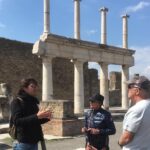
The group is capped at 18 people. That matters. With smaller groups, your movement stays smoother, and you are less likely to get stuck behind a slow-moving crowd at every photo spot. The guides you may meet come with serious passion for the subject—archaeologist Lello is one name that comes up, and another guide you might hear about is Italo, known for lively storytelling.
The main drawback is timing discipline. The meeting rule is clear: be at the start point 10 minutes early, and the guide will not wait if you’re late. If you tend to underestimate travel time inside Pompeii or you’re bouncing between other sites that day, plan extra buffer.
You can also read our reviews of more walking tours in Pompeii


Meeting at Coffee Shop Vittoria: Check-In, Tickets, and How You’ll Hear the Guide
You meet at Coffee Shop Vittoria on Via Mare, in Pompeii (80045, near public transportation). The tour ends back at the same meeting point, which is handy because you do not have to figure out a second logistics puzzle after walking.
Before you go, make sure you understand what your booking actually is. This is a guided tour confirmation, not a standalone ticket you can enter with by yourself. You will use it with the guide, and the entry time is booked for your group’s schedule. That’s why being early matters: your tickets are linked to that arrival window.
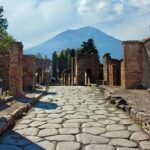
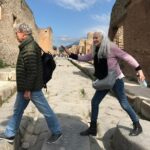
You’ll also want to wear smart casual and bring comfortable shoes. Pompeii’s streets are original, uneven, and built for walking—not gliding. The pace is manageable for “most travelers,” but the ground is still ground.
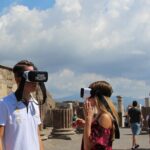
One practical plus: the tour uses a radio-style listening setup with a small ear piece. That means you’re less likely to strain your voice or miss details when the group shifts position. It also helps outdoors, where sound can carry and drift between theatre walls and open plazas.
Finally, note that confirmation comes at booking time, and service animals are allowed. If you’re coming from elsewhere that day, check how you’ll reach the meeting point so you’re not scrambling at the last minute.
UNESCO World Heritage Stop: Getting the Big Picture Early
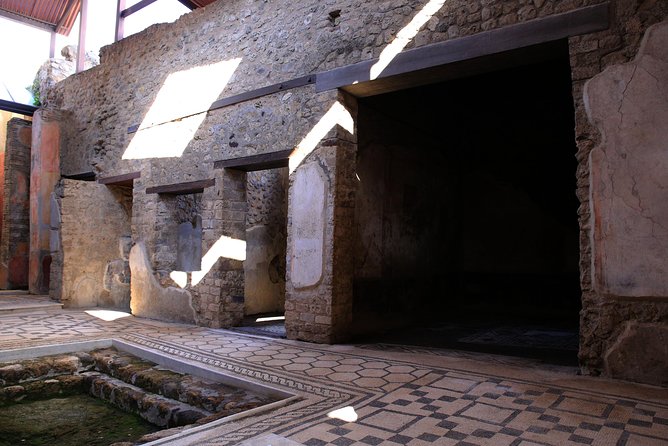
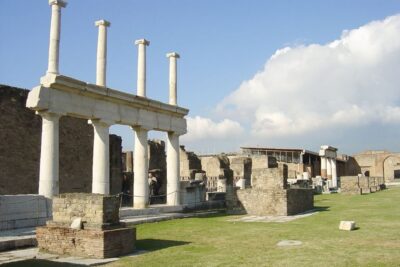
The first stop is a UNESCO World Heritage Site visit tied directly to the Pompeii experience, with an admission ticket included. Even though the stop itself is on the shorter side, I like the strategy: you get context before you head into the more specific buildings.
This early grounding helps you connect what you’re about to see. Pompeii is not just ruins; it’s a city with routines. When your guide frames what happened and why certain spaces mattered, later stops land harder—especially the theatres and the bath complex.
If you’ve been to other Roman sites, you’ll recognize patterns. But Pompeii feels different because so many structures are preserved in place. That makes it easier to understand daily life, not just monumental architecture.
Teatro Grande: How Roman Entertainment Looked in Real Life

Next up is Teatro Grande, the larger open-air theatre with about 5,000 seats. This is one of those stops where your guide’s explanations can turn stones into a story.
Here’s what you’ll want to notice while you’re there:
You’re watching a design meant for acoustics and public gathering. The scale tells you who this space served: large audiences, major performances, and civic-style events. And because the theatre is open-air, it also reflects Pompeii’s rhythm—public life tied to daylight, weather, and the community’s calendar.
A big plus on this tour is timing and pacing. Even if you’re visiting in warm weather, you’ll be able to move between major areas without the stress of planning. One reason small-group tours work well in August heat (or any hot season) is the stop-by-stop efficiency. You spend time listening, then walking, instead of circling and guessing.
The practical takeaway: if you love architecture, public buildings, or how Romans staged culture, Teatro Grande is a must-do highlight.
Odeon and Teatro Piccolo: Smaller Stage, Same City Life
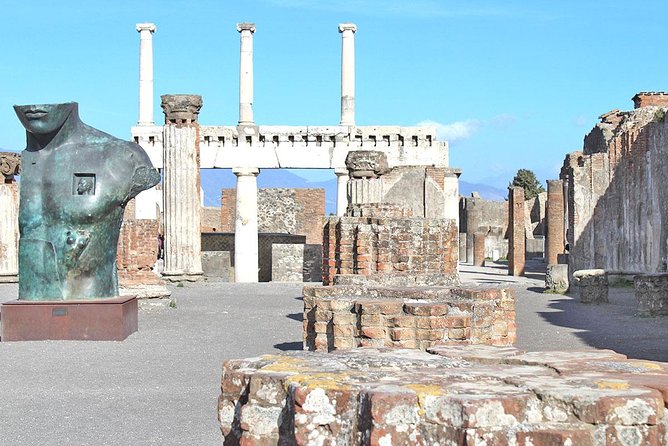
After the big theatre, you switch to the Odeon/Teatro Piccolo, with about 800 seats. This contrast is useful. It shows how entertainment in Pompeii wasn’t one-size-fits-all.
A smaller venue often signals different kinds of performances, smaller groups, or events that still mattered but felt less massive. You’ll also get a better sense of how the city’s entertainment scene offered variety, not just one big spectacle.
From a visitor standpoint, the smaller theatre can feel easier to read. With fewer seats to imagine, it’s simpler to picture where people sat and how the room worked. If you’re traveling with teenagers, this is also the kind of stop that tends to hold attention, since it’s a clear visual comparison after the larger venue.
In short: Teatro Grande helps you grasp the scale of Roman performance culture; the Odeon/Teatro Piccolo helps you grasp the range.
You can also read our reviews of more guided tours in Pompeii

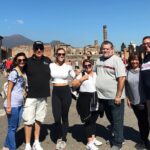

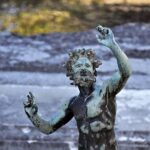
Terme del Foro Baths: Social Life Buried Under Ash
Then comes Terme del Foro, a Roman bath complex buried by the eruption of Vesuvius in 79 AD. This stop is where Pompeii shifts from spectacle to routine.
Bath complexes were more than places to wash. They were social hubs where people connected, discussed news, and spent time. When your guide explains how the bath complex worked, you start seeing Pompeii as a functioning community, not just a tragedy frozen in place.
A bath stop also helps with pacing. The space is distinct enough that it feels like a real “change of scene” after the theatres. And because it’s tied to a specific event in 79 AD, it gives you a clearer cause-and-effect story for why the city looks the way it does today.
One detail worth keeping in mind: the ruins here are preserved in a way that can make ancient spaces feel close. That closeness is what turns a “good sightseeing stop” into a meaningful one.
Lupanar: Appointment Houses, Frescoes, and Context You’ll Want from a Guide
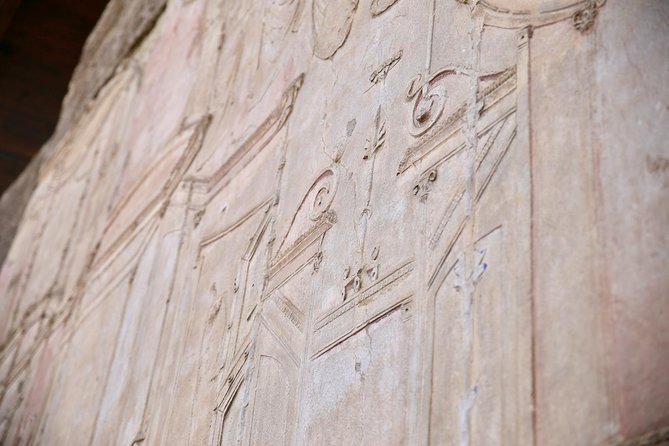
The final highlight is the Lupanar, described as appointment houses or brothels. Some frescoes are still visible, and they illustrate specialties of the women working there.
This stop can hit different depending on your comfort level with adult topics. It’s not a graphic museum experience like some people fear, but it is still direct. The value of a guided context is that your guide can help you interpret what you see instead of leaving you with random fragments.
Look for the fresco traces and imagery that show how the space advertised itself. What makes Pompeii especially educational here is that you’re looking at something tied to daily transactions, not just elite monuments. The frescoes are part of how the business worked, and seeing them in place makes the historical meaning more concrete.
If you’re traveling as a family, you can still do this tour, but you should consider your kids’ age and comfort with adult themes. The tour notes that children must be accompanied by an adult, and many families do pair this with the fact that the information is framed by the guide.
The Tour Pace: About Two Hours, Then Freedom to Keep Looking
The tour runs for about 2 hours (approx.), and it’s intentionally packed with major stops. In that time, you should feel like you got the “greatest hits” without turning Pompeii into a full-day marathon.
One practical benefit: small groups can make the schedule feel less rushed. Even if you’re seeing a lot, you’re not getting shoved through as if this is a conveyor belt. And after the guided portion, you may have time to explore on your own. That matters because Pompeii rewards the second look: once you learn what you’re seeing, you spot details faster when you return.
Price and Value: What You Pay For at $107.23
At $107.23 per person, this tour sits in the midrange for a guided Pompeii highlight experience. The best value argument is what’s included: skip-the-line access and entrance tickets. Add in a guide who can explain what you’re seeing at each building, and you’re paying for time saved plus context.
What you should plan and budget around:
- Drinks and lunch are not included.
- There’s no hotel pickup or drop-off, so you handle your own transport to the meeting point.
That’s not a dealbreaker, but it shapes how you plan your day. If you’re doing Pompeii from a base in Naples or Sorrento, build in transit time and keep a snack plan ready. You’ll be walking on uneven ancient streets, and you’ll want to stay comfortable.
One more value point: the tour is often booked about 52 days in advance on average. That’s a sign it tends to fill, especially in peak seasons. If your dates are fixed, booking earlier can help you lock in the small-group experience you’re paying for.
Who Should Book This Pompeii Highlights Tour?
This tour is a great fit if you want:
- A structured route through Pompeii’s most important and interesting ruins
- A guide-led explanation that makes theatres, baths, and the Lupanar make sense
- A smaller group (max 18) rather than getting swept up with massive crowds
It also tends to work well for teenagers and families who need the right amount of information. The route is short enough to keep attention, and it hits places that look dramatic and different from each other.
If you prefer total freedom with zero guidance, or you want to spend most of your day wandering slowly, you might feel constrained by a set sequence. But if you’re trying to learn Pompeii quickly and see the highlights without stress, this is a strong choice.
Should You Book This Tour? My Take
I’d book it if your goal is to walk Pompeii’s big highlights with a guide who can connect the dots. The combination of skip-the-line entry, included ticket costs, and a tight route across theatres, baths, and the Lupanar is exactly what makes a two-hour window work.
I would not book it if you’re likely to arrive late or you hate walking on uneven ancient streets. Also, go in knowing the Lupanar stop includes adult subject matter and frescoes, and you’ll get the most out of it when you’re ready for context.
If you do book, treat it like a guided “learning walk,” not just sightseeing. Arrive early, wear good shoes, and let the guide do the heavy lifting of explanation. You’ll leave with a much clearer picture of what Pompeii was like as a city.
FAQ
How long is the Pompeii highlights walking tour?
It lasts about 2 hours (approx.).
What group size should I expect?
The tour has a maximum of 18 travelers.
Is this tour offered in English?
Yes, it is offered in English.
Are skip-the-line entry and entrance tickets included?
Yes. The tour includes skip-the-line access and entrance tickets, along with a professional guide.
Where do I meet the guide?
You meet at Coffee Shop Vittoria, Via Mare, 80045 Pompei NA, Italy. The tour ends back at the same meeting point.
What should I wear?
The dress code is smart casual. Wear comfortable shoes, since you will walk on original ancient streets.
Is there free cancellation?
Yes. You can cancel for a full refund up to 24 hours before the experience starts. If you cancel less than 24 hours before, the amount paid is not refunded.