REVIEW · POMPEII
Pompeii and Herculaneum Small Group Tour with an Archaeologist
Book on Viator →Operated by Askos Tours · Bookable on Viator
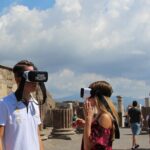
One wrong turn and you’re lost in ruins. This tour keeps you on track with an archaeologist guide and built-in logistics for Pompeii + Herculaneum in one day. I like the small group feel (up to 20), and I love the headsets—so you can actually hear the guide instead of playing guess-the-sound among the columns.
My main caution is pace. The day is efficiently packed, and a few people felt the rhythm was rushed—plus lunch is an on-your-own stop at a mall area between sites, which can dilute the magic if you’re hoping for a more “ruins-and-picnic” vibe.
In This Review
- Key things to know before you go
- Pompeii first: meeting points and what the day is really like
- Pompeii with a real plan: from Forum energy to quiet houses
- Houses and art: what you’re actually looking for
- Entertainment and civic scale: Teatro Piccolo to Teatro Grande
- The transfer to Herculaneum: train vs minibus, and why it matters
- Herculaneum in two hours: smaller site, sharper feeling
- The standout Herculaneum stops you’ll remember
- Houses that feel lived-in
- Public buildings and civic identity
- Wood, murals, and the odd-but-amazing details
- Value and price: what you’re paying for (and what you’re not)
- Group size, headsets, and the pace question
- Who should book this Pompeii and Herculaneum archaeologist tour?
- Should you book it?
- FAQ
- How long is the tour?
- What’s included in the ticket price?
- Where do I meet the guide?
- How do I travel from Pompeii to Herculaneum?
- Is lunch included?
- Is it suitable for visually impaired guests?
Key things to know before you go
- Archaeologist-led, not just a walk-through: you get explanations tied to real buildings, streets, and daily life.
- Headsets for every participant: easier listening in a noisy outdoor site.
- Skip-the-line entry: you go straight into the flow at Herculaneum, and you use the provided express tickets for Pompeii.
- Two-site structure with a transfer: guided time in Pompeii, then guided time in Herculaneum, with included transport between.
- Max 20 people: small enough to ask questions, big enough to feel like a shared trip.
Pompeii first: meeting points and what the day is really like
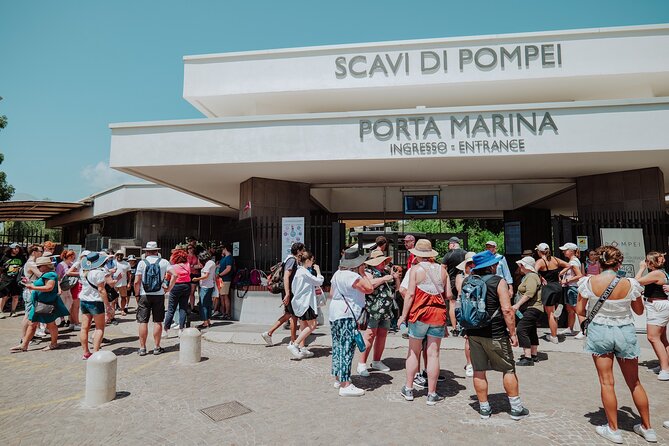
This is a “two ruins, one coherent story” kind of day. You meet your archaeologist guide at your selected start point: Porta Marina Superiore if you’re starting in Pompeii, Starhotels Terminus if you’re coming from Naples or Rome, or Piazza Angelina Lauro for Sorrento.
From there, the tour is designed to reduce the usual Pompeii headache: you’re not trying to interpret a map while you’re staring at street after street of stone. Instead, the guide keeps you moving through key zones and gives you context as you go.
Timing matters here. The guided portion in Pompeii is about two hours, and Herculaneum is also about two hours. That means you’ll see a lot of “top hits” and signature areas, but you won’t get the slow, linger-all-day experience of wandering every side street on your own.
You can also read our reviews of more tours and experiences in Pompeii.



Pompeii with a real plan: from Forum energy to quiet houses
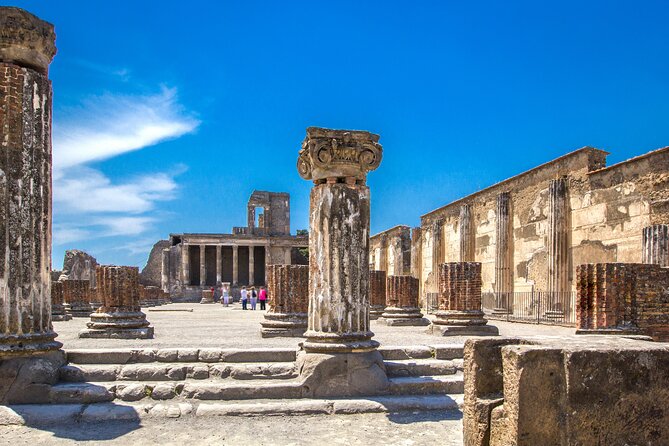
Pompeii can feel like a maze when you show up unassisted. The big win of this tour is that you walk Pompeii in the order that makes sense historically and geographically—so the city stops being a pile of famous ruins and starts feeling like a working place.
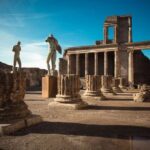
You’ll hit the big public spaces early, starting around an open Basilica—an area used as a sheltered portico where merchants and daily activity fit into the architecture. Next comes the Foro de Pompeya, the main square, where you get a feel for how people gathered and moved through civic life.
From there, you’ll walk the city’s main street. It’s the kind of stretch that helps you connect buildings you’ve seen in photos to the real human scale of a street grid—shops, crossings, and the rhythm of movement that would’ve shaped daily routines.
Then the tour shifts from public space into elite residences and entertainment.
Houses and art: what you’re actually looking for
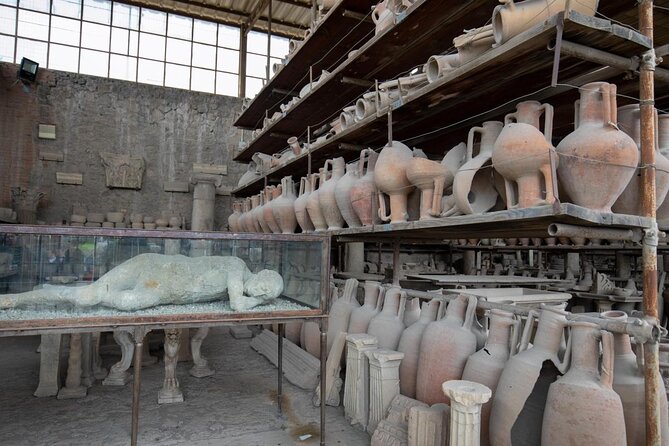
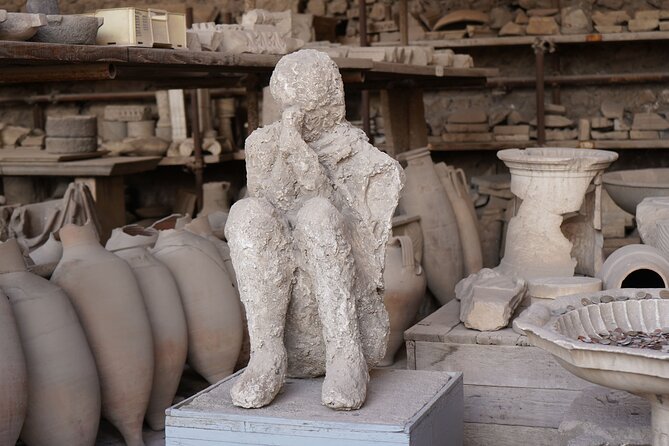
In Pompeii, one standout stop is the House of Menander. This one is famous for its wealth and for the way decoration and layout signal status. Nearby, you also get the chance to see the granaries of the Forum, including marble tables and fountain-related elements, plus some of the plaster casts tied to the eruption—like casts of victims, and even a dog and a tree. That blend—everyday infrastructure plus the eruption’s human imprint—is heavy, but it’s why Pompeii hits so hard.
You’ll also get time in the Stabian Baths (Terme Stabiane), the city’s oldest thermal complex. Baths in a Roman city weren’t just about cleanliness; they were social hubs. Seeing the scale of the complex helps you understand why people would structure their day around it.
Then comes the Lupanar, Pompeii’s best-known brothel. It’s often the most talked-about stop, but the better takeaway is how it fits into street life and how buildings communicated function.
The House of the Faun is a must for first-timers. It’s one of Pompeii’s largest and most impressive private residences, and walking through it with a guide helps you read the layout as power: who lived here, what they valued, and how the home worked.
Entertainment and civic scale: Teatro Piccolo to Teatro Grande
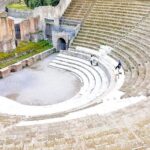
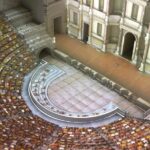
A tour that only hits houses misses the city’s public culture. This one also includes the Odeon / Teatro Piccolo and the Teatro Grande, Pompeii’s main theater. Theater architecture is where you start to notice planning: sightlines, entrances, and how crowds would have experienced performances and public events.
If you’re the type who wants your ruins to come with a sense of how people gathered, this Pompeii portion is built for that.
The transfer to Herculaneum: train vs minibus, and why it matters
Between sites, the tour handles transportation for you, which is a big deal in this region. You don’t need to puzzle out schedules while your brain is already overloaded by archaeological terms.
Your method depends on your start:
- If you start in Naples, Rome, or Sorrento, you travel with the guide by modern minibus directly to Herculaneum.
- If you start in Pompeii, you use an included Circumvesuviana train ticket to reach Herculaneum. Expect about 30 minutes by train plus a 10-minute walk.
There’s also a quick lunch break you can use before the transfer. Meals aren’t included, so plan for buying food nearby.
One more note: Pompeii and Herculaneum are close enough to pair, but the day still feels long. If you get easily frustrated by getting on and off transit, you might feel the grind—especially in rain or wind.

Herculaneum in two hours: smaller site, sharper feeling
Herculaneum doesn’t feel like Pompeii’s twin. It feels different—often calmer, and in many ways easier to absorb. The tour’s Herculaneum portion is about two hours, and you’ll start with guidance to the ticket office area and then move into the main visit route with your archaeologist.
A practical detail that helps: upon arrival, the guide leads you directly to the ticket office. If you’re arriving by minibus, you drop off near the entrance. If you’re arriving by train (Pompeii option), it’s a short 10-minute walk from Ercolano Scavi station.
Then you get a set of house and public-building stops that show how the town worked—homes, baths, and elite spaces with preservation that makes you rethink what “ruins” are.
The standout Herculaneum stops you’ll remember
Here’s what your guided walk focuses on in Herculaneum, and why it sticks with people:
Houses that feel lived-in
You’ll visit House of the Deer, named for marble stags/deer found in the peristyle. That detail matters because it turns the house into a story about taste and decoration—not just walls and floors.
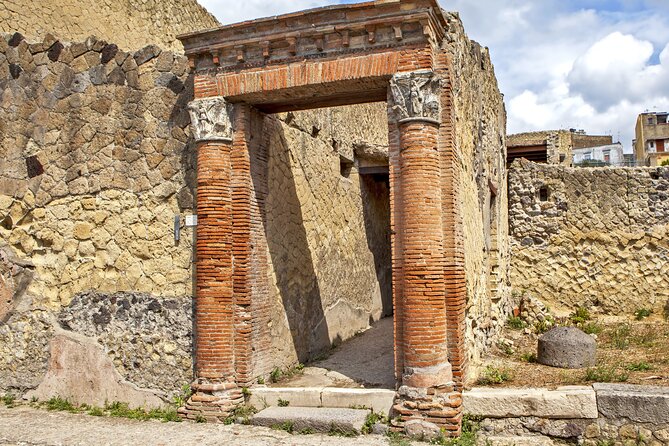
The House of the Black Salon is another “pause and stare” stop. It features a monumental entrance with carbonized remains of doorposts and lintel, so you can literally trace where wood once stood and what the eruption did to everyday materials.
Then there’s Casa del Bel Cortile, known for an unusual courtyard design: a stairway and a stone balcony rather than an atrium. It’s the kind of layout variation that makes Herculaneum feel personal and local.
You’ll also see the House of the Skeleton, named after human remains discovered in a second-floor room in 1831. This is one of the most emotionally direct reminders that these were real people, not just artifacts.
Public buildings and civic identity
Herculaneum isn’t all bedrooms. You’ll also spend time at La Terrazza di M. Nonio Balbo, including the long inscription tied to the city’s major benefactor. It’s an example of how elite funding and public honor show up in architecture and memory.
The College of the Augustales gives you a look at religious and civic organization tied to the cult of Emperor Augustus. You’re not just walking; you’re learning what kinds of institutions mattered and who ran them.
And yes, you’ll hit baths: Central Thermae, divided into men’s and women’s baths with separate entrances—another reminder that Roman daily life had routines and social structure built into the buildings.
Wood, murals, and the odd-but-amazing details
If you care about materials, don’t miss Partem Domus lignea – Casa del Tramezzo di Legno. This stop centers on an important wooden partition that survived in carbonized form.
And if you enjoy the way art and architecture show status, you’ll also see Casa Sannitica, known for its atrium and gallery with Ionic columns and frescoes.
Finally, House of the Grand Portal rounds out the route with a large domus and charred remains of wooden parts, plus frescoes and architectural spaces.
After you take in these stops, the site starts to feel like an actual town with neighborhoods and priorities, not just a dramatic volcanic snapshot.
Value and price: what you’re paying for (and what you’re not)
The price is $77.09 per person, and the experience includes a lot that usually costs extra on your own: guided time in both sites, admission tickets to Herculaneum and Pompeii, transport between sites, and headsets for everyone.
To think about value, compare ticket-only costs plus logistics:
- Herculaneum admission is noted as 16 euros for adults (and 2 euros for EU citizens age 18–25).
- Pompeii admission is noted as 20 euros for adults.
The tour bundles both entries with guided interpretation and transportation. That’s the core value: you buy time saved and context added. You’re not just paying to walk in; you’re paying to understand what you’re walking through.
What’s not included is also clear: meals and drinks. There’s a lunch break, but you’ll choose and pay for what you eat.
Group size, headsets, and the pace question
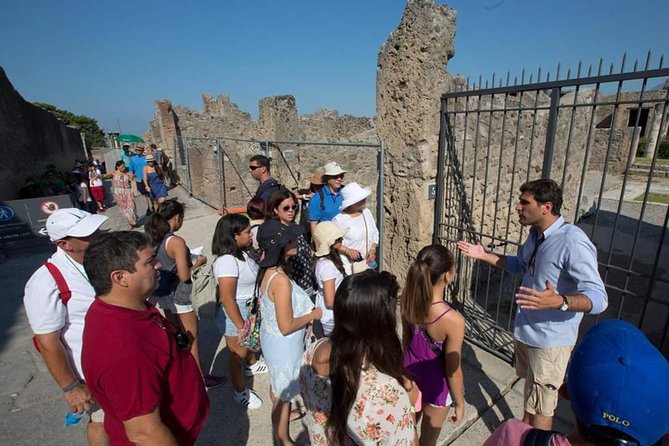
This is capped at 20 travelers, which is a sweet spot for a major site day. You can ask questions without feeling like you’re being herded like cattle. The headsets also help you keep up—especially when a guide steps slightly away while pointing at details.
That said, pace is the one thing you should mentally prep for. Pompeii alone is enormous. Even with the guide and a tight two-hour highlight run, it’s still easy to feel like you wanted more time at the most interesting corners (or to want a slower look at frescoes, mosaics, or specific casts).
If you’re the type who likes to stand and read every inscription, you’ll probably feel rushed. If you’re the type who wants the big story and the most important spaces in one day, this tour fits nicely.
Who should book this Pompeii and Herculaneum archaeologist tour?
I’d point you toward this tour if you want:
- A guided, archaeologist-led walkthrough instead of self-navigation.
- Two famous eruption-era sites in one day with built-in transport.
- A structured route that hits major public spaces, elite houses, theaters, baths, and standout details like plaster casts and carbonized wood.
I’d think twice if:
- You’re determined to spend long, slow stretches in every nook of Pompeii.
- You’re very sensitive to a packed schedule and brief stops.
- You planned your own car logistics in Pompeii and expect the tour to solve everything. One important practical note: the tour’s included return depends on your chosen start option, and if your plan involved parking in Pompeii, you may need to handle part of the return yourself.
Should you book it?
Yes, if you want a high-clarity day that mixes major Pompeii highlights with a different-feeling Herculaneum route. The included admission tickets, headsets, and archaeologist-led explanations make it feel like more than a sightseeing loop.
No, if you want maximum time on-site or a lunch experience that feels like part of the ruins. This tour is built for efficiency, and that can feel great—or a bit too brisk—depending on your style.
If you do book, go in with one goal: leave Pompeii knowing how Roman public life and elite homes fit together, then leave Herculaneum seeing how preservation can make daily routines feel shockingly close.
FAQ
How long is the tour?
It runs about 6 to 11 hours depending on the option you choose and the logistics of transfers between sites.
What’s included in the ticket price?
You get guided tours in both Pompeii and Herculaneum, headsets, admission tickets for Herculaneum and Pompeii, and included transport between the two sites based on your start point.
Where do I meet the guide?
Meeting points depend on your option: Pompeii (Porta Marina Superiore), Naples and Rome (Starhotels Terminus), or Sorrento (Piazza Angelina Lauro).
How do I travel from Pompeii to Herculaneum?
If you start in Pompeii, you use an included Circumvesuviana train ticket (about 30 minutes) and then walk about 10 minutes to the site with your guide.
Is lunch included?
Lunch is not included. There is a quick lunch break available before the transfer, and you cover meals and drinks yourself.
Is it suitable for visually impaired guests?
It is not recommended for visually impaired guests unless they are accompanied by a dedicated personal assistant.