REVIEW · POMPEII
Pompeii Small Group Guided Tour with Skip-the-line Admission
Book on Viator →Operated by Pompeiify · Bookable on Viator
Pompeii makes sense fast with a small group. This guided walk is built for skip-the-line entry and smart use of a short visit, so you’re not stuck guessing where to go. With a maximum of 15 people, you get a tour that can actually flex when the crowd bottlenecks.
I especially like the way the route weaves the big landmarks with everyday life. You’ll see Roman public buildings, then shift gears to places like thermopolia (early fast-food stalls) and pistrinum (bakeries), and it all clicks together.
One thing to consider: make sure your booking clearly states what your admission covers. There’s at least one reported case where extra payment was discussed if the group didn’t run as planned, so you’ll want to read your voucher carefully before you go.
In This Review
- Key highlights that make this Pompeii tour work
- Skip-the-line admission: how it changes your first hour
- The best part of a 2-hour plan: it keeps Pompeii from feeling random
- Pompeii’s public buildings: theatres, temples, thermal baths, and why they matter
- Theatres
- Temples
- Thermal baths
- Roman shops on the route: thermopolia and pistrinum
- Via dell’Abbondanza and the Forum: Pompeii’s main street and civic heart
- Famous houses: Menander, Faun, Vettii, and Caecilius Iucundus
- The “red-light district” wall paintings: uncomfortable, but part of the story
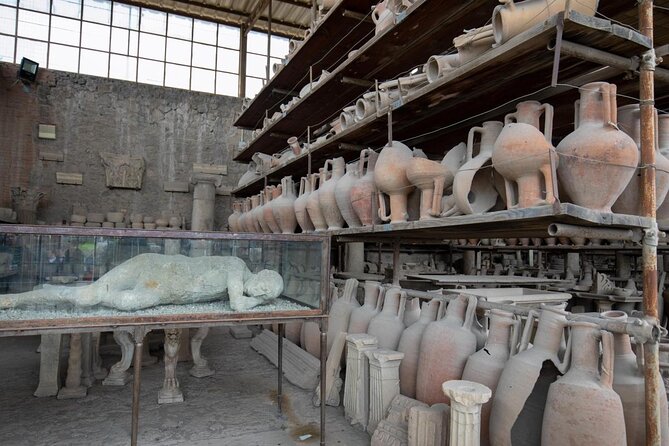
- The victims: petrified bodies, handled with care
- Price and value: is $82.91 worth it for Pompeii in two hours?
- Crowd control and guide style: what you should look for
- Practical tips that make this Pompeii walk easier
- Who this tour is best for
- Should you book Pompeii Small Group Guided Tour with Skip-the-line Admission?
- FAQ
- How long is the Pompeii small group guided tour?
- What is the price per person?
- Is the tour in English?
- How many people are in the group?
- Is admission included?
- Is it flexible if plans change?
Key highlights that make this Pompeii tour work
- Small group size (max 15): easier crowd control and more room for questions.
- Skip-the-line focus: you spend time seeing, not waiting.
- Roman daily life included: thermopolia and pistrinum aren’t just names on a sign.
- Homes you can picture: you’ll visit celebrated residences like the House of Menander and the House of the Faun.
- Via dell’Abbondanza + Forum: Pompeii’s street grid and civic center, explained clearly.
- A respectful focus on victims: petrified bodies are treated as part of the story, not a shock stop.
Skip-the-line admission: how it changes your first hour
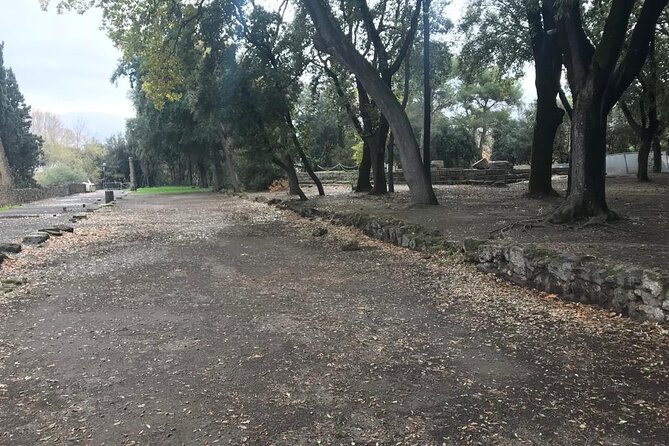
Pompeii is gorgeous, and also busy. The biggest advantage of this tour style is that it starts you off with skip-the-line admission, so your mental energy goes into the site instead of the entry queue. Even if you’re the type who loves museums, two hours disappears quickly once you’re standing still.
Small groups help here, too. With up to 15 people, you’re more likely to keep moving at a steady pace, which matters in a place where the walking paths tighten up around the most photographed buildings.
You can also read our reviews of more guided tours in Pompeii

The best part of a 2-hour plan: it keeps Pompeii from feeling random
Pompeii can feel like a scavenger hunt if you go alone. This tour avoids that by moving through the site with an “essentials first” approach, hitting major public spaces early and then layering in daily life and domestic life. The timing isn’t trying to cover everything; it’s trying to make the highlights understandable.
Over the course of the walk, you’ll bounce between different types of spaces:
- public life (theatres, temples, thermal baths)
- street life (the main shopping street and the Forum)
- private life (famous houses)
- the eruption’s human cost (the petrified victims)
That mix is what keeps the story from turning into a list of names.
Pompeii’s public buildings: theatres, temples, thermal baths, and why they matter
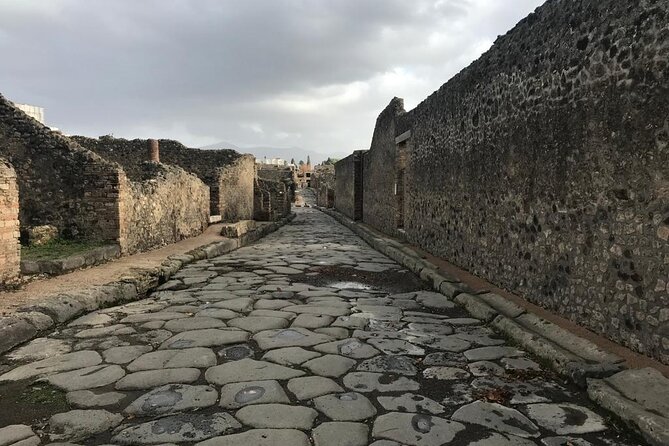
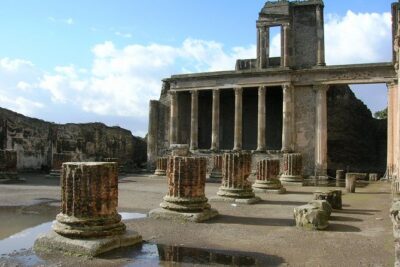
The tour centers on the most important public buildings, which is exactly what you want in a short visit. You’re not just looking at ruins—you’re learning how Romans used shared spaces for entertainment, worship, and routine.
Theatres
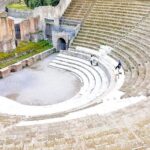
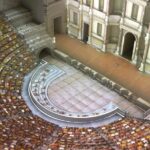
A theatre in Pompeii wasn’t only for plays. It also reflected status, civic pride, and the way communities gathered. Even from a ruin, you can usually spot how the seating shaped sightlines and movement.
Temples
Temples help you understand why the city’s identity wasn’t only practical. Religion sat right inside daily life, and the big temple spaces reinforce how public belief was designed to be seen and experienced.
You can also read our reviews of more tours and experiences in Pompeii




Thermal baths
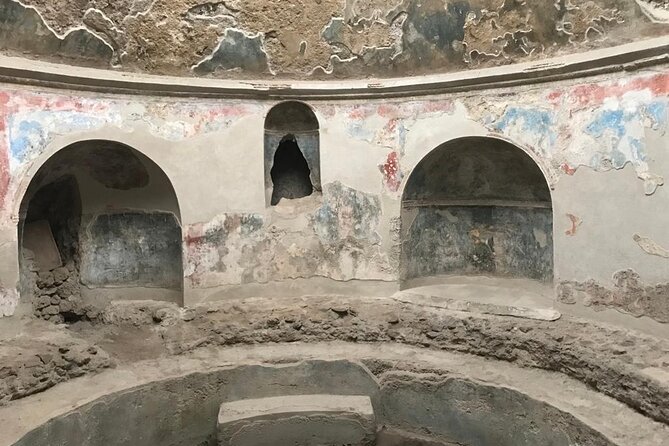
Thermal baths are a smart stop because they connect to real routine. These weren’t just “bathrooms,” they were places to socialize, relax, and take care of hygiene. When your guide points out features linked to bathing and circulation, the site starts to feel like a functioning city rather than an outdoor warehouse of stone.
Roman shops on the route: thermopolia and pistrinum
Pompeii’s ruins can be impressive, but the little stuff is what makes them believable. This tour pays attention to traditional Roman shops like the thermopolia and the pistrinum, which are the ancestors of fast food and bakery culture.
- Thermopolia: think hot, ready-to-eat meals served fast. It’s the kind of place where you’d grab lunch, keep walking, and not turn it into an event.
- Pistrinum: bakery production and sales. It gives you a sense of how food was made and distributed right inside the city.
If you like travel that’s more than big monuments, this section is one of the best reasons to book a guide. It turns “I saw a stall” into “I understand what that stall did.”
Via dell’Abbondanza and the Forum: Pompeii’s main street and civic heart
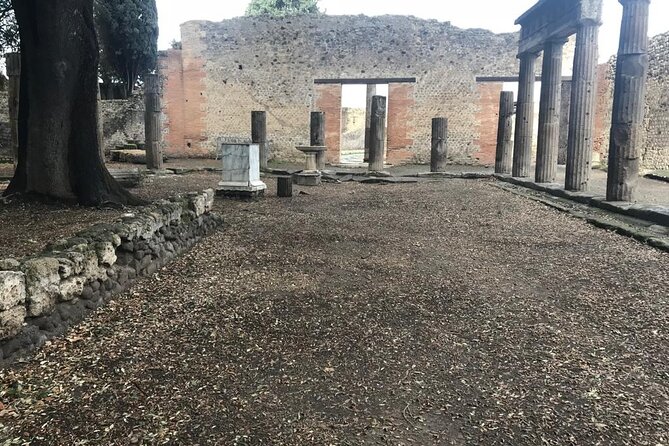
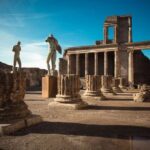
You’ll walk down Via dell’Abbondanza, Pompeii’s main street, and then spend time at the Forum, the main town square. This is where Pompeii shifts from individual buildings into a living layout.
On Via dell’Abbondanza, the big lesson is flow. You can see how people moved between shops, entrances, and public areas. Once you grasp that street logic, the ruins feel less random.
At the Forum, you get the civic center—the place where power, community life, and public gatherings all made an appearance. A good guide points out what makes a square function as a hub, not just a pretty open space.
Famous houses: Menander, Faun, Vettii, and Caecilius Iucundus
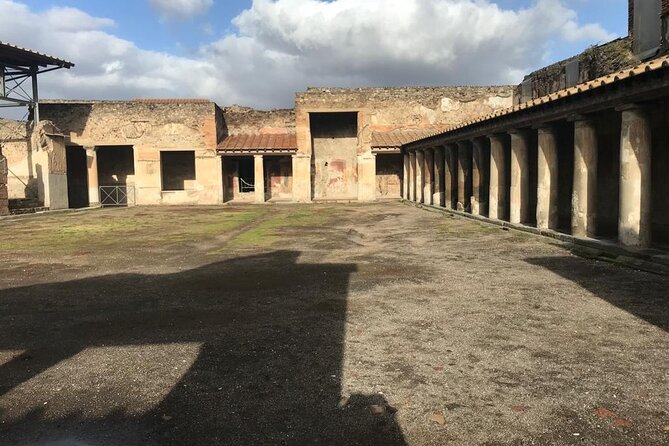
One of the most satisfying parts of this tour is that it doesn’t stop at “here’s a doorway.” You’ll visit well-known residences, including the House of Menander and the House of the Faun, plus the House of the Vettii and the House of Caecilius Iucundus.
What makes these house visits especially valuable on a guided walk is interpretation. You’re learning what you’re looking at:
- how rooms connect
- how a household arranged space for daily use
- how wealth or social standing showed up in layout and decoration
Homes like these are famous for a reason, but in a two-hour tour, the best value is how your guide helps you connect architecture to life. You leave with mental pictures that stick.
The “red-light district” wall paintings: uncomfortable, but part of the story
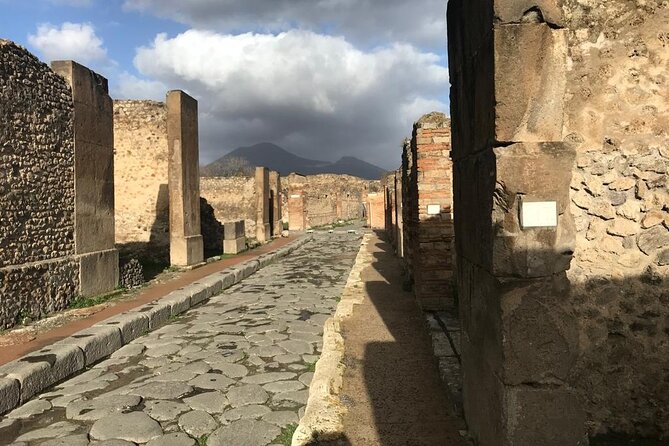
Yes, you’ll see the area often described as Pompeii’s red-light district, including its suggestive wall paintings. The key is tone. In a good tour, this doesn’t become tabloid material—it becomes evidence of everyday human behavior and how openly Romans portrayed sexuality and commerce on walls.
This is also one of those moments where a guide’s guidance helps you look without getting lost. You’re more likely to notice context—where the paintings were, how they framed space—so it doesn’t feel like a random detour.
The victims: petrified bodies, handled with care
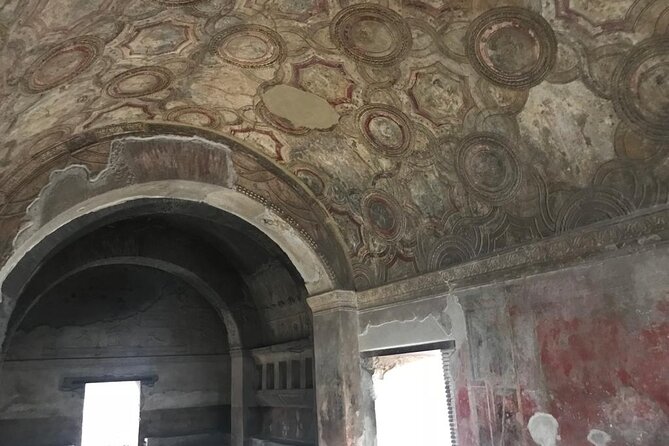
A special focus is put on the poor victims of the eruption, including petrified bodies. Pompeii is famous for visuals, but the weight of this part of the tour is different. This is the moment where you’re reminded that the ruins are not just an archaeological playground—they’re the remains of real people.
Because the tour includes this focus, you’ll get a fuller arc instead of stopping at “cool buildings.” If you’re the type who appreciates history with emotion, this section gives your visit a spine.
If you’re sensitive to disaster sites, you might want to decide in advance how much time you want to spend in that kind of space. The advantage of a guided group is that you’re not alone trying to process everything on your own.
Price and value: is $82.91 worth it for Pompeii in two hours?
At $82.91 per person, this tour isn’t the cheapest way into Pompeii. The value comes from three things working together:
- a tight 2-hour plan
- a small group limit that keeps the pacing sane
- guided interpretation that makes the site make sense quickly
If you’re short on time, a guided route often pays off because you’re not spending energy figuring out what’s worth your legs. Skip-the-line entry is another value driver; queues can eat the whole “fast visit” idea.
One practical note: the tour summary indicates admission is included, and it’s marketed as skip-the-line. Still, you should verify what your specific voucher includes, especially if your tour’s group size changes close to departure. In one reported scenario, additional cost came up when the tour didn’t run the way expected, so don’t assume everything is identical for every booking.
Crowd control and guide style: what you should look for
The strongest praise tied to this experience is how the guide handles attention and pacing. One guide named Roberta stood out for making history interesting and for helping people avoid the biggest crowd pressure points.
That matters more than you might think. Pompeii’s busiest areas can turn your visit into a slow-moving line of shoulders. When your guide times movements and chooses small shifts in route, you get to actually see things instead of watching other people’s backs.
When you book, I’d treat it like this: arrive ready to walk, listen, and ask questions. If you want a tour where you can stop for context and photos, this smaller-group format is designed for it.
Practical tips that make this Pompeii walk easier
Pompeii is uneven. Even with a guide, you’ll be walking through archaeological terrain, so comfortable shoes are not optional.
Also, plan your expectations for photos. A site this popular always has angles everyone wants. If your guide helps you avoid the worst crowd pockets, you’ll get better shots with less stress.
Finally, if you’re traveling in English, this is a good fit because the guide-led explanations are built for understanding on the move. You’ll get more out of the ruins if you can follow the story instead of piecing it together from signage.
Who this tour is best for
This is the right kind of tour if:
- you’re a first-timer in Pompeii and want the highlights with meaning
- you have a tight time window and want a guided route that moves
- you like your history grounded in everyday life, not only temples and trophies
- you prefer smaller groups where conversation is possible
It can also work well if you’re traveling with family members who can manage walking through a historic site, since the tour is described as most travelers can participate.
If you’re the type who loves wandering without structure for hours, you might find two hours a little short. But if your goal is a smart introduction, this tour is built for that job.
Should you book Pompeii Small Group Guided Tour with Skip-the-line Admission?
I’d book it if you want a time-efficient Pompeii experience that gives you more than “I stood in front of a ruin.” The combination of skip-the-line entry, small group size, and a route that mixes public buildings, daily shops, famous homes, and the eruption’s human side is a strong formula.
I would also book it with one homework step: check your voucher for what admission covers for your date. When a tour runs close to capacity rules, details can change, and a small mismatch is what creates the kind of disappointment that people talk about afterward.
If you want Pompeii that feels organized and human—rather than overwhelming—this is a solid choice.
FAQ
How long is the Pompeii small group guided tour?
It’s listed at about 2 hours.
What is the price per person?
The price is $82.91 per person.
Is the tour in English?
Yes, the tour is offered in English.
How many people are in the group?
The maximum group size is 15 travelers.
Is admission included?
The tour information indicates an admission ticket is included, but it’s smart to confirm the details on your voucher.
Is it flexible if plans change?
You can cancel up to 24 hours in advance for a full refund. Confirmation is received at the time of booking.