REVIEW · POMPEII
Pompeii walking tour
Book on Viator →Operated by Yellowsudmarine Art Food Tours · Bookable on Viator
Pompeii is big. A guide makes it readable. On this private Pompeii walking tour with Yellowsudmarine Art Food Tours, I really like the plan that helps you skip long lines and the way the guide connects major ruins to everyday life in 79 AD. The trade-off is the total time is about 2 hours, so you’ll need to choose priorities since you won’t cover every corner of the park.
You can pick a start time that fits your day, and the pace stays flexible for your group. I also like the practical attention to photo spots and details you might miss if you’re just wandering. One thing to watch: one review flagged a guide who seemed distracted and a slower start, so if you want a specific focus, it helps to be ready with your questions from the get-go.
In This Review
- Key points before you go
- Pompeii goes from ruins to a place to live
- Entering Pompeii with a skip-the-line plan
- The 2-hour walking pace that actually fits a trip
- Stop 1: Pompeii Archaeological Park highlights you’ll remember
- The city layout: Forum, Amphitheatre, and everyday life
- The catastrophe story (and why it’s talked about early)
- Photo points: worth the extra attention
- How the guide experience shapes the whole visit
- Price and value: what $240.28 per group buys you
- Who this Pompeii tour fits best
- Practical tips to make the most of your 2 hours
- Should you book this Pompeii walking tour?
- FAQ
- How long is the Pompeii walking tour?
- Is the Pompeii tour offered in English?
- Where does the tour start?
- Is Pompeii admission included in the price?
- How big is the private group?
- What’s the cancellation policy?
Key points before you go
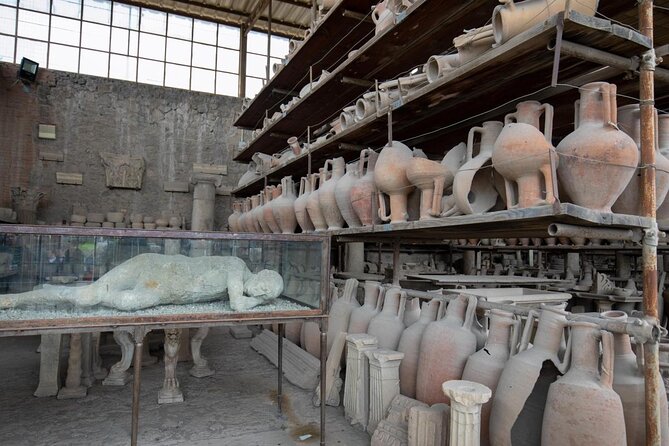
- Private group, up to 10: you walk with only your group, no crowd herding.
- Skip-the-lines setup: the tour is guaranteed to help you avoid the longest queues.
- Two-hour hit list: Forum, Amphitheatre, and private houses get the spotlight without dragging.
- Photo points on purpose: you get locations and angles you may not spot on your own.
- Questions are encouraged: the format is built for asking, not just listening.
- Smart casual dress code: plan outfit basics around standing and walking, not museum formalities.
Pompeii goes from ruins to a place to live
Pompeii isn’t just stone walls. It’s a whole city layout that suddenly makes sense once someone points out how people moved through it. The big draw here is that you’re not trying to “figure it out” alone while the park keeps expanding in front of you.
I like that the tour is built around the parts you actually want to recognize. You’re not stuck only in the most dramatic structures; you also get the human-scale angle—what private homes were like, and what it meant to live in a city that felt modern for its time.
The context matters. Pompeii was covered by ashes from an eruption on 24 October 79 AD, and the city stayed buried until it was brought to light gradually starting in the 18th century. That long “pause” is exactly why the ruins feel so sharp and why a guided approach makes such a difference.
You can also read our reviews of more walking tours in Pompeii



Entering Pompeii with a skip-the-line plan
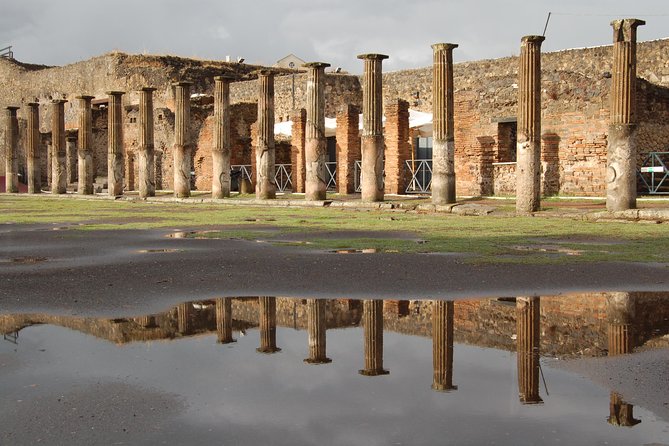
Meeting is at Piazza Esedra, 80045 Pompei NA, Italy, and the tour ends back at the same meeting point. That simple loop matters because Pompeii can feel like a choose-your-own-adventure maze. Starting with a fixed rendezvous helps you keep your day on track.
The other practical win is that the tour is designed to guarantee you skip the long lines. At the same time, admission to the park is not included. So what you’re paying for is the guided experience plus that streamlined entry approach, not the ticket itself.
How that affects you:
- If you’re the kind of traveler who hates waiting, this arrangement can save real vacation time.
- If you’re already a calm line-waiter, the value shifts more toward interpretation and pace. Either way, you still get a guide to keep the visit from turning into random walking.
The tour uses a mobile ticket, so you’re not scrambling for paper or counting off the wrong papers at the entrance.
The 2-hour walking pace that actually fits a trip
Two hours in Pompeii is not long, but it’s not a toy time either. You can see major zones and still have enough breathing room to absorb what you’re looking at instead of sprinting the whole way.
The way the tour is described, you can set a comfortable pace for your group. That’s a subtle quality-of-life factor. In Pompeii, the best ruins are the ones you can stop at, look from multiple angles, and ask one more question—without feeling like you’re slowing everyone down.
Here’s what that time window is best at:
- Hitting the iconic spaces (the ones that help you understand the city layout).
- Getting the “why this matters” story behind the stones.
- Seeing the private home elements that make Pompeii feel less like a theme park and more like a real lived-in place.
What you should not expect is full coverage of the archaeological park. This is a highlights-oriented tour. If your dream day is to do every major site plus wander quietly for hours, you’ll likely want a longer tour later or plan a separate self-guided block after.
Stop 1: Pompeii Archaeological Park highlights you’ll remember
All of the action is at Pompeii Archaeological Park, and the tour frames it around how the city worked before the eruption froze it in place.
The city layout: Forum, Amphitheatre, and everyday life
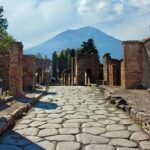
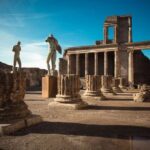
The Forum is the kind of site where a guide helps you get your bearings fast. Once you understand that this is where public life would have happened, the rest of the structures start to feel connected. Instead of looking at columns and walls, you start seeing movement: where people would gather, how they’d pass through, and how the city organized itself.
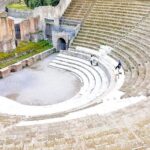
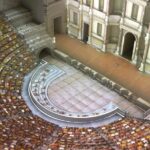
Then there’s the Amphitheatre, the big visual payoff for many visitors. The best part of doing it with a guide in a short timeframe is not just the view—it’s the explanation that puts the building in context. You’re not guessing what role it played. You’re being shown why it mattered in a society that was, in many ways, more familiar than you expect.
And crucially, the tour includes private houses as part of the story. That’s where Pompeii stops feeling like a single dramatic moment and starts feeling like a community. The guide’s emphasis on the habits of an incredibly modern-feeling society (for its era) helps you connect the dots between public spaces and private daily routines.




The catastrophe story (and why it’s talked about early)
Pompeii’s eruption is the anchor: ashes fell on 24 October 79 AD, and the city remained buried until the 18th century when excavation began in stages. A good guide doesn’t just repeat the date. They use that knowledge to explain why you can still see the physical places where life took place.
That framing matters because Pompeii can otherwise feel like “cool old stuff.” With the story in place, it becomes something else: a preserved snapshot. It also explains why certain details survive when they would normally vanish.
Photo points: worth the extra attention
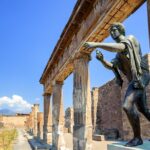
One of the tour highlights is that you’ll find impressive photo points you might miss if you’re on your own. In Pompeii, that can be as simple as standing in the right place to get a recognizable composition—like a dramatic sweep of a public space or a view that includes more than just a close-up wall.
The practical value: you leave with photos that tell the story, not just photos of ruins.
How the guide experience shapes the whole visit
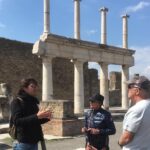
The tour is a private tour, which means you only share the space with your group. That matters a lot in Pompeii. You want a guide who can adjust when someone asks a question, lingers at a photo point, or wants a little extra context.
The reviews that score highest point to strong interpretation and patience. One positive review called out excellent knowledge and the ability to hit highlights even with limited time. That’s exactly the sweet spot for a 2-hour format: you get guided value fast, without feeling like you’re paying for wandering.
There’s also a constructive note from a lower-score review: the guide seemed distracted by a phone during the experience and didn’t seem prepared, asking what people wanted to see right as the tour started. That doesn’t automatically mean it will happen on your day, but it’s a useful reminder for you: arrive with a few priorities in mind (Forum vs. Amphitheatre vs. private houses), so you can steer the conversation immediately.
If you care about a tailored experience, I’d treat this like a conversation. Come ready with 1–2 topics you want explained. That’s how you get the best “ask questions unselfconsciously” experience the tour is designed for.
Price and value: what $240.28 per group buys you
This tour is priced at $240.28 per group, up to 10 people. The value depends on your group size, so do the quick math.
- If you fill it with 10 people, you’re looking at roughly $24 per person.
- If you go as a smaller group, the per-person cost rises, but you’re still paying for private guiding and time saved on queues.
What you’re really buying isn’t just a guide’s presence. You’re buying:
- a structured highlights route (Forum, Amphitheatre, private homes),
- the guaranteed skip-the-lines approach,
- and a paced experience you can ask questions through.
That combination tends to be worth it if your Pompeii day is short or if the park feels overwhelming to you. It’s also a good fit if you prefer controlling your own tempo instead of managing a larger group dynamic.
Who this Pompeii tour fits best
This is a smart choice for:
- First-timers who want the big Pompeii anchors without spending half the day trying to decode the layout.
- Small groups who want a private format and the ability to ask questions freely.
- Travelers who care about understanding daily life, not just snapping photos.
It may be less ideal if:
- You’re aiming to cover the entire park in one go.
- You want a very independent, self-led experience with no guide steer at all.
Also note the basics: it’s offered in English, and a multi-lingual guide may operate it. Children must be accompanied by an adult, and most travelers can participate. Dress is smart casual.
Practical tips to make the most of your 2 hours
Even with a guide, Pompeii works best when you show up ready to focus. Since the tour is about two hours, I’d plan your expectations around learning the city’s main threads: public life, entertainment, and private households.
Bring a simple mental checklist:
- One place you want to understand deeply (Forum, Amphitheatre, or a private home area).
- One question you’d actually ask if you had 10 minutes with a local expert.
- A plan for photos so you don’t waste time hunting.
And because the tour ends back where it starts, you’ll likely find it easier to connect this visit with the rest of your day in Pompeii. It’s a tidy block you can slot into a real itinerary.
Should you book this Pompeii walking tour?
I’d book it if you want a guided Pompeii experience that respects your time. The private group setup, the highlight-focused route, and the guaranteed skip-the-lines approach are the key reasons to choose it—especially if you only have a couple of hours to give the archaeological park.
I’d think twice if your goal is exhaustive coverage. Two hours in Pompeii is best used for recognition and context, not for checking every site off a list.
FAQ
How long is the Pompeii walking tour?
It runs for about 2 hours.
Is the Pompeii tour offered in English?
Yes, it is offered in English. It may also be operated by a multi-lingual guide.
Where does the tour start?
The meeting point is Piazza Esedra, 80045 Pompei NA, Italy.
Is Pompeii admission included in the price?
No. The admission ticket is not included.
How big is the private group?
It’s a private tour, and the price is per group of up to 10 people. Only your group participates.
What’s the cancellation policy?
You can cancel for a full refund if you do it at least 24 hours before the experience’s start time. Free cancellation applies, and the cut-off is based on local time.