REVIEW · POMPEII
Guided Tours of Pompeii Excavations Historical and Cultural Itineraries
Book on Viator →Operated by Bruno Pisano · Bookable on Viator
Pompeii stops feeling like rubble and starts speaking. This 4-hour guided walk takes in the Villa dei Misteri and its famous Dionysian fresco, then frames what you see with a historiographical and cultural lens. It’s not just monuments for photos; it’s a guided interpretation of how this Hellenistic city lived, worshiped, and traded across the Mediterranean.
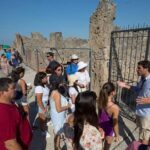
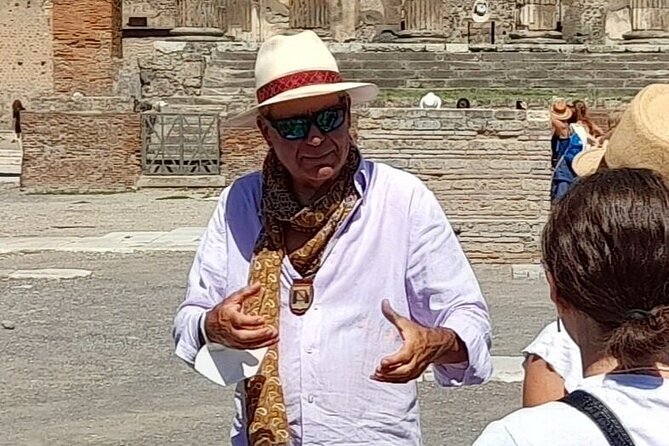
I especially like the small-group format (max 15), which keeps the pace human and makes it easier to ask questions as the guide connects art to daily life. And I like how Bruno Pisano, an archaeology-history-philosophy specialist, steers you through both elite homes and public space so Pompeii feels like a living place before it became a sealed memory.
One consideration: the big sights add up in time. With multiple stops and a set duration, you may not get long linger sessions inside every room, and entrance tickets aren’t included (also no snacks), so you’ll want to plan ahead to avoid feeling rushed.
In This Review
- Key takeaways before you go
- Pompeii, the Hellenistic city behind the Roman myth
- The real value: a 4-hour plan that hits the major art without stalling
- Meeting point and timing that won’t waste your morning
- Stop 1: Pompeii Archaeological Park and the suburban baths (spa life, not spa posters)
- Stop 2: Tempio di Venere and the sailors’ goddess—plus a modern art twist
- Stop 3: The Basilica as Pompeii’s public power center
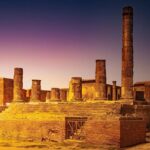
- Stop 4: Temple of Apollo—Greek design with bronze myth figures
- Stop 5: Foro de Pompeya—where commerce, administration, and religion meet
- Stop 6: Terme del Foro and the “wellness” logic of the ancients
- Stop 7: Casa del Fauno—Hellenistic palace scale and a Battle of Issus mosaic
- Stop 8: Casa dei Vettii—fourth Pompeian style and playful myth with sharper edges
- Stop 9: Casa degli Amorini Dorati—Isis shrine, Lararium, and mirrors that still feel strange
- Stop 10: Villa dei Misteri—Dionysian fresco as the emotional centerpiece
- Price and tickets: what you’re paying for, and what you still need to budget
- Who this tour fits best
- Should you book this Pompeii tour with Bruno Pisano?
- FAQ
- How long is the Pompeii guided tour?
- What is included in the tour price?
- Do I need to buy the entrance ticket separately?
- Where does the tour start, and what time?
- How big is the group?
- Is cancellation free?
Key takeaways before you go
- Villa dei Misteri is the must-see anchor: one stop is devoted to the Dionysian fresco and its exceptional state of preservation.
- Max 15 people helps you actually hear the explanations: it’s the difference between a stroll and a lecture.
- A guide who links archaeology to culture: Bruno Pisano mixes facts with interpretation in a way that stays understandable.
- You’ll see both public buildings and private houses: basilica/temples on one hand, domus mosaics and wall paintings on the other.
- Thermal baths and cult sites keep the day-to-day real: Pompeii isn’t only temples and temples-with-temples.
Pompeii, the Hellenistic city behind the Roman myth
Most people come to Pompeii expecting a Greek or purely Roman story. What makes this tour feel different is that it positions Pompeii as Hellenistic—a commercial and industrial hub with deep connections toward Asia Minor and beyond. You end up understanding why Greek-style design, Mediterranean trade, and local religious practice all show up together in the stones.
That matters because it changes how you read the ruins. Instead of seeing a set of unrelated buildings, you start to connect the dots: who used these spaces, how people gathered, and why certain cults were worth painting, building, and honoring.
You can also read our reviews of more guided tours in Pompeii

The real value: a 4-hour plan that hits the major art without stalling
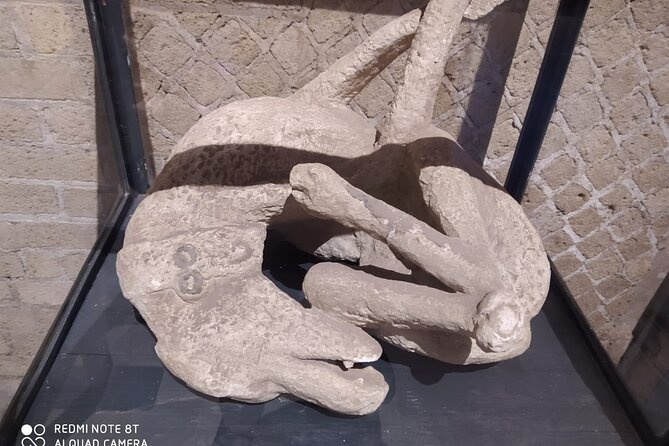
You get about 4 hours 10 minutes to cover 10 stops, with short guided stays at each. That structure works well if you want an informed overview that doesn’t turn into a full-day marathon.
Because it’s a small group of up to 15, the guide can keep the walking flow steady and still answer questions. That’s a practical win at Pompeii, where it’s easy for larger groups to stretch time thin and leave you stuck behind someone’s camera.
Meeting point and timing that won’t waste your morning
The tour starts at 9:30 am at Porta Marina audioguide official (Via Villa dei Misteri, 2, 80045 Pompei NA, Italy). The route ends back at Via Villa dei Misteri, 2.
Starting at a clear morning hour is helpful because Pompeii is big, signage can be confusing, and crowds grow. Even if you don’t love early starts, you’ll appreciate the time pressure being managed by a guide and a set itinerary length.
Stop 1: Pompeii Archaeological Park and the suburban baths (spa life, not spa posters)
You begin at the Pompeii Archaeological Park and head to the suburban spas. This is where Pompeii gets very human. The frigidarium (the cold-water room) is described with a nymphaeum built with glass-paste, plus polychrome and glazed tilework. There’s also a swimming pool frescoed with Nilotic subjects, which is a classic example of how Roman-world taste borrowed images from far away.
Even if you know nothing about ancient bathing rituals, you can feel what the guide is pointing at: these weren’t just hygienic spaces. They were social spaces—places to meet, unwind, and show off taste through decoration.
One practical tip for this kind of stop: look up. Floor-to-ceiling details get missed when you’re rushing toward the next stop.
Stop 2: Tempio di Venere and the sailors’ goddess—plus a modern art twist
Next is the Tempio di Venere on a terrace dominating the surrounding area. This temple ties to the imperial cult and the goddess associated with sailors, which gives the building a political and maritime meaning in the same breath.
A particularly eye-catching note here is a bronze statue by the Polish artist Igor Mitoraj, depicting Daedalus. Even though it’s a modern artwork placed in an ancient context, it helps you connect the dots between myth, identity, and how Pompeii’s religious imagery wanted to tell stories.
If you’re the type who likes architecture but gets bored by pure description, this stop is a good early reset. You get view lines (the terrace position) and symbolism (Venus, sailors, imperial authority).
You can also read our reviews of more historical tours in Pompeii
Stop 3: The Basilica as Pompeii’s public power center
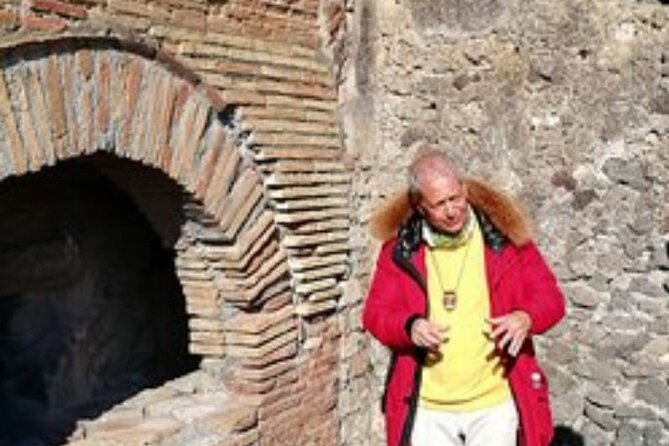
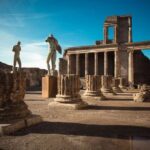
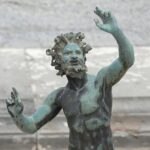
The Basilica of Pompeii is the kind of building that makes you straighten your posture. It’s described as Pompeii’s largest public building, with three naves, and with a form that anticipates later Christian basilica typology.
This is a strong stop for understanding civic life. “Tribunal” isn’t abstract here. You can imagine people arriving for decisions, disputes, and administrative business in a monumental room designed for authority.
If you like architecture that explains social structure, don’t skim this. Even a quick look at the spacing of naves helps you picture how people would have moved and gathered.
Stop 4: Temple of Apollo—Greek design with bronze myth figures
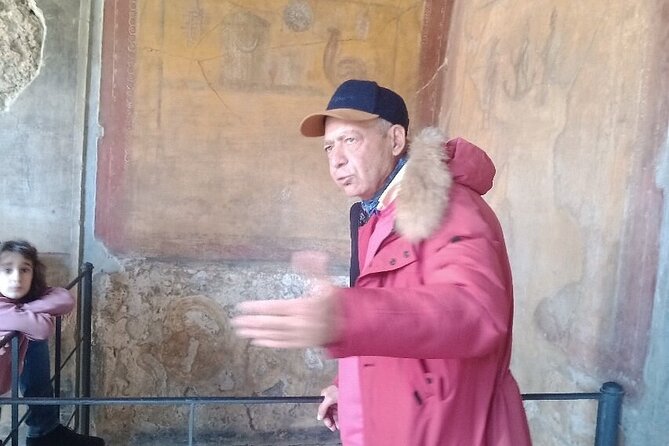
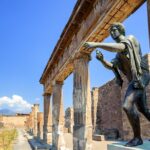
The Temple of Apollo is presented as ethical and prophetic worship. Architecturally, it’s described as magnificent with Greek design, and it also features two bronze statues of Apollo and Diana dominating the area.
This stop helps you see how Pompeii blended cultural influences. The guide’s framing pushes you to recognize that worship here wasn’t only local folklore. It used visual language—myth figures, sculptural presence, and temple design—that traveled through the Mediterranean.
One consideration: because Apollo and Diana are visually commanding, you might end up staring at the statues and miss smaller architectural context. Try to take five seconds to look at the whole layout before you zoom in.
Stop 5: Foro de Pompeya—where commerce, administration, and religion meet
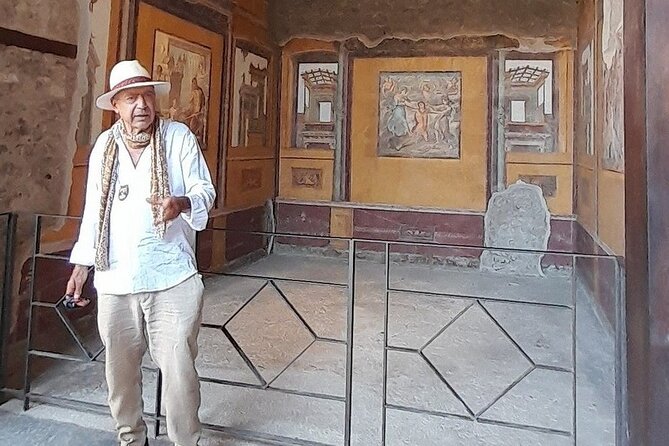
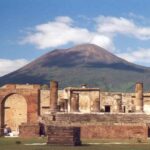
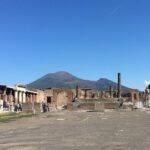
The Forum of Pompeii is described as Pompeii’s commercial, administrative, and religious center, with an urban complex of majestic grandeur. It’s dominated by the big temple complex dedicated to Jupiter, Juno, and Minerva.
This is the hub stop—where you start to understand how a city organizes itself. If you only remember one thing from the forum, remember this: in Pompeii, civic identity wasn’t separated from religion or from business. The same space could hold public decisions, economic movement, and sacred presence.
If you’re hoping for a quiet moment here, plan for movement. Forums were meant to be active, and the tour flow keeps you in that reality.
Stop 6: Terme del Foro and the “wellness” logic of the ancients
Then you hit the Terme del Foro, essentially a wellness center and SPA feel for the ancient community. The guide points you toward the tepidarium with stuccoes from the Neronian school, plus a grand alabaster labrum in the calidarium described as Egyptian in origin.
This is one of the most valuable stops for seeing Pompeii as connected. Egyptian materials, Neronian decorative styles, and local structure all point outward, showing taste and trade routes you can actually visualize.
If you’re wondering what kind of “vacation” ancient Pompeians had, this stop gives you a clue: comfort was engineered, and beauty was part of bodily routine.
Stop 7: Casa del Fauno—Hellenistic palace scale and a Battle of Issus mosaic
The Casa del Fauno is the largest palace house in all of Pompeii, described as Hellenistic in origin. It’s a key stop because it combines scale with high-impact art.
The highlight is an excellent copy of a famous mosaic from the Roman world: Battle of Issus (333 BC), depicting Alexander the Great against Darius III of Persia. Even if you don’t know the battle details, the image choice matters. It’s political art. It announces power, knowledge, and alignment with major historical narratives.
Don’t rush this room. This is the kind of artwork where a slower look helps you “read” the scene.
Stop 8: Casa dei Vettii—fourth Pompeian style and playful myth with sharper edges
Next is Casa dei Vettii, noted for frescoes in the fourth Pompeian style. This stop includes the famous Priapus and a majestic hall with lots of Cupids engaged in working activities.
The guide’s approach is particularly helpful here. The art looks playful at first glance, but it’s also loaded with cultural meaning—desire, protection, status, and myth made visible on walls.
You’ll also see mythological paintings including Daedalus and the Minotaur. That’s a great pairing with the Daedalus reference you saw earlier at Tempio di Venere, because it makes the myth feel like a theme across space rather than a random decorating choice.
Stop 9: Casa degli Amorini Dorati—Isis shrine, Lararium, and mirrors that still feel strange
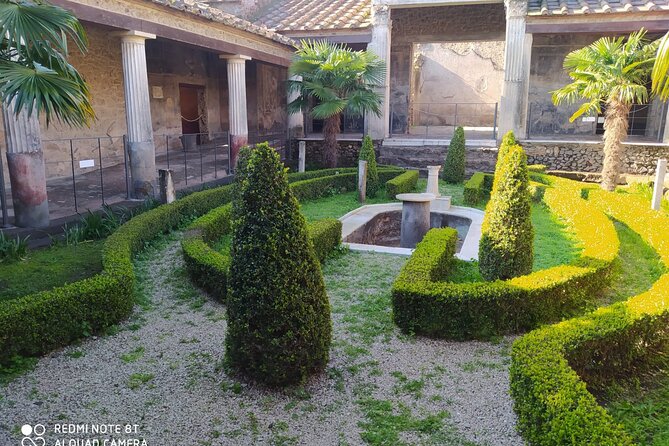
The Casa degli Amorini Dorati is presented as a perfectly preserved domus with a Rhodian peristyle. One of the standout details is obsidian mirrors, which look striking even after all these centuries.
More importantly, you get what turns this house into a story about belief: there’s a shrine dedicated to the cult of Isis and a Lararium, the household protective gods. There are also frescoes tied to the Trojan War.
This stop is where Pompeii becomes personal. You start realizing homes weren’t only for sleeping and eating. They were stages for identity: which deities you honored, which myths you admired, and what kind of household protection you believed in.
Stop 10: Villa dei Misteri—Dionysian fresco as the emotional centerpiece
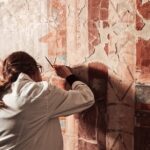
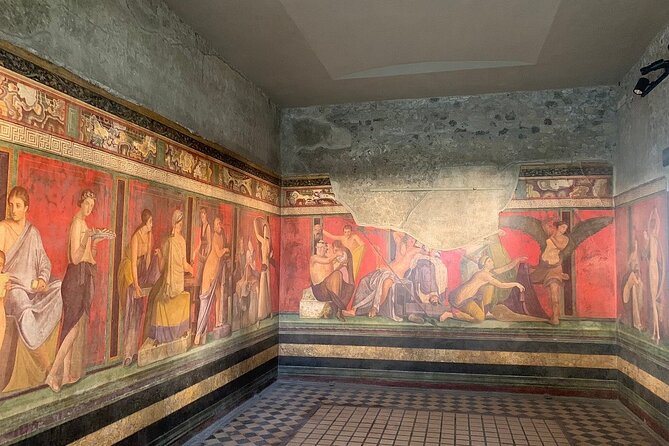
The final stop is the Villa dei Misteri, famous for its Dionysian fresco from the first century BC. It’s described as unique in the world for its state of conservation, which is a big deal. When a work is that well preserved, you can actually study rather than just admire from a distance.
This is also where the tour’s cultural framing clicks. The Dionysian mystery cult connection (and the broader Mystery cult context the guide references) gives you a sense of how religious experience could be intense, symbolic, and private—something you could participate in through ritual and image.
If you care about art, this is the moment you’ll be glad the rest of the itinerary set you up with context first.
Price and tickets: what you’re paying for, and what you still need to budget
At $57.62 per person for a 4-hour 10-minute guided tour, the price is reasonable if you value a specialist guide and a tight route that hits major houses, temples, and one of Pompeii’s most famous frescoes.
What matters is what’s not included:
- Entrance ticket to the Pompeii Ruins isn’t included
- Snacks aren’t included
That’s not a deal-breaker, but it affects your planning. If you want a smoother visit, make sure you have the ruin entry handled and bring water or a snack. Since the itinerary is packed, getting hungry at hour two is no one’s idea of a good time.
Who this tour fits best
This is a smart match for you if:
- you want a guided overview that still spends time on standout houses and frescoes
- you like interpretation, not just facts
- you want smaller-group attention instead of being swallowed by a crowd
- you’re traveling with older kids or teens, since the guide’s style is described as mixing history with clearer, modern references
It may be less ideal if you prefer long, slow wandering or you need extended time inside every room. The tour is designed to cover a lot, so you’ll be moving steadily.
Should you book this Pompeii tour with Bruno Pisano?
I’d book it if you want the best balance of art + archaeology + cultural meaning in a guided format that doesn’t eat your whole day. The inclusion of Villa dei Misteri and the steady sequence through baths, temples, the forum, and multiple domus is a strong combination.
Also, the small group cap of 15 people is a real quality lever here. Pompeii is a tough place to hear explanations unless the group is controlled.
If you can handle a packed schedule and you’re ready to budget for the separate entrance ticket, this is the kind of tour that makes Pompeii feel organized instead of overwhelming.
FAQ
How long is the Pompeii guided tour?
It lasts about 4 hours 10 minutes.
What is included in the tour price?
You get the guide and assistance for the full duration, and the group is kept small (maximum 15 people). The tour also uses a mobile ticket.
Do I need to buy the entrance ticket separately?
Yes. Entrance ticket to the Pompeii Ruins is not included.
Where does the tour start, and what time?
It starts at Porta Marina audioguide official, Via Villa dei Misteri, 2, 80045 Pompei NA, Italy at 9:30 am.
How big is the group?
Maximum 15 travelers per guide.
Is cancellation free?
Yes, you can cancel for a full refund. You must cancel at least 24 hours before the experience’s start time.