REVIEW · POMPEII
Pompeii Skip-the-Line Entry & Guided Tour with a certified guide
Book on Viator →Operated by Pompei Tour Organizer_Tempio Travel · Bookable on Viator
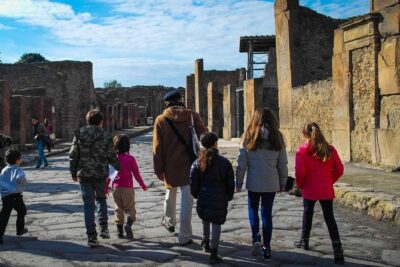
Pompeii makes more sense with a guide. This 2-hour outing pairs express entry with a certified pro so you don’t wander through unmarked ruins like a tourist with a map and no context. I especially like how the route leans into daily life—politics, meals, bathing, and domestic luxury—so it feels like a place, not just a collection of walls.
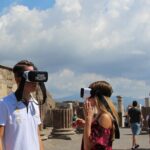
You’ll also get headsets on larger groups, which helps when the site is loud (and your guide is moving you forward at a steady pace). The one real consideration: the tour is time-tight, and Pompeii involves uneven ground and sun, so you may wish you had a longer window if you like slow photo stops.
In This Review
- Key things that make this tour worth it
- Pompeii is huge. This is the right kind of organized
- Express entry: what it gets you (and what it doesn’t)
- Finding the meeting point: the “don’t get lost” part
- Stop at the Foro: the political heart you can actually picture
- What you should look for
- Macellum: the meat-and-fish market side of Pompeii
- Forum Baths (Terme del Foro): split by gender, shaped by function
- Two domus stops: Casa del Fauno and Casa dei Vettii
- Casa del Fauno: the big aristocratic house
- Casa dei Vettii: mosaics, and also the intimate side
- Via dell’Abbondanza: the street that connects the big sights
- Thermopolium Regio VI, Insula VIII, 8: the ancient fast food
- Pacing and timing: how to enjoy the 2 hours you’re given
- Group size, listening comfort, and the headset advantage
- Who this tour is best for
- Should you book this Pompeii skip-the-line guided tour?
- FAQ
- What’s included in the ticket price for this tour?
- Does this tour include admission tickets for Villa of Mysteries?
- How long is the guided portion?
- Where do I meet the group?
- What time should I arrive before the tour starts?
- What language is the tour offered in?
- How big is the group?
- Are headsets provided?
- Is this tour suitable for children?
- Is the tour accessible by public transportation?
Key things that make this tour worth it
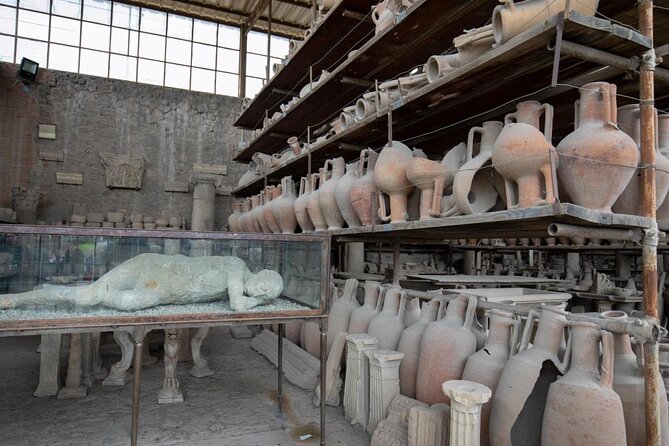
- Skip-the-line express admission so you spend less time stalled at the entrance.
- Certified guide + headsets for clear commentary as you move through the ruins.
- Forum-focused context that explains how Pompeii worked, not only what you’re looking at.
- Highlights from multiple life zones: markets, baths, elite homes, and a cooking/food stall.
- A paced loop for about 2 hours—great for a first visit, less ideal if you want to linger.
- A meeting point you must find correctly (upstairs at the Circumvesuviana station by Porta Marina Superiore).
Pompeii is huge. This is the right kind of organized
Pompeii can overwhelm you fast. Walk twenty minutes and you’ll already feel like you’re repeating yourself—arches, courtyards, mosaic floors—unless someone points out what each space meant. That’s exactly where this tour scores: it’s structured around the city’s “why,” not just the “what.”
For the price of $58.87, you’re buying two things that matter at Pompeii: admission and a real guided walk. The express ticket helps you avoid one of Pompeii’s most annoying stretches—standing around—while the guide does the heavy lifting of explaining layout and purpose. In other words, you’re paying so you don’t lose half your trip to logistics.
You can also read our reviews of more guided tours in Pompeii

Express entry: what it gets you (and what it doesn’t)
The big promise is simple: admission ticket included with express entry. That can make a noticeable difference if you arrive when the site is busy, because Pompeii’s main entrance can turn into a bottleneck.
Still, skip-the-line doesn’t mean instant access and perfect timing. You’ll be moving with the group, and the tour has a planned route. If you love to drift and make sudden detours on your own, you’ll feel a little pulled back into the schedule.
One more practical detail: the tour includes entrance tickets for the archaeological site, but it does not include the Villa of Mysteries. So if that fresco-heavy stop is high on your list, you’ll need to arrange it separately.
Finding the meeting point: the “don’t get lost” part
This tour starts at Via Villa dei Misteri 1. The key is not the address—it’s the building. You meet about 15 minutes before the time on your voucher, inside the Circumvesuviana station area at Pompei Scavi Villa dei Misteri.
Look for the office named Tempio Travel / Pompeii Tickets on the first floor of the red station building (it’s about 100 meters from Porta Marina Superiore). If you’re relying on Google Maps, double-check that you’re aiming for the station building itself and then going upstairs.
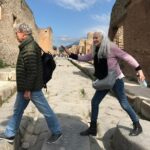
This is also a good moment to set yourself up: use the restroom before the entry process and wear shoes with traction. Pompeii’s walking surfaces can be uneven and sometimes steep, which matters more than people expect.
Stop at the Foro: the political heart you can actually picture
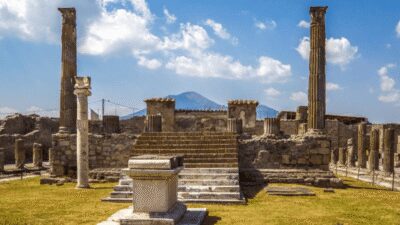
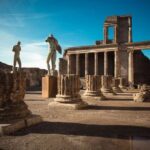
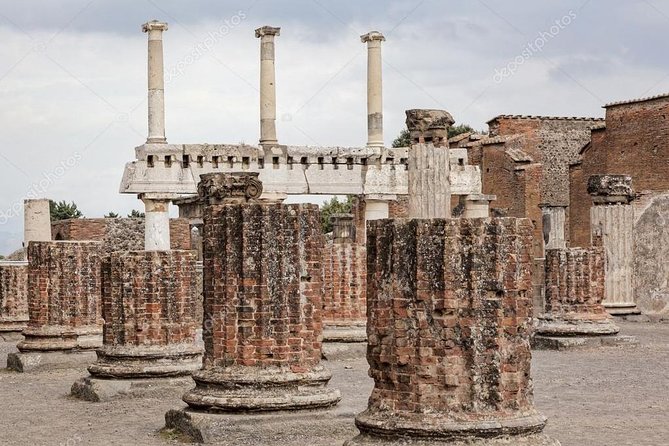
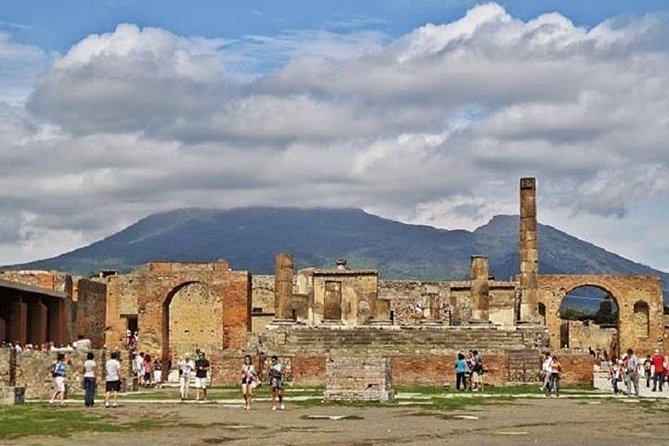
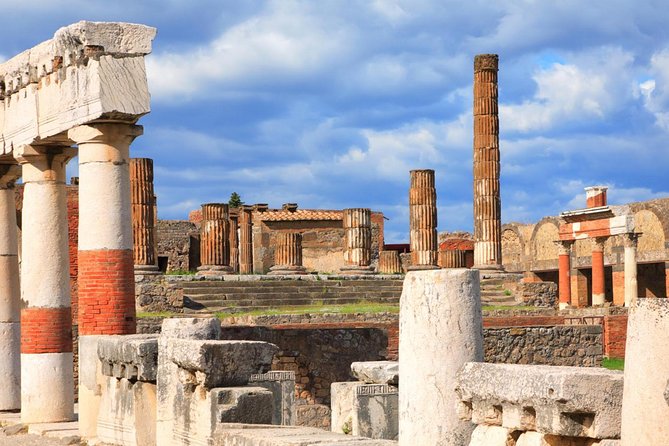
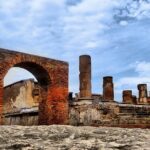
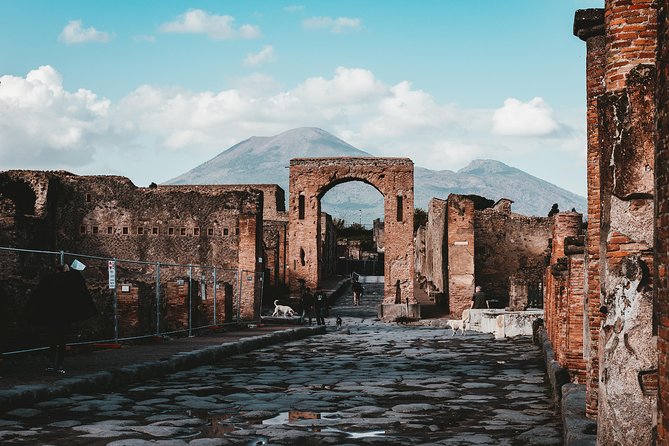
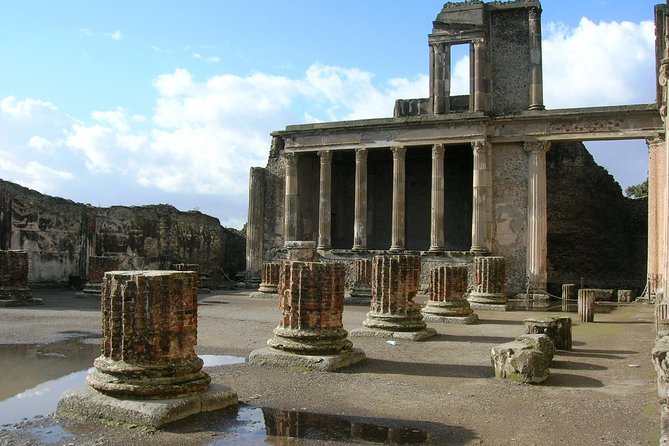
The walk begins at the Foro di Pompei, Pompeii’s main square. This isn’t just “a big open space.” It functioned as the center of politics, economics, and religion. When you stand here without guidance, you mostly see stones and columns. With a guide, you start seeing movement: where people gathered, where official life happened, and how civic space shaped daily routines.
You’ll spend about 30 minutes here with the ticket entry included. This stop is one of the best uses of your limited time, because it gives the rest of the tour a frame. After the Foro, the next places feel connected instead of random.
What you should look for
Focus less on trying to memorize every fragment and more on asking: What kind of place was this? Civic space, crowd space, business space—it all changes how you read what’s left.
You can also read our reviews of more tours and experiences in Pompeii





Macellum: the meat-and-fish market side of Pompeii
From the Foro you move to the Macellum, the market connected to food—meat and fish being major parts of the picture. This is where you’ll feel Pompeii get practical. The guide helps you connect the building to the idea of fast, local supply: people showing up to buy what they wanted rather than storing everything for months.
A quick 10 minutes here is short, but it works because it’s a concentrated “daily life” stop. You may also get a chance to see painted decoration, including images tied to what Romans ate in the 1st century AD. Those little details are why this tour isn’t only ruins—it’s ruins plus context.
Forum Baths (Terme del Foro): split by gender, shaped by function
Then you’ll visit the Terme del Foro, located behind the Temple of Jupiter area. This is a fascinating stop because the baths show how public routine was organized. The guide points out that the bath complex had separate areas—one for men and one for women—each with independent entrances.
The scale here is about 410 square meters, and you can also hear how water worked in daily life. The baths were fed by the Serino aqueduct, but they also had a well as a backup when water was scarce. That detail makes the building feel less like a monument and more like a real system with limits.
There’s a real payoff in the way the rooms look: the ceilings you see are described as original, and there are period stuccoes. You’ll also notice materials like the marble tub in the calidarium and a mosaic floor. It’s not just “a bath ruin.” It’s a design lesson in how Romans blended comfort, routine, and engineering.
Two domus stops: Casa del Fauno and Casa dei Vettii
If you want the shock of contrast—Pompeii’s wealth next to its everyday commercial spaces—this tour delivers with two elite home visits.
Casa del Fauno: the big aristocratic house
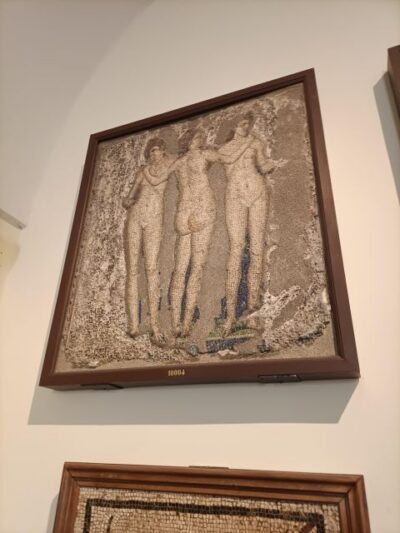
You’ll spend about 10 minutes at the Casa del Fauno, known as one of the most luxurious and large homes of the Roman republic era in Pompeii. The standout story here is the Mosaic of Alexander. You’ll see a copy, while the original is conserved at the MANN.
Why this matters: domus houses aren’t only about wealth. They show how status moved through art, display, and space. Even with a short visit, the guide helps you understand what you’re seeing as a lifestyle statement.
Casa dei Vettii: mosaics, and also the intimate side
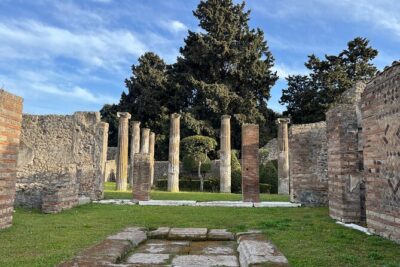
Next comes the Casa dei Vettii, a Roman-era domus preserved after burial and later uncovered through excavation. It’s associated with owners Aulo Vettio Restituto and Aulo Vettio Conviva—names that help the place feel specific rather than generic.
This stop is also where the tour gets more human and a bit surprising. There’s an area with erotic paintings, and the way the guide frames it helps you understand that these were not “museum-only” objects. They tied to the household and to life inside the home, including a mention that the room was linked to the woman’s profession.
For some people, this is the moment Pompeii stops being tidy postcards and becomes real social history. For others, it can feel a little intense—but it’s part of why Pompeii is so memorable.
Via dell’Abbondanza: the street that connects the big sights
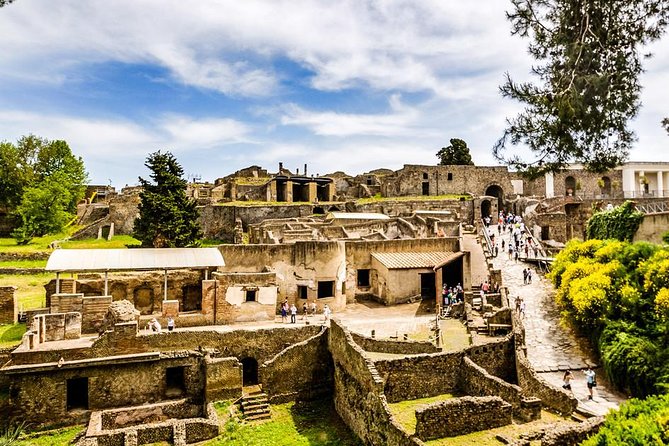
After the homes, the group continues along Via dell’Abbondanza, a main street running between major zones of Pompeii. This is where you feel the city’s scale. The guide’s pacing helps you connect the route: from the Foro area toward Porta Sarno, passing key anchors like the Stabian Baths, the theatres, the Temple of Isis, and the Amphitheatre.
Even if you don’t stop at all of those structures, walking the artery is useful. It tells you Pompeii isn’t a set of isolated sites—it’s a grid of neighborhoods that supported real movement every day.
Thermopolium Regio VI, Insula VIII, 8: the ancient fast food
The final highlight is the Thermopolium—literally a place where you sell hot goods. Think of it as a fast-food concept, but built into the life of the neighborhood.
You’ll spend about 10 minutes here, and the guide’s explanation helps you imagine how people ate on the go. It’s the kind of stop that makes Pompeii feel less like a “dead city” and more like a place where people grabbed meals, chatted, and kept their day running.
Pacing and timing: how to enjoy the 2 hours you’re given
This is an approximately 2-hour experience, and that short window shapes everything. Many people love it as a first Pompeii visit because you get a cross-section—civic life, food, bathing, elite homes, and street commerce—in one compact loop.
But tight timing also means you may not have time to do long picture sessions at each stop. One common complaint is that groups can feel rushed if the tour has delays or if the pace is adjusted to keep everyone together. If you know you’ll want extra time to linger, consider arriving early at Pompeii on another day or planning a self-guided follow-up.
Also, bring practical gear. Pompeii sun can be brutal in summer, and the walking terrain can feel steep. If it’s hot, treat shade and water like part of the plan, not an afterthought.
Group size, listening comfort, and the headset advantage
The tour caps at 35 travelers, which is fairly large, but not chaotic if the guide is organized. You’ll get headsets for groups over 15 people, which can be a big deal at ruins where you’re often walking and turning your head a lot.
This is one of those “small” inclusions that changes the whole feel. When you can hear the explanation cleanly, you’ll actually look at the places your guide mentions instead of zoning out during transitions.
Who this tour is best for
This is a great fit if you:
- are visiting Pompeii for the first time and want the big themes explained fast
- want a structured walk without doing tons of research beforehand
- like daily-life details—markets, baths, homes—rather than only big monuments
- prefer listening to a guide while you move, instead of reading stone tablets on your own
It may be less ideal if you:
- want a slow, photo-first pace with lots of free time
- plan to visit only a few sites and spend the rest of your day wandering without structure
- expect every guide moment to be perfectly tailored to long stops at each spot
Should you book this Pompeii skip-the-line guided tour?
I’d book it if you want value + context. Express entry reduces wasted time, and the guided route covers Pompeii’s most important “how people lived” topics without requiring you to know anything in advance. For many first-timers, this is the smart way to see real meaning in the ruins.
Skip it only if you strongly prefer self-guided wandering and you’re the type who wants to linger for half an hour in one courtyard. If that’s you, you might enjoy Pompeii more by building your own day. But if you want a guided loop that makes the site click—this one is a solid bet.
FAQ
What’s included in the ticket price for this tour?
The price includes the professional guide, headsets for listening (for groups over 15), and express entrance tickets for the Pompeii archaeological site.
Does this tour include admission tickets for Villa of Mysteries?
No. It does not include entrance tickets for the Villa of Mysteries.
How long is the guided portion?
The tour is about 2 hours.
Where do I meet the group?
Meet at Via Villa dei Misteri, 1, 80045 Pompei. The meeting point is at the Circumvesuviana Pompei Scavi Villa dei Misteri station area, at the first floor office called Tempio Travel / Pompeii Tickets.
What time should I arrive before the tour starts?
You should arrive about 15 minutes before the time shown on your voucher.
What language is the tour offered in?
The tour is offered in English.
How big is the group?
The tour has a maximum of 35 travelers.
Are headsets provided?
Yes. Headsets are provided for groups with more than 15 people.
Is this tour suitable for children?
Children must be accompanied by an adult, and most travelers can participate. Service animals are allowed.
Is the tour accessible by public transportation?
Yes. The meeting point is near public transportation.