REVIEW · POMPEII
Pompei three hours with an expert guide
Book on Viator →Operated by Campaniaguide · Bookable on Viator
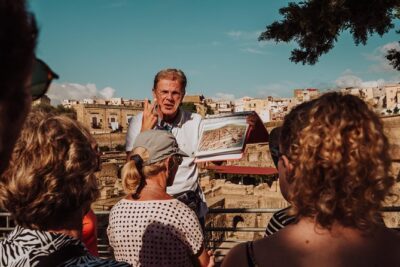
Pompeii makes sense faster with a guide. This private 3-hour Pompeii tour focuses on the big sights and the everyday details, using an expert guide to interpret what you’re looking at as you walk. I love the way the route stays flexible for your group, but one consideration: Pompeii admission isn’t included, so you still need to budget for the entry ticket.
What makes this outing work well is the pacing. You avoid the fast, fixed itinerary that can feel like a stampede in a place this large. With guides such as Giovanna and Vincenzo, you also get that rare combination of clarity and on-the-ground practicality, including help for slower mobility days so everyone can still see the key areas.
In This Review
- Key points to know before you go
- Price and value for a Pompeii private guide
- Starting at Piazza Esedra: what your 3 hours really look like
- Pompeii with context: why a guide turns stones into a story
- Street of Abundance and the main road feel: the city’s rhythm under your feet
- The theaters: reading entertainment and social life in two stops
- Brothel and everyday services: seeing Pompeii as real life
- Spas and Thermopolis: where warmth, water, and food tell the truth
- Private homes and villas: how domestic life contrasts with public spaces
- Amphitheater up to 20,000 seats: scale you can feel
- Classic Pompeii and the newer discoveries: why the route feels fresh
- Pacing that works for real groups, including seniors
- Who should book this Pompeii guide (and who might not need it)
- Quick practical tips for your day
- Should you book this Pompeii guide?
- FAQ
- Is Pompeii admission included in the tour price?
- How long is the Pompeii tour?
- Where does the tour meet?
- What time does the tour start?
- Is this a private tour?
- How many people are included in a group?
- What language is the tour offered in?
- Do I need a printed ticket?
- What happens if weather is bad or the minimum number isn’t met?
Key points to know before you go
- Private group up to 7 means you can move at a realistic pace and get answers without shouting.
- Custom route for ages and interests helps you spend time where your group actually wants to look.
- Street of Abundance + major public sites gives you a strong sense of how the city worked day to day.
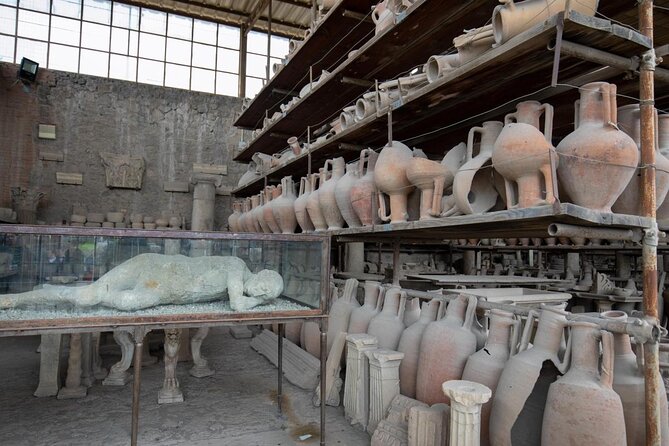
- Theaters, brothel, spas, and Thermopolis help you spot how public life and commerce mixed together.
- Amphitheater capacity up to 20,000 shows you Pompeii at scale, not just as scattered ruins.
- Newer excavated areas can appear on the route, so you’re not only seeing the same postcard version of Pompeii.
Price and value for a Pompeii private guide

At $416.34 per group (up to 7) for about 3 hours, this is priced like a true private experience, not a budget add-on. The value comes from what you get for that money: an expert on the ground helping you interpret the site while you walk, plus the ability to shape the experience for your group instead of following a one-size-fits-all route.
How that cost feels depends on your group size. If you fill the group limit, the guide cost per person drops a lot. If you’re traveling as a smaller party, you’ll feel the premium more, but you’re paying for fewer people, less time wasted, and more control over the pace.
One more value point: your ticket is part of what you’re buying. The guide service is included, while Pompeii admission isn’t included, which is common for guided experiences here. Still, you should plan for that extra line item so the total matches your expectations.
You can also read our reviews of more guided tours in Pompeii

Starting at Piazza Esedra: what your 3 hours really look like
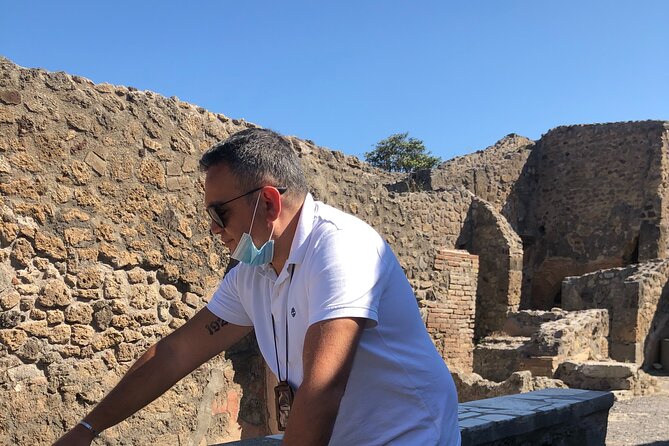
The tour starts at Piazza Esedra (80045 Pompei, NA, Italy) at 9:30 am, and it ends back at the meeting point. That simple loop matters because it keeps your day from getting hijacked by transfers and confusion inside the park.
It’s offered in English, and it’s designed for most people to participate. Since Pompeii is outdoors and you’ll be walking on uneven surfaces, you’ll want to be honest with yourself about mobility and stamina. The good news is the tour is private, so the guide can adjust the tempo and stops so your group isn’t trapped in a sprint.
You’ll also get a mobile ticket, which makes check-in smoother and less hassle before you start walking. And because this is a private group tour, you’re not stuck with strangers who might have different interests or different energy levels.
Pompeii with context: why a guide turns stones into a story
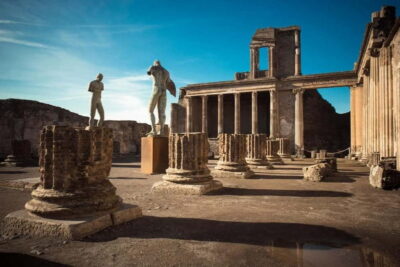
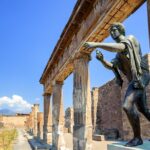
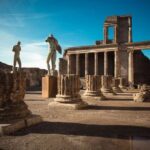
Pompeii is one of those places where you can easily miss the meaning. From a distance, you see walls and columns. Up close, you start to see the logic of daily life—where people ate, where they argued, where they relaxed, and where they gathered for events.
That’s where an expert guide earns their keep. The aim here is to help you understand the site in a structured way without making it feel like homework. In the time you have, the guide focuses on the main facts and then uses what you see—public spaces and private homes—to build a picture of the city right before the eruption of Vesuvius buried it.
If you’ve visited other archaeological sites, you’ll know the common problem: you’re surrounded by information, but you don’t know where to look first. This tour’s route is designed to get your bearings fast and then keep you oriented as the park expands around you.
Street of Abundance and the main road feel: the city’s rhythm under your feet
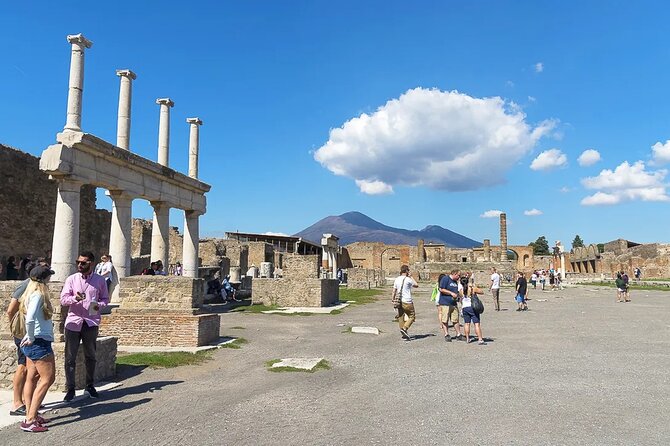
One of the clearest wins is the walk along the Street of Abundance, the city’s main road. It’s not just a pretty route. It’s how you understand Pompeii as a functioning place, not a museum of fragments.
As you move down this corridor of storefronts and public life, the guide can point out details that help you visualize how people moved through the city. You’ll start to connect buildings you see to the roles they played—business, gatherings, entertainment, and everyday services.
This is also where you’ll feel the benefit of avoiding a big-group rush. Large tours often push people along before they’ve even registered what they’re looking at. Here, the pace is more human, and the route can be adapted to your group’s comfort level.
The theaters: reading entertainment and social life in two stops
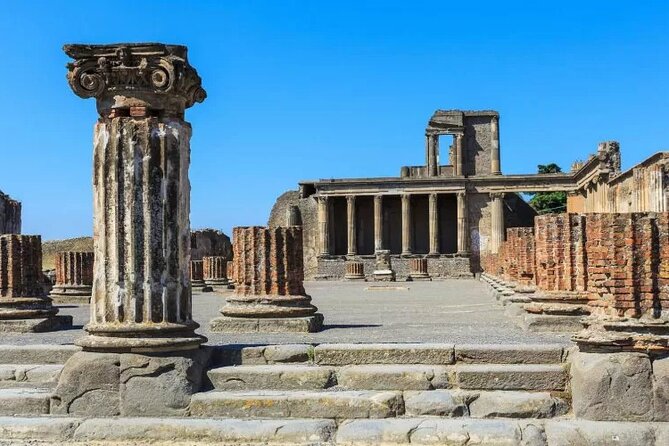
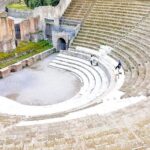
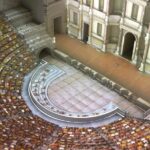
Pompeii has two theaters included on the route: you’ll see both as part of the core highlights. That’s useful because theaters weren’t only for shows. They were social engines—places where people gathered, talked, and built community.
What you can expect from a good guide (and this tour aims for that) is interpretation that makes the theater structures legible. Instead of treating them as just stone bowls, you get a better sense of how performances fit into Roman civic life and why this kind of entertainment mattered.
If your group enjoys culture, this stop usually lands well. If your group needs a break from heavy walking, theaters also give you natural pause points where you can look, listen, and re-center before continuing.
You can also read our reviews of more tours and experiences in Pompeii



Brothel and everyday services: seeing Pompeii as real life
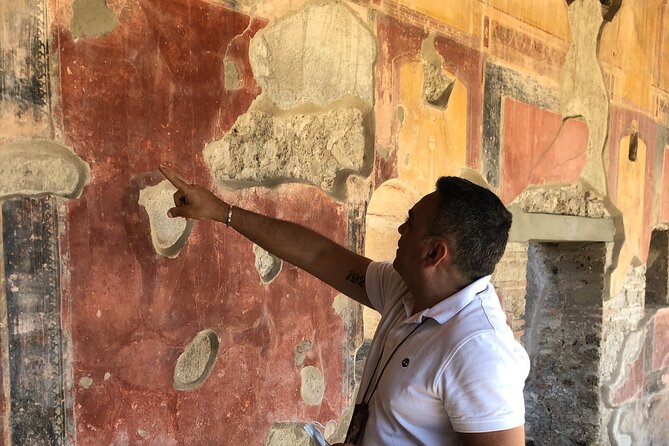
Yes, the route includes a brothel. It can sound like a shock listing, but it’s also a key piece of how cities worked. Commerce and attraction existed side by side with politics and religion, and Pompeii reflects that messy realism.
The same idea applies to the other “everyday services” stops, like spas and the commercial side of city life. A guide helps you avoid the trap of reading everything as scandal or spectacle. You’ll get a grounded interpretation of how people used spaces for relaxation, hygiene, and social interaction.
The payoff is that Pompeii stops being abstract. You start to feel like you’re walking through a real urban system with routines—work, leisure, and downtime—built into the streets.
Spas and Thermopolis: where warmth, water, and food tell the truth
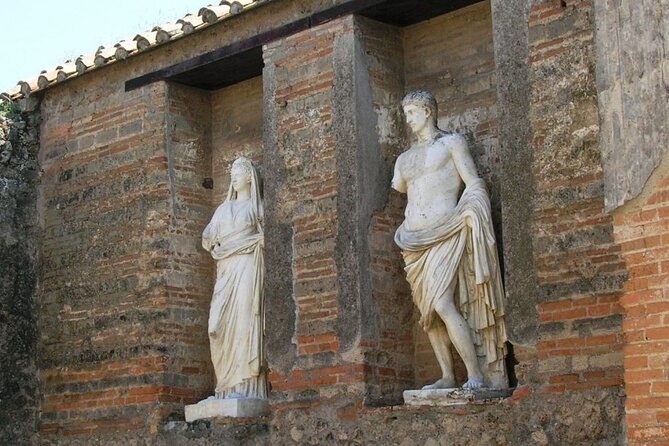
The route includes spas and a Thermopolis, which is essentially a kind of counter-service food and drink stop. These aren’t the flashiest ruins, but they’re the most revealing once you understand what they represent.
Spas help you connect architecture to habits. You can see how leisure and cleanliness were built into daily life, not something people only did in rare moments. The Thermopolis helps you understand how people ate and drank quickly without needing a full home kitchen.
When a guide points out what would have happened in these spaces, the ruins become more than background. You start reading Pompeii like you’d read a neighborhood map: not just where people lived, but how they spent the hours between living.
Private homes and villas: how domestic life contrasts with public spaces
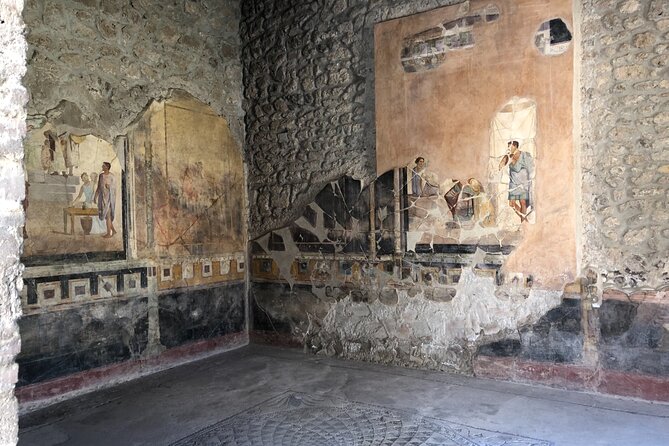
In the route you’ll also cover private homes and key villas, which matters because Pompeii isn’t only about public buildings. You’ll see how wealth and lifestyle shaped spaces—who had access to courtyards, rooms, and decorative elements, and what daily routines looked like behind the exterior walls.
The best part of including both public and private areas is balance. After you’ve walked through entertainment and services, domestic spaces feel different. They shift your perspective from crowds to routines, from performance to privacy.
Because the tour is customizable, the guide can emphasize areas that match your interests. If your group leans toward human stories, you may spend more time on household details. If your group wants the big civic sights first, the guide can keep the day moving.
Amphitheater up to 20,000 seats: scale you can feel
You’ll enter the amphitheater, described as large enough to hold up to 20,000 people. That number isn’t just trivia. It’s how you grasp why Pompeii mattered and how entertainment could bring huge crowds together.
This is usually a highlight because your brain catches up to the site. A lot of ruins feel small because you’re seeing them up close at ground level. The amphitheater forces a sense of scale—what it looked like when thousands of people packed in for an event.
A good guide also helps you connect the space to behavior: where people sat, how events were organized, and why this type of venue sat at the center of public life.
Classic Pompeii and the newer discoveries: why the route feels fresh
One of the interesting aspects of this tour is that the guide leads you between the classic parts of the city and areas associated with more recently discovered sections. That means you’re not only seeing the same same route that every quick tour repeats.
Guides such as Vincenzo are specifically praised for showing you recent discoveries and taking you to parts of Pompeii that other groups may not linger on. For you, that translates into a more satisfying visit: you feel like you learned something beyond the obvious postcard stops.
It also helps with crowd management. A strong guide reads the park like a living space, not a checklist. You’ll spend less time in the densest waves and more time in the moments where you can actually see details.
Pacing that works for real groups, including seniors
One of the standout strengths from the experiences shared with this tour is how the guide adapts to group needs. Giovanna earned praise for being kind, detailed, and accommodating—especially for older visitors who needed time to maneuver. That kind of attention isn’t just nice; it affects what you actually see.
In a place like Pompeii, where walking and stone steps are unavoidable, the difference between a rigid tour and a flexible one is huge. If your group includes seniors, people with slower mobility, or anyone who gets overwhelmed by crowds, you’ll likely appreciate the ability to slow down without feeling left behind.
If your group is made up of teens and active adults, you’ll still benefit. You can push at a reasonable pace while keeping control over what you focus on.
Who should book this Pompeii guide (and who might not need it)
This tour fits best if you want three things:
- Meaning, not just photos
- A controlled pace in a massive site
- Enough time to see major highlights without feeling like you’re sprinting
I’d especially recommend it for families who have a mix of ages, history lovers who want context for the brothel, theaters, and spas, and couples who want a more relaxed walk than a big-group tour.
You might reconsider if your group already has a deep Pompeii obsession and plans to spend all day on your own. If you’re the type who loves wandering without structure, you could still visit independently, but you’ll have less help interpreting what you see at speed.
Quick practical tips for your day
Here’s how to make the most of your 3 hours at Pompeii:
- Plan for the Pompeii entrance ticket since it’s not included.
- Wear shoes that handle uneven stone and expect lots of walking.
- Bring water and take small breaks when the guide suggests a pause point.
- If your group has accessibility needs, tell the guide what matters most—time to stop, slower pacing, or which sights are non-negotiable.
A small scheduling note: this tour is often booked about 55 days in advance, so if Pompeii is a key day on your trip, don’t wait until the last minute.
Should you book this Pompeii guide?
If your goal is to understand Pompeii in a short amount of time, this is an easy yes. The private format, the flexibility in route, and the focus on how the city worked—streets, public entertainment, everyday services, and private homes—make the experience feel efficient without feeling rushed.
If the extra admission ticket cost would stress your budget, you can still do it, but you should factor that in before you decide. And if your group has very limited mobility, you’ll want to be sure the pace and walking time will work.
Overall, this is the kind of Pompeii tour that leaves you saying, I finally get what I was looking at. And in a place buried under volcanic ash, that clarity is half the magic.
FAQ
Is Pompeii admission included in the tour price?
No. The guide service is included, but the Pompeii entrance fee is not included.
How long is the Pompeii tour?
It’s about 3 hours.
Where does the tour meet?
The meeting point is Piazza Esedra, 80045 Pompei NA, Italy.
What time does the tour start?
The start time is 9:30 am.
Is this a private tour?
Yes. It’s a private tour/activity, and only your group participates.
How many people are included in a group?
The price is per group up to 7 people.
What language is the tour offered in?
The tour is offered in English.
Do I need a printed ticket?
No. You’ll receive a mobile ticket.
What happens if weather is bad or the minimum number isn’t met?
The experience requires good weather, so it can be canceled due to poor weather. It can also be canceled if a minimum number of travelers isn’t met. In either case, you’ll be offered a different date or a full refund, and you can cancel for free up to 24 hours in advance.