REVIEW · POMPEI CAMPANIA
Pompeii: Skip-the-Line Ticket and Guidebook with Itineraries
Book on GetYourGuide →Operated by Around Vesuvio · Bookable on GetYourGuide
Pompeii rewards a good plan. This skip-the-line setup plus a Pompeii guidebook map makes it easier to see the big sights without feeling rushed or lost. You enter independently between 9AM and 5PM, so you control your pace.
I especially like the flexibility of the 2, 4, or 6-hour itineraries. You can keep it casual for a first visit or slow down to build a clearer picture of how the city worked day to day. I also love that the guidebook points you toward the places that people most often remember: the amphitheater, the casts of the victims, and the frescoed streets that still feel lived-in.
One drawback to think about: this experience is built around a guidebook, not a walking human guide. If you’re expecting someone to lead you step-by-step in person, the format may feel different than you hoped.
In This Review
- Key Highlights Worth Your Time
- Skip the Line and Find the Right Door: Piazza Anfiteatro
- Your Pompeii Game Plan: 2, 4, or 6 Hours with the Map
- The 2-hour version: Focus on the showpieces
- The 4-hour version: A first full loop with breathing room
- The 6-hour version: More building types, better story
- Must-See Pompeii Stops: Amphitheater, Streets, and Public Life
- The amphitheater: drama in stone
- Frescoed houses: private life you can almost picture
- Spas and temples: how Romans structured the day
- Shops and Thermopolis: food culture from the past
- Theaters and brothels: entertainment and the not-so-PG side
- The Eruption Story You’ll Actually Remember
- Navigation, Comfort, and Timing That Keep the Day Pleasant
- Price and Value: Is $41 Worth It for a Skip Ticket Plus Souvenir Map?
- Who Should Book This Pompeii Ticket and Guidebook?
- Should You Book This Pompeii Skip-Line Ticket and Guidebook?
- FAQ
- What time can I enter Pompeii with this ticket?
- Is there a live guide with this experience?
- What’s included in the price?
- Where do I meet the staff, and where do I enter?
- Do I need to bring ID?
- Is there a youth discount?
Key Highlights Worth Your Time

- Skip-the-line entry helps you start seeing Pompeii sooner instead of watching queues crawl.
- Self-guided freedom means you don’t have to stick to someone else’s pace.
- 2, 4, 6-hour itineraries let you match your time and attention span.
- A map with practical navigation helps you find key stops across the site.
- Must-see ruins are included: amphitheater, baths, temples, shops, Thermopolis, theaters, brothels, and victim casts.
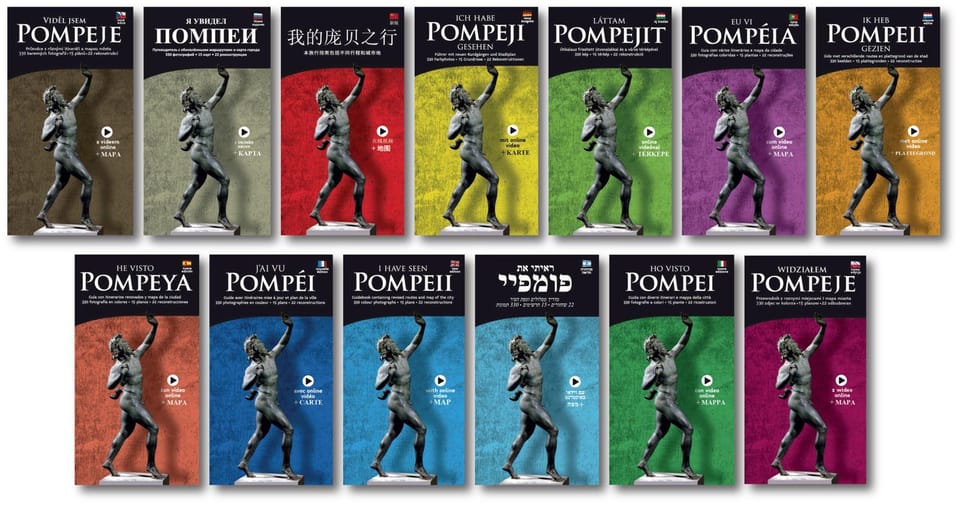
- Guidebook souvenir factor: you keep the translated book after your visit.
Skip the Line and Find the Right Door: Piazza Anfiteatro
Pompeii is popular, and the easiest way to waste a day is to spend it in lines. This ticket is designed to reduce that friction, letting you enter with your reservation so you can start walking right away. The main practical detail to remember is the entrance: Piazza Anfiteatro.
You’ll meet the staff outside their office (often in blue and yellow jackets) and then be directed to the check-in/info point. Once you arrive at the archaeological park area, you show your voucher to the staff for access. The info point is at Via Roma 123, Pompei, which is the address you’ll want handy on your phone.
If you like clear signage and step-by-step directions, be mentally ready for the fact that the site can feel like a maze at first. The map and itineraries help, but I’d still give yourself a bit of buffer the first time you navigate from the check-in area to the entrance and the first streets you want to see.
A small practical tip: bring your passport or ID card. It’s required, and it’s the kind of thing that can ruin your momentum if you reach the checkpoint without it.
You can also read our reviews of more tours and experiences in Pompei Campania



Your Pompeii Game Plan: 2, 4, or 6 Hours with the Map
The best thing about this experience is that it doesn’t force one route. You get a guidebook with three itinerary options (2, 4, and 6 hours) plus an updated map. That means you can decide how much you want to understand versus how much you want to just wander.
Here’s how to think about those time blocks so you don’t end up spending the day zig-zagging randomly.
The 2-hour version: Focus on the showpieces
Use this if Pompeii is a must-do on a busy schedule. Your goal is to hit the most memorable landmarks without overreaching.
In a short visit, I’d prioritize:
- The Roman amphitheater (big, dramatic, and easy to recognize)
- The victims’ casts (the emotional center of the experience)
- A quick sweep through the streets with frescoed houses to see what everyday Pompeii looked like
You’ll still get that wow feeling, but you won’t try to master the city.
The 4-hour version: A first full loop with breathing room
This is the sweet spot for most people. You’ll have time to absorb details like street life, public spaces, and a couple of building types.
A balanced 4-hour plan usually works well when you include:
- Amphitheater
- Victims’ casts
- One or two “neighborhood” moments, like frescoed houses
- A stop for daily-life culture such as Thermopolis (a kind of coffee-and-fast-food spot of its time)
- A glimpse of the entertainment side with theaters
The 6-hour version: More building types, better story
If you want Pompeii to make sense instead of just impress you, choose the longer route. Six hours gives you room to notice patterns: where people gathered, how they bathed, what they bought, and how entertainment and work fit together.
In this longer window, you can add more variety from the guidebook’s featured sites:
- Spas and baths culture (how Romans handled hygiene and leisure)
- Temples (religious life and civic identity)
- Shops (commercial streets and small-scale economy)
- Even brothels if you want the full picture of the city, not just the pretty parts
You’ll likely walk more, but it’s also the easiest way to avoid that feeling of skimming everything.
No matter which option you pick, the key is to stick to the guidebook’s route logic and use the map to keep your energy focused.
You can also read our reviews of more tours and experiences in Pompei Campania





Must-See Pompeii Stops: Amphitheater, Streets, and Public Life
Pompeii has a way of making you slow down without trying. The ruins aren’t just objects; they’re a layout of real habits—meeting, selling, performing, bathing, eating, praying.
The amphitheater: drama in stone
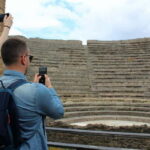
One of the best-preserved Roman amphitheaters is part of your included highlights. If you like places built for crowds, you’ll understand why it’s a top stop fast. Even if you don’t know every detail, you’ll feel the design: seating, sight lines, and the sense of performance baked into the space.
Frescoed houses: private life you can almost picture
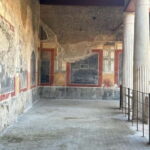
Pompeii’s frescoed houses are one of the strongest reasons to go. The paintings and decorative details make the city feel specific rather than generic. This is where you stop thinking only about disaster and start thinking about daily aesthetics, gossip, and home routine.
Spas and temples: how Romans structured the day
The itinerary highlights include spas and temples, and that’s a smart mix. Spas connect the city to leisure and hygiene, while temples help you place Pompeii in a religious and civic framework. It’s not just architecture; it’s routine and identity.
Shops and Thermopolis: food culture from the past
Seeing shops alongside the Thermopolis is a shortcut to understanding Pompeii’s hustle. The Thermopolis is described as the coffee-fast food of its time, which is a handy mental frame. It makes you imagine quick stops, snacking, and casual social life.
Theaters and brothels: entertainment and the not-so-PG side
Your highlights list includes theaters and brothels. If you want the full picture, plan a moment for both. Theaters show public performance as a civic event. Brothels remind you that Roman life included commerce and services that weren’t hidden away.
A quick caution: these sites can feel intense, and not every part will match your comfort level. If you feel tired or emotionally overloaded, swap one stop for another from the guidebook plan rather than forcing it.
The Eruption Story You’ll Actually Remember
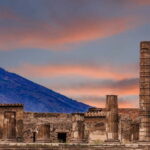
Pompeii isn’t only about preserved walls. It’s about a single event that froze a whole city mid-life. The guidebook and map are meant to connect the city’s layout to the eruption of Mount Vesuvius, so you don’t just see ruins—you understand what you’re looking at.
The emotional anchor is the casts of the victims. This stop often changes how you see everything else after it. You’ll move through the streets differently, noticing thresholds, spaces where people might have waited, and the proximity of everyday rooms to the disaster’s aftermath.
What I like about this format is that it doesn’t make the geology lesson compete with your walk. The guidebook approach helps you absorb the story in small segments while you still have momentum. Instead of cramming facts into one lecture, you can pair a historical note with what you’re standing in.
If you’re the type who likes context, spend extra time on the eruption explanation and then revisit the idea while you walk past public and private buildings. The day starts to click: Pompeii as a functioning town, then Pompeii as evidence.
Navigation, Comfort, and Timing That Keep the Day Pleasant
You’re exploring independently, so you want your logistics to be quiet and simple. Here are the practical pieces that matter most.
Entry hours are 9AM to 5PM, so plan for a full walk, not just an hour of sightseeing. Pompeii is large, and your energy will run out before your curiosity does if you try to cram everything.
Wear comfortable shoes. It’s not just about comfort; uneven stone and long distances mean blisters can end the day early. The guidance also suggests wearing dresses. If that’s your style, great. If not, focus on clothing you can move in safely.
Bring your passport or ID card, since it’s explicitly required. And remember: this experience includes the ticket and guidebook, but it doesn’t include food and beverages. Plan a snack stop strategy near the times you’ll be at the best points on your route.
One more reality check: a couple of people have said the language about what to expect on the ground could be clearer, especially if you were hoping for more explicit English directions for where to go first. I’d solve this by having your entrance (Piazza Anfiteatro) and check-in address (Via Roma 123) saved before you arrive.
Price and Value: Is $41 Worth It for a Skip Ticket Plus Souvenir Map?
At about $41 per person for a one-day visit, this option works best if you value two things: saving time at the gate and not having to buy your own materials onsite.
You’re paying for:
- A skip-the-line ticket
- A guidebook with itineraries
- A Pompeii ruins map with 3 itinerary options
- The guidebook doubles as a souvenir you take home
Skip-the-line benefits are easiest to feel during peak hours. When lines are long, a skip ticket can turn a frustrating delay into actual walking time. Even if you do not use every suggested stop, the time saved can be the difference between seeing the amphitheater and leaving with only a partial visit.
The guidebook itself is the “value multiplier.” Instead of turning Pompeii into a confusing wander, the book helps you choose where to spend attention. That matters because Pompeii can overwhelm you if you’re trying to decide everything on your feet.
So, is it worth $41? For me, yes if you fall into either group:
- You want a structured day without paying for a full guided tour.
- You like wandering, but you want a map and a plan so you don’t lose hours.
If you already know Pompeii well and you travel super light, you might choose a simpler ticket. But most first-timers will appreciate the built-in route support.
Who Should Book This Pompeii Ticket and Guidebook?
This works especially well if you want control. You set the pace, you pick the order based on the itinerary option you choose, and you don’t have to keep up with a group.
It’s a good match for:
- First-timers who want independence with built-in structure
- People short on time who still want to see the big sites
- Anyone who likes reading and then looking carefully at what the guidebook references
It might be less ideal if:
- You specifically want a live guide walking you through the ruins
- You need extremely clear, step-by-step directions in English at every moment
Also note the language range: the experience lists instructor languages as English, Italian, Spanish, French, and the guidebook is translated into multiple languages (the product details mention 12 languages, with a note about up to 13). English readers should be covered.
Should You Book This Pompeii Skip-Line Ticket and Guidebook?
Book it if you want fast entry plus a practical plan. The big win is avoiding the time sink of line management, while still letting you explore at your own rhythm. The guidebook and map are the difference between seeing Pompeii as a blur and seeing it as a connected city.
Skip it only if you’re confident you can navigate Pompeii without getting overwhelmed, or if you’re certain you want a live guide instead of a guidebook-led self visit.
If you’re planning a one-day trip, choose your time window carefully. If you can spare it, 4 hours is a comfortable minimum. If you really want the story behind the stones, go longer.
FAQ
What time can I enter Pompeii with this ticket?
Your ticket is valid for entry during 9AM to 5PM.
Is there a live guide with this experience?
This experience is designed for independent exploring using the included guidebook with itineraries and a map.
What’s included in the price?
You get a skip-the-line ticket, a guidebook in multiple languages, and a Pompeii ruins map with three itinerary options.
Where do I meet the staff, and where do I enter?
Meet the team (often in blue and yellow jackets) outside the office, and then use the info point at Via Roma 123, Pompei. Entry to the park is at Piazza Anfiteatro.
Do I need to bring ID?
Yes. Bring a passport or ID card.
Is there a youth discount?
A reduced youth price is available for ages 18 to 24, but it applies only to EU citizens.