REVIEW · POMPEI CAMPANIA
Pompeii: Skip-the-Line Entry & Audioguide
Book on GetYourGuide →Operated by TOURISTATION · Bookable on GetYourGuide
Pompeii hits fast, and you can go slow. With skip-the-line entry and an included audioguide, you’re not stuck waiting—you’re walking through streets, houses, and public spaces from Roman daily life almost right away. I like that the experience is paced to your rhythm, with a paper city map to help you find your bearings as Mount Vesuvius hangs in the background.
The biggest upside for me is practical: skip-the-line entry plus a multilingual audio tour lets you start immediately and keep going without crowds steering your day. The second big win is how much you can cover without feeling rushed, from the central forum to Roman homes and businesses. One possible drawback is that the value depends on what you ultimately pay and how check-in is handled, since some people reported confusion about extra costs and being asked for an ID deposit.
In This Review
- Key things I’d look for before you go
- Skip-the-Line Entry: Worth It at Pompeii?
- Finding the Meeting Point by the IBT Center
- Your “At-Your-Pace” Audioguide Setup
- Languages you can choose from
- Paper map = more useful than it sounds
- One caution: audio devices and added costs
- Starting at the Central Forum (And Using Mount Vesuvius for Context)
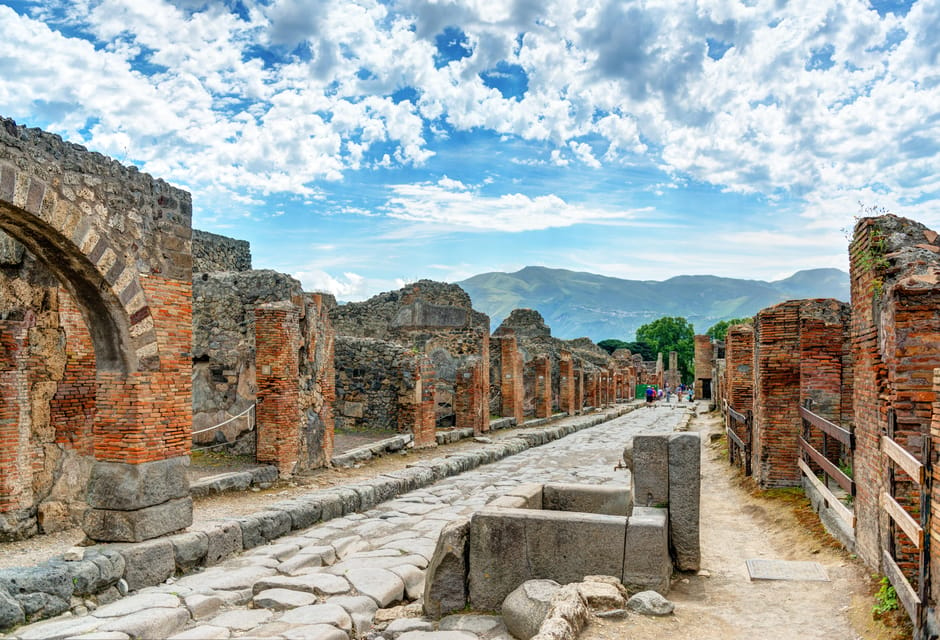
- Streets of Ancient Pompeii: Aqueducts, Fountains, and Daily Life
- Roman Homes and Businesses, Including Frescoes
- Amphitheater and Dramatic Theater: Where Everyone Watched
- How Long You’ll Actually Need: 2 Hours vs. a Full Day
- Price and Value: $53 for Skip Line + Audioguide
- What’s Not Included (So You Don’t Get Surprised)
- Who This Tour Suits Best (And Who Might Prefer Something Different)
- Should You Book This Pompeii Skip-the-Line Entry with Audioguide?
- FAQ
- Is Villa dei Misteri included?
- How long is the experience?
- What’s the meeting point?
- What’s included in the ticket price?
- What audioguide languages are available?
- Do I need ID?
- What is not allowed inside the archaeological area?
- Is there hotel pickup or drop-off?
- What is the cancellation policy?
Key things I’d look for before you go
- Skip-the-line entry helps you start quickly instead of losing your morning to queues.
- Audioguide languages are wide-ranging (including English and other options), so you can tour at your own pace.
- Central forum first sets context fast, with the Roman civic center and Mount Vesuvius in view.
- A lot is self-guided after entry, so you’ll want to actually use the map and audio prompts.
- Check what’s included in your booking price, because a few people saw pricing mismatches or extra audio-related fees.
Skip-the-Line Entry: Worth It at Pompeii?
Pompeii is popular, which means lines can show up and ruin your timing. This ticket is built around the idea that you should be inside the archaeological park sooner, not negotiating a slow-moving crowd. In real terms, that means you can spend more of your 2 hours (or whatever time you choose, up to a full day when available) walking the streets and less time standing still.
Here’s the honest part: a skip-the-line ticket isn’t automatically a magic deal. One person noted that tour-group crowds can still make the situation feel similar to buying on the spot, and the time saved wasn’t as dramatic as expected. So I’d treat skip-the-line as a strong convenience tool, but not a guaranteed money-saver in every scenario.
Also, Pompeii is outdoors, and you’ll be moving constantly. Starting earlier (even by 30–45 minutes) can change how comfortable your visit feels—less heat, fewer bottlenecks at key areas, and more flexibility if you want to pause for photos and slow down for the audio guide.
You can also read our reviews of more tours and experiences in Pompei Campania


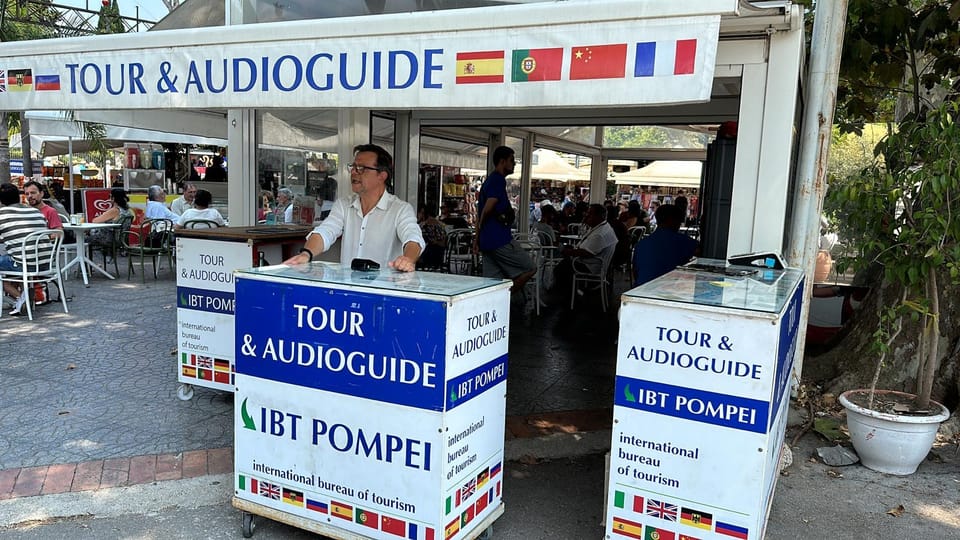
Finding the Meeting Point by the IBT Center
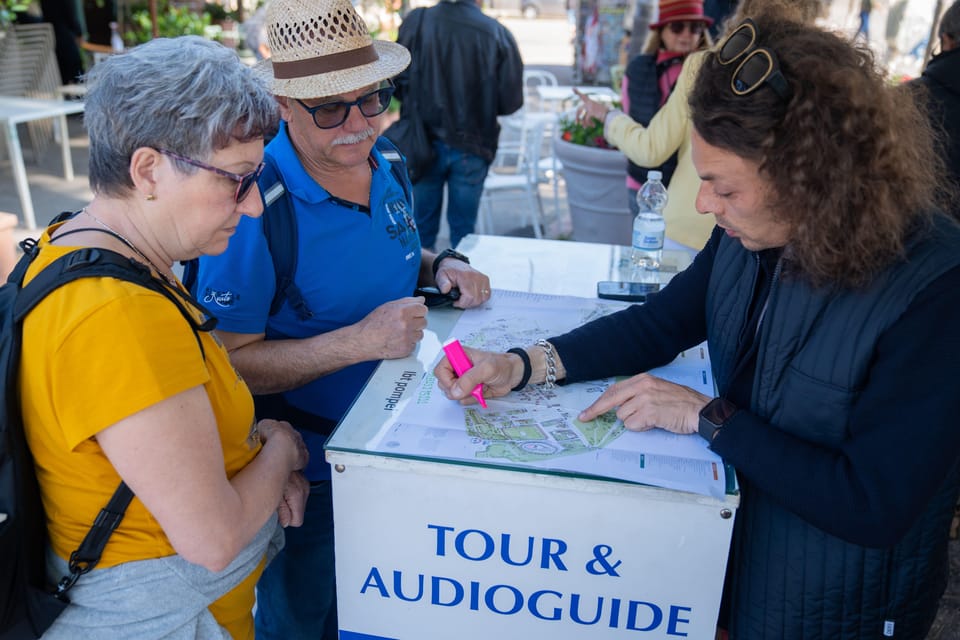
Where this works (and doesn’t work) is often decided before you even enter. Your meeting point is the IBT Center/Touristation next to Chalet Donna Lucia. If you’re arriving on foot, double-check your route the day before and give yourself extra buffer time.
A couple of practical notes based on real on-the-ground issues people flagged:
- If directions aren’t clear to you, arrive early enough to handle it. One booking mentioned the location wasn’t obvious at first.
- If you’re using a ride-share or taxi, confirm the exact spot by matching it to the IBT Center/Touristation name, not just nearby landmarks.
Getting this right helps everything after: you’ll have a smoother check-in and a calmer start—especially important because the visit is self-paced after you enter.
Your “At-Your-Pace” Audioguide Setup
This is a self-guided style visit, powered by an audioguide. You get entry, then you explore using the audio to understand what you’re seeing—Roman civic areas, everyday buildings, and the layout of the city.
What I like here is the mix of structure and freedom:
- You’re guided enough to make sense of the ruins
- You’re not trapped in a group tempo
Languages you can choose from
The audioguide is available in Italian, English, French, Spanish, German, Portuguese, Chinese, and Japanese. That means you can pick the language you’ll actually understand quickly—not just the language you can tolerate.
Paper map = more useful than it sounds
You also get a paper city map. In a site like Pompeii, that matters because the ruins can look repetitive if you’re just scanning. The map helps you line up your route with the audio stops, so the time you spend walking actually turns into knowledge.





One caution: audio devices and added costs
Some people reported confusion around what was included and whether they needed to pay for an additional audiophone. Others mentioned booking-price differences versus on-site pricing. Because of that, I’d recommend you confirm two things before you go:
- that your audioguide device or access is included in what you booked
- whether anything requires payment on arrival
That simple check can save you a headache.
Starting at the Central Forum (And Using Mount Vesuvius for Context)
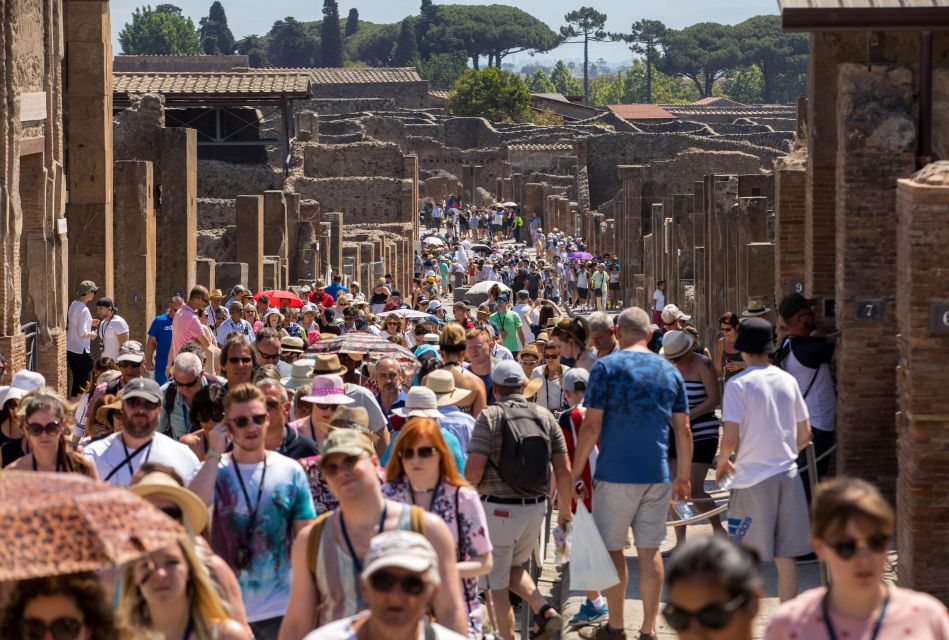
Most good Pompeii visits begin with the city’s heart, and this one starts you at the central forum. This is a smart choice because it gives you context early: you’re not wandering ruins at random—you’re orienting yourself to where people would have gathered for civic life.
Expect to walk past the kinds of remnants that make the forum feel grounded and real: columns and doorways still standing enough to imagine scale and purpose. And Mount Vesuvius looms in the background as you explore, which helps connect the city to its dramatic end.
If you’re the type who likes to “get the big picture first,” this start will work well. It also makes the later stops—homes, baths, businesses—feel less like random piles of stone and more like a connected city.
Streets of Ancient Pompeii: Aqueducts, Fountains, and Daily Life
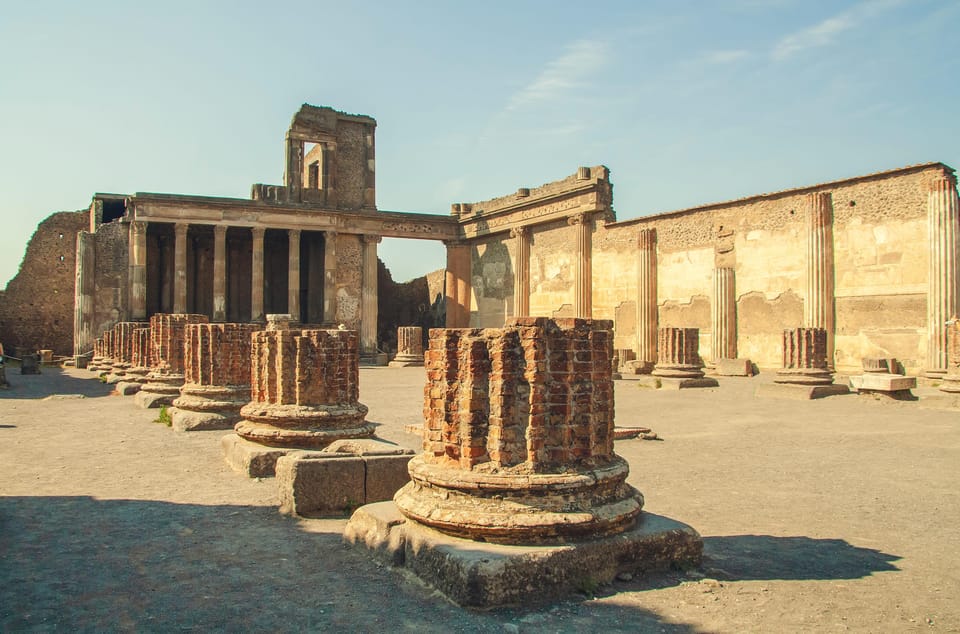
Once you’ve set the scene, you move from public civic space into the ordinary rhythms of the city. This is where Pompeii becomes more than sightseeing.
Here’s what you can expect to explore as you wander:
- streets of ancient Pompeii
- remnants of aqueducts and fountains
- public baths
- private houses
- businesses and statues
What’s valuable for you is that these aren’t just pretty ruins. Water infrastructure like aqueduct remnants and fountains points to how the city functioned. Public baths show shared space. Homes and shops show the patterns of daily life.
And because your route is self-paced, you can slow down where you care most. If you’re drawn to water features, spend extra time around those areas. If you want to focus on domestic life, let the audio guide you through the private houses and businesses.
Roman Homes and Businesses, Including Frescoes
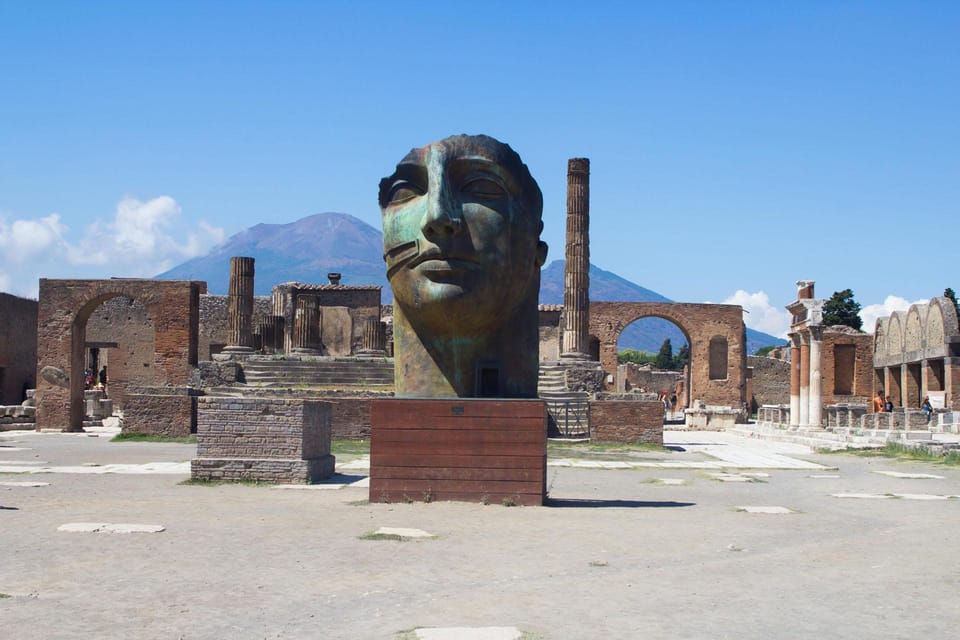
Pompeii is famous for how colorful some surfaces once were, and this experience includes time to see the remains of frescoes in houses and businesses. Even when the pigments are faded or damaged, fresco remnants can still help you picture what rooms looked like when they were in use.
This is a great stop for “memory-building.” The more you can link what you’re seeing to how people used these spaces, the better the ruins stick in your mind. The audioguide is what helps you do that part without needing to be an expert beforehand.
If you like small details, this is where you’ll feel rewarded. You’ll be walking through Roman interiors-in-ruins: doorways, structural remnants, and the idea of rooms that once had purpose.
Amphitheater and Dramatic Theater: Where Everyone Watched
A visit to Pompeii isn’t complete without time at the amphitheater and the dramatic theater. The key word here is dramatic: these spaces were built for spectators, and you can still feel that when you look at the surviving structure.
Even though the experience is self-guided, these are high-signal stops. It’s easy to imagine what kinds of events drew crowds, and the audio guide helps you connect the architecture to use.
If you’re photo-minded, this is also a section where viewpoints and angles can really change depending on where you stand. So don’t sprint through it. Take a few minutes to look around and then listen for the corresponding explanation.
How Long You’ll Actually Need: 2 Hours vs. a Full Day
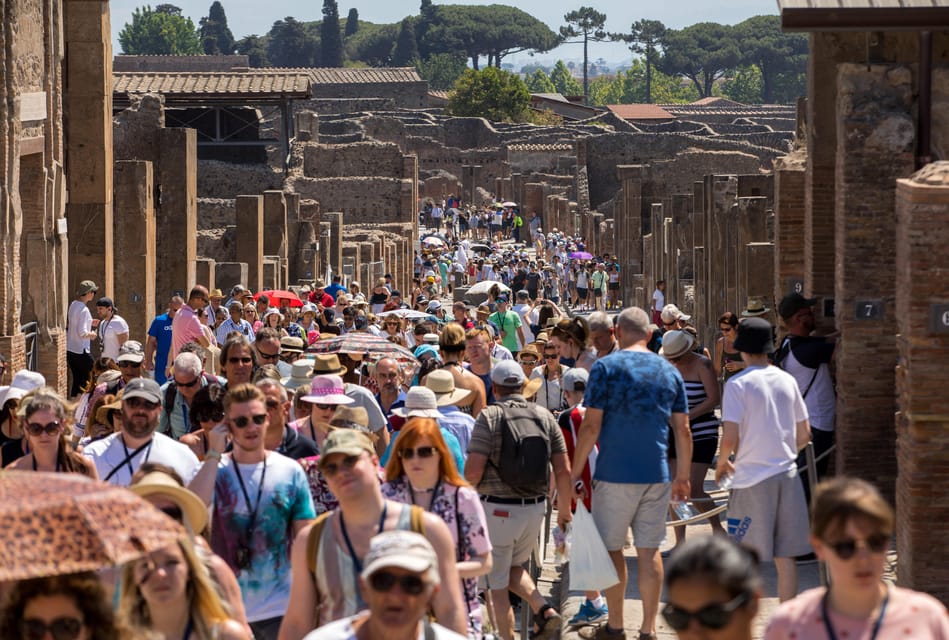
Your duration shows as 2 hours – 1 day, depending on availability and start times. For most people, 2 hours is enough to get a solid sweep of major areas—especially because the entry is quicker and you have an audio guide to keep your stops meaningful.
But I’d consider stretching it closer to a half-day to a full day if:
- you like reading the audio prompts slowly
- you want extra time around frescos, homes, and businesses
- you’re the kind of traveler who pauses often for photos and orientation
Because it’s outdoors and you’ll be moving constantly, longer visits can become tiring. The advantage of this style is that you can stop when you’re done rather than being locked into a fixed group itinerary.
Price and Value: $53 for Skip Line + Audioguide
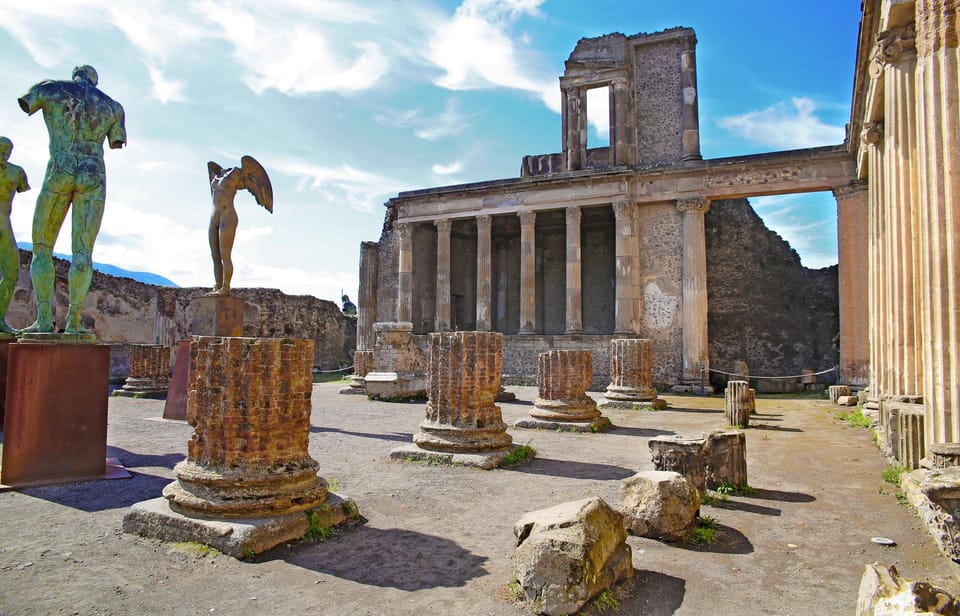
The listed price is $53 per person, and it includes skip-the-line entry, the audioguide, and a paper city map. That’s the core value proposition: fewer delays at the gate, plus context while you walk.
Is it good value? Usually yes—if what you booked truly matches the inclusions you expect. The reason I’m cautious is that some people reported pricing mismatches and confusion about whether audioguide costs were included or whether additional payment was required.
So here’s what helps you decide:
- If you hate waiting and you want your time spent on ruins (not queues), this price is easier to justify.
- If you’re comfortable arriving early and you don’t mind figuring out entry logistics on your own, you might find that savings are smaller than you hope.
Either way, I’d treat this as a convenience buy: you’re paying for smoother entry and an organized way to understand what you’re walking through.
What’s Not Included (So You Don’t Get Surprised)
To plan smoothly, know what you won’t have:
- Villa dei Misteri entrance is not included
- no hotel pickup or drop-off
- no drink or food
That last one matters because Pompeii is a park you walk through. Bring a realistic plan for snacks and water based on how long you intend to stay.
Also remember the rules:
- bring passport or ID card
- don’t bring pets, and don’t smoke
- no luggage or large bags
- no alcohol and drugs
If you’re traveling light, you’ll feel more relaxed. If you’re carrying a larger bag, you might have friction getting set up quickly.
Who This Tour Suits Best (And Who Might Prefer Something Different)
This experience is best for you if:
- you want skip-the-line entry and a fast start
- you’re happy exploring on your own pace with audio support
- you want an overview of major Pompeii areas without committing to a full guided lecture
- you like switching between big-picture context (forum) and smaller human-scale details (homes, businesses, frescos)
You might want a different approach if:
- you need everything spelled out turn-by-turn by a guide
- you’re very sensitive about check-in processes (some people expressed discomfort with being asked for an ID deposit)
- you’re hoping to minimize cost above all else and don’t mind timing your entry yourself
Should You Book This Pompeii Skip-the-Line Entry with Audioguide?
I’d book it if you care about time and clarity. The combination of skip-the-line entry, multilingual audioguide access, and a paper map makes it a practical way to see Pompeii without getting dragged along at someone else’s pace. Starting at the central forum also gives you structure fast, so the rest of the ruins make more sense as you go.
But book with a small, smart checklist:
- confirm your booking includes the audioguide/device you’ll use
- verify exactly how check-in works in practice (especially regarding ID handling)
- decide whether you’re aiming for 2 hours of highlights or a longer wandering day
If you do that, you’ll get a visit that feels like exploring a city—Roman streets, water systems, public spaces, homes, and theaters—rather than rushing between photo stops.
FAQ
Is Villa dei Misteri included?
No. Entrance to Villa dei Misteri is not included.
How long is the experience?
It’s listed as 2 hours – 1 day, depending on availability and starting times.
What’s the meeting point?
Go to the IBT Center/Touristation next to Chalet Donna Lucia.
What’s included in the ticket price?
Skip-the-line entry to Pompeii Archaeological Park, an audioguide, and a paper city map. A guided tour is included only if you select that option.
What audioguide languages are available?
Italian, English, French, Spanish, German, Portuguese, Chinese, and Japanese.
Do I need ID?
Yes. ID is required for all participants, and you should bring your passport or ID card.
What is not allowed inside the archaeological area?
Pets, smoking, luggage or large bags, and alcohol and drugs are not allowed.
Is there hotel pickup or drop-off?
No. Hotel pickup and drop-off are not included.
What is the cancellation policy?
This activity is non-refundable.