REVIEW · POMPEI CAMPANIA
Pompeii: Small Group Guided Tour and Skip-the-Line Ticket
Book on GetYourGuide →Operated by Visit Rome · Bookable on GetYourGuide
Pompeii is easier when someone points things out. This small-group tour gets you into the ruins fast with skip-the-line tickets and a tight walk through the city’s most famous sights, with a maximum of 12 people. You’ll finish with fresh orange juice, which is exactly the kind of sensible touch you want in the heat.
I especially love the way the tour keeps you moving without feeling rushed. You’ll hear stories while you walk the forum, then bounce to baths, temples, the great theater, and the infamous Lupanare. Another plus is the audio setup: headsets help you catch every detail, even when the crowd noise kicks up.
The one thing to watch is value. The tour is priced like a premium experience, so if you’re expecting the included water/orange juice to be consistently handed over, don’t assume—plan to confirm at the start so you’re not left feeling shortchanged. And if you want Villa dei Misteri, that entrance is not included.
In This Review
- Key things you should know before you go
- Skip-the-line entry and why it matters at Pompeii
- The meeting point: how to start smoothly (Piazza Esedra and IBT Center)
- Semi-private group size: the difference between a herd and a tour
- Inside the 2-hour walk: your Pompeii route from the forum outward
- Baths, temples, theater, and the Lupanare: what to pay attention to
- The baths and temples
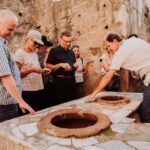
- The bakery
- The theater
- The Lupanare
- Mosaics, frescoes, and the preserved street life of Pompeii
- Timing, heat, and the included water and orange juice
- Price and value: is $80.43 worth it?
- What this tour does best—and who it’s for
- Rules to keep in mind during the visit
- Should you book this Pompeii guided tour?
- FAQ
- How long is the Pompeii small-group guided tour?
- Is skip-the-line entry included?
- What group size is this tour?
- Where do I meet the tour guide?
- What should I bring?
- Are headsets provided?
- Is Villa dei Misteri included?
- Can I bring a dog?
- Is this tour suitable for mobility impairments?
Key things you should know before you go
- Skip-the-line entry saves your time at the archaeological area
- Max 12 people keeps the feel semi-private and manageable
- Headsets help you hear the guide clearly throughout the walk
- Porta Marina Inferiore is your entry point into Pompeii
- Forum + Vesuvius views give you the big-picture Pompeii moment fast
- Water and orange juice are included to help you last the heat
Skip-the-line entry and why it matters at Pompeii
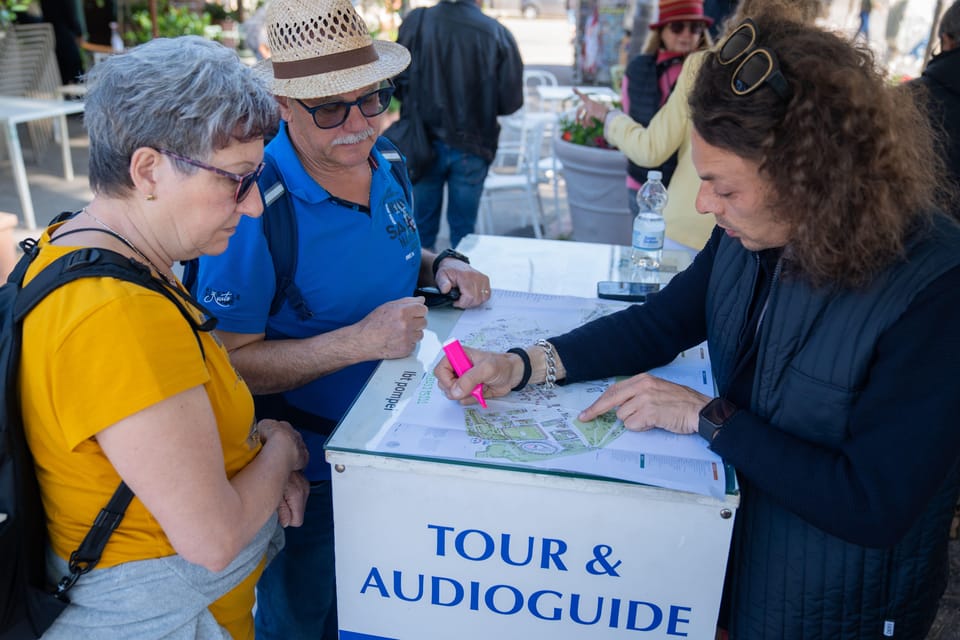
At Pompeii, waiting is the enemy. This tour includes reserved admission to the archaeological area, so you spend less time in lines and more time looking at what’s actually preserved. That makes a big difference when your time window is only about 2 hours.
You enter the town at Porta Marina Inferiore. That’s useful because it sets your orientation early. Instead of wandering in unsure, you’re guided into the ruin in a logical order, which helps the city feel like a place—not a pile of stones.
You’ll also get help right at the meeting point area, with assistance and Wi‑Fi offered there. It sounds small, but it’s handy if you need directions, translation support, or a quick check of what happens next.
You can also read our reviews of more tours and experiences in Pompei Campania


The meeting point: how to start smoothly (Piazza Esedra and IBT Center)
The tour starts at Piazza Esedra, 11. In practice, you report to the office labeled IBT Center/Touristation next to Chalet Donna Lucia. The end is back at the same meeting spot.
I’d treat this as your “show up early” moment. Pompeii days go sideways fast if you’re stressed about where to stand. Give yourself extra time to locate the exact office and get sorted before the group departs.
Also note the tour runs in multiple languages: German, English, Italian, Spanish, French, Japanese, and Portuguese. So you’ll be able to pick a departure that matches what you’re comfortable hearing.
Bring a passport or ID card—it’s required for all participants.
Semi-private group size: the difference between a herd and a tour
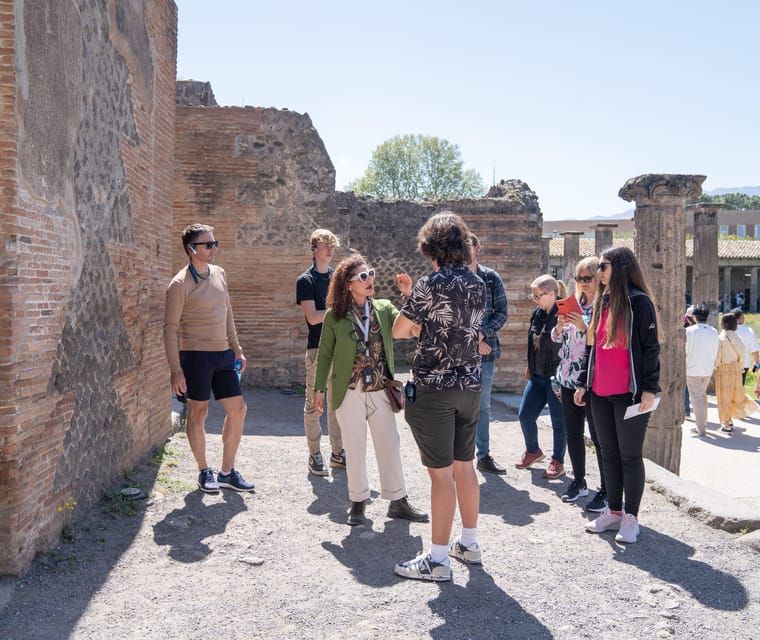
This is capped at 12 people, and that changes the whole experience. In a smaller group, you can actually hear the guide, ask questions if something clicks, and keep your bearings without constantly shuffling around strangers.
The tour uses headsets, which is a big deal in Pompeii’s outdoor noise. You’re not relying on someone shouting over footsteps and passing tours.
One practical detail: this format is also better for pacing. Pompeii is uneven underfoot and spread out, so a tighter group helps the guide keep you on track while still pausing for key views and details.
Not every body will find this comfortable. The tour is not suitable for people with mobility impairments, so if walking long distances or uneven ground is tough for you, consider a different arrangement.
Inside the 2-hour walk: your Pompeii route from the forum outward
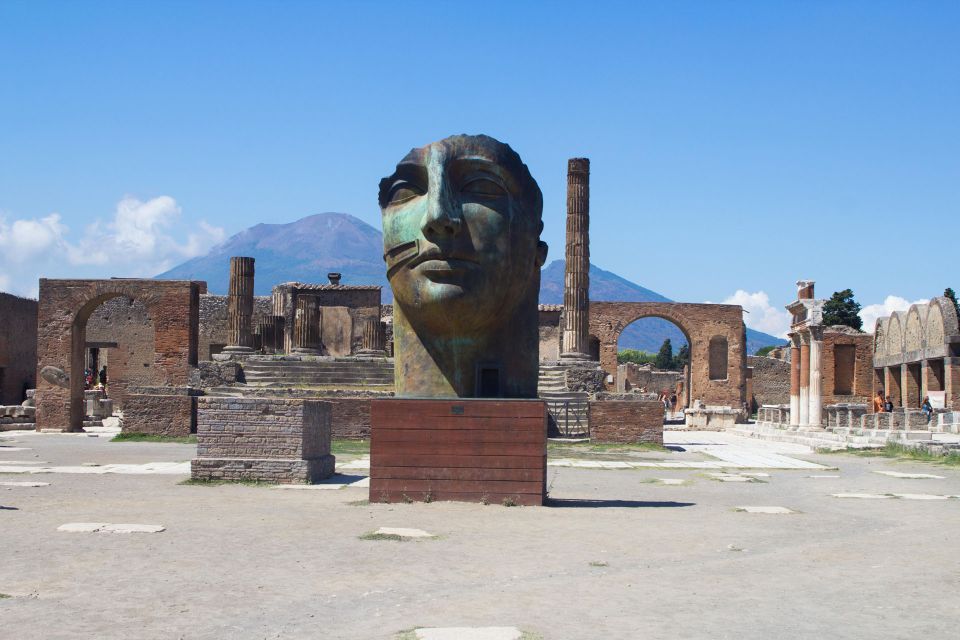
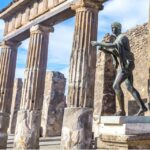
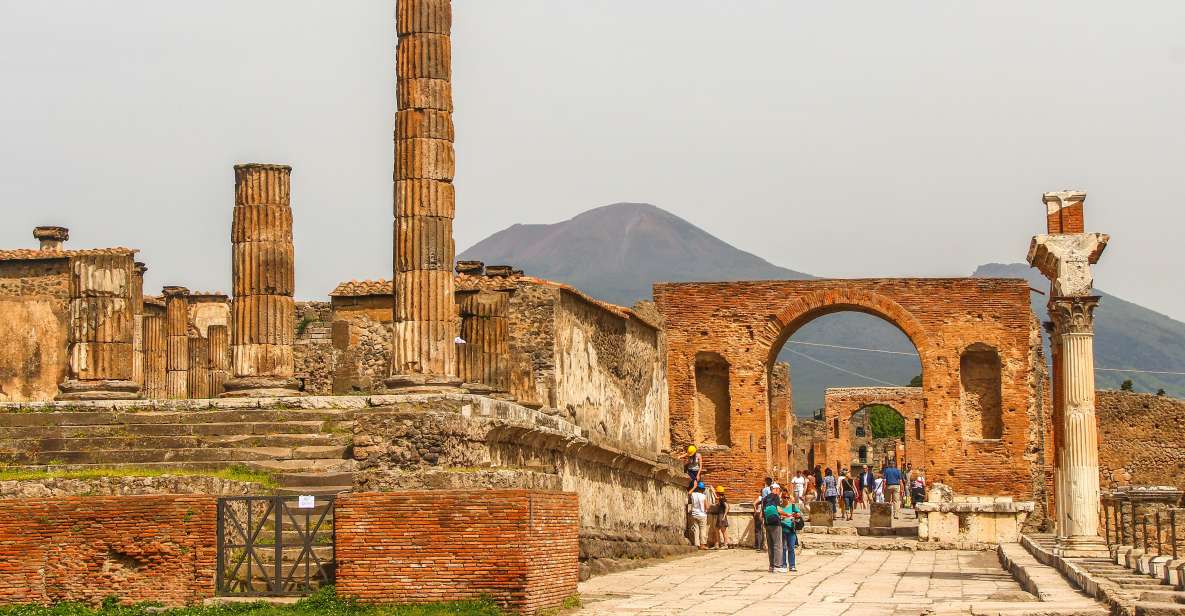
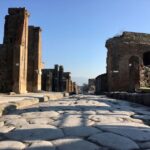
Your tour is guided at Pompeii Archaeological Site for about 2 hours. You’ll walk main streets and spend time in the heart of the city—the forum. That matters because the forum is the easiest place to understand what Pompeii was about: civic life, public gatherings, commerce, and power.
From there, you’ll move through a mix of everyday and big-ticket buildings. Expect stops that cover:
- Baths and temples, showing how people balanced hygiene, religion, and daily routines
- A bakery, which helps connect the city to food and the rhythms of work
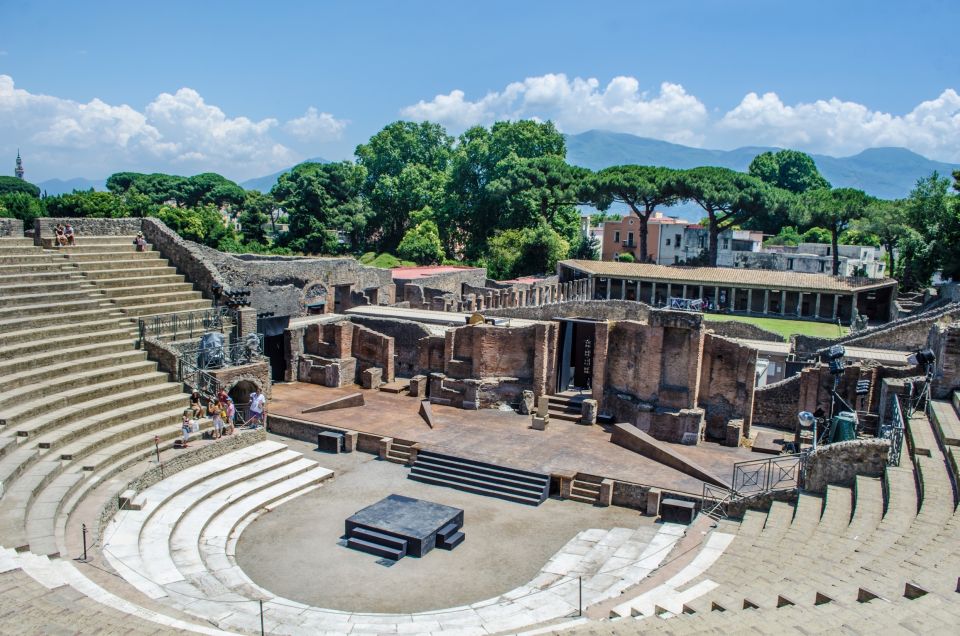
- The great theater, a reminder that entertainment was part of public life
- The Lupanare, a brothel area that’s often discussed with a mix of history and caution
Here’s the key: this isn’t just a “look at this wall” tour. The guide ties the spaces together so you can picture a day in Pompeii—where people went, what they did, and why certain buildings were so central.
There’s also a strong Mount Vesuvius perspective. You’ll get views over the city, which helps you understand how the geography shaped the place. Pompeii isn’t floating in a museum box. It’s a city built in a volcanic neighborhood—and the ash that preserved it is the same force that erased it.
Baths, temples, theater, and the Lupanare: what to pay attention to
If you’ve ever toured ruins with no context, you know the frustration: everything looks important, but you can’t tell what’s meaningful. A good guide fixes that, and this one is built around pointing out the right stuff at the right time.
You can also read our reviews of more guided tours in Pompei Campania

The baths and temples
Watch how the guide frames these buildings as systems, not just rooms. Baths tell you about personal routine and community habits. Temples show how religion sat inside normal life, not off in some separate world.
The bakery
This is the kind of stop that makes the city feel real. Food production wasn’t a background detail—it was essential. Even if you don’t leave knowing every technical term, you’ll leave understanding how urban life relied on practical work.
The theater
The great theater brings a different tone to the walk. You’ll see how public entertainment worked as social glue, and how performances fit into civic identity. It’s also a good place for the guide to connect architecture to human behavior: where people sat, where voices carried, and why the building’s layout mattered.
The Lupanare
The Lupanare is famous for a reason. The tour includes it as a stop, so you’ll learn what it was in the ancient city. Be ready for frank subject matter, but keep it in historical context—the point is understanding the city, not treating it like a shock attraction.
Mosaics, frescoes, and the preserved street life of Pompeii
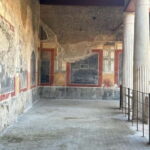
One of the biggest reasons Pompeii feels so powerful is visual evidence. You’ll see well-preserved artworks, including mosaics and frescoes, plus remnants of daily life painted or patterned onto walls and floors.
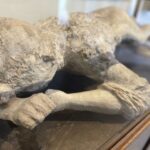
Here’s what I recommend you do during these moments: slow down for a few seconds and actually look for details the guide points to. In these ruins, one preserved color or one intact floor pattern is sometimes the whole story. The ash didn’t just bury Pompeii—it froze surfaces at a moment in time, which is why details still make sense today.
Your guide will point out what you’re seeing and why it mattered to ancient inhabitants. That turns “pretty fragments” into “a living city that got interrupted.”
This is also where the headsets help again. You’ll hear explanations while you’re visually scanning, so you don’t have to keep tugging your attention away from the artwork.
Timing, heat, and the included water and orange juice
Two hours at Pompeii can feel like both plenty and not enough. Plenty, because you’ll hit the major highlights without feeling stuck on a single street all day. Not enough, because you’ll likely want to linger once you get oriented.
That’s why the included refreshment is more than fluff. The tour provides a small bottle of water and a glass of orange juice. It’s the kind of practical finish that helps you keep your energy after the walking.
One consideration: there can be mismatches between what’s promised and what you receive in hand on the day. I’d treat the water and orange juice as included, but still check early rather than waiting until you’re thirsty later. If it isn’t there when you expect it, ask staff right away.
Price and value: is $80.43 worth it?
At about $80.43 per person, this tour isn’t the cheapest way into Pompeii. You’re paying for three things that actually matter:
- Skip-the-line reserved entry (time savings at a crowded site)
- A guided experience designed around key stops, not random wandering
- A smaller group plus headsets for clearer listening
You’re also not paying for everything. Villa dei Misteri is not included. If you’re specifically planning to spend time at that villa, you’ll need a separate ticket or another tour plan.
So the value depends on your travel style. If you like facts, structure, and a guided path through major sights, the price is easier to justify. If you prefer to go slow, stop everywhere, and build your own route without guidance, you may feel boxed in by the 2-hour format.
What this tour does best—and who it’s for
This tour is a strong fit if you want:
- A guided Pompeii experience with context, not just sightseeing
- A semi-private group size that stays manageable
- Clear audio help via headsets
- A route that hits big moments fast: forum, baths/temples, theater, and the Lupanare, plus Vesuvius views
It’s less ideal if:
- You have mobility challenges (it’s not suitable for people with mobility impairments)
- You want Villa dei Misteri included
- You dislike guided tours and would rather wander freely
If you’re traveling solo, a small group format can be a win. You get social energy without the chaos of a large bus tour.
Rules to keep in mind during the visit
Pompeii tours can be strict, especially in the archaeological area. This one asks that you follow basics like:
- No pets (small dogs are permitted in the archaeological area, but must be on a leash and carried when inside buildings)
- No alcohol or drugs
- No glass objects
You’ll also want to have your ID or passport, since it’s required for all participants.
Should you book this Pompeii guided tour?
I’d book this if you want Pompeii to feel understandable in a short time. The skip-the-line ticket, small group size, and headsets make it a smoother, more listenable outing. You’ll cover the forum and the big visual highlights like mosaics and frescoes, plus you’ll get practical orientation with Vesuvius views early enough to click.
I wouldn’t book it if Villa dei Misteri is a must for your day, or if walking this kind of route is a challenge for you. And if you’re counting on the included water and orange juice as part of your budget and comfort plan, confirm early so there’s no day-of disappointment.
FAQ
How long is the Pompeii small-group guided tour?
The guided portion is about 2 hours.
Is skip-the-line entry included?
Yes. Skip-the-line entrance tickets are included, with reserved admission to the archaeological area.
What group size is this tour?
It’s limited to a maximum of 12 people.
Where do I meet the tour guide?
Meet at the office called IBT Center/Touristation next to Chalet Donna Lucia (Piazza Esedra, 11). The tour ends back at the meeting point.
What should I bring?
Bring your passport or ID card.
Are headsets provided?
Yes. Headsets are included.
Is Villa dei Misteri included?
No. Entrance to Villa dei Misteri is not included.
Can I bring a dog?
Pets are not allowed, but small dogs are permitted inside the archaeological area if they are kept on a leash and carried when inside buildings.
Is this tour suitable for mobility impairments?
No, it’s not suitable for people with mobility impairments.