REVIEW · POMPEI CAMPANIA
Pompeii Skip-the-Line Tour with Expert Archeological Guide
Book on GetYourGuide →Operated by WORLDTOURS S.r.l. · Bookable on GetYourGuide
Pompeii feels huge, but this tour keeps it sharp. You’ll get a licensed archaeologist guide moving you through standout streets and sites, plus a short cameo workshop stop before you enter the ruins.
I love the way the route mixes big landmarks (temples and the Forum area) with everyday details like a thermopolium and market spots. I also like that the tour is built for learning, not just wandering. One possible drawback: the tour is time-compressed, so if you’re hoping for the amphitheater or long, slow exploring, you may feel a bit rushed.
If you’re ready to follow the guide and ask questions, this can be a high-value way to make Pompeii make sense. It’s also worth knowing that meeting points can get chaotic, and some people report uncomfortable or low-quality ear pieces on days when audio gear is used.
In This Review
- Why This Pompeii Tour Works for a Short Visit
- What You’ll See: The Real Stops Behind the Pompeii Highlights
- Fortuna Village Start: Get Your Bearings Before You March In
- Cameo Workshop Stop: A Useful Break With a Craft Connection
- Large Theatre and Teatro Piccolo: Public Life, Not Just Ruins
- Thermopolium: The Roman Fast-Food Moment You’ll Remember
- Foro Civile di Pompei and Forum Baths: Power, Leisure, and Social Life
- House of the Vettii: Wealth, Art, and How Taste Worked
- House of Menander: Private Life With Cultural Clues
- Macellum and Market Stops: Where Food and News Met
- Temples of Jupiter and Apollo: Sacred Spaces With Photo Moments
- Ear Pieces, Group Size, and the Guide Factor
- Pace and Coverage: What You Might Feel Missing
- Skip-the-Line Entrance: Worth It, But Don’t Count on Peace
- Price Value at About $31: What You Get for the Money
- Who This Tour Fits Best
- Should You Book This Pompeii Tour?
- FAQ
- How long is the Pompeii guided portion?
- Where do I meet the guide in Pompeii?
- What languages are available for the live guide?
- Does the tour include skip-the-line tickets?
- Is the cameo workshop included?
- What stops happen after the cameo workshop?
- What if there aren’t enough people for a live guide?
- Is this tour wheelchair friendly?
- Are there any restrictions on what I can bring?
- Is Pompeii free on the first Sunday of the month?
Why This Pompeii Tour Works for a Short Visit
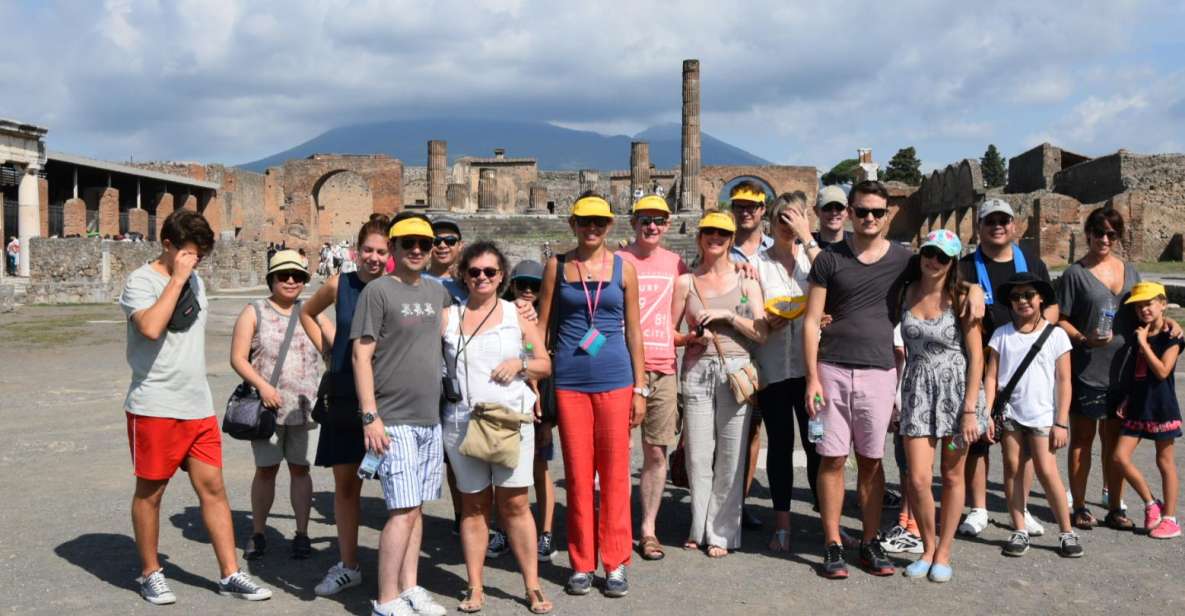
This is a 2-hour guided walk inside Pompeii with a skip-the-line entrance, which matters because the site can eat your time fast. Instead of spending your day in queues, you spend it in rooms and streets that are hard to interpret without someone who knows what to look for.
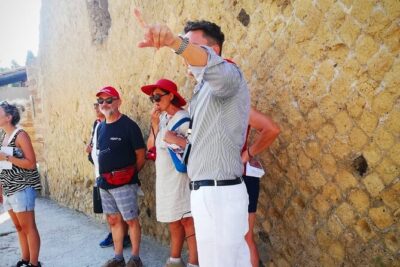
You also get a human layer to Pompeii: you’re not just seeing stones. You’re hearing how people lived and worked—temples for worship, villas for status, bathhouses for social life, and shopfronts that show trade and daily routine. That context is what turns a famous place into something you can picture.
What You’ll See: The Real Stops Behind the Pompeii Highlights
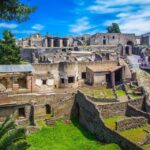
Pompeii can overwhelm you. This itinerary keeps returning to the idea of a functioning city: public life, commerce, leisure, and private home life.
Here’s how the flow typically feels:
- You start with a quick look at major public spaces, then move into houses that show how wealth and art played out at home.
- You finish with key sacred sites and market/bath life, which is where many visitors finally start linking the clues.
The trade-off is coverage. You’ll hit major areas, but it’s not a “see everything” day. Think of it as a guided orientation plus smart deepening where the guide can point out the details.
You can also read our reviews of more guided tours in Pompei Campania


Fortuna Village Start: Get Your Bearings Before You March In
The meeting point is outside the entrance of Fortuna Village Pompei, and the guide holds a sign with the company name. That sounds simple, but Pompeii has a way of making meeting points feel harder than they should.
Practical move: arrive a bit early and take a slow walk around the entrance area. If the guide sign is easy to miss, you’ll save time by letting yourself do one careful check instead of wandering fast.
Cameo Workshop Stop: A Useful Break With a Craft Connection
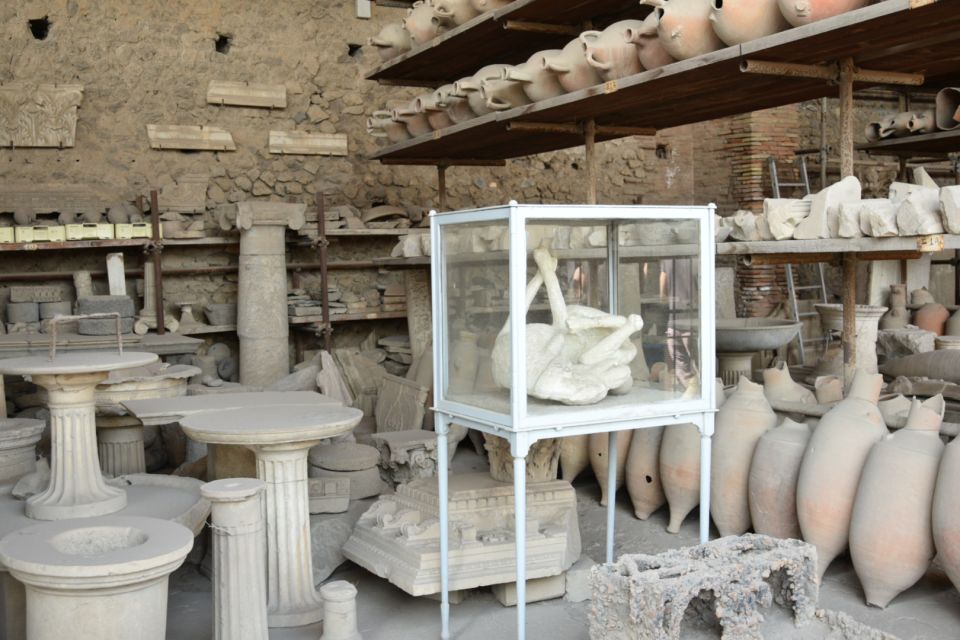
Before you get fully into the ruins, you stop at a traditional cameo workshop. You can watch artisans carving delicate shell pieces by hand, and you’ll have a brief restroom break too.
Why I like this stop: it resets your brain. Pompeii is visually intense and emotionally heavy. A craft demonstration gives your eyes something different to focus on, and the restroom break can save your entire afternoon.
Also, it’s a reminder that this region still practices forms of artistry tied to local materials and skills. You’re not just time-traveling; you’re still in Campania right now.
Large Theatre and Teatro Piccolo: Public Life, Not Just Ruins
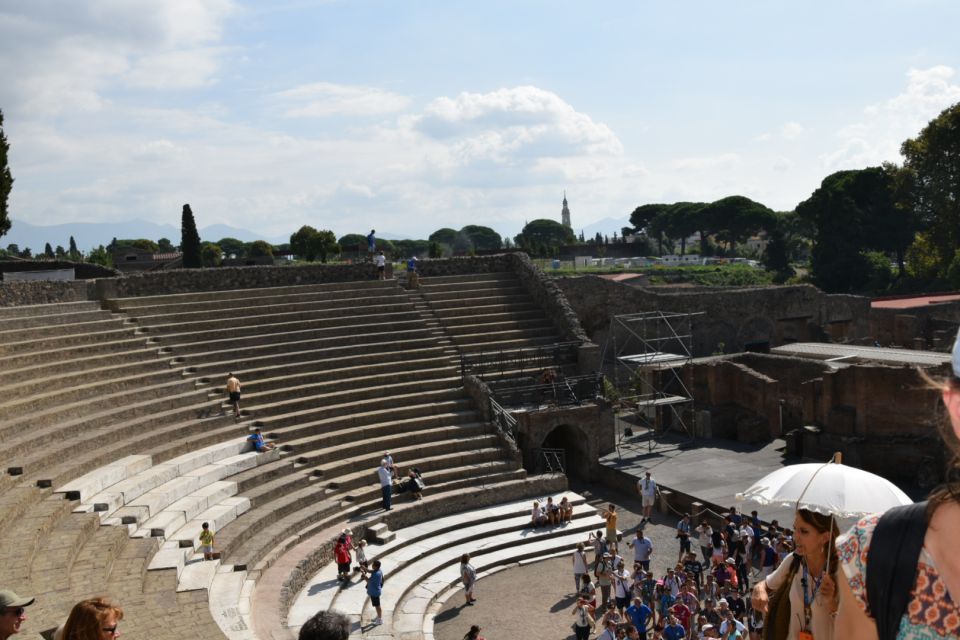
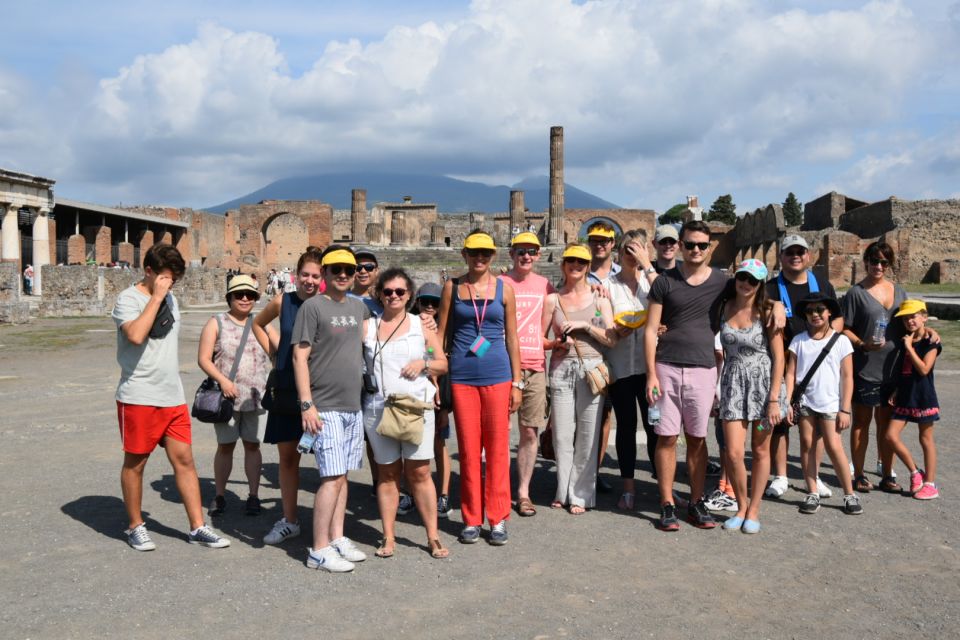
The tour includes a visit at the Large Theatre (around 5 minutes) and a photo stop at the Teatro Piccolo (around 5 minutes). These are short stops, so don’t expect a full explanation of performances or architecture.
What you should get out of it is the concept: Pompeii wasn’t only about temples and houses. People gathered for entertainment in spaces built to hold a crowd. Even a brief pause here helps you picture how the city worked on a daily level.
Thermopolium: The Roman Fast-Food Moment You’ll Remember
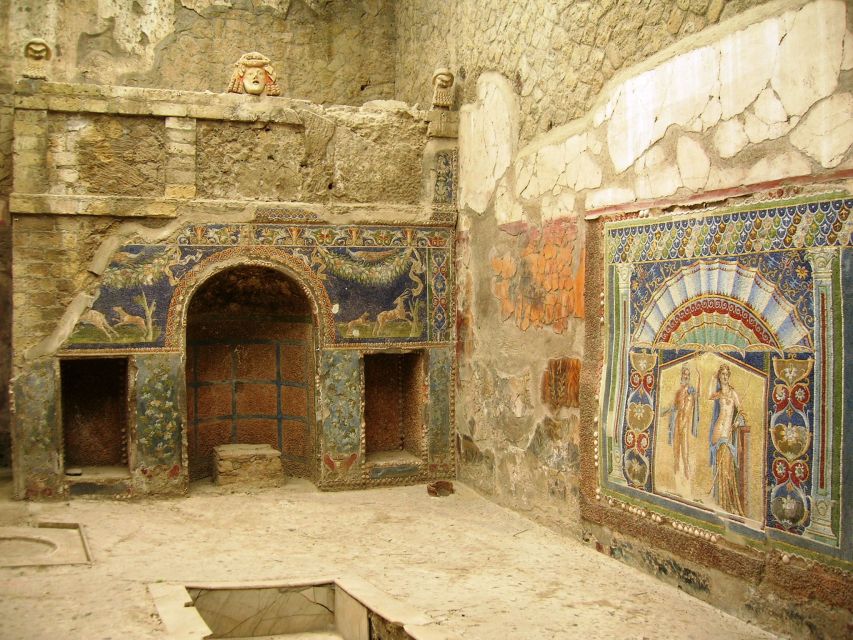
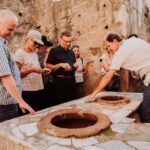
Next comes the thermopolium stop (around 5 minutes). This is the kind of place that makes Pompeii feel real because it’s about eating, drinking, and quick stops—exactly what you’d expect in a busy town.
The value here is the guide’s stories about habits and routine. When you understand that these weren’t just decorative rooms, you start noticing the purpose behind the design.
You can also read our reviews of more tours and experiences in Pompei Campania



Foro Civile di Pompei and Forum Baths: Power, Leisure, and Social Life
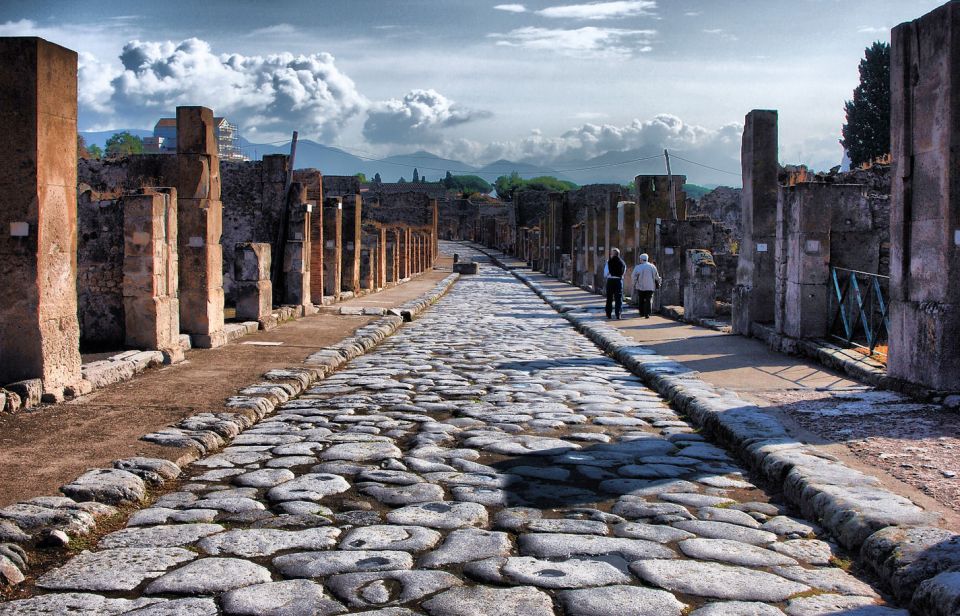
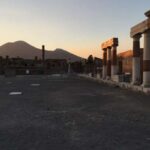
You’ll spend time at the Foro Civile di Pompeii (about 10 minutes) and then move into Forum Baths (about 20 minutes). This part of the day is one reason the tour can feel efficient: you’re reading public life in one connected sweep.
At the baths, listen for explanations of how bathing blended routine and socializing. Baths weren’t only about cleanliness. They were places to talk, relax, and keep up with news. In a city frozen in time, bathhouses are one of the best ways to understand normal life.
One consideration: you may feel the pace here. Some visitors mention the guide pushing forward right after key points. If you’re the type who likes slow photo time, be ready to prioritize what matters most to you.
House of the Vettii: Wealth, Art, and How Taste Worked
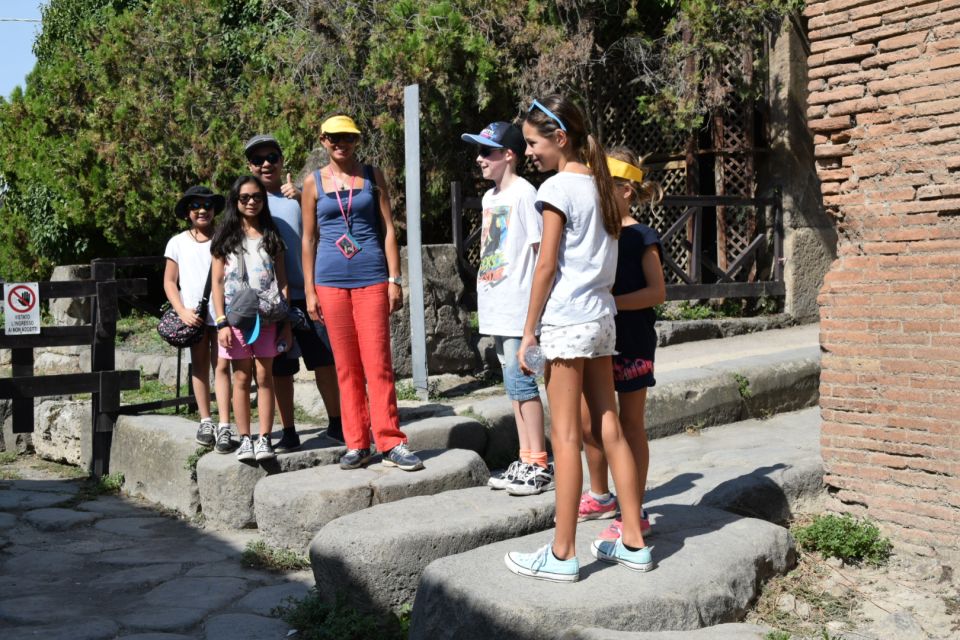
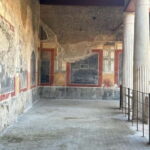
The House of the Vettii takes about 20 minutes. This is where Pompeii starts showing you class and ambition. Houses like this aren’t just shelters; they’re statements.
Look for details the guide highlights—because in a short stop, you won’t have time to “discover” everything on your own. The payoff is that you learn what to notice, not just what to see.
House of Menander: Private Life With Cultural Clues
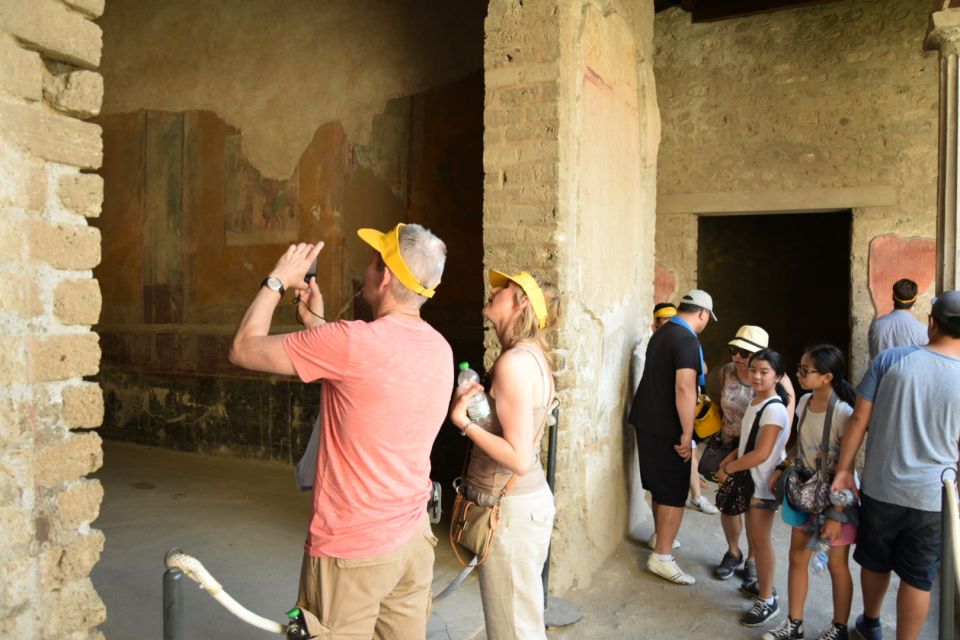
Then you’ll visit the House of Menander (about 20 minutes). This is another strong home-life stop, and it tends to balance what you saw in the Vettii house.
What I like about doing both houses on a timed tour is comparison. You start seeing patterns in layout and decor, and you’ll understand why people invested in displays of culture and identity.
Macellum and Market Stops: Where Food and News Met
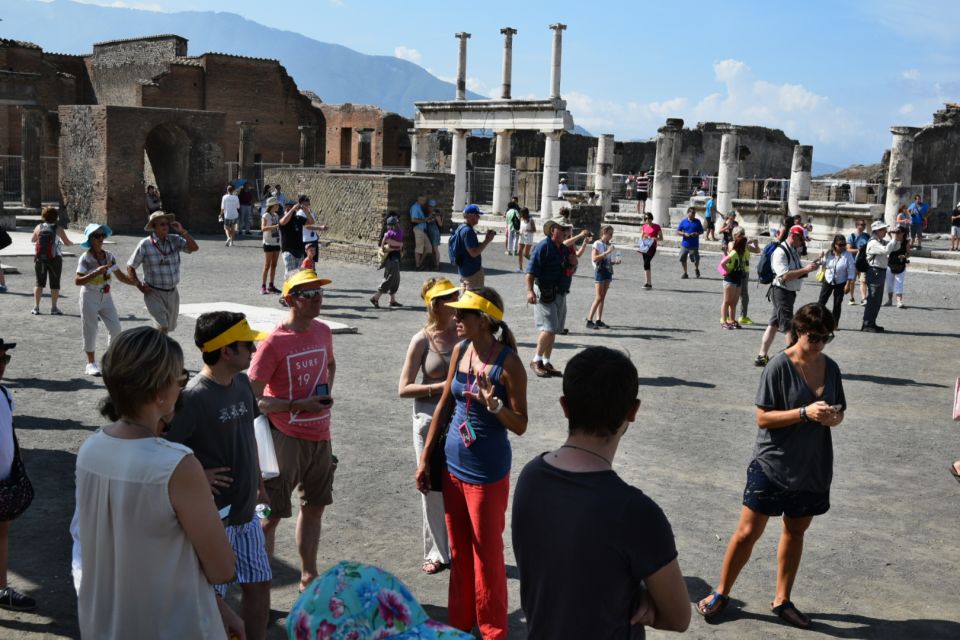
The Macellum of Pompeii gets about 10 minutes. Even in a short window, this is a great place to think about commerce and daily needs.
A market area helps you connect the dots between home life and public life. It’s not just where food was sold; it’s where people moved, talked, negotiated, and stayed in contact. When the guide ties this to daily behavior, Pompeii stops feeling like a museum and starts feeling like a town.
Temples of Jupiter and Apollo: Sacred Spaces With Photo Moments
You’ll have a photo stop at the Temple of Jupiter (about 5 minutes) and a visit at the Temple of Apollo (about 10 minutes). These are short stops compared to the houses and baths, so your goal should be understanding why these sites mattered.
Even a quick look can help. A temple tells you what a community valued, how it organized worship, and how religion shaped public space. If you’re into architecture or symbolic details, this is where the guide’s pointing matters most.
Ear Pieces, Group Size, and the Guide Factor
This tour is run by WORLDTOURS S.r.l. and you’ll get live guiding in English, Italian, Spanish, or French. A licensed archaeologist is included when the group meets the minimum for a guide; if not, each participant gets an audio guide.
In practice, the quality of hearing can affect how much you get from the day. Some people reported ear pieces that were uncomfortable or didn’t fit well, and others said sound volume could be poor at times. If you know you’re sensitive to audio gear, plan to position yourself closer to the guide and don’t be afraid to ask a question early.
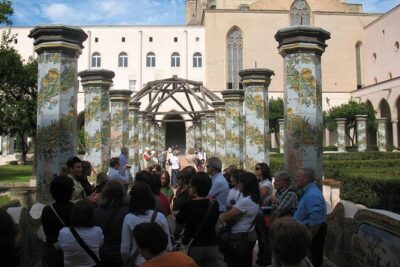
Group size is another reality check. The tour is marketed as small group, but some departures have felt larger than expected. That means you’ll want to keep an eye on the guide and stay within the main cluster so you don’t fall behind during transitions.
Names that came up in past experiences include Michael and Analisa, both praised for energy and clear explanation.
Pace and Coverage: What You Might Feel Missing
The whole format is designed to hit key areas within a two-hour guided window. That’s good if you’re limited on time. It can feel limiting if you want to linger.
A few past visitors noted the tour finishing faster than the stated length, and some mentioned the guide moving on quickly once explanations were done. Others also felt certain big areas weren’t included and suggested staying extra time on your own after the tour ends.
My advice: treat this tour as your “fast learning pass,” then add independent time for the parts that call to you—especially if you’re the kind of visitor who loves tracing details slowly.
Skip-the-Line Entrance: Worth It, But Don’t Count on Peace
Skip-the-line matters most at places like Pompeii where timing and crowd flow can change fast. This tour includes Pompeii skip-the-line entrance, which should help you start faster.
Still, two real-world factors can throw off your schedule: meeting point confusion and the flow of people once you arrive. Some visitors also reported the day being delayed due to traffic or late starts. If your day is tight—like you have another ticket or train soon—build in a buffer.
Price Value at About $31: What You Get for the Money
At around $31 per person, this isn’t just a ticket. You’re paying for:
- a skip-the-line entrance
- a licensed archaeologist guide (when the minimum is met)
- about two hours of guided time inside the ruins
- a cameo workshop stop and shop time
For Pompeii, guided interpretation is where the value lives. Without a guide, you can still enjoy the ruins—but you’ll likely walk faster and miss the why behind what you’re seeing. With guidance, your time inside Pompeii becomes more efficient.
One thing to watch: if it’s the first Sunday of the month, Pompeii entry is free by regional regulation, but tickets can’t be reserved ahead of time and entry isn’t guaranteed. In that case, the financial value of skip-the-line can shift, because you might save on admission but still need to win the entry timing.
Who This Tour Fits Best
I’d put this tour at the top of your list if you:
- want a guided overview that explains daily life, not just major ruins
- have about half a day and don’t want to plan every turn
- like houses, baths, and market life more than long museum-style wandering
- want a small-group experience with opportunities to ask questions
I’d skip or reconsider if you:
- have mobility challenges, because it’s not suitable for people with mobility impairments or wheelchair users
- travel with luggage, because luggage or large bags aren’t allowed
- rely on walking sticks, because they aren’t allowed
- want a slow, stress-free visit, because this is a structured, time-compressed route
Also note the no-drone rule and no pets rule. It’s a classic “prepare early so you don’t waste time at the gate” kind of site.
Should You Book This Pompeii Tour?
Yes, I’d book it if your goal is to understand Pompeii quickly and you want to spend your time on the places that help you grasp how the city worked. The mix of public spaces, a couple standout homes, baths, market life, and a temple stop gives you a well-rounded read of Roman daily life in a short window.
But don’t book it blindly if you hate rushing. If you want deep lingering in fewer spots, you might get more satisfaction by visiting Pompeii independently and spending your money on a longer private guide.
My decision checklist: if you can handle a timed route and you’re open to learning on the move, this one is solid value at $31—especially with the expert archaeologist focus and skip-the-line entry.
FAQ
How long is the Pompeii guided portion?
The guided tour inside the ruins lasts about 2 hours, with the overall activity listed as 2 hours. There’s also a brief stop at a cameo workshop before you enter the ruins.
Where do I meet the guide in Pompeii?
Meet outside the entrance of Fortuna Village Pompei. The guide holds a sign with the company name.
What languages are available for the live guide?
The live tour guide is offered in English, Italian, Spanish, and French. The tour may be bilingual.
Does the tour include skip-the-line tickets?
Yes. The tour includes Pompeii skip-the-line entrance.
Is the cameo workshop included?
Yes. The tour includes a cameo factory and shop stop, where you can watch skilled artisans carving shells by hand.
What stops happen after the cameo workshop?
You’ll also have a restroom break, then you’ll enter Pompeii for guided visits that include a theatre stop, a thermopolium, the Forum area, two houses, baths, a market, and temple photo/visit stops.
What if there aren’t enough people for a live guide?
A licensed guide is provided if a minimum of 6 participants is met. If that minimum isn’t met, each participant receives an audio guide.
Is this tour wheelchair friendly?
No. It is not suitable for people with mobility impairments and wheelchair users.
Are there any restrictions on what I can bring?
Yes. Pets, drones, luggage or large bags, walking sticks, and unaccompanied minors aren’t allowed.
Is Pompeii free on the first Sunday of the month?
Admission to the archaeological site is free on the first Sunday of each month, but tickets can’t be reserved in advance, so entry isn’t guaranteed.