REVIEW · POMPEII
Sharing Tour of Pompeii
Book on Viator →Operated by Tours Pompei · Bookable on Viator
Pompeii has a way of sticking in your head. This 2.5-hour Pompeii tour focuses on three standout ruins tied to the 79 eruption of Vesuvius: a recovered Roman temple, the Casa dei Vettii, and the lupanari brothels. I like the clear rhythm of the stops and the fact that you get a real guide with a private-group format (even though it’s marketed as sharing). One drawback to plan around: the Pompeii entrance ticket is not included, and the tour can depend on a minimum number of people.
What I really like is how each stop is explained as a story of burial and discovery—less trivia, more meaning. The Casa dei Vettii also gets special attention, including the fact it’s named after the owners, which helps the whole place feel less abstract. The lupanari stop is also handled in a straightforward way: it’s explained as the Roman appointment-house world, with some rooms still visible.
If you’re price sensitive, budget for the entrance ticket on top of the tour rate. Also, keep in mind there have been rare complaints about the experience not running; that can happen when tours have minimum-participant rules, so it’s smart to plan with some flexibility if possible.
In This Review
- Key things to know before you go
- How the tour is set up: time, group size, and what you pay for
- Meeting point at Villa Dei Misteri: getting started without drama
- Stop 1: The Roman temple buried and later recovered
- Stop 2: Casa dei Vettii and why the owners’ name matters
- Stop 3: The lupanari and what “appointment house” really means
- Why this selection of ruins works (and where it may not)
- Value check: pricing with the €20 entrance ticket in mind
- The guide and the language: why it matters at Pompeii
- Practical tips for making the most of the 2.5 hours
- Who should book this tour
- Should you book this Pompeii tour?
- FAQ
- Is pickup offered for this Pompeii tour?
- How long does the Pompeii tour take?
- Where do we meet for the tour?
- Is the Pompeii entrance ticket included in the price?
- What language is the tour in?
- Do we get a mobile ticket?
- Is this tour private?
- Are service animals allowed?
- What is the cancellation window for a full refund?
Key things to know before you go
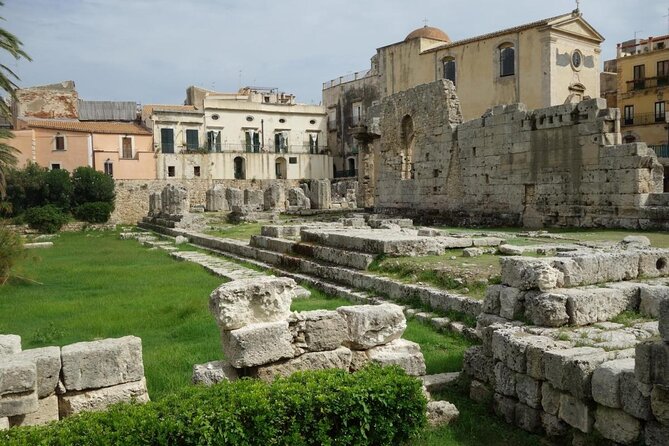
- Private guide, group up to 8: You get the guide attention without the stress of a huge crowd pack.
- Three ruins, not a blur: A Roman temple, the Casa dei Vettii, and the lupanari make for a focused circuit.
- Entrance ticket is separate: You’ll pay about €20 per person for Pompeii entry.
- English language tour: Easy to follow without second-guessing.
- Mobile ticket + pickup available: You can travel lighter and meet up smoothly.
- Near public transportation: The meeting point is set up for practical arrivals.
How the tour is set up: time, group size, and what you pay for
This is a 2 hours 30 minutes Pompeii visit designed to cover major sights without turning into an all-day endurance test. The price is $193.49 per group, sized for up to 8 people, so it can work out very differently depending on how full your group is. If your group is near capacity, the base tour cost spreads out nicely—then you only add the Pompeii entrance fee separately.
And yes, the entrance ticket matters. The tour price does not include the Pompeii entrance ticket, which is listed as €20 per person. The operator notes that they buy the entrance tickets daily for customers, but the key point is: don’t assume the €20 is folded into the $193.49. If you’re budgeting, add it up early so there are no last-minute surprises.
The format also helps. The experience is described as private in the sense that only your group participates, even if it’s called a sharing tour. In real terms, that usually means you can expect the guide to keep a steady pace for your party, not to constantly reshuffle people.
You’ll also get a mobile ticket, and the tour offers pickup (details are not spelled out in the info you provided, so I treat pickup as available, not guaranteed to be at a specific stop). The tour is offered in English.
You can also read our reviews of more tours and experiences in Pompeii.



Meeting point at Villa Dei Misteri: getting started without drama

You meet at Pompei Scavi Villa Dei Misteri, 80045 Pompei, Metropolitan City of Naples, Italy. The guide should be easy to spot: you’ll find them with a Sharing Tour of Pompei sign.
This matters more than it sounds. Pompeii has a few nearby meeting-area options, and being late can throw your timing off because the tour runs on a tight 2.5-hour window. If you’re using public transport, plan extra time for getting oriented around the entrance area and lining up where the guide is standing.
Stop 1: The Roman temple buried and later recovered
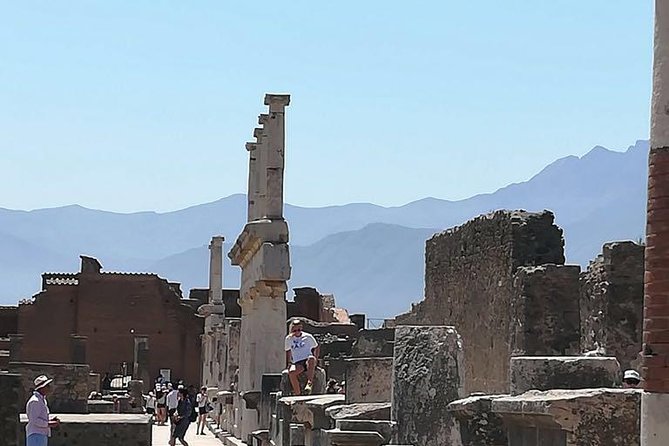
The first stop is a Roman temple that was buried by the eruption of Vesuvius in 79 and then later recovered through archaeological excavations of ancient Pompeii.
I like starting here because it sets the tone. You’re not jumping straight into houses or the more curious side of daily life. Instead, you get a strong sense of how the eruption changed the city, and how excavations bring parts of Pompeii back into view in a way that’s more than just scenic ruins.
A drawback to consider: a temple can feel “big and distant” compared to spaces where people lived and ate. If you love detail, you’ll want the guide’s explanations here—otherwise you might see a structure and miss the story. The value of booking this tour is that the guide’s job is to connect the physical remains to what they meant in Roman life, and then to what happened when the volcano buried it.
Stop 2: Casa dei Vettii and why the owners’ name matters
Next up is the Casa dei Vettii, described as a Roman domus (a townhouse) also buried during the eruption of Vesuvius in 79 and then found after excavations.
This stop is where the tour leans into art and personal identity. The info highlights it as one of the great examples of Roman art from the first century, and it also notes the house’s name: it’s named after the owners.
That owner detail is not just a naming trivia fact. It helps you read the space like a home rather than like a museum case. When a place is tied to actual people (even through the limited evidence we have), you start noticing why certain rooms and decorations would matter to them. It shifts your mental model from ruins as backdrop to ruins as a record of daily taste and status.
What can be tricky: houses usually mean more “inside” interpretation than “stand and look” sightseeing. If you’re someone who wants broad views at every second, domus spaces can feel more detailed than panoramic. Still, that’s exactly why this stop is a strong mid-tour anchor: it gives you a reason to slow down and pay attention.
Stop 3: The lupanari and what “appointment house” really means

The final stop is the lupanari, explained with some direct language. The term comes from Latin lupa, meaning prostitute. In Roman Pompeii, these were places dedicated to mercenary sexual pleasure, described as real appointment-house settings—basically brothels—and some of the structures are still visible in the ruins.
This is the stop that most people either find fascinating or want to understand respectfully and plainly. The best way to approach it is exactly as the tour frames it: as a documented piece of Roman social life that can be hard to talk about without context. With the guide in place, you’re more likely to learn what the space was for and how the remains connect to the original function.
A consideration: this stop may not be comfortable for everyone. Even when handled with context, it’s still focused on sexual commerce. If that topic makes you uneasy, decide before you go how you want your Pompeii experience to feel—because the tour’s itinerary includes it.



Why this selection of ruins works (and where it may not)
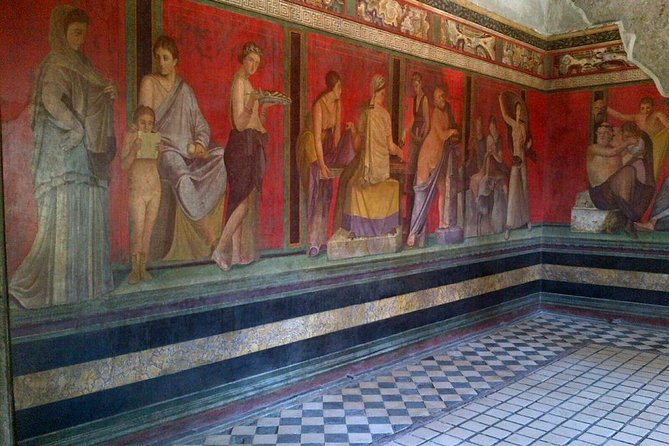
The tour’s big idea is simple: three sites that show Pompeii as both civic and personal.
- The temple gives you a public, formal start.
- The Casa dei Vettii pulls you into private domestic life and Roman art.
- The lupanari turns to a commercial and social corner of the city that’s unusually visible.
That combination is valuable for first-timers because it covers more than the postcard version. You’ll leave with a more complete sense of what Pompeii contained: places of worship, places where people lived and displayed art, and places where transactions happened.
Where it might not fit: if you’re expecting a high volume tour with many different stops, this is more focused. You’re paying for interpretation, not a sightseeing checklist. If you’re the type who wants to see every major site in one go, you may feel slightly “left wanting.” But if you want clarity and explanation, the tight set of three stops is a strength.
Value check: pricing with the €20 entrance ticket in mind
Let’s do the math in a practical way.
- Base tour price: $193.49 per group (up to 8)
- Pompeii entrance ticket: €20 per person, not included
If your group fills up close to 8, the tour cost per person can feel quite manageable, because the tour guide portion is spread across the group. If your group is smaller—say 2, 3, or 4 people—the base price per person climbs quickly, and the entrance ticket becomes a smaller share of the total.
So the best value scenario is: you have a group that can reach the upper size, or you truly want a guided, private-for-your-party kind of experience for just a few people.
There’s also an efficiency angle. When the entrance ticket isn’t part of the package, you’re effectively planning your own entry payment on top of the tour. That’s normal, but it changes how you should budget. I’d treat the tour like a guided walkthrough plus a separate site entry fee.
The guide and the language: why it matters at Pompeii

You’re getting a private tour guide and the tour is in English, which is a practical win. Pompeii is full of details, and ruins can be misleading without interpretation—especially when it comes to places like the Casa dei Vettii and the lupanari, where the point is not just what you see, but what the space meant.
Even when the guide is not named in the information you provided, the structure tells you what you’re buying: a guide-led explanation at each stop, not just access to ruins.
The fact that the tour offers mobile tickets also reduces friction. You don’t need to chase paper tickets or worry about misplacing documents right before you arrive.
Practical tips for making the most of the 2.5 hours
I can’t see the exact pace of your day, but I can tell you what to optimize.
- Arrive on time: Your start is at the Villa Dei Misteri area. If you show up late, you compress the tour and lose the guide’s context.
- Decide your comfort level for the lupanari: It’s part of the route. If you’d rather skip that topic, this itinerary may not fit your preferences.
- Budget for the separate entrance fee: The tour ticket is not included; €20 per person is the key number to plan around.
- Bring what you need for ruins: Pompeii is stone and steps. Wear footwear you’re comfortable with for walking on uneven surfaces.
Who should book this tour
This is a strong fit for you if:
- You want a guided Pompeii experience without a super long day.
- You prefer a focused set of stops with explanations, especially for the Casa dei Vettii.
- You’re traveling with a small group (up to 8) and can spread the per-group cost.
- You want English interpretation and mobile ticket convenience.
It may not be the best fit if:
- You want to hit a large number of sites in one visit.
- The topic of the lupanari would make you uncomfortable.
- You’re looking for a package where the Pompeii entrance ticket is fully included in the published price.
Should you book this Pompeii tour?
If you want Pompeii to feel like a guided story—temple, home, then the lupanari—this tour setup makes sense. The best part is the focused interpretation across three different kinds of spaces, and the private-for-your-party format helps the guide keep the flow.
Book it if you’re comfortable paying the €20 per person entrance fee separately and you’re okay with the itinerary’s most sensitive stop being included. If you’re booking last-minute, also remember the experience can be canceled if the minimum number of travelers isn’t met, so it helps to have a little flexibility around your schedule.
FAQ
Is pickup offered for this Pompeii tour?
Pickup is listed as offered, but specific pickup details aren’t included in the information provided.
How long does the Pompeii tour take?
The duration is approximately 2 hours 30 minutes.
Where do we meet for the tour?
The meeting point is Pompei Scavi Villa Dei Misteri, 80045 Pompei, Metropolitan City of Naples, Italy. The guide will meet you with a Sharing Tour of Pompei sign.
Is the Pompeii entrance ticket included in the price?
No. The price does not include the Pompeii entrance ticket. The entrance ticket is listed as €20 per person and is purchased daily for customers.
What language is the tour in?
The tour is offered in English.
Do we get a mobile ticket?
Yes, a mobile ticket is included.
Is this tour private?
It’s described as a private tour/activity, with only your group participating.
Are service animals allowed?
Service animals are allowed.
What is the cancellation window for a full refund?
You can cancel up to 24 hours in advance for a full refund. The cutoff is based on local experience time.