REVIEW · NAPLES
Napoli: Entrance Tickets to Sant’Anna dei Lombardi Complex
Book on GetYourGuide →Operated by Cooperativa Sociale ParteNeapolis · Bookable on GetYourGuide
Renaissance art comes with a countdown. This Sant’Anna dei Lombardi entrance ticket gets you into a monumental complex tied to the Tuscan Renaissance in Naples. You’ll have a 30-minute window and an app audio guide to help you read the church like a story, not just a stop.
What I really like here is the chance to see the Giorgio Vasari-frescoed sacristy vault, plus the emotional drama of the Compianto sul Cristo Morto (lamentation over the dead Christ) with narration on the key scenes. The complex also includes highlights that many visitors miss when they rush—like the Abbots’ Cript secrets and a small Michelangelo puttino.
One consideration: it’s not suitable for people with mobility impairments, and the ticket does not include headphones (the app audio guide is included, but you’ll need your own).
In This Review
- Key highlights worth planning for
- Sant’Anna dei Lombardi: a Renaissance landmark with Neapolitan fingerprints
- The practical reality of a 30-minute ticket
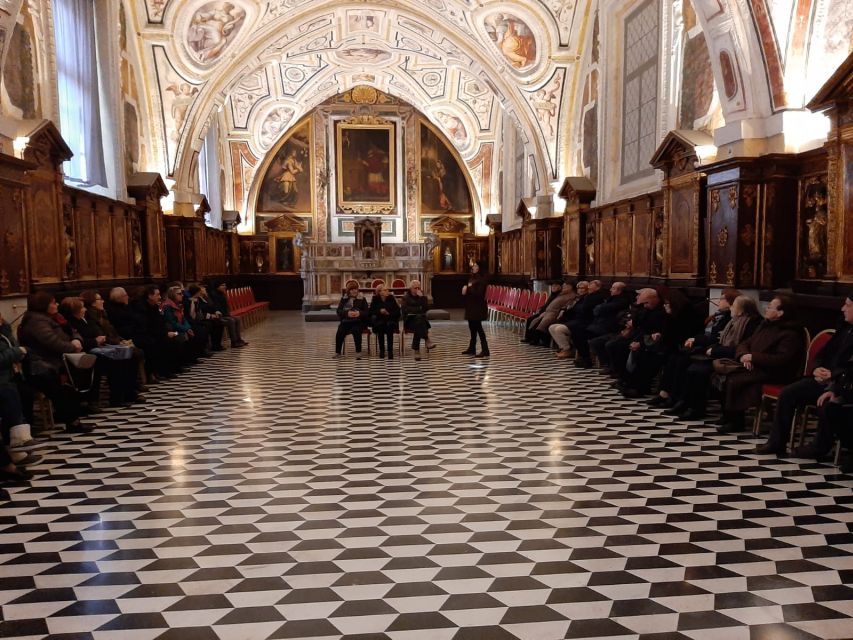
- Entering the complex: what you’re really walking into
- The sacristy with Giorgio Vasari: your best stop for fast art understanding
- Abbots’ Cript: the secrets you only get if you go looking
- The lamentation over the dead Christ by Guido Mazzoni
- A young Michelangelo puttino: small scale, strong impact
- Using the app audioguide: make it simple, not stressful
- Where the price feels fair: entry plus guidance plus Naples discounts
- Who this works for (and who should rethink it)
- Booking: should you get this ticket?
- FAQ
- What is the price of the Sant’Anna dei Lombardi entrance ticket?
- How long is the visit?
- Do I need to check starting times?
- What is included with the ticket?
- Which languages are available on the audio guide?
- Are headphones included?
- Is flash photography allowed?
- Is the complex suitable for people with mobility impairments?
- Is there a discount for other Naples attractions?
- What is the cancellation policy?
Key highlights worth planning for
- Timed entry to Sant’Anna dei Lombardi, designed for a focused 30-minute visit
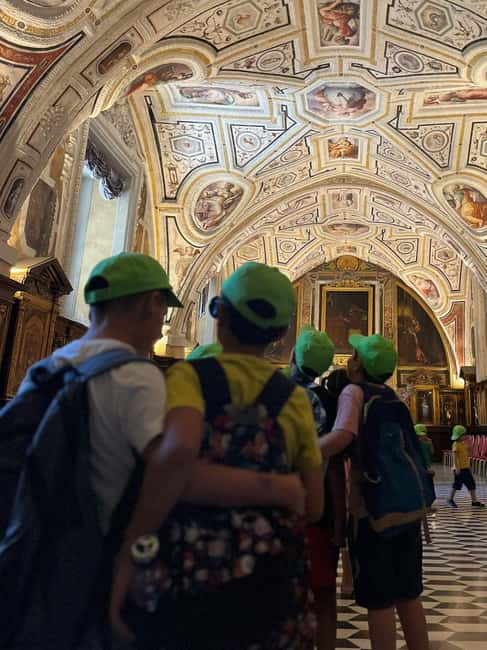
- Giorgio Vasari’s sacristy frescoes with an audio path that explains what you’re seeing
- Guido Mazzoni’s Lamentation over the Dead Christ through the app audio guide
- Abbots’ Cript for a quieter, more secret-feeling part of the complex
- A young Michelangelo puttino that’s small in size but big in interest
Sant’Anna dei Lombardi: a Renaissance landmark with Neapolitan fingerprints
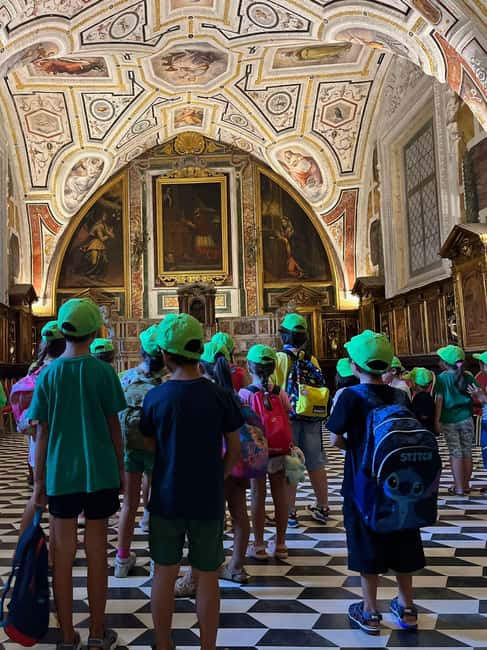
Sant’Anna dei Lombardi—also known as Santa Maria di Monteoliveto—is one of those Naples church visits that feels made for art lovers who like connections. It’s tied to the Tuscan Renaissance in the city, but you can also spot a very local Neapolitan side.
The foundation dates back to 1411, and the complex was especially dear to the Aragonese dynasty. Alfonso II of Aragon is said to have visited there daily. That’s the kind of detail that changes how you look at a building: you’re not just seeing decoration. You’re stepping into a place that mattered to power and culture.
Inside, the church’s layout is part of the experience. The nave has five chapels on each side-aisle, and these chapels reflect relationships between foreign artists and Neapolitan ones from the mid-1500s onward. If you’re into how art travels—artists arriving, styles blending, and patrons choosing what gets displayed—this is a smart stop.
And yes, the big names are here: Spanish artist Pedro Rubiales and Tuscan artist Giorgio Vasari both appear in the story of the complex. Add the young Michelangelo puttino, and suddenly your quick ticket starts to feel like a mini survey of Renaissance talent in Naples.
You can also read our reviews of more tours and experiences in Naples


The practical reality of a 30-minute ticket
This is sold as a 30-minute visit, with starting times you need to check in advance. That matters, because it shapes how you should approach the site.
I’d treat this like a “choose-your-moments” plan:
- Pick the two anchor pieces you most want (for most people, that’s the Vasari sacristy fresco focus and the Mazzoni lamentation story).
- Use the app audio guide as your wayfinding tool, not as something you listen to from the first second to the last.
- Move with purpose. You’re not lingering for hours, so you’ll get more value by hitting the key rooms and chapel areas that match the audio track topics.
Because the audio guide is included, this works well even if you don’t know art history. The narration is built around specific sections: the sacristy and the lamentation scenes. You’re basically getting a guided “reading” of the complex without paying for a full walking tour.
Entering the complex: what you’re really walking into
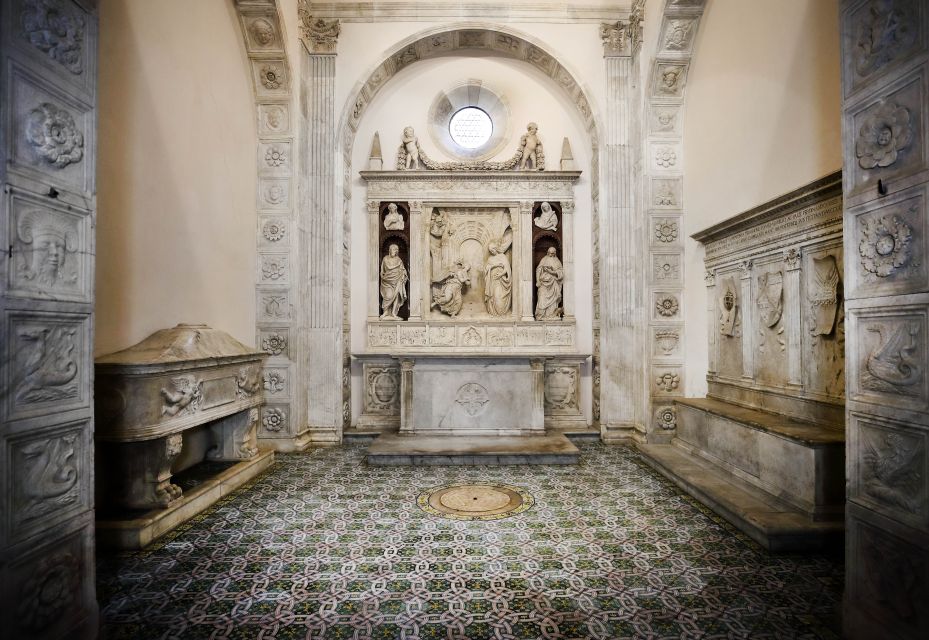
Once you’re inside, your best strategy is to start with context and then let the artwork lead. Sant’Anna dei Lombardi isn’t just one room—it’s a monumental complex, so your eyes can bounce between the church spaces and the more hidden, lower-feeling areas like the Abbots’ Cript.
A quick tip: keep your phone brightness reasonable and plan your audio listening in chunks. There’s a rule against flash photography, so rely on your eyes and the lighting that’s already there.
Even if your time is short, you’ll feel the building’s role. The complex leans into theatrical religious emotion. That shows up most clearly in the lamentation group (more on that below), but you’ll also feel it in how the church uses chapels to stage different parts of the sacred story.
If you’re traveling with family, this 30-minute format can be a win because it avoids the burnout factor. You’re choosing a concentrated art experience rather than signing up for an all-day church marathon.
The sacristy with Giorgio Vasari: your best stop for fast art understanding
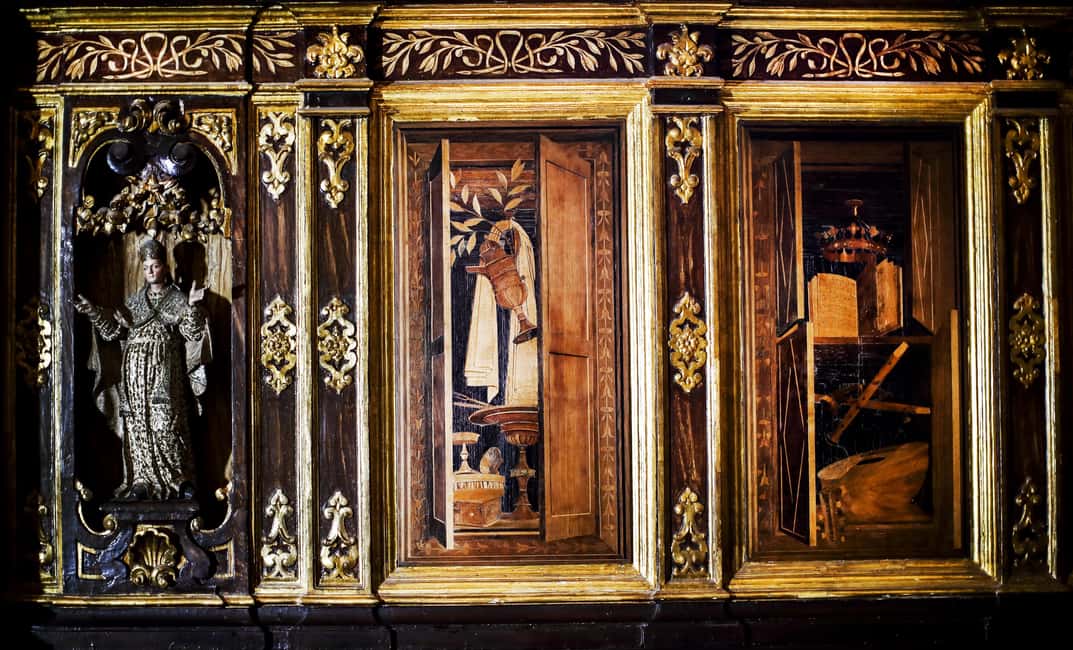
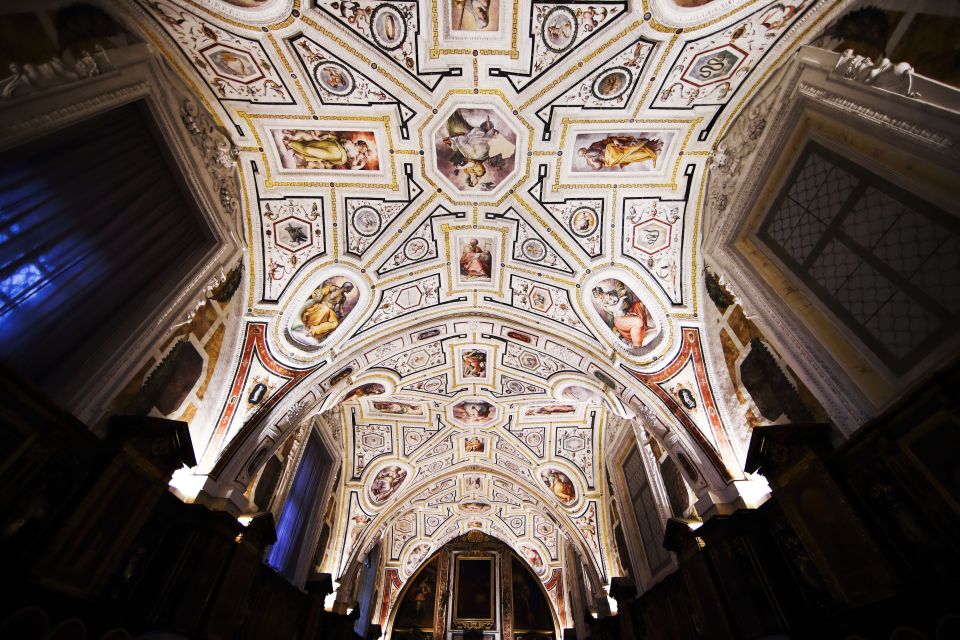
If you want a single “wow” moment that also teaches you how to look, go straight to the sacristy focus tied to Giorgio Vasari. The sacristy is frescoed—specifically, the vault is associated with Vasari’s work—and the included app audioguide is designed to explain this area.
Why this matters for you: Vasari isn’t just name-dropping. The presence of Vasari here points to the wider Renaissance network—Tuscan artistic language landing in Naples through patrons and artists. The narration helps you catch what you might otherwise miss: how fresco decoration can feel architectural, not just decorative. You’re not only seeing images. You’re seeing a ceiling designed to pull your gaze upward and organize attention.
You can think of the sacristy as the “visual briefing” of the visit. After it, everything else feels more connected—especially the way artists and patrons shaped religious expression.
Also, the complex credits relationships between foreign and Neapolitan artists from the mid-500s, including Pedro Rubiales and Vasari. If you like art as a network, not a museum label, the sacristy is where that idea becomes tangible.
Abbots’ Cript: the secrets you only get if you go looking
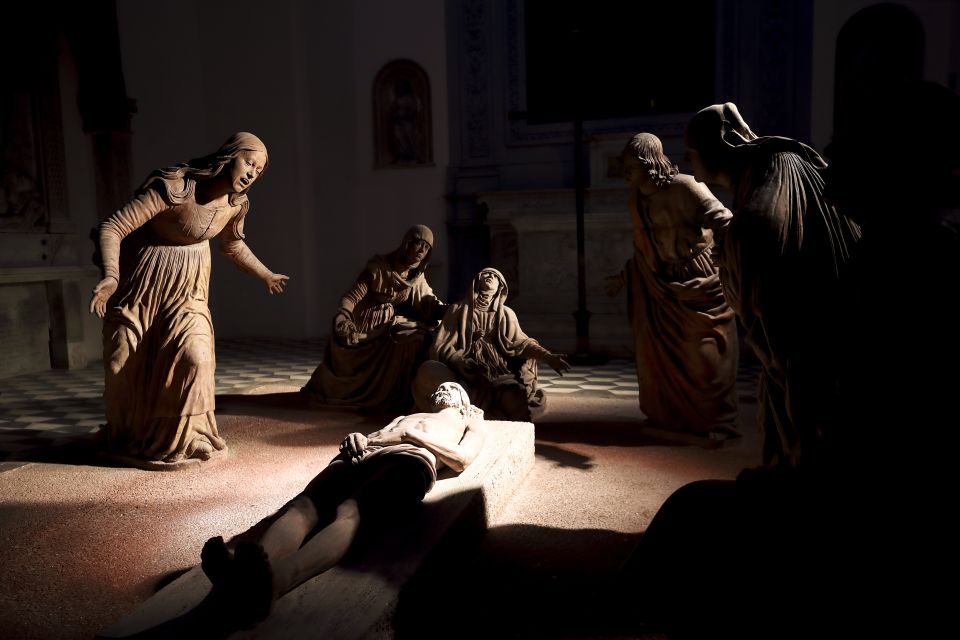
The Abbots’ Cript is one of those elements that makes the ticket feel more than “a quick church door.” The visit is described as including the abbots’ crypt and its secrets, and that’s exactly the kind of quieter area that rewards slower looking—even within a short time window.
In practice, treat it as your contrast stop:
- After the more public church spaces and chapel layout, the crypt area gives you a different mood.
- It also helps you understand how monumental complexes work. They aren’t only about what stands at eye level; they include spaces tied to leadership, ritual, and memory.
Because the audio guide included topics are listed for the sacristy of Vasari and the lamentation over the dead Christ, you might find the crypt relies more on your own observation. That’s not a problem—this kind of space often feels self-explanatory. Still, if you enjoy explanation, plan to rely on the audioguide for the big named artworks and use the crypt for atmosphere and discovery.


The lamentation over the dead Christ by Guido Mazzoni
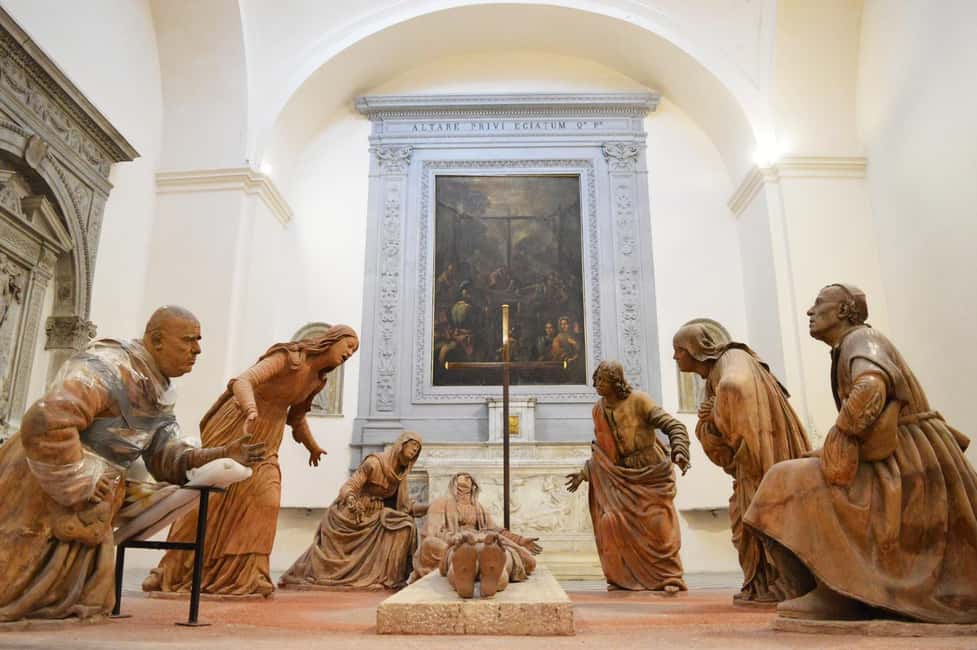
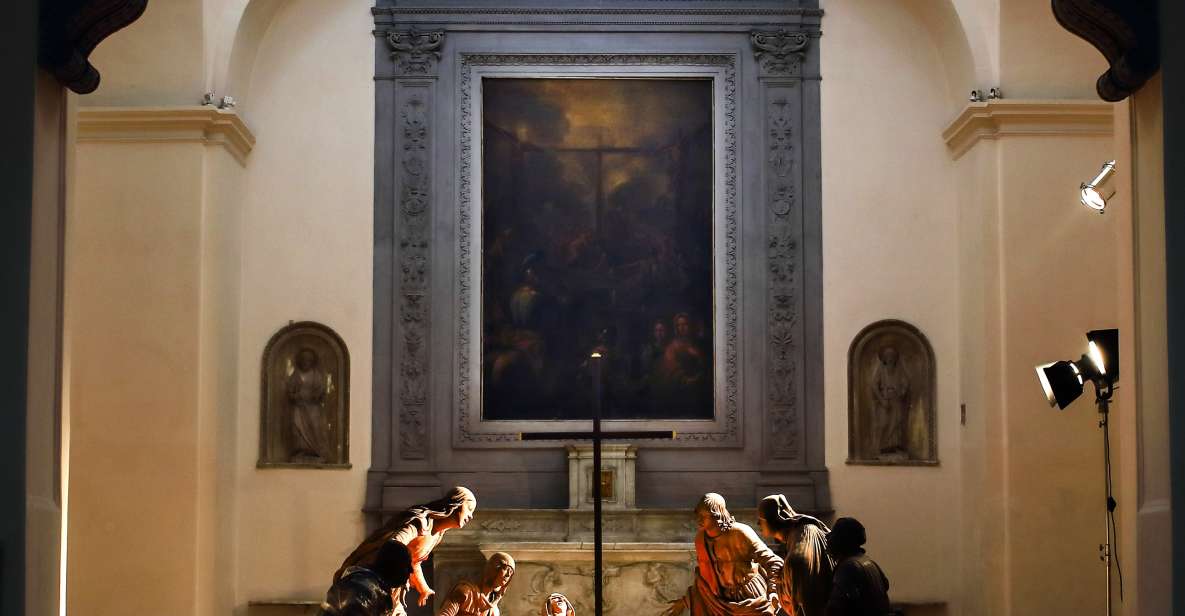
This is the moment people come for when they want emotion and craft in the same scene. The complex includes the Compianto sul Cristo Morto, described as important for the accuracy of details that expresses the characters’ energy and emotional force in their movements.
The app audio guide specifically covers The Lamentation Over The Dead Christ of Guido Mazzoni. That’s helpful because Mazzoni’s work can be easy to look at superficially if you don’t know what to notice. With an audio guide built around the piece, you’re more likely to clock the narrative choices—how gestures, posture, and facial emotion translate into a moving scene.
What I like about this for your planning: it turns a church into something you can follow like drama. In a short visit, that matters. You don’t just see religious art—you track what’s happening and why it’s staged that way.
If you’re the type who gets more from art when there’s context, the audio narration is the right kind of support here. It also makes the ticket feel like real value because you’re paying for entry plus a guided reading of the most demanding piece.
A young Michelangelo puttino: small scale, strong impact
The complex includes a puttino sculpted by a young Michelangelo. Even though it’s described as a small work, the point is that it’s there—and that creates an immediate connection to one of art history’s most recognizable names.
Why you should care: a tiny sculpture can hit harder than a huge one if it’s the only direct Michelangelo moment in your day. You’ll likely remember it precisely because it’s easy to focus on. Also, seeing a work linked to a young Michelangelo inside the same complex as later Renaissance figures makes the visit feel like a timeline in miniature.
If you’re trying to build your own “best of” list for Naples, treat this as a must-check even if you’re not a sculpture specialist. It’s the kind of detail that turns a short ticket into a personal highlight.
Using the app audioguide: make it simple, not stressful
The included audio guide is an app audioguide, covering:
- The Sacristy of Giorgio Vasari
- The Lamentation Over The Dead Christ of Guido Mazzoni
Languages available include Italian, English, French, German, and Spanish. That’s a big deal in a place like Naples, where you can easily end up without a clear explanation if you rely on guesswork.
Here’s how I’d use it to get the most without turning your visit into a chore:
- Listen for key moments, not every second. The audio is there to help you spot what matters.
- Plan your listening around the two named focal areas. The sacristy and the lamentation will do most of the heavy lifting.
- Bring your own earbuds or headphones. Headphones are listed as not included, so don’t assume you can borrow or buy inside.
Also remember: no flash photography. That keeps the lighting calmer and also means you’re relying more on the room’s natural light and your eyes.
Where the price feels fair: entry plus guidance plus Naples discounts
At $7 per person, this ticket is priced for value—especially because it includes entry to the Sant’Anna dei Lombardi Monumental Complex and an app audio guide for the sacristy and the lamentation.
The value gets even better if you plan to visit other major sites in Naples anyway. This ticket includes a discount for:
- Catacombe di San Gennaro
- Pio Monte della Misericordia (Caravaggio)
- Archeological Museum (MANN)
- Neapolis Sotterrata: Complesso Monumentale di San Lorenzo Maggiore
- Museo Diocesano di Donnaregina
You might not know which of these are in your route yet. But if you’re building a classic art-and-architecture itinerary, a ticket that helps with multiple stops is a smart way to manage your budget.
And since the visit duration is 30 minutes, it’s also efficient. You can slot it into a day that’s already packed with museums and churches without losing half your afternoon.
Who this works for (and who should rethink it)
This is a strong fit if you:
- Want a focused art experience with audio support
- Like Renaissance art networks and named creators (Vasari, Mazzoni, Michelangelo, Pedro Rubiales)
- Prefer a timed visit that keeps you from drifting
It’s a weaker fit if you:
- Need accessibility-friendly spaces, because it’s listed as not suitable for people with mobility impairments
- Hate using apps while walking, since your guidance is delivered via the included app audioguide (and you’ll need your own headphones)
If you’re traveling with limited time in Naples, this ticket is also a useful anchor. It gives you the kind of art payoff that can balance out longer museum days.
Booking: should you get this ticket?
If your goal is a short, high-impact art stop in Naples, I’d book this. The entrance ticket doesn’t just grant access—it comes with an app audio guide aimed at the complex’s two biggest named pulls: Giorgio Vasari’s sacristy fresco area and Guido Mazzoni’s lamentation scene.
The price is low for what you receive, and the added discounts for several major Naples attractions can make it even smarter if you’re planning other sites like the MANN or the Caravaggio at Pio Monte della Misericordia.
Just be honest with your own day: it’s a 30-minute window, and it’s not suitable for mobility impairments. If that matches your needs, this ticket is a solid choice.
FAQ
What is the price of the Sant’Anna dei Lombardi entrance ticket?
The ticket costs $7 per person.
How long is the visit?
The duration is 30 minutes.
Do I need to check starting times?
Yes. Starting times are available based on check availability.
What is included with the ticket?
You get an entry ticket to the Sant’Anna dei Lombardi Monumental Complex and an app audioguide for the Sacristy of Giorgio Vasari and The Lamentation Over The Dead Christ of Guido Mazzoni.
Which languages are available on the audio guide?
The app audio guide is available in Italian, English, French, German, and Spanish.
Are headphones included?
No. Headphones are listed as not included.
Is flash photography allowed?
No. Flash photography is not allowed.
Is the complex suitable for people with mobility impairments?
No. It is not suitable for people with mobility impairments.
Is there a discount for other Naples attractions?
Yes. Discounts apply to Catacombe di San Gennaro, Pio Monte della Misericordia (Caravaggio), Archeological Museum (MANN), Neapolis Sotterrata: Complesso Monumentale di San Lorenzo Maggiore, and Museo Diocesano di Donnaregina.
What is the cancellation policy?
Free cancellation is available up to 24 hours in advance for a full refund.