REVIEW · NAPLES
Pompeii and Herculaneum Ruins Private Tour
Book on Viator →Operated by Easy Car Tour Naples - Tours & Experiences · Bookable on Viator
One day, three volcanic ruins. What makes this outing special is that you get private transport from Naples and still have enough free time to explore Pompeii and Herculaneum on your own. It’s a rare combo: two major Roman sites plus an active volcano, all without you wrestling buses and schedules.
I also like the live commentary from an English-speaking driver who keeps the day moving and adds context while you travel. In particular, the guide Pino has a strong reputation for handling changes smoothly, so you’re not left scrambling if plans shift. The main consideration: the site entrance tickets are not included, and you may need to book them online for timed entry, then bring what you booked.
In This Review
- Key things to know before you go
- Private ride from Naples: the real value isn’t just comfort
- Pompeii Archaeological Park: 2 hours is plenty if you pick your priorities
- Herculaneum’s ruins: smaller footprint, more manageable pace
- Mount Vesuvius: the active-volcano finish (and why weather matters)
- Tickets, timed entry, and how to avoid entrance-day stress
- Timing and pacing: how a 6.5-hour day stays enjoyable
- Pricing and value: when $162.06 feels fair
- Who should book this private Pompeii and Vesuvius day?
- Should you book this Pompeii and Herculaneum private tour with Vesuvius?
- FAQ
- What time does the tour start?
- How long is the Pompeii and Herculaneum private tour?
- What’s included in the tour?
- Are entrance tickets included?
- Do I need to book timed entrance tickets online?
- What happens if weather is poor?
Key things to know before you go
- Private pickup and round-trip Naples transport: you skip the slow public-transport dance and pricey taxi hops.
- Enough on-site freedom: about 1.5–2 hours at Pompeii and the same at Herculaneum means you can explore at your pace.
- Live onboard commentary with an English-speaking driver: the drive doesn’t feel empty; it’s part information, part routing.
- Mount Vesuvius visit on the same day: you get the rare active-volcano contrast to the ruins.
- Online timed-entry is important: for the relevant Covid-era rules, you must book your entrance tickets online and respect the time slot.
- Tickets can run limited: the operator advises buying as soon as possible for your date.
Private ride from Naples: the real value isn’t just comfort
This is a 6.5-hour day designed around logistics, not just sightseeing. You start at 8:30am in Naples, and the tour provides an air-conditioned vehicle plus private transportation. That matters here, because Pompeii and Herculaneum aren’t close enough to treat like quick pops between meals.
You also get an English-speaking driver and live commentary on board. In practice, that’s your “moving education” while you travel between sites. Even better, when something changes (traffic, timing, or on-the-ground logistics), the guide Pino is specifically praised for knowing what to do, which helps the day stay calm.
If you’re the type who hates arriving exhausted and lost, this format is a big win. You’ll still do the walking and choosing inside the ruins, but the stress of getting there is handled for you.
One note: the tour lists a need for moderate physical fitness. That’s code for uneven ground and lots of steps or surface changes at archaeological sites and viewpoints. You don’t need to be an athlete, but you should be comfortable moving for a good chunk of the day.
You can also read our reviews of more private tours in Naples


Pompeii Archaeological Park: 2 hours is plenty if you pick your priorities
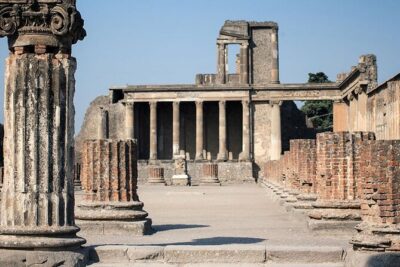
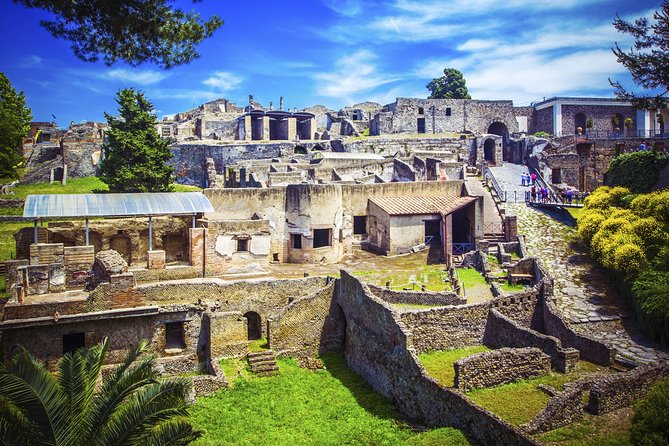
Pompeii is the headline act, but 2 hours can’t cover everything. The upside is that the tour builds your day so you’re not stuck there all day with no energy left for the rest. You get around 2 hours at Pompeii, and entrance tickets are not included, so you’ll want to arrive ready with your booked entry time.
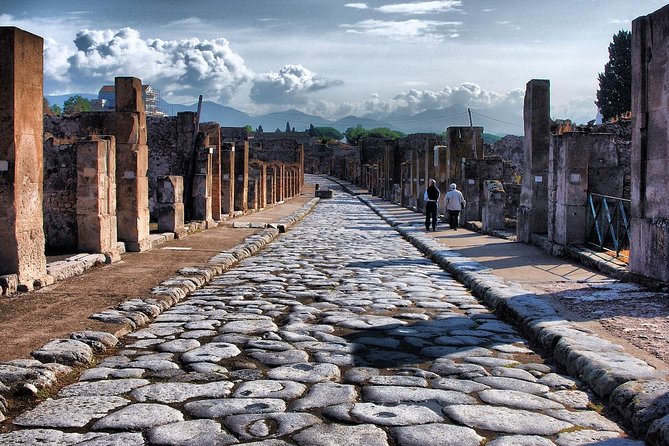
What you can realistically do in that time is focus on the big, recognizable parts—think main streets, standout building areas, and the sections that are easiest to connect in a loop. If you’ve done a little Pompeii homework, you’ll feel your bearings fast. If you haven’t, you can still get value by reading signs carefully and letting your eyes do the work.
Here’s the practical advantage of having free time: you’re not trapped listening to a fixed script every minute. You can slow down where something catches your attention—an inscription, a preserved doorway, a section of street that feels surprisingly vivid. That self-guided time is part of why this tour works: you get structure from the driver, but you keep control inside the park.
The drawback is simple: because you’re independent for this chunk, you’ll want to be intentional. If you try to “see it all,” you’ll end up rushing. If you choose a few targets and walk a sensible route, you’ll leave Pompeii feeling like you actually saw something.
Herculaneum’s ruins: smaller footprint, more manageable pace
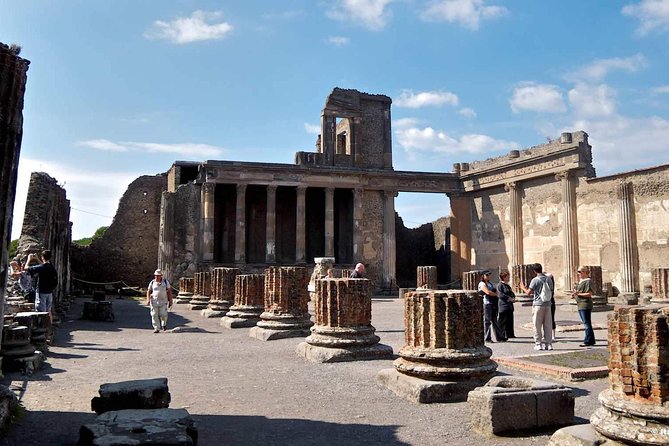
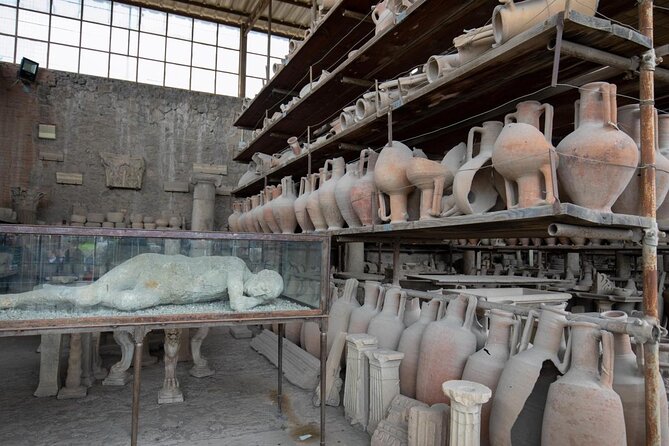
Next comes Parco Acheologico di Ercolano (Herculaneum). You get about 1.5 hours to 2 hours there—listed as 1.5 hours in the overview—so this stop is built to be satisfying without draining your whole day. Entrance tickets are again not included, and you’ll need to respect any timed-entry booking requirements.
Herculaneum is often less overwhelming than Pompeii in sheer scale. Because your time window is shorter, you’re pushed toward a smarter approach: pick the parts you want most, then let the ruins do the rest. You’re likely to notice more detail when you’re not trying to sprint between distant zones.
This is also where the contrast with Pompeii becomes memorable. Both are Roman sites impacted by volcanic activity, but they don’t “feel” identical on the ground. With your own time to explore, you can catch those differences directly—what’s preserved, how the spaces read, and how the layout guides your walking.
If you’re traveling with someone who gets restless in long guided lectures, this stop can be a sweet spot. You get independence, but the tour still keeps you moving through the day in a logical sequence.
Mount Vesuvius: the active-volcano finish (and why weather matters)
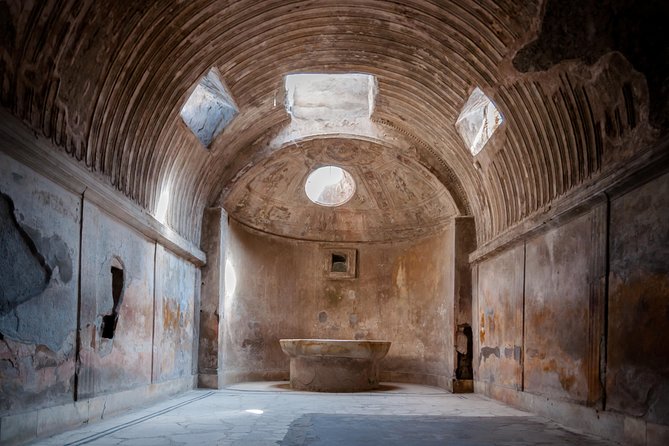
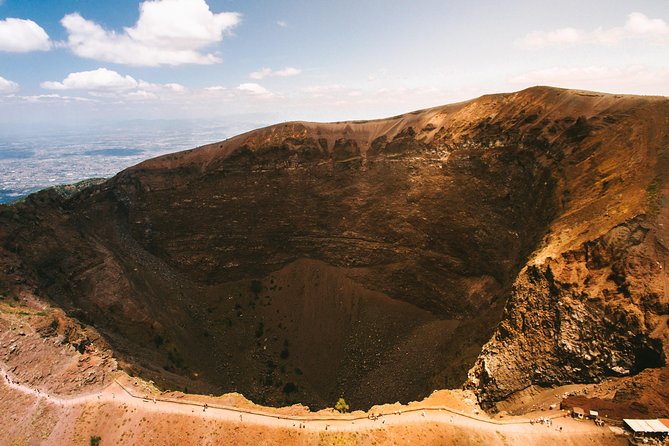
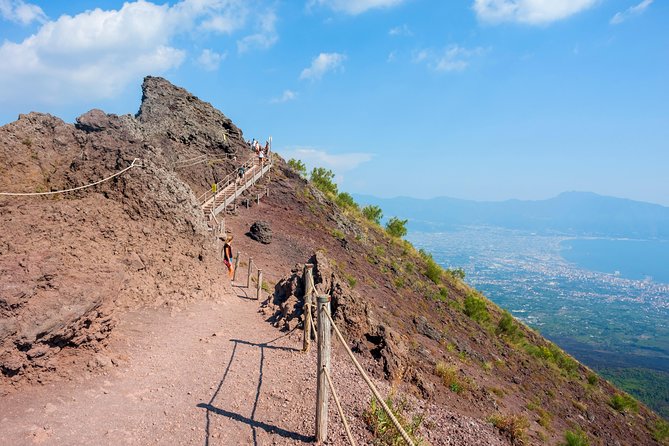
After the ruins, you head to Mount Vesuvius. This tour includes the volcano experience as a key stop, and because Vesuvius is weather-dependent, your day has a built-in reality check: the operator states the experience requires good weather.
That’s important because visibility and access can affect what you actually experience at a viewpoint. If conditions are poor, the tour can be canceled and you’ll be offered a different date or a full refund. Translation: don’t treat it like a guaranteed “perfect photos only” day.
Still, that risk is part of the Vesuvius appeal. Standing near an active volcano in Europe after seeing the human scale of the Roman ruins nearby creates a full-circle contrast. It’s not just a scenic detour—it’s the natural force behind the story you just toured.
If you want the best outcome, dress for shifting conditions. Even in good weather, volcano areas can feel cooler or windier than the city. Layers beat one heavy coat, especially since you’ll be going from air-conditioned vehicle to outdoor walking.
Tickets, timed entry, and how to avoid entrance-day stress

This is where the tour can either feel super smooth—or mildly annoying—depending on your prep. The sites’ entrance tickets are not included. Also, for Covid-19 precautions that apply from May 2020 onward, the operator advises you to book online entrance tickets to Pompeii, Herculaneum, and Vesuvius, then print them and bring them to the entrances. The key detail: you must respect the booking time you selected.
The operator also warns that tickets are limited, so you should check availability and purchase as soon as possible for your date. That’s practical advice, not fine print. If you wait, you can end up choosing between the tour date you want and the timed entries you can actually get.
The tour also offers a mobile ticket feature, but for the timed-entry rule, you should still plan to have your entrance confirmations ready on paper. I’d treat this as “do not leave to chance” territory.
What you’ll want to do before the day:
- Purchase entrance tickets for Pompeii, Herculaneum, and Vesuvius ahead of time.
- Double-check your selected time slots and keep them easy to find.
- Bring printed copies as advised.
This preparation pays off immediately. It turns the entrance process from a tense wait into a quick check-in and lets your 1.5–2 hour blocks at the ruins feel real, not lost.




Timing and pacing: how a 6.5-hour day stays enjoyable
A 6-hour 30-minute day sounds tight, but the structure helps. You start at 8:30am, then you get your Pompeii block, your Herculaneum block, and finally the Vesuvius portion. The time balance—especially the independence windows—keeps you from being “always with a guide.”
This schedule also works well because it reduces dead time. With private transport, you’re not waiting around for group departures, and you’re not paying the kind of taxi rates that often pop up for this exact route. The tour explicitly calls out that the private approach helps you avoid slow public transportation and expensive taxis. In real life, that’s a big part of why this day feels like a good deal.
Still, you should expect some walking and outdoor time. Moderate fitness is listed for a reason. You’re moving through ancient sites, which means uneven surfaces and sun/shade changes.
My practical tip: plan to keep your goals modest. Aim to see a handful of highlights well at each site. You can get a lot of satisfaction from a tight plan, and you’ll spend less time stressed about not covering everything.
Pricing and value: when $162.06 feels fair
The price is $162.06 per person, with private transport and live onboard commentary included, plus pickup offered. You’re also looking at two major archaeological stops and an active volcano in one day. That’s the “math” of the value: you’re paying for a single coordinated day that replaces multiple transport arrangements.
Would this be cheaper if you did it on your own? Possibly. But it’s rarely as simple as it sounds. Pompeii and Herculaneum routing, timed entries, and the time you lose to transit can add up quickly. This tour trades some flexibility for a smoother flow.
It’s also worth noting that the tour offers group discounts and has a booked-advance pattern (on average, booked 60 days in advance). That suggests the operator expects demand, which lines up with the advice that tickets can be limited. In other words, the price isn’t just a random number—it’s part of a system built to make this one-day plan work.
If your priority is comfort, time, and not spending your morning figuring out transportation, this can be a strong value. If you’re traveling ultra-budget and you enjoy planning every minute, you might be able to do it cheaper. But for most people, the private transport factor is what makes this feel worth the money.
Who should book this private Pompeii and Vesuvius day?
I think this fits best if you want:
- A no-stress logistics plan from Naples
- Independence time inside Pompeii and Herculaneum (not a nonstop lecture)
- A single-day combo of ruins + an active volcano
It’s also a good match if you appreciate onboard context. The live commentary and English-speaking driver help you understand what you’re seeing while you travel.
On the other hand, reconsider if:
- You’re not willing to handle entrance tickets in advance and follow timed-entry rules.
- You have mobility limits that make walking through archaeological ground difficult.
- Weather is a major concern for you, since the experience requires good weather and can be rescheduled or refunded.
Should you book this Pompeii and Herculaneum private tour with Vesuvius?
If you want a day that feels efficient and well-managed, I’d book it. The best part is the structure: private transportation, onboard commentary, and realistic free time at both Pompeii and Herculaneum. That combination is rare, and it keeps the day enjoyable instead of frantic.
My decision checklist for you:
- Have you already planned your timed-entry tickets for Pompeii, Herculaneum, and Vesuvius?
- Are you comfortable walking at least moderately during your site visits?
- Do you value saved time and avoiding expensive taxis in Naples?
If you answered yes, this is the kind of one-day Naples outing that can turn into a highlight rather than a checkbox.
FAQ
What time does the tour start?
The tour starts at 8:30am.
How long is the Pompeii and Herculaneum private tour?
It runs about 6 hours 30 minutes.
What’s included in the tour?
Included are air-conditioned private transportation, live commentary on board, an English-speaking driver, a local driver, and free time at each site.
Are entrance tickets included?
No. Entrance tickets for Pompeii, Herculaneum, and Vesuvius are not included, so you’ll need to buy them separately.
Do I need to book timed entrance tickets online?
For Covid-19 precautions starting May 2020 onward, the operator advises you to book entrance tickets online for Pompeii, Herculaneum, and Vesuvius, print them, and arrive at the entrance on your selected time.
What happens if weather is poor?
The tour requires good weather. If it’s canceled due to poor weather, you’ll be offered a different date or a full refund.