REVIEW · NAPLES
Pompeii the Ancient City (Tour+Transfer)
Book on Viator →Operated by Sesto Continente Tours · Bookable on Viator
Pompeii can feel painfully alive. What I like about this tour is the round-trip shuttle from towns around the bay and the English-led guidance once you reach the site, so you spend your time looking instead of sorting out logistics. It also keeps things efficient, with a compact route and a small group size (up to 25).
One thing to budget for: the Pompeii entrance ticket (€22 per person) is not included, so the total cost is higher than the headline price. If you’re already counting euros, that’s the main catch to plan around.
In This Review
- Key things that make this Pompeii tour work well
- Price and value: what $70.89 really covers in practice
- Getting there: the shuttle setup (and why it matters)
- Your guided entry: how the 4-hour visit is paced
- Stop-by-stop at Pompeii: what you’ll actually see
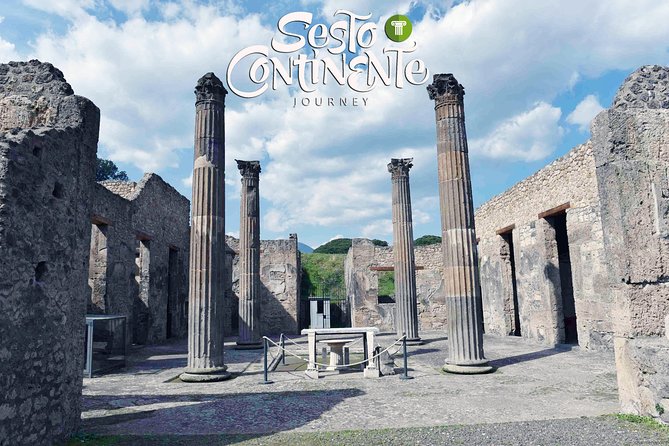
- Pompeii Archaeological Park entrance (with guide)
- Forum of Pompeii: the city’s main square
- Macellum: the provision market (and why it’s a clue to daily life)
- Casa del Fauno: big Roman luxury in a compact footprint
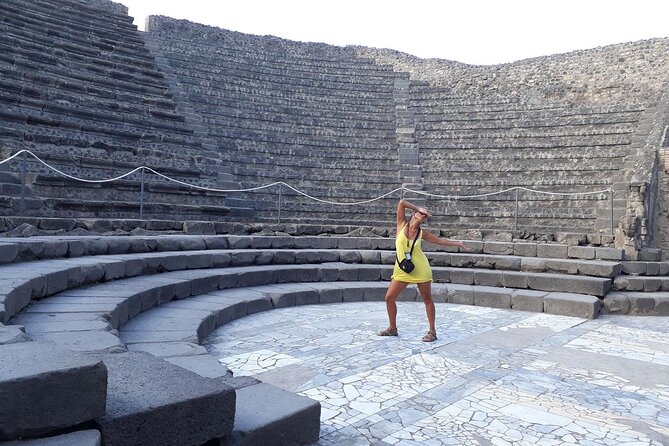
- Teatro Grande: a Roman theatre under ash
- Via dell’Abbondanza: Pompeii’s main artery between the big stops
- How the short stop times help (and what they can’t do)
- What’s included on the ground (and what you’ll need to handle yourself)
- Language and comfort: a realistic expectation check
- Who this tour is best for
- Should you book Pompeii the Ancient City (Tour+Transfer)?
- FAQ
- Is the Pompeii entrance ticket included?
- Does this tour pick up from Naples?
- What towns are pickup locations?
- How long is the tour?
- What language is the guide?
- Can I cancel for free?
Key things that make this Pompeii tour work well
- Vintage classic van + private transportation: comfortable ride, easy handoff to the guide
- Licensed multilingual guide (English/Italian): you won’t just wander in the dark at ruins
- Forum-to-theatre route: major public spaces, then down the main road of Pompeii
- Short, timed stops: great if you only have a half-day
- Free-entry segments inside the park: several sights are listed as free once you’re in
- Small group cap (25): less mob energy than you’d get on huge bus tours
Price and value: what $70.89 really covers in practice
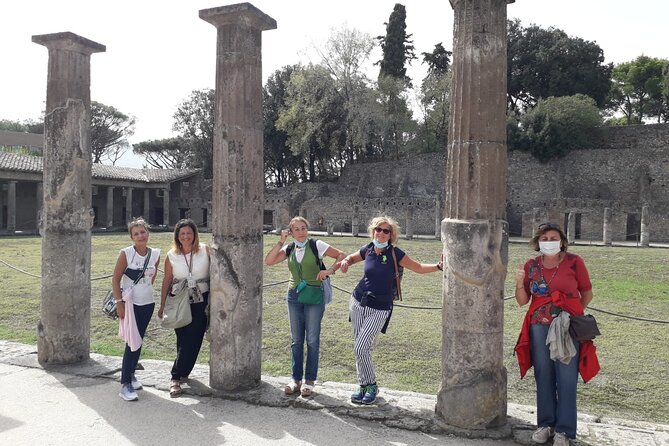
At $70.89 per person, the headline price is mostly paying for the transport + guided visit structure. You’re getting a ride on a vintage classic van and coordinated entry with a licensed guide, plus the stop-by-stop timing that turns a big, sprawling archaeological park into something you can actually finish in about 4 hours.
Then you add the key extra: Pompeii entrance ticket (€22 per person). Since entrance is not included, your real per-person budget is closer to what you’d pay for a midrange guided half-day plus the park fee. If you’re traveling with a group, that ticket cost scales fast, so I recommend doing the quick math before you book.
Also note what’s not included: lunch. The tour is short enough that you can usually grab something after, but don’t count on food being handled for you during the 4 hours.
You can also read our reviews of more city tours in Naples



Getting there: the shuttle setup (and why it matters)
This is a “tour + transfer” concept done in a practical way. You get pickup and drop-off from many towns in the area (including Castellammare di Stabia, Torre Annunziata, Pompei, Scafati, Sant’Antonio Abate, Angri, Gragnano, Pimonte, Agerola, Vico Equense, Seiano, Meta, and more). You’ll return to the meeting point area at the end.
Two logistics points make a real difference:
First, there’s no pickup from Naples. If you’re staying in the city, this might mean extra commuting on your own. If you’re not sure, confirm pickup coverage before you commit.
Second, the shuttle runs in sharing mode. That means the pickup time is a starting window: you should plan to be ready at the indicated time and for the next 30 minutes. You won’t get a pin-point minute-by-minute schedule, because traffic and other pick-ups affect everything. In plain terms: set an alarm, bring patience, and don’t schedule something critical right before pickup.
The upside? You avoid the hassle of figuring out the best transport to the ruins. The down side? You’re building your morning around the shared van schedule, not your own.
Your guided entry: how the 4-hour visit is paced
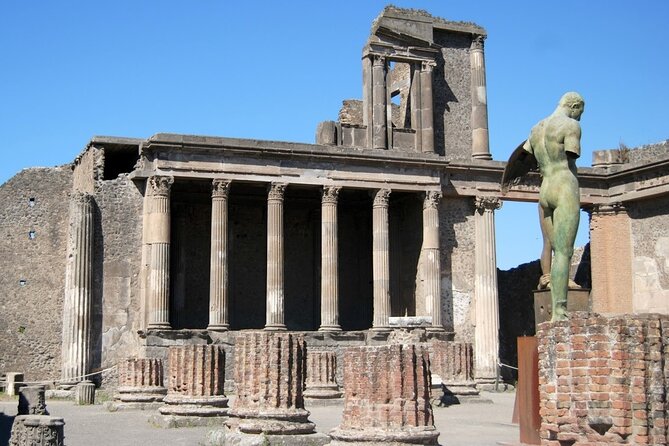
Once you’re with the guide, the tour is designed to be doable in a half-day. You’ll have guided time for the Pompeii Archaeological Park entrance, then a series of major stops—each on a short time box—so you get to see a lot without feeling like you’re spending the entire afternoon walking between nothing.
Group size is capped at 25 travelers, which helps a lot. With Pompeii, crowding can make it hard to hear, take photos, and keep your own momentum. A smaller group makes the guide’s explanations easier to follow and helps you avoid that constant stop-and-start feeling.
Time is the real feature here. This tour isn’t trying to “cover everything.” It’s trying to help you see the most important pieces—fast—and understand what you’re looking at while you’re there.
Stop-by-stop at Pompeii: what you’ll actually see
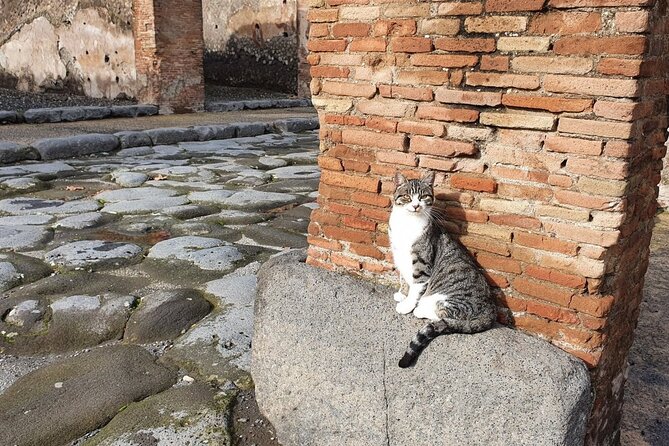
Pompeii Archaeological Park entrance (with guide)
This is the gateway moment. You go in with a licensed multilingual tourist guide (English/Italian), and the value is that they can point out what matters quickly—especially on a site where it would be easy to miss the story.
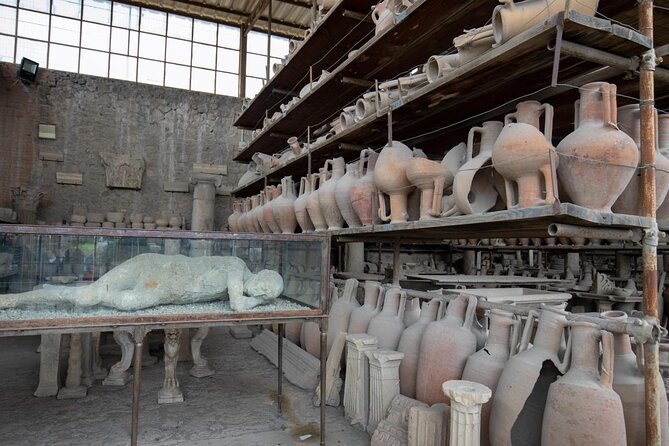
You should expect the guide to help you connect the physical remains to Roman life: what public spaces were for, how buildings functioned, and why Pompeii looks the way it does after the eruption of Vesuvius in 79 AD.
You can also read our reviews of more tours and experiences in Naples





Forum of Pompeii: the city’s main square
The Forum is the big public hub—the political, economic, and religious center where negotiations happened and civic life played out. It’s also described as one of the best preserved in its category, which is exactly why it’s a good first anchor point.
What I like about doing the Forum early is that it gives you a mental map. When you later see markets, theatres, and houses along the main road, you can connect them back to the city’s core.
Macellum: the provision market (and why it’s a clue to daily life)
The Macellum was the provisioning market on/near the Forum area. Think of it as a place tied to everyday needs: buying food, trading, and moving through the rhythm of the city.
The interesting part is the timeline. Pompeii was damaged by an earthquake in 62 CE, and the Macellum was affected too. Archaeological excavation shows it wasn’t fully repaired before the eruption in 79 CE. That creates a “frozen in time” feeling—like you’re looking at a community mid-fix.
Casa del Fauno: big Roman luxury in a compact footprint
The House of the Faun (Casa del Fauno) is one of the largest and most impressive private residences in Pompeii. It’s tied to the 2nd century BC and stands out as a luxurious aristocratic house from the Roman Republic period.
This stop is a favorite for first-timers because it changes the vibe. You go from civic space to how wealth and status were expressed at home—through scale and art.
Practical tip: take your time on whatever mosaic or art elements you can spot from the visitor area, even if the viewing angles aren’t perfect. A good guide can translate what you’re seeing into something understandable fast.
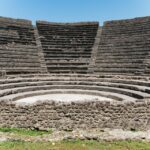
Teatro Grande: a Roman theatre under ash
The Teatro Grande is a Roman theatre buried in the 79 AD eruption and later uncovered through excavations. In Pompeii, theatre life mattered. Here you’re told it staged comedies, mimes, pantomimes, and the atellane.
This stop helps you understand Pompeii wasn’t only about survival—it was also about entertainment and public gatherings. If you want a sense of the city’s mood, this is a strong “feel it in your bones” location.
Via dell’Abbondanza: Pompeii’s main artery between the big stops
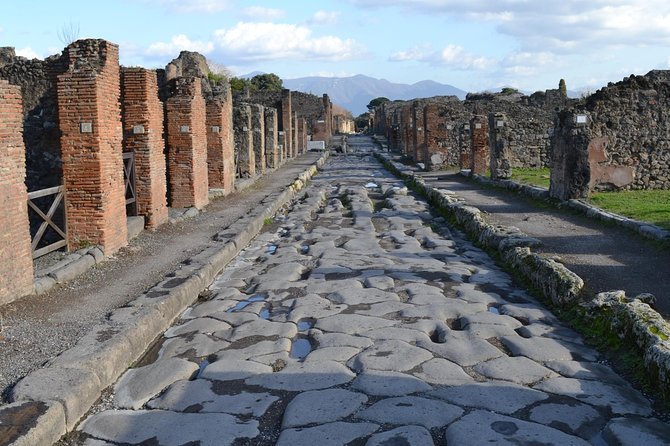
The Via dell’Abbondanza is the lower decumanus—the main road axis that connects key areas between the Forum and Porta Sarno. The name comes from a bas-relief on a fountain at the start near the Forum.
This is where you get a sense of walking routes and urban planning. The road links major nodes like the Stabian Baths, the theatres, the Temple of Isis, and the amphitheatre area. You’ll also see many decorated houses along it, including homes connected to the rich Pompeian bourgeoisie.
Even if you’re not a “structure nerd,” this road is a smart stop because it shows you how people actually moved through the city. It’s also often the part where photos are easier: you’re on a continuous route rather than looking at one isolated ruin.
How the short stop times help (and what they can’t do)
Each stop is short (about 15 minutes in the schedule). That’s a benefit if you want an efficient overview and clear guide explanations. It’s a limitation if you prefer to linger in one area for 45–60 minutes.
My advice: use your guide’s explanations to decide what you’d want to revisit on a return trip. In Pompeii, one good second look can turn “wow” into “I get it.”
What’s included on the ground (and what you’ll need to handle yourself)
Included:
- Ride on a vintage classic van
- Private transportation arranged for this tour
You also get:
- Mobile ticket for this experience
- A licensed guide for the Pompeii park entry and guided stops
- Several convenient start times offered (with 9:00 am as the listed example)
Not included:
- Pompeii entrance ticket (€22 per person)
- Lunch
Bring with you:
- Hat, water, sunscreen
- Camera
- Wind protective clothing (yes, even in warm seasons, the open ruins can be breezy)
This matters because Pompeii is outdoors. Comfortable feet and sun protection aren’t optional. The ruins are gorgeous, but your body still needs basics.
Language and comfort: a realistic expectation check

The tour runs with a multilingual licensed guide (English/Italian), and it’s offered in English. If you specifically need another language (for example, French), the safest move is to confirm availability before you go—don’t assume.
Comfort-wise, the schedule suggests a moderate walking day. It’s “most travelers can participate,” which is a helpful indicator, but you should still plan for uneven ground and outdoor conditions.
Who this tour is best for
This is a good fit if:
- You’re short on time and want a focused first Pompeii visit
- You like being guided through the major landmarks instead of wandering without context
- You’re staying in pickup towns like Castellammare di Stabia, Torre Annunziata, Pompei, Sorrento-area towns covered by the service, or nearby
It may be less ideal if:
- You’re staying in Naples (since pickup isn’t offered there)
- You want a lot of free time to roam without time-boxed stops
- You’re traveling so far outside the shuttle zone that you’d rather plan your own transport
Should you book Pompeii the Ancient City (Tour+Transfer)?
I think this tour is worth booking if you want a clean, guided half-day and you’ll be starting from one of the pickup areas. The biggest practical win is that transportation is handled and you enter with a licensed guide, which makes Pompeii feel like more than random stone.
Book it if:
- You want structure: Forum, market, luxury house, theatre, then the main road
- You appreciate a small group (up to 25)
- You’re okay adding the €22 entrance ticket on top of the $70.89 price
Consider a different option if:
- You’re based in Naples and don’t want to manage getting to the pickup region yourself
- You prefer long, unstructured exploring rather than timed stops
If you go, do two smart things: arrive with sun protection and treat the guided route as your “starter course.” After you finish, you’ll know exactly what you’d want to see again.
FAQ
Is the Pompeii entrance ticket included?
No. The Pompeii entrance ticket costs €22.00 per person and is not included in the tour price.
Does this tour pick up from Naples?
No. The listing specifies no pickup from Naples. It does offer pickup from several nearby towns, and there may be other ways to reach the office for areas outside the shuttle coverage.
What towns are pickup locations?
Pickup is offered from many locations in the area, including Castellammare di Stabia, Torre Annunziata, Pompei, Scafati, Sant’Antonio Abate, Angri, Gragnano, Pimonte, Agerola, Vico Equense, Seiano, and Meta (plus additional nearby pickup points listed). For Sorrento-area stops, you’re asked to contact and check coverage.
How long is the tour?
The tour lasts about 4 hours.
What language is the guide?
The guide is a licensed tourist guide with English/Italian offered, and the tour is listed as offered in English.
Can I cancel for free?
Yes. You can cancel for a full refund up to 24 hours before the experience starts.