REVIEW · NAPLES
Private Herculaneum for Families: Kids Archaeology Adventure
Book on Viator →Operated by Leisure Italy · Bookable on Viator
Roman ruins that kids actually want to hear about. This private Herculaneum adventure is built for families, with a Blue Badge–accredited guide and kid-friendly activities that keep attention from drifting at exactly the wrong moments. The big draw is how Herculaneum was protected by Vesuvius, preserving wooden doors, furniture, colorful frescoes, mosaics, and even food clues—so it feels like a real neighborhood, not just stone. I love the tour’s clear, child-focused storytelling plus the keepsake Herculaneum4Kids materials. I also love how compact the site is, so younger legs can handle the pace better than larger ruins. The main drawback to plan for: there is still a decent amount of walking, and a warm day can mean you’ll want water, hats, and breaks.
Before you step into the ancient streets, you’ll get a helpful sense of place with Vesuvius views. Then the day moves through surprises that work for both ages, from the Antiquarium’s charred wood to a preserved Roman boat and a “street-food” Thermopolium. If you’re traveling with very young kids who tire fast, I’d treat this as a walk-with-questions tour, not a hurry-through photo sprint. And at the shoreline stop, the topic is intense—your guide will keep it age-appropriate, but it’s still emotional archaeology.
In This Review
- Key things to know before you go
- Herculaneum’s “frozen neighborhood” feeling (and why families love it)
- A Blue Badge family guide who keeps the day moving
- Timing and pace: what 2 to 4 hours looks like in real life
- On the way to Herculaneum: Vesuvius views that set the stage fast
- Parco Acheologico di Ercolano: preserved Roman life in a walkable grid
- Antiquarium: the charred-wood section kids remember
- Boat Pavilion: the Roman sea isn’t far away
- Casa dei Cervi: marble statues and a house layout you can picture
- Palestra (gymnasium): Roman youth sports and social life
- Casa di Nettuno e Anfitrite: mosaics that hit for both ages
- Women’s Baths: cleanliness, engineering, and social time
- Ad Cucumas wine advertisement: when marketing becomes archaeology
- Casa del Bicentenario: refined living plus real legal paperwork
- Sacello Augustali: religion tied to empire
- Casa del Tramezzo di Legno: a folding screen you can almost touch
- Casa dello Scheletro: a mystery name with art and niches
- Thermopolium: Roman street-food counters make sense instantly
- The ancient shoreline and the skeleton chambers: powerful, guided, and human
- Value check: what you’re really paying for
- Who this tour suits best (and who might want a different plan)
- Should you book this Herculaneum for Families tour?
- FAQ
- How long is the private Herculaneum family tour?
- What does the tour cost?
- Is pickup available?
- Is this tour private?
- What language is the tour in?
- What’s the cancellation window if plans change?
Key things to know before you go
- Blue Badge guide + family-focused approach: professional interpretation with kid-level engagement.
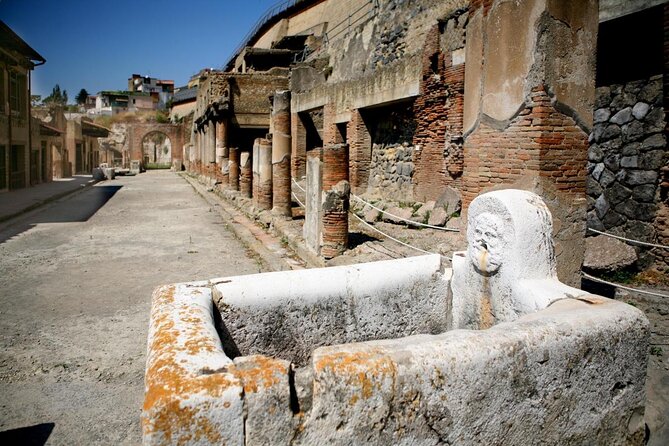
- A compact ruin that’s easy to picture: streets and buildings stay close together, so daily life feels real.
- Preserved wood makes the past tangible: you’ll see carbonized doors and furniture that were once fully wooden.
- Myth, bath culture, and mosaics for different tastes: the tour mixes artwork, architecture, and Roman routines.
- A keepsake package plus a site map: take home a way to keep the story going after your visit.
- Plan for walking and warm weather: bring water and sun gear from May to September.
Herculaneum’s “frozen neighborhood” feeling (and why families love it)
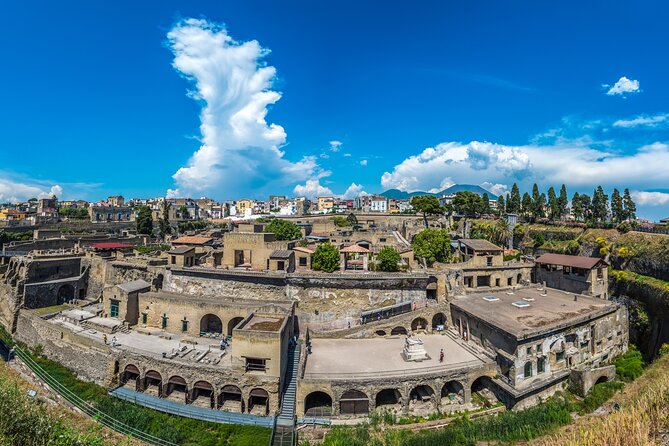
Herculaneum is the rare Roman site that feels like it’s mid-conversation. The eruption in 79 AD buried the town under volcanic material, and that protection helped preserve things that usually disappear—wood, food traces, bright wall decoration, and mosaics with color that still surprises people.
For kids, the effect is simple: it’s easier to imagine the place as lived-in. The ruins are compact, so you’re not constantly crossing huge distances where attention leaks out. You’ll move from shopfront details to rooms and courtyards without the long gaps that make young travelers restless.
For adults, the payoff is that the town tells stories in layers. You can point to an object and say, yes, people truly used this. Even the charred organic materials help you grasp the scale and speed of the eruption. It’s not just dramatic. It’s specific.
One smart idea with a family tour like this: let the guide’s pace set your rhythm. This kind of site rewards stopping to look, not marching.
You can also read our reviews of more private tours in Naples


A Blue Badge family guide who keeps the day moving
This is a private tour, so you’re not stuck with the slowest walker or the most chaotic group. You only share the experience with your own party, which matters when you’re trying to keep kids engaged without turning it into a constant negotiation.
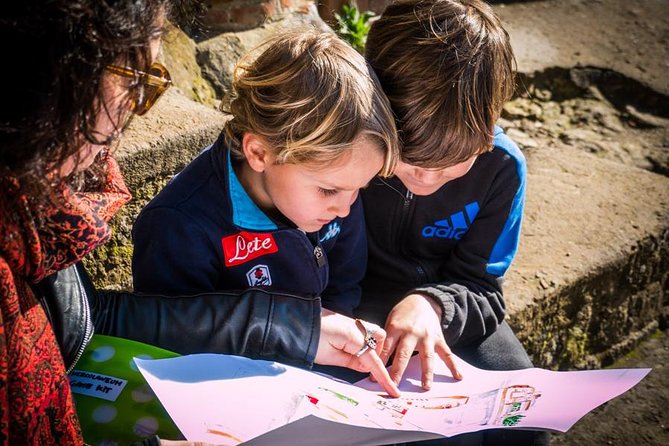
The tour is led by a Blue Badge–accredited guide, which is a real signal of professional guiding standards. More importantly for families, the approach is deliberately kid-friendly. Expect commentary that uses fun activities and attention hooks instead of long lectures that vanish over kids’ heads. In the best moments, kids become the ones spotting details—like decorative myth figures, bathhouse elements, or evidence of daily commerce.
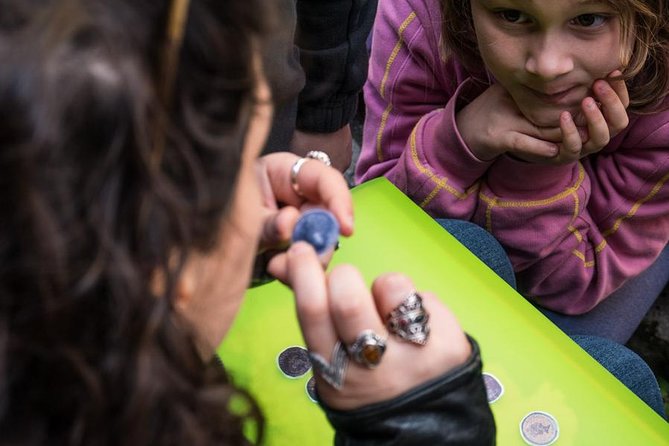
I also like that you get both a guide-led experience and a physical takeaway: a site map and a Herculaneum4Kids package. That’s practical. It gives you a way to revisit what you saw later without having to remember everything from scratch.
Timing and pace: what 2 to 4 hours looks like in real life
The tour runs about 2 to 4 hours. That range usually reflects a simple truth: families move at family speed. If you’ve got a mix of ages, you’ll likely spend more time at the stops that “click” for your kids—like mosaics, bath spaces, or the wooden features.
Moderate physical fitness is recommended. You should also wear appropriate shoes—non-negotiable on uneven ground. If you’re visiting in warmer months (May through September), plan for sun. Bring water and hats. The ruins are partly outdoor walking, and when it’s warm, breaks turn from optional to smart.
If you’ve got a very small child, use your family strategy:
- Start with hydration early, not at the first complaint.
- Build in short pauses when the guide shifts stops.
- Let kids ask questions even if you think you’re “behind.”
A tour like this works best when you treat it as a guided scavenger hunt with history attached.
On the way to Herculaneum: Vesuvius views that set the stage fast
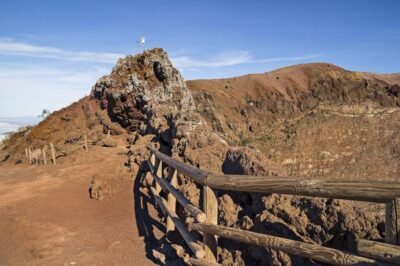
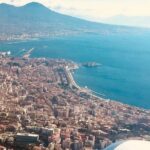
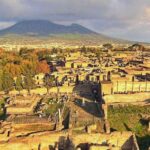
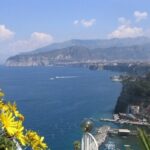
You don’t jump straight into ruins. On the way, you’ll get views of the Parco Nazionale del Vesuvio, the protected landscape around the volcano that shaped the region’s history.
This is a smart early stop because it helps kids and adults “connect the dots” right away. Seeing the volcano’s distinctive profile gives you an instant reference point. Then, once you’re at the archaeological site, the volcano remains part of the scene, making the eruption story feel grounded in geography—not just a distant textbook event.
If your kids love maps or animals or weather, this is where they can mentally place the setting.
Parco Acheologico di Ercolano: preserved Roman life in a walkable grid
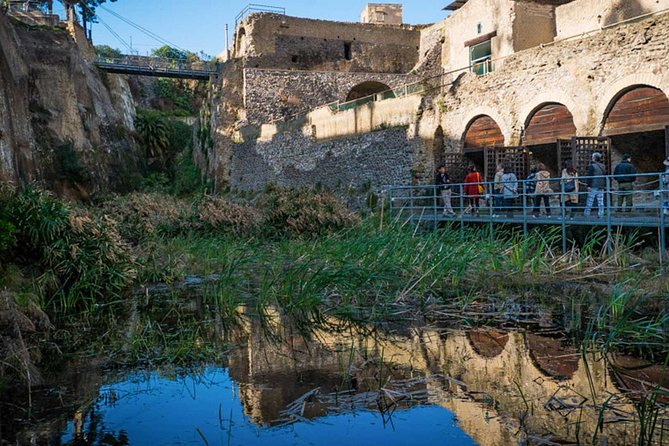
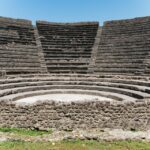
Stop 1 is the Parco Acheologico di Ercolano, where your admission is included. Think of it like exploring a Roman neighborhood that didn’t fully collapse into abstract ruins.
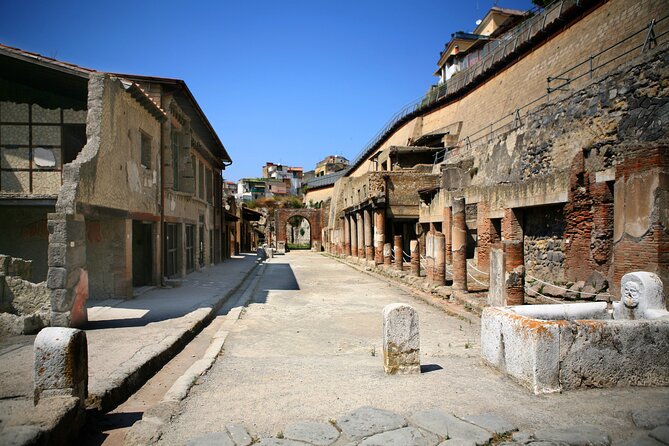
The biggest reason this place works for families is compactness. Streets feel close. Buildings sit near each other. It’s easier to picture someone walking from a shop to a bathhouse or returning home for supper.
As you move through, your guide points out details kids often spot first because they’re visually clear: ancient “counter” style features, mythological wall details, and everyday design elements. Adults benefit too because you learn how the preservation changes what you can understand. Herculaneum isn’t just pretty mosaics. It’s a readable town.
A small drawback: even with a manageable layout, it’s still a ruin site with walking and looking. If your kids need a lot of movement, you’ll appreciate a guide who can keep a steady pace without rushing past the best parts.


Antiquarium: the charred-wood section kids remember
The Antiquarium acts like your warm-up brain. Instead of starting with grand rooms, it shows objects from daily life: jewelry, coins, writing tools, household items, and children’s belongings.
The standout here is charred wood. You’ll learn why blackened pieces still matter: intense heat carbonized organic materials instead of turning everything to ash. That means you can see real wood elements that survived nearly two thousand years.
For kids, it’s a built-in science moment. For parents, it’s a rare chance to explain preservation in a way that doesn’t feel like homework.
One practical tip: pause here if your group likes museums. This is where you get vocabulary for the rest of the site, and it makes the outdoor stops land harder.
Boat Pavilion: the Roman sea isn’t far away
Next up is the Boat Pavilion, where a remarkably preserved Roman boat once sailed in the Bay of Naples. You also see tools and equipment connected to sailors.
This stop is unexpectedly fun because it turns Herculaneum from a “ruins-only” experience into a connected port town story. Kids are often drawn to the wooden hull—darkened by time but intact enough to feel real. Adults tend to like how the preservation protected the boat and its context.
If your family enjoys anything nautical, this is your moment. It also helps you understand why trade mattered to daily life.
Casa dei Cervi: marble statues and a house layout you can picture
Casa dei Cervi is known for its elegant courtyard and marble statues of stags attacked by hunting dogs. It’s a strong stop for families because it mixes a clear visual theme with a believable sense of how space worked.
As you walk through rooms, you’ll see cues of wealth and taste—frescoes, mosaics, and marble thresholds. Kids get a story they can track visually (myth and hunting imagery are easy anchors). Adults get a sense of how Roman families hosted, displayed, and arranged their homes.
The main “watch-out” is simply pacing. Houses can turn into a lot of looking. Ask your guide to connect each room back to daily life so it doesn’t feel like wandering.
Palestra (gymnasium): Roman youth sports and social life
The Palestra gives you the Roman version of a place where young people trained, played, and socialized. You’ll see an open courtyard that hosted games, with porticoes providing shaded areas for rest and discussion.
Kids often enjoy the imagination part: teenagers running and wrestling in an ancient courtyard sounds more exciting than it should. Parents usually appreciate that the gym wasn’t just fitness. It linked education, civic life, and community.
This is a great stop if your kids like action and your older child can handle short explanations. If you’re with toddlers, keep it short and ask them to locate the open space and the shaded areas.
Casa di Nettuno e Anfitrite: mosaics that hit for both ages
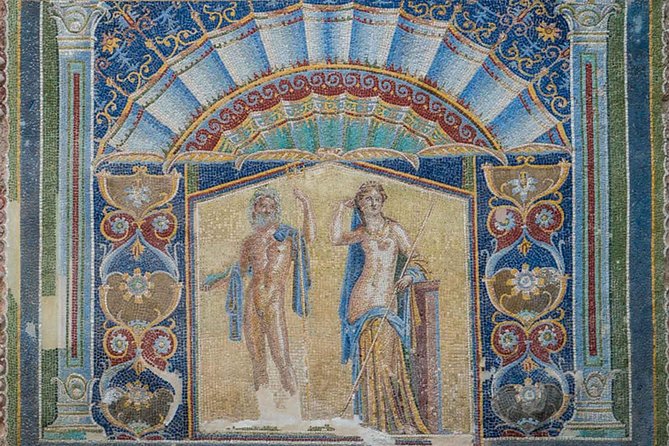
This house is celebrated for its mosaic of Neptune and Amphitrite—Roman mythology with sea themes. Families tend to pause here naturally because the image holds attention. The glass tesserae look like tiny art pixels, even centuries later.
Kids like the color and the figures. Adults appreciate the craftsmanship and the way the house decor signals personal interests and wealth.
If you want a “slow looking” moment for your group, this is it. It rewards close attention without requiring complex background knowledge.
Women’s Baths: cleanliness, engineering, and social time
The Women’s Baths show how Romans combined cleanliness, relaxation, and conversation. You’ll move through changing areas, warm and hot spaces, and notice mosaic floors, marble benches, and heating systems hidden beneath.
Kids sometimes get fascinated by the idea of a spa-like setup in ancient times. Parents get the engineering lesson: warmth wasn’t magic; it was organized design.
One consideration: baths can be a mentally busy stop because there are multiple rooms and temperature transitions. If your family is tired, tell your guide you’ll want the highlights version—what to look for, what it meant, and where the key engineering is.
Ad Cucumas wine advertisement: when marketing becomes archaeology
This is a charming, quick stop that does something important: it makes the ancient world feel familiar. You’ll see a wine advertisement painted directly on a shop façade, with imagery meant to signal what was sold inside.
Kids can treat it like a puzzle—spot the symbol, guess what it sells, imagine what people did there. Adults often appreciate how commerce blended with art in plain sight.
It’s one of those moments that turns history into everyday behavior. People advertised. People shopped. That’s the whole point.
Casa del Bicentenario: refined living plus real legal paperwork
Casa del Bicentenario offers a look at refined urban living around a central courtyard, with traces of colorful frescoes. It also includes a rare and fascinating archaeological detail: charred wooden writing tablets that contained court records.
That’s a powerful pivot for families. It moves the story from decoration and domestic routines into institutions and real-world systems. Kids may not care about bureaucracy, but they do care that the tablets were once used, not just displayed.
Parents will appreciate how the tour connects private life with civic life. Roman home life wasn’t sealed off from law and administration.
Sacello Augustali: religion tied to empire
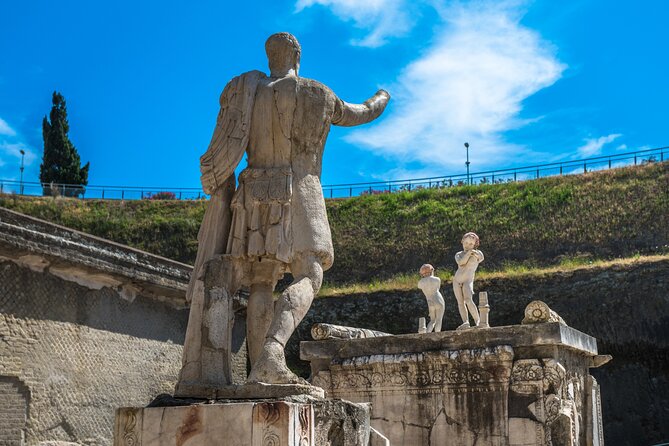
The Sacello Augustali is about religious life and how Romans honored the emperor as a symbol of unity and prosperity. You can admire statues and decorated panels linked to rituals connected to the imperial cult.
Kids often like identifying mythological figures and imagining ceremonies. Adults tend to connect this stop to how religion supported civic identity—belief and politics weren’t separate boxes.
This is a good place for your guide to tailor explanations to age. If your kids are sensitive to scary or heavy topics, this stop is comparatively uplifting.
Casa del Tramezzo di Legno: a folding screen you can almost touch
Here’s another preservation highlight: a large folding screen made of carbonized wood. The dark wood keeps its shape and decorative details, giving a rare look at Roman interior design.
Kids may react to the fact that it’s still real wood. Adults appreciate how architecture shows social etiquette—how spaces were divided and when rooms shifted from one function to another.
If your family is into puzzles, ask your guide to explain what this screen would have controlled in daily life. That turns a “cool artifact” into a practical story.
Casa dello Scheletro: a mystery name with art and niches
Casa dello Scheletro gets its name from a skeleton found during early excavations. Today you explore rooms with elegant wall paintings, decorative niches, and architectural features that hint at daily tastes and routines.
Kids tend to remember the story behind the name, which gives them an entry point. Adults like how archaeological research links finds to reconstructions of daily life.
This stop is worth it if you can handle a bit of “archaeology backstory.” If you’ve got a very young group, keep the focus on the visual decorations.
Thermopolium: Roman street-food counters make sense instantly
The Thermopolium is one of the easiest stops for kids because it’s basically the ancient version of a takeaway counter. It features terracotta jars set into a decorated countertop, where hot food was served.
Kids get it fast: no refrigerators, no delivery apps, just grab-and-go. Adults get the social side: a street corner where smells, chatter, and quick meals shaped daily rhythm.
If your family needs a palate-cleanser from heavier stops, this is a great one.
The ancient shoreline and the skeleton chambers: powerful, guided, and human
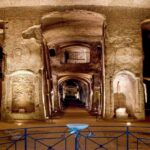
The last big emotional moment is the ancient shoreline area, including vaulted chambers where hundreds of skeletons were discovered. It’s evidence of people seeking shelter from superheated gases during the eruption.
This stop requires tact. The guide is set up to handle it with sensitivity for younger visitors while still honoring the archaeological truth. Parents often find this section helps connect ruins to real lives—so it’s not just “scary history,” it’s human stakes.
If you’re traveling with children who get overwhelmed, use the guide’s framing. Ask for age-appropriate questions and take breaks nearby if needed.
Value check: what you’re really paying for
At about $221.70 per person for a private family tour, the price may look high until you break down what you’re buying.
You’re paying for:
- A private experience (just your group).
- A Blue Badge–accredited guide, which affects quality of interpretation.
- A family-focused approach designed to keep kids engaged.
- Multiple preserved highlights that many people struggle to understand on their own.
- Keepsake materials like the site map and Herculaneum4Kids package.
- Time-efficient guiding across a compact site so you don’t waste energy figuring out what matters.
If you compare this to doing Herculaneum on your own, the biggest difference is how quickly kids lock onto the story. That’s hard to replicate without guiding. Also, preservation details like charred wood and how it survived are the kind of thing that clicks faster with the right explanation.
If your family thrives on structure and you’d rather spend the day learning than wandering, this is good value.
Who this tour suits best (and who might want a different plan)
This is a strong fit for:
- Families with kids who like games, spotting details, or stories that connect to everyday life.
- Mixed-age groups where adults want real context and kids need shorter, visual hooks.
- Travelers planning to visit Pompeii too, since the guided focus makes Roman life details easier to notice later.
You might consider a different approach if:
- Your group has very limited walking tolerance and you need a minimal-step plan.
- Your kids are highly sensitive to intense topics and you know you’ll struggle with the shoreline chambers, even with guided sensitivity.
Should you book this Herculaneum for Families tour?
If you want Herculaneum without turning it into a “quiet museum day,” I’d book it. The tour is built around what families actually need: a guide who can explain without losing the room, and stops that keep pulling both adults and kids in different ways.
I’d especially recommend it if your children respond to hands-on style learning—there are games and activities, plus take-home materials so the day doesn’t vanish the moment you exit the gates.
If your family includes younger kids or someone who tires quickly, go in with a plan: shoes, water, sun gear when it’s warm, and a willingness to stop and breathe. Done that way, this is one of the best Roman sites for families because the town feels like a story you can see.
FAQ
How long is the private Herculaneum family tour?
It runs about 2 to 4 hours.
What does the tour cost?
The price is listed at $221.70 per person.
Is pickup available?
Pickup is offered with flexible meeting options. The details note that pickup is included in the premium option of this tour.
Is this tour private?
Yes. It’s a private tour/activity, and only your group participates.
What language is the tour in?
It’s offered in English.
What’s the cancellation window if plans change?
You can cancel for a full refund up to 24 hours in advance of the experience start time. If you cancel less than 24 hours before, the amount paid isn’t refunded.