REVIEW · NAPLES
The Phlegrean Fields Discover the ruins of Baia, Cuma and Pozzuoli
Book on Viator →Operated by Askos Tours · Bookable on Viator
If you like ruins with a story, this is it. One day in the Phlegrean Fields ties together Greek myths, Roman engineering, and volcanic geography in a tight route, with the convenience of hotel or port pickup and a private minivan so you’re not wasting hours on transit. I especially like the way the guide turns the terrain itself into an explanation, and how the day moves from Cuma to Baia to Pozzuoli without the usual logistics headache. The one drawback to keep in mind: key stops (like parts of Cuma’s acropolis or the Flavian Amphitheater) can be closed on certain days, so ask about access when you book.
The best part is the flow: you start at Cuma, climb up to the acropolis, then shift to Baia for castle views and major Roman remains, and finish in Pozzuoli at one of the world’s big amphitheaters. It’s built for a full day, starting at 9:30am, with a guide plus a professional driver and enough pacing to keep it from feeling like a sightseeing conveyor belt.
Practical note: this route includes a short uphill walk at Cuma (about 10 minutes), so comfortable shoes matter. Meals are not included, but admission fees for the Phlegrean sites and museum are, which helps you keep control of the total spend. Also, service animals are allowed, and most travelers can participate with that one main walking effort.
In This Review
- Key highlights worth your attention
- Why the Phlegrean Fields feel different from typical Naples ruins
- Cuma’s acropolis: Apollo’s ruins and the Sybil’s cave
- Baia’s Alfonso d’Aragona castle: museum time plus terrace panoramas
- The Roman Baths at Baia: public architecture that says how people lived
- Pozzuoli’s Flavian Amphitheater and quick volcanic lake views
- Pickup, timing, and private transport: why it matters on the Phlegrean Fields
- Price and value: what $618.08 per person is really buying you
- The guide experience: Gennaro’s geology and local love for Baia
- Small practical tips that keep the day smooth
- Who should book this Phlegrean Fields route (and who might not)
- Should you book this tour?
- FAQ
- What time does the tour start?
- How long does the tour last?
- Do you offer pickup?
- Which sites are included?
- What is included, and what is not?
- How much walking is involved?
- Is it private and in English?
Key highlights worth your attention
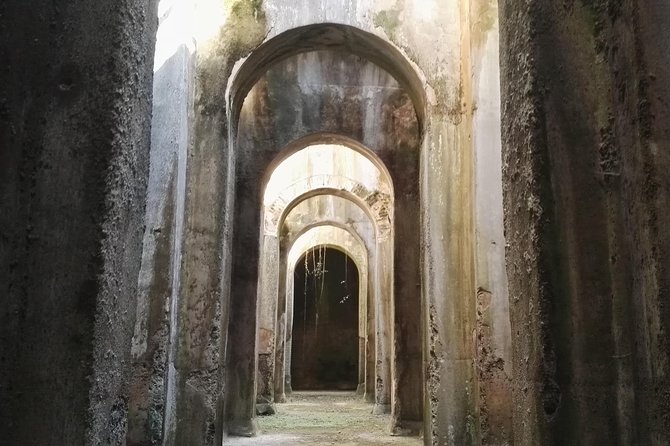
- Cuma’s acropolis: Temple of Apollo ruins plus the Cave of the Sybil in one historic sweep
- Baia’s Alfonso d’Aragona Castle terrace: great photo views before you step into the archaeological museum area
- Roman Baths at Baia: a major set of ruins with a very “how people lived” feeling
- Pozzuoli’s Flavian Amphitheater: one of the most important amphitheaters in the world
- Volcanic lake glimpses: quick looks at Lakes D’Averno, Fusaro, and Miseno
- Pickup + private transport: hotel or cruise port to each stop, with local taxes, fuel, and parking handled
Why the Phlegrean Fields feel different from typical Naples ruins
Naples is famous for layers: Greek roots under Roman power, with centuries of reuse on top. The Phlegrean Fields add another layer that you can actually feel in the scenery—the area is tied to volcanic activity, which helps explain why certain sites sit where they do and why “myth + science” fits here so naturally.
That’s what I like about this tour format. You’re not just ticking off monuments; you’re seeing how the region connects. Cuma sets the myth tone with Apollo and the Sybil. Baia brings you into a Roman lifestyle zone with major public architecture like Roman Baths and a castle-and-museum setup. Then Pozzuoli caps it with big-scale entertainment architecture, plus quick, scenic glimpses at volcanic lakes.
And since it’s private, you’re usually better positioned to adjust pace. If someone in your group needs a slower rhythm for the uphill at Cuma, you can take it without the stress of a group train schedule.
You can also read our reviews of more tours and experiences in Naples.

Cuma’s acropolis: Apollo’s ruins and the Sybil’s cave
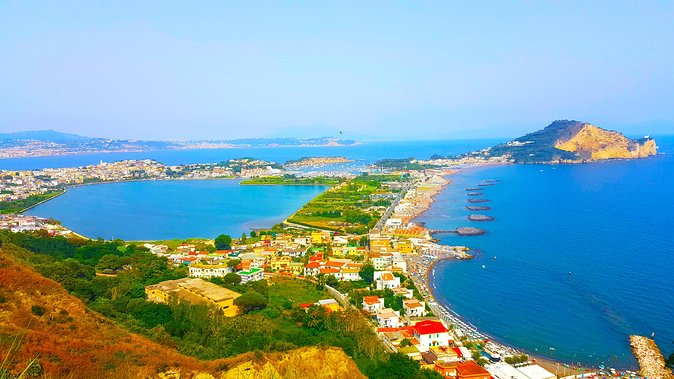
You’ll start at Cuma’s acropolis, where the ruins of Apollo’s Temple anchor the Greek side of the story. The sense here is “ancient place on elevated ground,” and that matters because you’re looking up at history instead of across it. Even if you know Roman ruins well, the Cuma setting changes the mood.
Then you’ll move to the Cave of the legendary prophetess Sybil. This stop is less about a single wall you can read like a textbook and more about atmosphere. The Sybil is one of those ancient figures that shows up in Western storytelling, and being at the cave-shaped location helps the legend feel grounded. It’s also a good mental reset between the Greek myth layer and the Roman engineering that comes later in the day.
The main practical detail: climbing the acropolis involves about a 10-minute walk uphill. That’s not a deal-breaker, but it’s real enough that you’ll want shoes you trust. If you have knee issues or you’re traveling with a stroller, consider asking the provider about day-of route specifics before you commit.
One more thing to consider: the acropolis at Cuma may be closed on some dates. A past tour experience included a situation where the acropolis was not accessible, and the guide compensated by spending more time at Baia. That’s not something you can plan around perfectly, but it is a good reason to treat this as a flexible day focused on the whole Phlegrean Fields—rather than betting everything on one exact entrance.
Baia’s Alfonso d’Aragona castle: museum time plus terrace panoramas
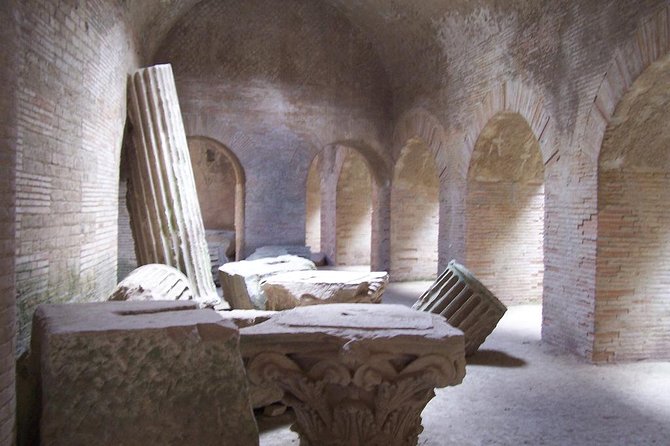
After Cuma, the day shifts into Baia, and that’s where the route starts offering those “wow, I didn’t expect this view” moments. The castle stop is the Alfonso d’Aragona castle, which now houses the archaeological museum of Baia.
Even if you’re not a museum person, the castle layout gives you two things at once:
- a museum context for what you’re about to see on the ground nearby
- a terrace vantage point for photos and for orienting yourself to the coast and surroundings
I like this timing because it breaks up the day. You get a visual pause before Roman remains take over again. It also means you’re not spending the entire day staring at stone from only one angle. The terrace makes the ruins feel like part of a bigger place, not just leftover blocks.
From a value point of view, this stop matters because it includes admission within the tour. You’re paying once for the guided day and entry fees for the Phlegrean museum and sites, which reduces the usual “add-on surprises” at the ticket window.
The Roman Baths at Baia: public architecture that says how people lived
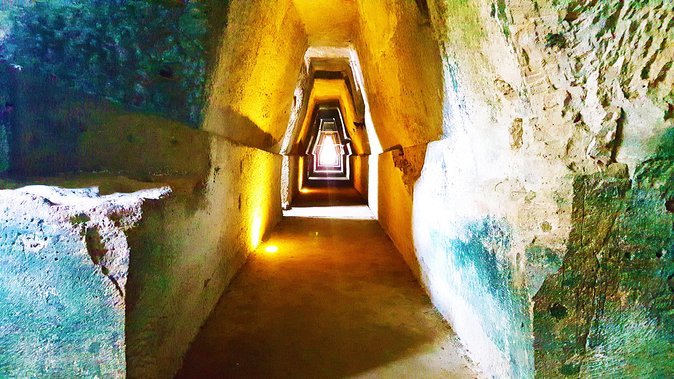
Baia’s archaeological park includes the Roman Baths, and this is one of the strongest parts of the day if you like architecture. Baths weren’t private luxuries; they were social hubs, civic space, and an engineering project all at once. Seeing a set of Roman Baths ruins in a guided context helps you move past simple wow-factor and toward understanding the function.
What I find useful here is the way the guide tends to connect the visible remains to daily life: how these spaces worked, why they were built where they were, and what they reveal about the kind of city Baia was becoming in Roman times.
This stop also tends to be the easiest to enjoy even if one of the other anchor sites hits a snag. In that one less-perfect experience, the Baia time ended up longer, which turned the day into a stronger Roman stop rather than a partial disappointment.
If your goal is to come away with something you can explain to friends later—how the Romans used public space, and how the setting supports the story—this is your payoff.
Pozzuoli’s Flavian Amphitheater and quick volcanic lake views
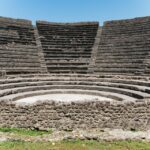
In Pozzuoli, the centerpiece is the Flavian Amphitheater. It’s described as one of the most important amphitheaters in the world, and when you’re standing near a structure like this, you immediately get the scale. It’s the kind of place where your brain starts imagining the crowd even if you’re not a sports-stadium person.
This is also where the tour’s “one day, multiple eras” approach really shows its power. You’ve gone from Greek myth settings (Cuma) to Roman public-life architecture (Baia) and now to Roman mass entertainment at amphitheater scale.
Then you’ll get glimpses of the volcanic Lakes D’Averno, Fusaro, and Miseno. These are not the kind of stops where you need to spend hours. The goal is quick visual and geographic orientation—proof that the volcanic identity of the area is part of the story, not just an academic note.
Keep in mind one more practical reality: the Flavian Amphitheater can be closed on certain days. In one earlier tour experience, the amphitheater wasn’t available, which again meant more time elsewhere. If Pozzuoli’s amphitheater is your top priority, it’s worth asking about access expectations during booking.


Pickup, timing, and private transport: why it matters on the Phlegrean Fields
This is a full-day plan that starts at 9:30am and runs about 8 hours. The reason that timing works is the private transport. You can be picked up at cruise ports in Campania, or from your hotel or meeting locations within Naples, Salerno, and the Amalfi Coast.
That matters more than it sounds. The Phlegrean area is spread out. Without an organized driver, you’d be juggling buses, walking between stops, and the risk of missing entrances. With pickup and drop-off handled, you can treat this as one continuous day rather than a chain of mini-adventures.
Also, it’s a private tour/activity, meaning only your group participates. That supports flexibility. If you want more time at a viewpoint terrace, or you need a slower pace around Cuma, your guide can adjust without negotiating a pace with strangers.
It’s also in English, and you receive a mobile ticket. If you’re the kind of person who likes less friction on the day itself, those details add up.
And yes—this one includes local taxes, fuel, and parking expenses, so you’re not playing the game of figuring out whether parking fees got quietly added elsewhere.
Price and value: what $618.08 per person is really buying you
At $618.08 per person, this is not a budget add-on. But it’s priced like a full guided day built around private transport and paid entries.
Here’s what you’re actually getting:
- full-day transportation by a private minivan with a professional driver
- guidance throughout the day
- local taxes, fuel, and parking handled
- admission fee for the Phlegrean museum and sites included
Meals are not included, so you’ll need to plan for lunch on your own.
So how does that translate into value? If you’re staying outside the city center or arriving by cruise, pickup alone can save you both time and stress. If you’re splitting the cost with friends or family, private transport tends to become more reasonable fast compared with piecing together individual tickets and multiple transfers. If you’re traveling as a solo or as a small group with high expectations for comfort and time management, the price is easier to justify because the logistics are built into the cost.
The guide experience: Gennaro’s geology and local love for Baia
One guide name shows up with particular strength: Gennaro. The standout point isn’t just that he gives explanations. It’s that he connects the area itself—geology, history, and archaeology—into the story of Cuma, Baia, and the Phlegrean Fields.
When a guide has genuine local attachment, your tour tends to feel less like reading captions and more like understanding a place. In this route, geology is not a decorative detail. It helps explain why the area feels mythic and scientific at the same time, and why the volcanic lakes are worth a quick look instead of a throwaway stop.
If you book, here’s the best way to take advantage: ask early in the day what makes this area different from other Roman regions. Then watch how the answers link the Greek Cuma myths to the Roman Baia ruins and the volcanic lake glimpses.
Small practical tips that keep the day smooth
- Wear comfortable shoes for Cuma. The uphill walk is about 10 minutes.
- Bring a camera or phone charger setup. Terrace views at Baia are built for photos.
- Plan your lunch separately since meals aren’t included.
- If you’re traveling with mobility needs, remember the tour’s main physical requirement is the uphill at Cuma, even though most people can participate overall.
- Keep expectations flexible about site access. Closures can happen, and a good day becomes a slightly different day.
Also, it’s worth noting that service animals are allowed, which makes this route more workable for more visitors.
Who should book this Phlegrean Fields route (and who might not)
This tour fits best if you want:
- a guided day across Cuma, Baia, and Pozzuoli without dealing with public transport
- mythology plus major Roman archaeology in one sweep
- a private pace (instead of racing through places with a crowd)
- the convenience of pickup from cruise ports or hotels across Naples, Salerno, and the Amalfi Coast
It may be less satisfying if you have very narrow priorities. If your trip depends on seeing a single specific entrance at Cuma or the Flavian Amphitheater that day, understand that closures can affect access. In that case, your enjoyment will depend more on how much you value the rest of the route and the guide’s ability to rebalance time.
Should you book this tour?
I’d book it if you want a structured, guided day that turns the Phlegrean Fields into a connected story—from Apollo and the Sybil at Cuma to Roman Baths at Baia and the Flavian Amphitheater in Pozzuoli. The strongest reason is value through organization: pickup, private transport, and admission included means you spend less time planning and more time looking closely.
I’d hesitate only if your schedule is tight and you’re betting everything on one site being open. If that’s you, consider asking what’s typically accessible on your dates, and be ready to enjoy Baia even if something else has an off day.
Free cancellation up to 24 hours before start time gives you a safety net, so you can book now and make the final call as your departure day gets closer.
FAQ
What time does the tour start?
It starts at 9:30am.
How long does the tour last?
The duration is about 8 hours.
Do you offer pickup?
Yes. You can be picked up at every cruise port in Campania, or from your hotel or other meeting locations within Naples, Salerno, and the Amalfi Coast.
Which sites are included?
You visit Cuma (Apollo’s Temple ruins and the Cave of the Sybil), Baia (Alfonso d’Aragona castle and the Baia archaeological museum area, plus the archaeological park with Roman Baths), and Pozzuoli (the Flavian Amphiteather). You also get a glimpse of volcanic lakes D’Averno, Fusaro, and Miseno.
What is included, and what is not?
Included are guidance for the entire tour, full-day transportation by a private minivan with a professional driver (including pick up and drop off), local taxes fuel and parking expenses, and admission fees for the Phlegrean museum and sites. Meals are not included.
How much walking is involved?
Most travelers can participate, but climbing the acropolis of Cuma involves a walk uphill of about 10 minutes. Comfortable shoes are recommended.
Is it private and in English?
Yes. It’s a private tour for your group only, and it’s offered in English.