REVIEW · NAPLES
TRAMVIA -Da Naples: Pompei Ruins and Vesuvio Transfer by Bus
Book on GetYourGuide →Operated by TRAMVIA - Beducci Travel Bus · Bookable on GetYourGuide
Pompeii and Vesuvius in one day can feel like cheating. You get the Pompeii ruins and the chance to reach Vesuvius up to 1,000 meters without renting a car or timing multiple transit legs. I like how the schedule is built around a clear, direct route, with a tour assistant onboard to help keep the day moving.
The main thing to watch is money and logistics. The bus fare is only the bus, and entrance tickets for Pompeii and Vesuvius are not included—so if you want the full experience, you should budget extra and keep an eye on what ticket you’re buying for which spot.
In This Review
- Key highlights to know before you go
- Naples-to-Pompeii-to-Vesuvius: the day in plain terms
- Catching the bus in Naples: where you board and what the timeline means
- Pompeii Archaeological Site: what 3 hours can really do
- Vesuvius up to 1,000 meters: crater views, time limits, and walking
- The bus-only price: how to judge value (and avoid surprises)
- What the tour assistant does (and what it doesn’t)
- Practical tips that make Pompeii and Vesuvius easier
- Who should book this transfer?
- Should you book TRAMVIA – Beducci Travel Bus?
- FAQ
- How long is the trip from Naples to Pompeii and Vesuvius?
- What’s included in the price?
- Are entrance fees included for Pompeii and Mount Vesuvius?
- Where do pickups happen in Naples?
- How much time do you get at each main stop?
- Is this tour suitable for wheelchair users?
Key highlights to know before you go
- Multiple Naples pickup options make it easier to start near where you’re staying
- A long Pompeii stop (about 3 hours) lets you actually walk blocks, not just pose for photos
- Vesuvius access up to 1,000 meters gives you a real climb-and-view option, not just a roadside stop
- Tour assistant onboard helps with the flow, even though there’s no guide inside the sites
- No large luggage allowed means pack light so you’re not wrestling bags all day
Naples-to-Pompeii-to-Vesuvius: the day in plain terms

This is a classic Campania day trip: first Pompeii, then Vesuvius, and back to Naples. The day is designed around travel time plus site time, and the bus handles the big movement problem—getting you out of Naples without a private driver.
You’ll depart from Naples (the pickup options are spread across central areas). Then the bus heads to Pompeii, spends a chunky block of time at the archaeological area, and continues on to Vesuvius for the crater-region visit. After that, it’s back to Naples on the posted schedule.
If you’ve ever worried about doing Pompeii and Vesuvius “the right way,” this tour is built for that: you get a dedicated Pompeii window and a dedicated Vesuvius window. The trade-off is that you’re relying on time on the clock rather than going at your own pace across both sites.
You can also read our reviews of more tours and experiences in Naples


Catching the bus in Naples: where you board and what the timeline means

Pickup is the first make-or-break detail, and this one gives you options. You can board at one of these pickup points in Naples:
- Via Medina, 39
- Via Galileo Ferraris, 40
- Via Monteoliveto, 20
- Via Toledo, 368
- Corso Arnaldo Lucci, 199
- Via San Carlo, 9
You’re told to be at your stop about 5 minutes before the time listed for that pickup location. The scheduled ranges run roughly from about 8:40–10:20 depending on where you board. From Pompeii to Vesuvius, the itinerary points to around 13:30, and the return from Vesuvius to Naples is around 16:30.
Here’s the practical angle: if you’re staying near a popular central spot, pick the stop that’s truly close to you. Don’t pick the one that sounds convenient on a map but is stressful in real life when you’re walking uphill or crossing busy streets. Also remember the bus can be red or white—so give yourself a moment to identify the correct vehicle once you arrive.
One more note that matters: the tour mentions a specific transfer pattern between Naples areas and that the pickup run is based on scheduled timing. In plain language, the bus is not waiting forever, so arriving early is your best move.
Pompeii Archaeological Site: what 3 hours can really do
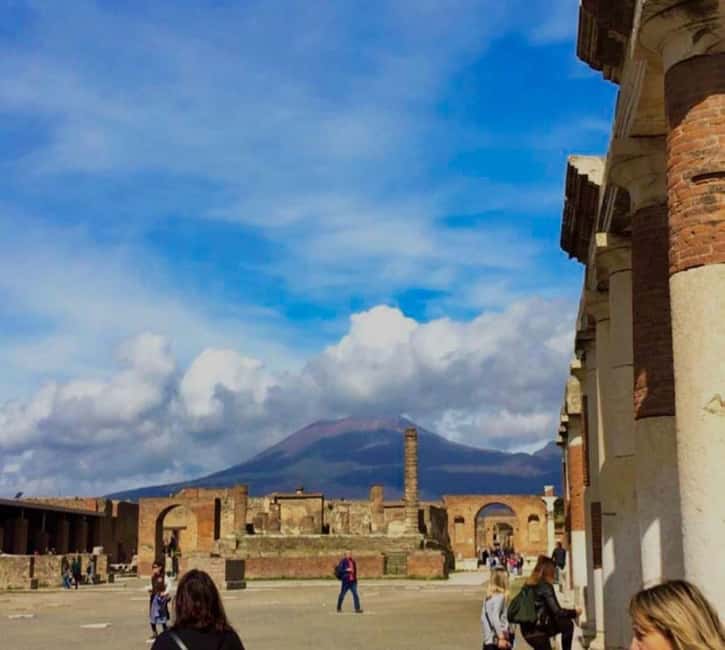
Pompeii is huge. Three hours is not enough to see everything, but it’s often enough to see the highlights—if you choose a direction and don’t get hypnotized by every doorway.
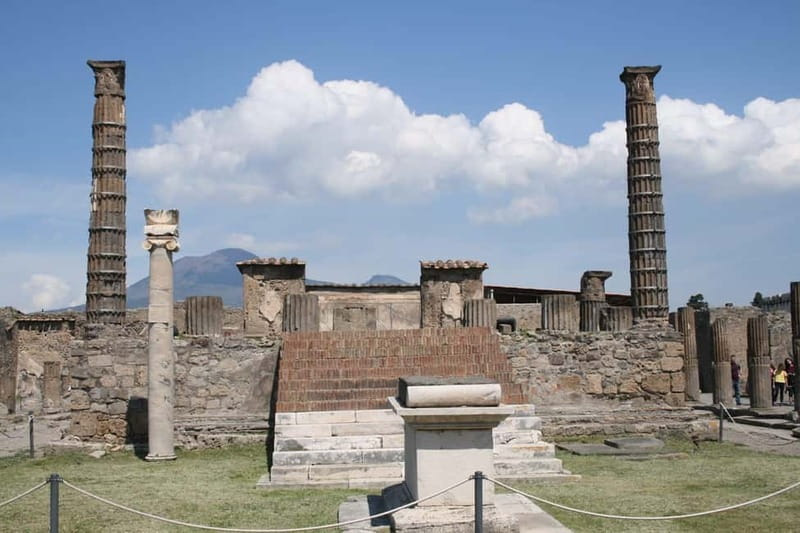
Your Pompeii time block is about 3 hours, and you’ll be dropped near the archaeological area around Villa dei Misteri 2. That matters because it sets you up for a first stretch of walking right away. Pompeii works best when you treat it like a grid: decide what you want first, then loop and backtrack less.
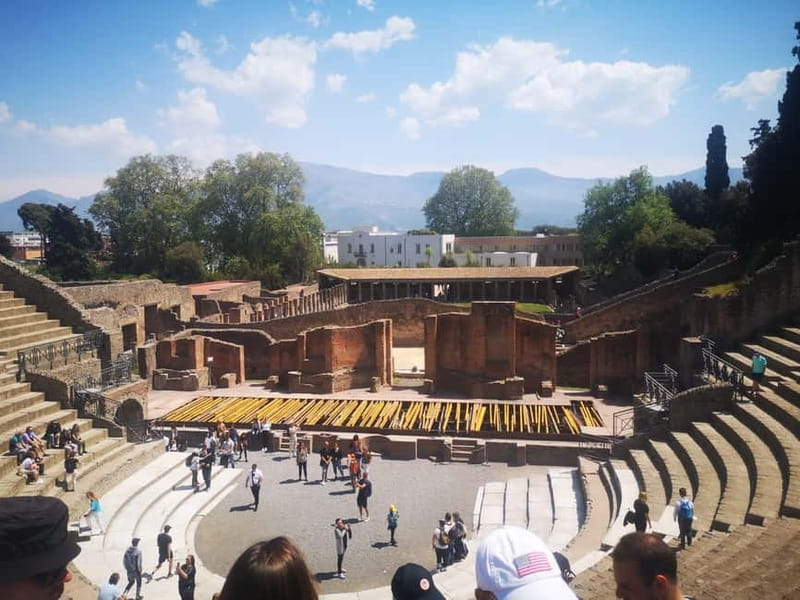
What makes Pompeii so powerful is that you’re not looking at ruins in theory—you’re walking through a city frozen in time by the 79 A.D. eruption. The tour description points out the types of buildings you’ll encounter: houses, shops, and brothels. You can see how ordinary life functioned—bakeries, streets, courtyards, and the everyday “this is how people lived” feel you don’t get from ruins that are only foundations.
The strongest reason to do Pompeii by organized transport is simple: it saves you the friction of figuring out how to get there and back. The weaker reason is that you still have to manage your own walking pace inside Pompeii. If you want slow, detailed museum-style viewing, this schedule might feel tight.
Ticket reality in Pompeii: entrance is not included in the package. That said, a real-world issue that comes up is confusion about whether Pompeii entry is free on certain days. In practice, you should assume you may need to buy (or re-check) your ticket. If you reserved ahead, keep documentation ready and be ready to show it at the entrance area.
Vesuvius up to 1,000 meters: crater views, time limits, and walking
After Pompeii, you ride again by bus to Vesuvius. The itinerary allocates about 2 hours at Vesuvius. The tour also specifies transportation up to 1,000 meters, which is helpful because Vesuvius isn’t flat and you don’t want to fight elevation before you even start walking.
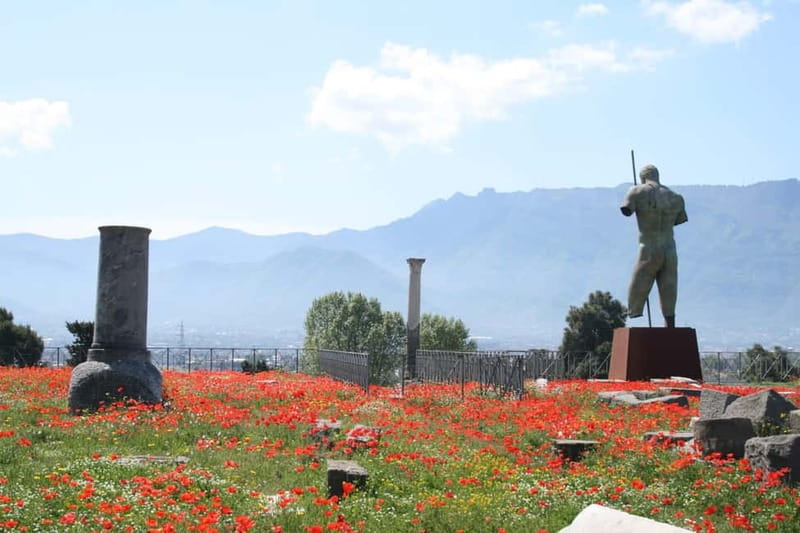
What you’ll be looking for is the crater-area experience. The description frames Vesuvius as the volcano that buried Pompeii, with the eruption described in dramatic terms: ash and stones thrown skyward at enormous scale, releasing vast thermal energy. Even if those numbers sound wild, they underline why the site is scientifically and emotionally important—this wasn’t a gentle event. It was fast, violent, and final.
Here’s the timing consideration: while the schedule gives about 2 hours, one clue from real-world experience is that climbing toward the top can take longer than you think, especially if paths are crowded or conditions are slow. If you want crater-top views plus time to enjoy the panorama from above Naples, don’t treat the stop as “just a quick climb.”
Also, conditions can change. One earlier winter-style day example included snowy, difficult roads handled by the driver. That’s not a promise for every day, but it’s a reminder that Vesuvius can involve real weather and real footing. Bring shoes that work on uneven ground, and expect that the “easy walk” version depends on conditions.
Finally, the tour mentions enjoying the Naples view from the top. That view is often the payoff people remember. To make sure you get it, plan to start walking promptly once you arrive, rather than spending your first 20 minutes figuring out where you are.
The bus-only price: how to judge value (and avoid surprises)

At $39.86 per person, this looks like a bargain for a full-day Pompeii and Vesuvius transfer. The catch is stated clearly: the price covers round-trip transportation and Vesuvius up to 1,000 meters, but it does not include entrance fees, and there’s no guide inside the sights.
So the “value” question is really: will you budget for entrances and possible add-ons? If yes, then the price can be very reasonable because the bus is doing the hard logistical lifting. If you expect this to cover everything, you’ll feel the cost shift at the gate.
One issue that can seriously sting is ticket mismatch. A common confusion is assuming you only need to pay for one thing when the full viewpoint experience requires separate access—especially for Vesuvius top/crater areas. On the Vesuvius side, one example included being told to pay an additional fee for access to the top after already assuming entry was covered. Even when the exact policy varies day to day, the lesson for you is consistent: confirm what your ticket allows before you walk away from the ticket point.
If you want to keep this trip from becoming an unplanned budget surprise, do two things:
- Budget extra for Pompeii and Vesuvius entrances.
- When you get there, verify that your ticket matches the specific area you’re planning to reach.
In other words: don’t buy the dream ticket; buy the exact ticket for the exact views you want.




What the tour assistant does (and what it doesn’t)

You’ll travel with a tour assistant on board, with languages listed as Spanish, English, French, and Italian. That’s helpful for basic coordination—where to board, when to be back, and how to handle the day’s rhythm.
But this package does not include a tour guide inside the sights. That means Pompeii and Vesuvius are mostly self-guided. If you love a narrative—names, dates, and the “why this matters” explanations—plan to rely on your own reading, guidebook, or audio content during your walk.
The upside of self-guiding is flexibility. You can move faster if you’re eager or pause if you spot something that grabs you. The downside is that you’ll get less context unless you bring it with you.
Practical tips that make Pompeii and Vesuvius easier
A few details can make your day feel smoother right away.
Wear comfortable shoes. Pompeii means lots of walking on uneven surfaces. Vesuvius means elevation and potentially rougher ground near paths.
Pack light. Luggage and large bags aren’t allowed. If you’re bringing a big backpack, expect hassle. A small daypack is the safer bet.
Bring a photo ID. You’ll need a passport or ID card, and having it ready saves time.
Be ready to manage tickets on the spot. Entrance fees are not included. If you reserved online, keep your confirmation accessible. If there’s any mismatch, it’s easier to fix when you’re not rushing back to the bus.
Start your walking quickly at Vesuvius. If your goal is the crater area and Naples views, you’ll want to avoid losing time to delays. Once you’re at the top, you’ll want a little breathing space for photos and the view—not just a sprint back to the meeting point.
Who should book this transfer?
This trip is a good fit if you want:
- One-day logistics solved: bus transportation round-trip from Naples, plus Vesuvius access up to 1,000 meters.
- A structured visit: Pompeii for about 3 hours and Vesuvius for about 2 hours.
- Convenience over a deep, guided explanation inside each site.
It’s not the best choice if you:
- Want everything bundled (entrance fees are not included, and pricing can shift based on what access you choose).
- Need a wheelchair-friendly itinerary (it’s noted as not suitable for wheelchair users).
- Hate last-minute ticket clarifications. With an all-day route, you’ll want to stay organized.
Also, keep your expectations aligned with the rhythm: this is a transfer-heavy day. You’re choosing to trade some freedom for getting both destinations done in one go.
Should you book TRAMVIA – Beducci Travel Bus?

If you’re the type who likes seeing major sites efficiently and you’re willing to handle entrance tickets yourself, I think this is a practical way to do Pompeii and Vesuvius without the stress of driving or coordinating separate transit legs.
But if you’re hoping the booking price covers the full experience, or if you want a guided walkthrough in Pompeii and at the crater area, you’ll likely feel frustrated by the “bus-only” nature of the deal. In that case, look for an option that includes a licensed guide inside the sites or at least gives clearer entrance inclusions for the exact Vesuvius area you want.
My advice: treat this as a transport package, then plan your entrances with care. Do that, and you’ll get a memorable Campania day—ruined Roman streets by morning, and a volcanic crater view by afternoon.
FAQ
How long is the trip from Naples to Pompeii and Vesuvius?
The total duration is 7 hours, with the schedule set by pickup and the fixed return time.
What’s included in the price?
You get round-trip transportation to Pompeii, transportation up Vesuvius to 1,000 meters, and a tour assistant on board.
Are entrance fees included for Pompeii and Mount Vesuvius?
No. Entrance fees for Pompeii Archaeological Site and Mount Vesuvius are not included.
Where do pickups happen in Naples?
Pickups are offered at several stops: Via Medina 39, Via Galileo Ferraris 40, Via Monteoliveto 20, Via Toledo 368, Corso Arnaldo Lucci 199, and Via San Carlo 9.
How much time do you get at each main stop?
Pompeii is scheduled for about 3 hours, and Mount Vesuvius is scheduled for about 2 hours.
Is this tour suitable for wheelchair users?
No, it’s listed as not suitable for wheelchair users.