REVIEW · POMPEII
Skip-the-Line Half-Day Private Tour Ancient Pompeii Highlights with Native Guide
Book on Viator →Operated by Tours of Pompeii with Lello & Co. · Bookable on Viator
Skip lines, then hear Pompeii talk. This skip-the-line private highlights tour is designed to get you into Pompeii fast and keep you moving through the big, iconic stops with an art historian-style storyteller. You’ll cover theater, streets, baths, the Forum, and the Lupanar without wasting time in queues.
I especially like the private, guided pacing. You’re not stuck in a slow-moving group shuffle, and your guide can steer you toward the most interesting corners instead of checking boxes.
One possible drawback: 2 hours is tight. Pompeii is huge, so you’ll leave with favorites rather than a full sweep—and like any tour, guide style can vary (one review flagged that a guide may prioritize getting through busy areas).
In This Review
- Key highlights at a glance
- Why skip-the-line at Pompeii can feel like a small miracle
- Hotel Vittoria meeting point and the 2-hour rhythm inside the park
- Teatro Grande and Teatro Piccolo: the theater stop that makes ruins feel alive
- Via dell’Abbondanza: walking the main street like Romans did
- Stabian Baths (Terme Stabiane): steam, daily routine, and an underground surprise
- Forum and Pompeii Archaeological Park: where public life comes back
- Lupanar: a frank look at Roman sexuality and art
- Private guide energy: Lello, Italo, Fabio, and Rosanna
- Price and value: what $83.48 per person buys in real terms
- Who this tour is best for (and who may want a different plan)
- Should you book this skip-the-line private Pompeii highlights tour?
- FAQ
- How long is the Pompeii private highlights tour?
- Is this tour private?
- Does the tour include skip-the-line entry?
- What language is the tour offered in?
- Where does the tour start, and is hotel pickup included?
- What should I know about physical fitness and kids?
- What if weather is bad?
Key highlights at a glance
- Guaranteed skip-the-line entry, so you spend your energy seeing rather than waiting
- Art historian guidance that turns ruins into daily life stories
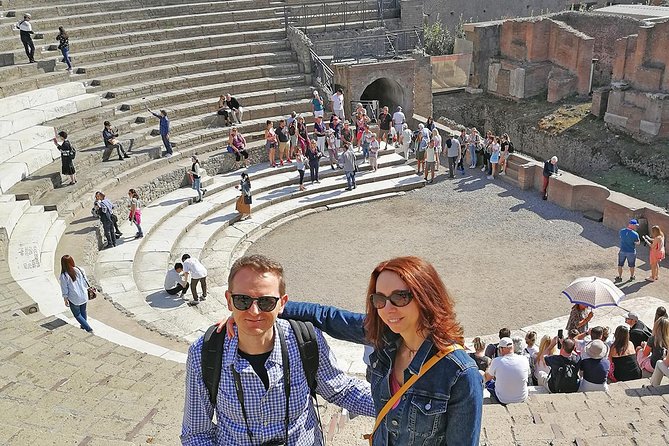
- Teatro Grande and Teatro Piccolo stops, including the sound-focused theater moment
- Stabian Baths (Terme Stabiane) plus a standout underground look mentioned in feedback
- Forum highlights where markets and public life feel close to the surface
- Lupanar view, including discussion around its famous erotic frescoes
Why skip-the-line at Pompeii can feel like a small miracle
Pompeii punishes slow starts. Even when you do everything right, lines and crowding can eat your best hours. That’s why I like tours that include guaranteed skip-the-line entry. Here, you’re paying to buy back time—so you can actually look, not just shuffle your feet forward.
This tour is built around speed with purpose. In about two hours, you hit the big emotional hits: the theaters, the main streets, the bath complex, the Forum, and the Lupanar. That’s a lot for a short outing, and it only works if you’re not wasting time at the entrance.
If you hate standing around in the sun, this format fits. You’ll also find that your guide can help you choose what to linger on (within the time limits) so you still get real seeing, not just passing glances.
You can also read our reviews of more guided tours in Pompeii

Hotel Vittoria meeting point and the 2-hour rhythm inside the park
Your start point is Hotel Vittoria at Piazza Esedra, Pompei. There’s no hotel pickup, so plan to arrive on your own and meet right where the tour begins. The good news: it’s near public transportation, which makes it easier to structure your day around Pompeii without complex logistics.
With an approx. 2-hour duration, the tour runs on a focused rhythm. The pacing matters: you’re hopping between sites that are close enough to make sense in a short visit, while your guide keeps the story threads from theater life to street life to public life to everyday leisure.
Bring moderate walking stamina. Pompeii is uneven and you’ll spend time on outdoor surfaces as well as in archaeological areas. If you’re traveling with kids, note the basic rule: children must be accompanied by an adult.
Teatro Grande and Teatro Piccolo: the theater stop that makes ruins feel alive
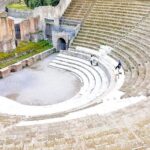
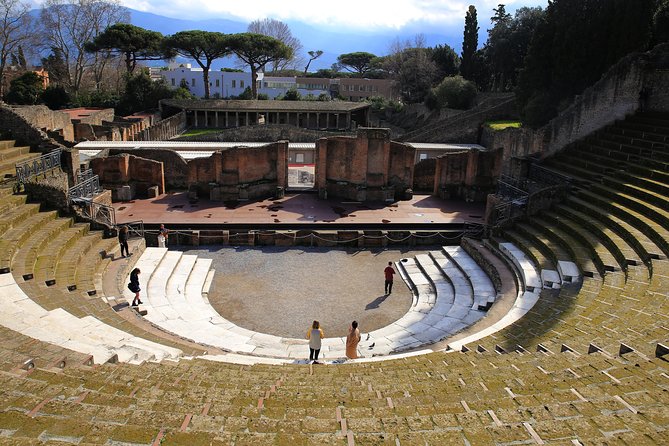
The tour’s early stretch is theater-first, and that’s a smart choice. In Pompeii, the theater buildings aren’t just pretty shells. They’re about sound, movement, and how people gathered for performance.
You’ll be taken to Teatro Grande and guided through what it means in Roman life—then you’ll also get a stop connected to Teatro Piccolo, with an emphasis on the acoustic perfection of the space. It’s the kind of detail that makes you look twice: you start noticing angles, sightlines, and how the design probably guided the audience’s experience.
One reason this works especially well with a private guide is that you can ask for the “why” while you’re standing there. A short theater lesson in context beats reading a museum label for 15 minutes. You’ll also get anecdotes and secrets, which is where Pompeii stops being just architecture and starts feeling like a living city.
Via dell’Abbondanza: walking the main street like Romans did
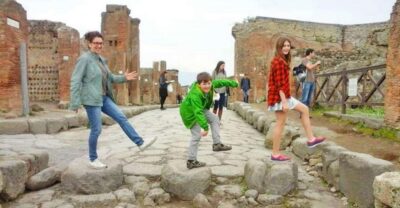
After the theaters, you move into street life via Via dell’Abbondanza. This is where Pompeii becomes human-scale fast. Instead of treating the site like a checklist, your guide walks you along the main thoroughfare and explains how daily life flowed through the city.
This part matters because Pompeii’s ruins can feel confusing if you only see isolated buildings. A main street walk gives you orientation: you start to understand what’s near what, where people likely walked, and how the city’s layout supported commerce and social life.
Expect more than “look at that column.” Your guide frames what you see in Roman time, including how public spaces functioned and how the street connects the larger landmarks you’ll visit next. If you’re the type who enjoys understanding layout and function more than collecting trivia, this is a strong match.
Stabian Baths (Terme Stabiane): steam, daily routine, and an underground surprise
The Stabian Baths are a highlight on this tour, and for good reason. Baths weren’t just hygiene in Roman cities—they were social centers. In a short visit, a bath stop gives you a deeper sense of routine than you’d get from monuments alone.
You’ll learn about Roman daily life and then tour the thermal baths area. One thing to keep in mind: the space can include an underground section, and multiple reviews called out it as fantastic—an area where you can appreciate the setting from a different level. You won’t need to know the layout in advance; just be ready to look down and up, because bath complexes reward perspective.
Practical tip: bring water if you’re going in warm months. A review specifically encouraged water bottles for summer, and that’s good common sense for outdoor ruins.
Possible drawback here: because the time is limited, you may not get to linger in every corner. If baths are your top interest, be ready to ask your guide where you should focus for the last few minutes.
You can also read our reviews of more private tours in Pompeii




Forum and Pompeii Archaeological Park: where public life comes back
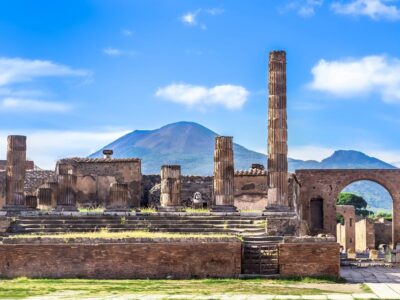
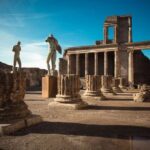
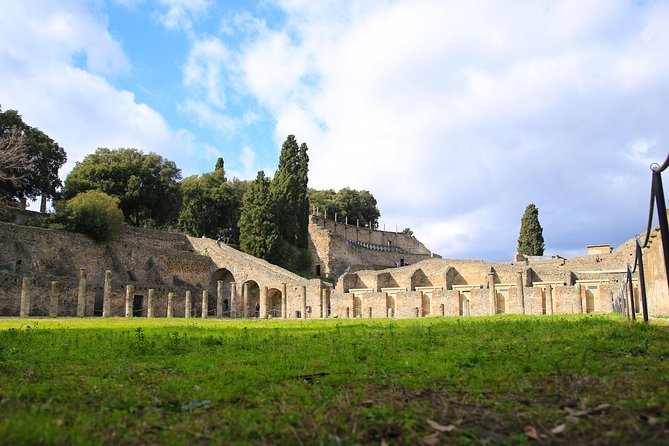
Next up is the Forum (Foro de Pompeya) and time within Pompeii Archaeological Park. This is the big public-life zone—markets, gathering spaces, and the kind of activity that makes a city feel real.
Your guide will walk you through the Forum and point out how it worked in Roman times, including the market atmosphere. Reviews also highlighted the Forum excavations as a must-not-miss. Even if you’ve seen photos, being there with a guide helps you connect the open spaces, foundations, and architectural remnants into something you can picture as active daily ground.
The value of having this portion guided is clarity. Pompeii’s scale is tough, and it’s easy to miss the “why” behind what you’re seeing. A good art historian-style guide turns the Forum into a story about civic life, not just a collection of stones.
If you have limited time and want the feeling of a real city center, this part of the route delivers.
Lupanar: a frank look at Roman sexuality and art
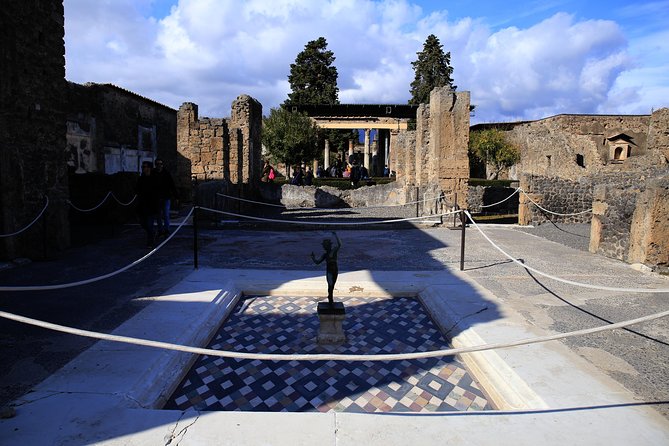
Then you’ll visit the Lupanar, known for its erotic frescoes. This stop can be emotionally different than the theaters or baths because it’s more direct about human behavior and desire.
The tour frames the Lupanar as part of Roman life, and you’ll see the site for what it was. Your guide will discuss the famous erotic frescoes, and that context helps keep you from turning it into shock-tourism. You’re there to understand a social reality—sex work, power, and the way art lived right alongside street life.
Balance matters here. Pompeii’s “edgy” scenes are part of the full picture, but not every guide will match your tone. If your group prefers a softer approach, you should communicate that. If you want factual, grounded explanations, you’re likely to enjoy this stop more than you expect.
Also, it’s a reminder that Pompeii was not a sanitized theme park. It was a real place with real people and their contradictions.
Private guide energy: Lello, Italo, Fabio, and Rosanna
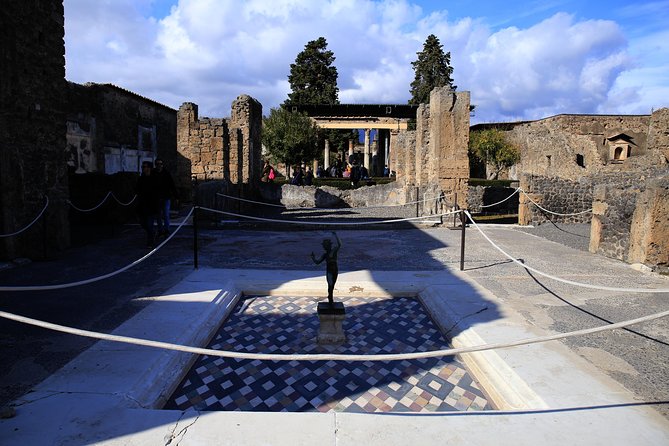
The biggest quality jump in Pompeii tours comes down to the guide. This is a private tour, and feedback repeatedly praised the way specific guides bring the site to life.
Lello came up again and again in reviews, described as warm, funny, and deeply expert—someone who can make you feel the city’s everyday rhythm and even connect the timeline of events around Vesuvius in a vivid way. Italo was also praised for energy and engaging delivery, and Fabio was described like a friendly professor, steering you to the most interesting pieces while explaining them in context. One review even credited Rosanna with smoothly navigating crowds and keeping teenage kids engaged with thoughtful questions.
Why this matters for you: Pompeii can be overwhelming. A strong guide does two things at once—keeps you moving through crowds and turns specific stones into understandable stories. You’re buying that skill, not just walking access.
One caution from a mixed review: if you get a guide who focuses only on the most photographed spots and moves too fast, the value can feel less. That’s why private matters. You can steer the pace toward what you care about most.
Price and value: what $83.48 per person buys in real terms
At $83.48 per person for about 2 hours, you’re paying for three main things: skip-the-line entry, a private guide experience, and professional interpretation. That price can feel steep if you compare it to casual self-guided wandering—but that comparison misses the point.
Here’s the value math that makes sense: if you lose an hour to waiting or getting turned around in a massive archaeological site, you’ve just spent your limited vacation time. By stacking theaters, baths, the Forum, and the Lupanar into one guided loop—and doing it with guaranteed line avoidance—you’re effectively buying efficiency and clarity.
Also, your guide is described as a professional art historian guide, plus a local guide as part of the setup. In plain terms, that’s a lot of explanation packed into a short window.
Is the tour perfect? Not necessarily. The best experiences usually happen when your guide’s style matches what you like—story-led and interactive, not just a race through crowded viewpoints. But when it clicks, it’s the kind of tour that turns Pompeii from a photo stop into something you actually understand.
Who this tour is best for (and who may want a different plan)
This tour is a strong fit if you:
- want a tight, efficient Pompeii highlights plan
- like history told through stories and daily life details
- appreciate theater, baths, the Forum, and the Lupanar as separate experiences
- value private pacing over big group logistics
It may be less ideal if you:
- want to see Pompeii slowly and broadly across many sections
- struggle with uneven outdoor archaeological walking
- expect a deep dive into every single building rather than a curated highlights tour
If you’re traveling as a family, the tour allows kids, but children must be accompanied by an adult. One review specifically mentioned teenage kids being engaged through questions, which suggests the right guide can make it work for mixed ages.
Should you book this skip-the-line private Pompeii highlights tour?
I’d book it if your priority is: get into Pompeii fast, then understand what you’re seeing without getting lost. The skip-the-line promise, the art historian style, and the range of stops in a short visit create good value for time-crunched travelers.
Book with extra care if you’re very sensitive to pace. Since the tour is short, you’ll want to make sure your guide knows what matters most to you—especially if baths or the Forum are your top interests.
If you want one focused Pompeii outing that hits the major landmarks and gives them context in real language, this private format is one of the better ways to spend a couple of hours here.
FAQ
How long is the Pompeii private highlights tour?
It runs for about 2 hours (approx.). The stop times are broken into short segments so you can cover several key areas in one visit.
Is this tour private?
Yes. It’s a private tour/activity, so only your group participates.
Does the tour include skip-the-line entry?
Yes. It guarantees skip the long lines and includes admission ticket entry as part of the stops.
What language is the tour offered in?
The tour is offered in English.
Where does the tour start, and is hotel pickup included?
The meeting point is Hotel Vittoria, Piazza Esedra, 80045 Pompei NA, Italy. Hotel pickup and drop-off are not included, and the tour ends back at the meeting point.
What should I know about physical fitness and kids?
The tour is listed for travelers with a moderate physical fitness level. Children must be accompanied by an adult.
What if weather is bad?
This experience requires good weather. If it’s canceled due to poor weather, you’ll be offered a different date or a full refund.