REVIEW · POMPEII
Horseback Riding on Vesuvius
Book on Viator →Operated by TASTETHEXPERIENCE · Bookable on Viator
Horseback on Vesuvius is calm, scenic, and beginner-friendly. I love the way you ride around 400–500 meters above sea level for big views toward Mt. Vesuvius and the Bay of Naples. I also love the personal feel of a small group (up to 8) with guides like Sofia and Giuseppe showing you the ropes step by step. The main catch: this ride does not reach the crater rim.
This is a practical outing that fits into a Pompeii day. You get transport from Pompeii and back, a helmet, bottled water, and about 1 hour on horseback, usually paced for first-timers and families.
One more thing to know up front: you are riding on legal park terrain where horses can’t go all the way up. If you’re picturing a crater-at-sunset mission, you’ll need a different plan for that portion.
In This Review
- Quick hits
- Where Your Horse Ride Ends: Vesuvius Views Without Crater Access
- Starting in Pompeii: How the Tour Runs in Real Life
- The Horses and Helmets: Beginner Comfort That Actually Matters
- The Ride Itself: What 400–500 Meters Feels Like
- Guides Who Keep It Personal: Walking Beside You for a Reason
- The Vineyards, the Views, and the End-of-Ride Moment
- Price and Value: Is $78.64 a Good Deal?
- Weather, Visibility, and the Ride Pace You Should Expect
- Who This Horseback Ride Works For (and Who Should Skip It)
- Should You Book Horseback Riding on Vesuvius?
- FAQ
- Do I need any prior horseback riding experience?
- Will we ride up to the crater?
- How long is the horseback riding time?
- What altitude will we ride at?
- Where do we meet in Pompeii?
- Is the tour offered in English?
- What’s included in the price?
- What are the age and weight limits?
- How big are the groups?
- What happens if the weather is bad?
- Is there free cancellation?
Quick hits
- Ride at 400–500 meters: panoramic views without going near the crater
- Beginner setup: helmets on, instructions given, calm horses for new riders
- Small groups (max 8): you get attention instead of being one face in a crowd
- Guides walk alongside when needed: extra safety on busy or larger groups
- English available: clear directions from start to finish
- Ranch time at the end: many departures add a tasty local finish, plus time with animals
Where Your Horse Ride Ends: Vesuvius Views Without Crater Access
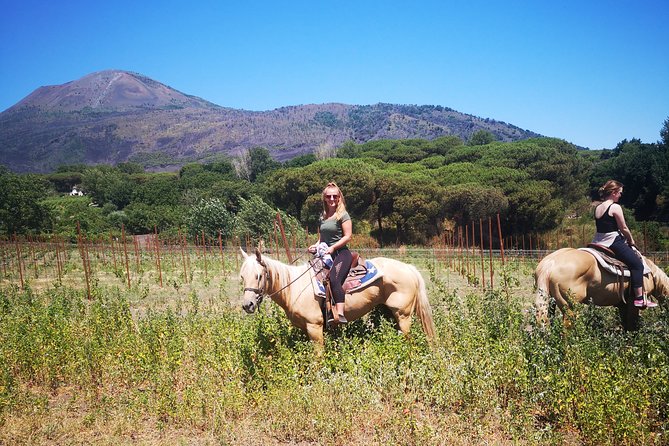
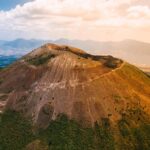
Let’s clear up the most important expectation. This experience takes place in Vesuvius National Park at about 500 meters above sea level, but it stays within rules that prevent horses from going to the crater area. So yes, you can see Mt. Vesuvius from the ride, but no, you will not ride up to the crater rim.
That limitation actually makes the experience better for most people. Crater country is dramatic, but it’s also steeper, more exposed, and less comfortable for first-time riders. Here, you still get the “I’m near Vesuvius” feeling, without the stress of trying to manage a horse on the most hazardous ground.
If crater access is your top priority, plan for a separate hike via the designated trail from the upper parking area (that’s the approach this setup points you toward). Think of this ride as the scenic, peaceful cousin of the crater scramble.
You can also read our reviews of more tours and experiences in Pompeii
Starting in Pompeii: How the Tour Runs in Real Life
You meet at Bar Cornetteria Tabaccheria Magma H24, Via Plinio 46, 80045 Pompeii. The tour ends right back at the same meeting point, so you’re not left figuring out transit after you’re done in the park.
You’ll usually spend the bulk of the activity time on the slopes plus the ride itself. Expect the total duration to be about 2 hours (approx.), with about 1 hour actually spent horseback riding.
One reason I like this format is that it’s simple. You show up, you get checked in, you get suited up (helmet), and you go. It’s also offered in English, which matters when you’re new to riding and you want instructions to be clear the first time around.
The Horses and Helmets: Beginner Comfort That Actually Matters
If you’ve never ridden before, this is one of those tours where the structure matters more than the marketing. The experience is designed for first-timers and does not require prior horseback experience.
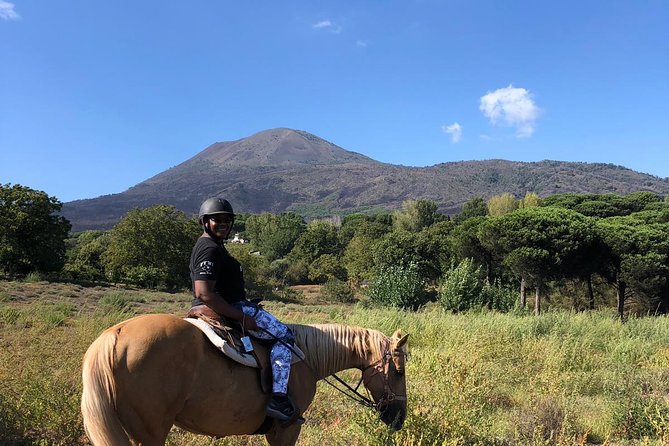
You get helmets, and you’ll get help mounting and getting comfortable. The age range is 6+, and there’s a max weight of 105 kg. Most people can participate, and service animals are allowed.
Also pay attention to pace. This is not set up like a fast stunt ride. The whole point is that the horses and route work for beginners. That shows up in how the guides manage the group.
A detail I really appreciate from the way the operation is described: if conditions are tricky (like wind or light rain), the guides may walk alongside more often for extra safety. That’s not a “plan B.” It’s part of the way they keep the experience calm and under control.
The Ride Itself: What 400–500 Meters Feels Like
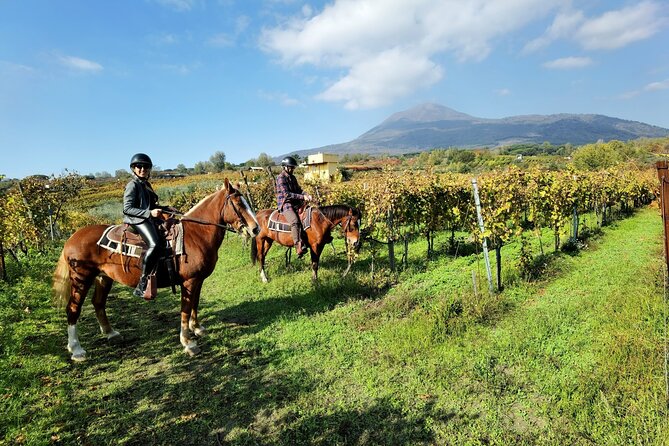
The ride takes place on volcanic terrain in the park, positioned around 400–500 meters in elevation. From that height, you’re close enough to feel the drama of Vesuvius and far enough to stay in areas the park allows for horses.
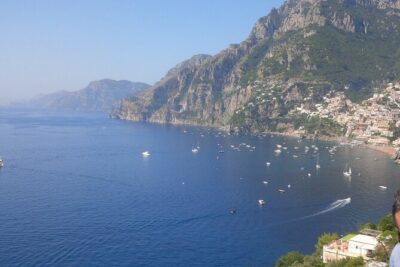
Visually, this is where the magic happens. You’re set up for wide views in multiple directions. Many people describe seeing Mt. Vesuvius and also taking in the Bay/peninsula area around Naples. Even if visibility isn’t perfect, the route through vineyards and volcanic slopes still gives you that “there’s a lot going on here” feeling.
The pace is typically slow and steady. Most riders will be moving at a walk—easy enough for your first time, and easy enough that the guide can watch everyone.
There’s also a choice point on speed. The stated approach is that they don’t run trotting or cantering during the main ride because riders can be at very different comfort levels. When horses pick up speed, other horses often follow, and that can unsettle beginners. That’s why this ride stays calm as a default.
That said, some people describe more active moments during their own departures. If you’re hoping for a more energetic ride, treat it as a “maybe,” not a guarantee, and be ready for it to stay gentle.
Guides Who Keep It Personal: Walking Beside You for a Reason
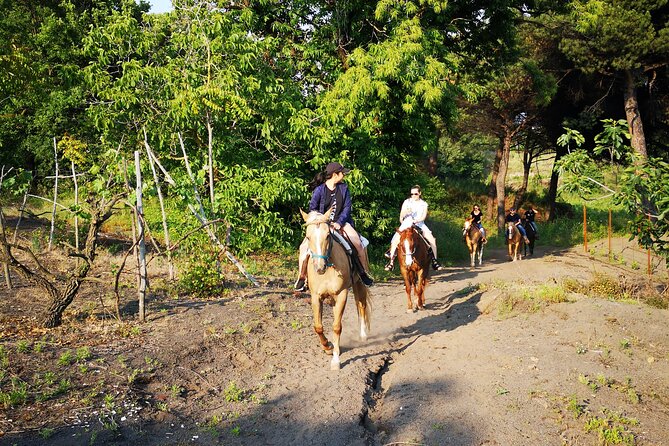
One pattern shows up again and again in the experience reports: groups are small, and the guides make sure you’re okay.
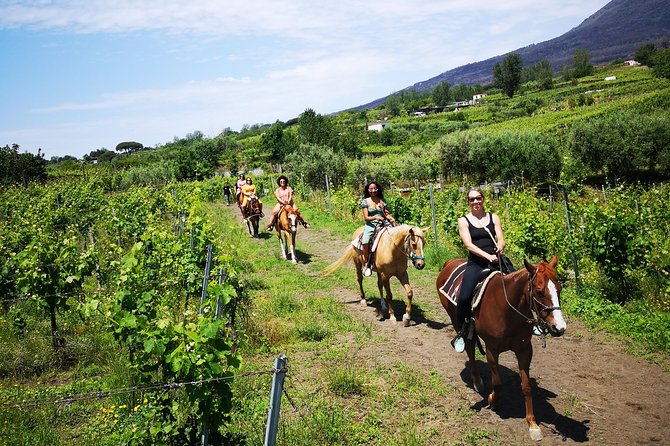
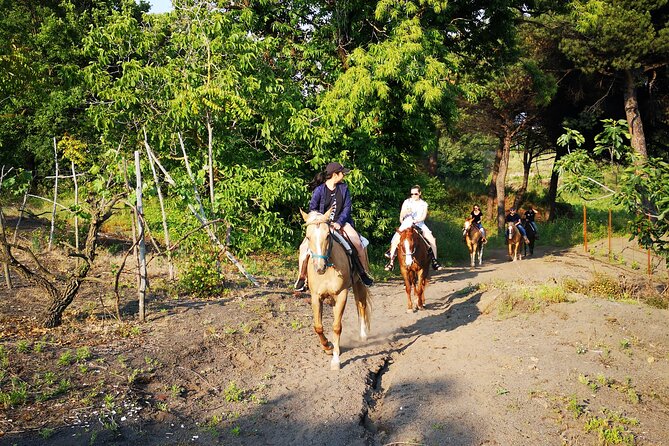
Some guides ride alongside on horseback, and some walk next to the horses. Either way, the goal is the same. With a group size up to 8, your guide can monitor how you’re sitting, how your horse is behaving, and how the group is moving together.
You’ll hear names like Sofia, Giuseppe, Giovanni, Sophie, Giulia, and Eraldo linked to smooth, patient guidance. That matters because beginners don’t just need a horse. They need someone who can explain what to do with your body, not just what fork of the trail to take.
If you want a more “tour-like” experience than a “ride-only” experience, this is a good fit. Guides often point out what you’re seeing and share context about the area as you ride.
And yes, a calm guide is part of the value. Feeling safe makes the views enjoyable.



The Vineyards, the Views, and the End-of-Ride Moment
A lot of the ride time is spent moving through vineyard areas within the Vesuvius park slopes. That combination is a big part of why people rate this so highly: it doesn’t feel like you’re only seeing one thing. You get vineyard greenery, volcanic terrain, and far-reaching views in the same outing.
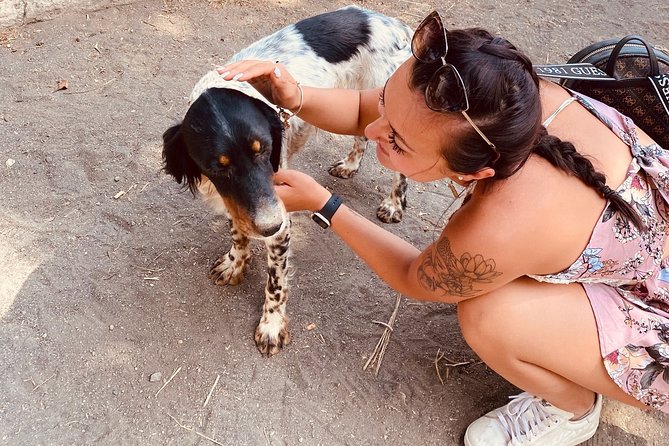
What you do after the ride can vary, but many reports describe a finish with local food and wine—things like cheese and bruschetta, and a tasting vibe rather than a formal restaurant meal. Some people also mention time around the ranch animals, including cats.
If you’re hungry after Pompeii ruins, that end-of-ride food can be a relief. You don’t need to scramble to find lunch immediately, and you can keep your day’s momentum instead of resetting it.
Price and Value: Is $78.64 a Good Deal?
At $78.64 per person for about 2 hours, this isn’t the cheapest thing you can do near Pompeii. But it’s not overpriced for what you get, either.
Here’s why the value holds up:
- Transport included from Pompeii and back means less planning stress.
- Helmets and basic safety gear are handled.
- A full hour of horseback time is the main event, not a brief photo stop.
- Small group size (max 8) helps you get real guidance.
- You’re paying for an experience you can’t easily replicate on your own, especially as a first-timer.
If your goal is crater access, you’ll likely spend more time (and often more money) elsewhere. But for a scenic “Vesuvius day” that stays friendly to beginners and families, this tends to make sense.
Also, this is typically booked around a month out on average. That’s a hint to take it seriously if you’re traveling in peak season: slots can fill.
Weather, Visibility, and the Ride Pace You Should Expect
This experience requires decent weather. If poor weather cancels the activity, you’re offered a different date or a full refund, depending on the situation.
In lighter conditions like mist or cloud cover, the view can be reduced. Still, the ride through vineyards and park terrain can feel rewarding because you’re out moving slowly, not standing around hoping the sky cooperates.
As for speed and intensity, plan for a relaxed outing. Trotting and cantering during the main ride are not the standard setup for first-time riders. If you want to go faster, think of this as a “build confidence first” ride.
Who This Horseback Ride Works For (and Who Should Skip It)
This ride is a strong match if:
- You’re a beginner and want clear instruction, helmets, and calm horses
- You’re traveling with kids (minimum age is 6+)
- You want small-group attention rather than a big bus-group vibe
- You care about views and want an experience you can actually enjoy without being on edge
You might want to skip this (or add something else) if:
- Your whole goal is riding to the crater rim
- You’re looking for a long, high-adrenaline gallop
- Your schedule only allows for a very strict time window and you can’t flex if weather changes
Should You Book Horseback Riding on Vesuvius?
If you want a calm, scenic horseback experience near Pompeii, I think this is a solid booking. The best part is the combination: beginner-friendly setup, small group attention, and wide views from legal park elevations around 400–500 meters.
Book it if you’ll be happy seeing Vesuvius from the slopes rather than standing on the crater rim. And if you want to chase the crater too, treat this as your “Vesuvius scenery” day, then add crater access separately.
If you’re still unsure, ask yourself one question: do you want a peaceful ride with big vistas, or do you want the crater ticket stamped into your itinerary. This ride is for the first one.
FAQ
Do I need any prior horseback riding experience?
No. The ride is designed for beginners, with instructions and a beginner-friendly pace.
Will we ride up to the crater?
No. The route stays in the Vesuvius National Park where horses are not allowed up to the crater area, so you do not reach the crater rim.
How long is the horseback riding time?
You’ll have about 1 hour of horseback riding, with the overall experience lasting about 2 hours (approx.).
What altitude will we ride at?
The tour operates around the park elevation of about 500 meters above sea level, and the ride is described as happening at roughly 400–500 meters above sea level.
Where do we meet in Pompeii?
Meet at Bar Cornetteria Tabaccheria Magma H24, Via Plinio 46, 80045 Pompei NA, Italy. The activity returns to this same meeting point.
Is the tour offered in English?
Yes, it’s offered in English.
What’s included in the price?
Included are helmets, transportation from Pompeii and back, bottled water, and 1 hour of horseback riding.
What are the age and weight limits?
The tour is for ages 6+ and has a max weight of 105 kg.
How big are the groups?
The maximum group size is 8 travelers.
What happens if the weather is bad?
This experience requires good weather. If it’s canceled due to poor weather, you’ll be offered a different date or a full refund.
Is there free cancellation?
Yes. Free cancellation is available up to 24 hours before the experience’s start time for a full refund.