REVIEW · NAPLES
Transfer from Naples to Positano with 2 hours Private Tour in Pompeii
Book on Viator →Operated by Askos Tours · Bookable on Viator
Pompeii, then Positano, on one tight schedule. This is the kind of trip move that saves you hours in transit while still getting real time in the ruins, especially since Pompeii admission is included and you learn from both your driver and your on-site guide. I also like that pickup is truly door-to-door in Naples. One thing to plan for: the vehicle is described as a minivan, but you should confirm what you’ll actually get, since one group noted it arrived as a sedan instead.
You’ll start at Pompeii’s main entrance, walk a smart route through the forum, houses, baths, and theaters, and then continue onward to Positano with a one-way private transfer. It’s built for people who don’t want to think about trains, tickets, or logistics. In about four hours total, you’ll get a guided overview of how Pompeii worked—public spaces, daily routines, and big entertainment—without needing a full-day commitment.
In This Review
- Key things I’d plan for before you go
- Private Naples pickup and the ride that keeps things simple
- Entering Pompeii at Porta Marina Superiore: starting with good orientation
- Basilica and the Forum: Pompeii’s public life in quick snapshots
- Granai del Foro: markets, water features, and casts that hit hard
- Casa del Menandro and Casa del Fauno: why these homes matter
- Baths and the Lupanar: everyday routine and the city’s after-dark side
- Teatro Piccolo and Teatro Grande: entertainment as a city-wide habit
- Time management: how this short route changes what you notice
- Price and value: what $467.63 per person is really buying
- Who this Pompeii-and-transfer tour fits best
- A note on the guide experience: Maria’s style made it click
- Should you book this Naples to Positano with Pompeii stop?
- FAQ
- How long is the Naples to Positano transfer with Pompeii included?
- Is Pompeii admission included?
- Where will the pickup happen in Naples?
- Is the Pompeii part guided and in English?
- Is this a private tour?
- What’s included and not included in the price?
- Is free cancellation available?
Key things I’d plan for before you go
- Door-to-door Naples pickup (airport, central station, or your accommodation) with a driver holding your name sign
- Admission to Pompeii included so you’re not scrambling for tickets mid-plan
- A tight, guided Pompeii walk that hits famous stops like the Forum areas and the theaters
- Learn from two perspectives: driver + Pompeii guide, which helps the whole day make sense
- Vehicle size to confirm if you have lots of luggage (a sedan showed up for one group)
- English-guided ruins time plus free and included-entry stops throughout the route
Private Naples pickup and the ride that keeps things simple
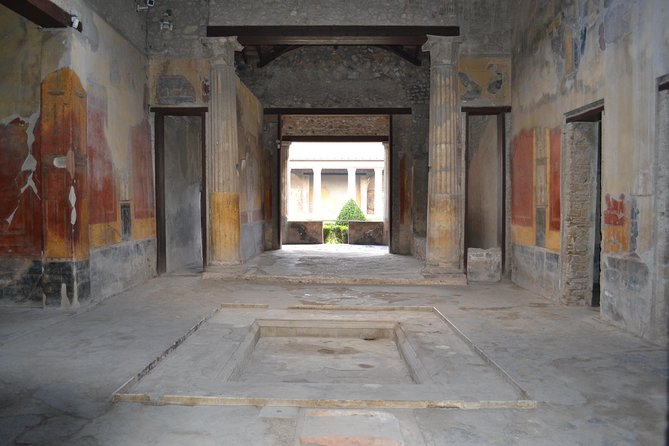
The biggest value here is that you start with someone else handling the hard part: getting you out of Naples and into your next base in Positano. Pickup can happen at the airport, Naples central station (NAP), or your accommodation in Naples, and the driver holds a sign with your name.
Once you’re in the vehicle, you’re in “no-thinking mode.” It’s a private, air-conditioned ride, and you’ll get a hotel drop-off in Positano. That’s a big deal if your Pompeii timing matters—your day won’t hinge on catching a bus that decides to be late.
The only practical caution is comfort and space. The tour description calls it a minivan, but one real-world experience mentioned it was a sedan. If you’re traveling with more than a couple suitcases, I’d treat “minivan” as a request, not a promise. Send a quick message (or confirm when you book) so you don’t end up doing luggage origami at the curb.
You can also read our reviews of more private tours in Naples



Entering Pompeii at Porta Marina Superiore: starting with good orientation
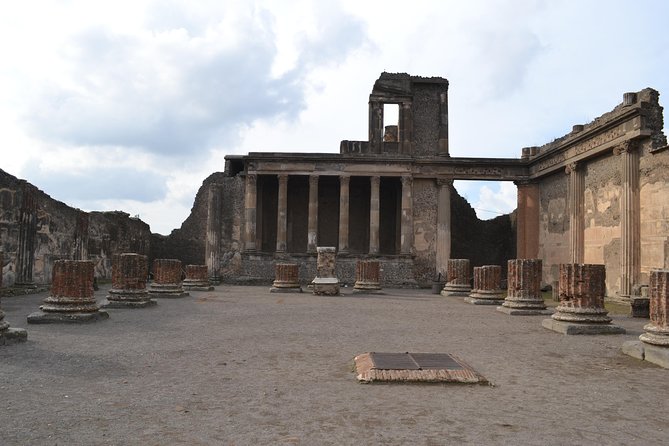
Your guided Pompeii route begins at the main entrance called Porta Marina Superiore. You meet the guide at the entrance of the ruins, then you head into the archaeological park as a group with admission handled.
That first stop matters more than it sounds. When you’re short on time, you want to start with the right “north-south” orientation. The Porta Marina Superiore entry point helps set your bearings fast, so later stops—like the Forum, bath areas, and theaters—feel connected instead of like a random checklist.
From there, the tour keeps moving at a steady pace. Many stops are short (about 10 to 15 minutes each), which means you’ll see highlights and get context without spending half your day standing around waiting for the next group.
Basilica and the Forum: Pompeii’s public life in quick snapshots
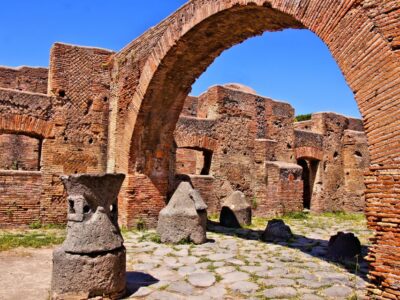
One of the first places you’ll stop is the Basilica, described as an open portico that offered shelter for merchants and other activities. This is one of those stops that turns the ruins from scenery into a place that had jobs, foot traffic, and daily movement.
Next comes the Foro de Pompeya, the ancient main square. Think of it as the place where people gathered for public business and community life. Even with limited time, walking through the Forum area helps you understand Pompeii as a functioning city, not just a collection of stand-alone monuments.
You then continue through the route down the main street, which is a smart way to keep the experience coherent. Instead of jumping between distant sites, you get a sense of how people would have moved through the city’s core.
A quick note on expectations: because the timing is tight, you won’t linger for long photos at every corner. If you’re the kind of person who wants “slow museum pace,” you might feel rushed. If you’re happy with a guided highlights approach, this timing works well.
Granai del Foro: markets, water features, and casts that hit hard
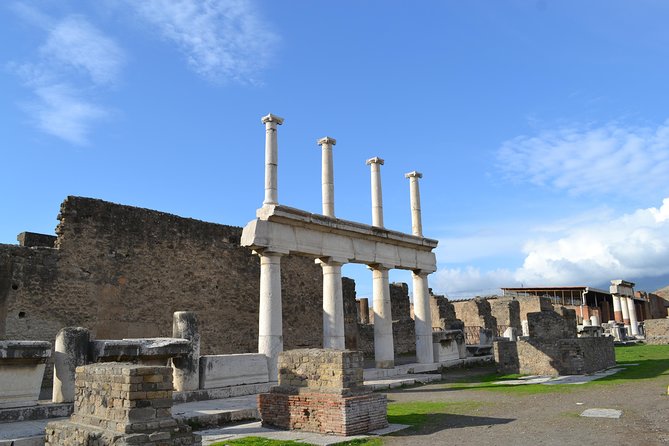
The Granai del Foro is a standout stop because it mixes everyday city functions with dramatic reminders of the eruption’s impact. The information you’ll get focuses on marble tables and baths for fountains that decorated entrances of houses, plus casts connected to the eruption—including a dog and a tree.
This is one of those Pompeii stops that can feel emotionally heavy, even in a short visit. The tour keeps it controlled: you get the meaning through the guide’s explanation, then you move on without overstaying the moment.
If you want to get the most out of this stop, I’d treat it as your “pause-and-listen” segment. Since your time is measured in minutes, giving your attention here pays off later when you see other parts of the city and can connect them to how people lived.
Casa del Menandro and Casa del Fauno: why these homes matter
You’ll tour two house stops that represent how different living spaces were in Pompeii.
First is Casa del Menandro, highlighted as one of the richest and most magnificent houses in the city, especially in architecture, decoration, and contents. Then later you’ll see Casa del Fauno, one of the largest and most impressive private residences.
These aren’t just “pretty buildings.” In a compact itinerary, houses like these are how you get a sense of social differences and household priorities—what people valued, what rooms looked like, and how decoration and layout were used in daily life.
One possible drawback: house interiors can be visually complex. With short timing, you’ll need to choose what you focus on—decoration, layout, or the feeling of scale. The guide helps you pick the key elements so you don’t miss the point while trying to look at everything at once.
You can also read our reviews of more tours and experiences in Naples






Baths and the Lupanar: everyday routine and the city’s after-dark side
Pompeii’s Stabian Baths (Terme Stabiane) take you into the oldest thermal complex in the city (as described in the tour details). The stop is set in a large area between the Brothel lane, the Holconius crossroads, and the Via Stabiana, which helps you understand how bath life fit into the wider neighborhood grid.
If you’ve ever wondered what “public relaxation” meant in ancient times, the baths area is where that question starts to feel real. Even in a brief stop, you get a sense that people weren’t just rushing through the city—they were spending time in shared spaces.
Then comes the Lupanar, the most famous brothel in the ruined Roman city of Pompeii. This is the stop that may surprise people. It’s also a useful reminder that Pompeii included entertainment, commerce, and services—no sanitized version.
If you’re traveling with kids or anyone sensitive to adult themes, it’s worth knowing this stop is part of the route. The tour includes it, but you’ll still be able to control your distance and pace as needed while your guide explains the context.
Teatro Piccolo and Teatro Grande: entertainment as a city-wide habit
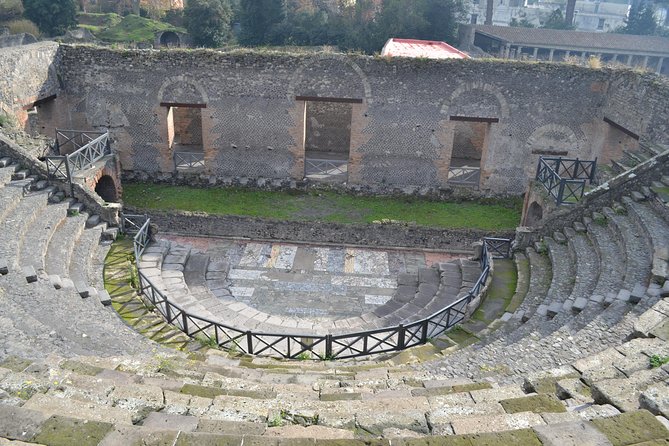
Your route includes a look at the Teatro Piccolo (small theater) and then a full visit to the Teatro Grande, described as Pompeii’s most important theater. There’s also mention of the house of the Tragic Poet and the famous plaster casts.
This is where the tour finishes with a strong “big picture” feeling. The theaters help you see the city’s rhythm: there was public spectacle, gatherings, and shared cultural events. Even if you don’t memorize details, your mental map becomes clearer.
Also, plaster casts are part of the experience here. They tend to stay with you. In a short day, that emotional anchor can make the rest of the route feel more connected, because you’re not just walking through rooms—you’re seeing evidence of real people in real places.
Time management: how this short route changes what you notice
This experience is built for limited time, and that affects what you’ll get.
You’ll spend only about 10 to 15 minutes at each named stop, plus walking time between them. That means you’ll likely remember themes more than trivia: public life in the Forum, daily routines through baths, private living in the houses, and entertainment in the theaters.
If you’re a detail collector, you might feel a little impatient when you pass something you want to linger on. If you’re more interested in understanding the layout and how Pompeii functioned, the speed actually helps. You’ll build a model of the city quickly and then use the guide’s explanations to fill in the meaning.
I’d also plan for photo time to be selective. Pick a few “must capture” spots—usually the Forum area, one house, and one theater—and let the rest be a listening experience.
Price and value: what $467.63 per person is really buying
At $467.63 per person, this isn’t the cheapest way to do Pompeii. The trade-off is that you’re paying for speed, privacy, and a lot bundled together.
Here’s what you’re getting in the value equation:
- Private air-conditioned transport from Naples with pickup options across the city
- One-way transfer to Positano with hotel drop-off
- A professional guide in Pompeii, with admission fees included
- All taxes covered in the package
- A compact route with multiple included stops, so you aren’t building your own mini-adventure
If you tried to build this yourself, you’d still face decisions: how to get to Pompeii, how to time entry, and how to hire an English guide for a short window. Paying for a packaged plan makes sense when your schedule is tight and you don’t want logistics to eat your day.
The cost feels more reasonable if you’re traveling as a small group and you value having one plan from door-to-door. If you’re going solo and already comfortable with public transport and self-guided visits, you could find lower-cost alternatives. But this is priced like a convenience-focused, guided transfer day.
Who this Pompeii-and-transfer tour fits best
This is a great match if you want Pompeii without turning your whole day into Pompeii. It’s especially useful for:
- People on a tight schedule in Italy who still want guided context
- Anyone who prefers private transportation over public options
- Travelers who want Pompeii highlights in a structured order (instead of wandering)
- Small groups who can make good use of a one-on-one style guide interaction
It may be less ideal if you want hours of free time inside each site. The itinerary is active and short, so you’ll be guided, then moving on.
A note on the guide experience: Maria’s style made it click
One thing I’d call out from firsthand feedback is the impact of the guide. A group mentioned Maria as the guide, with 26 years of guiding experience. What they emphasized wasn’t just facts—it was her engaging, personable style that felt like a friend giving direction rather than a distant lecturer.
That kind of delivery matters on a short route. When someone can explain what you’re seeing quickly and clearly, your limited time turns into understanding instead of just walking past stones.
Should you book this Naples to Positano with Pompeii stop?
I think you should book it if you value three things: time saved, guided stops, and door-to-door comfort. The included Pompeii admission, the professional guide, and the private transfer to Positano are a strong combo for anyone who wants Pompeii but can’t afford a full day.
You should pause before booking if (1) you have a lot of luggage and you truly need a minivan, or (2) you want a slow, free-form Pompeii experience. In that case, confirm the vehicle type in advance and consider whether a compact route is your style.
If you’re aiming for a smart first pass through Pompeii while still getting to Positano smoothly, this plan is practical and efficient—the kind of trip day that respects your schedule and your curiosity.
FAQ
How long is the Naples to Positano transfer with Pompeii included?
The total duration is approximately 4 hours.
Is Pompeii admission included?
Yes. Admission to Pompeii’s Archaeological Area is included.
Where will the pickup happen in Naples?
Pickup is offered from the airport, Naples central station (NAP), or your accommodation in Naples.
Is the Pompeii part guided and in English?
Yes. You’ll have a professional guide in Pompeii, and the tour is offered in English.
Is this a private tour?
Yes. It’s private, meaning only your group participates.
What’s included and not included in the price?
Included: private air-conditioned transport, one-way private transfer from Naples to Positano, hotel drop-off, guide and assistance in Pompeii, all taxes, and admission fees to Pompeii ruins. Not included: meals.
Is free cancellation available?
Yes, free cancellation is available up to 24 hours in advance for a full refund.