REVIEW · NAPLES
Walking-tour of Naples hystorical Centre
Book on GetYourGuide →Operated by GRAND TOURS ITALY · Bookable on GetYourGuide
Naples doesn’t do small talk. This guided walking tour strings together UNESCO sights and street-level stories in just 2.5 hours. I particularly liked the stop at San Gregorio Armeno for the crib workshops, and the way the walk threads through churches and legends rather than just monuments. One thing to consider: it’s a compact, on-your-feet route, so if you want lots of long breaks, you may feel slightly pressed for time.
What makes this experience practical is the structure. You start at Piazza Dante, work through the historic center’s main corridors, and end at Piazza del Gesù Nuovo, with a guide in English or Spanish and a radio setup if the group is larger. The focus stays on what you can actually see—Greek walls, early pizzerias, Pulcinella, and major churches—plus the myths and local folklore that make Naples feel like a living museum.
In This Review
- Key highlights that make this tour worth your time
- How a 2.5-hour historic-center walk works (and why it’s smart)
- Piazza Dante start: Vanvitelli’s Convitto Nazionale and your bearings
- Entering from Port’Alba: stepping into the old city rhythm
- Piazza Bellini: the Greek walls of Neapolis, still visible
- Via dei Tribunali: Pulcinella, purgatory talk, and a crypt mystery
- San Gregorio Armeno: how the crib workshops keep the tradition alive
- Santa Chiara’s monumental complex: Gothic style in southern Italy
- Piazza del Gesù Nuovo: Jesuit façades and a strong finish
- Price and logistics: is $55 good value here?
- Who should book this walking tour?
- Should you book this Naples historical-center walk?
- FAQ
- FAQ
- Where does the tour start and end?
- What is the duration?
- How much does it cost?
- What languages are available?
- What time do the tours start for each language?
- Where do I meet my guide?
- Is the tour wheelchair accessible?
- Is there a radio for hearing the guide?
- What are the main places you visit?
- How does cancellation work?
- Can I book without paying immediately?
Key highlights that make this tour worth your time
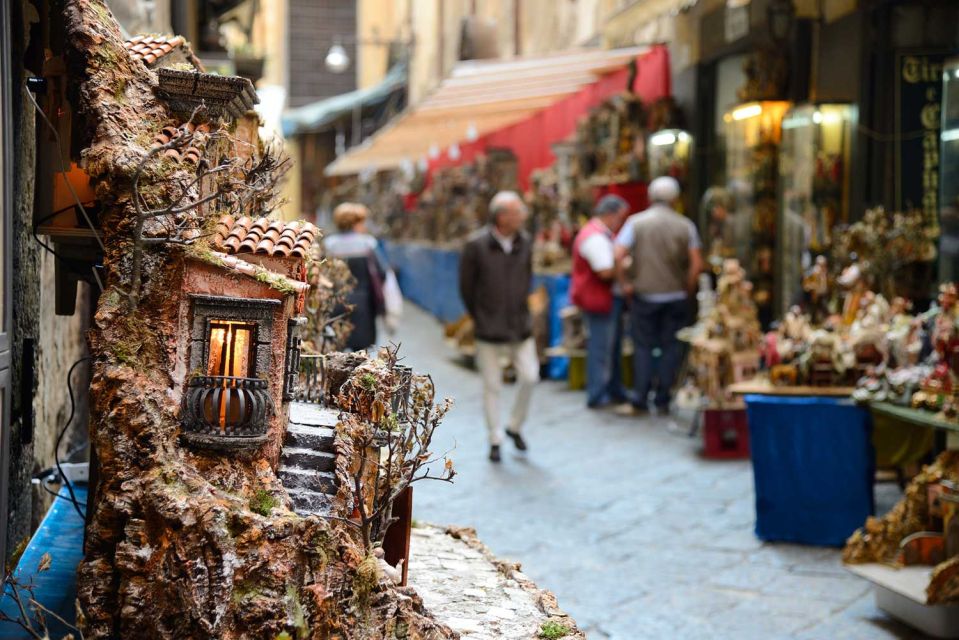
- San Gregorio Armeno street, the cribs street: artisans’ nativity workshops are front and center.
- Early pizzeria sightings in the historic center: you’ll learn where Naples’ pizza story begins (not just modern hype).
- Greek Neapolis walls at Piazza Bellini: ancient city defenses are still visible in everyday street life.
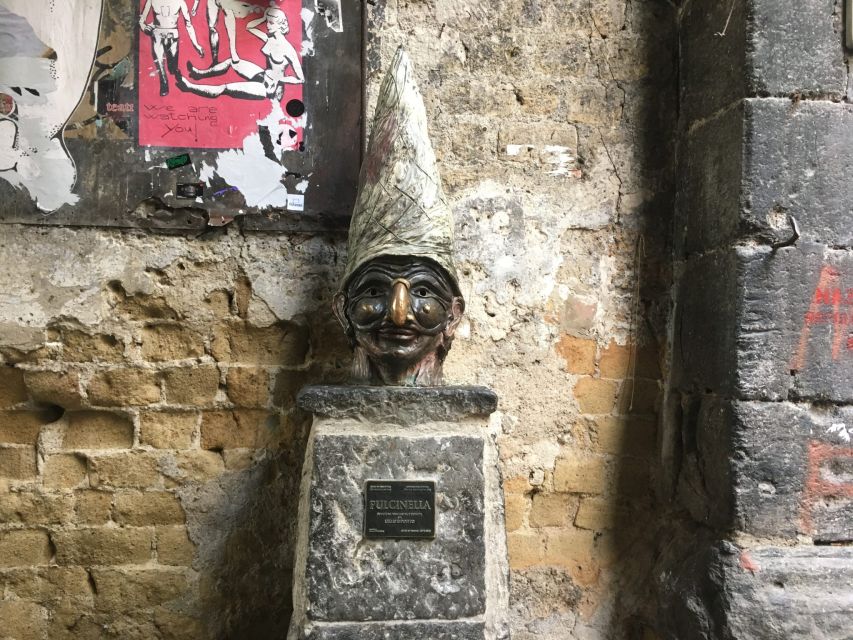
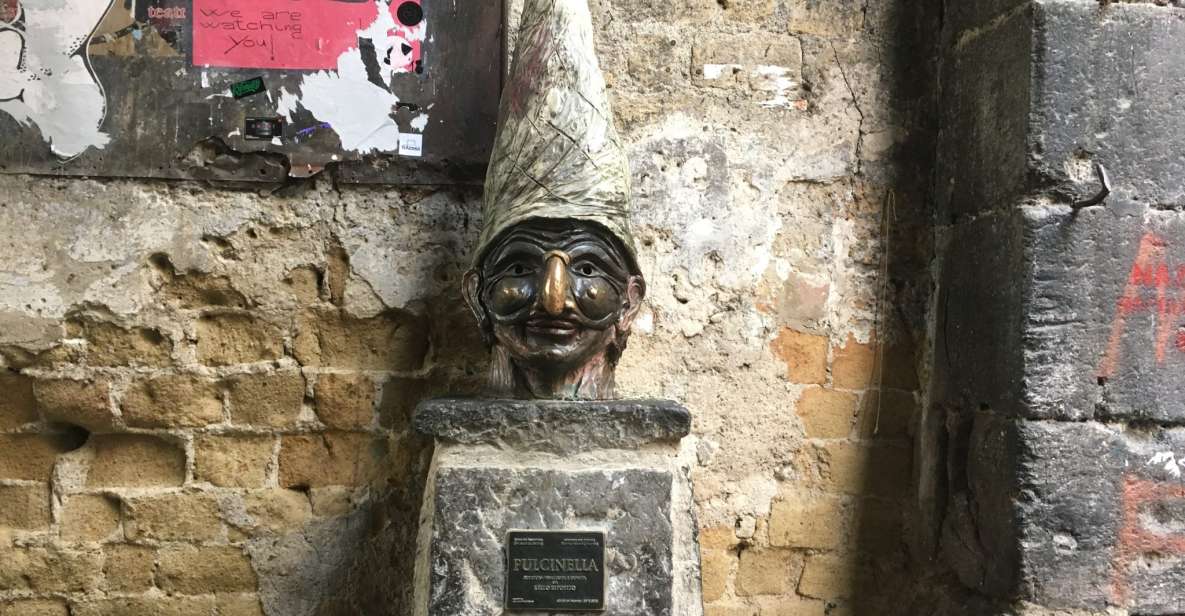
- Via dei Tribunali and the Pulcinella statue: local character and cultural lore get real context.
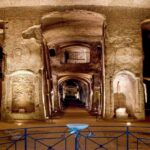
- The mysterious crypt linked to the church of the souls in purgatory: a legend-friendly stop that’s more than postcard material.
- Santa Chiara and Piazza del Gesù Nuovo finish strong: two major landmarks close out the walk.
How a 2.5-hour historic-center walk works (and why it’s smart)
This tour covers Naples’ historic core, designated a UNESCO heritage site since 1995, where you can trace Greek, Roman, French, Austrian, Spanish, and then Italian Naples in a small area. That mix can sound abstract until you’re literally walking between the physical leftovers—walls, façades, church interiors, and street traditions.
You also get an organized path. Instead of wandering for hours and hoping you hit the right corners, the route moves from major squares to the key streets that define the neighborhood’s identity. And because it’s guided, you’re not left figuring out what you’re looking at or why locals care.
At $55 per person for a 2.5-hour experience (with 2 hours 15 minutes of guided time), you’re paying for interpretation as much as scenery. In a place where streets and buildings can look similar if you’re not told what matters, that guide time can be the difference between a “seen it” walk and a “now I get it” walk.
You can also read our reviews of more walking tours in Naples



Piazza Dante start: Vanvitelli’s Convitto Nazionale and your bearings
The meeting point is Piazza Dante, with your guide waiting under the Dante statue using an open white umbrella. This is genuinely helpful. Naples historic centers can be a maze, and starting at a named landmark keeps the whole day from feeling stressful.
Right from the start, you’re shown the Convitto Nazionale, designed by architect Vanvitelli. It’s the kind of building that looks impressive on a first glance, but a guide gives you the context that helps it click—why it’s here, why it matters, and how the square connects to the historic center you’re about to enter.
If you’re the type who likes to understand how a city is “put together,” this opening sets the tone. You’ll spend the rest of the tour reading architecture and street cues like they’re part of the same story.
Entering from Port’Alba: stepping into the old city rhythm
After Piazza Dante, the walk enters the historic center from Port’Alba. This matters because you’re not just moving from one sight to another—you’re crossing into the older fabric of the city, where layers of history are tightly packed.
A highlight here is the talk around the oldest pizzeria in Naples and the earliest pizzerias in the historic center. Even if you already know Naples is the home of pizza, it’s worth hearing the evolution in place: what “first” meant, and how pizza culture settled into these neighborhoods over time.
This segment also gives you momentum. You’re walking into the streets where the tour will keep referencing local life—religion, folklore, and craftsmanship—so you’re not waiting until the end to get the human side of Naples.
Piazza Bellini: the Greek walls of Neapolis, still visible
At Piazza Bellini, the tour highlights something rare: ancient Greek walls of Neapolis can still be seen. That’s the kind of detail that makes a UNESCO heritage site feel real. You’re not just looking at replicas or museum explanations—you’re seeing older city structure embedded in the present.
The guide’s job here is interpretation. A wall fragment doesn’t tell you its story by itself. But when it’s connected to the Greek foundation of the city, it changes how you see the whole area. Suddenly, the streets and blocks feel like they grew out of older decisions.
If you like architecture and urban history, this is one of the strongest “aha” moments. You’ll likely start noticing how often Naples reuses space and repurposes structures instead of starting fresh.
Via dei Tribunali: Pulcinella, purgatory talk, and a crypt mystery
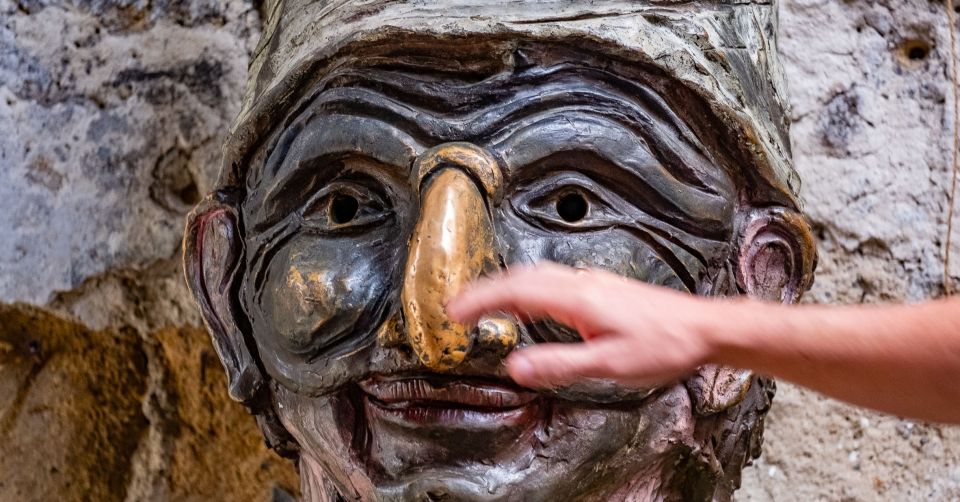
Next up is Via dei Tribunali, one of those streets where folklore and religion get tangled together in a very Naples way. Here you’ll learn about the statue of Pulcinella—a classic character tied to Neapolitan tradition—and why that figure matters culturally.
Then comes the stop often described as intriguing: the church of the souls in purgatory, which hides a mysterious crypt. The word mysterious isn’t meant to be spooky-for-the-sake-of-spooky. In practice, it signals that the site has a layered feel, with history you can’t read at a glance.
This portion is also about tone. You’ll hear legends and folklore alongside the monuments. If you tend to enjoy Naples for its personality, not just its “must-sees,” this is the part that turns the tour into storytelling.
A practical consideration: this street network can be busy, and the pace can feel a touch dense because the guide is covering many named points in a short window. Wear comfortable shoes and keep your expectations aligned with a walking schedule.



San Gregorio Armeno: how the crib workshops keep the tradition alive
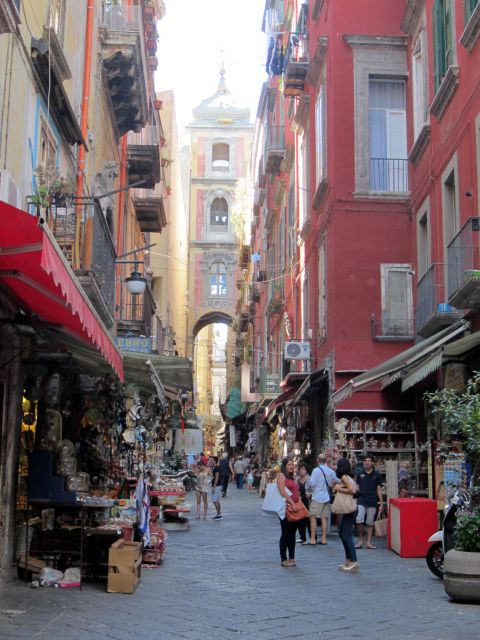
Then you reach Via San Gregorio Armeno, famous for nativity scenes made by local artisans’ workshops. This is the emotional core of the tour for many people because it’s not just about a building—it’s about an ongoing craft.
What you should take away isn’t only the fact that cribs exist. It’s how a tradition moves through street commerce, local skill, and seasonal Naples identity. Seeing workshops in action—or at least observing them up close—puts Naples’ religious and cultural life into focus in a way museum displays can’t always do.
If you’re shopping for souvenirs, this is also the street where you’ll understand what you’re actually buying. You’ll be better equipped to ask questions, compare styles, and spot what makes different workshops distinct—within the limits of what you can realistically do in a 2.5-hour route.
Santa Chiara’s monumental complex: Gothic style in southern Italy
Your next major stop is Santa Chiara Monumental Complex. The guide frames it as a key emblem of Naples Gothic style in southern Italy. Even if you’ve seen Gothic elsewhere, the “southern” version tends to feel different in light, texture, and proportions—so it’s worth paying attention to how it adapts to the region.
This stop works well late in the tour because you’ve already built context: the architecture isn’t floating in space; it’s the next chapter in the city’s layered identity. After hearing about Greek walls and local folklore, Santa Chiara anchors the walk with a major monument that’s meant to last for centuries.
If you’re someone who enjoys churches for their art and design details, this is a good payoff stop. Just remember: you’re on a walking tour schedule, so you’ll likely get a guided look rather than hours to linger independently.
Piazza del Gesù Nuovo: Jesuit façades and a strong finish
The tour ends at Piazza del Gesù Nuovo, with the impressive Jesuit church façade built in the 15th century. Finishing here is a smart choice. Squares and façades give you that last “big picture” feeling, and the Jesuit presence explains another historical layer in the city’s evolution.
This final segment also ties back to the tour’s overall theme: different cultural influences stacked over time, all still visible in the streets you walk. From Greek remains to Jesuit architecture to craft tradition on San Gregorio Armeno, the route keeps connecting Naples’ past to your exact surroundings.
If you still have energy after the tour, this piazza is a solid place to decompress. It’s an area where you can review what you learned and decide what you want to see next on your own.
Price and logistics: is $55 good value here?
At $55 per person for about 2.5 hours, this is priced like an interpretation-heavy historic walking tour rather than a “just walk and look” experience. The value hinges on the guide’s ability to connect what you see—Greek walls, early pizza references, church stops—with the stories and local legends that explain why those sights matter.
A couple practical perks help the experience stay smooth:
- English and Spanish live guiding.
- A radio system if there are more participants, so you’re less dependent on hearing the guide over street noise.
- A private group setup, which generally makes it easier to keep things organized and attentive.
If you’re the type who likes to understand cities through their streets and landmarks (instead of only ticking boxes), this price feels aligned with what you’re getting.
Who should book this walking tour?
This is a great fit if:
- You want a focused intro to Naples’ historic center without spending days wandering.
- You like stories that connect architecture, religion, and street traditions.
- You care about craft culture, not only big monuments—San Gregorio Armeno is a major reason to go.
It may be less ideal if:
- You need long stops for sitting, café time, or slow museum-style pacing.
- You prefer to explore independently with minimal guidance.
Because it’s wheelchair accessible and stays within a compact area, it’s also a reasonable option for travelers who want a guided route with accessibility considered.
Should you book this Naples historical-center walk?
Yes, if your goal is to get your bearings fast and understand what you’re looking at in Naples’ UNESCO core. The itinerary hits the places that most directly reveal Naples’ layered identity: Greek remnants at Piazza Bellini, folklore and religious mystery on Via dei Tribunali, the craft tradition of San Gregorio Armeno, and major monuments that give the walk architectural weight.
If you enjoy walking tours that feel like a guided narrative—rather than a checklist—you’ll probably find this one satisfying. Just plan for a steady pace and wear shoes you trust. Naples is full of charm; it’s also full of uneven streets.
FAQ
FAQ
Where does the tour start and end?
It starts at Piazza Dante and finishes at Piazza del Gesù Nuovo.
What is the duration?
The tour lasts about 2.5 hours, with 2 hours 15 minutes of guided touring.
How much does it cost?
The price is $55 per person.
What languages are available?
The live tour guide is available in English and Spanish.
What time do the tours start for each language?
The English tour starts at 10:45 a.m., and the Spanish tour starts at 11:00 a.m.
Where do I meet my guide?
Meet your guide at Piazza Dante, under the Dante statue in the middle of the square. The guide will be holding an open white umbrella.
Is the tour wheelchair accessible?
Yes, the tour is wheelchair accessible.
Is there a radio for hearing the guide?
Yes, radio is included in case of a large number of participants.
What are the main places you visit?
You’ll see Piazza Bellini, Via dei Tribunali, Via San Gregorio Armeno, Santa Chiara Monumental Complex, and Piazza del Gesù Nuovo, along with the areas around Port’Alba and other historic-center streets.
How does cancellation work?
You can cancel up to 24 hours in advance for a full refund.
Can I book without paying immediately?
Yes, you can reserve now and pay later.