REVIEW · NAPLES
First dive test + photo and video service with operator
Book on Viator →Operated by Centro Sub Campi Flegrei · Bookable on Viator
Breathing underwater hits like a surprise. This first-time scuba trial in Naples-area waters lets you try shallow air work at about 3 to 6 meters with an instructor, and you get a photo/video operator to record your first moments underwater. The big consideration is that the experience depends on good weather, so you’ll want flexibility.
I especially like the 1-on-1 teaching setup, because it means you’re not guessing or being rushed while learning new sensations. I also like that you don’t have to bring gear—everything you need is provided—so you can focus on the experience. If you’re very anxious about being in the water or new breathing routines, it’s worth knowing the session is only about 3 hours, so you’ll need to commit fully rather than taking a slow, drawn-out pace.
In This Review
- Key things to know before you go
- Getting to Pozzuoli and meeting at Via Miliscola
- What the 3-hour plan actually feels like
- Theory lesson first, then the shallow-water test (3–6 m)
- Baia’s underwater archaeology is the star
- The photo and video service: how it changes the value
- Equipment provided, and why that matters
- English instruction and small-group comfort
- Who this is best for (and who should think twice)
- Price and value: what $228.78 covers
- The operator and the safety feeling
- Practical tips to get the most from your underwater first try
- Quick FAQ for first-timers in Baia
- FAQ
- Where is the meeting point for this experience?
- How long does the experience last?
- Do I need to bring scuba equipment?
- What depth will we go to?
- Is it offered in English?
- How big is the group?
- Can I get a full refund if weather cancels it?
- Should you book this first-time scuba tryout in Baia?
Key things to know before you go
- Shallow water trial (3–6 m): A starter-friendly depth range in the Submerged Archaeological Park of Baia
- Instructor ratio is 1-to-1: You get close guidance throughout the water part
- Everything supplied: No equipment hauling, no pre-learning gear practice
- Photo and video operator included: They capture your first breaths and underwater moments
- Small group size: Maximum of 10 travelers helps keep attention personal
- English available + mobile ticket: Easy for English speakers, and you’ll use a mobile ticket on-site
Getting to Pozzuoli and meeting at Via Miliscola
This activity starts in Pozzuoli, at Via Miliscola, 165, 80078 Pozzuoli (NA), Italy. The session ends back at the same meeting point, which is helpful when you’re trying to plan the rest of your day in Naples without complicated transfers.
What I like about the setup is how practical it feels for a shore-based experience: near public transportation, and you’re not stuck coordinating extra steps after you finish. It also keeps things simple if you’re combining this with other sights in the Naples-Pozzuoli area.
You can also read our reviews of more tours and experiences in Naples.


What the 3-hour plan actually feels like
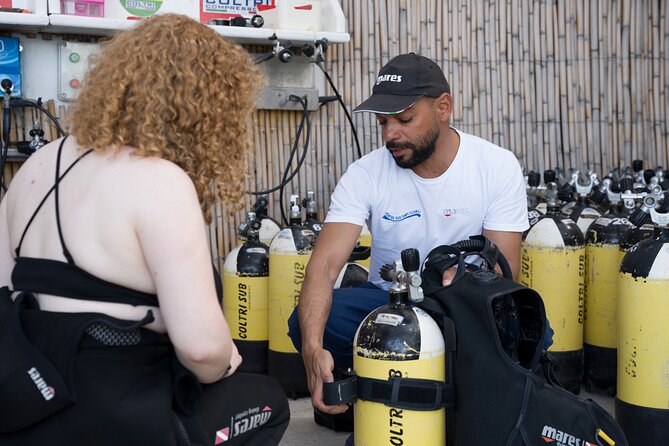
The total duration is about 3 hours. That time window usually means a structured flow: a short theory part with your instructor, then a guided water session at shallow depth, with the photo/video team working during the underwater portion.
Because the program is designed for people trying air scuba for the first time, the pacing is intentionally compact. I’d plan your day so you’re not rushing from lunch-to-water in sweaty stress mode. You’ll do best if you arrive calm, hydrated, and ready to follow instructions.
Also, on average it’s booked around 13 days in advance, so it’s not always something you can casually decide last minute—especially if you’re traveling in peak season.
Theory lesson first, then the shallow-water test (3–6 m)
You start with a theory lesson with the instructor. Even without being a scuba person, the idea is that you understand the basics before you go underwater—how the equipment works, how to handle the new breathing rhythm, and what to do during the session.
Then you head into the Submerged Archaeological Park of Baia, where the guided water part happens at about 3 to 6 meters. That depth matters for first-timers: it’s shallow enough that the whole experience stays focused on learning and observation, not endurance. In other words, you get to spend your attention on the underwater world and the rules you’re practicing.
You’ll be with an instructor in a 1-to-1 ratio, which is a huge difference from group lessons. It means you can ask questions immediately, adjust faster, and feel less alone while your body learns a brand-new sensation: breathing and moving underwater.
Baia’s underwater archaeology is the star
This isn’t a generic training pool moment. The goal is to visit the Submerged Archaeological Park of Baia, using one of the park sites suited to shallow depth conditions.
Why this is valuable: you’re not just learning how to float. You’re also looking at archaeological features while surrounded by real sea life. The combination is what makes the experience feel special even if you’ve never taken a course.
In the best moments, the underwater setting pulls your attention in two directions at once: the human-made structures below the surface and the living things drifting around you. One highlight noted with this kind of visit is seeing fish up close—and occasionally even a squid appearing during the underwater swim. You can’t count on any specific animal, but the marine-life atmosphere is part of the appeal.
The photo and video service: how it changes the value
This package includes an exclusive photo and video service with an operator, aimed at capturing your first breaths underwater. For many first-timers, that matters more than people expect. You’re doing something new with your body, and your brain is busy learning. A professional operator helps you remember it later with visuals instead of just a fuzzy memory.
The practical win is that you don’t have to bring your own underwater gear or try to manage a camera while learning. The operator also keeps you from worrying about documentation during the session, so you can focus on the instructor’s cues.
In short: this is one of those extras that turns a once-in-a-lifetime sensory moment into something you can actually share and revisit.


Equipment provided, and why that matters
The program notes that no equipment is needed—the center provides what you need to dive. For you, that removes a big hassle: no shopping for rental gear, no figuring out sizing or compatibility, and no last-minute panic at the beach.
It also supports the “try it” purpose. This is meant to be your first real underwater air experience with coaching, not a day of prep work. When you’re paying for a guided tryout, you’re mainly buying time with an instructor and access to the right water conditions—not logistical headaches.
English instruction and small-group comfort
The experience is offered in English, and the group size has a maximum of 10 travelers. For a first-time activity, smaller groups tend to feel calmer. You get time for questions, and you’re less likely to feel like you’re waiting for a long line of people before your turn.
That said, it’s still a shared activity. You’ll want to listen carefully during the theory portion, because once you’re underwater, the instructor’s directions should become your main focus.
Who this is best for (and who should think twice)
This experience is geared for people who have never taken a diving course or who want a first try at shallow air scuba. If you’ve been curious about underwater archaeology but didn’t want to commit to a full course, this is the kind of structured “starter session” that can satisfy that curiosity in one go.
It can also fit you if you like guided attention. The 1-to-1 ratio means you’re not left to figure it out on your own, which helps if you’re worried about the learning curve.
Where you might think twice: if you’re uncomfortable with water or you’re extremely weather-dependent in your travel planning. The experience requires good weather, and if it’s canceled due to poor conditions, you’ll be offered a different date or a full refund.
Price and value: what $228.78 covers
The price is $228.78 per person for about 3 hours, and you should look at what’s included—not just the number.
Here’s what the value is built from:
- A theory lesson plus guided shallow-water session
- A 1-to-1 instructor ratio
- The equipment (since you don’t need to bring your own)
- The photo and video operator service
When you add up those components, the cost starts to make sense as a bundled experience: you’re paying for professional coaching time, safe setup, underwater access, and the documentation piece. If the photo/video service is important to you, it can easily be the differentiator versus cheaper “try it” experiences that don’t capture the moment.
If you’re traveling as a couple or with friends, you’ll also appreciate the small group limit. It reduces the odds that your instructor attention will be diluted by a crowd.
The operator and the safety feeling
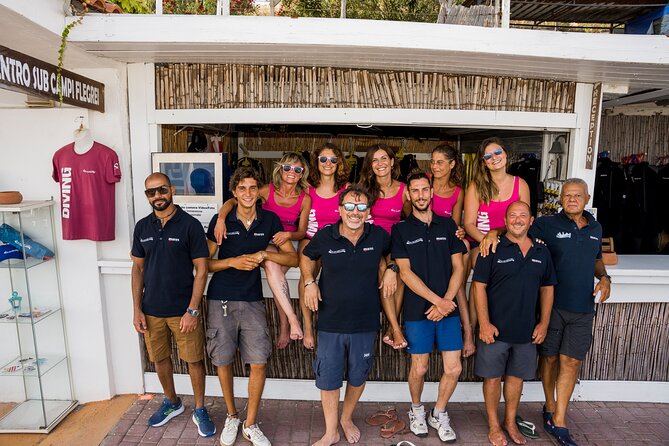
The experience is run by Centro Sub Campi Flegrei. The center’s model (the 1-to-1 ratio plus the theory-before-water flow) is exactly what you want when you’re learning something physical and unfamiliar.
What stood out in the guidance you’ll likely receive is patience and professionalism. Names that came up with this kind of care are Silvia and Sophia—both described as friendly, professional, and attentive, with a steady focus on keeping you feeling safe while you adjust to breathing underwater and moving with instruction.
That matters because the first few minutes underwater can feel odd. When the instructor is calm and responsive, you’re more likely to enjoy the archaeology and marine life instead of spending the whole session worrying about the mechanics.
Practical tips to get the most from your underwater first try
A few things I’d do to set yourself up well, based on how these shallow, first-time sessions work:
- Go in ready to listen. The theory part sets you up for the underwater part, so don’t treat it like a formality.
- Let your instructor lead your timing. With a 1-to-1 setup, you’ll get better results by following cues closely.
- Treat your first breath rhythm as practice, not a test you pass or fail.
- Bring a positive mindset about the new sensation. Most first-timers describe it as overwhelming in a good way—once breathing and movement click.
- If you care about photos, try not to rush. The operator is capturing your underwater moment, and you’ll likely get better results if you stay present.
Quick FAQ for first-timers in Baia
FAQ
Where is the meeting point for this experience?
The meeting point is Via Miliscola, 165, 80078 Pozzuoli (NA), Italy, and the activity ends back at the same location.
How long does the experience last?
It lasts about 3 hours.
Do I need to bring scuba equipment?
No. The program states that no equipment is needed and that they provide everything you need.
What depth will we go to?
The guided water portion happens at shallow depth between 3 and 6 meters.
Is it offered in English?
Yes, the experience is offered in English.
How big is the group?
The activity has a maximum of 10 travelers.
Can I get a full refund if weather cancels it?
The experience requires good weather. If it’s canceled due to poor weather, you’ll be offered a different date or a full refund. Free cancellation is available up to 24 hours in advance for a full refund.
Should you book this first-time scuba tryout in Baia?
If you want a safe-feeling way to try air scuba for the first time—without equipment shopping—and you also care about seeing underwater archaeology, I think this is a strong pick. The combination of shallow 3–6 m training, 1-to-1 instruction, and the included photo/video operator is what makes it feel like more than a basic novelty.
Book it if:
- You’re curious about Baia’s submerged archaeological site and want to experience it firsthand
- You like the idea of personal coaching rather than a big-group lesson
- You want professional underwater photos and video so you can remember it clearly
Skip it if:
- Your schedule can’t handle a weather change (the experience depends on good conditions)
- You’re not comfortable with water and learning new breathing sensations in real time
If that all sounds like your style, reserve your spot soon—this one tends to fill, and about two weeks ahead is a good planning target.