REVIEW · NAPLES
From Naples: Ruins of Pompeii
Book on GetYourGuide →Operated by NapoliCityVision · Bookable on GetYourGuide
Pompeii is history you can walk through. This guided day trip from Naples brings you to the ruins of Pompeii with a 2-hour walking tour through the most meaningful sights, plus helpful narration on the bus. I especially love how the stops follow an easy rhythm of Roman daily life, from streets and shops to major public spaces, and I like that guides (like Salvatore and Fabio, when assigned) focused on keeping the group together and comfortable. The main drawback to plan around is time: you’re in Pompeii for about two hours, and the rest of the day is the coach ride (plus Naples traffic can stretch it).
You get a classic-value format for a short visit: pick-up in Naples, a short ride to Campania’s most famous archaeological park, then a guided route that hits the big highlights without making you map your own path. You’ll want sturdy shoes and a small day bag, since large bags aren’t allowed and the walking is real.
In This Review
- Key Highlights You’ll Feel Immediately
- Naples Pickup to Pompeii: Less Stress, More Ruins
- Your 2-Hour Pompeii Walking Tour: What That Time Buys You
- Roman Theater First: Getting the Vibe of a Living Town
- The Shopping Street Stops: Bakeries, Pizzerias, and Daily Routine
- Forum, Baths, and Necropolis: Big Meaning in Common Places
- The House of the Richest Man: Seeing Pompeii’s Social Split
- The Cameos and Coral Factory Stop: Worth It If You Have the Time
- Price and Timing: Is $59 Good Value?
- Group Size, Guides, and How the Tour Stays Organized
- A Few Practical Things to Know Before You Go
- Book It or Skip It: Who This Tour Fits Best
- FAQ
- FAQ
- How long is the Pompeii portion of the tour?
- Does the price include Pompeii entry tickets?
- What languages are available?
- Where are the pickup points in Naples?
- Is lunch included?
- Can I bring luggage or large bags?
Key Highlights You’ll Feel Immediately
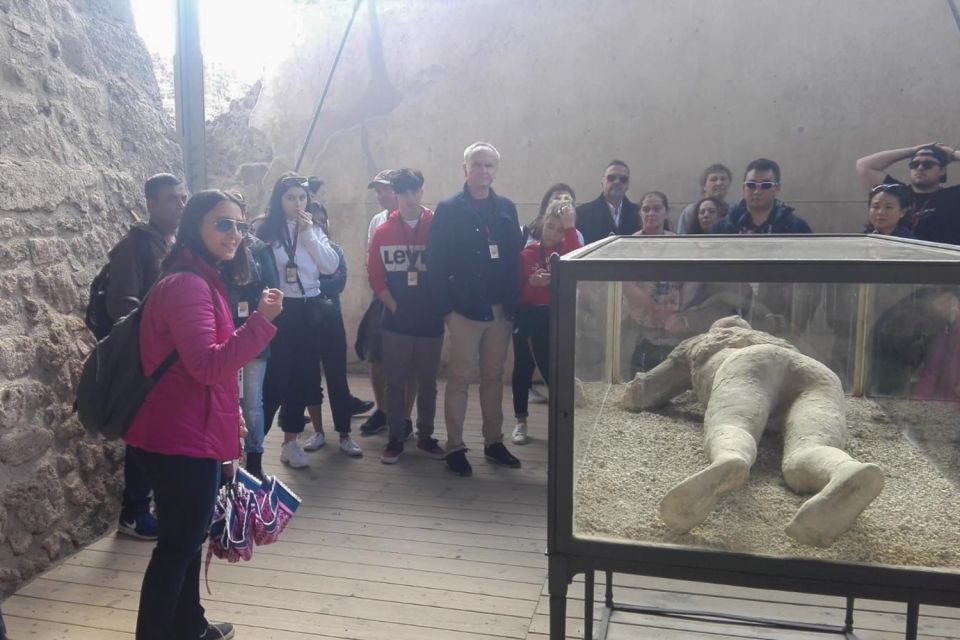
- Guides that manage the group well: I liked the way guides kept pace and helped everyone stay together, even on crowded days (think Maria’s careful attention to timing and spacing).
- The 2-hour Pompeii route: theater, forum, necropolis, bathhouses, and major houses, in a tight, readable sequence.
- Daily-life sights in one walk: preserved bakeries and pizzerias along the shopping street, so the town feels lived-in.
- The House of the richest man in Pompeii: a strong contrast to the simpler everyday spaces around it.
- Optional cameos and coral craft stop: a cameo/coral workshop stop may happen if time allows.
- Small group options: some tours run tiny (one group was eight), which helps you hear the guide and see more.
Naples Pickup to Pompeii: Less Stress, More Ruins
This trip is built for people who don’t want to figure out trains, parking, or transfers. You start in Naples at one of several pickup points, and the coach ride is scheduled at about 20 minutes each way. If you’re staying near the water or central Naples, the list of meeting spots is convenient, including places like Lungomare Caracciolo and areas around Molo Beverello and Piazza Giuseppe Garibaldi.
Pick-up is time-based, with multiple departure windows (example times run early in the morning, like 08:00–08:45 depending on the hotel/meeting point). The driver waits up to five minutes, which matters on a tight schedule in Naples. If you’re the type who hates last-minute stress, I’d treat this like a strict plan: show up a bit early, not five minutes late.
Once you’re aboard, the tour includes multilingual narration on the coach. Even if your Pompeii guide is using a live format in a set language, the bus commentary helps you get oriented fast: where you’re going, what you’re looking at, and why Pompeii’s preservation is so famous.
You can also read our reviews of more tours and experiences in Naples.


Your 2-Hour Pompeii Walking Tour: What That Time Buys You
The core of the experience is a guided, walking tour at the Pompeii Archaeological Site for about two hours. Two hours can sound short until you realize how much ground you cover on foot once you factor in crowd flow and the time it takes to actually read the stone.
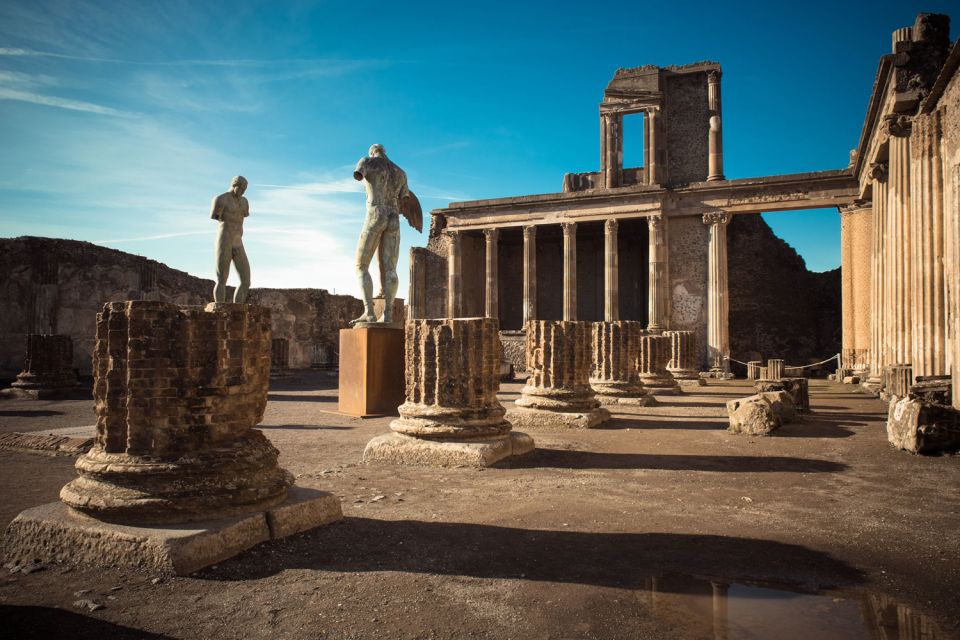
This format is ideal if you want the highlights and the context in one go. You’re not stuck on a long day where you start zoning out. Instead, you get a focused route that connects places to Roman life in the 1st century, when Pompeii was a thriving town before the eruption of Vesuvius in 79 A.D.
Here’s the practical truth: Pompeii rewards patience, but your schedule is designed for clarity. You’ll see a lot of marquee areas, but you won’t have the hours needed for deep, slow wandering across every neighborhood. If you’re an academic-level history nut, you might want more time on your own after the guided portion. If you want a smart first visit, this tour gives you a strong base.
Roman Theater First: Getting the Vibe of a Living Town
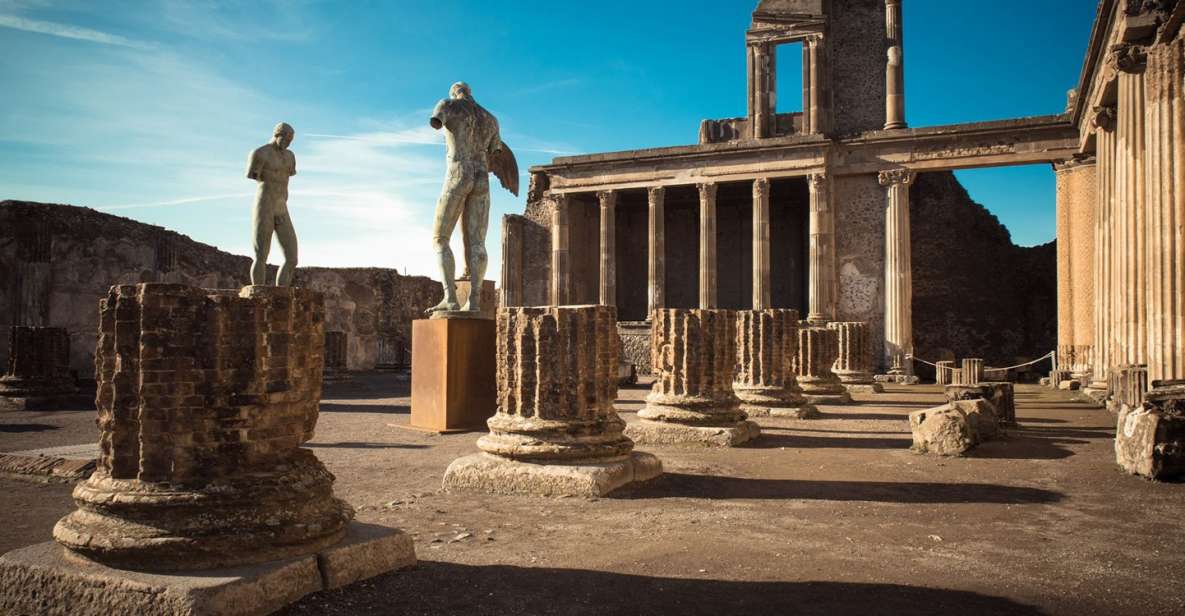
A favorite stop on this route is the ancient Roman theater. It’s not just another ruin photo-op. In a short, guided visit, the theater works because it’s immediately understandable: seating, space, and the sense of public gathering. When your guide talks through the role of theaters and public performance in Roman culture, the stones stop being just old buildings.
This is also where you’ll feel why guides matter. One guide, Salvatore, was praised for bringing the city to life through clear, day-to-day storytelling. Another guide, Anita, was noted for moving the group at a pace that accounted for high temperatures and finding shade. Both styles help you enjoy the same site without turning the visit into a sprint.
The Shopping Street Stops: Bakeries, Pizzerias, and Daily Routine
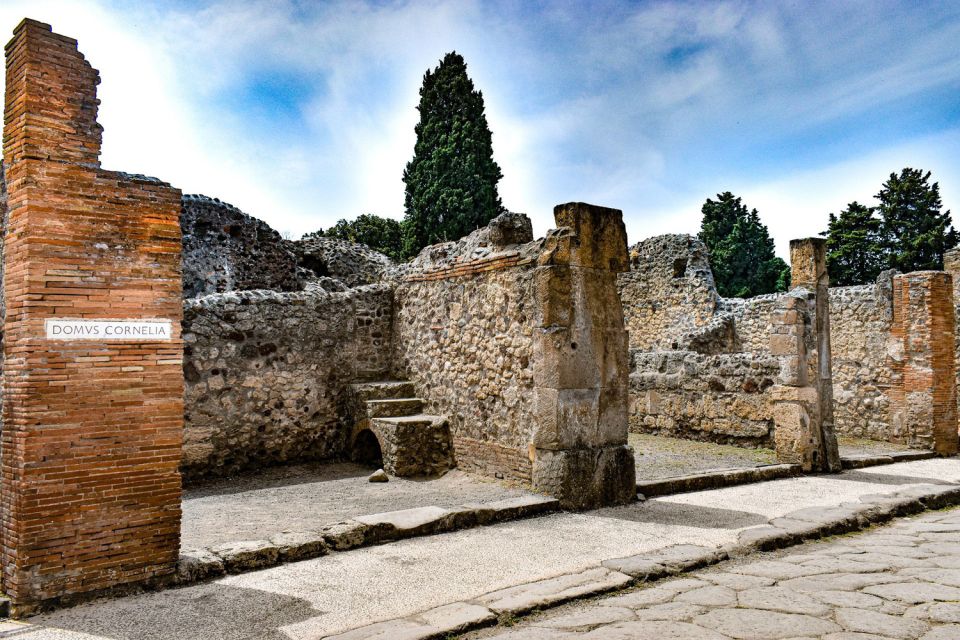
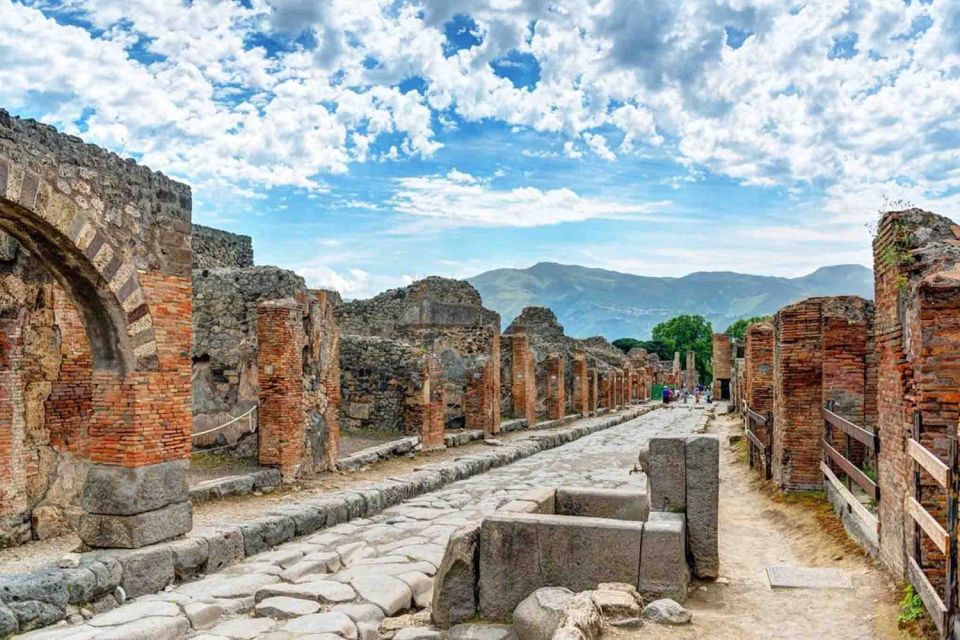
Pompeii’s preserved commercial spaces can be surprisingly vivid. One of the best parts of this tour is walking through the ancient shopping area where you can spot bakeries and pizzerias. I love this section because it grounds the ruins in routine: food, work, locals moving through a street built for commerce.
Instead of only talking about grand public monuments, the guided route keeps linking spaces to daily habits. That’s where a short tour can actually outperform a long one. When your guide explains how Roman life ran—buying food, eating meals, meeting in public—your brain starts to connect the buildings into a real town.
If you’re hungry or you have dietary instincts, you’ll likely want to check out nearby snack options after the tour on your own time. This trip itself does not include lunch, so plan a meal for after you’re back in Naples.
Forum, Baths, and Necropolis: Big Meaning in Common Places
After the shopping area, the route continues to the forum, bath houses, and the necropolis. These stops are essential because they show you what Romans did beyond work and shopping.
The forum is where civic life happens—decisions, announcements, and the social gravity of the city. Even on a fast walk, you’ll get the shape of how public spaces worked: open areas, circulation, and the way different buildings relate to one another.
The bath houses are another highlight because they’re so practical. People forget that bathing in Roman times wasn’t only about cleanliness; it was also a social routine. When a guide explains that angle, you start seeing the baths as a community hub, not just a water-related ruin.
Then comes the necropolis, which shifts the emotional tone. It’s a reminder that Pompeii wasn’t only about living hours; it also held the routines of remembrance and burial. In a short guided route, you won’t spend long here—but you will leave with the feeling that you saw the whole civic ecosystem, not just entertainment and shopping.


The House of the Richest Man: Seeing Pompeii’s Social Split
If you want one stop that really changes your perspective, it’s the house of the richest man in Pompeii. This part of the route is your “social contrast” moment. You see how wealth translated into space, decoration, and status—then you look around and compare that to the everyday commercial and public buildings nearby.
That contrast is valuable because Pompeii isn’t just impressive due to preservation. It’s impressive because it captures social differences in stone. A guide can help you read those differences quickly: how houses reflect rank, how public life differs from private life, and why certain rooms and features mattered.
Fabio, described as an archaeologist and praised for excellence, is one of the types of guides who can make this section especially clear. Even if your guide isn’t an archaeologist, the best ones keep the focus on what you can actually understand in a short walk.
The Cameos and Coral Factory Stop: Worth It If You Have the Time
One extra element you might get is a stop at a local factory connected to cameos and corals—jewelry made from coral and seashell materials. The tour description says this depends on time, so don’t assume it’s guaranteed.
If it happens, it’s a fun break from ruins-only time. It also connects Naples and nearby craft traditions to the kind of jewelry and personal goods that likely existed in Roman life (even if the exact techniques differ by era). Even if you’re not a jewelry person, this stop tends to be easy to enjoy because it’s hands-on in its storytelling: what materials are used, how designs come together, and why coral was so prized.
If time runs short, it’s fine. Your main value is the Pompeii walking tour, and you shouldn’t feel cheated if the workshop portion doesn’t fit in.
Price and Timing: Is $59 Good Value?
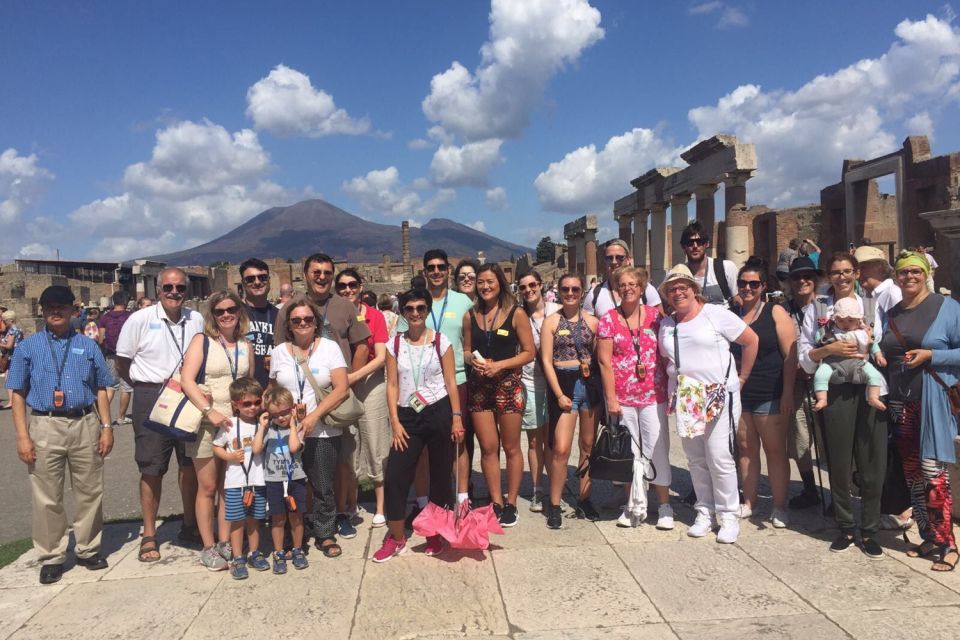
This experience lists a price of $59 per person with a 3–4 hour window total. That range is realistic because you’re spending time on the coach and then doing a guided two-hour walk at the site.
Where the value comes from:
- Round-trip transportation from Naples is included.
- You get onboard multilingual commentary during the coach ride.
- You get a two-hour guided walking tour in Pompeii.
- You get a guide or audioguide depending on the season and group size.
- Pompeii entry ticket is included only if you select the option that includes it.
So the value depends on what option you choose. If the entry ticket is included, you’re getting the most “all-in” day format for the money. If not, you’re still paying for a guided route and transportation, which can be worth it if you’d otherwise struggle to coordinate your own plan for timing and crowd flow.
Also keep expectations aligned with the schedule. You’re paying for a highlights route, not a long archaeologist-style study session. If you want more time at the site, you’ll probably want to pair this with a self-guided extension later (or choose a longer tour).
Group Size, Guides, and How the Tour Stays Organized
This tour can run as a small group, which helps a lot at Pompeii. Smaller groups mean you spend less time waiting and more time walking with purpose. On some departures, groups were as small as eight, which makes it easier to hear commentary and keep your bearings.
Language format is flexible:
- Live tour guide is offered in English, Italian, and Spanish.
- Audio guide can be available in French, Chinese, German, Japanese, Russian, and Portuguese.
- A guide is provided if a minimum number of participants is reached; otherwise, you’ll receive an audio guide.
I like this setup because it prevents the common problem of paying for a guided plan and then getting stuck with vague signage. When there is a live guide, the narration quality is a big part of the overall experience, and the feedback tied to specific guides (Salvatore, Anita, Fabio, and others like Maria) shows how much that matters in practice.
A Few Practical Things to Know Before You Go
You’ll walk a lot on uneven surfaces. Wear comfortable shoes. Add sunscreen and a sun hat, because Pompeii can be hot and exposed.
You also need to travel light:
- Luggage or large bags aren’t allowed, so bring a day bag only.
For timing, remember:
- The coach ride is listed at about 20 minutes each way, but Naples traffic can affect the real-world timing.
- One important upside: the organized return timing tends to be handled well enough that people can still manage same-day plans when they plan carefully.
Finally, if you’re sensitive to heat, choose your tour start time intelligently. A guide like Anita was specifically praised for keeping the group comfortable and finding shade when needed.
Book It or Skip It: Who This Tour Fits Best
Book this Pompeii day trip if you want:
- A short, guided highlights route that covers the core sights without planning stress.
- A structured introduction to Roman daily life, including shops, public spaces, and burial areas.
- Round-trip transport from Naples and a clear timeline.
Consider another option if:
- You want to spend most of the day wandering and reading quietly. This tour keeps you moving and structured, with about two hours inside the site.
- You need accessibility accommodations. This tour is not suitable for people with mobility impairments or wheelchair users.
FAQ
FAQ
How long is the Pompeii portion of the tour?
You get a 2-hour guided walking tour at the Pompeii Archaeological Site.
Does the price include Pompeii entry tickets?
It includes a Pompeii entry ticket only if you select the option that includes it. Otherwise, you may need to purchase separately.
What languages are available?
A live guide is listed in English, Italian, and Spanish. Optional audio guides may be available in French, Chinese, German, Japanese, Russian, and Portuguese.
Where are the pickup points in Naples?
Pickup is available from selected meeting points, including locations such as Lungomare Caracciolo, Molo Beverello-Ontano, NH Napoli Panorama Via Medina, Hotel Naples, and areas around Piazza Giuseppe Garibaldi.
Is lunch included?
No. Lunch is not included.
Can I bring luggage or large bags?
No. Luggage or large bags aren’t allowed, so you’ll want a small day bag.
Should you book this Pompeii tour from Naples? If you want an efficient first visit with a guided storyline—from theater and shopping streets to forum, bath houses, and the necropolis—this is a solid value at $59. Just respect the time limit in Pompeii, pack light, and bring good walking shoes, and you’ll get a surprisingly complete picture of Roman life in a single morning-to-afternoon outing.